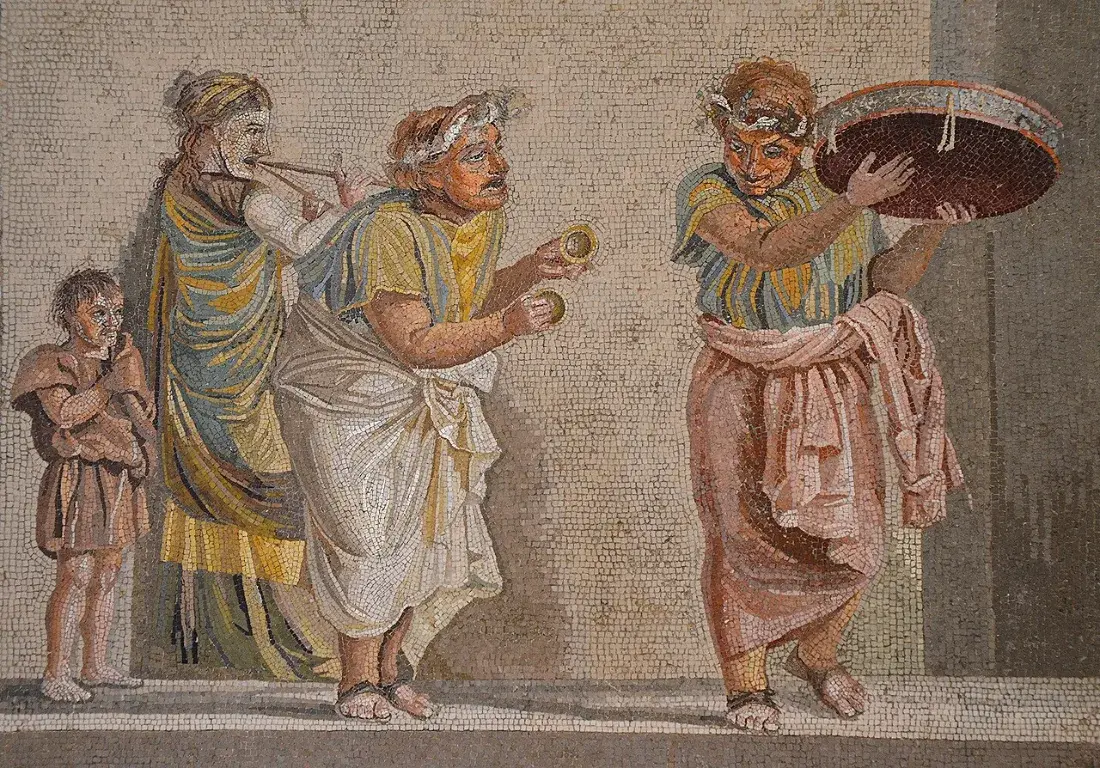
The music of Greek poetry: instruments, scales and notation, the surviving scores, and how melody and rhythm went with the words.
Music: a guide to this section
Greek poetry was made to be heard, and much of it was sung. This section tells what is known of that music. It starts with the basic ideas of music theory, explained from the beginning. It then covers the Greeks’ own notation, their scales and rhythms, the instruments they played, where music was performed, and modern performances of the surviving scores.
Greek music was overwhelmingly song, and the instruments were there to support the voice.[1] So everything in this section bears on the poems elsewhere on the site. This guide explains the words the menu uses, shows how the pages are arranged, and suggests an order.
Mousikē
The Greek word μουσική (mousikē) means “the art of the Muses”. It first appears in Pindar and Epicharmus.[2] It covered more than our word music, and the Mousikē tab of the Overview explains how much more.
Sounds and intervals
An interval is the distance in pitch between two notes. The basic intervals were found as ratios of string lengths:[3]
The fourth, the fifth and the octave were the concords, the intervals heard as sounding well together.[4] The Music theory page lets you hear each of them on a sounding string.
Tetrachords and genera
Greek scales were built from tetrachords (τετράχορδον, tetrachordon, “four strings”): four notes spanning a fourth. The two outer notes were fixed. The two inner notes could move, and where they stood decided the genus (γένος, genos, “kind”) of the scale:[5]
The Greek chromatic and enharmonic are not the modern ones.[6] The diagram shows what the words meant then.
Harmonia and key
A harmonia (ἁρμονία, “tuning”, plural harmoniai) was a way of tuning the notes for a style of song. The word is often translated “mode”. The harmoniai differed in their choice of notes and in their range, and some carried rhythms and melodic habits too.[7] Their names include Dorian, Phrygian and Lydian.
A key, in Greek τόνος (tonos, plural tonoi), is the same scale set at a higher or lower pitch. In later theory the keys took over the old names.[8]
Notation and rhythm
From at least the fourth century BC there were two notations, two sets of signs for writing notes: one for the voice and one for instruments.[9] The Notation page reads the Seikilos song sign by sign.
In rhythm, each measure had a thesis (θέσις, “placing”), the down-beat, and an arsis (ἄρσις, “lifting”), the up-beat.[10] An ancient writer traced the two words to the dancer’s foot: lifted for the arsis, set down for the thesis.[11]
Instruments
A lyre has two arms rising from a sound-box and joined by a crossbar, with strings of equal length.[12] The kithara was the wooden concert lyre of professional singers. The lyra was the lyre made from a tortoise shell, played at home, at drinking-parties and at school.[13]
The aulos was a reed pipe with finger-holes, almost always played in pairs.[14] It is often called a “flute”, but wrongly: its sound came from a reed, like an oboe’s.[15]
The pages
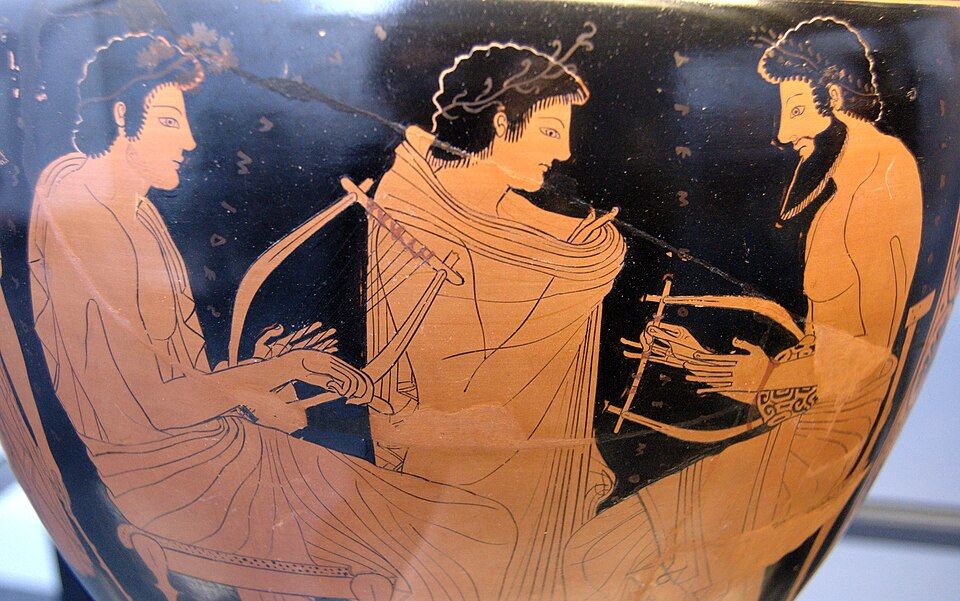 OverviewWhat we know and howAncient Greek music through surviving scores, instruments, images and theoretical writings.
Tabs: What survives · Mousikē · Scores in manuscripts · The Anonymus Bellermanni · The Bellermann exercises · Scores on stone · Papyri before Rome · Reading an edition
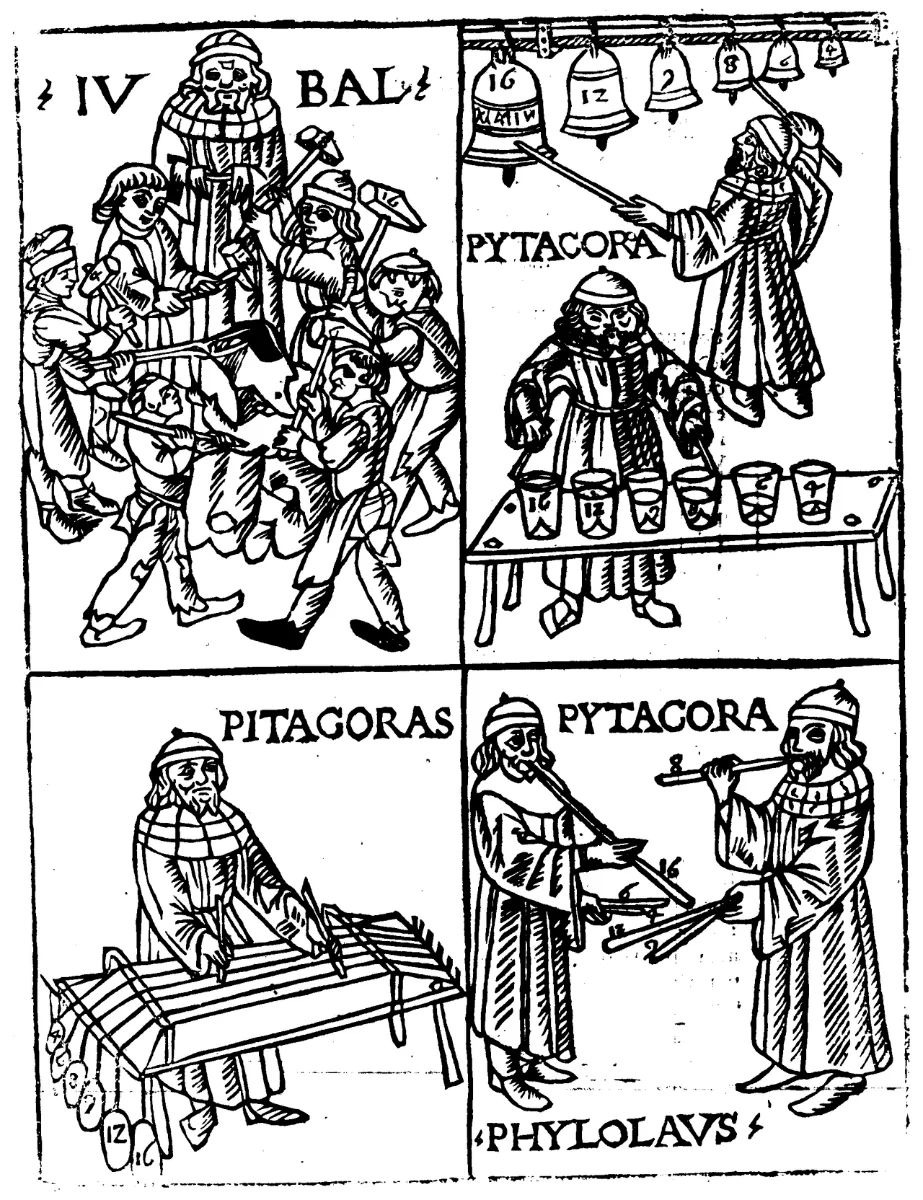 Music theoryTones, intervals, scalesPitch, intervals, scales, rhythm and notation in ancient Greek music.
Tabs: Pitch · Octave · Tone and semitone · Intervals · Tetrachord · Joining tetrachords · Species and harmoniai · Keys · Rhythm · Notation
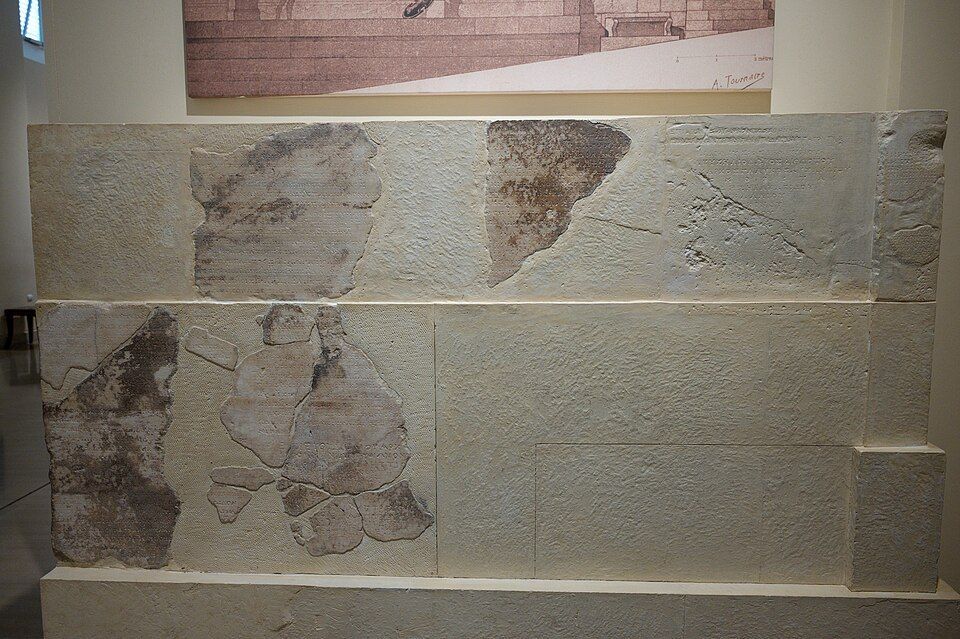 NotationReading the scoresThe signs for voice and instruments, and how they record pitch, duration and rests.
Tabs: Two sign systems · An aulos tablature? · Reading a line · Seikilos sign by sign · A Delphic passage · Rhythmic signs
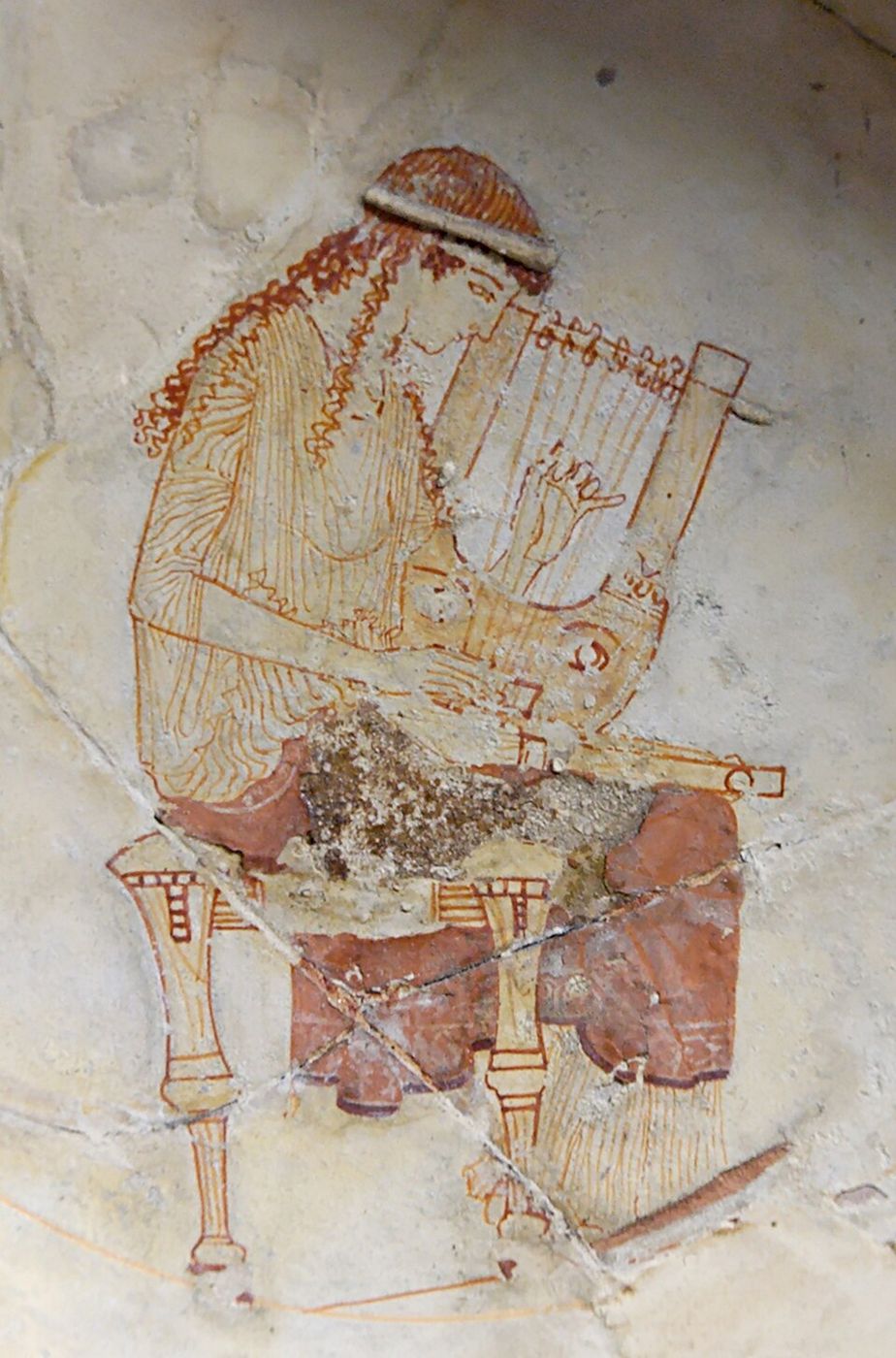 ScalesTetrachords, keys, harmoniaiTetrachords, genera, keys and octave species: the structure of ancient Greek scales.
Tabs: Tetrachords and genera · The Perfect System · Keys and species · Harmoniai and ethos · Aristoxenus and the Pythagoreans
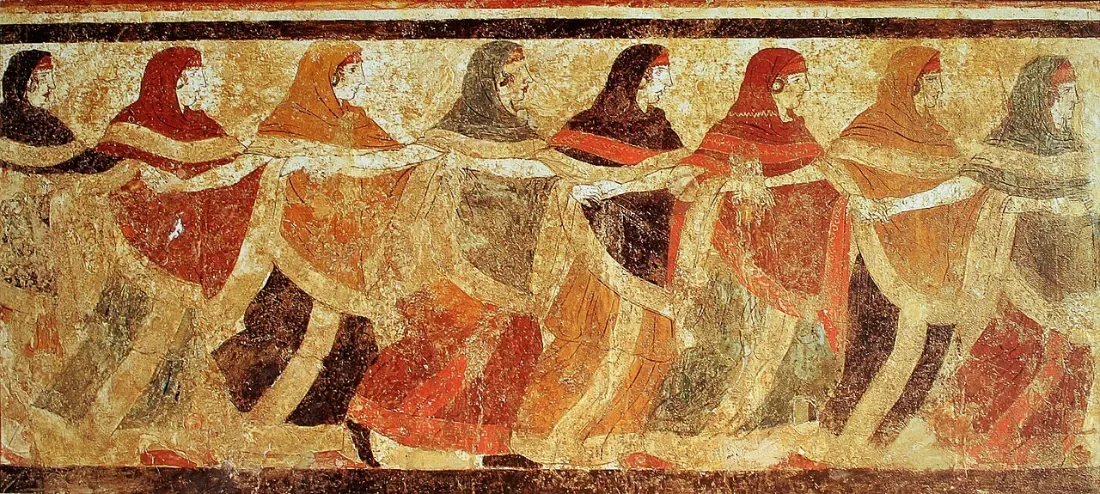 RhythmDuration and beatMusical time, feet and beats, and their relation to the metre of words.
Tabs: Aristoxenus' rhythmics · Arsis and thesis · Song and metre · A musician's view · What the documents show
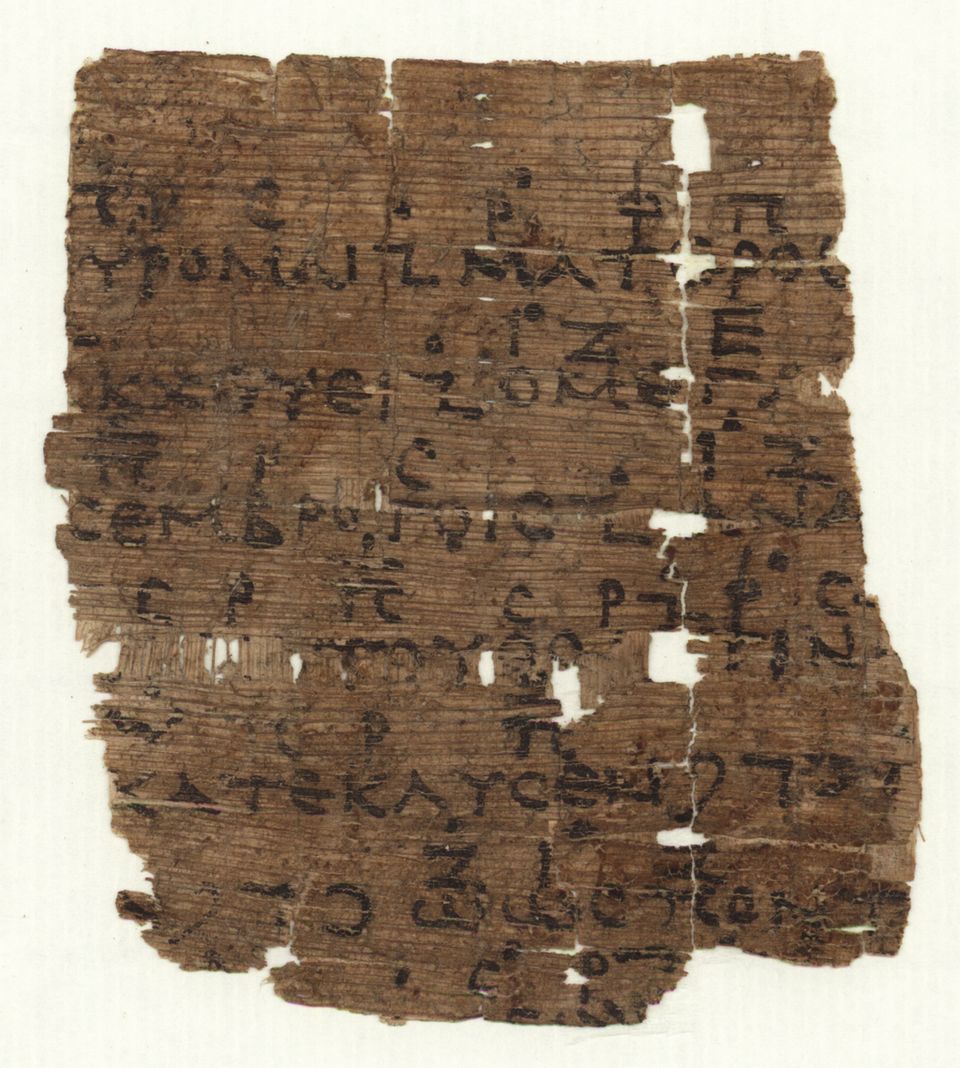 MelodyTune and accentThe relation between a Greek tune and the pitch accents of its words.
Tabs: The rules · Exceptions and dispute · Strophe and antistrophe · Orestes · Mesomedes and Seikilos
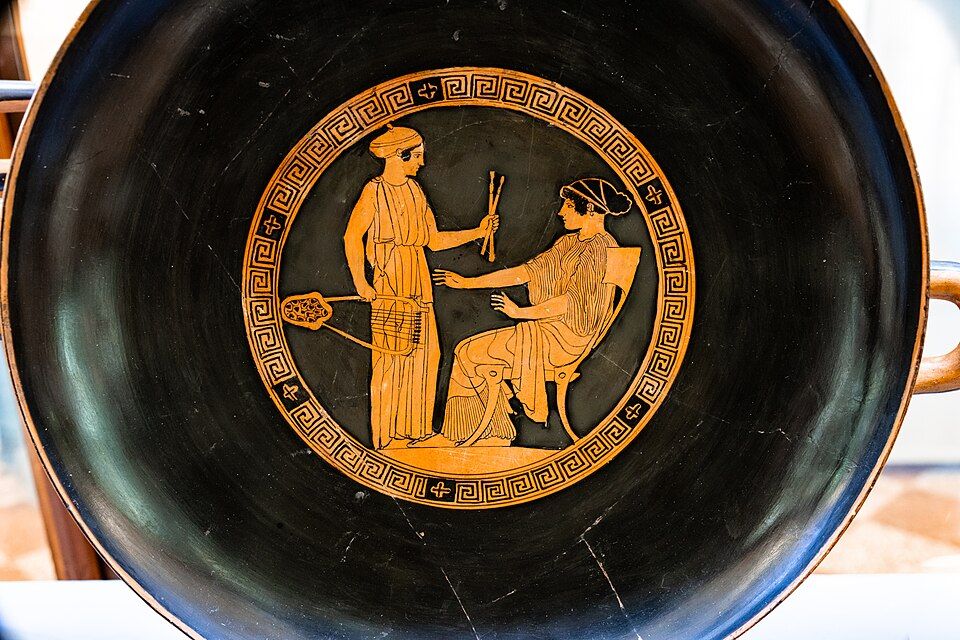 InstrumentsLyres, pipes, percussionLyres, pipes, harps and percussion: their construction, tuning and place in Greek performance.
Tabs: Lyres · The aulos · Panpipe, trumpet, harps · Percussion · Ranges and pitch
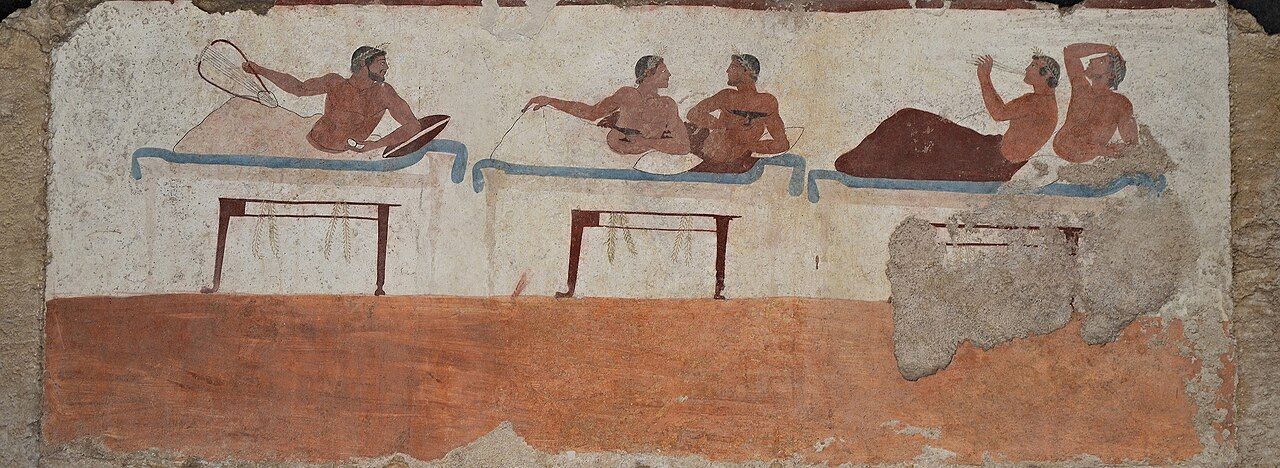 PerformanceSymposium to theatreGreek music at drinking parties, festivals, theatres and contests, from archaic to Roman times.
Tabs: Symposium · Chorus and dance · Theatre · Cult and competitions · Army and fleet · The New Music · Later history
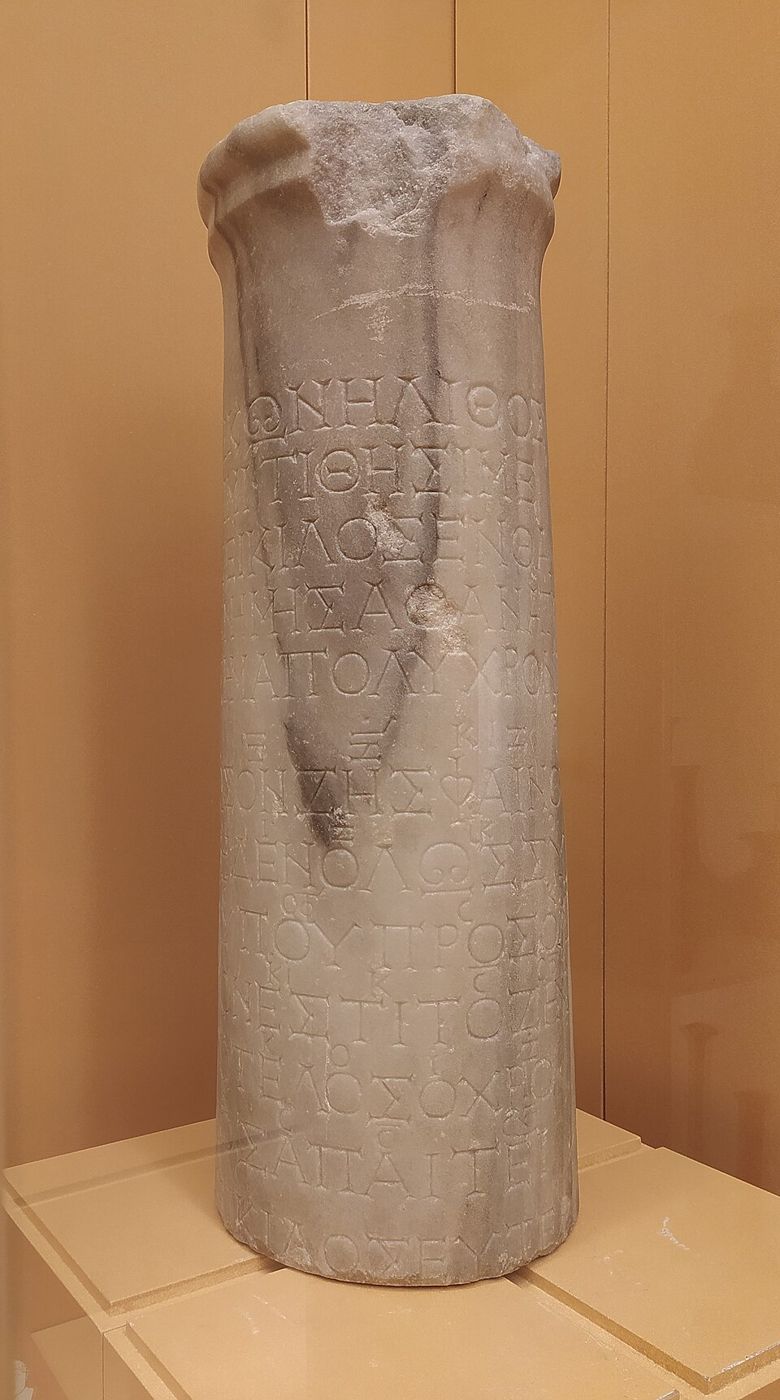 Hearing itModern performancesModern performances of surviving ancient scores, and the evidence behind their reconstruction.
Tabs: Reconstructions · Seikilos audio
A suggested path
- Overview: what survives, and the idea of mousikē.
- Music theory: pitch, octave, tone and semitone, intervals, tetrachords. Press the strings and keys to hear each idea.
- Instruments: the lyre family and the aulos.
- Notation, then Scales: how the Greeks wrote and organised their notes.
- Rhythm and Melody: how music went with the long and short syllables and with the pitch accent. Read Phonology › Accent and morae first if the accent is new to you.
- Performance: the symposium, the chorus and the theatre.
- Hearing it: modern performances of the surviving scores.
Notes
- ^ West 1992, p. 39.
- ^ West 1992, p. 225.
- ^ West 1992, pp. 8–12.
- ^ West 1992, p. 160.
- ^ West 1992, pp. 160–162.
- ^ West 1992, p. 3.
- ^ West 1992, pp. 177–184.
- ^ West 1992, pp. 184–189.
- ^ West 1992, p. 7.
- ^ West 1987, pp. 85, 90.
- ^ Phillips 2018, pp. 76–77.
- ^ West 1992, pp. 48–49.
- ^ West 1992, pp. 50–51.
- ^ West 1992, pp. 81–82.
- ^ West 1992, pp. 1–2.


