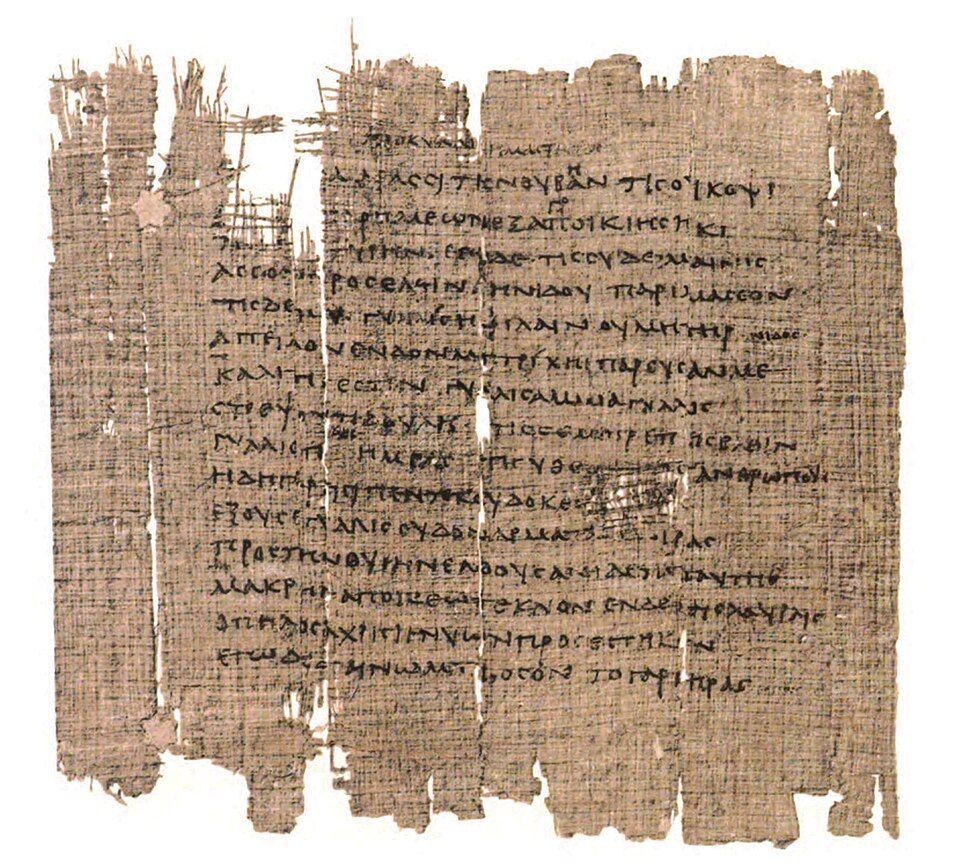
Poets and playwrightsElegy and iambus
Hipponax, Semonides and the iambographers
The iambic poetry of Hipponax, Semonides and Solon.
Works
- Synopsis
- Text and translation
- How to read each line
- Key to the labels
- Scansion
- Metre
- Prosody, line by line
- Notes
- Synopsis
- Text and translation
- How to read each line
- Key to the labels
- Scansion
- Metre
- Prosody, line by line
- Notes
- Synopsis
- Text and translation
- How to read each line
- Key to the labels
- Scansion
- Metre
- Prosody, line by line
- Notes
About · 1 of 5
Semonides, Hipponax, Ananius: the lives
This page gathers the iambic poets after Archilochus whom the metrical sources treat together, with Solon’s iambics. Solon’s life is on the Elegists page. Archilochus, Semonides and Hipponax are the three great archaic iambic poets.[1]
Semonides of Amorgos
Of Semonides’ life nothing can be said with certainty beyond his connection with the island of Amorgos.[2] Tradition says that he led a group of Samian colonists to Amorgos, which makes him a man of rank. It says that he performed trimeters, tetrameters and elegies at symposia. He did not use epodes. A “History of the Samians”, probably a narrative elegy, is lost.[3] He is one of the early Ionian iambic poets who used the trimeter, with Archilochus.[4]
Date (disputed). Carey dates him “probably” to the first half of the seventh century, following Brown.[2] Lennartz, citing Proclus’ Chrestomathy, calls him “somewhat younger” than Archilochus, who belongs to the middle of the century.[5] Bowie places him, with Archilochus, Callinus and Mimnermus, in the mid-seventh century.[6] The Cambridge chronology gives “7th cent.”.[7]
Hipponax of Ephesus
Hipponax, son of Pytheus and Protis, was born in Ephesus.[8] The biographical tradition says he was banished from Ephesus to Klazomenai. Lennartz thinks the detail too specific to be invented. Carey notes only that the later tradition maintains he was exiled, and that nothing political survives in the poems.[9]
Date (the ranges differ). Lennartz puts his activity between about 520 and 490 BC.[8] Carey treats a sixth-century date as secure.[10] The Cambridge chronology gives “mid- or late 6th cent.”.[7]
The persona. A persona is the character a poet speaks as. The speaker “Hipponax” names himself repeatedly. He and his companions are drawn as poor outcasts.[11] Carey finds strong hints that the speaker is a thief, with Hermes, god of thieves, prominent. Lennartz calls Hermes his favourite god. But he denies that “Hipponax” is depicted as a thief, since Hellenistic poets saw him as a man of stern judgement.[12] Both Lennartz and Carey think the author was an educated member of the elite, and the persona a mask. They explain it differently.[13]
His language mixes Ionic with Lydian words.[14] His chief enemy is Bupalus, a sculptor of Chios who worked with his brother Athenis.[15] Carey takes Bupalus to be historical. He notes Rosen’s suggestion that the poet chose a real name for its obscene etymological potential.[16]
Where he performed (disputed). One may imagine the symposium. But Carey finds it unusual for an aristocratic audience to be so interested in the lower orders. West suggested a festival, perhaps the Thargelia. The scapegoat (pharmakos) ritual of several poems was associated with that festival.[17] West also observed that the metrical difference between Hipponax and his predecessors fits a different performance context. Carey reports this, and concludes that none of it can be proven.[18]
Ananius
Hephaestion already records the doubt over the lame trimeter, “which some say was the invention of Hipponax, others of Ananius”.[19] Ananius is a further archaic iambographer about whom little is known.[20] Lennartz treats Hipponax as the inventor, and Ananius as a contemporary who imitated him at once.[21] The question is open.
Solon’s iambics
Like Archilochus, Solon was known for both elegies and iamboi. But his surviving iamboi use only the iambic trimeter and the trochaic tetrameter catalectic. He used them for political self-justification, not for abuse or erotic narrative.[6] They are discussed on the next tab.
Notes
- ^ Lennartz 2022, p. 208; Carey 2009, p. 150.
- ^ a b Carey 2009, p. 160.
- ^ Lennartz 2022, p. 213.
- ^ West 1987, p. 24.
- ^ Lennartz 2022, p. 213 with n. 37.
- ^ a b Bowie 2022, p. 303.
- ^ a b Budelmann 2009, p. 386.
- ^ a b Lennartz 2022, p. 215.
- ^ Lennartz 2022, p. 215 with n. 46; Carey 2009, p. 162.
- ^ Carey 2009, p. 162.
- ^ Carey 2009, pp. 163, 165; Lennartz 2022, p. 215.
- ^ Carey 2009, p. 163; Lennartz 2022, pp. 215–216.
- ^ Lennartz 2022, p. 215; Carey 2009, p. 165.
- ^ Carey 2009, p. 163; Lennartz 2022, p. 216 n. 49.
- ^ Lennartz 2022, p. 217.
- ^ Carey 2009, p. 165 with n. 42.
- ^ Carey 2009, p. 166; Lennartz 2022, p. 218 n. 60.
- ^ Carey 2009, p. 166.
- ^ Hephaestion, Ench. 5.4.
- ^ West 1987, p. 30.
- ^ Lennartz 2022, pp. 208, 219.
About · 2 of 5
Women and animals, Hermes and Bupalus, Solon's defence
Semonides. His longest fragment, fr. 7, derives types of women from animals (sow, vixen, bitch, ass, weasel, mare, monkey, bee) and from earth and sea. Only the woman born of the bee is commended.[1] Carey sees in it the aggression and shared values of Archilochus’ attacks on Lycambes, widened from individual targets to the whole female sex. He finds it hard to dismiss as mere entertainment. Lennartz likewise rejects “folksy”, comic or carnival readings. He reads in it the anxieties of a closed male group.[2]
Fr. 1 begins “My boy, loud-thundering Zeus holds the outcome of all things” (our translation). It reflects on the futility of human hopes. Carey finds its closest parallel in Solon’s elegiac Prayer to the Muses (fr. 13).[3] Other fragments show first-person narratives of eating, drinking and sex, obscene rebuke and animal fable.[4] Most of his trimeters and all his trochaic poems are lost.[5]
Hipponax. In fr. 32 the speaker prays to Hermes, in hymnic form, for a cloak, a little tunic, sandals and boots, and sixty gold staters.[6] Epic is constantly parodied, above all the Odyssey. The woman in “Hipponax’s” life is called Arete, like the Phaeacian queen. Cypso recalls Calypso. Rosen has compared the boxing match with Bupalus in frr. 120–121 with Odysseus’ fight with Irus.[7] Carey reads the parody as a claim to be “the Homer of his trade”.[8] Several poems cast Bupalus as a scapegoat (pharmakos), to be driven out of the city.[9]
Hipponax also wrote short, elegant love songs in a dancing rhythm. One is fr. 119, “If only I might have a maiden, fair and tender” (our translation).[10] It is in the iambic tetrameter catalectic, which Hephaestion quotes as his specimen of the metre.[11] This is the “cheerful metre” of West 1987, p. 29:
εἴ μοι γένοιτο παρθένος καλή τε καὶ τέρεινα
ei moi genoito parthenos kalē te kai tereina
“If only I might have a maiden, fair and tender.”
An iambic tetrameter catalectic: two metra, × — ⏑ —, the caesura after παρθένος, a third metron, and the catalectic close ⏑ — — (red), whose first position is short, not anceps.
Hipponax fr. 119 W, quoted by Hephaestion, Ench. 5.3
synthetic ∿
The curse poem, fr. 115 (attribution disputed). A papyrus at Strasbourg has eight epodic stanzas. An epode, in this sense, is a couplet of a longer and a shorter line, repeated. The stanzas curse a former companion who broke his oath. May he be driven by the waves to Salmydessus, naked, and taken by the Thracians, to eat the bread of slavery.[12]
Neither the victim’s nor the poet’s name is in the text. Lennartz stresses that there is no positive documentation that the poem is by Hipponax. But the same papyrus contains an epode, fr. 117, that he regards as certainly Hipponax’s. And most experts, West and Degani among them, assign fr. 115 to him.[13] Carey marks fr. 117 as of dubious authenticity. Yet he treats fr. 115 as Hipponax’s, and as evidence of a distinct, aristocratic strand in his work, most likely performed at the symposium.[14]
Solon’s iambics. His longest fragment is fr. 36, twenty-eight iambic trimeters transmitted entire by the Aristotelian Constitution of the Athenians. In it he claims that he removed the boundary-markers that enslaved the land of Attica, and brought home citizens sold abroad. He calls dark Earth to witness.[15]
The tetrameters frr. 32–34 defend his conduct and attack his critics. In fr. 33 they mock him as foolish for refusing the tyranny.[16] Their content places them after his archonship, traditionally 594/3 BC.[16] Bowie thinks they may have been sung first at symposia of like-minded friends. He does not rule out performance at some formal political meeting. Elsewhere he argues for a more formal context for the tetrameters than for the trimeters.[17]
The metres are set out on the Metres tabs.
Notes
- ^ Carey 2009, pp. 160–161; Lennartz 2022, p. 214.
- ^ Carey 2009, pp. 160–162; Lennartz 2022, p. 214.
- ^ Carey 2009, p. 162; Lennartz 2022, pp. 214–215.
- ^ Carey 2009, p. 160; Lennartz 2022, pp. 213–214.
- ^ Lennartz 2022, p. 215.
- ^ Lennartz 2022, p. 216.
- ^ Carey 2009, pp. 163–164; Lennartz 2022, p. 218.
- ^ Carey 2009, p. 164.
- ^ Carey 2009, p. 163; Lennartz 2022, p. 218.
- ^ Lennartz 2022, p. 219.
- ^ Hephaestion, Ench. 5.3.
- ^ Lennartz 2022, p. 217; Carey 2009, pp. 166–167.
- ^ Lennartz 2022, p. 217 n. 57.
- ^ Carey 2009, pp. 165 n. 39, 166–167.
- ^ Bowie 2022, pp. 303–304.
- ^ a b Bowie 2022, p. 304.
- ^ Bowie 2022, p. 304 with n. 3.
About · 3 of 5
Quotations, papyri, numbering, revival
Indirect tradition. Greek lyric apart from Pindar and the Theognidea was until recently known only through quotation. It was quoted by authors such as Athenaeus and Stobaeus, and in the scholia, the ancient notes on texts.[1] That holds for the iambographers too. For Hipponax the metrical handbook of Hephaestion, the Enchiridion, is a principal witness. It quotes him only where he is useful as a specimen: one iambic tetrameter catalectic (fr. 119 W),[2] one choliamb with a spondee in the fifth foot (5.4), one lame trochaic tetrameter (6.2), and one nine-syllable line that gave its name to the “hipponactean” (10.2):
καὶ κνίσῃ τινὰ θυμιήσας
kai knisēi tina thymiēsas
“and having fumigated someone with the smoke of burnt fat”
A hipponactean, × × — ⏑ ⏑ — ⏑ — —: two free positions (καὶ κνί-), the choriamb — ⏑ ⏑ — (red), then ⏑ — —, one syllable more than a glyconic.
Hipponax, quoted by Hephaestion, Ench. 10.2
synthetic ∿
Hephaestion calls the colon “the so-called Sapphic nine-syllable or hipponactean”. He analyses it as an antispastic dimeter hypercatalectic.[3] In West’s notation it is a hipponactean, × × — ⏑ ⏑ — ⏑ — —: a glyconic with one syllable added.[4] Rhinthon’s Orestes has the phrase Ἱππώνακτος τὸ μέτρον (Hippōnaktos to metron), “Hipponax’s metre”.[5] So the poet’s name was already shorthand for the metre. No line of Semonides or Solon is quoted in the Enchiridion. Lucian names Semonides’ chief target, Orodokides, in a form Lennartz thinks corrupt.[6]
Papyri. Hipponax 115 comes from the “Strasburg Papyrus”. In it hemiepes and iambic trimeter alternate.[7] The papyrus is P. Strasb. 3, and its attribution to Hipponax is not documented.[8] A papyrus title was once read as “Odysseus” (P.Oxy. 2174 fr. 5 = fr. 74). It suggested an “iambic epic”. Carey accepts, with some caution, that fr. 74 bears the title Odysseus. Lennartz reports that Prodi has doubted it with good reason.[9] West quotes choliambic trimeters from fr. 79.17–20 and tetrameters from frr. 120–121 (both with scansion under Metres).[10]
Numbering and editions. The standard edition of the iambic and elegiac poets is West’s Iambi et elegi Graeci (2nd edn, 1989–92). Gerber’s Loeb of 1999 gives text and translation.[11] For Hipponax there is also Degani’s edition, which Lennartz calls magisterial. For Semonides there is the commentary of Pellizer and Tedeschi.[12]
The two Hipponax numerations differ. Hipponax 28.6 West is 39.6 Degani.[13] Fragment numbers on this page are West’s, as in Lennartz and Carey. Kiparsky’s “Hipponax 19” and “115” carry page references to Gerber’s Loeb.[14] The numbers in the digitised Consbruch text of Hephaestion belong to an older edition (Bergk’s Poetae Lyrici Graeci, PLG⁴), and differ again.
The Hellenistic revival. The choliamb came back into use in the late fourth century BC, now tied to Hipponax in particular. It was used in Callimachus’ Iambi 1–4 and 13 and in Herondas.[15] Babrius used it for his fables in the first century AD.[16] Hipponax, not Archilochus, became the figurehead. Hellenistic poets were drawn to his wording and metre, while the plain trimeter was by then ready-made.[17]
Phoenix of Colophon wrote ethical sermons and short aetiological poems in limping lines. Herodas wrote “iambic mimes”. In the “Dream” (Herod. 8) he presents himself as Hipponax’s true heir. Callimachus’ book of thirteen Iamboi is poorly preserved, but known through the ancient summaries (Diegeseis). It opens by bringing Hipponax back from Hades to speak.[18]
Hephaestion’s model choliamb is ἀκούσαθ’ Ἱππώνακτος· οὐ γὰρ ἀλλ’ ἥκω.[19] It is the opening line of that poem, which Lennartz quotes as Call. fr. 191.1–4 Pf.:[20] “Hear Hipponax! Yes, truly, I have come …” (our translation). Hellenistic epigrams (Theocritus, Leonidas) remember Hipponax as a stern judge who spared no one.[21] The metrical differences between the model and the imitators are on the Metres tab.
Notes
- ^ Sampson 2022, p. 91.
- ^ Hephaestion, Ench. 5.3; see the Poetry tab.
- ^ Hephaestion, Ench. 10.2.
- ^ West 1987, p. 33.
- ^ Hephaestion, Ench. 1.5.
- ^ Lennartz 2022, p. 214 with n. 40.
- ^ Kiparsky 2018, p. 111.
- ^ Lennartz 2022, p. 217 n. 57; see the Poetry tab.
- ^ Carey 2009, p. 164; Lennartz 2022, p. 218 n. 64.
- ^ West 1987, p. 30.
- ^ Budelmann 2009, p. 388.
- ^ Lennartz 2022, p. 220.
- ^ West 2018, p. 371.
- ^ Kiparsky 2018, pp. 111–112.
- ^ West 1987, p. 82; Barbantani 2009, p. 309.
- ^ West 1987, p. 82.
- ^ Lennartz 2022, pp. 215, 219.
- ^ Lennartz 2022, p. 219 with n. 68.
- ^ Hephaestion, Ench. 5.4.
- ^ Lennartz 2022, p. 219.
- ^ Lennartz 2022, p. 215.
About · 4 of 5
The choliamb
The choliamb. Hipponax and Ananius write odd forms of the iambic trimeter and the trochaic tetrameter. They are known as choliambic (from χωλός, chōlos, ‘lame’) or scazon (‘limping’). In nearly every line, though not in all, a long stands where the short penultimate should be. The rhythm jolts, as if it had gone wrong.[1]
West gives no separate schemes. Applying his description to the trimeter and tetrameter[2] gives these:
| Form | Scheme |
|---|---|
| choliambic trimeter | × — ⏑ — × ¦ — ⏑ ¦ — ⏑ — — × ‖ |
| choliambic (lame) trochaic tetrameter | — ⏑ — × — ⏑ — × ¦ — ⏑ — × — — — ‖ |
West’s examples,[3] with Greek independently checked against Bergk. Hipponax 79.17–20, trimeters (the first of them, he notes, an ordinary iambic trimeter):
ὃ δ’ αὐτίκ’ ἐλθὼν σὺν τριοῖσι μάρτυσιν
ὅκου τὸν ἕρπιν ὁ σκότος καπηλεύει
ἄνθρωπον εὗρε τὴν στέγην ὀφέλλοντα—
οὐ γὰρ παρῆν ὄφελμα—πυθˈμένι στοιβῆς.
ho d’ autik’ elthōn syn trioisi martysin / hokou ton herpin ho skotos kapēleuei / anthrōpon heure tēn stegēn ophellonta— / ou gar parēn ophelma—pyth’meni stoibēs.
“And he came at once with three witnesses to where the Dark One sells his wine, and found a man sweeping the floor (for there was no broom) with the stump of a thorn-bush.”
Choliambic trimeters, × — ⏑ — × — ⏑ — ⏑ — — ×: a long (red) stands in the penultimate position, where the plain trimeter has a short. Line 17 is an ordinary trimeter, ending ⏑ ×. In 20 West divides θμ, so πυθ- (red) is long.
Hipponax fr. 79.17–20: Greek from Bergk 1882 II p. 479, with μάρτυσιν from the apparatus; analysis[3]
synthetic ∿
West underlines the long penultimates -λευ-, -λον-, στοι-. In 79.20 his syllable-mark πυθˈμένι shows θμ divided, so that πυθ- is long.
Hipponax 120–121, tetrameters:
λάβετέ μου θαἰμάτια, κόψω Βουπάλωι τὸν ὀφθαλμόν·
ἀμφιδέξιος γάρ εἰμι κοὐκ ἁμαρτάνω κόπτων.
labete mou thaimatia, kopsō Boupalōi ton ophthalmon; / amphidexios gar eimi kouk hamartanō koptōn.
“Hold my clothes: I’ll hit Bupalus in the eye. I’m two-handed, and I don’t miss when I hit.”
Choliambic trochaic tetrameters, — ⏑ — × — ⏑ — × — ⏑ — × — — —. Red: two resolved longs in line 120 (λάβε-, -μάτι-), and the “wrong” long penultimates -θαλ- and κόπ-. μου is one long syllable.
Hipponax frr. 120–121: Greek from Bergk;[4] metrical analysis from West[3]
The contracted pronoun μου is one long syllable; θαἰμάτια joins the article and noun by crasis. The first line has two resolutions (λάβε-, -μάτι-). -θαλ- and κόπ- are the “wrong” long penultimates.
Resolution is admitted, and occasionally an anapaestic foot in a trimeter.[3] The fourth position from the end is normally short. When it is long, the verse is called ischiorrhogic, “broken-hipped”. An example is Hippon. 9.1:[3]
πάλαι γὰρ αὐτοὺς προσδέκονται χάσκοντες
palai gar autous prosdekontai chaskontes
“for a long while now they have been gaping, waiting for them”
Ischiorrhogic: the fourth position from the end (-ται, red), normally short, is long, so that the line closes with four longs.
Hipponax fr. 9.1: Greek from Bergk 1882 II p. 463, with προσδέκονται from the apparatus; translation ours
synthetic ∿
Hephaestion says the same thing in terms of feet. The lame line differs from the straight one in having a spondee or trochee for its last iamb. It refuses trisyllabic feet in the fifth place. There it takes “mostly an iamb, when it is also seemly”, but “sometimes also a spondee, when it becomes rougher”.[5] His two examples:
ἀκούσαθ’ Ἱππώνακτος· οὐ γὰρ ἀλλ’ ἥκω
εἰς ἄκρον ἕλκων, ὥσπερ ἀλλᾶντα ψύχων
akousath’ Hippōnaktos; ou gar all’ hēkō / eis akron helkōn, hōsper allānta psychōn
“Listen to Hipponax; for I have come … pulling it to the tip, like someone cooling a sausage”
Red, the fifth foot: an iamb, γὰ ρἀλ- (Callimachus), “when it is also seemly”; a spondee, λᾶν τα (Hipponax), “when it becomes rougher”. The second line is West’s ischiorrhogic type.
Callimachus and Hipponax, quoted by Hephaestion, Ench. 5.4
synthetic ∿
Kiparsky’s example, Hipponax 19, is regular on both counts:[6]
τίς ὀμφαλητόμος σε τὸν διοπλῆγα
ἔψησε κἀπέλουσεν ἀσκαρίζοντα;
tis omphalētomos se ton dioplēga / epsēse kapelousen askarizonta?
“What navel-cutter wiped you clean and washed you as you squirmed, you god-struck wretch?”
Two regular choliambs, each ending — — ×. Red: the -ο- of διοπλῆγα, lengthened before πλ-. The first syllable of ἔψησε is long too, since ψ counts as two consonants (πσ); it stands in an anceps position.
Hipponax fr. 19: Greek from Hiller–Crusius 1897 p. 60; metrical analysis[6]
synthetic ∿
Syncopation is the suppression of a short element, so that two longs meet. The choliamb is the one Greek case of syncopation in the last foot rather than the first. Its harsh refusal of a smooth close suits the genre.[6]
A hymn that does not limp. In fr. 32 the speaker prays to Hermes for warm clothes and gold. The rhythm is handled with strict care. The “limping” effect is ironically omitted in the hymn-like first line:[7]
Ἑρμῆ, φίλ’ Ἑρμῆ, Μαιαδεῦ, Κυλλήνιε,
ἐπεύχομαί τοι, κάρτα γὰρ κακῶς ῥιγῶ
Hermē, phil’ Hermē, Maiadeu, Kyllēnie, / epeuchomai toi, karta gar kakōs rhīgō
“Hermes, dear Hermes, son of Maia, lord of Cyllene, I pray to you, for I am shivering badly.”
Red, the penultimate: short in line 1, a normal trimeter close; long in line 2, which limps, since the ι of ῥιγῶ is long.[8]
Hipponax fr. 32.1–2: Greek from Bergk 1882 II pp. 468–469, with Κυλλήνιε from the apparatus; analysis[7]
synthetic ∿
Line 1 ends ⏑ ×, a normal trimeter. Line 2 limps, since the ι of ῥιγῶ is long.[8]
Prosody. Synecphonesis is the running together of vowels across a word-boundary into one syllable. Between words it is allowed chiefly in Sappho, in Hipponax and his Alexandrian followers, and in Old Comedy.[9] Correption is the shortening of a long vowel or diphthong before another vowel. Hipponax has correption inside the word in δείλαιος (deilaios), “wretched”, λεύειν (leuein), “to stone”, and εὔωνον (euōnon), “cheap”:[10] a diphthong or long vowel stands in a short position before the next vowel of the same word. He scans ὄφις (ophis), “snake”, with the first syllable long, as if ὄπφις (opphis), like the notorious Homeric line Il. 12.208.[11]
Later practice, for contrast. The revived choliamb drops the pure iambic ending, with one doubtful exception in Phoenix of Colophon. Herondas has the ischiorrhogic ending about once in 24 lines, and Callimachus avoids it. Babrius always accents the penultimate syllable. So Hipponax’s πάλαι γὰρ αὐτούς line breaks Babrius’ rules in four ways.[12]
Notes
- ^ West 1987, p. 30; Lennartz 2022, p. 208.
- ^ West 1987, pp. 25, 28.
- ^ a b c d e West 1987, p. 30.
- ^ Bergk 1882, p. 489.
- ^ Hephaestion, Ench. 5.4.
- ^ a b c Kiparsky 2018, p. 112.
- ^ a b Lennartz 2022, p. 216.
- ^ a b LSJ s.v. ῥιγέω.
- ^ West 1987, p. 15.
- ^ West 1987, p. 14.
- ^ West 2018, p. 371.
- ^ West 1987, pp. 82–83.
About · 5 of 5
Tetrameters and trimeters
Besides the choliamb,[1] Hipponax used a lame form of the trochaic tetrameter, and the iambic tetrameter catalectic. Semonides and Solon wrote ordinary trimeters, and Solon wrote trochaic tetrameters.
The lame tetrameter. Hephaestion’s example, Hippon. ap. Ench. 6.2:
Μητροτίμῳ δηῦτέ με χρὴ τῷ σκότῳ δικάζεσθαι
Mētrotimōi dēute me chrē tōi skotōi dikazesthai
“Again I have to go to law with Metrotimus, that creature of the dark.”
A lame trochaic tetrameter, — ⏑ — × — ⏑ — × — ⏑ — × — — —. Red: με, lengthened before χρ-; -ζεσ-, long where the plain tetrameter has a short.
Hipponax, quoted by Hephaestion, Ench. 6.2
synthetic ∿
The penultimate -ζεσ- is long where a trochaic tetrameter requires a short;[2] με is lengthened before χρ-.
The iambic tetrameter catalectic. Its scheme is × — ⏑ — × — ⏑ — ¦ × ¦ — ⏑ — ⏑ — — ‖. The caesura comes at the end of the second metron, or one position later. A catalectic metron lacks its final element. In this last, catalectic metron the first position is short rather than anceps, as it is in catalectic iambic lines generally.[3] Hephaestion’s specimen of the tetrameter is from Hipponax.[4] It is fr. 119 W, one of Hipponax’s love songs set to a dancing rhythm:[5]
εἴ μοι γένοιτο παρθένος καλή τε καὶ τέρεινα
ei moi genoito parthenos kalē te kai tereina
“If only I might have a maiden, fair and tender.”
An iambic tetrameter catalectic: two metra, × — ⏑ —, the caesura after παρθένος, a third metron, and the catalectic close ⏑ — — (red), whose first position is short, not anceps.
Hipponax fr. 119 W, quoted by Hephaestion, Ench. 5.3
synthetic ∿
Semonides’ trimeters. Semonides wrote trimeters and tetrameters but no epodes. All his trochaic poems are lost.[6] What West says of the trimeter is general to “early iambus”. The trimeter is × — ⏑ — × ¦ — ⏑ ¦ — × — ⏑ — ‖. It usually has the caesura after the fifth position or, failing that, after the seventh. Porson’s Law is observed. Resolution, two shorts in place of a long, is used sparingly: on average in no more than one line out of ten.[7]
Anapaestic feet are a licence of drama (Hipponax occasionally has one).[8] Hephaestion says the iambic poets use the anapaest in the even feet more rarely than the comic poets.[9] Semonides shares with Archilochus the avoidance of a short syllable before stop + liquid, even at the start of a word.[10] The opening of his fr. 1, also discussed by Carey,[11] is a regular trimeter with the penthemimeral caesura and no resolution:
ὦ παῖ, τέλος μὲν Ζεὺς ἔχει βαρύκτυπος
ō pai, telos men Zeus echei baryktypos
“My boy, loud-thundering Zeus holds the outcome of all things …”
A regular trimeter, × — ⏑ — × — ⏑ — × — ⏑ —, with the penthemimeral caesura after μὲν and no resolution. Red: -ρυκ-, long before κτ.
Semonides fr. 1.1: Greek from Hiller–Crusius 1897 p. 16
synthetic ∿
Solon’s iambics. Solon used the trimeter and the trochaic tetrameter.[12] In the tetrameter the early poets observe Porson’s Law at the end of the line and Havet’s Law at its beginning. Havet’s Law forbids — ⏑ — — ¦ in the first metron.[13] The sources make one specific point about Solon’s prosody. He, with Theognis and Pindar, allows himself more freedom than the Ionian iambographers in scanning a short vowel short before stop + liquid.[14] His longest fragment, fr. 36, is in trimeters.[15] Line 3 again has the caesura after the fifth position:
συμμαρτυροίη ταῦτ’ ἂν ἐν δίκηι Χρόνου
symmartyroiē taut’ an en dikēi Chronou
“… would bear witness to this in the court of Time.”
Caesura after the fifth position. Red: the final η of συμμαρτυροίη is long; the ν of ἂν goes with the next vowel, so ἂ- is a short open syllable, and ἐν is long before δ-.
Solon fr. 36.3: Greek from Hiller–Crusius 1897 p. 44; discussion[16]
synthetic ∿
The final η of συμμαρτυροίη is long. In ταῦτ’ ἂν ἐν the ν of ἂν goes with the following vowel, so ἂν gives a short open syllable (seventh position), and ἐν is long before δ-.
Notes
- ^ See the previous tab.
- ^ cf. West 1987, p. 28.
- ^ West 1987, p. 29.
- ^ Hephaestion, Ench. 5.3.
- ^ Lennartz 2022, p. 219.
- ^ Lennartz 2022, pp. 213, 215.
- ^ West 1987, pp. 24–25.
- ^ West 1987, p. 26; West 1987, p. 30.
- ^ Hephaestion, Ench. 5.1.
- ^ West 1987, p. 16 n. 7.
- ^ Carey 2009, p. 162.
- ^ West 1987, pp. 24, 28.
- ^ West 1987, p. 28.
- ^ West 1987, p. 16.
- ^ Bowie 2022, p. 303.
- ^ Bowie 2022, p. 304.
Hipponax: choliambs (frr. 79.17–20, 9.1, 48)
Synopsis
Hipponax, son of Pytheus and Protis, was born in Ephesus. The dates given for him differ. Lennartz puts his activity between about 520 and 490 BC. Carey treats a sixth-century date as secure. The Cambridge chronology gives “mid- or late 6th cent.”.[1] The biographical tradition says he was banished to Klazomenai.[2] His speaker, “Hipponax”, names himself again and again. He and his companions are drawn as poor outcasts, though the poet was clearly educated and of an elite family.[2] His chief enemy is Bupalus, a sculptor of Chios.[3] Where he performed is disputed. The symposium is one possibility. West suggested a festival such as the Thargelia.[4] He made both the iambic trimeter and the trochaic tetrameter “limp”, with a long syllable in place of the short one before the last. This gives his iambus a rougher colour.[2]
Scanned here are four choliambic trimeters from a narrative (fr. 79.17–20). Then comes a “broken-hipped” line, with a long fourth syllable from the end (fr. 9.1). Last is a line that Hephaestion quotes for its spondee in the fifth foot.[5]
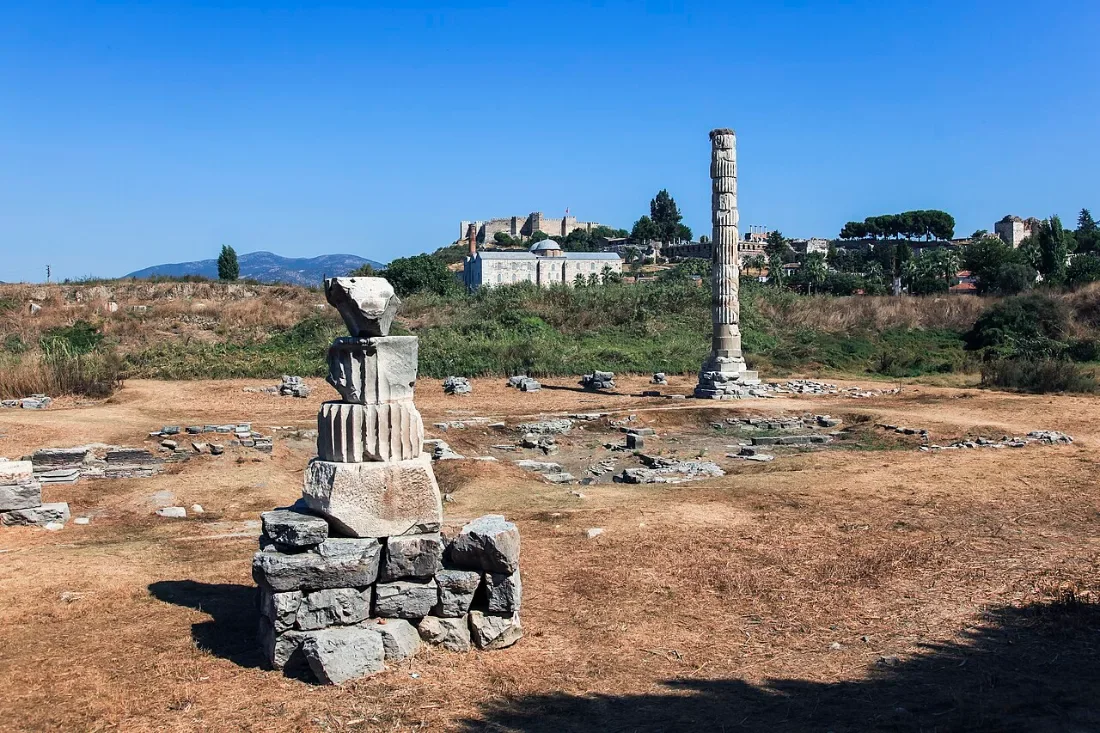
Text and translation
The uninterrupted Greek with its English translation, line by line.
Show text and translation
ὃ δ’ αὐτίκ’ ἐλθὼν σὺν τριοῖσι μάρτυσιν
Hipponax · 79.17–20 and 9.1 (Greek wording from Bergk 1882 II, with selected old variants) · 48 Bergk (as quoted by Hephaestion, Enchiridion 5.4)
How to read each line
A guide to the Greek, syllables, pitch marks and quantities.
Show the reading key
- Above each line: the line as the edition prints it, each word placed over its own syllables. The main row: the same Greek divided into metrical syllables, each written as it is pronounced. A consonant that closes a syllable is written with it (λόθ | ρο); an elided word is closed up with the next vowel (ν’ἀ); a final consonant carried into the next word is set with a thin space (ς ἰ). Wider gaps mark word-ends.
- Above the syllables: the pitch of each syllable, from the accents. Under them: the quantity of each syllable as it falls in the line, then the transliteration, syllable by syllable, with accented syllables in capitals.
- Under each line: a line-for-line translation. In the right margin of the scansion: the line type, its scheme, and its analysis into cola.
Key to the labels
The names, patterns and symbols used beside this poem.
Show the labels and symbols
The labels in the right margin of the scansion below name the line, its scheme, the feet as the line realises them, and the caesurae and diaereses (the named word-ends) that fall in it. In the scheme ⏔ is a biceps, two shorts that may be contracted to one long; ⏕ is a long that may be resolved into two shorts; × is an anceps, long or short. A click on any syllable highlights its metron or colon, or, with the switch, its foot. The sources of the labels, with their page numbers, are given line by line under Prosody, line by line.
| Label | Name and shape | What it is |
|---|---|---|
| hx-m1 | First iambic metron× — ⏑ — | Positions 1–4. The anceps may be long or short. A long may be resolved into two shorts.[6] |
| hx-m2 | Second iambic metron× — ⏑ — | Positions 5–8. The main caesura falls inside it, after position 5 (penthemimeral) or 7 (hephthemimeral).[7] |
| hx-m3 | Third iambic metron× — ⏑ × | Positions 9–12 of the normal trimeter, the last syllable indifferent at period-end.[8] |
| hx-lame | The limping close× — — × | Positions 9–12 of the choliamb. The short penultimate position of the trimeter is replaced by a long, giving a “bumpingly ‘wrong’ rhythm”.[9] The anceps at position 9, the fourth syllable from the end, is usually kept short; when it is long the verse is called ischiorrhogic, “broken-hipped”.[9] Hephaestion says the same in feet: the fifth foot is mostly an iamb, sometimes a spondee, “when it becomes rougher”.[10] |
The feet
| Foot and shape | Where |
|---|---|
| First foot× — | Positions 1–2: an iamb or a spondee. Hephaestion’s odd places admit iamb, tribrach, spondee, dactyl and anapaest.[11] |
| Second foot⏑ — | Positions 3–4: an iamb, or a tribrach by resolution. The even places admit iamb, tribrach and anapaest.[11] |
| Third foot× — | Positions 5–6. |
| Fourth foot⏑ — | Positions 7–8. |
| Fifth foot× — | Positions 9–10. In the choliamb Hephaestion admits here “mostly an iamb”, sometimes a spondee, never a trisyllabic foot.[10] |
| Sixth foot⏑ × / — × | Positions 11–12. In the trimeter an iamb or pyrrhic; in the choliamb a spondee or trochee.[10] |
Scansion
The “limping” iambic trimeter that Hipponax made his own: a passage that starts with a normal trimeter and goes on to limp, a “broken-hipped” line, and Hephaestion’s example of a choliamb with a spondee in the fifth foot. Every syllable’s quantity is given with its reason.
And he came at once with three witnesses
to where the Darkness sells his wine,
and found a fellow sweeping the house —
for there was no broom — with the stump of a thorn-bush.
For a long time they have been waiting for them, open-mouthed,
drawing it up to the tip, like someone cooling a sausage.
Metre
- The choliamb. Hipponax and another archaic iambographer, Ananius, use variants of the iambic trimeter and the trochaic tetrameter called choliambic (from χωλός, “lame”) or scazon (“limping”): nearly every line, though not every one, fills the penultimate position, short in the ordinary verse, with a long, so that the line ends with a deliberate jolt.[13] The trimeter × — ⏑ — × — ⏑ — × — ⏑ ×[7] becomes × — ⏑ — × — ⏑ — × — — ×. Hephaestion says that some call the lame line Hipponax’s invention and others Ananius’, and that it differs from the straight one in having a spondee or a trochee, not an iamb or pyrrhic, as its last foot.[10] Lennartz calls Hipponax the inventor of the choliambos and says that it gives his iambus a much rougher colour.[14]
- The fourth syllable from the end. The anceps before the limping close is normally short; where it is long, as in Hipponax 9.1, the verse is called ischiorrhogic, “broken-hipped”.[9] Hephaestion makes the same point in terms of feet: the lame line does not admit a trisyllabic foot (dactyl, tribrach, anapaest) as its fifth foot, but “mostly an iamb, when it is also seemly, and sometimes also a spondee, when it becomes rougher”,[10] and the spondee is his example from Hipponax on this tab. Later poets were stricter: Herondas allows the ischiorrhogic ending in only about one line in 24, Callimachus avoids it altogether, and Babrius does not use it.[15]
- Resolution and caesura. Hipponax admits resolution, and now and then an anapaest in the trimeter;[9] there is none in the lines on this tab. The trimeter usually has a penthemimeral caesura or, failing that, a hephthemimeral one;[7] every line here has one or the other.
- West’s marks. West underlines the long penultimate syllable in each limping line of 79.17–20 (-λευ-, -λον-, στοι-) and the long fourth syllable from the end in 9.1 (-ται); the page shows the same syllables as long in the scansion row. In 79.20 he prints πυθ’μένι with a syllable-marker, the sign he uses to show that a stop + liquid or nasal is divided between two syllables;[16] the page prints the word without it. The pencil marks in the copy of West used for this tab are a reader’s, not West’s, and were ignored.
- Prosody. A syllable counts as long when its vowel is long or a diphthong, or when a consonant closes it; before a vowel, a consonant at the end of a word is spoken with the following syllable, and the rough breathing is not a consonant for this purpose.[17] ψ counts as two consonants.[18] Short final vowels are elided before a vowel.[19] Early poets as a rule leave a syllable short before stop + liquid only when the group begins a word;[20] inside a word, as in ἄκρον (line 6), the group makes position. The last syllable of each line is at period-end and is indifferent.[21] The input marks the short α of καπηλεύει and πάλαι, whose quantity the spelling does not show;[22] the page does not show the marks.
- Text. The wording is available in the public-domain edition (volume II), which numbers these passages 51, 8 and 48. Its apparatus records μάρτυσιν in the narrative’s first line and προσδέκονται in the “broken-hipped” line.[23] These readings are selected here. Accents, breathings, punctuation, capitalization and teaching quantity marks are normalized; the display uses ὃ δ’ and ὅκου. The metrical analysis and modern fragment numbers follow the later handbook.[9] The final line is also quoted by Hephaestion.[10]
Prosody, line by line
Every syllable, with the reason for its length. Quantities are read from the vowel where the spelling shows it, from the consonants that follow (“position”), from the accent where it tells, and from the metre where nothing else does. Editors’ notes on the text follow in the boxed paragraphs.
- 79.17
Line 79.17 · ὃ δ’ αὐτίκ’ ἐλθὼν σὺν τριοῖσι μάρτυσιν
ὃ δ’ αὐτίκ’ ἐλθὼν σὺν τριοῖσι μάρτυσιν
ὃδ’αὐτίκ’ἐλθὼνσὺντριοῖσιμάρτυσινpenthemimeral caesura.
The label in the margin, with its sources: “a normal iambic trimeter” (West).
- 1 ⏑ὃὃ is short by nature; the position is anceps.
- 2 —δ’αὐαὐ is a diphthong, long by nature; the apostrophe marks an elided vowel; the consonant before it joins this syllable.
- 3 ⏑τίί is short by the metre (position 3 must be short).
- 4 —κ’ἐλἐ is short by nature; closed by λ: long by position; the apostrophe marks an elided vowel; the consonant before it joins this syllable.
- 5 —θὼνὼ is long by nature; closed by ν: long by position; the position is anceps.
- 6 —σὺνὺ is a vowel of unknown length; closed by ν: long by position.
- 7 ⏑τριι is short by the metre (position 7 must be short).
- 8 —οῖοῖ is a diphthong, long by nature.
- 9 ⏑σιι is short by the accent rule: circumflex on the penult requires a short final syllable; the position is anceps.
- 10 —μάρά is a vowel of unknown length; closed by ρ: long by position.
- 11 ⏑τυυ is short by the metre (position 11 must be short).
- 12 ×σινι is a vowel of unknown length; closed by ν: long by position; the position is anceps.
Hipponax 79.17. West counts this line an ordinary iambic trimeter:[9] its eleventh position, τυ, is short, as in the trimeter, not long as in the choliamb. West prints ὃ δ’ with accent and rough breathing, the article used as a pronoun, “and he”. δ’ and αὐτίκ’ are elided before vowels,[19] and their consonants go with the next syllable.[24] The penthemimeral caesura falls after ἐλθὼν.[7] In τριοῖσι, “three” (dative), the ι of τρι- is short before the vowel. LSJ thinks that μάρτυρσι, not μάρτυσι, is probably the right form here (s.v. μάρτυς); that would make τυρ long and the line a choliamb like the rest, but West prints μάρτυσιν and calls the line normal. The last syllable is indifferent at period-end.[21]
- 79.18
Line 79.18 · ὅκου τὸν ἕρπιν ὁ σκότος καπηλεύει
ὅκου τὸν ἕρπιν ὁ σκότος καπηλεύει
ὅκουτὸν ἕρπιν ὁσκότοςκαπηλεύειpenthemimeral caesura.
The label in the margin, with its sources: (West 1987, p. 30).
- 1 ⏑ὅὅ is short by nature; the position is anceps.
- 2 —κουου is a diphthong, long by nature.
- 3 ⏑τὸὸ is short by nature.
- 4 —ν ἕρἕ is short by nature; closed by ρ: long by position; the first consonant belongs to the previous word and is carried over to this vowel.
- 5 ○πιι is of unknown length; the position is anceps, so either scans.
- 6 —ν ὁὁ is short by nature; the next word begins with σκ: the syllable is closed before it: long by position; the first consonant belongs to the previous word and is carried over to this vowel.
- 7 ⏑σκόό is short by nature.
- 8 —τοςο is short by nature; closed by ς: long by position.
- 9 ⏑καᾰ is short (its length is not shown by the ordinary spelling); the position is anceps.
- 10 —πηη is long by nature.
- 11 —λεύεύ is a diphthong, long by nature.
- 12 ×ειει is a diphthong, long by nature; the position is anceps.
Hipponax 79.18, a choliamb. West underlines λευ of καπηλεύει, the long that replaces the short penultimate position.[9] ὅκου is the Ionic form of ὅπου, “where”.[25] ἕρπις is a foreign word for wine; LSJ cites this line for it (s.v. ἕρπις, and s.v. καπηλεύω, “sell by retail”), under an older numbering (Hippon. 51). ὁ σκότος is literally “the darkness”; West prints σκότος without a capital; the translation takes it as a nickname, “the Darkness”, as the tetrameters tab takes τῷ σκότῳ (note on 78 Bergk). The ν of τὸν and of ἕρπιν goes with the following vowel,[24] so τὸ and πι are short; the rough breathing of ἕρπιν does not count as a consonant.[18] ὁ is short by nature but closed by the σ of σκότος, so it fills the long sixth position. The penthemimeral caesura falls after ἕρπιν.[7]
Gerber prints Masson’s ἔρπιν with the smooth breathing.[26]
The ι of ἕρπιν is left ○: LSJ (s.v. ἕρπις, an Egyptian word for wine) gives no length, and the word occurs nowhere in the verse searched (the Perseus texts of Homer, Hesiod, the Homeric Hymns, Apollonius, Theocritus and the dramatists).
- 79.19
Line 79.19 · ἄνθρωπον εὗρε τὴν στέγην ὀφέλλοντα—
ἄνθρωπον εὗρε τὴν στέγην ὀφέλλοντα—
ἄνθρωπον εὗρετὴνστέγηνὀφέλλονταpenthemimeral caesura.
The label in the margin, with its sources: (West 1987, p. 30).
- 1 —ἄνἄ is a vowel of unknown length; closed by ν: long by position; the position is anceps.
- 2 —θρωω is long by nature.
- 3 ⏑ποο is short by nature.
- 4 —ν εὗεὗ is a diphthong, long by nature; the first consonant belongs to the previous word and is carried over to this vowel.
- 5 ⏑ρεε is short by nature; the position is anceps.
- 6 —τὴνὴ is long by nature; closed by ν: long by position.
- 7 ⏑στέέ is short by nature.
- 8 —γηνη is long by nature.
- 9 ⏑ὀὀ is short by nature; the position is anceps.
- 10 —φέλέ is short by nature; closed by λ: long by position.
- 11 —λονο is short by nature; closed by ν: long by position.
- 12 ×ταα is short by the accent rule: acute on the antepenult requires a short final syllable; the position is anceps.
Hipponax 79.19, a choliamb. West underlines λλον of ὀφέλλοντα: the syllable λον, closed by ν before τ, stands in the penultimate position where the trimeter has a short.[9] The ν of ἄνθρωπον and of στέγην goes with the next word’s vowel,[24] so πο and the anceps ὀ are short and γη is long only by its vowel. στέ is short before the single γ. The penthemimeral caesura falls after εὗρε. ὀφέλλοντα here means “sweeping”: LSJ quotes these words and the next line to show that the branches of the στοιβή, a thorny shrub, were used to make brooms (s.v. στοιβή). West’s dash marks the parenthesis that follows.
- 79.20
Line 79.20 · οὐ γὰρ παρῆν ὄφελμα — πυθμένι στοιβῆς.
οὐ γὰρ παρῆν ὄφελμα — πυθμένι στοιβῆς.
οὐγὰρπαρῆνὄφελμαπυθμένιστοιβῆς.hephthemimeral caesura.
The label in the margin, with its sources: (West 1987, p. 30).
- 1 —οὐοὐ is a diphthong, long by nature; the position is anceps.
- 2 —γὰρὰ is a vowel of unknown length; closed by ρ: long by position.
- 3 ⏑παα is short by the metre (position 3 must be short).
- 4 —ρῆνῆ is long by nature.
- 5 ⏑ὄὄ is short by nature; the position is anceps.
- 6 —φελε is short by nature; closed by λ: long by position.
- 7 ⏑μαα is short by the accent rule: acute on the antepenult requires a short final syllable.
- 8 —πυθυ is a vowel of unknown length; closed by θ before a nasal: stop + nasal makes position, as it usually does in epic.
- 9 ⏑μέέ is short by nature; the position is anceps.
- 10 —νιthe next word begins with στ: the syllable is closed before it: long by position.
- 11 —στοιοι is a diphthong, long by nature.
- 12 ×βῆς.ῆ is long by nature; closed by ς: long by position; the position is anceps.
Hipponax 79.20, a choliamb. West underlines στοι, the long penultimate.[9] He prints πυθ’μένι with a syllable-marker: the θ of θμ closes the syllable before it, so πυθ fills the long eighth position.[16] West notes that a stop followed by a nasal is more resistant than other such groups to being taken wholly into the next syllable, which would leave the syllable before it short, and that this is seldom found with the nasals before the fifth century.[20] νι, short by nature, is closed by the σ of στοιβῆς and fills the long tenth position.[24] γὰρ is closed by ρ before π. The hephthemimeral caesura falls after ὄφελμα, “broom”, at West’s dash.[7]
- 9.1
Line 9.1 · πάλαι γὰρ αὐτοὺς προσδέκονται χάσκοντες,
πάλαι γὰρ αὐτοὺς προσδέκονται χάσκοντες,
πάλαιγὰρ αὐτοὺςπροσδέκονταιχάσκοντες,penthemimeral caesura.
The label in the margin, with its sources: fourth syllable from the end long (West 1987, p. 30).
- 1 ⏑πάᾰ́ is short (its length is not shown by the ordinary spelling); the position is anceps.
- 2 —λαιαι is a diphthong, long by nature.
- 3 ⏑γὰὰ is short by the metre (position 3 must be short).
- 4 —ρ αὐαὐ is a diphthong, long by nature; the first consonant belongs to the previous word and is carried over to this vowel.
- 5 —τοὺςοὺ is a diphthong, long by nature; closed by ς: long by position; the position is anceps.
- 6 —προσο is short by nature; closed by σ: long by position.
- 7 ⏑δέέ is short by nature.
- 8 —κονο is short by nature; closed by ν: long by position.
- 9 —ταιαι is a diphthong, long by nature; the position is anceps.
- 10 —χάσά is a vowel of unknown length; closed by σ: long by position.
- 11 —κονο is short by nature; closed by ν: long by position.
- 12 ×τες,ε is short by nature; closed by ς: long by position; the position is anceps.
Hipponax 9.1, an ischiorrhogic choliamb.[9] The fourth syllable from the end, ται of προσδέκονται, is long by its diphthong, and West underlines it; with the limping close after it, the line ends in four longs, — — — ×.[15] προσδέκομαι is the Ionic form of προσδέχομαι, “wait for”.[27] The ρ of γὰρ goes with αὐτοὺς,[24] so γὰ is short. The penthemimeral caesura falls after αὐτοὺς. West quotes the line again to show how the later choliamb of Babrius differs: in Babrius the next-to-last syllable always carries the accent and usually has a long vowel, and a long vowel or diphthong nearly always in the last syllable, so that this verse departs from Babrius’ practice on four counts: it is ischiorrhogic, it ends in a proparoxytone, and each of its last two syllables has a short vowel.[28] Devine and Stephens count long vowels in more than 92 per cent of the last two syllables of Babrius’ choliambs, against under 60 per cent in Hipponax.[29]
Gerber prints the line as fr. 9.1, followed by κράδας ἔχοντες ὡς ἔχουσι φαρμακοῖς: the context is the scapegoat ritual.[30]
- 48
Line 48 · εἰς ἄκρον ἕλκων, ὥσπερ ἀλλᾶντα ψύχων.
εἰς ἄκρον ἕλκων, ὥσπερ ἀλλᾶντα ψύχων.
εἰςἄκρον ἕλκων,ὥσπερ ἀλλᾶνταψύχων.penthemimeral caesura; hephthemimeral caesura.
- 1 —εἰςεἰ is a diphthong, long by nature; the position is anceps.
- 2 —ἄκἄ is a vowel of unknown length; closed by κ before a liquid: stop + liquid makes position, as it usually does in epic.
- 3 ⏑ροο is short by nature.
- 4 —ν ἕλἕ is short by nature; closed by λ: long by position; the first consonant belongs to the previous word and is carried over to this vowel.
- 5 —κων,ω is long by nature; the position is anceps.
- 6 —ὥσὥ is long by nature; closed by σ: long by position.
- 7 ⏑πεε is short by nature.
- 8 —ρ ἀλἀ is a vowel of unknown length; closed by λ: long by position; the first consonant belongs to the previous word and is carried over to this vowel.
- 9 —λᾶνᾶ carries a circumflex, so it is long; closed by ν: long by position; the position is anceps.
- 10 —ταthe next word begins with the double consonant ψ: the syllable is closed before it: long by position.
- 11 —ψύύ is long by the metre (position 11 must be long).
- 12 ×χων.ω is long by nature; closed by ν: long by position; the position is anceps.
Hipponax 48 Bergk, quoted by Hephaestion as the choliamb that has “sometimes also a spondee” in its fifth foot, which makes it rougher:[10] the fifth foot is λᾶν τα, two longs, and in West’s terms the fourth syllable from the end is long, so the line is ischiorrhogic.[9] ἀλλᾶντα has a circumflex on its second syllable, so its α is long;[31] its short final α is closed by the double consonant ψ of ψύχων.[18] In ἄκρον the κρ inside the word closes the first syllable, which fills the long second position.[20] The ρ of ὥσπερ goes with ἀλλᾶντα, so πε is short. The ν of ἄκρον goes with ἕλκων.[24] The υ of ψύχων stands in the limping eleventh position, which is long. The scanner reports penthemimeral and hephthemimeral word-ends, after ἕλκων and after ὥσπερ.
Notes
- ^ Lennartz 2022, p. 215; Carey 2009, p. 162; Budelmann 2009, p. 386.
- ^ a b c Lennartz 2022, p. 215.
- ^ Lennartz 2022, p. 217.
- ^ Carey 2009, p. 166; Lennartz 2022, p. 218 n. 60.
- ^ Hephaestion, Ench. 5.4.
- ^ West 1987, pp. 25, 30.
- ^ a b c d e f West 1987, p. 25.
- ^ West 1987, pp. 4, 25.
- ^ a b c d e f g h i j k l West 1987, p. 30.
- ^ a b c d e f g Hephaestion, Ench. 5.4.
- ^ a b Hephaestion, Ench. 5.1.
- ^ West 1987, pp. 30, 82.
- ^ West 1987, p. 30; Battezzato 2009, p. 137, describes the same reversal of the rhythm at the line-end.
- ^ Lennartz 2022, pp. 208, 215.
- ^ a b West 1987, p. 82.
- ^ a b West 1987, p. 17.
- ^ West 1987, p. 12 with n. 1.
- ^ a b c West 1987, p. 12 n. 1.
- ^ a b West 1987, p. 13.
- ^ a b c West 1987, p. 16.
- ^ a b West 1987, p. 4.
- ^ LSJ s.vv. καπηλεύω, πάλαι.
- ^ Bergk 1882, pp. 463, 478–480.
- ^ a b c d e f West 1987, p. 12.
- ^ LSJ s.v. ὅπου.
- ^ Gerber 1999b, p. 414.
- ^ LSJ s.v. προσδέχομαι.
- ^ West 1987, pp. 82–83.
- ^ Devine and Stephens 1994, pp. 83–84.
- ^ Gerber 1999b, p. 360.
- ^ LSJ s.v. ἀλλᾶς, citing this line.
Text and sources
- Greek wording: T. Bergk, Poetae lyrici Graeci, fourth edition, II (Leipzig 1882), p. 463 and pp. 478–480, including the apparatus. Public domain, normalized as explained above. Hipponax 48 also quoted by Hephaestion, Enchiridion 5.4, ed. M. Consbruch (Leipzig 1906), First1KGreek, CC BY-SA 4.0.
- Metre and prosody: West 1987, pp. 4 (period-end), 12–13 (syllables, double consonants, elision), 16–17 (stop + liquid, the syllable-marker), 25 (the trimeter, caesura), 30 (choliambics), 82–83 (the later choliamb), checked against the page images; Hephaestion, Enchiridion 5.1, 5.4.
- K. Lennartz, ‘Iambos’, ch. 14 in L. Swift (ed.), A Companion to Greek Lyric (Wiley 2022), pp. 208, 215.
- L. Battezzato, ‘Metre and music’, in F. Budelmann (ed.), The Cambridge Companion to Greek Lyric (Cambridge 2009), ch. 7, p. 137 (the choliamb).
- A. M. Devine and L. D. Stephens, The Prosody of Greek Speech (New York and Oxford 1994), pp. 83–84 (Tables 2.14–2.15: long vowels in the last two syllables of the choliamb).
- Meanings and forms: Liddell–Scott–Jones, Greek–English Lexicon, Perseus Digital Library (CC BY-SA), s.vv. ἀλλᾶς, ἕρπις, καπηλεύω, μάρτυς, ὅπου, προσδέχομαι, στοιβή.
- D. E. Gerber, Greek Iambic Poetry from the Seventh to the Fifth Centuries BC (Loeb Classical Library 259, Cambridge, MA 1999), Hipponax frr. 79.17–20 (pp. 414–415) and 9 (pp. 360–361), compared: same numbers as West. The line from Hephaestion 5.4 (Bergk 48) was not located in Gerber.
Quotations from copyrighted works are not covered by this page’s licence.
Hipponax: tetrameters (frr. 120–121, 78 and 90)
Synopsis
Hipponax, son of Pytheus and Protis, was born in Ephesus. The dates given for him differ. Lennartz puts his activity between about 520 and 490 BC. Carey treats a sixth-century date as secure. The Cambridge chronology gives “mid- or late 6th cent.”.[1] The biographical tradition says he was banished to Klazomenai.[2] His speaker, “Hipponax”, names himself again and again. He and his companions are drawn as poor outcasts, though the poet was clearly educated and of an elite family.[2] His chief enemy is Bupalus, a sculptor of Chios.[3] Where he performed is disputed. The symposium is one possibility. West suggested a festival such as the Thargelia.[4] He made both the iambic trimeter and the trochaic tetrameter “limp”, with a long syllable in place of the short one before the last. This gives his iambus a rougher colour.[2]
Scanned here are three limping tetrameters. Two are the threat to punch Bupalus in the eye (frr. 120–121), and one is a line about going to law with Metrotimus.[5] Last comes a love-line in the iambic tetrameter catalectic, “If only I could have a girl, beautiful and tender” (fr. 119). It is one of his short songs in a dancing rhythm.[6]
Text and translation
The uninterrupted Greek with its English translation, line by line.
Show text and translation
λάβετέ μου θαἰμάτια, κόψω Βουπάλωι τὸν ὀφθαλμόν·
Hipponax · 120–121 (Greek from Bergk 1882, vol. II, p. 489) · 78 and 90 Bergk (as quoted by Hephaestion, Enchiridion 6.2, 5.3)
How to read each line
A guide to the Greek, syllables, pitch marks and quantities.
Show the reading key
- Above each line: the line as the edition prints it, each word placed over its own syllables. The main row: the same Greek divided into metrical syllables, each written as it is pronounced. A consonant that closes a syllable is written with it (λόθ | ρο); an elided word is closed up with the next vowel (ν’ἀ); a final consonant carried into the next word is set with a thin space (ς ἰ). Wider gaps mark word-ends.
- Above the syllables: the pitch of each syllable, from the accents. Under them: the quantity of each syllable as it falls in the line, then the transliteration, syllable by syllable, with accented syllables in capitals.
- Under each line: a line-for-line translation. In the right margin of the scansion: the line type, its scheme, and its analysis into cola.
Key to the labels
The names, patterns and symbols used beside this poem.
Show the labels and symbols
The labels in the right margin of the scansion below name the line, its scheme, the feet as the line realises them, and the caesurae and diaereses (the named word-ends) that fall in it. In the scheme ⏔ is a biceps, two shorts that may be contracted to one long; ⏕ is a long that may be resolved into two shorts; × is an anceps, long or short. A click on any syllable highlights its metron or colon, or, with the switch, its foot. The sources of the labels, with their page numbers, are given line by line under Prosody, line by line.
| Label | Name and shape | What it is |
|---|---|---|
| hx-t1 | First trochaic metron— ⏑ — × | Positions 1–4. The longs may be resolved.[7] |
| hx-t2 | Second trochaic metron— ⏑ — × | Positions 5–8. Word-end follows it: the caesura that divides the tetrameter in two.[8] |
| hx-t3 | Third trochaic metron— ⏑ — × | Positions 9–12. |
| hx-tlame | Limping catalectic close— — × | Positions 13–15. The trochaic tetrameter catalectic ends — ⏑ —;[8] in the choliambic tetrameter the short is replaced by a long.[9] Hephaestion: the tetrameter “becomes lame when its penultimate foot becomes a spondee”.[10] |
| hx-m1 | First iambic metron× — ⏑ — | Positions 1–4. The anceps may be long or short. A long may be resolved into two shorts.[11] |
| hx-m2 | Second iambic metron× — ⏑ — | Positions 5–8. The caesura usually falls at its end, after position 8, or one position later.[12] |
| hx-i3 | Third iambic metron× — ⏑ — | Positions 9–12. In Old Comedy the caesura usually falls before it, at the end of the second metron, or one position later.[12] |
| hx-icat | Catalectic metron⏑ — × | Positions 13–15. The first position of the final, catalectic metron is short, not anceps, as is generally true of catalectic iambic verses.[12] |
The feet
| Foot and shape | Where |
|---|---|
| Trochee— ⏑ / — × | One trochaic foot; its long may be resolved (a tribrach) and, in the even feet, the second syllable may be long (a spondee).[13] |
| Penultimate foot: spondee— — | Positions 13–14. A trochee in the normal tetrameter; in the lame tetrameter a spondee.[14] |
| Final syllable× | Position 15, indifferent at period-end.[15] |
| First foot× — | Positions 1–2: an iamb or a spondee. Hephaestion’s odd places admit iamb, tribrach, spondee, dactyl and anapaest.[16] |
| Second foot⏑ — | Positions 3–4: an iamb, or a tribrach by resolution. The even places admit iamb, tribrach and anapaest.[16] |
| Third foot× — | Positions 5–6. |
| Fourth foot⏑ — | Positions 7–8. |
| Fifth foot× — | Positions 9–10. In the choliamb Hephaestion admits here “mostly an iamb”, sometimes a spondee, never a trisyllabic foot.[17] |
| Sixth foot⏑ × / — × | Positions 11–12. In the trimeter an iamb or pyrrhic; in the choliamb a spondee or trochee.[17] |
| Seventh foot⏑ — | Positions 13–14 of the iambic tetrameter catalectic. |
| Final syllable× | Position 15, indifferent at period-end.[15] |
Scansion
Hipponax made the trochaic tetrameter limp as well as the trimeter, and he also used the “cheerful” iambic tetrameter catalectic. Three limping tetrameters, two of them with resolutions, and one iambic tetrameter, each scanned syllable by syllable.
Hold my clothes: I am going to hit Bupalus in the eye.
For I am two-handed, and I don't miss when I hit.
Once again I have to go to law with Metrotimus, the Darkness.
If only I could have a girl, beautiful and tender.
Metre
- The limping trochaic tetrameter. The trochaic tetrameter catalectic is — ⏑ — × — ⏑ — × | — ⏑ — × ⁝ — ⏑ — ‖, an iambic trimeter with — ⏑ — prefixed, used by Archilochus and Solon.[8] Hipponax and Ananius make a choliambic variant of it, as of the trimeter: a long takes the place of the short in the penultimate position,[9] so that the line ends — ⏑ — × — — ×. Hephaestion puts it in feet: the tetrameter “becomes lame when its penultimate foot becomes a spondee”.[10] Lennartz notes that Hipponax made both stichic metres limp,[18] and Battezzato gives the limping tetrameter, — ⏑ — × — ⏑ — × | — ⏑ — × — — ×, beside the limping trimeter.[19]
- Resolution. Resolution is admitted in Hipponax’s choliambics; the first of the tetrameters West quotes has two:[9] in 120 the longs of positions 1 and 5 are each resolved into two shorts (λάβε-, -μάτι-). The trochaic tetrameter can resolve any of its first six longs,[8] and Hephaestion’s odd feet admit a tribrach.[13]
- Word-end in the middle. The tetrameter normally has word-end after its second metron,[8] and all three limping lines here have it. West adds that early iambus and tragedy also shun — ⏑ — — | at the start of the line (Havet’s law, p. 28)[20].
- The iambic tetrameter catalectic. West’s scheme is × — ⏑ — × — ⏑ — ⁝ × — ⏑ — ⏑ — — ‖; he calls it a cheerful metre used by Hipponax and common in comedy, and notes that the last, catalectic metron begins with a short rather than an anceps, as catalectic iambic lines generally do.[12] Hephaestion gives this line of Hipponax as his example of the catalectic iambic tetrameter.[21]
- Prosody. A syllable counts as long when its vowel is long or a diphthong, or when a consonant closes it; before a vowel, a consonant at the end of a word is spoken with the following syllable.[22] ζ, ξ and ψ count as two consonants.[23] Vowels of two words may run together as one syllable, especially after καί (crasis, p. 15): θαἰμάτια is τὰ ἱμάτια, with aspiration carried into θ, and κοὐκ is καὶ οὐκ. The printed μου is a single long syllable. The last syllable of each line is indifferent at period-end.[15] The input marks the short α of ἁμαρτάνω and the long α of καλή;[24] the page does not show the marks.
- Text. The Greek of 120–121 follows Bergk’s fr. 83, including the dative Βουπάλῳ recorded in his apparatus.[25] This page writes the iota beside the vowel, Βουπάλωι. Bergk’s μου θαἰμάτια replaces the formerly displayed uncontracted pronoun and unaspirated crasis; the quantities are unchanged. Accents and punctuation are normalized. The other two lines, 78 and 90 Bergk, remain Hephaestion’s quotations in Consbruch’s edition.
Prosody, line by line
Every syllable, with the reason for its length. Quantities are read from the vowel where the spelling shows it, from the consonants that follow (“position”), from the accent where it tells, and from the metre where nothing else does. Editors’ notes on the text follow in the boxed paragraphs.
- 120
Line 120 · λάβετέ μου θαἰμάτια, κόψω Βουπάλωι τὸν ὀφθαλμόν·
λάβετέ μου θαἰμάτια, κόψω Βουπάλωι τὸν ὀφθαλμόν·
λάβετέμουθαἰμάτια,κόψωΒουπάλωιτὸν ὀφθαλμόν·diaeresis after the second metron.
The label in the margin, with its sources: (West 1987, pp. 28, 30).
- 1 ⏑λάά is short by the metre (position 1 must be short); with its neighbour it resolves the long of position 1 into two shorts.
- 2 ⏑βεε is short by nature; with its neighbour it resolves the long of position 1 into two shorts.
- 3 ⏑τέέ is short by nature.
- 4 —μουου is a diphthong, long by nature.
- 5 —θαἰαἰ is a diphthong, long by nature; the position is anceps.
- 6 ⏑μάά is short by the metre (position 5 must be short); with its neighbour it resolves the long of position 5 into two shorts.
- 7 ⏑τιι is short by the metre (position 5 must be short); with its neighbour it resolves the long of position 5 into two shorts.
- 8 ⏑α,α is short by the accent rule: acute on the antepenult requires a short final syllable.
- 9 —κόό is short by nature; ψ is a double consonant (two sounds) and closes the syllable: long by position.
- 10 —ψωω is long by nature; the position is anceps.
- 11 —Βουου is a diphthong, long by nature.
- 12 ⏑πάά is short by the metre (position 10 must be short).
- 13 —λωιωι is a diphthong, long by nature.
- 14 ⏑τὸὸ is short by nature; the position is anceps.
- 15 —ν ὀφὀ is short by nature; closed by φ: long by position; the first consonant belongs to the previous word and is carried over to this vowel.
- 16 —θαλα is a vowel of unknown length; closed by λ: long by position.
- 17 ×μόν·ό is short by nature; closed by ν: long by position; the position is anceps.
Hipponax 120, a limping trochaic tetrameter with two resolutions.[9] λάβε- resolves the long of position 1 into two shorts, and τέ is the short of position 2; then μου, “my”, is one long syllable. θαἰμάτια is τὰ ἱμάτια, “the clothes”, run together by crasis,[26] so θαἰ is long. These are the forms printed by Bergk.[25] -μάτι- resolves the long of position 5, and α is the short of position 6: LSJ marks the α of ἱμάτιον short (s.v.). κό is long, closed by ψ.[27] The diaeresis falls after κόψω, at the end of the second metron.[28] The ν of τὸν goes with ὀφθαλμόν,[29] so τὸ is a short anceps. West underlines θαλ, the long that replaces the short penultimate position.[9] Bupalus was a sculptor of Chios with whom Hipponax had a famous feud.[30]
Gerber prints Βουπάλου, the genitive, where West has Βουπάλωι;[31] the scansion is the same.
- 121
Line 121 · ἀμφιδέξιος γάρ εἰμι κοὐκ ἁμαρτάνω κόπτων.
ἀμφιδέξιος γάρ εἰμι κοὐκ ἁμαρτάνω κόπτων.
ἀμφιδέξιοςγάρ εἰμικοὐκἁμαρτάνωκόπτων.diaeresis after the second metron.
The label in the margin, with its sources: (West 1987, pp. 28, 30).
- 1 —ἀμἀ is a vowel of unknown length; closed by μ: long by position.
- 2 ⏑φιι is short by the metre (position 2 must be short).
- 3 —δέέ is short by nature; ξ is a double consonant (two sounds) and closes the syllable: long by position.
- 4 ⏑ξιῐ is short (its length is not shown by the ordinary spelling); the position is anceps.
- 5 —οςο is short by nature; closed by ς: long by position.
- 6 ⏑γάά is short by the metre (position 6 must be short).
- 7 —ρ εἰεἰ is a diphthong, long by nature; the first consonant belongs to the previous word and is carried over to this vowel.
- 8 ⏑μιῐ is short (its length is not shown by the ordinary spelling); the position is anceps.
- 9 —κοὐκοὐ is a diphthong, long by nature.
- 10 ⏑ἁἁ is short by the metre (position 10 must be short).
- 11 —μαρα is a vowel of unknown length; closed by ρ: long by position.
- 12 ⏑τάᾰ́ is short (its length is not shown by the ordinary spelling); the position is anceps.
- 13 —νωω is long by nature.
- 14 —κόπό is short by nature; closed by π: long by position.
- 15 ×των.ω is long by nature; closed by ν: long by position; the position is anceps.
Hipponax 121, a limping trochaic tetrameter without resolution. ἀμφιδέξιος means “ambidextrous”, and LSJ cites this line for it and for the future κόψω in the line before (s.vv. ἀμφιδέξιος, κόπτω, under an older numbering, Hippon. 83). δέ is long, closed by ξ.[23] The ρ of γάρ goes with εἰμι,[22] so γά is short. κοὐκ is καὶ οὐκ by crasis.[26] The diaeresis falls after εἰμι. West underlines κόπ, the long in the penultimate position;[9] it is closed by π before τ.
The ῐ of ἀμφιδέξιος is short;[32] the metre does not show it here, and the input marks it. The ῐ of εἰμι is short;[33] the metre does not show it here, and the input marks it.
- 78
Line 78 · Μητροτίμῳ δηῦτέ με χρὴ τῷ σκότῳ δικάζεσθαι.
Μητροτίμῳ δηῦτέ με χρὴ τῷ σκότῳ δικάζεσθαι.
Μητροτίμῳδηῦτέμεχρὴτῷσκότῳδικάζεσθαι.diaeresis after the second metron.
The label in the margin, with its sources: (West 1987, pp. 28, 30).
- 1 —Μηη is long by nature.
- 2 ⏑τροο is short by nature.
- 3 —τίί is long by the metre (position 3 must be long).
- 4 —μῳῳ is long by nature; the position is anceps.
- 5 —δηῦηῦ is a diphthong, long by nature.
- 6 ⏑τέέ is short by nature.
- 7 —μεε is short by nature; the next word begins with χρ: the syllable is closed before it: long by position.
- 8 —χρὴὴ is long by nature; the position is anceps.
- 9 —τῷῷ is long by nature; the next word begins with σκ: the syllable is closed before it: long by position.
- 10 ⏑σκόό is short by nature.
- 11 —τῳῳ is long by nature.
- 12 ⏑διῐ is short (its length is not shown by the ordinary spelling); the position is anceps.
- 13 —κάζ is a double consonant (two sounds) and closes the syllable: long by position.
- 14 —ζεσε is short by nature; closed by σ: long by position.
- 15 ×θαι.αι is a diphthong, long by nature; the position is anceps.
Hipponax 78 Bergk, quoted by Hephaestion as the lame tetrameter, whose penultimate foot has become a spondee:[10] κά ζεσ, both long, the first closed by ζ,[23] the second by σ. Hephaestion quotes it straight after Archilochus’ normal tetrameter Ἐρξίη πῆ δηῦτ’ ἄνολβος ἀθροΐζεται στρατός (on the Archilochus page). The ι of the name Μητρότιμος is long, as the metre requires in position 3. με is closed before the χρ of χρὴ,[34] and τῷ, long by nature, also stands before a consonant group. The diaeresis falls after χρὴ. The first metron, Μη τρο τί μῳ, is — ⏑ — — with word-end after it: that is the rhythm West says early iambus avoids at the beginning of the tetrameter (Havet’s law)[8]; West does not discuss this line. τῷ σκότῳ can be taken with Μητροτίμῳ, “Metrotimus, the Darkness”, like ὁ σκότος in 79.18 on the choliambs tab, or as “in the dark”; the translation takes the first, and the scansion is the same either way.
The ῐ of δικάζεσθαι is short;[35] the metre does not show it here, and the input marks it.
- 90
Line 90 · εἴ μοι γένοιτο παρθένος καλή τε καὶ τέρεινα.
εἴ μοι γένοιτο παρθένος καλή τε καὶ τέρεινα.
εἴμοιγένοιτοπαρθένοςκαλήτεκαὶτέρεινα.caesura at the end of the second metron.
The label in the margin, with its sources: (West 1987, p. 29).
- 1 —εἴεἴ is a diphthong, long by nature; the position is anceps.
- 2 —μοιοι is a diphthong, long by nature.
- 3 ⏑γέέ is short by nature.
- 4 —νοιοι is a diphthong, long by nature.
- 5 ⏑τοο is short by nature; the position is anceps.
- 6 —παρα is a vowel of unknown length; closed by ρ: long by position.
- 7 ⏑θέέ is short by nature.
- 8 —νοςο is short by nature; closed by ς: long by position.
- 9 —καᾱ is long (its length is not shown by the ordinary spelling); the position is anceps.
- 10 —λήή is long by nature.
- 11 ⏑τεε is short by nature.
- 12 —καὶαὶ is a diphthong, long by nature.
- 13 ⏑τέέ is short by nature.
- 14 —ρειει is a diphthong, long by nature.
- 15 ×να.α is short by the accent rule: acute on the antepenult requires a short final syllable; the position is anceps.
Hipponax 90 Bergk, an iambic tetrameter catalectic, quoted by Hephaestion.[21] The word-end after παρθένος falls at the end of the second metron, the commoner place for the caesura.[12] The first position of the catalectic metron, τέ of τέρεινα, is short, as West says it must be.[12] The α of καλή is long in epic and early iambic poets,[36] and the input marks it so; it stands in the anceps of the third metron, where either quantity would scan. Of the three anceps positions the first (εἴ) and third (κα) are long, the second (το) short. The last syllable is indifferent at period-end.[15]
Notes
- ^ Lennartz 2022, p. 215; Carey 2009, p. 162; Budelmann 2009, p. 386.
- ^ a b c Lennartz 2022, p. 215.
- ^ Lennartz 2022, p. 217.
- ^ Carey 2009, p. 166; Lennartz 2022, p. 218 n. 60.
- ^ Hephaestion, Ench. 6.2.
- ^ Lennartz 2022, p. 219.
- ^ West 1987, pp. 28, 30.
- ^ a b c d e f West 1987, p. 28.
- ^ a b c d e f g West 1987, p. 30.
- ^ a b c Hephaestion, Ench. 6.2.
- ^ West 1987, pp. 29, 30.
- ^ a b c d e f West 1987, p. 29.
- ^ a b Hephaestion, Ench. 6.1.
- ^ Hephaestion, Ench. 6.2; West 1987, p. 30.
- ^ a b c d West 1987, p. 4.
- ^ a b Hephaestion, Ench. 5.1.
- ^ a b Hephaestion, Ench. 5.4.
- ^ Lennartz 2022, pp. 208, 215.
- ^ Battezzato 2009, p. 137.
- ^ See the note on 78 Bergk.
- ^ a b Hephaestion, Ench. 5.3.
- ^ a b West 1987, p. 12.
- ^ a b c West 1987, p. 12 n. 1.
- ^ LSJ s.vv. ἁμαρτάνω, καλός.
- ^ a b Bergk 1882, p. 489.
- ^ a b West 1987, p. 15.
- ^ Bergk 1882, p. 12 n. 1.
- ^ Bergk 1882, p. 28.
- ^ Bergk 1882, p. 12.
- ^ Lennartz 2022, p. 217.
- ^ Gerber 1999b, p. 452.
- ^ West 1987, p. 11: adjectival suffix -ῐος.
- ^ West 1987, p. 11: final -ῐ, -ῠ.
- ^ West 1987, p. 16.
- ^ LSJ s.v. δικάζω: δῐκάζω.
- ^ LSJ s.v. καλός, “Quantity”.
Text and sources
- Greek of Hipponax 120–121: T. Bergk, Poetae lyrici Graeci, fourth edition, vol. II (1882), p. 489, fr. 83, including the dative variant in the apparatus; public-domain scan, original page inspected. Accents, punctuation and iota adscript normalized; teaching marks added. West supplies the metrical analysis and modern numbering. Hipponax 78 and 90 Bergk as quoted by Hephaestion, Enchiridion 6.2 and 5.3, ed. M. Consbruch (Leipzig 1906), First1KGreek, CC BY-SA 4.0.
- Metre and prosody: West 1987, pp. 4, 12, 15–16, 28 (trochaic tetrameter, Havet’s law), 29 (iambic tetrameter catalectic), 30 (choliambics), checked against the page images; Hephaestion, Enchiridion 5.3, 6.1–2.
- K. Lennartz, ‘Iambos’, ch. 14, and M. de Kreij, ‘The Lyric Dialects’, ch. 10, in L. Swift (ed.), A Companion to Greek Lyric (Wiley 2022), pp. 208, 215, 217 and 152.
- L. Battezzato, ‘Metre and music’, in F. Budelmann (ed.), The Cambridge Companion to Greek Lyric (Cambridge 2009), ch. 7, p. 137 (the limping tetrameter).
- Liddell–Scott–Jones, Greek–English Lexicon, Perseus Digital Library (CC BY-SA), s.vv. ἁμαρτάνω, ἀμφιδέξιος, ἱμάτιον, καλός, κόπτω.
- D. E. Gerber, Greek Iambic Poetry from the Seventh to the Fifth Centuries BC (Loeb Classical Library 259, Cambridge, MA 1999), Hipponax frr. 120–121 (pp. 452–453), compared: same numbers as West. The lines numbered 78 and 90 by Bergk were not located in Gerber.
Quotations from copyrighted works are not covered by this page’s licence.
Semonides: trimeters quoted by Athenaeus (frr. 7.56, 24, 25, 26, 27, 16, 8, 9, 11)
Synopsis
Semonides is connected with the island of Amorgos. Tradition says that he led a group of Samian colonists there, which would make him a man of rank.[1] His date is disputed. Carey puts him probably in the first half of the seventh century BC. Lennartz, following Proclus, makes him somewhat younger than Archilochus. Bowie places both in the mid-seventh century.[2] He performed trimeters, tetrameters and elegies at symposia, but wrote no epodes. Most of his trimeters and all his trochaic poems are lost.[3] His longest fragment, fr. 7, derives types of women from animals and from earth and sea. It commends only the woman born of the bee.[4] Other fragments tell of eating, drinking and sex, or use animal fable.[5]
Scanned here are eleven single lines that Athenaeus quotes from his Iambi (frr. 7.56, 24–27, 16, 8, 9, 11). A woman eats offerings before they are sacrificed. A speaker singes a pig with all due ritual. There are cups and perfumes, and an eel diving into the slime. A heron robs a buzzard of a Maeander eel.
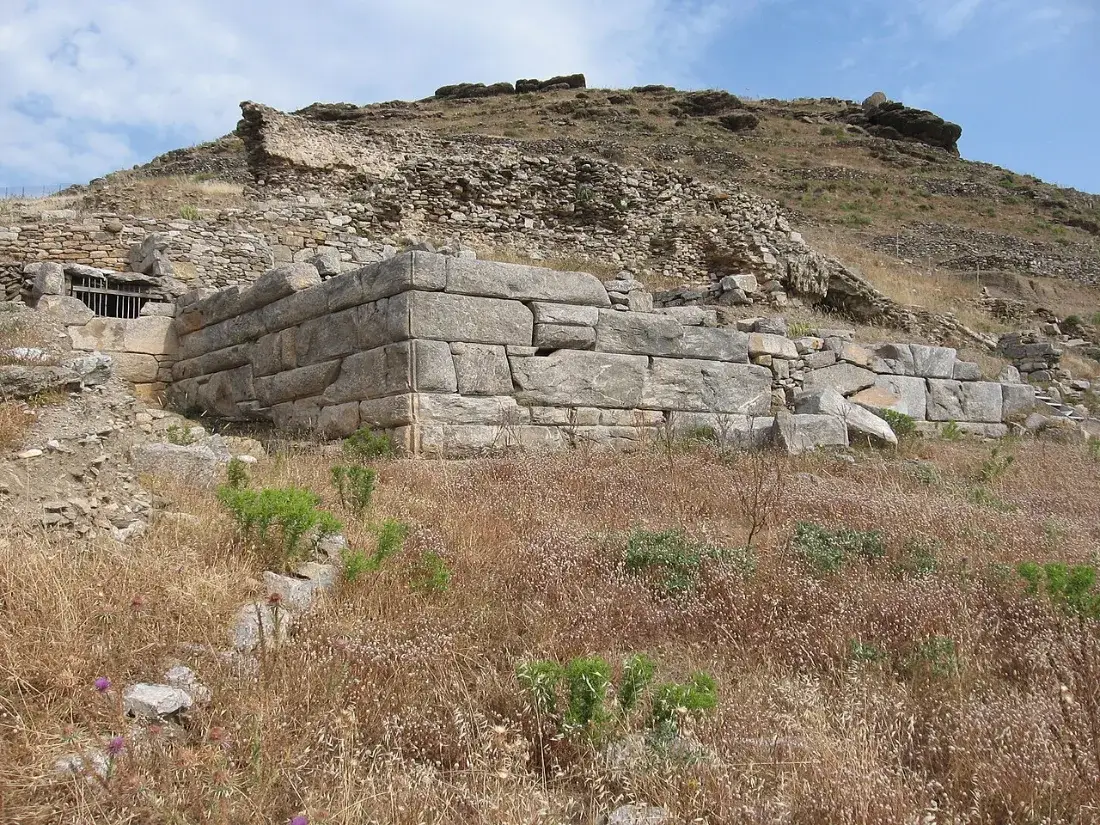
Text and translation
The uninterrupted Greek with its English translation, line by line.
Show text and translation
ἄθυστα δ’ ἱρὰ πολλάκις κατεσθίει
Semonides of Amorgos · frr. 7.56, 24, 25, 26, 27, 16, 8, 9, 11 · text of Athenaeus, Deipnosophistae, ed. Kaibel
How to read each line
A guide to the Greek, syllables, pitch marks and quantities.
Show the reading key
- Above each line: the line as the edition prints it, each word placed over its own syllables. The main row: the same Greek divided into metrical syllables, each written as it is pronounced. A consonant that closes a syllable is written with it (λόθ | ρο); an elided word is closed up with the next vowel (ν’ἀ); a final consonant carried into the next word is set with a thin space (ς ἰ). Wider gaps mark word-ends.
- Above the syllables: the pitch of each syllable, from the accents. Under them: the quantity of each syllable as it falls in the line, then the transliteration, syllable by syllable, with accented syllables in capitals.
- Under each line: a line-for-line translation. In the right margin of the scansion: the line type, its scheme, and its analysis into cola.
Key to the labels
The names, patterns and symbols used beside this poem.
Show the labels and symbols
The labels in the right margin of the scansion below name the line, its scheme, the feet as the line realises them, and the caesurae and diaereses (the named word-ends) that fall in it. In the scheme ⏔ is a biceps, two shorts that may be contracted to one long; ⏕ is a long that may be resolved into two shorts; × is an anceps, long or short. A click on any syllable highlights its metron or colon, or, with the switch, its foot. The sources of the labels, with their page numbers, are given line by line under Prosody, line by line.
| Label | Name and shape | What it is |
|---|---|---|
| hx-m1 | First iambic metron× — ⏑ — | Positions 1–4. The anceps may be long or short. A long may be resolved into two shorts.[6] |
| hx-m2 | Second iambic metron× — ⏑ — | Positions 5–8. The main caesura falls inside it, after position 5 (penthemimeral) or 7 (hephthemimeral).[6] |
| hx-m3 | Third iambic metron× — ⏑ × | Positions 9–12 of the normal trimeter, the last syllable indifferent at period-end.[7] |
| hx-m1end | End of the first metron— | The last position of the first iambic metron (position 4 of the trimeter). The fragment begins here: the first three positions of the line are lost. |
The feet
| Foot and shape | Where |
|---|---|
| First foot× — | Positions 1–2: an iamb or a spondee. Hephaestion’s odd places admit iamb, tribrach, spondee, dactyl and anapaest.[8] |
| Second foot⏑ — | Positions 3–4: an iamb, or a tribrach by resolution. The even places admit iamb, tribrach and anapaest.[8] |
| Third foot× — | Positions 5–6. |
| Fourth foot⏑ — | Positions 7–8. |
| Fifth foot× — | Positions 9–10. In the choliamb Hephaestion admits here “mostly an iamb”, sometimes a spondee, never a trisyllabic foot.[9] |
| Sixth foot⏑ × / — × | Positions 11–12. In the trimeter an iamb or pyrrhic; in the choliamb a spondee or trochee.[9] |
Scansion
Almost all of Semonides that survives outside the long poem on women comes as single lines quoted by Athenaeus for an unusual word. Eleven of those lines and one broken line, scanned syllable by syllable: plain iambic trimeters, with the stop + liquid groups that Semonides, like Archilochus, never leaves short.
and she often eats up offerings that have not been sacrificed …
How I singed the pig and how I cut up the meat
in due ritual form: for I know my business well …
Nobody gave even a ladle of new wine.
He took away from him the table, the cups.
And the Argive cup itself, narrowing towards the lip,
and I anointed myself with perfumes and incense
and baccaris.
like an eel down into the slime.
For a heron found a buzzard eating a Maeander eel
and took it away from him.
like the egg of a goose from the Maeander.
Metre
- The trimeter. The early Ionian iambic poets, Archilochus and Semonides of Amorgos, wrote iambic trimeters, and so did Solon at Athens.[10] Its scheme is × — ⏑ — × — ⏑ — × — ⏑ × ‖, usually with the penthemimeral caesura (after position 5) or, failing that, the hephthemimeral (after position 7).[6] In the early iambus resolution is rare, on average in one line in ten at the most;[11] there is none in these lines. Semonides wrote trimeters and tetrameters but no epodes, and all his trochaic poems are lost.[12]
- Stop + liquid. A short vowel before a stop + liquid or nasal may be scanned short or long; early poets as a rule allow the short scansion only when the group begins a word,[13] and Archilochus and Semonides avoid even that in their iambi.[14] Four lines on this tab put a short final vowel before a word beginning with a stop + liquid, and in every one the syllable stands in a long position and is long: λα κρέα (fr. 24.1), ρα τρυγός (fr. 25), πὸ τράπεζαν (fr. 26), τὰ γλοιοῦ (fr. 8).
- Prosody. A syllable counts as long when its vowel is long or a diphthong, or when a consonant closes it; before a vowel, a consonant at the end of a word is spoken with the following syllable; the rough breathing is not a consonant for this purpose, and ζ ξ ψ count as two.[15] Short final vowels are elided before a vowel.[16] Crasis is a kind of synecphonesis, found most often when a monosyllable such as καί comes first:[17] χὠς (fr. 24.1) and κἠλειφόμην (fr. 16) are written with the coronis. The last syllable of each verse is at period-end and indifferent.[18]
- Ionic forms. Semonides writes Ionic: ἱρά and ἱρωστί for ἱερά, ἱερωστί (in the contracted form ἱρός the ι is always long)[19], Ἀργείη and Μαιανδρίην with η for ᾱ (the Ionic change of ᾱ to η)[20], ὤεον for ᾠόν.[21]
- Numbers and attribution. Athenaeus calls the poet Σιμωνίδης, and once Σημωνίδης (7.54). He says “the Amorgian” for frr. 26 and 27, “in the Iambi” for frr. 8 and 26, “in the second book of Iambi” for fr. 11, and introduces fr. 7.56 as Simonides’ words “about the disorderly woman”. The fragment numbers are Kaibel’s references to Bergk’s edition; LSJ cites frr. 7.56, 9, 16, 25 and 27 under the same numbers as “Semon.” (s.vv. ἄθυστος, ἐρωδιός, θύωμα, ἀρυστήρ, φοξίχειλος), and Lennartz cites frr. 8, 9 and 24 under them too.[22] Fr. 8 has no number in Kaibel’s note, which refers to the page of Bergk’s edition.
- Vowel lengths. The ι of ἱρά and ἱρωστί is marked long,[23] and the final ι of βακκάρῑ;[24] the short ι of φοξίχειλος and τρίορχον and the short υ of μύροισι and θυώμασι are marked short;[25] the Greek text is shown without these added length marks, which are not Kaibel’s. The other doubtful vowels are left to the metre or the accent, and the reason given for each syllable says which; in an anceps position, where either length scans, the page draws them ○.
Prosody, line by line
Every syllable, with the reason for its length. Quantities are read from the vowel where the spelling shows it, from the consonants that follow (“position”), from the accent where it tells, and from the metre where nothing else does. Editors’ notes on the text follow in the boxed paragraphs.
- 7.56
Line 7.56 · ἄθυστα δ’ ἱρὰ πολλάκις κατεσθίει ....
ἄθυστα δ’ ἱρὰ πολλάκις κατεσθίει ....
ἄθυσταδ’ἱρὰπολλάκιςκατεσθίειpenthemimeral caesura.
The label in the margin, with its sources: (West 1987, p. 25).
- 1 ⏑ἄᾰ̓́ is short (its length is not shown by the ordinary spelling); the position is anceps.
- 2 —θυσυ is a vowel of unknown length; closed by σ: long by position.
- 3 ⏑ταα is short by the accent rule: acute on the antepenult requires a short final syllable.
- 4 —δ’ἱἱ̄ is long (its length is not shown by the ordinary spelling); the apostrophe marks an elided vowel; the consonant before it joins this syllable.
- 5 ⏑ρὰᾰ̀ is short (its length is not shown by the ordinary spelling); the position is anceps.
- 6 —πολο is short by nature; closed by λ: long by position.
- 7 ⏑λάά is short by the metre (position 7 must be short).
- 8 —κιςι is a vowel of unknown length; closed by ς: long by position.
- 9 ⏑καᾰ is short (its length is not shown by the ordinary spelling); the position is anceps.
- 10 —τεσε is short by nature; closed by σ: long by position.
- 11 ⏑θίί is short by the metre (position 11 must be short).
- 12 ×ειει is a diphthong, long by nature; the position is anceps.
fr. 7.56, from Semonides’ longest poem, on the kinds of women and the animals they come from.[26] Athenaeus quotes the line of the “disorderly woman” to contrast Epicurus’ feasts, at which nothing is offered to the gods; Kaibel marks the break after it with dots. LSJ cites the line for ἄθυστος, “unsacrificed” (s.v. ἄθυστος). δ’ is elided before ἱρά[16] and its consonant joins the next syllable.[27] The ι of ἱρά is long: in the contracted Ionic form ἱρός it always is, and LSJ cites this very line (s.v. ἱερός). In πολλάκις the κις is closed by ς before κ, and τεσ by σ before θ.[27] Penthemimeral caesura after ἱρά.[6]
The ᾰ of ἄθυστα is short;[28] the metre does not show it here, and the input marks it. The ᾰ of ἱρὰ is short;[29] the metre does not show it here, and the input marks it. The ᾰ of κατεσθίει is short;[30] the metre does not show it here, and the input marks it.
- 24.1
Line 24.1 · ὗν ὡς ἄφευσα χὠς ἐμίστυλα κρέα
ὗν ὡς ἄφευσα χὠς ἐμίστυλα κρέα
ὗνὡςἄφευσαχὠςἐμίστυλακρέαpenthemimeral caesura.
The label in the margin, with its sources: (West 1987, p. 25).
- 1 —ὗνὗ carries a circumflex, so it is long; the position is anceps.
- 2 —ὡςὡ is long by nature.
- 3 ⏑ἄἄ is short by the metre (position 3 must be short).
- 4 —φευευ is a diphthong, long by nature.
- 5 ⏑σαα is short by the accent rule: acute on the antepenult requires a short final syllable; the position is anceps.
- 6 —χὠςὠ is long by nature.
- 7 ⏑ἐἐ is short by nature.
- 8 —μίσί is a vowel of unknown length; closed by σ: long by position.
- 9 —τυῡ is long (its length is not shown by the ordinary spelling); the position is anceps.
- 10 —λαα is short by the accent rule (the accent falls too far back for a long final syllable); the next word begins with κρ: the syllable is closed before it: long by position.
- 11 ⏑κρέέ is short by nature.
- 12 ×αα is of unknown length; the position is anceps, so either scans.
fr. 24.1. A cook, it seems, boasts of his skill at a sacrifice: Athenaeus quotes the lines in a discussion of cooks who know the rites, saying only “in Simonides another says”. Lennartz counts fr. 24 among Semonides’ narrations by speakers of lower rank.[31] ἄφευσα is the aorist of ἀφεύω, “singe off”;[32] ἐμίστυλα of μιστύλλω, the Homeric verb for cutting up meat.[33] χὠς is crasis of καὶ ὡς.[17] ὡς is long by its vowel; its σ goes with ἄ-.[27] In ἐμίστυλα the α is short (the acute on the antepenult shows it), but the next word begins with κρ and the syllable stands in the long tenth position: Semonides does not leave a syllable short before stop + liquid even at the beginning of a word.[14] Penthemimeral caesura after ἄφευσα.[6]
Gerber prints Schneidewin’s and Bergk’s κὠς ⟨ὗν⟩ ἀπεῦσα κὠς; the manuscript has χως ἄφευσα χως.[34] The scansion is the same.
The ῡ of ἐμίστυλα is long;[35] the metre does not show it here, and the input marks it.
- 24.2
Line 24.2 · ἱρωστί· καὶ γὰρ οὐ κακῶς ἐπίσταμαι ...
ἱρωστί· καὶ γὰρ οὐ κακῶς ἐπίσταμαι ...
ἱρωστί·καὶγὰρ οὐκακῶςἐπίσταμαιpenthemimeral caesura.
The label in the margin, with its sources: (West 1987, p. 25).
- 1 —ἱἱ̄ is long (its length is not shown by the ordinary spelling); the position is anceps.
- 2 —ρωσω is long by nature; closed by σ: long by position.
- 3 ⏑τί·ί is short by the metre (position 3 must be short).
- 4 —καὶαὶ is a diphthong, long by nature.
- 5 ⏑γὰᾰ̀ is short (its length is not shown by the ordinary spelling); the position is anceps.
- 6 —ρ οὐοὐ is a diphthong, long by nature; the first consonant belongs to the previous word and is carried over to this vowel.
- 7 ⏑καα is short by the metre (position 7 must be short).
- 8 —κῶςῶ is long by nature.
- 9 ⏑ἐἐ is short by nature; the position is anceps.
- 10 —πίσί is a vowel of unknown length; closed by σ: long by position.
- 11 ⏑ταα is short by the metre (position 11 must be short).
- 12 ×μαιαι is a diphthong, long by nature; the position is anceps.
fr. 24.2. ἱρωστί is the Ionic form of ἱερωστί, “in due (sacred) form”;[36] its ι is long, as in ἱρός,[23] though it stands here in anceps. The ρ of γὰρ goes with οὐ,[27] so γά is short (fifth position, anceps), and the penthemimeral caesura falls after γάρ.[6] Kaibel marks with dots that the quotation breaks off.
The ᾰ of γὰρ is short (the metre: γάρ fills a position that must be short in OT 62 and Medea 17, both on this site); the metre does not show it here, and the input marks it.
- 25
Line 25 · ἔδωκεν οὐδεὶς οὐδ’ ἀρυστῆρα τρυγός.
ἔδωκεν οὐδεὶς οὐδ’ ἀρυστῆρα τρυγός.
ἔδωκεν οὐδεὶςοὐδ’ἀρυστῆρατρυγός.penthemimeral caesura.
The label in the margin, with its sources: (West 1987, p. 25).
- 1 ⏑ἔἔ is short by nature; the position is anceps.
- 2 —δωω is long by nature.
- 3 ⏑κεε is short by nature.
- 4 —ν οὐοὐ is a diphthong, long by nature; the first consonant belongs to the previous word and is carried over to this vowel.
- 5 —δεὶςεὶ is a diphthong, long by nature; the position is anceps.
- 6 —οὐοὐ is a diphthong, long by nature.
- 7 ⏑δ’ἀἀ is short by the metre (position 7 must be short); the apostrophe marks an elided vowel; the consonant before it joins this syllable.
- 8 —ρυσυ is a vowel of unknown length; closed by σ: long by position.
- 9 —τῆῆ is long by nature; the position is anceps.
- 10 —ραα is short by the accent rule (the accent falls too far back for a long final syllable); the next word begins with τρ: the syllable is closed before it: long by position.
- 11 ⏑τρυυ is short by the metre (position 11 must be short).
- 12 ×γός.ό is short by nature; closed by ς: long by position; the position is anceps.
fr. 25, quoted by Athenaeus for ἀρυστήρ, a ladle or cup for drawing wine.[37] τρύξ is new wine, must.[38] The ν of ἔδωκεν goes with οὐδείς,[27] so κε is short. οὐδ’ is elided.[16] The α of ἀρυστῆρα is short (accent rule), but the syllable is closed before the τρ of τρυγός and fills the long tenth position.[14] Penthemimeral caesura after οὐδείς.[6]
- 26
Line 26 · ἀπὸ τράπεζαν εἷλέ νιν ποτήρια.
ἀπὸ τράπεζαν εἷλέ νιν ποτήρια.
ἀπὸτράπεζαν εἷλένινποτήρια.penthemimeral caesura; hephthemimeral caesura.
The label in the margin, with its sources: (West 1987, p. 25).
- 1 ⏑ἀᾰ̓ is short (its length is not shown by the ordinary spelling); the position is anceps.
- 2 —πὸὸ is short by nature; the next word begins with τρ: the syllable is closed before it: long by position.
- 3 ⏑τράά is short by the metre (position 3 must be short).
- 4 —πεε is short by nature; ζ is a double consonant (two sounds) and closes the syllable: long by position.
- 5 ⏑ζαα is short by the accent rule: acute on the antepenult requires a short final syllable; the position is anceps.
- 6 —ν εἷεἷ is a diphthong, long by nature; the first consonant belongs to the previous word and is carried over to this vowel.
- 7 ⏑λέέ is short by nature.
- 8 —νινι is a vowel of unknown length; closed by ν: long by position.
- 9 ⏑ποο is short by nature; the position is anceps.
- 10 —τήή is long by nature.
- 11 ⏑ριι is short by the metre (position 11 must be short).
- 12 ×α.α is short by the accent rule: acute on the antepenult requires a short final syllable; the position is anceps.
fr. 26. Athenaeus says that Simonides “the Amorgian” is the first he knows to have used the word ποτήρια, “cups”, “in the Iambi”. ἀπὸ … εἷλε is ἀφεῖλε in tmesis, “took away”, with νιν (Ionic, “him” or “her”) and the things taken as objects; τράπεζαν and ποτήρια stand side by side without a connective. The ὸ of ἀπό, short by nature, is closed before the τρ of τράπεζαν and fills the long second position.[14] ζ counts as two consonants, so πε is long.[39] The scanner reports a hephthemimeral caesura after εἷλέ as well as the penthemimeral after τράπεζαν, but νιν is an enclitic and belongs with εἷλε, so the only real break is the penthemimeral (“postpositives” count with the preceding word: West 1987, p. 21, of word-end in the hexameter).
Gerber obelizes νιν as corrupt.[40]
The ᾰ of ἀπὸ is short;[41] the metre does not show it here, and the input marks it.
- 27
Line 27 · αὐτὴ δὲ φοξίχειλος Ἀργείη κύλιξ,
αὐτὴ δὲ φοξίχειλος Ἀργείη κύλιξ,
αὐτὴδὲφοξίχειλος Ἀργείηκύλιξ,hephthemimeral caesura.
The label in the margin, with its sources: (West 1987, p. 25).
- 1 —αὐαὐ is a diphthong, long by nature; the position is anceps.
- 2 —τὴὴ is long by nature.
- 3 ⏑δὲὲ is short by nature.
- 4 —φοο is short by nature; ξ is a double consonant (two sounds) and closes the syllable: long by position.
- 5 ⏑ξίῐ́ is short (its length is not shown by the ordinary spelling); the position is anceps.
- 6 —χειει is a diphthong, long by nature.
- 7 ⏑λοο is short by nature.
- 8 —ς ἈρἈ is a vowel of unknown length; closed by ρ: long by position; the first consonant belongs to the previous word and is carried over to this vowel.
- 9 —γείεί is a diphthong, long by nature; the position is anceps.
- 10 —ηη is long by nature.
- 11 ⏑κύύ is short by the metre (position 11 must be short).
- 12 ×λιξ,ι is a vowel of unknown length; closed by ξ: long by position; the position is anceps.
fr. 27. Athenaeus explains that Argive cups were φοξαί “at the lip”, pointed or narrowing (the ι of -ξι- is short)[42]. ξ counts as two consonants, so φοξ- is long.[39] The σ of φοξίχειλος goes with Ἀργείη.[27] Ἀργείη is the Ionic form of Ἀργεία (ᾱ becomes η in Ionic)[20]. No word ends after the fifth position, so the caesura is hephthemimeral, after φοξίχειλος.[6]
Gerber prints αὕτη δὲ φοξὴ χεῖλος, from one manuscript of the Homer scholia, and lists φοξίχειλος in the other sources.[40] With it the fifth syllable is long; it stands in an anceps.
- 16.1
Line 16.1 · κἠλειφόμην μύροισι καὶ θυώμασι
κἠλειφόμην μύροισι καὶ θυώμασι
κἠλειφόμηνμύροισικαὶθυώμασιhephthemimeral caesura.
The label in the margin, with its sources: (West 1987, p. 25).
- 1 —κἠἠ is long by nature; the position is anceps.
- 2 —λειει is a diphthong, long by nature.
- 3 ⏑φόό is short by nature.
- 4 —μηνη is long by nature; closed by ν: long by position.
- 5 ⏑μύῠ́ is short (its length is not shown by the ordinary spelling); the position is anceps.
- 6 —ροιοι is a diphthong, long by nature.
- 7 ⏑σιι is short by the accent rule: acute on the antepenult requires a short final syllable.
- 8 —καὶαὶ is a diphthong, long by nature.
- 9 ⏑θυῠ is short (its length is not shown by the ordinary spelling); the position is anceps.
- 10 —ώώ is long by nature.
- 11 ⏑μαα is short by the metre (position 11 must be short).
- 12 ×σιι is short by the accent rule: acute on the antepenult requires a short final syllable; the position is anceps.
fr. 16, an erotic narration according to Lennartz.[31] κἠλειφόμην is crasis of καὶ ἠλειφόμην, “and I anointed myself”.[17] The υ of μύροισι is short;[43] θυώματα are spices or incense.[44] Hephthemimeral caesura after μύροισι.[6]
Gerber prints κἀλειφόμην μύροισι καὶ θυώμασιν, from Clement, with Athenaeus’ κἠλειφόμην in his apparatus; his line 2 continues καὶ γάρ τις ἔμπορος παρῆν.[45]
- 16.2
Line 16.2 · καὶ βακκάρι.
καὶ βακκάρι.
καὶβακκάρι.- 1 —καὶαὶ is a diphthong, long by nature; the position is anceps.
- 2 —βακα is a vowel of unknown length; closed by κ: long by position.
- 3 ⏑κάά is short by the metre (position 3 must be short).
- 4 ×ρι.ῑ is long (its length is not shown by the ordinary spelling).
fr. 16 continued: the next trimeter begins καὶ βακκάρι, “and with baccaris”, and Athenaeus stops there. βάκκαρις is an unguent, a Lydian word; LSJ notes that this line has the dative βακκάρῑ with a long ι (s.v. βάκκαρις), so the four syllables fill positions 1–4, × — ⏑ —. The × at the end of the scheme is only the workbench’s mark for the end of a quoted piece: the verse went on.
- 8
Line 8 · ὥσπερ ἔγχελυς κατὰ γλοιοῦ.
ὥσπερ ἔγχελυς κατὰ γλοιοῦ.
ὥσπερ ἔγχελυςκατὰγλοιοῦ.word-end after position 5 of the trimeter (penthemimeral).
- 1 —ὥσὥ is long by nature; closed by σ: long by position.
- 2 ⏑πεε is short by nature; the position is anceps.
- 3 —ρ ἔγἔ is short by nature; closed by γ: long by position; the first consonant belongs to the previous word and is carried over to this vowel.
- 4 ⏑χεε is short by nature.
- 5 —λυςυ is a vowel of unknown length; closed by ς: long by position.
- 6 ⏑καᾰ is short (its length is not shown by the ordinary spelling); the position is anceps.
- 7 —τὰὰ is a vowel of unknown length; the next word begins with γλ: the syllable is closed before it: long by position.
- 8 ⏑γλοιοι is a diphthong, long by nature; the diphthong is shortened before the vowel that follows it inside the word, as the metre requires (internal correption, frequent in Attic verse with words containing αι and οι)[46].
- 9 ×οῦ.οῦ is a diphthong, long by nature; the position is anceps.
fr. 8, quoted by Athenaeus for the nominative ἔγχελυς, “eel”; Lennartz reads it as vulgar imagery in an erotic sense.[26] The nine syllables are not a whole trimeter: they fit its last nine positions (4–12), so the first three are lost. γλοιός is any sticky substance, and the oil and dirt scraped off the skin.[47] The ρ of ὥσπερ goes with ἔγχελυς.[27] The final α of κατά is short, but before the γλ of γλοιοῦ it is closed and fills a long position, as Semonides’ practice requires.[14] In γλοιοῦ the diphthong οι stands before a vowel inside the word and is short: correption within the word, a tendency “most prominent in Ionic”.[46] Word-end after ὥσπερ corresponds to the penthemimeral caesura of a whole line.[6]
The ᾰ of κατὰ is short;[41] the metre does not show it here, and the input marks it.
- 9.1
Line 9.1 · ἐρῳδιὸς γὰρ ἔγχελυν Μαιανδρίην
ἐρῳδιὸς γὰρ ἔγχελυν Μαιανδρίην
ἐρῳδιὸςγὰρ ἔγχελυνΜαιανδρίηνpenthemimeral caesura.
The label in the margin, with its sources: (West 1987, p. 25).
- 1 ⏑ἐἐ is short by nature; the position is anceps.
- 2 —ρῳῳ is long by nature.
- 3 ⏑διι is short by the metre (position 3 must be short).
- 4 —ὸςὸ is short by nature; closed by ς: long by position.
- 5 ⏑γὰᾰ̀ is short (its length is not shown by the ordinary spelling); the position is anceps.
- 6 —ρ ἔγἔ is short by nature; closed by γ: long by position; the first consonant belongs to the previous word and is carried over to this vowel.
- 7 ⏑χεε is short by nature.
- 8 —λυνυ is a vowel of unknown length; closed by ν: long by position.
- 9 —Μαιαι is a diphthong, long by nature; the position is anceps.
- 10 —ανα is a vowel of unknown length; closed by ν: long by position.
- 11 ⏑δρίί is short by the metre (position 11 must be short).
- 12 ×ηνη is long by nature; closed by ν: long by position; the position is anceps.
fr. 9.1, an animal fable,[26] quoted by Athenaeus for the accusative ἔγχελυν. ἐρωδιός is the heron.[48] The ρ of γάρ goes with ἔγχελυν,[27] so γά is short (fifth position, anceps) and the penthemimeral caesura falls after γάρ.[6] In Μαιανδρίην, “from the Maeander”, Ionic for -ίαν, the first syllable stands in anceps, and the ι of -δρι- is short.
The ᾰ of γὰρ is short (the metre: γάρ fills a position that must be short in OT 62 and Medea 17, both on this site); the metre does not show it here, and the input marks it.
- 9.2
Line 9.2 · τρίορχον εὑρὼν ἐσθίοντ’ ἀφείλετο.
τρίορχον εὑρὼν ἐσθίοντ’ ἀφείλετο.
τρίορχον εὑρὼνἐσθίοντ’ἀφείλετο.penthemimeral caesura.
The label in the margin, with its sources: (West 1987, p. 25).
- 1 ⏑τρίῐ́ is short (its length is not shown by the ordinary spelling); the position is anceps.
- 2 —ορο is short by nature; closed by ρ: long by position.
- 3 ⏑χοο is short by nature.
- 4 —ν εὑεὑ is a diphthong, long by nature; the first consonant belongs to the previous word and is carried over to this vowel.
- 5 —ρὼνὼ is long by nature; the position is anceps.
- 6 —ἐσἐ is short by nature; closed by σ: long by position.
- 7 ⏑θίί is short by the metre (position 7 must be short).
- 8 —ονο is short by nature; closed by ν: long by position.
- 9 ⏑τ’ἀᾰ̓ is short (its length is not shown by the ordinary spelling); the apostrophe marks an elided vowel; the consonant before it joins this syllable; the position is anceps.
- 10 —φείεί is a diphthong, long by nature.
- 11 ⏑λεε is short by nature.
- 12 ×το.ο is short by nature; the position is anceps.
fr. 9.2. The τρίορχος is a kind of hawk, perhaps the buzzard;[49] its first ι is short.[50] The ν of τρίορχον goes with εὑρών,[27] so χο is short. ἐσθίοντ’ is elided before ἀφείλετο;[16] its ν closes the syllable before τ’. Penthemimeral caesura after εὑρών.[6]
Gerber prints Fick’s ἀπείλετο; the manuscript of Athenaeus has ἀφείλετο.[51]
The ᾰ of ἀφείλετο is short;[52] the metre does not show it here, and the input marks it.
- 11
Line 11 · οἷόν τε χηνὸς ὤεον Μαιανδρίου.
οἷόν τε χηνὸς ὤεον Μαιανδρίου.
οἷόντεχηνὸς ὤεονΜαιανδρίου.penthemimeral caesura.
The label in the margin, with its sources: (West 1987, p. 25).
- 1 —οἷοἷ is a diphthong, long by nature; the position is anceps.
- 2 —όνό is short by nature; closed by ν: long by position.
- 3 ⏑τεε is short by nature.
- 4 —χηη is long by nature.
- 5 ⏑νὸὸ is short by nature; the position is anceps.
- 6 —ς ὤὤ is long by nature; the first consonant belongs to the previous word and is carried over to this vowel.
- 7 ⏑εε is short by nature.
- 8 —ονο is short by nature; closed by ν: long by position.
- 9 —Μαιαι is a diphthong, long by nature; the position is anceps.
- 10 —ανα is a vowel of unknown length; closed by ν: long by position.
- 11 ⏑δρίί is short by the metre (position 11 must be short).
- 12 ×ου.ου is a diphthong, long by nature; the position is anceps.
fr. 11, which Athenaeus quotes from “the second book of Iambi” for the form ὤεον, Ionic for ᾠόν, “egg”.[21] Μαιανδρίου agrees with χηνός: a goose of the Maeander. The ν of οἷον closes its syllable before τ; the σ of χηνός goes with ὤεον,[27] so νό is short (fifth position, anceps). Penthemimeral caesura after χηνός.[6] The οι of οἷον and the αι of Μαιανδρίου, both before a vowel inside the word, stand in anceps positions, so their length does not affect the metre (correption within the word: p. 14).
Notes
- ^ Carey 2009, p. 160; Lennartz 2022, p. 213.
- ^ Carey 2009, p. 160; Lennartz 2022, p. 213 with n. 37; Bowie 2022, p. 303.
- ^ Lennartz 2022, pp. 213, 215.
- ^ Lennartz 2022, p. 214.
- ^ Carey 2009, p. 160; Lennartz 2022, pp. 213–214.
- ^ a b c d e f g h i j k l m West 1987, p. 25.
- ^ West 1987, pp. 4, 25.
- ^ a b Hephaestion, Ench. 5.1.
- ^ a b Hephaestion, Ench. 5.4.
- ^ West 1987, p. 24.
- ^ West 1987, p. 25; Battezzato 2009, p. 136, also calls it very rare in the early iambic poets.
- ^ Lennartz 2022, pp. 213, 215.
- ^ West 1987, p. 16.
- ^ a b c d e West 1987, p. 16 n. 7.
- ^ West 1987, p. 12 with n. 1.
- ^ a b c d West 1987, p. 13.
- ^ a b c West 1987, pp. 14–15.
- ^ West 1987, p. 4.
- ^ LSJ s.vv. ἱερός, ἱρωστί; LSJ s.v. ἱερός, citing this line of fr. 7.
- ^ a b de Kreij 2022, p. 152.
- ^ a b LSJ s.v. ὤεον.
- ^ Lennartz 2022, pp. 213–214.
- ^ a b LSJ s.v. ἱερός.
- ^ LSJ s.v. βάκκαρις.
- ^ LSJ s.vv. φοξίχειλος, τρίορχος, μύρον, θύωμα.
- ^ a b c Lennartz 2022, p. 214.
- ^ a b c d e f g h i j West 1987, p. 12.
- ^ LSJ s.v. ἀ-: privative ἀ- is ᾰ.
- ^ West 1987, p. 11: -ᾰ of the neuter plural.
- ^ West 1987, p. 11: all prepositions have short vowels, here κατά.
- ^ a b Lennartz 2022, p. 213.
- ^ LSJ s.v. ἀφεύω, which cites Semonides for the form.
- ^ LSJ s.v. μιστύλλω.
- ^ Gerber 1999b, p. 328.
- ^ LSJ s.v. μιστύλλω: aor. ἐμίστῡλα, citing Semon. 24.
- ^ LSJ s.v. ἱρωστί.
- ^ LSJ s.v. ἀρυστήρ, citing “Semon. 25”.
- ^ LSJ s.v. τρύξ.
- ^ a b West 1987, p. 12 n. 1.
- ^ a b Gerber 1999b, p. 330.
- ^ a b West 1987, p. 11: all prepositions have short vowels.
- ^ LSJ s.v. φοξίχειλος, “narrowing towards the lip”, citing this line.
- ^ LSJ s.v. μύρον [ῠ].
- ^ LSJ s.v. θύωμα, citing “Semon. 16”.
- ^ Gerber 1999b, p. 322.
- ^ a b West 1987, p. 14.
- ^ LSJ s.v. γλοιός.
- ^ LSJ s.v. ἐρωδιός, citing “Semon. 9”.
- ^ LSJ s.vv. τρίορχος, citing “Semon. 9”, and τριόρχης.
- ^ LSJ.
- ^ Gerber 1999b, p. 314.
- ^ West 1987, p. 11: all prepositions have short vowels, here ἀπό.
Text and sources
- Text: Athenaeus, Deipnosophistae 2.50 (57d), 5.7 (179d), 7.54 (299c), 10.23 (424c), 11.2 (460b), 11.60 (480d), 14.78 (659f), 15.41 (690c), ed. G. Kaibel (Leipzig 1887–1890), Perseus Digital Library (tlg0008.tlg001.perseus-grc3), CC BY-SA 4.0; checked letter by letter. Kaibel’s dots after frr. 7.56 and 24.2 are kept.
- Metre and prosody: M. L. West, Introduction to Greek Metre (Oxford 1987), pp. 4, 12–16 (with p. 16 n. 7), 21, 24–25, checked against the page images.
- K. Lennartz, ‘Iambos’, ch. 14, and M. de Kreij, ‘The Lyric Dialects’, ch. 10, in L. Swift (ed.), A Companion to Greek Lyric (Wiley 2022), pp. 213–215 and 152.
- L. Battezzato, ‘Metre and music’, in F. Budelmann (ed.), The Cambridge Companion to Greek Lyric (Cambridge 2009), ch. 7, p. 136 (resolution in early iambus).
- Meanings, forms and quantities: Liddell–Scott–Jones, Greek–English Lexicon, Perseus Digital Library (CC BY-SA), s.vv. ἄθυστος, ἀρυστήρ, ἀφεύω, βάκκαρις, γλοιός, ἐρωδιός, θύωμα, ἱερός, ἱρωστί, μιστύλλω, μύρον, τρίορχος, τριόρχης, τρύξ, φοξίχειλος, ὤεον.
- D. E. Gerber, Greek Iambic Poetry from the Seventh to the Fifth Centuries BC (Loeb Classical Library 259, Cambridge, MA 1999), Semonides frr. 7.56 (p. 308), 8–9 (p. 314), 11 (p. 318), 16 (p. 322), 24 (p. 328), 25–27 (p. 330), compared; his numbers are West’s and those used here.
Quotations from copyrighted works are not covered by this page’s licence.
Solon: trochaic tetrameters (fr. 34)
Synopsis
Like Archilochus, Solon of Athens composed both elegies and iambic poems. But his surviving iambics use only the iambic trimeter and the closely related trochaic tetrameter, and only for political self-justification.[1] Hornblower takes the iambic poem 37 W as the type. Solon began Athenian democracy in the early sixth century. In this poem he claims that no one but he could have restrained the demos. The oligarchs of 403 echoed the boast on Critias’ monument.[2] The content of the iambics places them after his archonship, traditionally dated 594/3 BC. It places them after the laws he then gave Athens. Among these was the “shaking-off of burdens” (seisachtheia), which freed many Athenians from some form of servitude tied to the land.[3] Bowie suggests that they were first sung at symposia of like-minded friends, and spread from there. He does not rule out performance at a formal political meeting. Elsewhere he argues for a more formal setting for the tetrameters than for the trimeters.[4] Both poems scanned on this page come from the Aristotelian Constitution of the Athenians.
Fr. 34 is nine trochaic tetrameters (Ath. Pol. 12.3). It answers the men who came “for plunder”, hoping he would share out the land. It refuses to act by the force of tyranny. It may belong to the same poem as frr. 32 and 33.[3]
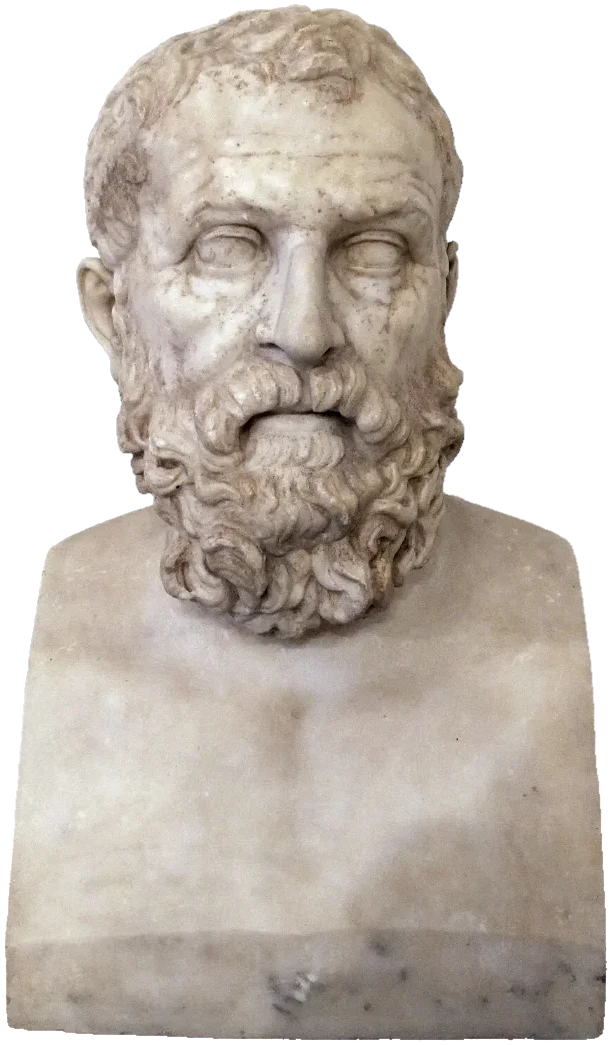
Text and translation
The uninterrupted Greek with its English translation, line by line.
Show text and translation
οἳ δʼ ἐφʼ ἁρπαγαῖσιν ἦλθον, ἐλπίδʼ εἶχον ἀφνεάν,
Solon · fr. 34 · text of the Athenaion Politeia 12.3, ed. Kenyon
How to read each line
A guide to the Greek, syllables, pitch marks and quantities.
Show the reading key
- Above each line: the line as the edition prints it, each word placed over its own syllables. The main row: the same Greek divided into metrical syllables, each written as it is pronounced. A consonant that closes a syllable is written with it (λόθ | ρο); an elided word is closed up with the next vowel (ν’ἀ); a final consonant carried into the next word is set with a thin space (ς ἰ). Wider gaps mark word-ends.
- Above the syllables: the pitch of each syllable, from the accents. Under them: the quantity of each syllable as it falls in the line, then the transliteration, syllable by syllable, with accented syllables in capitals.
- Under each line: a line-for-line translation. In the right margin of the scansion: the line type, its scheme, and its analysis into cola.
Key to the labels
The names, patterns and symbols used beside this poem.
Show the labels and symbols
The labels in the right margin of the scansion below name the line, its scheme, the feet as the line realises them, and the caesurae and diaereses (the named word-ends) that fall in it. In the scheme ⏔ is a biceps, two shorts that may be contracted to one long; ⏕ is a long that may be resolved into two shorts; × is an anceps, long or short. A click on any syllable highlights its metron or colon, or, with the switch, its foot. The sources of the labels, with their page numbers, are given line by line under Prosody, line by line.
| Label | Name and shape | What it is |
|---|---|---|
| hx-t1 | First trochaic metron— ⏑ — × | Positions 1–4. The longs may be resolved.[5] |
| hx-t2 | Second trochaic metron— ⏑ — × | Positions 5–8. Word-end follows it: the caesura that divides the tetrameter in two.[5] |
| hx-t3 | Third trochaic metron— ⏑ — × | Positions 9–12. |
| hx-tcat | Catalectic close— ⏑ × | Positions 13–15: the last metron of the tetrameter lacks its final position (catalexis), — ⏑ —, the last syllable indifferent at period-end.[6] |
The feet
| Foot and shape | Where |
|---|---|
| Trochee— ⏑ / — × | One trochaic foot; its long may be resolved (a tribrach) and, in the even feet, the second syllable may be long (a spondee).[7] |
| Seventh foot— ⏑ | Positions 13–14: a trochee. Hephaestion: in the catalectic tetrameter the penultimate foot is mostly a trochee, sometimes a tribrach.[7] |
| Final syllable× | Position 15, indifferent at period-end.[8] |
Scansion
Nine trochaic tetrameters in which Solon answers the men who expected him to redistribute the land: the metre Archilochus had used, here for political self-justification. Every line keeps the word-end after the second metron, and there is not a single resolution.
But those who came for plunder had rich hopes,
and each of them thought he would find great wealth,
and that I, for all my smooth coaxing, would show a harsh mind.
Empty were their thoughts then; now, angry with me,
they all look askance at me with their eyes, as at an enemy.
That is not right: what I said, with the gods I accomplished,
and the rest I did not do in vain. Nor does it please me
to do anything by the force of tyranny, nor that of the rich soil
of our fatherland the noble should have an equal share with the base.
Metre
- The trochaic tetrameter catalectic. West’s scheme is — ⏑ — × — ⏑ — × | — ⏑ — × ⁝ — ⏑ — ‖: in effect an iambic trimeter with — ⏑ — set before it, as Battezzato too brings out by printing the two lines one above the other.[9] Archilochus and Solon used it, and drama took it over.[5] The normal caesura is the word-end after the second metron:[10] every line of fr. 34 has it, marked in the margin as a diaeresis. The first six princeps positions can be resolved;[5] Solon resolves none here. Hephaestion: in the catalectic tetrameter the penultimate foot is mostly a trochee, sometimes a tribrach.[7]
- Porson’s and Havet’s laws. Early iambus and tragedy apply Porson’s Law to the close of the tetrameter just as to the trimeter, and a matching rule, Havet’s Law, to its opening: they shun — ⏑ — — | in the first metron.[5] Solon keeps both: where the fourth position is long (κωτίλλοντα, ὀφθαλμοῖσ’, ll. 3, 5) the word runs on past it, and where the twelfth is long (εὑρήσειν, πιείρας, ll. 2, 8) the word runs on to the end of the line.
- Solon’s iambi. Solon’s surviving iambic poems use only the iambic trimeter and the closely related trochaic tetrameter catalectic, and are confined to political self-justification; fr. 34, nine lines, may come from the same tetrameter poem as frr. 32 and 33, and attacks his critics after his archonship and laws.[11] Bowie thinks the iambics may have been performed in symposia, though a formal political meeting cannot be ruled out.[12]
- Prosody. A syllable counts as long when its vowel is long or a diphthong, or when a consonant closes it; before a vowel, a consonant at the end of a word is spoken with the following syllable; ζ ξ ψ count as two consonants.[13] Short final vowels are elided.[14] Inside a word a stop + liquid makes position in early poetry:[15] ἐφ-ράσαντο (l. 4), πατ-ρίδος (l. 9). The last position of each line is indifferent at period-end.[8]
- Vowel lengths. Three vowels whose length the spelling does not show are marked long from LSJ: τρᾱχύν (l. 3)[16], πῑείρας (l. 8)[17] and ῑσομοιρίαν (l. 9)[18]. These vowel lengths follow LSJ; the Greek text is shown without the added length marks, which are not Kenyon’s. The diaeresis in δήϊον (l. 5) separates ηι into two syllables, as the metre requires; Kenyon prints δήιον.
Prosody, line by line
Every syllable, with the reason for its length. Quantities are read from the vowel where the spelling shows it, from the consonants that follow (“position”), from the accent where it tells, and from the metre where nothing else does. Editors’ notes on the text follow in the boxed paragraphs.
- 34.1
Line 34.1 · οἳ δʼ ἐφʼ ἁρπαγαῖσιν ἦλθον, ἐλπίδʼ εἶχον ἀφνεάν,
οἳ δʼ ἐφʼ ἁρπαγαῖσιν ἦλθον, ἐλπίδʼ εἶχον ἀφνεάν,
οἳδ’ἐφ’ἁρπαγαῖσιν ἦλθο,ν ἐλπίδ’εἶχον ἀφνεάν,diaeresis after the second metron.
The label in the margin, with its sources: (West 1987, p. 28).
- 1 —οἳοἳ is a diphthong, long by nature.
- 2 ⏑δ’ἐἐ is short by nature; the apostrophe marks an elided vowel; the consonant before it joins this syllable.
- 3 —φ’ἁρἁ is a vowel of unknown length; closed by ρ: long by position; the apostrophe marks an elided vowel; the consonant before it joins this syllable.
- 4 ⏑παᾰ is short (its length is not shown by the ordinary spelling); the position is anceps.
- 5 —γαῖαῖ is a diphthong, long by nature.
- 6 ⏑σιι is short by the accent rule: circumflex on the penult requires a short final syllable.
- 7 —ν ἦλἦ is long by nature; closed by λ: long by position; the first consonant belongs to the previous word and is carried over to this vowel.
- 8 ⏑θο,ο is short by nature; the position is anceps.
- 9 —ν ἐλἐ is short by nature; closed by λ: long by position; the first consonant belongs to the previous word and is carried over to this vowel.
- 10 ⏑πίί is short by the metre (position 10 must be short).
- 11 —δ’εἶεἶ is a diphthong, long by nature; the apostrophe marks an elided vowel; the consonant before it joins this syllable.
- 12 ⏑χοο is short by nature; the position is anceps.
- 13 —ν ἀφἀ is a vowel of unknown length; closed by φ before a nasal: stop + nasal makes position, as it usually does in epic; the first consonant belongs to the previous word and is carried over to this vowel.
- 14 ⏑νεε is short by nature.
- 15 ×άν,ά is a vowel of unknown length; closed by ν: long by position; the position is anceps.
fr. 34.1. The Athenaion Politeia quotes the lines as spoken by Solon “about those who wanted to divide up the land”. δʼ and ἐφʼ (ἐπί) are elided;[14] the aspirate of ἁρπαγαῖσιν does not count as a consonant.[19] The ν of ἁρπαγαῖσιν and of εἶχον goes with the following vowel,[20] so σι and χο are short. Word-end after ἦλθον, at the end of the second metron.[5]
Gerber prints οἱ δ’ (Richards, West) and West’s ἁρπαγῇσιν and ἀφνεήν;[21] the scansion is the same.
The ᾰ of ἁρπαγαῖσιν is short (the metre: ἁρπαγαῖσι fills the short third position of the trimeter at E. El. 591 and Phoen. 46); the metre does not show it here, and the input marks it.
- 34.2
Line 34.2 · κἀδόκουν ἕκαστος αὐτῶν ὄλβον εὑρήσειν πολύν,
κἀδόκουν ἕκαστος αὐτῶν ὄλβον εὑρήσειν πολύν,
κἀδόκουνἕκαστος αὐτῶνὄλβον εὑρήσεινπολύν,diaeresis after the second metron.
The label in the margin, with its sources: (West 1987, p. 28).
- 1 —κἀἀ is long by crasis: the coronis marks two words contracted into one long vowel.
- 2 ⏑δόό is short by nature.
- 3 —κουνου is a diphthong, long by nature.
- 4 ⏑ἕἕ is short by nature; the position is anceps.
- 5 —κασα is a vowel of unknown length; closed by σ: long by position.
- 6 ⏑τοο is short by nature.
- 7 —ς αὐαὐ is a diphthong, long by nature; the first consonant belongs to the previous word and is carried over to this vowel.
- 8 —τῶνῶ is long by nature; the position is anceps.
- 9 —ὄλὄ is short by nature; closed by λ: long by position.
- 10 ⏑βοο is short by nature.
- 11 —ν εὑεὑ is a diphthong, long by nature; the first consonant belongs to the previous word and is carried over to this vowel.
- 12 —ρήή is long by nature; the position is anceps.
- 13 —σεινει is a diphthong, long by nature; closed by ν: long by position.
- 14 ⏑ποο is short by nature.
- 15 ×λύν,ύ is a vowel of unknown length; closed by ν: long by position; the position is anceps.
fr. 34.2. κἀδόκουν is crasis of καὶ ἐδόκουν.[22] The σ of ἕκαστος goes with αὐτῶν,[20] so το is short. εὑρήσειν fills positions 11–13; its long ρή stands in the twelfth position, the anceps before the close, and since the word continues past it Porson’s Law is kept.[5]
Gerber prints κἀδόκ[ε]ον.[21]
- 34.3
Line 34.3 · καί με κωτίλλοντα λείως τραχὺν ἐκφανεῖν νόον.
καί με κωτίλλοντα λείως τραχὺν ἐκφανεῖν νόον.
καίμεκωτίλλονταλείωςτραχὺν ἐκφανεῖννόον.diaeresis after the second metron.
The label in the margin, with its sources: (West 1987, p. 28).
- 1 —καίαί is a diphthong, long by nature.
- 2 ⏑μεε is short by nature.
- 3 —κωω is long by nature.
- 4 —τίλί is a vowel of unknown length; closed by λ: long by position; the position is anceps.
- 5 —λονο is short by nature; closed by ν: long by position.
- 6 ⏑ταα is short by the accent rule: acute on the antepenult requires a short final syllable.
- 7 —λείεί is a diphthong, long by nature.
- 8 —ωςω is long by nature; closed by ς: long by position; the position is anceps.
- 9 —τραᾱ is long (its length is not shown by the ordinary spelling).
- 10 ⏑χὺὺ is short by the metre (position 10 must be short).
- 11 —ν ἐκἐ is short by nature; closed by κ: long by position; the first consonant belongs to the previous word and is carried over to this vowel.
- 12 ⏑φαᾰ is short (its length is not shown by the ordinary spelling); the position is anceps.
- 13 —νεῖνεῖ is a diphthong, long by nature; closed by ν: long by position.
- 14 ⏑νόό is short by nature.
- 15 ×ον.ο is short by nature; closed by ν: long by position; the position is anceps.
fr. 34.3. κωτίλλω is to chatter, coax, wheedle.[23] In κωτίλλοντα the fourth position is long (τίλ), but the word goes on, so there is no word-end after a long fourth position, which Havet’s Law forbids.[5] The α of τραχύν is long (the Ionic form is τρηχύς)[24] and fills the long ninth position; the ν of τραχὺν goes with ἐκφανεῖν, so χύ is short.[20]
The ᾰ of ἐκφανεῖν is short;[25] the metre does not show it here, and the input marks it.
- 34.4
Line 34.4 · χαῦνα μὲν τότʼ ἐφράσαντο, νῦν δέ μοι χολούμενοι
χαῦνα μὲν τότʼ ἐφράσαντο, νῦν δέ μοι χολούμενοι
χαῦναμὲντότ’ἐφράσαντο,νῦνδέμοιχολούμενοιdiaeresis after the second metron.
The label in the margin, with its sources: (West 1987, p. 28).
- 1 —χαῦαῦ is a diphthong, long by nature.
- 2 ⏑ναα is short by the accent rule: circumflex on the penult requires a short final syllable.
- 3 —μὲνὲ is short by nature; closed by ν: long by position.
- 4 ⏑τόό is short by nature; the position is anceps.
- 5 —τ’ἐφἐ is short by nature; closed by φ before a liquid: stop + liquid makes position, as it usually does in epic; the apostrophe marks an elided vowel; the consonant before it joins this syllable.
- 6 ⏑ράά is short by the metre (position 6 must be short).
- 7 —σανα is a vowel of unknown length; closed by ν: long by position.
- 8 ⏑το,ο is short by nature; the position is anceps.
- 9 —νῦνῦ carries a circumflex, so it is long; closed by ν: long by position.
- 10 ⏑δέέ is short by nature.
- 11 —μοιοι is a diphthong, long by nature.
- 12 ⏑χοο is short by nature; the position is anceps.
- 13 —λούού is a diphthong, long by nature.
- 14 ⏑μεε is short by nature.
- 15 ×νοιοι is a diphthong, long by nature; the position is anceps.
- 34.5
Line 34.5 · λοξὸν ὀφθαλμοῖσʼ ὁρῶσι πάντες ὥστε δήϊον.
λοξὸν ὀφθαλμοῖσʼ ὁρῶσι πάντες ὥστε δήϊον.
λοξὸν ὀφθαλμοῖσ’ὁρῶσιπάντες ὥστεδήϊον.diaeresis after the second metron.
The label in the margin, with its sources: (West 1987, p. 28).
- 1 —λοο is short by nature; ξ is a double consonant (two sounds) and closes the syllable: long by position.
- 2 ⏑ξὸὸ is short by nature.
- 3 —ν ὀφὀ is short by nature; closed by φ: long by position; the first consonant belongs to the previous word and is carried over to this vowel.
- 4 —θαλα is a vowel of unknown length; closed by λ: long by position; the position is anceps.
- 5 —μοῖοῖ is a diphthong, long by nature.
- 6 ⏑σ’ὁὁ is short by nature; the apostrophe marks an elided vowel; the consonant before it joins this syllable.
- 7 —ρῶῶ is long by nature.
- 8 ⏑σιι is short by the accent rule: circumflex on the penult requires a short final syllable; the position is anceps.
- 9 —πάνά is a vowel of unknown length; closed by ν: long by position.
- 10 ⏑τεε is short by nature.
- 11 —ς ὥσὥ is long by nature; closed by σ: long by position; the first consonant belongs to the previous word and is carried over to this vowel.
- 12 ⏑τεε is short by nature; the position is anceps.
- 13 —δήή is long by nature.
- 14 ⏑ϊϊ is short by the metre (position 14 must be short).
- 15 ×ον.ο is short by nature; closed by ν: long by position; the position is anceps.
- 34.6
Line 34.6 · οὐ χρεών· ἃ μὲν γὰρ εἶπα, σὺν θεοῖσιν ἤνυσα,
οὐ χρεών· ἃ μὲν γὰρ εἶπα, σὺν θεοῖσιν ἤνυσα,
οὐχρεών·ἃμὲνγὰρ εἶπα,σὺνθεοῖσιν ἤνυσα,diaeresis after the second metron.
The label in the margin, with its sources: (West 1987, p. 28).
- 1 —οὐοὐ is a diphthong, long by nature; the next word begins with χρ: the syllable is closed before it: long by position.
- 2 ⏑χρεε is short by nature.
- 3 —ών·ώ is long by nature.
- 4 ⏑ἃᾰ̔̀ is short (its length is not shown by the ordinary spelling); the position is anceps.
- 5 —μὲνὲ is short by nature; closed by ν: long by position.
- 6 ⏑γὰὰ is short by the metre (position 6 must be short).
- 7 —ρ εἶεἶ is a diphthong, long by nature; the first consonant belongs to the previous word and is carried over to this vowel.
- 8 ⏑πα,α is short by the accent rule: circumflex on the penult requires a short final syllable; the position is anceps.
- 9 —σὺνὺ is a vowel of unknown length; closed by ν: long by position.
- 10 ⏑θεε is short by nature.
- 11 —οῖοῖ is a diphthong, long by nature.
- 12 ⏑σιι is short by the accent rule: circumflex on the penult requires a short final syllable; the position is anceps.
- 13 —ν ἤἤ is long by nature; the first consonant belongs to the previous word and is carried over to this vowel.
- 14 ⏑νυυ is short by the metre (position 14 must be short).
- 15 ×σα,α is short by the accent rule: acute on the antepenult requires a short final syllable; the position is anceps.
- 34.7
Line 34.7 · ἄλλα δʼ οὐ μάτην ἔερδον, οὐδέ μοι τυραννίδος
ἄλλα δʼ οὐ μάτην ἔερδον, οὐδέ μοι τυραννίδος
ἄλλαδ’οὐμάτηνἔερδο,ν οὐδέμοιτυραννίδοςdiaeresis after the second metron.
The label in the margin, with its sources: (West 1987, p. 28).
- 1 —ἄλἄ is a vowel of unknown length; closed by λ: long by position.
- 2 ⏑λαα is short by the metre (position 2 must be short).
- 3 —δ’οὐοὐ is a diphthong, long by nature; the apostrophe marks an elided vowel; the consonant before it joins this syllable.
- 4 ⏑μάᾰ́ is short (its length is not shown by the ordinary spelling); the position is anceps.
- 5 —τηνη is long by nature.
- 6 ⏑ἔἔ is short by nature.
- 7 —ερε is short by nature; closed by ρ: long by position.
- 8 ⏑δο,ο is short by nature; the position is anceps.
- 9 —ν οὐοὐ is a diphthong, long by nature; the first consonant belongs to the previous word and is carried over to this vowel.
- 10 ⏑δέέ is short by nature.
- 11 —μοιοι is a diphthong, long by nature.
- 12 ⏑τυῠ is short (its length is not shown by the ordinary spelling); the position is anceps.
- 13 —ρανα is a vowel of unknown length; closed by ν: long by position.
- 14 ⏑νίί is short by the metre (position 14 must be short).
- 15 ×δοςο is short by nature; closed by ς: long by position; the position is anceps.
fr. 34.7. Kenyon prints ἔερδον, three syllables (ἔ-ερ-δον), which the metre needs at positions 6–8 (⏑ — ×); LSJ gives the imperfect of ἔρδω, “do”, as ἔρδον (s.v. ἔρδω), which would leave the line a syllable short. δʼ is elided before οὐ.[14]
The ᾰ of μάτην is short;[29] the metre does not show it here, and the input marks it. The ῠ of τυραννίδος is short;[30] the metre does not show it here, and the input marks it.
- 34.8
Line 34.8 · ἁνδάνει βίᾳ τι ῥέζειν, οὐδὲ πιείρας χθονὸς
ἁνδάνει βίᾳ τι ῥέζειν, οὐδὲ πιείρας χθονὸς
ἁνδάνειβίᾳτιῥέζειν,οὐδὲπιείραςχθονὸςdiaeresis after the second metron.
The label in the margin, with its sources: (West 1987, p. 28).
- 1 —ἁνἁ is a vowel of unknown length; closed by ν: long by position.
- 2 ⏑δάά is short by the metre (position 2 must be short).
- 3 —νειει is a diphthong, long by nature.
- 4 ⏑βίῐ́ is short (its length is not shown by the ordinary spelling); the position is anceps.
- 5 —ᾳᾳ is long by nature.
- 6 ⏑τιι is short by the metre (position 6 must be short).
- 7 —ῥέέ is short by nature; ζ is a double consonant (two sounds) and closes the syllable: long by position.
- 8 —ζειν,ει is a diphthong, long by nature; the position is anceps.
- 9 —οὐοὐ is a diphthong, long by nature.
- 10 ⏑δὲὲ is short by nature.
- 11 —πιῑ is long (its length is not shown by the ordinary spelling).
- 12 —είεί is a diphthong, long by nature; the position is anceps.
- 13 —ραςα is a vowel of unknown length; closed by ς: long by position.
- 14 ⏑χθοο is short by nature.
- 15 ×νὸςὸ is short by nature; closed by ς: long by position; the position is anceps.
fr. 34.8. The ᾳ of βίᾳ is long (iota subscript). τι stays short before the ῥ of ῥέζειν: lengthening a short vowel before ρ is still frequent in iambus,[31] but the metre here needs the short. ζ counts as two consonants, so ῥέζ- is long.[19] The ι of πιείρας is long,[17] and the word runs on past the long twelfth position (Porson’s Law, p. 28).
Gerber prints the Ionic πιεί[ρ]ης, and ἰσομοιρίην in line 9;[21] η and ᾱ are both long.
The ῐ of βίᾳ is short;[32] the metre does not show it here, and the input marks it.
- 34.9
Line 34.9 · πατρίδος κακοῖσιν ἐσθλοὺς ἰσομοιρίαν ἔχειν.
πατρίδος κακοῖσιν ἐσθλοὺς ἰσομοιρίαν ἔχειν.
πατρίδοςκακοῖσιν ἐσθλοὺςἰσομοιρίανἔχειν.diaeresis after the second metron.
The label in the margin, with its sources: (West 1987, p. 28).
- 1 —πατα is a vowel of unknown length; closed by τ before a liquid: stop + liquid makes position, as it usually does in epic.
- 2 ⏑ρίί is short by the metre (position 2 must be short).
- 3 —δοςο is short by nature; closed by ς: long by position.
- 4 ⏑καᾰ is short (its length is not shown by the ordinary spelling); the position is anceps.
- 5 —κοῖοῖ is a diphthong, long by nature.
- 6 ⏑σιι is short by the accent rule: circumflex on the penult requires a short final syllable.
- 7 —ν ἐσἐ is short by nature; closed by σ: long by position; the first consonant belongs to the previous word and is carried over to this vowel.
- 8 —θλοὺςοὺ is a diphthong, long by nature; the position is anceps.
- 9 —ἰῑ̓ is long (its length is not shown by the ordinary spelling).
- 10 ⏑σοο is short by nature.
- 11 —μοιοι is a diphthong, long by nature.
- 12 ⏑ρίῐ́ is short (its length is not shown by the ordinary spelling); the position is anceps.
- 13 —ανα is long by the metre (position 13 must be long).
- 14 ⏑ἔἔ is short by nature.
- 15 ×χειν.ει is a diphthong, long by nature; closed by ν: long by position; the position is anceps.
fr. 34.9. The τρ inside πατρίδος makes position.[15] The σ of ἐσθλοὺς goes with ἰσομοιρίαν.[20] ἰσομοιρία, “an equal share”, has a long first syllable,[33] which fills the long ninth position; its accusative ending -ίᾱν is long (the Ionic form is -ίη, LSJ) and fills the long thirteenth position. ἐσθλοὺς is the subject of ἔχειν, κακοῖσιν its partner in the sharing: the noble with the base.
The ᾰ of κακοῖσιν is short;[34] the metre does not show it here, and the input marks it. The ῐ of ἰσομοιρίαν is short;[35] the metre does not show it here, and the input marks it.
Notes
- ^ Bowie 2022, p. 303.
- ^ Hornblower 2009, p. 51.
- ^ a b Bowie 2022, p. 304.
- ^ Bowie 2022, p. 304 with n. 3.
- ^ a b c d e f g h West 1987, p. 28.
- ^ West 1987, pp. 4, 28.
- ^ a b c Hephaestion, Ench. 6.1.
- ^ a b West 1987, p. 4.
- ^ West 1987, p. 28; Battezzato 2009, pp. 136–137.
- ^ West 1987, p. 28; Battezzato 2009, p. 137.
- ^ Bowie 2022, pp. 303–304.
- ^ Bowie 2022, p. 304 with n. 3.
- ^ West 1987, p. 12 with n. 1.
- ^ a b c d e West 1987, p. 13.
- ^ a b c West 1987, p. 16.
- ^ LSJ s.v. τραχύς, Ionic τρηχύς.
- ^ a b LSJ s.v. πίειρα, citing this line.
- ^ LSJ s.v. ἰσομοιρία, which quotes this line with the first syllable long.
- ^ a b c West 1987, p. 12 n. 1.
- ^ a b c d e f West 1987, p. 12.
- ^ a b c Gerber 1999a, p. 156.
- ^ West 1987, pp. 14–15.
- ^ LSJ s.v. κωτίλλω.
- ^ LSJ s.v. τραχύς.
- ^ LSJ s.v. φαίνω: fut. φᾰνῶ.
- ^ LSJ s.v. χαῦνος.
- ^ LSJ s.v. δήϊος.
- ^ West 1987, p. 11: -ᾰ of the neuter plural.
- ^ LSJ s.v. μάτην: [μᾰ].
- ^ LSJ s.v. τύραννος: [ῠ].
- ^ West 1987, p. 17.
- ^ LSJ s.v. βία: [ῐ].
- ^ LSJ s.v. ἰσομοιρία, quoting this line.
- ^ LSJ s.v. κακός: κᾰκός.
- ^ West 1987, p. 11: noun suffix -ῐᾱ.
Text and sources
- Text: [Aristotle], Athenaion Politeia 12.3, ed. F. G. Kenyon (Oxford Classical Texts, 1920), Perseus Digital Library (tlg0086.tlg003.perseus-grc2), CC BY-SA 4.0, which numbers the fragment “Sol. Fr. 34”; checked letter by letter.
- Metre and prosody: M. L. West, Introduction to Greek Metre (Oxford 1987), pp. 4, 12–17, 28, checked against the page images; Hephaestion, Enchiridion 6.1, ed. M. Consbruch (Leipzig 1906), First1KGreek, CC BY-SA 4.0.
- E. Bowie, ‘Solon and Theognis’, ch. 21 in L. Swift (ed.), A Companion to Greek Lyric (Wiley 2022), pp. 303–304.
- L. Battezzato, ‘Metre and music’, in F. Budelmann (ed.), The Cambridge Companion to Greek Lyric (Cambridge 2009), ch. 7, pp. 136–137 (the trochaic tetrameter beside the trimeter; its diaeresis).
- Meanings and quantities: Liddell–Scott–Jones, Greek–English Lexicon, Perseus Digital Library (CC BY-SA), s.vv. δήϊος, ἔρδω, ἰσομοιρία, κωτίλλω, πίειρα, τραχύς, χαῦνος.
- D. E. Gerber, Greek Elegiac Poetry from the Seventh to the Fifth Centuries BC (Loeb Classical Library 258, Cambridge, MA 1999), Solon fr. 34 (pp. 156–157), compared line by line: same number as West.
Quotations from copyrighted works are not covered by this page’s licence.
Solon: iambic trimeters (fr. 36)
Synopsis
Like Archilochus, Solon of Athens composed both elegies and iambic poems. But his surviving iambics use only the iambic trimeter and the closely related trochaic tetrameter, and only for political self-justification.[1] Hornblower takes the iambic poem 37 W as the type. Solon began Athenian democracy in the early sixth century. In this poem he claims that no one but he could have restrained the demos. The oligarchs of 403 echoed the boast on Critias’ monument.[2] The content of the iambics places them after his archonship, traditionally dated 594/3 BC. It places them after the laws he then gave Athens. Among these was the “shaking-off of burdens” (seisachtheia), which freed many Athenians from some form of servitude tied to the land.[3] Bowie suggests that they were first sung at symposia of like-minded friends, and spread from there. He does not rule out performance at a formal political meeting. Elsewhere he argues for a more formal setting for the tetrameters than for the trimeters.[4] Both poems scanned on this page come from the Aristotelian Constitution of the Athenians.
Fr. 36 (Ath. Pol. 12.4) is his longest fragment. In it he calls black Earth to witness that he pulled up the boundary-markers that enslaved her, and brought home Athenians sold abroad.[5] It ends with Solon turning at bay like a wolf among many dogs.
Text and translation
The uninterrupted Greek with its English translation, line by line.
Show text and translation
ἐγὼ δὲ τῶν μὲν οὕνεκα ξυνήγαγον
Solon · fr. 36 · text of the Athenaion Politeia 12.4, ed. Kenyon
How to read each line
A guide to the Greek, syllables, pitch marks and quantities.
Show the reading key
- Above each line: the line as the edition prints it, each word placed over its own syllables. The main row: the same Greek divided into metrical syllables, each written as it is pronounced. A consonant that closes a syllable is written with it (λόθ | ρο); an elided word is closed up with the next vowel (ν’ἀ); a final consonant carried into the next word is set with a thin space (ς ἰ). Wider gaps mark word-ends.
- Above the syllables: the pitch of each syllable, from the accents. Under them: the quantity of each syllable as it falls in the line, then the transliteration, syllable by syllable, with accented syllables in capitals.
- Under each line: a line-for-line translation. In the right margin of the scansion: the line type, its scheme, and its analysis into cola.
Key to the labels
The names, patterns and symbols used beside this poem.
Show the labels and symbols
The labels in the right margin of the scansion below name the line, its scheme, the feet as the line realises them, and the caesurae and diaereses (the named word-ends) that fall in it. In the scheme ⏔ is a biceps, two shorts that may be contracted to one long; ⏕ is a long that may be resolved into two shorts; × is an anceps, long or short. A click on any syllable highlights its metron or colon, or, with the switch, its foot. The sources of the labels, with their page numbers, are given line by line under Prosody, line by line.
| Label | Name and shape | What it is |
|---|---|---|
| hx-m1 | First iambic metron× — ⏑ — | Positions 1–4. The anceps may be long or short. A long may be resolved into two shorts.[6] |
| hx-m2 | Second iambic metron× — ⏑ — | Positions 5–8. The main caesura falls inside it, after position 5 (penthemimeral) or 7 (hephthemimeral).[6] |
| hx-m3 | Third iambic metron× — ⏑ × | Positions 9–12 of the normal trimeter, the last syllable indifferent at period-end.[7] |
The feet
| Foot and shape | Where |
|---|---|
| First foot× — | Positions 1–2: an iamb or a spondee. Hephaestion’s odd places admit iamb, tribrach, spondee, dactyl and anapaest.[8] |
| Second foot⏑ — | Positions 3–4: an iamb, or a tribrach by resolution. The even places admit iamb, tribrach and anapaest.[8] |
| Third foot× — | Positions 5–6. |
| Fourth foot⏑ — | Positions 7–8. |
| Fifth foot× — | Positions 9–10. In the choliamb Hephaestion admits here “mostly an iamb”, sometimes a spondee, never a trisyllabic foot.[9] |
| Sixth foot⏑ × / — × | Positions 11–12. In the trimeter an iamb or pyrrhic; in the choliamb a spondee or trochee.[9] |
Scansion
Solon’s longest fragment: his defence of the “shaking-off of burdens”, in which Earth herself is called as witness and the poet ends as a wolf at bay among dogs. Twenty-seven trimeters without a single resolution, every one with a penthemimeral or hephthemimeral caesura.
But I — of the aims for which I brought the people
together, which did I give up before attaining it?
She would bear witness to this in the court of Time,
the great mother of the Olympian gods,
best of all, black Earth, from whom I once
took up the boundary-stones fixed in many places:
enslaved before, now she is free.
And many to Athens, their god-built fatherland,
I brought back, who had been sold, one unjustly,
another justly, and others who under dire
necessity had fled, no longer speaking the Attic tongue,
as men who wander in many places;
and those here at home, in shameful slavery,
trembling at the moods of their masters,
I set free. These things by power
[of law], fitting together force and justice,
I accomplished, and I went through with them as I had promised.
And laws alike for the base and the noble,
fitting straight justice to each,
I wrote. Another man, had he taken the goad as I did,
an evil-minded and grasping man,
would not have held the people back. For if I had been willing
to do what pleased their opponents at that time,
or in turn what the other side planned for them,
this city would have been widowed of many men.
For this reason, making a defence on every side,
I turned at bay like a wolf among many dogs.
Metre
- The trimeter. × — ⏑ — × — ⏑ — × — ⏑ × ‖, usually with penthemimeral caesura (after position 5) or, failing that, hephthemimeral (after position 7); used by the early Ionian iambographers and, at Athens, by Solon.[10] Every line here has one or both. In early iambus resolution is rare, at most about one line in ten;[11] in these 27 lines there is none.
- Porson’s Law. Early iambus and tragedy shun the line-ending — | — ⏑ × ‖: when the anceps of the third metron (position 9) is long, it may not end a word, unless it or the syllable after it is a monosyllable.[12] Solon has a long ninth position in four lines (10, 21, 25, 26), and in each the word runs on: ἀναγ|καί|ης, φιλοκ|τή|μων, ἐχη|ρώ|θη, ποι|ού|μενος.
- Solon’s iambi. Solon’s surviving iambi use only the iambic trimeter and the trochaic tetrameter catalectic and are confined to political self-justification. Bowie calls fr. 36 Solon’s longest fragment, 28 iambic trimeters, transmitted entire by the Athenaion Politeia and known in part from Plutarch and Aelius Aristides;[13] the Perseus text of Kenyon’s edition prints 27 lines. Bowie summarizes it: Solon claims to have uprooted the boundary-markers (ὅροι) which enslaved the land and to have brought back to Attica many citizens sold as slaves overseas, and he refers to laws applicable to rich and poor alike (ll. 18–20).[14] The Athenaion Politeia introduces it as Solon’s words “about the cancellation of debts and those who had been slaves before and were freed by the seisachtheia”.
- Prosody. A syllable counts as long when its vowel is long or a diphthong, or when a consonant closes it; before a vowel, a consonant at the end of a word is spoken with the following syllable; ζ ξ ψ count as two consonants.[15] Short final vowels are elided.[16] Inside a word a stop + liquid makes position in early poetry:[17] πατ-ρίδ’ (l. 8), κακοφ-ραδής (l. 21), ἔγ-ραψα (l. 20, anceps). A prepositive goes with the word after it and a postpositive with the word before it,[18] so ἂν, μὲν, τε and δ’ belong to the word before them when the margin names a caesura after them. The last position of each line is indifferent at period-end.[19]
- Marks in the input. Three short vowels in anceps positions are marked short from LSJ: the υ of συν- (l. 16)[20], the ι of δι- (l. 17; s.v. διά), the υ of ὑπ- (l. 17; s.v. ὑπό [ῠ]). The page does not show the marks; other vowels of unknown length in anceps positions are drawn ○ (either scans).
- Text. Kenyon’s spelling is printed as Perseus gives it, with Attic forms in places where Bowie, quoting ll. 3–7, prints Ionic ones: δίκηι, πολλαχῆι, ἐλευθέρη for Kenyon’s δίκῃ, πολλαχῇ, ἐλευθέρα.[21] None of these changes the scansion.
Prosody, line by line
Every syllable, with the reason for its length. Quantities are read from the vowel where the spelling shows it, from the consonants that follow (“position”), from the accent where it tells, and from the metre where nothing else does. Editors’ notes on the text follow in the boxed paragraphs.
- 36.1
Line 36.1 · ἐγὼ δὲ τῶν μὲν οὕνεκα ξυνήγαγον
ἐγὼ δὲ τῶν μὲν οὕνεκα ξυνήγαγον
ἐγὼδὲτῶνμὲν οὕνεκαξυνήγαγονpenthemimeral caesura.
The label in the margin, with its sources: (West 1987, p. 25).
- 1 ⏑ἐἐ is short by nature; the position is anceps.
- 2 —γὼὼ is long by nature.
- 3 ⏑δὲὲ is short by nature.
- 4 —τῶνῶ is long by nature; closed by ν: long by position.
- 5 ⏑μὲὲ is short by nature; the position is anceps.
- 6 —ν οὕοὕ is a diphthong, long by nature; the first consonant belongs to the previous word and is carried over to this vowel.
- 7 ⏑νεε is short by nature.
- 8 —καthe next word begins with the double consonant ξ: the syllable is closed before it: long by position.
- 9 ⏑ξυῠ is short (its length is not shown by the ordinary spelling); the position is anceps.
- 10 —νήή is long by nature.
- 11 ⏑γαα is short by the metre (position 11 must be short).
- 12 ×γονο is short by nature; closed by ν: long by position; the position is anceps.
fr. 36.1. ξυνήγαγον: ξυν- is a form of συν-.[22] The double consonant ξ of ξυνήγαγον closes the syllable before it, so κα of οὕνεκα is long (eighth position).[23] The ν of μὲν goes with οὕνεκα,[24] so μέ is short; μέν is a postpositive and counts with τῶν, so the word-group ends after position 5 and the caesura is penthemimeral.[25] The sentence runs on into the next line (δῆμον).
The ῠ of ξυνήγαγον is short;[26] the metre does not show it here, and the input marks it.
- 36.2
Line 36.2 · δῆμον, τί τούτων πρὶν τυχεῖν ἐπαυσάμην;
δῆμον, τί τούτων πρὶν τυχεῖν ἐπαυσάμην;
δῆμον,τίτούτωνπρὶντυχεῖνἐπαυσάμην;penthemimeral caesura.
The label in the margin, with its sources: (West 1987, p. 25).
- 1 —δῆῆ is long by nature; the position is anceps.
- 2 —μον,ο is short by nature; closed by ν: long by position.
- 3 ⏑τίί is short by the metre (position 3 must be short).
- 4 —τούού is a diphthong, long by nature.
- 5 —τωνω is long by nature; closed by ν: long by position; the position is anceps.
- 6 —πρὶνὶ is a vowel of unknown length; closed by ν: long by position.
- 7 ⏑τυυ is short by the metre (position 7 must be short).
- 8 —χεῖνεῖ is a diphthong, long by nature.
- 9 ⏑ἐἐ is short by nature; the position is anceps.
- 10 —παυαυ is a diphthong, long by nature.
- 11 ⏑σάά is short by the metre (position 11 must be short).
- 12 ×μην;η is long by nature; closed by ν: long by position; the position is anceps.
- 36.3
Line 36.3 · συμμαρτυροίη ταῦτʼ ἂν ἐν δίκῃ Χρόνου
συμμαρτυροίη ταῦτʼ ἂν ἐν δίκῃ Χρόνου
συμμαρτυροίηταῦτ’ἂν ἐνδίκῃΧρόνουpenthemimeral caesura; hephthemimeral caesura.
The label in the margin, with its sources: (West 1987, p. 25).
- 1 —συμυ is a vowel of unknown length; closed by μ: long by position; the position is anceps.
- 2 —μαρα is a vowel of unknown length; closed by ρ: long by position.
- 3 ⏑τυυ is short by the metre (position 3 must be short).
- 4 —ροίοί is a diphthong, long by nature.
- 5 —ηη is long by nature; the position is anceps.
- 6 —ταῦαῦ is a diphthong, long by nature.
- 7 ⏑τ’ἂἂ is short by the metre (position 7 must be short); the apostrophe marks an elided vowel; the consonant before it joins this syllable.
- 8 —ν ἐνἐ is short by nature; closed by ν: long by position; the first consonant belongs to the previous word and is carried over to this vowel.
- 9 ⏑δίῐ́ is short (its length is not shown by the ordinary spelling); the position is anceps.
- 10 —κῃῃ is long by nature; the next word begins with Χρ: the syllable is closed before it: long by position.
- 11 ⏑Χρόό is short by nature.
- 12 ×νουου is a diphthong, long by nature; the position is anceps.
fr. 36.3, also quoted by Bowie 2022, p. 304, with δίκηι. ταῦτʼ is elided before ἂν;[16] the ν of ἂν goes with ἐν, so the syllable τ’ἂ is short (seventh position), and ἐν is long before δ-. Penthemimeral caesura after συμμαρτυροίη; ἂν is postpositive and goes with ταῦτ’, so the word-group also ends after position 7.[25] The η of συμμαρτυροίη is long (fifth position, anceps). The subject, Earth, comes two lines later.
The ῐ of δίκῃ is short;[28] the metre does not show it here, and the input marks it.
- 36.4
Line 36.4 · μήτηρ μεγίστη δαιμόνων Ὀλυμπίων
μήτηρ μεγίστη δαιμόνων Ὀλυμπίων
μήτηρμεγίστηδαιμόνωνὈλυμπίωνpenthemimeral caesura.
The label in the margin, with its sources: (West 1987, p. 25).
- 1 —μήή is long by nature; the position is anceps.
- 2 —τηρη is long by nature; closed by ρ: long by position.
- 3 ⏑μεε is short by nature.
- 4 —γίσί is a vowel of unknown length; closed by σ: long by position.
- 5 —τηη is long by nature; the position is anceps.
- 6 —δαιαι is a diphthong, long by nature.
- 7 ⏑μόό is short by nature.
- 8 —νωνω is long by nature.
- 9 ⏑ὈὈ is short by nature; the position is anceps.
- 10 —λυμυ is a vowel of unknown length; closed by μ: long by position.
- 11 ⏑πίί is short by the metre (position 11 must be short).
- 12 ×ωνω is long by nature; closed by ν: long by position; the position is anceps.
fr. 36.4. Penthemimeral caesura after μεγίστη.[6] Every syllable is long or short by its vowel or by position; the long anceps μή opens the line.
- 36.5
Line 36.5 · ἄριστα, Γῆ μέλαινα, τῆς ἐγώ ποτε
ἄριστα, Γῆ μέλαινα, τῆς ἐγώ ποτε
ἄριστα,Γῆμέλαινα,τῆςἐγώποτεhephthemimeral caesura.
The label in the margin, with its sources: (West 1987, p. 25).
- 1 ⏑ἄᾰ̓́ is short (its length is not shown by the ordinary spelling); the position is anceps.
- 2 —ρισι is a vowel of unknown length; closed by σ: long by position.
- 3 ⏑τα,α is short by the accent rule: acute on the antepenult requires a short final syllable.
- 4 —Γῆῆ is long by nature.
- 5 ⏑μέέ is short by nature; the position is anceps.
- 6 —λαιαι is a diphthong, long by nature.
- 7 ⏑να,α is short by the accent rule: acute on the antepenult requires a short final syllable.
- 8 —τῆςῆ is long by nature.
- 9 ⏑ἐἐ is short by nature; the position is anceps.
- 10 —γώώ is long by nature.
- 11 ⏑ποο is short by nature.
- 12 ×τεε is short by nature; the position is anceps.
- 36.6
Line 36.6 · ὅρους ἀνεῖλον πολλαχῇ πεπηγότας,
ὅρους ἀνεῖλον πολλαχῇ πεπηγότας,
ὅρουςἀνεῖλονπολλαχῇπεπηγότας,penthemimeral caesura.
The label in the margin, with its sources: (West 1987, p. 25).
- 1 ⏑ὅὅ is short by nature; the position is anceps.
- 2 —ρουςου is a diphthong, long by nature.
- 3 ⏑ἀἀ is short by the metre (position 3 must be short).
- 4 —νεῖεῖ is a diphthong, long by nature.
- 5 —λονο is short by nature; closed by ν: long by position; the position is anceps.
- 6 —πολο is short by nature; closed by λ: long by position.
- 7 ⏑λαα is short by the metre (position 7 must be short).
- 8 —χῇῇ is long by nature.
- 9 ⏑πεε is short by nature; the position is anceps.
- 10 —πηη is long by nature.
- 11 ⏑γόό is short by nature.
- 12 ×τας,α is a vowel of unknown length; closed by ς: long by position; the position is anceps.
- 36.7
Line 36.7 · πρόσθεν δὲ δουλεύουσα, νῦν ἐλευθέρα.
πρόσθεν δὲ δουλεύουσα, νῦν ἐλευθέρα.
πρόσθενδὲδουλεύουσα,νῦνἐλευθέρα.hephthemimeral caesura.
The label in the margin, with its sources: (West 1987, p. 25).
- 1 —πρόσό is short by nature; closed by σ: long by position; the position is anceps.
- 2 —θενε is short by nature; closed by ν: long by position.
- 3 ⏑δὲὲ is short by nature.
- 4 —δουου is a diphthong, long by nature.
- 5 —λεύεύ is a diphthong, long by nature; the position is anceps.
- 6 —ουου is a diphthong, long by nature.
- 7 ⏑σα,α is short by the accent rule: acute on the antepenult requires a short final syllable.
- 8 —νῦνῦ carries a circumflex, so it is long.
- 9 ⏑ἐἐ is short by nature; the position is anceps.
- 10 —λευευ is a diphthong, long by nature.
- 11 ⏑θέέ is short by nature.
- 12 ×ρα.α is of unknown length; the position is anceps, so either scans.
- 36.8
Line 36.8 · πολλοὺς δʼ Ἀθήνας, πατρίδʼ εἰς θεόκτιτον,
πολλοὺς δʼ Ἀθήνας, πατρίδʼ εἰς θεόκτιτον,
πολλοὺςδ’Ἀθήνας,πατρίδ’εἰςθεόκτιτον,penthemimeral caesura; hephthemimeral caesura (with elision).
The label in the margin, with its sources: (West 1987, p. 25).
- 1 —πολο is short by nature; closed by λ: long by position; the position is anceps.
- 2 —λοὺςοὺ is a diphthong, long by nature; closed by ς: long by position.
- 3 ⏑δ’ἈἈ is short by the metre (position 3 must be short); the apostrophe marks an elided vowel; the consonant before it joins this syllable.
- 4 —θήή is long by nature.
- 5 —νας,α is a vowel of unknown length; closed by ς: long by position; the position is anceps.
- 6 —πατα is a vowel of unknown length; closed by τ before a liquid: stop + liquid makes position, as it usually does in epic.
- 7 ⏑ρίί is short by the metre (position 7 must be short).
- 8 —δ’εἰςεἰ is a diphthong, long by nature; closed by ς: long by position; the apostrophe marks an elided vowel; the consonant before it joins this syllable.
- 9 ⏑θεε is short by nature; the position is anceps.
- 10 —όκό is short by nature; closed by κ: long by position.
- 11 ⏑τιι is short by the metre (position 11 must be short).
- 12 ×τον,ο is short by nature; closed by ν: long by position; the position is anceps.
- 36.9
Line 36.9 · ἀνήγαγον πραθέντας, ἄλλον ἐκδίκως,
ἀνήγαγον πραθέντας, ἄλλον ἐκδίκως,
ἀνήγαγονπραθέντα,ς ἄλλον ἐκδίκως,hephthemimeral caesura.
The label in the margin, with its sources: (West 1987, p. 25).
- 1 ⏑ἀᾰ̓ is short (its length is not shown by the ordinary spelling); the position is anceps.
- 2 —νήή is long by nature.
- 3 ⏑γαα is short by the metre (position 3 must be short).
- 4 —γονο is short by nature; closed by ν: long by position.
- 5 —πραᾱ is long (its length is not shown by the ordinary spelling); the position is anceps.
- 6 —θένέ is short by nature; closed by ν: long by position.
- 7 ⏑τα,α is short by the metre (position 7 must be short).
- 8 —ς ἄλἄ is a vowel of unknown length; closed by λ: long by position; the first consonant belongs to the previous word and is carried over to this vowel.
- 9 ⏑λοο is short by nature; the position is anceps.
- 10 —ν ἐκἐ is short by nature; closed by κ: long by position; the first consonant belongs to the previous word and is carried over to this vowel.
- 11 ⏑δίί is short by the metre (position 11 must be short).
- 12 ×κως,ω is long by nature; closed by ς: long by position; the position is anceps.
fr. 36.9. The σ of πραθέντας goes with ἄλλον, so τα is short;[24] hephthemimeral caesura after πραθέντας.[6] The ν of ἄλλον goes with ἐκδίκως. The sentence runs on to ἄλλον δικαίως in the next line.
The ᾰ of ἀνήγαγον is short;[30] the metre does not show it here, and the input marks it. The ᾱ of πραθέντας is long;[31] the metre does not show it here, and the input marks it.
- 36.10
Line 36.10 · ἄλλον δικαίως, τοὺς δʼ ἀναγκαίης ὑπὸ
ἄλλον δικαίως, τοὺς δʼ ἀναγκαίης ὑπὸ
ἄλλονδικαίως,τοὺςδ’ἀναγκαίηςὑπὸpenthemimeral caesura.
The label in the margin, with its sources: (West 1987, p. 25).
- 1 —ἄλἄ is a vowel of unknown length; closed by λ: long by position; the position is anceps.
- 2 —λονο is short by nature; closed by ν: long by position.
- 3 ⏑διι is short by the metre (position 3 must be short).
- 4 —καίαί is a diphthong, long by nature.
- 5 —ως,ω is long by nature; closed by ς: long by position; the position is anceps.
- 6 —τοὺςοὺ is a diphthong, long by nature; closed by ς: long by position.
- 7 ⏑δ’ἀἀ is short by the metre (position 7 must be short); the apostrophe marks an elided vowel; the consonant before it joins this syllable.
- 8 —ναγα is a vowel of unknown length; closed by γ: long by position.
- 9 —καίαί is a diphthong, long by nature; the position is anceps.
- 10 —ηςη is long by nature.
- 11 ⏑ὑὑ is short by the metre (position 11 must be short).
- 12 ×πὸὸ is short by nature; the position is anceps.
- 36.11
Line 36.11 · χρειοῦς φυγόντας, γλῶσσαν οὐκέτʼ Ἀττικὴν
χρειοῦς φυγόντας, γλῶσσαν οὐκέτʼ Ἀττικὴν
χρειοῦςφυγόντας,γλῶσσαν οὐκέτ’Ἀττικὴνpenthemimeral caesura; hephthemimeral caesura.
The label in the margin, with its sources: (West 1987, p. 25).
- 1 —χρειει is a diphthong, long by nature; the position is anceps.
- 2 —οῦςοῦ is a diphthong, long by nature; closed by ς: long by position.
- 3 ⏑φυυ is short by the metre (position 3 must be short).
- 4 —γόνό is short by nature; closed by ν: long by position.
- 5 —τας,α is a vowel of unknown length; closed by ς: long by position; the position is anceps.
- 6 —γλῶσῶ is long by nature; closed by σ: long by position.
- 7 ⏑σαα is short by the accent rule: circumflex on the penult requires a short final syllable.
- 8 —ν οὐοὐ is a diphthong, long by nature; the first consonant belongs to the previous word and is carried over to this vowel.
- 9 ⏑κέέ is short by nature; the position is anceps.
- 10 —τ’ἈτἈ is a vowel of unknown length; closed by τ: long by position; the apostrophe marks an elided vowel; the consonant before it joins this syllable.
- 11 ⏑τιι is short by the metre (position 11 must be short).
- 12 ×κὴνὴ is long by nature; closed by ν: long by position; the position is anceps.
- 36.12
Line 36.12 · ἱέντας, ὡς ἂν πολλαχῇ πλανωμένους·
ἱέντας, ὡς ἂν πολλαχῇ πλανωμένους·
ἱέντα,ς ὡςἂνπολλαχῇπλανωμένους·penthemimeral caesura.
The label in the margin, with its sources: (West 1987, p. 25).
- 1 ○ἱἱ is of unknown length; the position is anceps, so either scans.
- 2 —ένέ is short by nature; closed by ν: long by position.
- 3 ⏑τα,α is short by the metre (position 3 must be short).
- 4 —ς ὡςὡ is long by nature; the first consonant belongs to the previous word and is carried over to this vowel.
- 5 —ἂνἂ is a vowel of unknown length; closed by ν: long by position; the position is anceps.
- 6 —πολο is short by nature; closed by λ: long by position.
- 7 ⏑λαα is short by the metre (position 7 must be short).
- 8 —χῇῇ is long by nature; the next word begins with πλ: the syllable is closed before it: long by position.
- 9 ⏑πλαᾰ is short (its length is not shown by the ordinary spelling); the position is anceps.
- 10 —νωω is long by nature.
- 11 ⏑μέέ is short by nature.
- 12 ×νους·ου is a diphthong, long by nature; closed by ς: long by position; the position is anceps.
fr. 36.12. The σ of ἱέντας goes with ὡς.[24] ἂν is postpositive and counts with ὡς,[18] so the word-group ὡς ἂν ends after position 5: penthemimeral caesura.[6]
The ᾰ of πλανωμένους is short;[34] the metre does not show it here, and the input marks it.
The ι of ἱέντας is left ○: the ι of ἵημι varies, long or short in epic (ἵετο in the princeps at A.R. 1.174, ἵησι short in the dactyl at A.R. 2.973) and in tragedy (ἱέναι long in the sixth position at E. El. 320, ἱέντα short in the third at A. Sept. 493; LSJ gives ῐ Ep., ῑ Att.); position 1 is anceps, so the metre does not decide.
- 36.13
Line 36.13 · τοὺς δʼ ἐνθάδʼ αὐτοῦ δουλίην ἀεικέα
τοὺς δʼ ἐνθάδʼ αὐτοῦ δουλίην ἀεικέα
τοὺςδ’ἐνθάδ’αὐτοῦδουλίηνἀεικέαpenthemimeral caesura.
The label in the margin, with its sources: (West 1987, p. 25).
- 1 —τοὺςοὺ is a diphthong, long by nature; closed by ς: long by position; the position is anceps.
- 2 —δ’ἐνἐ is short by nature; closed by ν: long by position; the apostrophe marks an elided vowel; the consonant before it joins this syllable.
- 3 ⏑θάά is short by the metre (position 3 must be short).
- 4 —δ’αὐαὐ is a diphthong, long by nature; the apostrophe marks an elided vowel; the consonant before it joins this syllable.
- 5 —τοῦοῦ is a diphthong, long by nature; the position is anceps.
- 6 —δουου is a diphthong, long by nature.
- 7 ⏑λίί is short by the metre (position 7 must be short).
- 8 —ηνη is long by nature.
- 9 ⏑ἀᾰ̓ is short (its length is not shown by the ordinary spelling); the position is anceps.
- 10 —ειει is a diphthong, long by nature.
- 11 ⏑κέέ is short by nature.
- 12 ×αα is of unknown length; the position is anceps, so either scans.
- 36.14
Line 36.14 · ἔχοντας, ἤθη δεσποτῶν τρομευμένους,
ἔχοντας, ἤθη δεσποτῶν τρομευμένους,
ἔχοντα,ς ἤθηδεσποτῶντρομευμένους,penthemimeral caesura.
The label in the margin, with its sources: (West 1987, p. 25).
- 1 ⏑ἔἔ is short by nature; the position is anceps.
- 2 —χονο is short by nature; closed by ν: long by position.
- 3 ⏑τα,α is short by the accent rule: acute on the antepenult requires a short final syllable.
- 4 —ς ἤἤ is long by nature; the first consonant belongs to the previous word and is carried over to this vowel.
- 5 —θηη is long by nature; the position is anceps.
- 6 —δεσε is short by nature; closed by σ: long by position.
- 7 ⏑ποο is short by nature.
- 8 —τῶνῶ is long by nature; closed by ν: long by position.
- 9 ⏑τροο is short by nature; the position is anceps.
- 10 —μευευ is a diphthong, long by nature.
- 11 ⏑μέέ is short by nature.
- 12 ×νους,ου is a diphthong, long by nature; closed by ς: long by position; the position is anceps.
- 36.15
Line 36.15 · ἐλευθέρους ἔθηκα. ταῦτα μὲν κράτει
ἐλευθέρους ἔθηκα. ταῦτα μὲν κράτει
ἐλευθέρουςἔθηκα.ταῦταμὲνκράτειhephthemimeral caesura.
The label in the margin, with its sources: (West 1987, p. 25).
- 1 ⏑ἐἐ is short by nature; the position is anceps.
- 2 —λευευ is a diphthong, long by nature.
- 3 ⏑θέέ is short by nature.
- 4 —ρουςου is a diphthong, long by nature.
- 5 ⏑ἔἔ is short by nature; the position is anceps.
- 6 —θηη is long by nature.
- 7 ⏑κα.α is short by the accent rule: acute on the antepenult requires a short final syllable.
- 8 —ταῦαῦ is a diphthong, long by nature.
- 9 ⏑ταα is short by the accent rule: circumflex on the penult requires a short final syllable; the position is anceps.
- 10 —μὲνὲ is short by nature; closed by ν: long by position.
- 11 ⏑κράά is short by the metre (position 11 must be short).
- 12 ×τειει is a diphthong, long by nature; the position is anceps.
fr. 36.15. ἐλευθέρους ἔθηκα ends the long sentence of ll. 8–15. No word ends after position 5 (ἔ- of ἔθηκα), so the caesura is hephthemimeral, after ἔθηκα.[6] κρά- of κράτει fills the short eleventh position.
- 36.16
Line 36.16 · νομοῦ βίην τε καὶ δίκην συναρμόσας
νομοῦ βίην τε καὶ δίκην συναρμόσας
νομοῦβίηντεκαὶδίκηνσυναρμόσαςpenthemimeral caesura.
The label in the margin, with its sources: (West 1987, p. 25).
- 1 ⏑νοο is short by nature; the position is anceps.
- 2 —μοῦοῦ is a diphthong, long by nature.
- 3 ⏑βίί is short by the metre (position 3 must be short).
- 4 —ηνη is long by nature; closed by ν: long by position.
- 5 ⏑τεε is short by nature; the position is anceps.
- 6 —καὶαὶ is a diphthong, long by nature.
- 7 ⏑δίί is short by the metre (position 7 must be short).
- 8 —κηνη is long by nature; closed by ν: long by position.
- 9 ⏑συῠ is short (its length is not shown by the ordinary spelling); the position is anceps.
- 10 —ναρα is a vowel of unknown length; closed by ρ: long by position.
- 11 ⏑μόό is short by nature.
- 12 ×σαςα is a vowel of unknown length; closed by ς: long by position; the position is anceps.
fr. 36.16. The Perseus text of Kenyon has νομοῦ, which as accented is the genitive of νομός, “pasture”;[37] the translation takes it as νόμου, “of law”, and marks the words in brackets. Plutarch quotes the line with ὁμοῦ, “together” (Plutarch, Solon 15.2, ed. Perrin). The scansion is the same with any of the three (⏑ —). τε is postpositive and counts with βίην,[18] so the word-group ends after position 5: penthemimeral caesura.[6]
Gerber prints ὁμοῦ, “together”, where Kenyon has νομοῦ, “of law”;[27] both are ⏑ —.
- 36.17
Line 36.17 · ἔρεξα καὶ διῆλθον ὡς ὑπεσχόμην.
ἔρεξα καὶ διῆλθον ὡς ὑπεσχόμην.
ἔρεξακαὶδιῆλθον ὡςὑπεσχόμην.hephthemimeral caesura.
The label in the margin, with its sources: (West 1987, p. 25).
- 1 ⏑ἔἔ is short by nature; the position is anceps.
- 2 —ρεε is short by nature; ξ is a double consonant (two sounds) and closes the syllable: long by position.
- 3 ⏑ξαα is short by the accent rule: acute on the antepenult requires a short final syllable.
- 4 —καὶαὶ is a diphthong, long by nature.
- 5 ⏑διῐ is short (its length is not shown by the ordinary spelling); the position is anceps.
- 6 —ῆλῆ is long by nature; closed by λ: long by position.
- 7 ⏑θοο is short by nature.
- 8 —ν ὡςὡ is long by nature; the first consonant belongs to the previous word and is carried over to this vowel.
- 9 ⏑ὑῠ̔ is short (its length is not shown by the ordinary spelling); the position is anceps.
- 10 —πεσε is short by nature; closed by σ: long by position.
- 11 ⏑χόό is short by nature.
- 12 ×μην.η is long by nature; closed by ν: long by position; the position is anceps.
- 36.18
Line 36.18 · θεσμοὺς δʼ ὁμοίως τῷ κακῷ τε κἀγαθῷ,
θεσμοὺς δʼ ὁμοίως τῷ κακῷ τε κἀγαθῷ,
θεσμοὺςδ’ὁμοίωςτῷκακῷτεκἀγαθῷ,penthemimeral caesura.
The label in the margin, with its sources: (West 1987, p. 25).
- 1 —θεσε is short by nature; closed by σ: long by position; the position is anceps.
- 2 —μοὺςοὺ is a diphthong, long by nature; closed by ς: long by position.
- 3 ⏑δ’ὁὁ is short by nature; the apostrophe marks an elided vowel; the consonant before it joins this syllable.
- 4 —μοίοί is a diphthong, long by nature.
- 5 —ωςω is long by nature; closed by ς: long by position; the position is anceps.
- 6 —τῷῷ is long by nature.
- 7 ⏑καα is short by the metre (position 7 must be short).
- 8 —κῷῷ is long by nature.
- 9 ⏑τεε is short by nature; the position is anceps.
- 10 —κἀἀ is long by crasis: the coronis marks two words contracted into one long vowel.
- 11 ⏑γαα is short by the metre (position 11 must be short).
- 12 ×θῷ,ῷ is long by nature; the position is anceps.
- 36.19
Line 36.19 · εὐθεῖαν εἰς ἕκαστον ἁρμόσας δίκην,
εὐθεῖαν εἰς ἕκαστον ἁρμόσας δίκην,
εὐθεῖαν εἰςἕκαστον ἁρμόσαςδίκην,hephthemimeral caesura.
The label in the margin, with its sources: (West 1987, p. 25).
- 1 —εὐεὐ is a diphthong, long by nature; the position is anceps.
- 2 —θεῖεῖ is a diphthong, long by nature.
- 3 ⏑αα is short by the accent rule: circumflex on the penult requires a short final syllable.
- 4 —ν εἰςεἰ is a diphthong, long by nature; the first consonant belongs to the previous word and is carried over to this vowel.
- 5 ⏑ἕἕ is short by nature; the position is anceps.
- 6 —κασα is a vowel of unknown length; closed by σ: long by position.
- 7 ⏑τοο is short by nature.
- 8 —ν ἁρἁ is a vowel of unknown length; closed by ρ: long by position; the first consonant belongs to the previous word and is carried over to this vowel.
- 9 ⏑μόό is short by nature; the position is anceps.
- 10 —σαςα is a vowel of unknown length; closed by ς: long by position.
- 11 ⏑δίί is short by the metre (position 11 must be short).
- 12 ×κην,η is long by nature; closed by ν: long by position; the position is anceps.
- 36.20
Line 36.20 · ἔγραψα. κέντρον δʼ ἄλλος ὡς ἐγὼ λαβών,
ἔγραψα. κέντρον δʼ ἄλλος ὡς ἐγὼ λαβών,
ἔγραψα.κέντρονδ’ἄλλος ὡςἐγὼλαβών,penthemimeral caesura; hephthemimeral caesura.
The label in the margin, with its sources: (West 1987, p. 25).
- 1 —ἔγἔ is short by nature; closed by γ before a liquid: stop + liquid makes position, as it usually does in epic; the position is anceps.
- 2 —ραψ is a double consonant (two sounds) and closes the syllable: long by position.
- 3 ⏑ψα.α is short by the accent rule: acute on the antepenult requires a short final syllable.
- 4 —κένέ is short by nature; closed by ν: long by position.
- 5 —τρονο is short by nature; closed by ν: long by position; the position is anceps.
- 6 —δ’ἄλἄ is a vowel of unknown length; closed by λ: long by position; the apostrophe marks an elided vowel; the consonant before it joins this syllable.
- 7 ⏑λοο is short by nature.
- 8 —ς ὡςὡ is long by nature; the first consonant belongs to the previous word and is carried over to this vowel.
- 9 ⏑ἐἐ is short by nature; the position is anceps.
- 10 —γὼὼ is long by nature.
- 11 ⏑λαα is short by the metre (position 11 must be short).
- 12 ×βών,ώ is long by nature; closed by ν: long by position; the position is anceps.
fr. 36.20. ἔγραψα, the verb of ll. 18–19, comes at the start of the line; its first syllable, in anceps, is closed by the γρ inside the word.[17] κέντρον, the goad: the image of driving the people. The margin names both caesurae, after κέντρον and after ἄλλος (the elided δ’ goes with κέντρον).
- 36.21
Line 36.21 · κακοφραδής τε καὶ φιλοκτήμων ἀνήρ,
κακοφραδής τε καὶ φιλοκτήμων ἀνήρ,
κακοφραδήςτεκαὶφιλοκτήμωνἀνήρ,penthemimeral caesura.
The label in the margin, with its sources: (West 1987, p. 25).
- 1 ⏑καᾰ is short (its length is not shown by the ordinary spelling); the position is anceps.
- 2 —κοφο is short by nature; closed by φ before a liquid: stop + liquid makes position, as it usually does in epic.
- 3 ⏑ραα is short by the metre (position 3 must be short).
- 4 —δήςή is long by nature; closed by ς: long by position.
- 5 ⏑τεε is short by nature; the position is anceps.
- 6 —καὶαὶ is a diphthong, long by nature.
- 7 ⏑φιι is short by the metre (position 7 must be short).
- 8 —λοκο is short by nature; closed by κ: long by position.
- 9 —τήή is long by nature; the position is anceps.
- 10 —μωνω is long by nature.
- 11 ⏑ἀἀ is short by the metre (position 11 must be short).
- 12 ×νήρ,ή is long by nature; closed by ρ: long by position; the position is anceps.
fr. 36.21. κακοφραδής, “bad in counsel”,[39] with κοφ- closed by the φρ inside the word;[17] φιλοκτήμων, “greedy of possessions”.[40] The ninth position, τή of φιλοκτήμων, is long and the word continues (Porson’s Law, p. 25). Penthemimeral caesura after κακοφραδής τε (τε postpositive, p. 21).
The ᾰ of κακοφραδής is short;[41] the metre does not show it here, and the input marks it.
- 36.22
Line 36.22 · οὐκ ἂν κατέσχε δῆμον. εἰ γὰρ ἤθελον
οὐκ ἂν κατέσχε δῆμον. εἰ γὰρ ἤθελον
οὐκἂνκατέσχεδῆμο.ν εἰγὰρ ἤθελονpenthemimeral caesura; hephthemimeral caesura.
The label in the margin, with its sources: (West 1987, p. 25).
- 1 —οὐκοὐ is a diphthong, long by nature; the position is anceps.
- 2 —ἂνἂ is a vowel of unknown length; closed by ν: long by position.
- 3 ⏑καα is short by the metre (position 3 must be short).
- 4 —τέσέ is short by nature; closed by σ: long by position.
- 5 ⏑χεε is short by nature; the position is anceps.
- 6 —δῆῆ is long by nature.
- 7 ⏑μο.ο is short by nature.
- 8 —ν εἰεἰ is a diphthong, long by nature; the first consonant belongs to the previous word and is carried over to this vowel.
- 9 ⏑γὰᾰ̀ is short (its length is not shown by the ordinary spelling); the position is anceps.
- 10 —ρ ἤἤ is long by nature; the first consonant belongs to the previous word and is carried over to this vowel.
- 11 ⏑θεε is short by nature.
- 12 ×λονο is short by nature; closed by ν: long by position; the position is anceps.
fr. 36.22. ἂν is followed by the κ of κατέσχε, so its ν closes the syllable and ἂν is long (second position).[24] The ν of δῆμον goes with εἰ; the ρ of γὰρ with ἤθελον. The margin names both caesurae, after κατέσχε and after δῆμον. The sentence runs over into the next line.
The ᾰ of γὰρ is short (the metre: γάρ fills a position that must be short in OT 62 and Medea 17, both on this site); the metre does not show it here, and the input marks it.
- 36.23
Line 36.23 · ἃ τοῖς ἐναντίοισιν ἥνδανεν τότε,
ἃ τοῖς ἐναντίοισιν ἥνδανεν τότε,
ἃτοῖςἐναντίοισιν ἥνδανεντότε,hephthemimeral caesura.
The label in the margin, with its sources: (West 1987, p. 25).
- 1 ⏑ἃᾰ̔̀ is short (its length is not shown by the ordinary spelling); the position is anceps.
- 2 —τοῖςοῖ is a diphthong, long by nature.
- 3 ⏑ἐἐ is short by nature.
- 4 —νανα is a vowel of unknown length; closed by ν: long by position.
- 5 ⏑τίῐ́ is short (its length is not shown by the ordinary spelling); the position is anceps.
- 6 —οιοι is a diphthong, long by nature.
- 7 ⏑σιι is short by the accent rule: acute on the antepenult requires a short final syllable.
- 8 —ν ἥνἥ is long by nature; closed by ν: long by position; the first consonant belongs to the previous word and is carried over to this vowel.
- 9 ⏑δαᾰ is short (its length is not shown by the ordinary spelling); the position is anceps.
- 10 —νενε is short by nature; closed by ν: long by position.
- 11 ⏑τόό is short by nature.
- 12 ×τε,ε is short by nature; the position is anceps.
fr. 36.23. No word ends after position 5 (τί- of ἐναντίοισιν), so the caesura is hephthemimeral, after ἐναντίοισιν;[6] its ν goes with ἥνδανεν.[24]
The ᾰ of ἃ is short;[42] the metre does not show it here, and the input marks it. The ῐ of ἐναντίοισιν is short;[43] the metre does not show it here, and the input marks it. The ᾰ of ἥνδανεν is short;[44] the metre does not show it here, and the input marks it.
- 36.24
Line 36.24 · αὖθις δʼ ἃ τοῖσιν οὕτεροι φρασαίατο,
αὖθις δʼ ἃ τοῖσιν οὕτεροι φρασαίατο,
αὖθιςδ’ἃτοῖσιν οὕτεροιφρασαίατο,penthemimeral caesura.
The label in the margin, with its sources: (West 1987, p. 25).
- 1 —αὖαὖ is a diphthong, long by nature; the position is anceps.
- 2 —θιςι is a vowel of unknown length; closed by ς: long by position.
- 3 ⏑δ’ἃἃ is short by the metre (position 3 must be short); the apostrophe marks an elided vowel; the consonant before it joins this syllable.
- 4 —τοῖοῖ is a diphthong, long by nature.
- 5 ⏑σιι is short by the accent rule: circumflex on the penult requires a short final syllable; the position is anceps.
- 6 —ν οὕοὕ is a diphthong, long by nature; the first consonant belongs to the previous word and is carried over to this vowel.
- 7 ⏑τεε is short by nature.
- 8 —ροιοι is a diphthong, long by nature; the next word begins with φρ: the syllable is closed before it: long by position.
- 9 ⏑φραᾰ is short (its length is not shown by the ordinary spelling); the position is anceps.
- 10 —σαίαί is a diphthong, long by nature.
- 11 ⏑αα is short by the metre (position 11 must be short).
- 12 ×το,ο is short by nature; the position is anceps.
- 36.25
Line 36.25 · πολλῶν ἂν ἀνδρῶν ἥδʼ ἐχηρώθη πόλις.
πολλῶν ἂν ἀνδρῶν ἥδʼ ἐχηρώθη πόλις.
πολλῶνἂν ἀνδρῶνἥδ’ἐχηρώθηπόλις.penthemimeral caesura.
The label in the margin, with its sources: (West 1987, p. 25).
- 1 —πολο is short by nature; closed by λ: long by position; the position is anceps.
- 2 —λῶνῶ is long by nature.
- 3 ⏑ἂἂ is short by the metre (position 3 must be short).
- 4 —ν ἀνἀ is a vowel of unknown length; closed by ν: long by position; the first consonant belongs to the previous word and is carried over to this vowel.
- 5 —δρῶνῶ is long by nature; the position is anceps.
- 6 —ἥἥ is long by nature.
- 7 ⏑δ’ἐἐ is short by nature; the apostrophe marks an elided vowel; the consonant before it joins this syllable.
- 8 —χηη is long by nature.
- 9 —ρώώ is long by nature; the position is anceps.
- 10 —θηη is long by nature.
- 11 ⏑πόό is short by nature.
- 12 ×λις.ι is a vowel of unknown length; closed by ς: long by position; the position is anceps.
fr. 36.25. ἥδʼ is elided before ἐχηρώθη.[16] The ninth position, ρώ of ἐχηρώθη, is long and the word runs on (Porson’s Law, p. 25). The ν of ἂν goes with ἀνδρῶν. Penthemimeral caesura after ἀνδρῶν.
- 36.26
Line 36.26 · τῶν οὕνεκʼ ἀλκὴν πάντοθεν ποιούμενος
τῶν οὕνεκʼ ἀλκὴν πάντοθεν ποιούμενος
τῶνοὕνεκ’ἀλκὴνπάντοθενποιούμενοςpenthemimeral caesura.
The label in the margin, with its sources: (West 1987, p. 25).
- 1 —τῶνῶ is long by nature; the position is anceps.
- 2 —οὕοὕ is a diphthong, long by nature.
- 3 ⏑νεε is short by nature.
- 4 —κ’ἀλἀ is a vowel of unknown length; closed by λ: long by position; the apostrophe marks an elided vowel; the consonant before it joins this syllable.
- 5 —κὴνὴ is long by nature; closed by ν: long by position; the position is anceps.
- 6 —πάνά is a vowel of unknown length; closed by ν: long by position.
- 7 ⏑τοο is short by nature.
- 8 —θενε is short by nature; closed by ν: long by position.
- 9 —ποιοι is a diphthong, long by nature; the position is anceps.
- 10 —ούού is a diphthong, long by nature.
- 11 ⏑μεε is short by nature.
- 12 ×νοςο is short by nature; closed by ς: long by position; the position is anceps.
fr. 36.26. οὕνεκʼ is elided before ἀλκήν.[16] The ninth position, ποι of ποιούμενος, is long and the word runs on (Porson’s Law, p. 25). Penthemimeral caesura after ἀλκήν.
- 36.27
Line 36.27 · ὡς ἐν κυσὶν πολλῇσιν ἐστράφην λύκος.
ὡς ἐν κυσὶν πολλῇσιν ἐστράφην λύκος.
ὡςἐνκυσὶνπολλῇσιν ἐστράφηνλύκος.hephthemimeral caesura.
The label in the margin, with its sources: (West 1987, p. 25).
- 1 —ὡςὡ is long by nature; the position is anceps.
- 2 —ἐνἐ is short by nature; closed by ν: long by position.
- 3 ⏑κυυ is short by the metre (position 3 must be short).
- 4 —σὶνὶ is a vowel of unknown length; closed by ν: long by position.
- 5 —πολο is short by nature; closed by λ: long by position; the position is anceps.
- 6 —λῇῇ is long by nature.
- 7 ⏑σιι is short by the accent rule: circumflex on the penult requires a short final syllable.
- 8 —ν ἐσἐ is short by nature; closed by σ: long by position; the first consonant belongs to the previous word and is carried over to this vowel.
- 9 ⏑τράᾰ́ is short (its length is not shown by the ordinary spelling); the position is anceps.
- 10 —φηνη is long by nature; closed by ν: long by position.
- 11 ⏑λύύ is short by the metre (position 11 must be short).
- 12 ×κος.ο is short by nature; closed by ς: long by position; the position is anceps.
fr. 36.27, the last line: the wolf among many dogs. The ν of πολλῇσιν goes with ἐστράφην,[24] so σι is short. ἐσ- is closed by σ; τρά, short, stands in the ninth position, anceps. No word ends after position 5 (πολ- of πολλῇσιν), so the caesura is hephthemimeral.[6] πολλῇσιν has the Ionic dative plural ending -ηισι(ν) of the first declension.[32]
The ᾰ of ἐστράφην is short;[47] the metre does not show it here, and the input marks it.
Notes
- ^ Bowie 2022, p. 303.
- ^ Hornblower 2009, p. 51.
- ^ Bowie 2022, p. 304.
- ^ Bowie 2022, p. 304 with n. 3.
- ^ Bowie 2022, pp. 303–304.
- ^ a b c d e f g h i j k l m n o p q r s t West 1987, p. 25.
- ^ West 1987, pp. 4, 25.
- ^ a b Hephaestion, Ench. 5.1.
- ^ a b Hephaestion, Ench. 5.4.
- ^ West 1987, pp. 24–25; Battezzato 2009, p. 136.
- ^ West 1987, p. 25; Battezzato 2009, p. 136.
- ^ West 1987, p. 25; Battezzato 2009, p. 137, notes that the law holds in archaic iambus as in tragedy.
- ^ Bowie 2022, p. 303.
- ^ a b Bowie 2022, pp. 303–304.
- ^ West 1987, p. 12 with n. 1.
- ^ a b c d e f g h West 1987, p. 13.
- ^ a b c d West 1987, p. 16.
- ^ a b c West 1987, p. 21.
- ^ West 1987, p. 4.
- ^ LSJ s.v. σύν [ῠ].
- ^ a b c d Bowie 2022, p. 304.
- ^ LSJ s.v. ξύν.
- ^ a b West 1987, p. 12 n. 1.
- ^ a b c d e f g h i j West 1987, p. 12.
- ^ a b West 1987, pp. 21, 25.
- ^ West 1987, p. 11: all prepositions have short vowels, here σύν.
- ^ a b c Gerber 1999a, p. 158.
- ^ LSJ s.v. δίκη: [ῐ].
- ^ LSJ s.v. ἄριστος: [ᾰ].
- ^ West 1987, p. 11: all prepositions have short vowels, here ἀνά.
- ^ LSJ s.v. πέρνημι: aor. ἐπράθην [ᾱ], citing Sol. 36.7.
- ^ a b c de Kreij 2022, p. 152.
- ^ LSJ s.v. χρεώ.
- ^ LSJ s.v. πλανάω: πλᾰνάω.
- ^ LSJ s.v. δούλιος.
- ^ LSJ s.v. ἀ-: privative ἀ- is ᾰ.
- ^ LSJ s.v. νομός.
- ^ West 1987, pp. 14–15.
- ^ LSJ s.v. κακοφραδής.
- ^ LSJ s.v. φιλοκτήμων, which cites this line.
- ^ LSJ s.v. κακός: κᾰκός.
- ^ West 1987, p. 11: -ᾰ of the neuter plural.
- ^ West 1987, p. 11: adjectival suffix -ῐος.
- ^ LSJ s.v. ἁνδάνω: [δᾰ].
- ^ West 1987, pp. 14–15: crasis is most frequent with a monosyllable, such as the article, as the first word.
- ^ LSJ s.v. φράζω: [ᾰ].
- ^ LSJ s.v. στρέφω: aor. 2 ἐστράφην [ᾰ], citing Sol. 37.6.
Text and sources
- Text: [Aristotle], Athenaion Politeia 12.4, ed. F. G. Kenyon (Oxford Classical Texts, 1920), Perseus Digital Library (tlg0086.tlg003.perseus-grc2), CC BY-SA 4.0, which numbers the fragment “Sol. Fr. 36”; checked letter by letter. Plutarch, Solon 15.2, ed. B. Perrin, Perseus Digital Library (tlg0007.tlg007.perseus-grc2), for the reading ὁμοῦ in l. 16.
- Metre and prosody: M. L. West, Introduction to Greek Metre (Oxford 1987), pp. 4, 12–16, 21, 24–25, checked against the page images.
- E. Bowie, ‘Solon and Theognis’, ch. 21, and M. de Kreij, ‘The Lyric Dialects’, ch. 10, in L. Swift (ed.), A Companion to Greek Lyric (Wiley 2022), pp. 303–304 and 152.
- L. Battezzato, ‘Metre and music’, in F. Budelmann (ed.), The Cambridge Companion to Greek Lyric (Cambridge 2009), ch. 7, pp. 136–137 (the trimeter; resolution in early iambus; Porson’s law).
- Meanings: Liddell–Scott–Jones, Greek–English Lexicon, Perseus Digital Library (CC BY-SA), s.vv. διά, δούλιος, κακοφραδής, νομός, ξύν, σύν, ὑπό, φιλοκτήμων, χρεώ.
- D. E. Gerber, Greek Elegiac Poetry from the Seventh to the Fifth Centuries BC (Loeb Classical Library 258, Cambridge, MA 1999), Solon fr. 36 (pp. 156–159), compared line by line: same number as West; Gerber also prints ἐλευθέρη (7), ἐς (8), ξυναρμόσας (16), αὖτις (24) and ποιεόμενος (26).
Quotations from copyrighted works are not covered by this page’s licence.


