Poets and playwrightsChoral lyric
Bacchylides
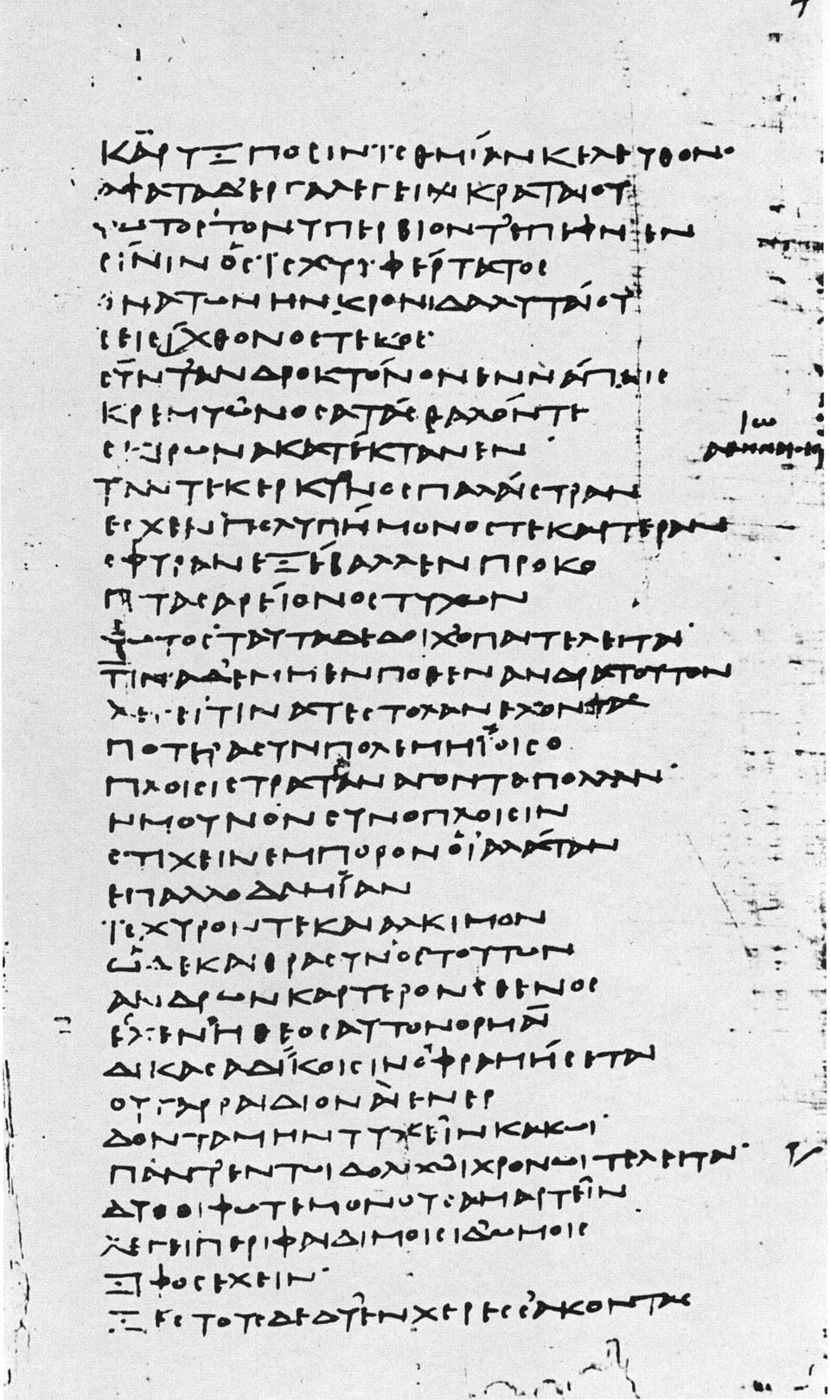
Bacchylides’ victory odes and dithyrambs, recovered from papyrus.
Works
- Synopsis
- Text and translation
- How to read each line
- Key to the labels
- Scansion
- Metre
- Prosody, line by line
- Notes
- Synopsis
- Text and translation
- How to read each line
- Key to the labels
- Scansion
- Metre
- Prosody, line by line
- Notes
- Synopsis
- Text and translation
- How to read each line
- Key to the labels
- Scansion
- Metre
- Prosody, line by line
- Notes
- Synopsis
- Text and translation
- How to read each line
- Key to the labels
- Scansion
- Metre
- Prosody, line by line
- Notes
- Synopsis
- Text and translation
- How to read each line
- Key to the labels
- Scansion
- Metre
- Prosody, line by line
- Notes
- Synopsis
- Text and translation
- How to read each line
- Key to the labels
- Scansion
- Metre
- Prosody, line by line
- Notes
- Synopsis
- Text and translation
- How to read each line
- Key to the labels
- Scansion
- Metre
- Prosody, line by line
- Notes
- Synopsis
- Text and translation
- How to read each line
- Key to the labels
- Scansion
- Metre
- Prosody, line by line
- Notes
About · 1 of 5
Who Bacchylides was
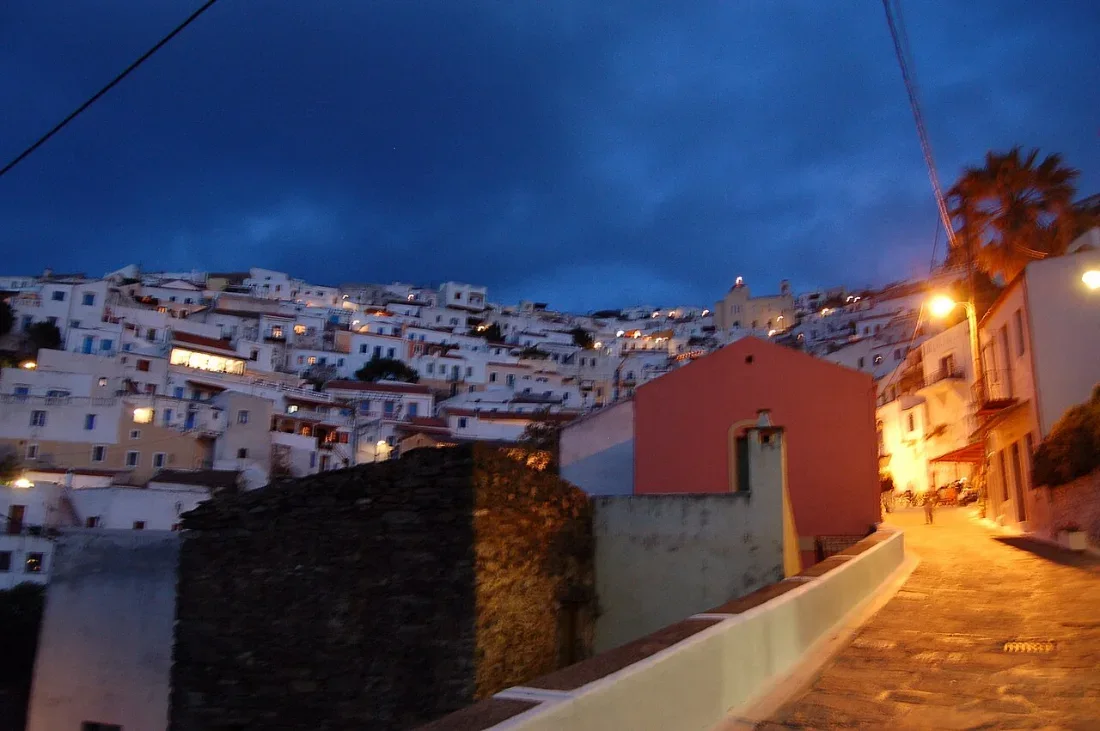
Ceos and Simonides. Little is known of Bacchylides’ life and dates. His home town was Iulis, on the island of Ceos (Keos), off the south-eastern tip of Attica. His mother was a sister of the poet Simonides (557/6–468/7 BC).[1] The biographical tradition makes him Simonides’ nephew, and places his life between the late sixth and the middle of the fifth century.[2]
Maehler argues that he was probably born around 520. Ode 17 and the enkomion for the young Macedonian prince Alexander (fr. 20B) can be dated to the early 490s. That makes him an exact contemporary of Pindar, who was born in 518. A late Byzantine notion made Bacchylides the younger poet, and Eusebius’ Chronicle says that he “became known” in 431. Both are unfounded.[1]
A career built on connections. When Bacchylides was born, Simonides was already famous for dithyrambs, choral songs and epigrams. He had been invited to Athens by Hipparchus, and he was later invited to Syracuse by Hieron. Bacchylides probably profited from these connections. His career took off soon after 500. There was an Athenian commission for the great festival on Delos (ode 17), and a song for Alexander of Macedon to be sung at the symposium (fr. 20B). In the 480s he and Pindar were rivals for the commissions of Aegina’s great families.[1]
Hieron. In 476 Bacchylides celebrated the first Olympic victory of Hieron of Syracuse: the horse-race won by Pherenicus (ode 5). Pindar’s first Olympian is for the same victory. In 470 Hieron’s chariot won at Delphi. Bacchylides sent the short ode 4, while Pindar composed Pythian 1. His most prestigious commission was ode 3, for Hieron’s Olympic chariot victory of 468.[1] The latest securely dated ode, 6, is for a boy’s victory at Olympia in 452. Nothing is known of Bacchylides after that, and he probably died not much later.[1]
Exile. Plutarch (On exile 14, 605C) says that Bacchylides spent some time in exile in the Peloponnese. This is credible. Pindar wrote a paean for the Ceans, who would presumably have asked their own poet had he been available. When the exile happened cannot be established.[3]
What he wrote. Besides the odes for Hieron, he wrote victory odes for athletes from Ceos (1, 2, 6, 7, 8), Phlius (9), Athens (10), Metapontum (11), Aegina (12, 13) and Thessaly (14). Ode 14B is for a magistrate’s election at Larisa, and it may have closed the book of victory odes.[4]
Of the dithyrambs, 17, 18 and 19 were “doubtless” composed for Athens. Probably 15 was too, and just possibly 16, while 20 was almost certainly performed at Sparta. He also wrote hymns, paeans, processional songs, maiden songs, dancing songs (hyporchemata), love songs (erotika) and songs of praise (enkomia).[3] The papyrus places ode 17 among the dithyrambs, but Maehler thinks it is rather a paean.[5] The dithyrambs are told entirely or mainly as narrative. Ode 18 is pure dialogue, between King Aegeus and the Athenians, with no narrative at all (van Emde Boas 2022, p. 168 with n. 3).[5]
Among the great professionals. Simonides, Pindar and Bacchylides are the “three great professionals”. In them the Dorian tradition of large strophes and triads reaches its height. Pindar exceeds five triads only in Pythian 4, while Bacchylides runs to eight at least.[6] Ode 17 is also known by its title, Ἠίθεοι (Ēitheoi), “The Youths”.[7]
Campbell’s dates. Campbell’s Loeb introduction differs from Maehler in some details.[8] Bacchylides’ father, Meidylus or Meidon, married a sister of Simonides. Campbell reports Severyns’ reckoning of the poet’s birth to about 518/517, which also makes him an exact contemporary of Pindar. Eusebius has three entries for him. Campbell takes 468/7 as a floruit and 451/450 perhaps as the year of his death, and he calls the third, 431/430, puzzling.
The earliest victory ode that Campbell can date is 13, of 485 or at the latest 483. The latest are 6 and 7, of 452. The odes for Hieron are 5, 4 and 3, of 476, 470 and 468. And he accepts the exile in the Peloponnese.[8] He lists nine books in the ancient edition: victory odes, dithyrambs, paeans, hymns, processional songs, maiden songs, dancing songs, love songs and songs of praise.[9]
| Ode | Occasion | Date |
|---|---|---|
| 5 | Hieron, horse-race, Olympia | 476 |
| 4 | Hieron, chariot-race, Delphi | 470 |
| 3 | Hieron, chariot-race, Olympia | 468 |
| 6 (and 7) | Lachon of Ceos, boys’ foot-race, Olympia | 452 |
| 17 | Athenian commission for the Delian festival | early 490s |
All dates BC, from Maehler 2004, pp. 9, 129.
Notes
About · 2 of 5
His metres
Triads and periods. A poem of Bacchylides is either triadic or monostrophic. A triadic poem repeats a group of three stanzas: strophe, antistrophe, and a metrically related epode. A monostrophic poem repeats a single stanza; odes 4, 6 and 18 are of this kind.[1] The division into strophes and short verses (cola) goes back to Aristophanes of Byzantium. He was guided by responsion, and by the pauses that hiatus and brevis in longo reveal.[1]
West groups the poems of Simonides, Bacchylides and Pindar into three categories: dactylo-epitrite, aeolic and iambic.[2] Maehler groups them into two: dactylo-epitrite and “ionic-aeolic”.[1]
Dactylo-epitrite
The longer victory odes, such as 5 and 11, are in dactylo-epitrite. So are the dithyrambs 15, 19 and 20, and the paean fr. 4.[3] Dactylo-epitrite combines dactylic cola, chiefly the hemiepes, with iambic (⏓ — ⏑ —) or trochaic (— ⏑ — ⏓) cola. In Maas’s symbols these are D (— ⏑ ⏑ — ⏑ ⏑ —), d¹ (— ⏑ ⏑ —), d² (⏑ ⏑ —), e (— ⏑ —) and E (— ⏑ — ⏓ — ⏑ —). They are often joined by a link anceps, which is usually long. Here is the opening of Ode 5, with Maehler’s analysis (– D E – ‖ – D – D ⏓ e | …):
εὔμοιρε Συρακοσίων
ἱπποδινήτων στραταγέ,
γνώσει μὲν ἰοστεφάνων
Μοισᾶν γλυκύδωρον ἄγαλμα, τῶν γε νῦν
eumoire Syrakosiōn / hippodinētōn stratage, / gnōsei men iostephanōn / Moisān glykydōron agalma, tōn ge nyn
“Fortunate war-lord of the Syracusans with their whirling horses, you will judge the Muses’ sweet-gifted delight …”
– D E – ‖ – D – D ⏓ e: a free first position (–) before each hemiepes D (— ⏑ ⏑ — ⏑ ⏑ —); E is — ⏑ — ⏓ — ⏑ —. The short -γέ (red) closes a period: brevis in longo.
Bacchylides 5.1–4, Jebb’s text, Maehler’s analysis
synthetic ∿
The short -γέ that ends line 2 is brevis in longo at period-end. The whole triad is scanned on the works page.
Irregular responsion. The authorities disagree about Ode 5. West finds that it stands alone in letting × — ⏑ — answer — ⏑ — at three places in the strophe. At each place one form or the other becomes fixed after the first triad.[4] Maehler removes all three by emendation, since he sees no reason to posit metrical licence here.[5]
Another irregularity perhaps occurs in the Asine Paean, fr. 4.70. There ἀραχνᾶν ἱστοὶ πέλονται (⏑ ⏑ — — — ⏑ — —) answers παιδικοί θ’ ὕμνοι φλέγονται (E —). There are two apparent parallels in tragedy (Prometheus 535 ~ 543, Euripides Andromache 1035 ~ 1045), and all three passages may be corrupt.[6] The ithyphallic is the catalectic form of E. Neither Pindar nor Bacchylides uses it.[4]
Aeolic and iambic
Iambic and aeolic metres are used in the dithyrambs 17 and 18, and in the victory odes 3, 4 and 6. Ode 3 is unique in Bacchylides: it has an aeolic strophe and a dactylo-epitrite epode.[7] The cola are the glyconic and its relatives: the telesillean, pherecratean, hipponactean and hagesichorean. They are often expanded from within by a repeated — ⏑ ⏑.[8] In Bacchylides and Pindar the aeolic base is ○ ○, and its first position may be resolved.[4] The second line of Ode 3 shows such an expansion:
Δάματρα ϝιοστέφανόν τε κούραν
Dāmatra wiostephanon te kouran
“Demeter, and the Daughter crowned with violets”
An acephalous (“headless”) hipponactean, × — ⏑ ⏑ — ⏑ — —, expanded from within by one dactyl, — ⏑ ⏑ (red). The digamma of ϝιοστέφανον lets the -α of Δάματρα stand before it without hiatus.[9]
Bacchylides 3.2, Jebb’s text, Maehler’s scheme (as on this site’s Ode 3 tab)
synthetic ∿
Ode 17 is one of the few odes made almost entirely of iambic metra. Simonides and Bacchylides put a short run of dactyls in the middle of the strophe.[10] At eight places its scheme lets syncopated iambics answer unsyncopated ones, mostly ⏕ ⏑ — against ⏒ — ⏑ —. For West this proves that the two took the same time. The length of the suppressed short went to one of the neighbouring longs, which became a triseme.[11] West recalls this when he meets apparent examples in tragedy, though many scholars contest them.[12]
Maehler reads the same ode differently. For him its metre is “unprecedented” and predominantly “Cretan”, built from cretics, paeons and a “long cretic”, — ⏑ — ⏑ —.[13]
Cretics
Hephaestion states that whole songs are composed in cretics, “as also in Bacchylides”, and quotes (Consbruch’s fr. 31 = 16 Blass):[14]
ὦ Περικλειτὲ δᾶλα ἀγνοήσειν μὲν οὔ σ’ ἔλπομαι
ō Perikleite dāla agnoēsein men ou s’ elpomai
“Delos, far renowned, I do not imagine you will fail to know …”
Five cretics, — ⏑ — five times, if δᾶλα is elided before ἀγνοήσειν and -ρικ- (red) is long before κλ.
Bacchylides, quoted by Hephaestion, Ench. 13.7
synthetic ∿
Notes
- ^ a b c Maehler 2004, p. 14.
- ^ West 1987, p. 43.
- ^ Maehler 2004, p. 15.
- ^ a b c West 1987, p. 44.
- ^ Maehler 2004, p. 114.
- ^ West 1987, pp. 44 n. 7, 65–66.
- ^ Maehler 2004, p. 16.
- ^ Maehler 2004, pp. 16–17.
- ^ Maehler 2004, p. 13.
- ^ West 1987, p. 46 with n. 8.
- ^ West 1987, p. 47.
- ^ West 1987, p. 54.
- ^ Maehler 2004, p. 17.
- ^ Hephaestion, Ench. 13.7.
About · 3 of 5
The text and its transmission
Forgotten, then edited. In his lifetime Bacchylides’ songs do not seem to have been widely known. Patrons and communities must have kept the texts in archives, or they would not have survived to be edited at Alexandria. But unlike songs of Simonides or Pindar, they left no trace in the Greek literature of the later fifth and fourth centuries.[1]
Callimachus (third century BC) is the first scholar known to have read him again. He probably made the first classification of the odes. A papyrus commentary reports that Callimachus classed one poem as a paean, while Aristarchus classed it as a dithyramb and called it Cassandra.[2]
Aristophanes of Byzantium (c. 260–180 BC) probably edited Bacchylides with the other lyric poets. He divided the texts into strophes, triads and cola, and he used responsion to correct them. The critical signs of the papyri are those of the Pindar papyri: the paragraphos between strophes, and the coronis between triads.[3] Aristarchus wrote commentaries on Bacchylides, and Didymus (late first century BC) wrote one on his victory odes.[4]
Readers in Egypt. Papyrus fragments show that he was fairly widely read in Egypt, in at least the first three centuries of Roman rule.[5] The papyri of Bacchylides, like those of Pindar’s Paeans and of Alcman, carry learned notes in the margins that cite Hellenistic scholars.[6] Later quotations come mostly from anthologies, which explains why four of them are attributed to other poets. The emperor Julian liked to quote him.[5] Plutarch quotes 1.159–61 for its “neat” philosophical content, and he seems to know little of the poet.[6]
No monograph. No Peripatetic, and no Hellenistic scholar, wrote a monograph on Bacchylides, though Chamaeleon wrote on Simonides and Pindar. His text may have reached the libraries at a time when editions mattered more than monographs.[7] The papyri themselves, their titles and the printed editions are on the Papyri tab.
Notes
About · 4 of 5
The London papyrus and the other papyri
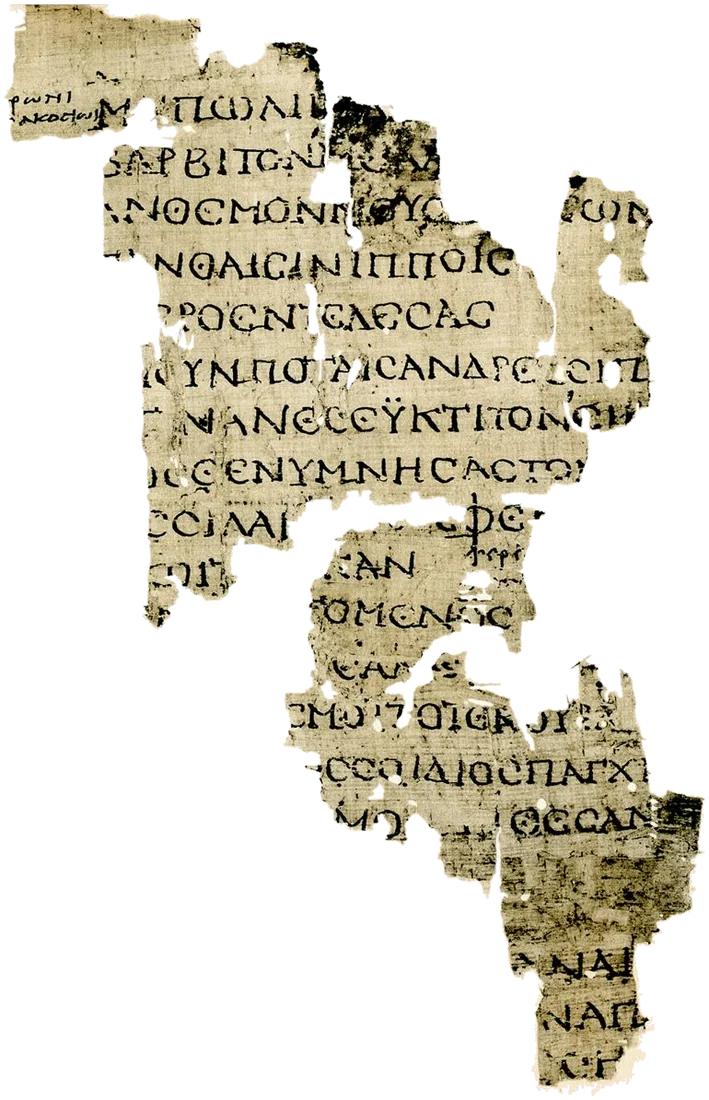
The London papyrus. Only a handful of lines were known when “the great papyrus A” was found in 1896 and acquired for the British Museum.[1] E. A. Wallis Budge bought it from a dealer, probably Ali Farag of Giza, and smuggled it out of Egypt. He slipped past the authorities with a trick that involved a crate of oranges and a meeting at midnight with a P&O mail ship lying off Suez. The dealer said that he had found it in a tomb at Meir.[2] F. G. Kenyon reassembled it from some 200 fragments, with the help of Jebb and Blass, and published it in 1897 with a facsimile.[1]
Papyrus A (British Library, P.Lond. inv. 733) preserves parts of two rolls written by the same hand. The first 35 columns hold the book of victory odes, more or less complete. The next ten hold the first half of the dithyrambs, arranged alphabetically by title.[1] The book of victory odes ran to about 1,300 lines; odes 3–5 for Hieron follow two odes for a young Cean.[3]
The hand is a clear and regular upright bookhand, dated to the late second or early third century AD. Most corrections and additions are by a corrector, A³. He also added most of the titles, and five lines that the scribe had omitted (11.106, 18.55–7, 19.22). But he left mistakes, and made some of his own.[3]
The titles. The dithyrambs were arranged alphabetically by title. So the titles go back at least to the Alexandrian edition, and the lyric titles there are largely an Alexandrian creation or systematisation. The London papyrus’s main scribe wrote none. The corrector A² supplied those of odes 2, 19 and 20 (and perhaps, by mistake, 7). A³ supplied the rest, and ode 5 was left untitled.
A³ corrected by comparing another copy, but A² may have worked by conjecture, as Snell held. Two titles name the community that commissioned the poem: Io for the Athenians and Idas for the Spartans. Both come from A², so their authority is the least secure. Prodi is fairly sure that one title is a scholar’s invention: Cassandra, the poem over which Aristarchus refuted Callimachus’ classification.[4] Later papyri carry metrical marks in the margin. The London manuscript is one of only two early manuscripts of choral lyric without them; the other is the Oxyrhynchus Ibycus.[5]
Other papyri. Oxyrhynchus papyri preserve a commentary on the dithyrambs (B), fragments of dithyrambs (C), and parts of a commentary on the victory odes (M). They also preserve a dithyramb roll (O), whose parchment label shows that ode 15 was the first poem in the book.[6] The ancient scholarship on papyrus has been published in the Commentaria et lexica Graeca in papyris reperta.[2]
Editions. Snell’s Teubner edition, revised by Maehler, gives the analysis of every poem.[7] The Greek on this site is Jebb’s text (1905), as digitised by the Perseus Digital Library. Where Maehler’s 2004 reading matters for the metre, the works pages print it and give Jebb’s in a note.
Notes
About · 5 of 5
Occasions, as the Companions describe them
The tabs before this one follow Maehler’s commentary. Here are added what the two lyric Companions say of dates and occasions, with the places where they differ.
Dates: where the sources differ. Maehler dates ode 17 and the encomium for Alexander of Macedon (fr. 20B) to the early 490s. He makes Bacchylides an exact contemporary of Pindar.[1] Pelliccia is more cautious. For him the start of the career is harder to fix. Ode 13 probably belongs to the middle or later 480s, and ode 5 (476) is the next securely dated poem; but “these indications may be misleading”. He does not rule out that Bacchylides was the younger of the two.[2]
Fearn counts fr. 20B and ode 13 among the earliest commissions; ode 13 is a pair with Pindar’s Nemean 5.[3] All agree that ode 6 (452) is the last datable poem.[4] Another chronology runs from the last quarter of the sixth century to after 452.[5] The date of his birth, and his age relative to Pindar, are disputed.
Simonides. Was Bacchylides Simonides’ nephew? For Rawles this is possibly true, but also a likely fiction for two poets from one island. Pelliccia finds the details “unclear and of debatable trustworthiness”.[6] Maehler accepts the relationship. The point is disputed.
Patrons and places. Commissions for his own island of Ceos “feature strongly” (odes 1, 2, 6 and 7).[7] Three of the fifteen poems in the book of victory odes are for Hieron of Syracuse. A further encomium for him (fr. 20C) celebrates victories at Delphi and Olympia. Bacchylides’ most prominent commission was ode 3, for Hieron’s Olympic chariot victory of 468. He also wrote for less famous places, such as Phlius (ode 9) and Metapontum (ode 11).[3]
Ode 11 seems to have been set into the cult of Artemis Hemera at Metapontum, over which the victor’s family had some authority. Ode 14B celebrates a later civic office, and it puts athletic success to work in support of it. Ode 10 may be for a victory in the Isthmian “horse-course” foot race.[8]
Victors and their helpers. Odes for boy victors in the combat events mostly name the trainer. Ode 13 does; ode 1, for the boy Argeios, does not.[9] In ode 5 Hieron’s racehorse Pherenicus wins untouched by dust (5.44) and takes care of his rider (5.47). The horse gets the credit.[10]
Odes 1 and 2 were written for Argeios of Ceos. His family may have used the victory, the ode, and a claimed descent from the island’s first king to win aristocratic status. His father, Pantheides, provided medical care.[11]
A short ode and a long one. Ode 2 names victor, victory, homeland and father in a few lines, and alludes to the island’s myth. Fearn suggests that it was composed soon after the victory and performed at the Isthmus. On this view it is the companion of the long ode 1 for the same victory, which the Alexandrian editors chose to open the book.[12]
The dithyrambs and their settings. Ode 19, “Io, for the Athenians”, praises Athens and names Dionysus, but no festival. Ode 16 speaks of “hymns” and “paeans” and of Delphian choruses, before its myth of Heracles’ downfall. Ode 17 never mentions Dionysus, and it ends with Cean choruses for Apollo on Delos. Ode 15 is pure myth. Ode 18 is a unique “hybrid” between choral lyric and what is often called a “dramatic” exchange.[13]
Whether ode 17 is a dithyramb or a paean has troubled scholars, ancient and modern. Fearn thinks the question “somewhat moot”, since circular choruses performed at Apolline and Dionysiac festivals alike.[14] A papyrus commentary records the same kind of ancient debate over another poem, the Cassandra. Callimachus classed it as a paean, and Aristarchus as a dithyramb.[15] The classification of ode 17 is disputed.
Notes
- ^ See the Life tab.
- ^ Pelliccia 2009, pp. 241, 260.
- ^ a b Fearn 2022, p. 347.
- ^ Pelliccia 2009, p. 241.
- ^ Budelmann 2009, p. 386.
- ^ Rawles 2022, p. 317; Pelliccia 2009, p. 241.
- ^ Compare ode 17.
- ^ Nicholson 2022, pp. 48 n. 5, 49 n. 10, 53 n. 37.
- ^ Nicholson 2022, p. 55 n. 50.
- ^ Nicholson 2022, pp. 54, 56.
- ^ Nicholson 2022, p. 59.
- ^ Fearn 2022, pp. 349–350.
- ^ Fearn 2022, pp. 347–349.
- ^ Fearn 2022, p. 357 n. 35.
- ^ Morrison 2022, p. 390 n. 2; Barbantani 2009, p. 302.
Ode 2 — for Argeius of Ceos (complete)
Synopsis
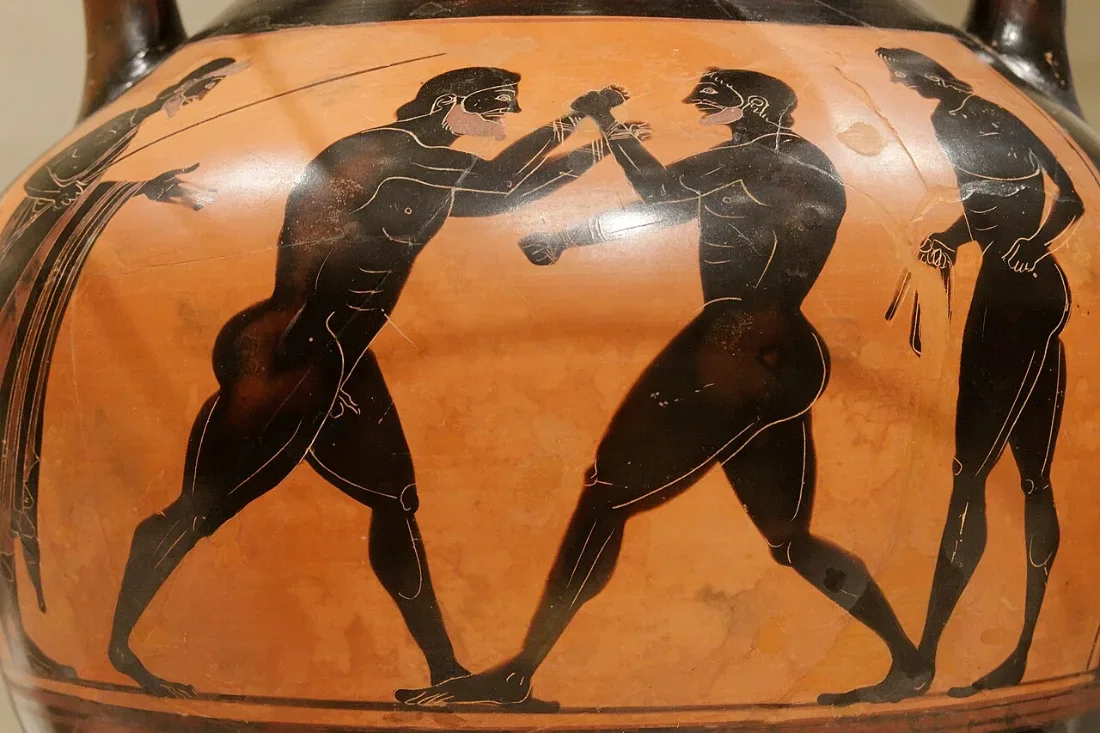
A short song for Argeius of Ceos, son of Pantheides. He won at the Isthmian Games in the boys’ boxing, or perhaps the pancration, since the words used fit both. The date is unknown.[1] A list of Cean victors was found at Iulis. It was cut perhaps between 400 and 350 BC, probably copied from an older record. It names Argeius among the boys who won at the Isthmus and the youths who won at Nemea.[2] Ode 1 celebrates the same victory at length. The last lines of this ode mention the music of pipes. Jebb took it as a welcome sung when Argeius landed at home, and Ode 1 as the formal victory ode, written later.[3] Bacchylides came from Iulis on Ceos, and he was a nephew of Simonides. He was perhaps born around 520 BC, and his latest datable ode is of 452.[4] The two odes for Argeius open his book of victory odes. It survives in the great London papyrus, a roll of the late second or early third century AD, found at Meir in Egypt and published by Kenyon in 1897.[5]
The whole ode is given below: one triad of fourteen lines.
Text and translation
The uninterrupted Greek with its English translation, line by line.
Show text and translation
ἄϊξεν ἁ σεμνοδότειρα Φήμα
Bacchylides · Ode 2 · for Argeius of Ceos, boys’ boxing at the Isthmus · one triad · “iambi et priapea clausula” (Maehler 1982) or triple time (Hendry 1994) · text of Jebb (Perseus)
How to read each line
A guide to the Greek, syllables, pitch marks and quantities.
Show the reading key
- Above each line: the line as the edition prints it, each word placed over its own syllables. The main row: the same Greek divided into metrical syllables, each written as it is pronounced. A consonant that closes a syllable is written with it (λόθ | ρο); an elided word is closed up with the next vowel (ν’ἀ); a final consonant carried into the next word is set with a thin space (ς ἰ). Wider gaps mark word-ends.
- Above the syllables: the pitch of each syllable, from the accents. Under them: the quantity of each syllable as it falls in the line, then the transliteration, syllable by syllable, with accented syllables in capitals.
- Under each line: a line-for-line translation. In the right margin of the scansion: the line type, its scheme, and its analysis into cola.
Key to the labels
The names, patterns and symbols used beside this poem.
Show the labels and symbols
The labels in the right margin of the scansion below give the line’s analysis as the scheme file states it, then its scheme and, where the analysis notes them, the period-end, a brevis in longo or a hiatus. ‖ marks the end of a period, ||| the end of the stanza; a line without a period-end runs on into the next (synapheia). × is an anceps, long or short; the last position of every period is indifferent. A click on any syllable highlights the colon it belongs to and explains it. The sources of the labels, with their page numbers, are given line by line under Prosody, line by line.
| Label | Name and shape | What it is |
|---|---|---|
| ia | Iambic metron (ia)⏑ — ⏑ — | The iambic metron, here always with a short anceps (Maehler’s scheme as reproduced by Hendry 1994, part 1)[6]. |
| cho | Choriamb (cho)— ⏑ ⏑ — | The choriamb — ⏑ ⏑ —, the core of the aeolic cola.[6] Maehler’s scheme for Ode 2 is built from iambic metra and choriambs (Hendry 1994, part 1). |
| ba | Baccheus (ba)⏑ — — | The baccheus ⏑ — —, closing the first period.[6] |
| glyc | Glyconic, first half of Maehler’s priapean⏓ ⏓ — ⏑ ⏑ — ⏑ — | The glyconic.[6] Maehler labels the last two verses of strophe and epode “priap”, a glyconic followed by a pherecratean (Hendry 1994, part 1). In the strophe the first position of the glyconic is resolved into two shorts (uu), in the epode it is short. |
| phrc | Pherecratean, second half of Maehler’s priapean⏓ ⏓ — ⏑ ⏑ — — | The pherecratean,[6] the clausula of the priapean that closes strophe and epode (Hendry 1994, part 1). |
The feet
| Foot and shape | Where |
|---|---|
| Iamb (⏑ —) in triple time⏑ — | Hendry’s basic unit: a single iamb, one bar of three short time-units (Hendry 1994, part 1 and n. 7). |
| Trochee (— ⏑) in triple time— ⏑ | Hendry’s other unit: a single trochee, one bar of three short time-units (Hendry 1994, part 1). |
| Period-end with rest— | The last syllable of a period, followed by a rest that completes the bar (Hendry 1994, part 1). The first period ends with a rest of two shorts.[7] |
| Three shorts (⏑ ⏑ ⏑)⏑ ⏑ ⏑ | In strophe verse 4 Hendry’s bar is filled by three shorts, “uuu”; the strophe of Ode 2 “follows precisely the same sort of pattern as B.6, except that uuu is found along with u– and –u” (Hendry 1994, part 1). |
| The shift in the last verse— — — ⏑ ⏑ — — | In the last verse of the epode “the meter shifts in the last four feet”: either the last four bars of triple time are “tied across the bar lines”, or the epode is eight bars of sextuple time whose last two are divided 2 + 2 + 2. The victor’s patronymic stands where the metre shifts (Hendry 1994, part 1). |
Scansion
A fourteen-line triad that Maehler analyses as iambic metra and choriambs with a priapean close, and that Hendry reads as an almost unbroken run of single iambs and trochees in triple time, with the metre shifting under the victor’s patronymic in the last line.
Fame, bestower of honour, has rushed
to sacred Ceos, carrying news
that bears a gracious name:
that in the contest of daring fists Argeius
has carried off the victory.
And he has called to mind the glories that, on the renowned
neck of the Isthmus, having left the hallowed
isle of Euxantius, we
showed forth, with seventy
crowns.
And the Muse born here summons
the pipes’ sweet clangour,
to celebrate with songs of victory
Pantheides’ beloved son.
Metre
- The ode. Ode 2 is the shorter of the two odes Bacchylides composed for a single Isthmian victory of Argeius son of Pantheides, won in the boys’ boxing, or possibly the pankration, between about 460 and 452; the larger is Ode 1, in dactylo-epitrite (Hendry 1994, introduction). It is a single triad of 14 lines. Ode 2 is not in Maehler’s 2004 selection.
- Maehler’s analysis. The scheme on this page is Maehler’s in his 1982 edition, as Hendry reproduces it, slightly compressed but not otherwise changed; Maehler’s analyses are identical to those of Snell–Maehler (Hendry 1994, part 1 and n. 4). Maehler calls the metre of the strophe “iambi et priapea clausula”: ia cho ba ‖ 2 cho | ia cho | priap |||, and the epode is ia cho | ia cho | priap |||. The priapean of the last two verses is a glyconic followed by a pherecratean, the cola Maehler defines in his 2004 edition;[6] in the strophe its first position is resolved into two shorts.
- Hendry’s analysis. Hendry argues that Odes 2 and 6 “appear to have been written in a simple triple meter throughout”: grouped in pairs, the syllables of the strophe are single iambs and trochees, with one bar of three shorts (uuu) in verse 4, and a rest at each period-end (Hendry 1994, part 1). The strophe falls into periods of 3 and 8 bars of six shorts each, the epode into one of 8, a ratio of 3 + 8 : 3 + 8 : 8, which he thinks too tidy to be an accident. In the last verse the rhythm changes for its final four feet, exactly where the victor’s patronymic stands (Hendry 1994, part 1). Apart from period-end there is no anceps in the ode.[8] Hendry connects the simple rhythm with performance by amateurs welcoming the victor home, a hypothesis he calls more speculative than his metrical observation (Hendry 1994, introduction and part 3). The foot layer of this page (the colon/foot switch) shows his bars.
- Responsion and ἱεράν. Strophe and antistrophe answer each other exactly if ἱεράν (2) is sung as two syllables, ἱε- as one (synizesis), as Maehler assumes. Hendry notes that the word is trisyllabic elsewhere in Bacchylides; read so, the strophe would have — ⏑ ⏑ ⏑ ⏑ where the antistrophe has — ⏑ ⏑ —, a poor choriamb but acceptable in his triple-time analysis; the choice, he says, turns on which one finds harder to accept, synizesis or imperfect responsion.[9] The workbench follows Maehler and ties ἱ‿εράν.
- Periods. Maehler marks period-end only after the first verse of strophe and antistrophe and at the end of each stanza (Hendry 1994, part 1); the other verses run on into each other. Hendry’s first period ends with a rest of two shorts, the others with a rest of one.[7]
- Prosody. The workbench uses the epic rules. Jebb prints the digamma of ϝισθμοῦ (7), which prevents hiatus after αὐχένι.[10] Doric forms: Φήμα with long final ᾱ, ἀνέμνασεν with ᾱ, νᾶσον, Πανθείδα (genitive in -ᾱ). Jebb’s supplements stand in square brackets; the page brackets every syllable that contains a supplied letter.
Prosody, line by line
Every syllable, with the reason for its length. Quantities are read from the vowel where the spelling shows it, from the consonants that follow (“position”), from the accent where it tells, and from the metre where nothing else does. Editors’ notes on the text follow in the boxed paragraphs.
- 2.1
Line 2.1 · ἄϊξεν ἁ σεμνοδότειρα Φήμα
ἄϊξεν ἁ σεμνοδότειρα Φήμα
ἄ[ϊ][ξε][ν ἁ]σεμνοδότειραΦήμαThe label in the margin, with its sources: period-end; Hendry: u– u– –u u– u– u, ending in a rest.
- 1 ⏑ἄἄ is short by the metre (position 1 must be short).
- 2 —[ϊ]ξ is a double consonant (two sounds) and closes the syllable: long by position.
- 3 ⏑[ξε]ε is short by nature.
- 4 —[ν ἁ]ἁ is long by the metre (position 4 must be long); the first consonant belongs to the previous word and is carried over to this vowel.
- 5 —σεμε is short by nature; closed by μ: long by position.
- 6 ⏑νοο is short by nature.
- 7 ⏑δόό is short by nature.
- 8 —τειει is a diphthong, long by nature.
- 9 ⏑ραα is short by the accent rule: acute on the antepenult requires a short final syllable.
- 10 —Φήή is long by nature.
- 11 ×μαα is of unknown length; the position is anceps, so either scans; the last position of the period is indifferent.
ia cho ba ‖ (Maehler’s scheme in Hendry 1994, part 1). The opening words are supplemented: Jebb’s ἄ[ϊξεν ἁ], “has darted”, printed by Perseus; the ϊ is a syllable of its own, long by position before ξ. ἁ is the Doric article (Attic ἡ), with long ᾱ. Φήμα has the Doric long final ᾱ, at period-end. In Hendry’s bars the verse is u– u– –u u– u– u, the last syllable followed by a rest of two shorts (Hendry 1994, part 1 and n. 17).Campbell prints ἄ[ϊξον, ὦ], an imperative, “speed”, where Jebb has ἄ[ϊξεν ἁ].[11] The scansion is the same.
- 2.2
Line 2.2 · ἐς Κέον ἱ‿εράν, χαριτώ-
ἐς Κέον ἱ‿εράν, χαριτώ-
ἐςΚέον ἱ‿εράν,χαριτώ-the period runs on into 2.3 (synapheia).
- 1 —ἐςἐ is short by nature; closed by ς: long by position.
- 2 ⏑Κέέ is short by nature.
- 3 ⏑οο is short by nature.
- 4 —ν ἱ‿εἱε is two vowels of one word pronounced together as one long syllable (synizesis); the first consonant belongs to the previous word and is carried over to this vowel.
- 5 —ράν,ά is a vowel of unknown length; closed by ν: long by position.
- 6 ⏑χαα is short by the metre (position 6 must be short).
- 7 ⏑ριι is short by the metre (position 7 must be short).
- 8 —τώ-ώ is long by nature; the line-end is not a period-end: the period runs on into the next line (synapheia), so this syllable keeps its own length, with no brevis in longo, and a word may run over into the next line.[12]
2 cho (Hendry 1994, part 1). ἱεράν is sung as two syllables, with synizesis of ἱε-, so that the verse answers verse 7; Hendry discusses the alternative, a trisyllabic ἱεράν without exact responsion.[9] The ς of ἐς closes its syllable before Κ-. The word χαριτώνυμον is divided between verses 2 and 3.Campbell divides the lines differently in 2–5 and 8–10, with χαριτώνυμ[ον], Ἀργεῖο[ς], νᾶσον and ἑβδομήκοντα each whole in one line.[11]
- 2.3
Line 2.3 · νυμον φέρουσʼ ἀγγελίαν,
νυμον φέρουσʼ ἀγγελίαν,
νυμονφέρουσ’ἀγγελία,continues 2.2 · one period (synapheia); the period runs on into 2.4 (synapheia).
- 1 ⏑νυυ is short by the metre (position 1 must be short).
- 2 —μονο is short by nature; closed by ν: long by position.
- 3 ⏑φέέ is short by nature.
- 4 —ρουου is a diphthong, long by nature.
- 5 —σ’ἀγἀ is a vowel of unknown length; closed by γ: long by position; the apostrophe marks an elided vowel; the consonant before it joins this syllable.
- 6 ⏑γεε is short by nature.
- 7 ⏑λίί is short by the metre (position 7 must be short).
- 8 —α,α is long by the metre (position 8 must be long); the line-end is not a period-end: the period runs on into the next line (synapheia), so this syllable keeps its own length, with no brevis in longo, and a word may run over into the next line.[12]
ia cho (Hendry 1994, part 1). φέρουσ’ is elided before ἀγγελίαν, and σ’ἀγ- is long by position. The ν of ἀγγελίαν passes to ὅτι in verse 4: the period runs on.- 2.4
Line 2.4 · ὅτι μάχας θρασύχειρος Ἀρ-
ὅτι μάχας θρασύχειρος Ἀρ-
ν ὅτιμ[ά][χ]αςθρασύχειρος Ἀρ-continues 2.3 · one period (synapheia); the period runs on into 2.5 (synapheia).
The label in the margin, with its sources: first half of Maehler’s priapean; the resolved first position (uu) and the next short make Hendry’s uuu.
- 1 ⏑ν ὅὅ is short by nature; the first consonant belongs to the previous word and is carried over to this vowel; with its neighbour it splits the short of position 1 into two shorts, making the anapaest that comedy admits.
- 2 ⏑τιι is short by the metre (position 1 must be short); with its neighbour it splits the short of position 1 into two shorts, making the anapaest that comedy admits.
- 3 ⏑μ[ά]ά is short by the metre (position 2 must be short).
- 4 —[χ]αςα is a vowel of unknown length; closed by ς: long by position.
- 5 ⏑θραα is short by the metre (position 4 must be short).
- 6 ⏑σύύ is short by the metre (position 5 must be short).
- 7 —χειει is a diphthong, long by nature.
- 8 ⏑ροο is short by nature.
- 9 —ς Ἀρ-Ἀ is a vowel of unknown length; closed by ρ: long by position; the first consonant belongs to the previous word and is carried over to this vowel; the line-end is not a period-end: the period runs on into the next line (synapheia), so this syllable keeps its own length, with no brevis in longo, and a word may run over into the next line.[12]
The glyconic half of Maehler’s priapean, with its first position resolved: ὅ-τι fill one position, Maehler’s uu (Hendry 1994, part 1). Hendry counts ὅ-τι-μά as a bar of three shorts (uuu). μ[άχ]ας is supplemented; its ς closes the syllable before θρ, and θρα- is short. The word Ἀργεῖος is divided between verses 4 and 5.- 2.5
Line 2.5 · γεῖος ἄρατο νίκαν·
γεῖος ἄρατο νίκαν·
γεῖος ἄρατονίκαν·continues 2.4 · one period (synapheia).
- 1 —γεῖεῖ is a diphthong, long by nature.
- 2 ⏑οο is short by nature.
- 3 —ς ἄἄ is long by the metre (position 3 must be long); the first consonant belongs to the previous word and is carried over to this vowel.
- 4 ⏑ραα is short by the metre (position 4 must be short).
- 5 ⏑τοο is short by nature.
- 6 —νίί is long by the metre (position 6 must be long).
- 7 ×καν·α is a vowel of unknown length; closed by ν: long by position; the last position of the period is indifferent.
The pherecratean that closes the strophe (Hendry 1994, part 1). The ἀ- of ἄρατο fills a long and is taken long from the metre. νίκαν has a long ᾱ (Doric accusative); the last syllable is free at the end of the strophe.- 2.6
Line 2.6 · καλῶν δʼ ἀνέμνασεν, ὅσʼ ἐν κλεεννῷ
καλῶν δʼ ἀνέμνασεν, ὅσʼ ἐν κλεεννῷ
καλῶνδ’ἀνέμνασε,ν ὅσ’ἐνκλεεννῷ- 1 ⏑καα is short by the metre (position 1 must be short).
- 2 —λῶνῶ is long by nature; closed by ν: long by position.
- 3 ⏑δ’ἀἀ is short by the metre (position 3 must be short); the apostrophe marks an elided vowel; the consonant before it joins this syllable.
- 4 —νέμέ is short by nature; closed by μ: long by position.
- 5 —ναα is long by the metre (position 5 must be long).
- 6 ⏑σε,ε is short by nature.
- 7 ⏑ν ὅὅ is short by nature; the first consonant belongs to the previous word and is carried over to this vowel.
- 8 —σ’ἐνἐ is short by nature; closed by ν: long by position; the apostrophe marks an elided vowel; the consonant before it joins this syllable.
- 9 ⏑κλεε is short by nature.
- 10 —ενε is short by nature; closed by ν: long by position.
- 11 ×νῷῷ is long by nature; the last position of the period is indifferent.
The antistrophe answers the strophe: ia cho ba ‖. δ’ is elided before ἀνέμνασεν, whose Doric ᾱ fills the long fifth position. ὅσ’ is elided before ἐν, and ἐν is closed before κλ-. κλεεννῷ is three syllables.- 2.7
Line 2.7 · αὐχένι ϝισθμοῦ ζαθέαν
αὐχένι ϝισθμοῦ ζαθέαν
αὐχένιϝισθμοῦζαθέανthe period runs on into 2.8 (synapheia).
- 1 —αὐαὐ is a diphthong, long by nature.
- 2 ⏑χέέ is short by nature.
- 3 ⏑νιι is short by the metre (position 3 must be short).
- 4 —ϝισι is a vowel of unknown length; closed by σ: long by position.
- 5 —θμοῦοῦ is a diphthong, long by nature; the next word begins with the double consonant ζ: the syllable is closed before it: long by position.
- 6 ⏑ζαα is short by the metre (position 6 must be short).
- 7 ⏑θέέ is short by nature.
- 8 —ανα is a vowel of unknown length; closed by ν: long by position; the line-end is not a period-end: the period runs on into the next line (synapheia), so this syllable keeps its own length, with no brevis in longo, and a word may run over into the next line.[12]
2 cho, as verse 2. Jebb prints the digamma of ϝισθμοῦ, “of the Isthmus”. The workbench treats ϝ as a consonant: it begins the syllable ϝισθ-, long by position, and the -νι of αὐχένι stays a short open syllable before it. Without the ϝ, -νι would stand in hiatus before ἰσθμοῦ; Maehler explains that an “invisible” digamma is assumed in Bacchylides where it avoids hiatus, though he does not discuss this word.[13]Campbell prints Ἰσθμοῦ without the digamma.[11]
- 2.8
Line 2.8 · λιπόντες Εὐξαντίδα νᾶ-
λιπόντες Εὐξαντίδα νᾶ-
λιπόντες Εὐξαντίδανᾶ-continues 2.7 · one period (synapheia); the period runs on into 2.9 (synapheia).
- 1 ⏑λιι is short by the metre (position 1 must be short).
- 2 —πόνό is short by nature; closed by ν: long by position.
- 3 ⏑τεε is short by nature.
- 4 —ς ΕὐΕὐ is a diphthong, long by nature; ξ is a double consonant (two sounds) and closes the syllable: long by position; the first consonant belongs to the previous word and is carried over to this vowel.
- 5 —ξανα is a vowel of unknown length; closed by ν: long by position.
- 6 ⏑τίί is short by the metre (position 6 must be short).
- 7 ⏑δαα is short by the metre (position 7 must be short).
- 8 —νᾶ-ᾶ carries a circumflex, so it is long; the line-end is not a period-end: the period runs on into the next line (synapheia), so this syllable keeps its own length, with no brevis in longo, and a word may run over into the next line.[12]
ia cho, as verse 3. Εὐξαντίδα νᾶσον, “the island of Euxantius”, is Ceos; νᾶσον has the Doric ᾱ. The word is divided between verses 8 and 9.- 2.9
Line 2.9 · σον ἐπεδείξαμεν ἑβδομή-
σον ἐπεδείξαμεν ἑβδομή-
σον ἐπεδείξαμεν ἑβδομή-continues 2.8 · one period (synapheia); the period runs on into 2.10 (synapheia).
- 1 ⏑σοο is short by nature; with its neighbour it splits the short of position 1 into two shorts, making the anapaest that comedy admits.
- 2 ⏑ν ἐἐ is short by nature; the first consonant belongs to the previous word and is carried over to this vowel; with its neighbour it splits the short of position 1 into two shorts, making the anapaest that comedy admits.
- 3 ⏑πεε is short by nature.
- 4 —δείεί is a diphthong, long by nature; ξ is a double consonant (two sounds) and closes the syllable: long by position.
- 5 ⏑ξαα is short by the metre (position 4 must be short).
- 6 ⏑μεε is short by nature.
- 7 —ν ἑβἑ is short by nature; closed by β: long by position; the first consonant belongs to the previous word and is carried over to this vowel.
- 8 ⏑δοο is short by nature.
- 9 —μή-ή is long by nature; the line-end is not a period-end: the period runs on into the next line (synapheia), so this syllable keeps its own length, with no brevis in longo, and a word may run over into the next line.[12]
The glyconic of the priapean, with its first position resolved: σο νἐ- fill one position, as ὅ-τι in verse 4. ἐπεδείξαμεν, “we displayed”, has the chorus speak for Ceos. The word ἑβδομήκοντα is divided between verses 9 and 10.- 2.10
Line 2.10 · κοντα σὺν στεφάνοισιν.
κοντα σὺν στεφάνοισιν.
κοντασὺνστεφάνοισιν.continues 2.9 · one period (synapheia).
- 1 —κονο is short by nature; closed by ν: long by position.
- 2 ⏑ταα is short by the accent rule: acute on the antepenult requires a short final syllable.
- 3 —σὺνὺ is a vowel of unknown length; closed by ν: long by position.
- 4 ⏑στεε is short by nature.
- 5 ⏑φάά is short by the metre (position 5 must be short).
- 6 —νοιοι is a diphthong, long by nature.
- 7 ×σιν.ι is a vowel of unknown length; closed by ν: long by position; the last position of the period is indifferent.
The pherecratean that closes the antistrophe. σύν is long by position before στ-.- 2.11
Line 2.11 · καλεῖ δὲ Μοῦσʼ αὐθιγενὴς
καλεῖ δὲ Μοῦσʼ αὐθιγενὴς
καλεῖδὲΜοῦσ’αὐθιγενὴςthe period runs on into 2.12 (synapheia).
- 1 ⏑καα is short by the metre (position 1 must be short).
- 2 —λεῖεῖ is a diphthong, long by nature.
- 3 ⏑δὲὲ is short by nature.
- 4 —Μοῦοῦ is a diphthong, long by nature.
- 5 —σ’αὐαὐ is a diphthong, long by nature; the apostrophe marks an elided vowel; the consonant before it joins this syllable.
- 6 ⏑θιι is short by the metre (position 6 must be short).
- 7 ⏑γεε is short by nature.
- 8 —νὴςὴ is long by nature; closed by ς: long by position; the line-end is not a period-end: the period runs on into the next line (synapheia), so this syllable keeps its own length, with no brevis in longo, and a word may run over into the next line.[12]
- 2.12
Line 2.12 · γλυκεῖαν αὐλῶν καναχάν,
γλυκεῖαν αὐλῶν καναχάν,
γλυκεῖαν αὐλῶνκαναχάν,continues 2.11 · one period (synapheia); the period runs on into 2.13 (synapheia).
- 1 ⏑γλυυ is short by the metre (position 1 must be short).
- 2 —κεῖεῖ is a diphthong, long by nature.
- 3 ⏑αα is short by the accent rule: circumflex on the penult requires a short final syllable.
- 4 —ν αὐαὐ is a diphthong, long by nature; the first consonant belongs to the previous word and is carried over to this vowel.
- 5 —λῶνῶ is long by nature; closed by ν: long by position.
- 6 ⏑καα is short by the metre (position 6 must be short).
- 7 ⏑ναα is short by the metre (position 7 must be short).
- 8 —χάν,ά is a vowel of unknown length; closed by ν: long by position; the line-end is not a period-end: the period runs on into the next line (synapheia), so this syllable keeps its own length, with no brevis in longo, and a word may run over into the next line.[12]
ia cho. The γλ of γλυκεῖαν begins the verse; the ν of γλυκεῖαν passes to αὐλῶν. καναχάν has the Doric ᾱ.- 2.13
Line 2.13 · γεραίρουσʼ ἐπινικίοις
γεραίρουσʼ ἐπινικίοις
γεραίρουσ’ἐπινικίοιςcontinues 2.12 · one period (synapheia); the period runs on into 2.14 (synapheia).
- 1 ⏑γεε is short by nature.
- 2 —ραίαί is a diphthong, long by nature.
- 3 —ρουου is a diphthong, long by nature.
- 4 ⏑σ’ἐἐ is short by nature; the apostrophe marks an elided vowel; the consonant before it joins this syllable.
- 5 ⏑πιι is short by the metre (position 5 must be short).
- 6 —νιι is long by the metre (position 6 must be long).
- 7 ⏑κίί is short by the metre (position 7 must be short).
- 8 —οιςοι is a diphthong, long by nature; closed by ς: long by position; the line-end is not a period-end: the period runs on into the next line (synapheia), so this syllable keeps its own length, with no brevis in longo, and a word may run over into the next line.[12]
The glyconic of the priapean, here with a short first position: ⏑ — — ⏑ ⏑ — ⏑ — (Hendry 1994, part 1). γεραίρουσ’ is elided before ἐπινικίοις.- 2.14
Line 2.14 · Πανθείδα φίλον υἱόν.
Πανθείδα φίλον υἱόν.
Πανθείδαφίλον υἱόν.continues 2.13 · one period (synapheia).
The label in the margin, with its sources: end of the epode and the ode; Hendry: here the metre shifts.
- 1 —Πανα is a vowel of unknown length; closed by ν: long by position.
- 2 —θείεί is a diphthong, long by nature.
- 3 —δαα is long by the metre (position 3 must be long).
- 4 ⏑φίί is short by the metre (position 4 must be short).
- 5 ⏑λοο is short by nature.
- 6 —ν υἱυἱ is a diphthong, long by nature; the first consonant belongs to the previous word and is carried over to this vowel.
- 7 ×όν.ό is short by nature; closed by ν: long by position; the last position of the period is indifferent.
The pherecratean that ends the ode. Πανθείδα is a Doric genitive with long final ᾱ, which fills the third long; the ν of φίλον passes to υἱόν, so -λο- is short. Hendry observes that the rhythm changes here: either the last four bars of triple time are “tied across the bar lines”, or the epode is in eight bars of sextuple time, the last two divided 2 + 2 + 2; and the change comes just where the victor’s patronymic, Πανθείδα φίλον υἱόν, is sung (Hendry 1994, part 1).
Notes
- ^ Jebb 1905, p. 185.
- ^ Jebb 1905, pp. 186–188.
- ^ Jebb 1905, p. 189.
- ^ Maehler 2004, p. 9.
- ^ Maehler 2004, pp. 28–29.
- ^ a b c d e f Maehler 2004, p. 16.
- ^ a b Hendry 1994, n. 17.
- ^ Hendry 1994, n. 10.
- ^ a b Hendry 1994, n. 8.
- ^ See the note on 7.
- ^ a b c Campbell 1992, p. 124.
- ^ a b c d e f g h i West 1987, pp. 3–4.
- ^ Maehler 2004, p. 13.
- ^ Hendry 1994, n. 12.
Text and sources
- Text: Bacchylides, The Poems and Fragments, ed. R. C. Jebb (Cambridge 1905), Ode 2, from the Perseus Digital Library (tlg0199.tlg001.perseus-grc2), licensed CC BY-SA 4.0 (the licence stated in the Perseus file). Ties and marks are editorial aids to the scansion and are not shown on the page.
- Metrical scheme: H. Maehler, Die Lieder des Bakchylides I (Leiden 1982), as reproduced in M. Hendry, ‘The Meter of Bacchylides 2 and 6’, Liverpool Classical Monthly 19 (1994), 110–14, part 1; Hendry’s own analysis, parts 1–4 and nn. 4, 8, 10, 12, 17. The 1982 edition itself was not consulted.
- H. Maehler, Bacchylides: A Selection (Cambridge 2004), p. 13 (digamma), p. 16 (aeolic and iambic cola); read from the page images.
- Synapheia and period-end: M. L. West, Introduction to Greek Metre (Oxford 1987), pp. 3–4, checked against the page images. Also West 1987, pp. 34 and 35 n. 1 (the third period of the Sapphic and Alcaic stanzas, divided between two lines of writing in antiquity).
- Translation: metrehelp.org, CC BY-SA 4.0.
- D. A. Campbell, Greek Lyric IV: Bacchylides, Corinna, and Others (Loeb Classical Library 461, Cambridge, MA 1992), Bacchylides, Ode 2 (pp. 124–125), compared line by line: same words apart from the supplement in line 1 and Ἰσθμοῦ in line 7; different line-division (see the notes).
Quotations from copyrighted works are not covered by this page’s licence.
Ode 3 — Hieron and Croesus (lines 1–40)
Synopsis
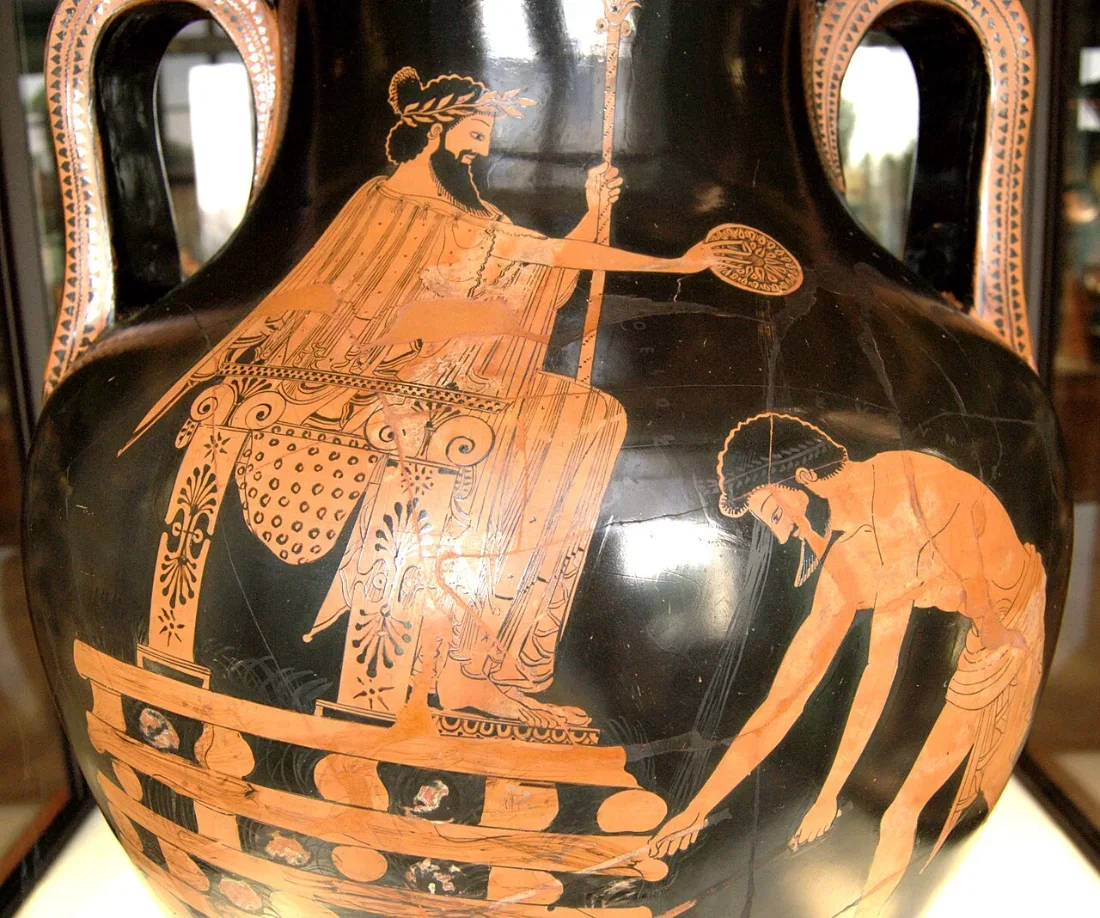
For Hieron, ruler of Syracuse, whose four-horse chariot won at Olympia in 468 BC. The date comes from the ancient introduction to Pindar’s First Olympian.[1] It was Bacchylides’ most prestigious and most prominent commission, one of three victory odes for Hieron in the book of fifteen.[2] The ode praises Demeter and Kore of Sicily, and Hieron’s generosity to Delphi. Then it tells the story of Croesus of Lydia. When Sardis fell to the Persians, Croesus mounted a pyre with his wife and daughters rather than face slavery. Zeus quenched the fire, and Apollo carried him and his daughters to the Hyperboreans.[3] This heroic, self-chosen pyre follows the version on Myson’s amphora, not Herodotus’ later story.[4] Hieron was already ill, and he died the next year. The myth makes the parallel between Hieron and Croesus unusually plain. Maehler suggests that it promises Hieron Apollo’s protection in his darkest hour.[5] Bacchylides of Ceos, born perhaps around 520 BC, was the nephew of Simonides.[6] The ode survives in the London papyrus of the late second or early third century AD.[7]
Lines 1–40 are given below: the opening triads and the start of Croesus’ story.
Text and translation
The uninterrupted Greek with its English translation, line by line.
Show text and translation
ἀριστοκάρπου Σικελίας κρέουσαν
Bacchylides · Ode 3 · for Hieron of Syracuse, chariot-race at Olympia, 468 BC · triads 1–2 and the third triad to line 40 · aeolic-iambic strophe, dactylo-epitrite epode · text of Jebb (Perseus), scheme of Maehler 2004
How to read each line
A guide to the Greek, syllables, pitch marks and quantities.
Show the reading key
- Above each line: the line as the edition prints it, each word placed over its own syllables. The main row: the same Greek divided into metrical syllables, each written as it is pronounced. A consonant that closes a syllable is written with it (λόθ | ρο); an elided word is closed up with the next vowel (ν’ἀ); a final consonant carried into the next word is set with a thin space (ς ἰ). Wider gaps mark word-ends.
- Above the syllables: the pitch of each syllable, from the accents. Under them: the quantity of each syllable as it falls in the line, then the transliteration, syllable by syllable, with accented syllables in capitals.
- Under each line: a line-for-line translation. In the right margin of the scansion: the line type, its scheme, and its analysis into cola.
Key to the labels
The names, patterns and symbols used beside this poem.
Show the labels and symbols
The labels in the right margin of the scansion below give the line’s analysis as the scheme file states it, then its scheme and, where the analysis notes them, the period-end, a brevis in longo or a hiatus. ‖ marks the end of a period, ||| the end of the stanza; a line without a period-end runs on into the next (synapheia). × is an anceps, long or short; the last position of every period is indifferent. A click on any syllable highlights the colon it belongs to and explains it. The sources of the labels, with their page numbers, are given line by line under Prosody, line by line.
| Label | Name and shape | What it is |
|---|---|---|
| ia3c | Catalectic iambic trimeter⏒ — ⏑ ⏕ ⏓ ⏔ ⏑ — ⏑ — — | Maehler labels the first verse of the strophe “trim iamb catal”, a catalectic iambic trimeter.[8] It is three iambic metra, the last shortened by one position (catalexis)[9]. Either of the two inner longs may be resolved into two shorts, as Maehler’s ⏕ and ⏔ show. |
| hippd | Hagesichorean with dactylic expansion (∧hippᵈ)⏒ — ⏑ ⏑ — ⏑ ⏑ — ⏑ — — | Maehler uses this verse, the second of the strophe, as his example of a “‘hagesichorean’ (= shortened ‘hipponactean’) with dactylic expansion (∧hippᵈ)”.[10] The pattern printed there has one long more at the start than his scheme for the ode;[8] the text follows the scheme. The hagesichorean ⏓ — ⏑ ⏑ — ⏑ — — is a hipponactean without its first position, a term coined by West.[11] Dactylic expansion repeats the internal — ⏑ ⏑.[12] |
| gld | Telesillean with dactylic expansion (∧glᵈ)⏓ — ⏑ ⏑ — ⏑ ⏑ — ⏑ — | The telesillean ⏓ — ⏑ ⏑ — ⏑ — is a glyconic without its first position.[9] Here it is expanded by a further — ⏑ ⏑ (dactylic expansion)[12]. |
| ia | Iambic metron (ia)⏓ — ⏑ — | The iambic metron.[13] In this strophe it runs across the verse-end: its first position is the last syllable of verse 3 and its other three are the first syllables of verse 4 (Maehler’s label ∧glᵈ ia ∧hipp covers both verses). |
| hag | Hagesichorean (∧hipp)⏒ — ⏑ ⏑ — ⏑ — — | A hipponactean without its first position: ⏓ — ⏑ ⏑ — ⏑ — —.[14] It closes the strophe. |
| linkx | Link-syllable, anceps (⏓)⏓ | A link that Maehler marks ⏓, anceps.[15] |
| D | Hemiepes (D)— ⏑ ⏑ — ⏑ ⏑ — | Maas’s D, the dactylic unit of dactylo-epitrite.[16] |
| link | Link-syllable (–)— | The syllable before, between or after the D and e units, usually long.[15] |
| E | Epitrite pair (E)— ⏑ — ⏓ — ⏑ — | Maas’s E, two e-units joined by an anceps.[16] In the fourth and fifth verses of the epode Maehler prints a long that may be resolved (⏕). |
| e | Cretic (e)— ⏑ — | Maas’s e.[16] |
The feet
| Foot and shape | Where |
|---|---|
| Iambic metron (ia)⏓ — ⏑ — | One iambic metron: anceps, long, short, long.[13] In the trimeter either inner long may be resolved into two shorts. |
| Bacchiac (ba)⏑ — — | The baccheus ⏑ — —.[9] Maehler analyses the first verse of the strophe as 2ia ba,[17] the same shape as his label “trim iamb catal”.[8] |
| ∧pherᵈ⏓ — ⏑ ⏑ — ⏑ ⏑ — — | A shortened pherecratean (reizianum, ⏓ — ⏑ ⏑ — —) with dactylic expansion.[9] Maehler notes that the first verse of the epode at first looks like a slight variation of the hipponactean that ends the strophe, but describes it as ⏓D– “rather than ∧pherᵈ”, because the verses that follow are dactylo-epitrite.[18] |
| Cretic (cr)— ⏑ — | The cretic — ⏑ —.[9] In the alternative “iambic” analysis of the epode the e-units are read as cretics.[19] |
Scansion
The opening of Bacchylides’ ode for Hieron’s Olympic chariot victory, through the beginning of Croesus’ speech on the pyre: a strophe of iambic and aeolic cola answered by a dactylo-epitrite epode, the only such pairing in Bacchylides, scanned verse by verse against Maehler’s scheme.
The queen of Sicily, land of the best harvests,
Demeter, and the Daughter crowned with violets,
praise in song, Clio of the sweet gifts, and the quick
horses of Hieron, runners at Olympia.
For they rushed on together with pre-eminent Victory
and with Glory, beside the broad-swirling
Alpheus, where they caused Deinomenes’
fortunate son to gain the crowns.
And the boundless crowd cried out:
“Oh, three times happy the man
who has received as his portion from Zeus
the honour of commanding more Greeks than any,
and knows better than to hide his towering riches in the dark
that wears a black cloak.”
The shrines overflow with feasts where oxen are slain,
the streets overflow with welcome for guests;
and gold glitters amid the flashing light
of tall, richly wrought tripods set up
before the temple, where the mightiest precinct
of Phoebus, by the waters of Castalia,
the men of Delphi keep. The god, the god — let everyone
do him honour: that is the finest of riches.
For once even the lord of horse-breaking
Lydia,
when, bringing to pass the fated
decree of Zeus,
Sardis was being plundered by the Persian host,
Croesus, Apollo of the golden sword
kept safe. And he, reaching the day he never looked for,
was not going to wait for slavery, with all its
tears, any longer; a pyre
before his courtyard with its bronze walls
he had piled, and there with his true wife
and his daughters with their fine braids he went up, the girls
wailing past consoling; and his hands toward
the towering sky he raised and
called aloud: “Overweening power,
where now is the gods’ gratitude?
Where is the lord, the son of Leto?
The halls of Alyattes are falling,
Metre
- The ode and its form. Ode 3 was Bacchylides’ most prestigious commission: the victory of Hieron’s chariot at Olympia in 468.[20] It has seven triads, each of a four-verse strophe and antistrophe and a six-verse epode, 98 lines in all. This page gives lines 1–40: the first two triads, the third strophe and antistrophe, and the first four verses of the third epode, where the text breaks off (41–42 survive only as a word or two).
- Two kinds of metre in one triad. Maehler heads the strophe “metra iambica et aeolica” and the epode “dactyloepitr.”.[8] Ode 3 is the only ode of Bacchylides that combines an aeolic or iambic strophe with a dactylo-epitrite epode,[9] and the only other example in Greek choral lyric is Pindar’s Olympian 13.[18] The strophe is a catalectic iambic trimeter (‖), a hagesichorean with dactylic expansion (∧hippᵈ ‖), and a period of two verses made of a telesillean with dactylic expansion, an iambic metron and a hagesichorean (∧glᵈ ia ∧hipp |||). The epode is ⏓ D – E ‖ E – E ‖ E ⏓ e E |||.
- Another analysis of the epode. Maehler notes that the first verse of the epode (⏓ — ⏑ ⏑ — ⏑ ⏑ — —) at first looks like a slight variation of the hipponactean that ends the strophe, but since the verses that follow are dactylo-epitrite he describes it as ⏓D– rather than ∧pherᵈ. Verses 2–6 may also be analysed as “iambic”: cr ia ‖ cr ia 2ia ‖ cr 2ia cr ia |||, so that the passage from epode to strophe (2ia ba ‖) is not abrupt.[19] The colon/foot switch shows this second analysis.
- Rhythm. Verses 2–6 of the epode contain no double short, apart from two resolved longs, Ἀλυάττα in 40 and ὅσια in 83; Maehler calls their rhythm “slower and weightier, almost solemn”, and notes that each epode addresses Hieron or refers to Zeus or Apollo.[17]
- Resolution and responsion. In the first verse of the strophe Maehler prints both inner longs as resolvable (⏕ at position 4, ⏔ at position 6). In the six strophes given here one of them is resolved every time: position 6 in 1, 5, 19, 29 and 33, position 4 in 15. The first position, which Maehler prints ⏒, is short in 1, 15, 19 and 29 and long in 5 and 33. The workbench shows the position as ×, a plain anceps. In the epode the long Maehler prints ⏕ in verse 4 is resolved in 40 (Ἀλυάττα) and long in 12 and 26.
- Periods. ‖ marks a period-end, ||| the end of a strophe or epode, ⁝ a word-end in most strophes.[21] Period-end after the second verse of the strophe is shown by brevis in longo in 30 (ἔμελλε).[22] Verses 3–4 of the strophe are one period, and the iambic metron runs across the verse-end: its first position is the last syllable of verse 3.
- Prosody. The workbench uses the epic rules. Stop + liquid makes position in three cases out of four; where it does not, Maehler marks it with a loop, as Κ‿λεοῖ (3) and ὁ χ‿ρυσός (17).[23] Hiatus is avoided before a word that once began with digamma: Jebb prints the letter in ϝιοστέφανον (2), and Maehler cites the line.[24] Vowels sung as one are tied: Ἀλφεόν and Δεινομένεος (7), and ἀγλαϊζέτω ὁ (22), which Maehler prints as the crasis ἀγλαϊζέθὠ.[25]
- Text. Jebb’s text; his supplements in square brackets are kept where Maehler’s differ only in wording (8, 9, 26, 27, 40). At line 3 the text uses Κλεοῖ, a reading already proposed in Jebb’s commentary.[26] Line 11 follows ὃς in Jebb’s printed text,[27] correcting the electronic transcription. Quantity marks on doubtful vowels in anceps positions are editorial aids and are not shown on the page.
Prosody, line by line
Every syllable, with the reason for its length. Quantities are read from the vowel where the spelling shows it, from the consonants that follow (“position”), from the accent where it tells, and from the metre where nothing else does. Editors’ notes on the text follow in the boxed paragraphs.
- 3.1
Line 3.1 · ἀριστοκάρπου Σικελίας κρέουσαν
ἀριστοκάρπου Σικελίας κρέουσαν
ἀριστοκάρπουΣικελίαςκρέουσανThe label in the margin, with its sources: catalectic iambic trimeter, Maehler’s ⏒ at position 1 shown as ×; period-end.
- 1 ⏑ἀᾰ̓ is short (its length is not shown by the ordinary spelling); the position is anceps.
- 2 —ρισι is a vowel of unknown length; closed by σ: long by position.
- 3 ⏑τοο is short by nature.
- 4 —κάρά is a vowel of unknown length; closed by ρ: long by position.
- 5 —πουου is a diphthong, long by nature; the position is anceps.
- 6 ⏑Σιι is short by the metre (position 6 must be short); with its neighbour it resolves the long of position 6 into two shorts.
- 7 ⏑κεε is short by nature; with its neighbour it resolves the long of position 6 into two shorts.
- 8 ⏑λίί is short by the metre (position 7 must be short).
- 9 —αςα is a vowel of unknown length; closed by ς: long by position.
- 10 ⏑κρέέ is short by nature.
- 11 —ουου is a diphthong, long by nature.
- 12 ×σανα is a vowel of unknown length; closed by ν: long by position; the last position of the period is indifferent.
The strophe opens with Maehler’s “trim iamb catal”, a catalectic iambic trimeter ending a period;[8] he also analyses it as 2ia ba.[17] The first position, which Maehler prints ⏒, is short here (ἀ-, the short α of ἄριστος). The sixth position is resolved into two shorts (Σι-κε-), the ⏔ of the scheme. The -ρισ- of ἀριστοκάρπου is long by position. Maehler notes that the compound is found only here.[17]- 3.2
Line 3.2 · Δάματρα ϝιοστέφανόν τε κούραν
Δάματρα ϝιοστέφανόν τε κούραν
ΔάματραϝιοστέφανόντεκούρανThe label in the margin, with its sources: hagesichorean with dactylic expansion, Maehler’s ⏒ at position 1 shown as ×; period-end.
- 1 —Δάᾱ́ is long (its length is not shown by the ordinary spelling); the position is anceps.
- 2 —ματα is a vowel of unknown length; closed by τ before a liquid: stop + liquid makes position, as it usually does in epic.
- 3 ⏑ραα is short by the accent rule: acute on the antepenult requires a short final syllable.
- 4 ⏑ϝιι is short by the metre (position 4 must be short).
- 5 —οσο is short by nature; closed by σ: long by position.
- 6 ⏑τέέ is short by nature.
- 7 ⏑φαα is short by the metre (position 7 must be short).
- 8 —νόνό is short by nature; closed by ν: long by position.
- 9 ⏑τεε is short by nature.
- 10 —κούού is a diphthong, long by nature.
- 11 ×ρανα is a vowel of unknown length; closed by ν: long by position; the last position of the period is indifferent.
A hagesichorean with dactylic expansion, ∧hippᵈ, which Maehler uses as his example of the form (the pattern printed there has one long more at the start than the scheme on p. 33, which the text bears out)[10]. Δάματρα is the Doric form of Δήμητρα, with long ᾱ;[28] its -ματ- is long by position before τρ. Jebb prints the digamma of ϝιοστέφανον; Maehler prints ἰοστέφανον and cites this line for a digamma assumed to avoid hiatus.[29] Either way the -ρα of Δάματρα stays short and unelided before it. The -οσ- is long by position, and the final syllable ends the period.Campbell prints ἰοστέφανον without the digamma, and Κούραν with a capital.[30]
- 3.3
Line 3.3 · ὕμνει, γλυκύδωρε Κλεοῖ, θοάς τ’ Ὀ-
ὕμνει, γλυκύδωρε Κλεοῖ, θοάς τ’ Ὀ-
ὕμνει,γλυκύδωρεΚλεοῖ,θοάςτ’Ὀ-the period runs on into 3.4 (synapheia).
- 1 —ὕμὕ is a vowel of unknown length; closed by μ: long by position; the position is anceps.
- 2 —νει,ει is a diphthong, long by nature; the next word begins with γλ: the syllable is closed before it: long by position.
- 3 ⏑γλυυ is short by the metre (position 3 must be short).
- 4 ⏑κύύ is short by the metre (position 4 must be short).
- 5 —δωω is long by nature.
- 6 ⏑ρεε is short by nature; the next word begins with Κλ, a stop + liquid that does not make position here, so the syllable stays short.
- 7 ⏑Κλεε is short by nature.
- 8 —οῖ,οῖ is a diphthong, long by nature.
- 9 ⏑θοο is short by nature.
- 10 —άςά is a vowel of unknown length; closed by ς: long by position.
- 11 ⏑τ’Ὀ-Ὀ is short by nature; the apostrophe marks an elided vowel; the consonant before it joins this syllable; the line-end is not a period-end: the period runs on into the next line (synapheia), so this syllable keeps its own length, with no brevis in longo, and a word may run over into the next line.[31]
∧glᵈ and the first position of an iambic metron, which runs on into verse 4.[8] Κλεοῖ, printed here, is already proposed by Jebb.[26] Maehler adopts it and marks the κλ with a loop, his sign that stop + liquid does not lengthen the syllable before it:[32] -ρε of γλυκύδωρε stays short. Jebb prints Κλειοῖ, whose first syllable would have to be shortened before the following vowel (correption within the word)[33] to fill the short seventh position. τ’ is elided before Ὀ-, and the word Ὀλυμπιοδρόμους is divided between verses 3 and 4.- 3.4
Line 3.4 · λυμπιοδρόμους Ἱέρωνος ἵππους.
λυμπιοδρόμους Ἱέρωνος ἵππους.
λυμπιοδρόμουςἹέρωνος ἵππους.continues 3.3 · one period (synapheia).
The label in the margin, with its sources: the rest of the iambic metron, then a hagesichorean (Maehler’s ⏒ at position 4 shown as ×); word-end after position 5 in most strophes (⁝).
- 1 —λυμυ is a vowel of unknown length; closed by μ: long by position.
- 2 ⏑πιι is short by the metre (position 2 must be short).
- 3 —οδο is short by nature; closed by δ before a liquid: stop + liquid makes position, as it usually does in epic.
- 4 ⏑ρόό is short by nature; the position is anceps.
- 5 —μουςου is a diphthong, long by nature.
- 6 ⏑ἹἹ is short by the metre (position 6 must be short).
- 7 ⏑έέ is short by nature.
- 8 —ρωω is long by nature.
- 9 ⏑νοο is short by nature.
- 10 —ς ἵπἵ is a vowel of unknown length; closed by π: long by position; the first consonant belongs to the previous word and is carried over to this vowel.
- 11 ×πους.ου is a diphthong, long by nature; closed by ς: long by position; the last position of the period is indifferent.
The rest of the iambic metron, then a hagesichorean, ∧hipp.[34] The -οδ- of Ὀλυμπιοδρόμους is long by position before δρ. Maehler prints ⁝ after the fifth position, a word-end in most strophes; here it falls after Ὀλυμπιοδρόμους. Ἱέρωνος has two short first syllables; its ς passes to ἵππους. The end of the verse is the end of the strophe.- 3.5
Line 3.5 · σεύοντο γὰρ σὺν ὑπερόχῳ τε Νίκᾳ
σεύοντο γὰρ σὺν ὑπερόχῳ τε Νίκᾳ
[σεύ][ον]τογὰρσὺν ὑπερόχῳτεΝίκᾳThe label in the margin, with its sources: catalectic iambic trimeter, Maehler’s ⏒ at position 1 shown as ×; period-end.
- 1 —[σεύ]εύ is a diphthong, long by nature; the position is anceps.
- 2 —[ον]ο is short by nature; closed by ν: long by position.
- 3 ⏑τοο is short by nature.
- 4 —γὰρὰ is a vowel of unknown length; closed by ρ: long by position.
- 5 ⏑σὺῠ̀ is short (its length is not shown by the ordinary spelling); the position is anceps.
- 6 ⏑ν ὑὑ is short by the metre (position 6 must be short); the first consonant belongs to the previous word and is carried over to this vowel; with its neighbour it resolves the long of position 6 into two shorts.
- 7 ⏑πεε is short by nature; with its neighbour it resolves the long of position 6 into two shorts.
- 8 ⏑ρόό is short by nature.
- 9 —χῳῳ is long by nature.
- 10 ⏑τεε is short by nature.
- 11 —Νίί is long by the metre (position 10 must be long).
- 12 ×κᾳᾳ is long by nature; the last position of the period is indifferent.
The antistrophe answers the strophe. Catalectic trimeter, with the sixth position resolved: the ν of σύν passes to ὑπερόχῳ, and νὑ-πε- fill one long.[8] The first position, σεύ-, is long. Jebb and Maehler supplement σεύοντο; Maehler mentions Kenyon’s reasons and the alternative ὄρνυντο.[35] σύν is short before the vowel in the fifth position, an anceps.- 3.6
Line 3.6 · σὺν Ἀγλαΐᾳ τε παρ’ εὐρυδίναν
σὺν Ἀγλαΐᾳ τε παρ’ εὐρυδίναν
[σὺ][ν Ἀγ]λαΐᾳτεπαρ’εὐρυδίνανThe label in the margin, with its sources: hagesichorean with dactylic expansion, Maehler’s ⏒ at position 1 shown as ×; period-end.
- 1 ⏑[σὺ]ῠ̀ is short (its length is not shown by the ordinary spelling); the position is anceps.
- 2 —[ν Ἀγ]Ἀ is a vowel of unknown length; closed by γ before a liquid: stop + liquid makes position, as it usually does in epic; the first consonant belongs to the previous word and is carried over to this vowel.
- 3 ⏑λαα is short by the metre (position 3 must be short).
- 4 ⏑ΐΐ is short by the metre (position 4 must be short).
- 5 —ᾳᾳ is long by nature.
- 6 ⏑τεε is short by nature.
- 7 ⏑παα is short by the metre (position 7 must be short).
- 8 —ρ’εὐεὐ is a diphthong, long by nature; the apostrophe marks an elided vowel; the consonant before it joins this syllable.
- 9 ⏑ρυυ is short by the metre (position 9 must be short).
- 10 —δίί is long by the metre (position 10 must be long).
- 11 ×νανα is a vowel of unknown length; closed by ν: long by position; the last position of the period is indifferent.
- 3.7
Line 3.7 · Ἀλφε‿όν, τόθι Δεινομένε‿ος ἔθηκαν
Ἀλφε‿όν, τόθι Δεινομένε‿ος ἔθηκαν
[Ἀλ][φε‿όν],[τό][θι][Δ]εινομένε‿οςἔθηκαthe period runs on into 3.8 (synapheia).
- 1 —[Ἀλ]Ἀ is a vowel of unknown length; closed by λ: long by position; the position is anceps.
- 2 —[φε‿όν],εό is two vowels of one word pronounced together as one long syllable (synizesis); closed by ν: long by position.
- 3 ⏑[τό]ό is short by nature.
- 4 ⏑[θι]ι is short by the metre (position 4 must be short).
- 5 —[Δ]ειει is a diphthong, long by nature.
- 6 ⏑νοο is short by nature.
- 7 ⏑μέέ is short by nature.
- 8 —νε‿οςεο is two vowels of one word pronounced together as one long syllable (synizesis).
- 9 ⏑ἔἔ is short by nature.
- 10 —θηη is long by nature.
- 11 ⏑καα is short by the accent rule: acute on the antepenult requires a short final syllable; the line-end is not a period-end: the period runs on into the next line (synapheia), so this syllable keeps its own length, with no brevis in longo, and a word may run over into the next line.[31]
∧glᵈ and the first position of ia, as verse 3. Two words are sung with synizesis: Ἀλφεόν (two syllables) and Δεινομένεος (four), which Jebb marks with ligatures and Maehler with loops.[36] Synizesis inside a word is frequent when the first vowel is ε.[37] The final -καν of ἔθηκαν is short because its ν passes to ὄλβιον in verse 8.- 3.8
Line 3.8 · ὄλβιον γόνον στεφάνων κυρῆσαι.
ὄλβιον γόνον στεφάνων κυρῆσαι.
ν ὄλβιον[γό][νον][στε][φά][νω]νκυρῆσαι.continues 3.7 · one period (synapheia).
The label in the margin, with its sources: the rest of the iambic metron, then a hagesichorean (Maehler’s ⏒ at position 4 shown as ×); word-end after position 5 in most strophes (⁝).
- 1 —ν ὄλὄ is short by nature; closed by λ: long by position; the first consonant belongs to the previous word and is carried over to this vowel.
- 2 ⏑βιι is short by the metre (position 2 must be short).
- 3 —ονο is short by nature; closed by ν: long by position.
- 4 ⏑[γό]ό is short by nature; the position is anceps.
- 5 —[νον]ο is short by nature; closed by ν: long by position.
- 6 ⏑[στε]ε is short by nature.
- 7 ⏑[φά]ά is short by the metre (position 7 must be short).
- 8 —[νω]νω is long by nature; closed by ν: long by position.
- 9 ⏑κυυ is short by the metre (position 9 must be short).
- 10 —ρῆῆ is long by nature.
- 11 ×σαι.αι is a diphthong, long by nature; the last position of the period is indifferent.
ia ∧hipp, as verse 4. Jebb supplements γόνον, Maehler τ[έκος]; both are a short syllable and a syllable long by position before στεφάνων (⏑ —). The fourth position (γό-) is short here. Maehler takes the infinitive as one of result: the horses made Deinomenes’ son fortunate, so that he gained the garlands.[35]Campbell prints Edmonds’s [τ]έκος, “child”, for Jebb’s [γόνον]; both are ⏑ — here.[30]
- 3.9
Line 3.9 · θρόησε δὲ λαὸς ἀπείρων·
θρόησε δὲ λαὸς ἀπείρων·
θρόησεδὲλ[α][ὸ][ς ἀ][πεί][ρω]·the period runs on into 3.10 (synapheia).
The label in the margin, with its sources: anceps, D, link (Maehler: ⏓ D – E ‖, verses 1–2); or ∧pherᵈ (Maehler 2004, p. 85).
- 1 ⏑θρόό is short by nature; the position is anceps.
- 2 —ηη is long by nature.
- 3 ⏑σεε is short by nature.
- 4 ⏑δὲὲ is short by nature.
- 5 —λ[α]α is long by the metre (position 5 must be long).
- 6 ⏑[ὸ]ὸ is short by nature.
- 7 ⏑[ς ἀ]ἀ is short by the metre (position 7 must be short); the first consonant belongs to the previous word and is carried over to this vowel.
- 8 —[πεί]εί is a diphthong, long by nature.
- 9 —[ρω]·ω is long by nature; the line-end is not a period-end: the period runs on into the next line (synapheia), so this syllable keeps its own length, with no brevis in longo, and a word may run over into the next line.[31]
The epode opens with ⏓ D –: an anceps, D and a link,[8] or ∧pherᵈ.[18] The anceps is θρό-, short. Jebb prints Blass’s supplement ἀπείρων, “countless”; Maehler leaves the gap unfilled (⏑ — —), and in his commentary discusses Blass’s supplement and another, ἀγασθείς, “amazed”, which he attributes to Jebb.[38] The final ν passes to ἆ in verse 10, since the verse runs on.Campbell leaves the end of the line as a gap, with Blass’s ἀπείρων in his apparatus.[30]
- 3.10
Line 3.10 · ἆ τρισευδαίμων ἀνήρ,
ἆ τρισευδαίμων ἀνήρ,
[ν] ἆτρισευδαίμ[ων][ἀ][νήρ],continues 3.9 · one period (synapheia).
The label in the margin, with its sources: E; period-end. Iambic alternative: cr ia (Maehler 2004, p. 86).
- 1 —[ν] ἆἆ carries a circumflex, so it is long; the next word begins with τρ: the syllable is closed before it: long by position; the first consonant belongs to the previous word and is carried over to this vowel.
- 2 ⏑τριι is short by the metre (position 2 must be short).
- 3 —σευευ is a diphthong, long by nature.
- 4 —δαίαί is a diphthong, long by nature; the position is anceps.
- 5 —μ[ων]ω is long by nature.
- 6 ⏑[ἀ]ἀ is short by the metre (position 6 must be short).
- 7 ×[νήρ],ή is long by nature; closed by ρ: long by position; the last position of the period is indifferent.
- 3.11
Line 3.11 · ὃς παρὰ Ζηνὸς λαχὼν
ὃς παρὰ Ζηνὸς λαχὼν
ὃςπαρὰΖηνὸςλαχὼνthe period runs on into 3.12 (synapheia).
The label in the margin, with its sources: E (Maehler: E – E ‖, verses 3–4). Iambic alternative: cr ia.
- 1 —ὃςὃ is short by nature; closed by ς: long by position.
- 2 ⏑παα is short by the metre (position 2 must be short).
- 3 —ρὰthe next word begins with the double consonant Ζ: the syllable is closed before it: long by position.
- 4 —Ζηη is long by nature; the position is anceps.
- 5 —νὸςὸ is short by nature; closed by ς: long by position.
- 6 ⏑λαα is short by the metre (position 6 must be short).
- 7 —χὼνὼ is long by nature; closed by ν: long by position; the line-end is not a period-end: the period runs on into the next line (synapheia), so this syllable keeps its own length, with no brevis in longo, and a word may run over into the next line.[31]
E.[8] Maehler 2004 reads ὅς, printed here; the Perseus text of Jebb has ὃ, which would leave the first long of E short. The -ρὰ of παρά is long by position before ζ, a double consonant, and the anceps of E (Ζη-) is long.- 3.12
Line 3.12 · πλείσταρχον Ἑλλάνων γέρας
πλείσταρχον Ἑλλάνων γέρας
πλείσταρχον Ἑλλάνωνγέραςcontinues 3.11 · one period (synapheia).
- 1 —πλείσεί is a diphthong, long by nature; closed by σ: long by position.
- 2 —ταρα is a vowel of unknown length; closed by ρ: long by position.
- 3 ⏑χοο is short by nature.
- 4 —ν ἙλἙ is short by nature; closed by λ: long by position; the first consonant belongs to the previous word and is carried over to this vowel.
- 5 —λάά is long by the metre (position 5 must be long).
- 6 —νωνω is long by nature; closed by ν: long by position.
- 7 ⏑γέέ is short by nature.
- 8 ×ραςα is a vowel of unknown length; closed by ς: long by position; the last position of the period is indifferent.
- 3.13
Line 3.13 · οἶδε πυργωθέντα πλοῦτον μὴ μελαμ-
οἶδε πυργωθέντα πλοῦτον μὴ μελαμ-
οἶδεπυργωθένταπλοῦτονμὴμελαμ-the period runs on into 3.14 (synapheia).
The label in the margin, with its sources: E, anceps link, e (Maehler: E ⏓ e E |||, verses 5–6). Iambic alternative: cr 2ia.
- 1 —οἶοἶ is a diphthong, long by nature.
- 2 ⏑δεε is short by nature.
- 3 —πυρυ is a vowel of unknown length; closed by ρ: long by position.
- 4 —γωω is long by nature; the position is anceps.
- 5 —θένέ is short by nature; closed by ν: long by position.
- 6 ⏑ταα is a vowel of unknown length; the next word begins with πλ, a stop + liquid that does not make position here, so the syllable stays short.
- 7 —πλοῦοῦ is a diphthong, long by nature.
- 8 —τονο is short by nature; closed by ν: long by position; the position is anceps.
- 9 —μὴὴ is long by nature.
- 10 ⏑μεε is short by nature.
- 11 —λαμ-α is a vowel of unknown length; closed by μ: long by position; the line-end is not a period-end: the period runs on into the next line (synapheia), so this syllable keeps its own length, with no brevis in longo, and a word may run over into the next line.[31]
E ⏓ e, the first verse of the period E ⏓ e E |||.[8] The first position, which Maehler prints ⏕, is a single long here (οἶ-). The anceps of E (-γω-) is long, and the anceps link -τον is long by position. The word μελαμφαρέϊ is divided between verses 13 and 14.- 3.14
Line 3.14 · φαρέϊ κρύπτειν σκότῳ.
φαρέϊ κρύπτειν σκότῳ.
φαρέϊκρύπτεινσκότῳ.continues 3.13 · one period (synapheia).
- 1 —φαα is long by the metre (position 1 must be long).
- 2 ⏑ρέέ is short by nature.
- 3 —ϊϊ is a vowel of unknown length; the next word begins with κρ: the syllable is closed before it: long by position.
- 4 —κρύπύ is a vowel of unknown length; closed by π: long by position; the position is anceps.
- 5 —τεινει is a diphthong, long by nature; closed by ν: long by position.
- 6 ⏑σκόό is short by nature.
- 7 ×τῳ.ῳ is long by nature; the last position of the period is indifferent.
- 3.15
Line 3.15 · βρύει μὲν ἱερὰ βουθύτοις ἑορταῖς,
βρύει μὲν ἱερὰ βουθύτοις ἑορταῖς,
βρύειμὲν ἱερὰβουθύτοιςἑορταῖς,The label in the margin, with its sources: catalectic iambic trimeter, Maehler’s ⏒ at position 1 shown as ×; period-end.
- 1 ⏑βρύῠ́ is short (its length is not shown by the ordinary spelling); the position is anceps.
- 2 —ειει is a diphthong, long by nature.
- 3 ⏑μὲὲ is short by nature.
- 4 ⏑ν ἱἱ is short by the metre (position 4 must be short); the first consonant belongs to the previous word and is carried over to this vowel; with its neighbour it resolves the long of position 4 into two shorts.
- 5 ⏑εε is short by nature; with its neighbour it resolves the long of position 4 into two shorts.
- 6 ⏑ρὰᾰ̀ is short (its length is not shown by the ordinary spelling); the position is anceps.
- 7 —βουου is a diphthong, long by nature.
- 8 ⏑θύύ is short by the metre (position 7 must be short).
- 9 —τοιςοι is a diphthong, long by nature.
- 10 ⏑ἑἑ is short by nature.
- 11 —ορο is short by nature; closed by ρ: long by position.
- 12 ×ταῖς,αῖ is a diphthong, long by nature; closed by ς: long by position; the last position of the period is indifferent.
The second triad. Catalectic trimeter with the fourth position resolved: the ν of μέν passes to ἱερά, and νἱ-ε- fill one long (⏕ in Maehler’s scheme, p. 33). The fifth position is the short -ρὰ of ἱερά. The first position, an anceps, is short: the υ of βρύω is short.[40]- 3.16
Line 3.16 · βρύουσι φιλοξενίας ἀγυιαί·
βρύουσι φιλοξενίας ἀγυιαί·
βρύουσιφιλοξενίαςἀγυιαί·The label in the margin, with its sources: hagesichorean with dactylic expansion, Maehler’s ⏒ at position 1 shown as ×; period-end.
- 1 ⏑βρύῠ́ is short (its length is not shown by the ordinary spelling); the position is anceps.
- 2 —ουου is a diphthong, long by nature.
- 3 ⏑σιι is short by the accent rule: acute on the antepenult requires a short final syllable.
- 4 ⏑φιι is short by the metre (position 4 must be short).
- 5 —λοο is short by nature; ξ is a double consonant (two sounds) and closes the syllable: long by position.
- 6 ⏑ξεε is short by nature.
- 7 ⏑νίί is short by the metre (position 7 must be short).
- 8 —αςα is long by the metre (position 8 must be long).
- 9 ⏑ἀἀ is short by the metre (position 9 must be short).
- 10 —γυιυι is a diphthong, long by nature.
- 11 ×αί·αί is a diphthong, long by nature; the last position of the period is indifferent.
- 3.17
Line 3.17 · λάμπει δ’ ὑπὸ μαρμαρυγαῖς ὁ χρυσὸς
λάμπει δ’ ὑπὸ μαρμαρυγαῖς ὁ χρυσὸς
λάμπειδ’ὑπὸμαρμαρυγαῖςὁχρυσὸthe period runs on into 3.18 (synapheia).
- 1 —λάμά is a vowel of unknown length; closed by μ: long by position; the position is anceps.
- 2 —πειει is a diphthong, long by nature.
- 3 ⏑δ’ὑὑ is short by the metre (position 3 must be short); the apostrophe marks an elided vowel; the consonant before it joins this syllable.
- 4 ⏑πὸὸ is short by nature.
- 5 —μαρα is a vowel of unknown length; closed by ρ: long by position.
- 6 ⏑μαα is short by the metre (position 6 must be short).
- 7 ⏑ρυυ is short by the metre (position 7 must be short).
- 8 —γαῖςαῖ is a diphthong, long by nature.
- 9 ⏑ὁὁ is short by nature; the next word begins with χρ, a stop + liquid that does not make position here, so the syllable stays short.
- 10 —χρυυ is long by the metre (position 10 must be long).
- 11 ⏑σὸὸ is short by nature; the line-end is not a period-end: the period runs on into the next line (synapheia), so this syllable keeps its own length, with no brevis in longo, and a word may run over into the next line.[31]
∧glᵈ and the first position of ia.[8] The article ὁ stays short before χρυσός: Maehler marks the χρ with a loop.[42] The final -σός passes its ς to ὑψι- in the next verse, so its syllable is open and short. Maehler explains ὑπὸ μαρμαρυγαῖς with the tripods of verse 18: the gold shines under their flashing gleam.[43]- 3.18
Line 3.18 · ὑψιδαιδάλτων τριπόδων σταθέντων
ὑψιδαιδάλτων τριπόδων σταθέντων
ς ὑψιδαιδάλτωντριπόδωνσταθέντωνcontinues 3.17 · one period (synapheia).
The label in the margin, with its sources: the rest of the iambic metron, then a hagesichorean (Maehler’s ⏒ at position 4 shown as ×); word-end after position 5 in most strophes (⁝).
- 1 —ς ὑψ is a double consonant (two sounds) and closes the syllable: long by position; the first consonant belongs to the previous word and is carried over to this vowel.
- 2 ⏑ψιι is short by the metre (position 2 must be short).
- 3 —δαιαι is a diphthong, long by nature.
- 4 —δάλά is a vowel of unknown length; closed by λ: long by position; the position is anceps.
- 5 —τωνω is long by nature; closed by ν: long by position.
- 6 ⏑τριι is short by the metre (position 6 must be short).
- 7 ⏑πόό is short by nature.
- 8 —δωνω is long by nature; closed by ν: long by position.
- 9 ⏑σταα is short by the metre (position 9 must be short).
- 10 —θένέ is short by nature; closed by ν: long by position.
- 11 ×τωνω is long by nature; closed by ν: long by position; the last position of the period is indifferent.
ia ∧hipp.[8] The ὑ- of ὑψιδαιδάλτων is long by position before ψ, a double consonant. Word-end falls after the fifth position (ὑψιδαιδάλτων | τριπόδων), at Maehler’s ⁝.- 3.19
Line 3.19 · πάροιθε ναοῦ, τόθι μέγιστον ἄλσος
πάροιθε ναοῦ, τόθι μέγιστον ἄλσος
πάροιθεναοῦ,τόθιμέγιστον ἄλσοςThe label in the margin, with its sources: catalectic iambic trimeter, Maehler’s ⏒ at position 1 shown as ×; period-end.
- 1 ⏑πάᾰ́ is short (its length is not shown by the ordinary spelling); the position is anceps.
- 2 —ροιοι is a diphthong, long by nature.
- 3 ⏑θεε is short by nature.
- 4 —ναα is long by the metre (position 4 must be long).
- 5 —οῦ,οῦ is a diphthong, long by nature; the position is anceps.
- 6 ⏑τόό is short by nature; with its neighbour it resolves the long of position 6 into two shorts.
- 7 ⏑θιι is short by the metre (position 6 must be short); with its neighbour it resolves the long of position 6 into two shorts.
- 8 ⏑μέέ is short by nature.
- 9 —γισι is a vowel of unknown length; closed by σ: long by position.
- 10 ⏑τοο is short by nature.
- 11 —ν ἄλἄ is a vowel of unknown length; closed by λ: long by position; the first consonant belongs to the previous word and is carried over to this vowel.
- 12 ×σοςο is short by nature; closed by ς: long by position; the last position of the period is indifferent.
Catalectic trimeter with the sixth position resolved (τόθι). The first position is short (πά-). ναοῦ has the long ᾱ of Doric where Ionic has η;[28] it fills the fourth position and -οῦ the fifth.- 3.20
Line 3.20 · Φοίβου παρὰ Κασταλίας ῥεέθροις
Φοίβου παρὰ Κασταλίας ῥεέθροις
ΦοίβουπαρὰΚασταλίαςῥεέθροιςThe label in the margin, with its sources: hagesichorean with dactylic expansion, Maehler’s ⏒ at position 1 shown as ×; period-end.
- 1 —Φοίοί is a diphthong, long by nature; the position is anceps.
- 2 —βουου is a diphthong, long by nature.
- 3 ⏑παα is short by the metre (position 3 must be short).
- 4 ⏑ρὰὰ is short by the metre (position 4 must be short).
- 5 —Κασα is a vowel of unknown length; closed by σ: long by position.
- 6 ⏑ταα is short by the metre (position 6 must be short).
- 7 ⏑λίί is short by the metre (position 7 must be short).
- 8 —αςα is a vowel of unknown length; closed by ς: long by position.
- 9 ⏑ῥεε is short by nature.
- 10 —έθέ is short by nature; closed by θ before a liquid: stop + liquid makes position, as it usually does in epic.
- 11 ×ροιςοι is a diphthong, long by nature; closed by ς: long by position; the last position of the period is indifferent.
∧hippᵈ.[8] The -ρὰ of παρά stays short before Κ-. The -έθ- of ῥεέθροις is long by position before θρ.- 3.21
Line 3.21 · Δελφοὶ διέπουσι. θεόν, θεόν τις
Δελφοὶ διέπουσι. θεόν, θεόν τις
Δελφοὶδιέπουσι.θεόν,θεόντιthe period runs on into 3.22 (synapheia).
- 1 —Δελε is short by nature; closed by λ: long by position; the position is anceps.
- 2 —φοὶοὶ is a diphthong, long by nature.
- 3 ⏑διι is short by the metre (position 3 must be short).
- 4 ⏑έέ is short by nature.
- 5 —πουου is a diphthong, long by nature.
- 6 ⏑σι.ι is short by the accent rule: acute on the antepenult requires a short final syllable.
- 7 ⏑θεε is short by nature.
- 8 —όν,ό is short by nature; closed by ν: long by position.
- 9 ⏑θεε is short by nature.
- 10 —όνό is short by nature; closed by ν: long by position.
- 11 ⏑τιι is short by the metre (position 11 must be short); the line-end is not a period-end: the period runs on into the next line (synapheia), so this syllable keeps its own length, with no brevis in longo, and a word may run over into the next line.[31]
- 3.22
Line 3.22 · ἀγλαϊζέτω,‿ὁ γὰρ ἄριστος ὄλβων.
ἀγλαϊζέτω,‿ὁ γὰρ ἄριστος ὄλβων.
ς ἀγλαϊζέτω,‿ὁγὰρ ἄριστος ὄλβων.continues 3.21 · one period (synapheia).
The label in the margin, with its sources: the rest of the iambic metron, then a hagesichorean (Maehler’s ⏒ at position 4 shown as ×); word-end after position 5 in most strophes (⁝).
- 1 —ς ἀγἀ is a vowel of unknown length; closed by γ before a liquid: stop + liquid makes position, as it usually does in epic; the first consonant belongs to the previous word and is carried over to this vowel.
- 2 ⏑λαα is short by the metre (position 2 must be short).
- 3 —ϊζ is a double consonant (two sounds) and closes the syllable: long by position.
- 4 ⏑ζέέ is short by nature; the position is anceps.
- 5 —τω,‿ὁωὁ is two vowels run together across the word-boundary into one long syllable (synecphonesis).
- 6 ⏑γὰὰ is short by the metre (position 6 must be short).
- 7 ⏑ρ ἄἄ is short by the metre (position 7 must be short); the first consonant belongs to the previous word and is carried over to this vowel.
- 8 —ρισι is a vowel of unknown length; closed by σ: long by position.
- 9 ⏑τοο is short by nature.
- 10 —ς ὄλὄ is short by nature; closed by λ: long by position; the first consonant belongs to the previous word and is carried over to this vowel.
- 11 ×βων.ω is long by nature; closed by ν: long by position; the last position of the period is indifferent.
ia ∧hipp ends the antistrophe.[8] ἀγλαϊζέτω and ὁ are sung as one syllable, which Jebb marks with a ligature; Maehler prints the two words as one, ἀγλαϊζέθὠ, and calls it synekphonesis, comparing Sappho 1.11, where ὠράνω αἴθερος is sung in the same way.[44] West gives the same Sappho line as an example of synecphonesis between words.[37] The recurring word-end after the fifth position (Maehler’s ⁝) falls after ὁ, which shares that syllable with the end of ἀγλαϊζέτω.- 3.23
Line 3.23 · ἐπεί ποτε καὶ δαμασίππου
ἐπεί ποτε καὶ δαμασίππου
ἐπείποτεκαὶδαμασίππουthe period runs on into 3.24 (synapheia).
The label in the margin, with its sources: anceps, D, link (Maehler: ⏓ D – E ‖, verses 1–2); or ∧pherᵈ (Maehler 2004, p. 85).
- 1 ⏑ἐἐ is short by nature; the position is anceps.
- 2 —πείεί is a diphthong, long by nature.
- 3 ⏑ποο is short by nature.
- 4 ⏑τεε is short by nature.
- 5 —καὶαὶ is a diphthong, long by nature.
- 6 ⏑δαα is short by the metre (position 6 must be short).
- 7 ⏑μαα is short by the metre (position 7 must be short).
- 8 —σίπί is a vowel of unknown length; closed by π: long by position.
- 9 —πουου is a diphthong, long by nature; the line-end is not a period-end: the period runs on into the next line (synapheia), so this syllable keeps its own length, with no brevis in longo, and a word may run over into the next line.[31]
⏓ D –.[8] The anceps is short (ἐ-). καί is long here, before a consonant. The -σίπ- of δαμασίππου is long by position.- 3.24
Line 3.24 · Λυδίας ἀρχαγέταν,
Λυδίας ἀρχαγέταν,
Λυδίαςἀρχαγέταν,continues 3.23 · one period (synapheia).
The label in the margin, with its sources: E; period-end. Iambic alternative: cr ia (Maehler 2004, p. 86).
- 1 —Λυυ is long by the metre (position 1 must be long).
- 2 ⏑δίί is short by the metre (position 2 must be short).
- 3 —αςα is long by the metre (position 3 must be long).
- 4 —ἀρἀ is a vowel of unknown length; closed by ρ: long by position; the position is anceps.
- 5 —χαα is long by the metre (position 5 must be long).
- 6 ⏑γέέ is short by nature.
- 7 ×ταν,α is a vowel of unknown length; closed by ν: long by position; the last position of the period is indifferent.
- 3.25
Line 3.25 · εὖτε τὰν πεπρωμέναν
εὖτε τὰν πεπρωμέναν
εὖτετὰνπεπ[ρω][μέ][ναν]the period runs on into 3.26 (synapheia).
The label in the margin, with its sources: E (Maehler: E – E ‖, verses 3–4). Iambic alternative: cr ia.
- 1 —εὖεὖ is a diphthong, long by nature.
- 2 ⏑τεε is short by nature.
- 3 —τὰνὰ is a vowel of unknown length; closed by ν: long by position.
- 4 —πεπε is short by nature; closed by π before a liquid: stop + liquid makes position, as it usually does in epic; the position is anceps.
- 5 —[ρω]ω is long by nature.
- 6 ⏑[μέ]έ is short by nature.
- 7 —[ναν]α is a vowel of unknown length; closed by ν: long by position; the line-end is not a period-end: the period runs on into the next line (synapheia), so this syllable keeps its own length, with no brevis in longo, and a word may run over into the next line.[31]
- 3.26
Line 3.26 · Ζηνὸς τελειοῦσαι κρίσιν
Ζηνὸς τελειοῦσαι κρίσιν
Ζηνὸςτελε[ι][οῦ][σαι][κρί][σιν]continues 3.25 · one period (synapheia).
- 1 —Ζηη is long by nature.
- 2 —νὸςὸ is short by nature; closed by ς: long by position.
- 3 ⏑τεε is short by nature.
- 4 —λε[ι]ει is a diphthong, long by nature.
- 5 —[οῦ]οῦ is a diphthong, long by nature.
- 6 —[σαι]αι is a diphthong, long by nature; the next word begins with κρ: the syllable is closed before it: long by position.
- 7 ⏑[κρί]ί is short by the metre (position 7 must be short).
- 8 ×[σιν]ι is a vowel of unknown length; closed by ν: long by position; the last position of the period is indifferent.
– E ‖.[8] Jebb supplements τελε[ιοῦσαι κρίσιν, Maehler τελέ[σσαντος κρί]σιν (Wackernagel’s supplement, with Weil’s κρίσιν); both have eight syllables and the same scansion.[46] The third position of E, which Maehler prints ⏕, is a single long (-λει- in Jebb’s supplement).Campbell chooses different supplements in lines 26–27. They give the same quantities as Jebb’s, while making Zeus the subject of the first clause.[47]
- 3.27
Line 3.27 · Σάρδιες Περσᾶν ἐπορθεῦντο στρατῷ,
Σάρδιες Περσᾶν ἐπορθεῦντο στρατῷ,
ΣάρδιεςΠερσᾶ[ν][ἐ][πορ][θεῦν][το][στρ]ατῷ,the period runs on into 3.28 (synapheia).
The label in the margin, with its sources: E, anceps link, e (Maehler: E ⏓ e E |||, verses 5–6). Iambic alternative: cr 2ia.
- 1 —Σάρά is a vowel of unknown length; closed by ρ: long by position.
- 2 ⏑διι is short by the metre (position 2 must be short).
- 3 —εςε is short by nature; closed by ς: long by position.
- 4 —Περε is short by nature; closed by ρ: long by position; the position is anceps.
- 5 —σᾶ[ν]ᾶ carries a circumflex, so it is long.
- 6 ⏑[ἐ]ἐ is short by nature.
- 7 —[πορ]ο is short by nature; closed by ρ: long by position.
- 8 —[θεῦν]εῦ is a diphthong, long by nature; closed by ν: long by position; the position is anceps.
- 9 —[το]ο is short by nature; the next word begins with στ: the syllable is closed before it: long by position.
- 10 ⏑[στρ]αα is short by the metre (position 10 must be short).
- 11 —τῷ,ῷ is long by nature; the next word begins with Κρ: the syllable is closed before it: long by position; the line-end is not a period-end: the period runs on into the next line (synapheia), so this syllable keeps its own length, with no brevis in longo, and a word may run over into the next line.[31]
- 3.28
Line 3.28 · Κροῖσον ὁ χρυσάορος
Κροῖσον ὁ χρυσάορος
Κροῖσον ὁχρυσά[ο][ρος]continues 3.27 · one period (synapheia).
- 1 —Κροῖοῖ is a diphthong, long by nature.
- 2 ⏑σοο is short by nature.
- 3 —ν ὁὁ is short by nature; the next word begins with χρ: the syllable is closed before it: long by position; the first consonant belongs to the previous word and is carried over to this vowel.
- 4 —χρυῡ is long (its length is not shown by the ordinary spelling); the position is anceps.
- 5 —σάᾱ́ is long (its length is not shown by the ordinary spelling).
- 6 ⏑[ο]ο is short by nature.
- 7 ×[ρος]ο is short by nature; closed by ς: long by position; the last position of the period is indifferent.
E ends the epode.[8] Here the stop + liquid of χρυσάορος makes position, so ὁ before it fills a long, unlike ὁ χρυσός in 17.[23] The υ of χρυσάορος has the regular long ῡ of χρυσο-,[29] and its α is long too (χρῡσᾱ́ορος)[48]. LSJ renders the epithet “with sword of gold”; Maehler asks whether it means “of the golden (lyre-)strap”, citing the ancient dispute over the word.[49]- 3.29
Line 3.29 · φύλαξ’ Ἀπόλλων. ὁ δ’ ἐς ἄελπτον ἆμαρ
φύλαξ’ Ἀπόλλων. ὁ δ’ ἐς ἄελπτον ἆμαρ
φύλαξ’Ἀπόλλων.[ὁ][δ’ἐ][ς ἄ]ελπτον ἆμαρThe label in the margin, with its sources: catalectic iambic trimeter, Maehler’s ⏒ at position 1 shown as ×; period-end.
- 1 ⏑φύῠ́ is short (its length is not shown by the ordinary spelling); the position is anceps.
- 2 —λαξ is a double consonant (two sounds) and closes the syllable: long by position.
- 3 ⏑ξ’ἈἈ is short by the metre (position 3 must be short); the apostrophe marks an elided vowel; the consonant before it joins this syllable.
- 4 —πόλό is short by nature; closed by λ: long by position.
- 5 —λων.ω is long by nature; the position is anceps.
- 6 ⏑[ὁ]ὁ is short by nature; with its neighbour it resolves the long of position 6 into two shorts.
- 7 ⏑[δ’ἐ]ἐ is short by nature; the apostrophe marks an elided vowel; the consonant before it joins this syllable; with its neighbour it resolves the long of position 6 into two shorts.
- 8 ⏑[ς ἄ]ἄ is short by the metre (position 7 must be short); the first consonant belongs to the previous word and is carried over to this vowel.
- 9 —ελπε is short by nature; closed by λπ: long by position.
- 10 ⏑τοο is short by nature.
- 11 —ν ἆἆ carries a circumflex, so it is long; the first consonant belongs to the previous word and is carried over to this vowel.
- 12 ×μαρα is a vowel of unknown length; closed by ρ: long by position; the last position of the period is indifferent.
The third triad. Catalectic trimeter with the sixth position resolved (ὁ δ’ ἐς). The first position (φύ-) is short; ξ makes -λαξ’ long. φύλαξ’ is the elided aorist φύλαξε.- 3.30
Line 3.30 · μολὼν πολυδάκρυον οὐκ ἔμελλε
μολὼν πολυδάκρυον οὐκ ἔμελλε
μολὼνπολυδ[άκ][ρυ][ο][ν] οὐκἔμελλεbrevis in longo at period-end (a short in the final long position).
The label in the margin, with its sources: hagesichorean with dactylic expansion, Maehler’s ⏒ at position 1 shown as ×; period-end.
- 1 ⏑μοο is short by nature; the position is anceps.
- 2 —λὼνὼ is long by nature; closed by ν: long by position.
- 3 ⏑ποο is short by nature.
- 4 ⏑λυυ is short by the metre (position 4 must be short).
- 5 —δ[άκ]ά is a vowel of unknown length; closed by κ before a liquid: stop + liquid makes position, as it usually does in epic.
- 6 ⏑[ρυ]υ is short by the metre (position 6 must be short).
- 7 ⏑[ο]ο is short by nature.
- 8 —[ν] οὐκοὐ is a diphthong, long by nature; the first consonant belongs to the previous word and is carried over to this vowel.
- 9 ⏑ἔἔ is short by nature.
- 10 —μελε is short by nature; closed by λ: long by position.
- 11 ×λεε is short by nature; the last position of the period is indifferent; a short here is brevis in longo.
- 3.31
Line 3.31 · μίμνειν ἔτι δουλοσύναν· πυρὰν δὲ
μίμνειν ἔτι δουλοσύναν· πυρὰν δὲ
μίμνεινἔτιδ[ου][λο][σύ]ναν·πυρὰνδὲthe period runs on into 3.32 (synapheia).
- 1 —μίμί is a vowel of unknown length; closed by μ: long by position; the position is anceps.
- 2 —νεινει is a diphthong, long by nature.
- 3 ⏑ἔἔ is short by nature.
- 4 ⏑τιι is short by the metre (position 4 must be short).
- 5 —δ[ου]ου is a diphthong, long by nature.
- 6 ⏑[λο]ο is short by nature.
- 7 ⏑[σύ]ύ is short by the metre (position 7 must be short).
- 8 —ναν·α is a vowel of unknown length; closed by ν: long by position.
- 9 ⏑πυυ is short by the metre (position 9 must be short).
- 10 —ρὰνὰ is a vowel of unknown length; closed by ν: long by position.
- 11 ⏑δὲὲ is short by nature; the line-end is not a period-end: the period runs on into the next line (synapheia), so this syllable keeps its own length, with no brevis in longo, and a word may run over into the next line.[31]
- 3.32
Line 3.32 · χαλκοτειχέος προπάροιθεν αὐλᾶς
χαλκοτειχέος προπάροιθεν αὐλᾶς
χαλκοτειχέοςπ[ρο][πά][ροι]θεν αὐ[λᾶς]continues 3.31 · one period (synapheia).
The label in the margin, with its sources: the rest of the iambic metron, then a hagesichorean (Maehler’s ⏒ at position 4 shown as ×); word-end after position 5 in most strophes (⁝).
- 1 —χαλα is a vowel of unknown length; closed by λ: long by position.
- 2 ⏑κοο is short by nature.
- 3 —τειει is a diphthong, long by nature.
- 4 ⏑χέέ is short by nature; the position is anceps.
- 5 —οςο is short by nature; closed by ς: long by position.
- 6 ⏑π[ρο]ο is short by nature.
- 7 ⏑[πά]ά is short by the metre (position 7 must be short).
- 8 —[ροι]οι is a diphthong, long by nature.
- 9 ⏑θεε is short by nature.
- 10 —ν αὐαὐ is a diphthong, long by nature; the first consonant belongs to the previous word and is carried over to this vowel.
- 11 ×[λᾶς]ᾶ carries a circumflex, so it is long; closed by ς: long by position; the last position of the period is indifferent.
ia ∧hipp.[8] The fourth position, which Maehler prints ⏒, is short here (-χέ- of χαλκοτειχέος). Word-end after the fifth position falls after χαλκοτειχέος, at Maehler’s ⁝.- 3.33
Line 3.33 · ναήσατ’, ἔνθα σὺν ἀλόχῳ τε κεδνᾷ
ναήσατ’, ἔνθα σὺν ἀλόχῳ τε κεδνᾷ
ναήσατ’,ἔνθασὺ[ν ἀ][λό][χῳ]τεκεδνᾷThe label in the margin, with its sources: catalectic iambic trimeter, Maehler’s ⏒ at position 1 shown as ×; period-end.
- 1 —ναᾱ is long (its length is not shown by the ordinary spelling); the position is anceps.
- 2 —ήή is long by nature.
- 3 ⏑σαα is short by the metre (position 3 must be short).
- 4 —τ’,ἔνἔ is short by nature; closed by ν: long by position; the apostrophe marks an elided vowel; the consonant before it joins this syllable.
- 5 ⏑θαᾰ is short (its length is not shown by the ordinary spelling); the position is anceps.
- 6 ⏑σὺὺ is short by the metre (position 6 must be short); with its neighbour it resolves the long of position 6 into two shorts.
- 7 ⏑[ν ἀ]ἀ is short by the metre (position 6 must be short); the first consonant belongs to the previous word and is carried over to this vowel; with its neighbour it resolves the long of position 6 into two shorts.
- 8 ⏑[λό]ό is short by nature.
- 9 —[χῳ]ῳ is long by nature.
- 10 ⏑τεε is short by nature.
- 11 —κεδε is short by nature; closed by δ: long by position; δν is one of the four clusters (γμ, γν, δμ, δν) that never leave the syllable before them short.[50]
- 12 ×νᾷᾷ is long by nature; the last position of the period is indifferent.
Catalectic trimeter with the sixth position resolved (σὺν ἀ-). The first position is the long ᾱ of ναήσατ’, “heaped up”, with the Doric ᾱ for Ionic η.[28] The fifth position is the short -θα of ἔνθα.- 3.34
Line 3.34 · σὺν εὐπλοκάμοις τ’ ἐπέβαιν’ ἄλαστον
σὺν εὐπλοκάμοις τ’ ἐπέβαιν’ ἄλαστον
σὺν εὐπλοκάμοιςτ’ἐπέβαιν’ἄλα[σ][τον]The label in the margin, with its sources: hagesichorean with dactylic expansion, Maehler’s ⏒ at position 1 shown as ×; period-end.
- 1 ⏑σὺῠ̀ is short (its length is not shown by the ordinary spelling); the position is anceps.
- 2 —ν εὐεὐ is a diphthong, long by nature; the first consonant belongs to the previous word and is carried over to this vowel.
- 3 ⏑πλοο is short by nature.
- 4 ⏑κάά is short by the metre (position 4 must be short).
- 5 —μοιςοι is a diphthong, long by nature; closed by ς: long by position.
- 6 ⏑τ’ἐἐ is short by nature; the apostrophe marks an elided vowel; the consonant before it joins this syllable.
- 7 ⏑πέέ is short by nature.
- 8 —βαιαι is a diphthong, long by nature.
- 9 ⏑ν’ἄἄ is short by the metre (position 9 must be short); the apostrophe marks an elided vowel; the consonant before it joins this syllable.
- 10 —λα[σ]α is a vowel of unknown length; closed by σ: long by position.
- 11 ×[τον]ο is short by nature; closed by ν: long by position; the last position of the period is indifferent.
- 3.35
Line 3.35 · θυγατράσι δυρομέναις· χέρας δ’ ἐς
θυγατράσι δυρομέναις· χέρας δ’ ἐς
θυγατράσιδυρομέναις·χέραςδ’ἐthe period runs on into 3.36 (synapheia).
- 1 ⏑θυῠ is short (its length is not shown by the ordinary spelling); the position is anceps.
- 2 —γατα is a vowel of unknown length; closed by τ before a liquid: stop + liquid makes position, as it usually does in epic.
- 3 ⏑ράά is short by the metre (position 3 must be short).
- 4 ⏑σιι is short by the metre (position 4 must be short).
- 5 —δυῡ is long (its length is not shown by the ordinary spelling).
- 6 ⏑ροο is short by nature.
- 7 ⏑μέέ is short by nature.
- 8 —ναις·αι is a diphthong, long by nature; closed by ς: long by position.
- 9 ⏑χέέ is short by nature.
- 10 —ραςα is a vowel of unknown length; closed by ς: long by position.
- 11 ⏑δ’ἐἐ is short by nature; the apostrophe marks an elided vowel; the consonant before it joins this syllable; the line-end is not a period-end: the period runs on into the next line (synapheia), so this syllable keeps its own length, with no brevis in longo, and a word may run over into the next line.[31]
- 3.36
Line 3.36 · αἰπὺν αἰθέρα σφετέρας ἀείρας
αἰπὺν αἰθέρα σφετέρας ἀείρας
ς αἰπὺν αἰθέρασφετέραςἀείραςcontinues 3.35 · one period (synapheia).
The label in the margin, with its sources: the rest of the iambic metron, then a hagesichorean (Maehler’s ⏒ at position 4 shown as ×); word-end after position 5 in most strophes (⁝).
- 1 —ς αἰαἰ is a diphthong, long by nature; the first consonant belongs to the previous word and is carried over to this vowel.
- 2 ⏑πὺὺ is short by the metre (position 2 must be short).
- 3 —ν αἰαἰ is a diphthong, long by nature; the first consonant belongs to the previous word and is carried over to this vowel.
- 4 ⏑θέέ is short by nature; the position is anceps.
- 5 —ραthe next word begins with σφ: the syllable is closed before it: long by position.
- 6 ⏑σφεε is short by nature.
- 7 ⏑τέέ is short by nature.
- 8 —ραςα is long by the metre (position 8 must be long).
- 9 ⏑ἀἀ is short by the metre (position 9 must be short).
- 10 —είεί is a diphthong, long by nature.
- 11 ×ραςα is a vowel of unknown length; closed by ς: long by position; the last position of the period is indifferent.
ia ∧hipp ends the antistrophe.[8] The fourth position is short (-θέ- of αἰθέρα), and the -ρα before σφ- is long by position. σφετέρας agrees with χέρας, an accusative plural with long -ᾱς.- 3.37
Line 3.37 · γέγωνεν· ὑπέρβιε δαῖμον,
γέγωνεν· ὑπέρβιε δαῖμον,
[γέ][γω]νε·ν ὑπέρβιεδαῖμον,the period runs on into 3.38 (synapheia).
The label in the margin, with its sources: anceps, D, link (Maehler: ⏓ D – E ‖, verses 1–2); or ∧pherᵈ (Maehler 2004, p. 85).
- 1 ⏑[γέ]έ is short by nature; the position is anceps.
- 2 —[γω]ω is long by nature.
- 3 ⏑νε·ε is short by nature.
- 4 ⏑ν ὑὑ is short by the metre (position 4 must be short); the first consonant belongs to the previous word and is carried over to this vowel.
- 5 —πέρέ is short by nature; closed by ρ: long by position.
- 6 ⏑βιι is short by the metre (position 6 must be short).
- 7 ⏑εε is short by nature.
- 8 —δαῖαῖ is a diphthong, long by nature.
- 9 —μον,ο is short by nature; closed by ν: long by position; the line-end is not a period-end: the period runs on into the next line (synapheia), so this syllable keeps its own length, with no brevis in longo, and a word may run over into the next line.[31]
- 3.38
Line 3.38 · ποῦ θεῶν ἐστιν χάρις;
ποῦ θεῶν ἐστιν χάρις;
ποῦθεῶνἐστινχάρις;continues 3.37 · one period (synapheia).
The label in the margin, with its sources: E; period-end. Iambic alternative: cr ia (Maehler 2004, p. 86).
- 1 —ποῦοῦ is a diphthong, long by nature.
- 2 ⏑θεε is short by nature.
- 3 —ῶνῶ is long by nature.
- 4 —ἐσἐ is short by nature; closed by σ: long by position; the position is anceps.
- 5 —τινι is a vowel of unknown length; closed by ν: long by position.
- 6 ⏑χάά is short by the metre (position 6 must be short).
- 7 ×ρις;ι is a vowel of unknown length; closed by ς: long by position; the last position of the period is indifferent.
E ‖.[8] θεῶν keeps its two syllables here. The anceps of E (ἐσ-) is long by position.- 3.39
Line 3.39 · ποῦ δὲ Λατοίδας ἄναξ;
ποῦ δὲ Λατοίδας ἄναξ;
ποῦδὲΛατοίδαςἄναξ;the period runs on into 3.40 (synapheia).
The label in the margin, with its sources: E (Maehler: E – E ‖, verses 3–4). Iambic alternative: cr ia.
- 1 —ποῦοῦ is a diphthong, long by nature.
- 2 ⏑δὲὲ is short by nature.
- 3 —Λαα is long by the metre (position 3 must be long).
- 4 —τοίοί is a diphthong, long by nature; the position is anceps.
- 5 —δαςα is long by the metre (position 5 must be long).
- 6 ⏑ἄἄ is short by the metre (position 6 must be short).
- 7 —ναξ;α is a vowel of unknown length; closed by ξ: long by position; the line-end is not a period-end: the period runs on into the next line (synapheia), so this syllable keeps its own length, with no brevis in longo, and a word may run over into the next line.[31]
E.[8] Λατοίδας is three syllables, -οί- a diphthong; its first α and its final -ᾱς are Doric long vowels, taken from the metre. The anceps of E (-τοί-) is long.- 3.40
Line 3.40 · πίτνουσιν Ἀλυάττα δόμοι,
πίτνουσιν Ἀλυάττα δόμοι,
[πίτ][νου][σ]ιν Ἀλυάτταδόμοι,continues 3.39 · one period (synapheia).
- 1 —[πίτ]ί is a vowel of unknown length; closed by τ before a nasal: stop + nasal makes position, as it usually does in epic.
- 2 —[νου]ου is a diphthong, long by nature.
- 3 ⏑[σ]ιι is short by the accent rule: acute on the antepenult requires a short final syllable.
- 4 ⏑ν ἈἈ is short by the metre (position 4 must be short); the first consonant belongs to the previous word and is carried over to this vowel; with its neighbour it resolves the long of position 4 into two shorts.
- 5 ⏑λυυ is short by the metre (position 4 must be short); with its neighbour it resolves the long of position 4 into two shorts.
- 6 —άτά is a vowel of unknown length; closed by τ: long by position.
- 7 —ταα is long by the metre (position 6 must be long).
- 8 ⏑δόό is short by nature.
- 9 ×μοι,οι is a diphthong, long by nature; the last position of the period is indifferent.
– E ‖.[8] Jebb supplements πίτνουσιν, Maehler ἔρρουσιν; both begin with two longs. The third position of E is resolved: the ν of -σιν passes to Ἀλυάττα, and νἈ-λυ- fill one long, one of the two resolved longs in verses 2–6 of the epodes that Maehler notes.[17] The final -ᾱ of Ἀλυάττα, a Doric genitive, is long. The text breaks off after this verse.Campbell chooses a different verb for the falling riches; its first two syllables are also long.[47]
Notes
- ^ Maehler 2004, pp. 9, 79.
- ^ Maehler 2004, p. 9; Fearn 2022, p. 347.
- ^ Maehler 2004, pp. 80–81.
- ^ Maehler 2004, p. 80.
- ^ Maehler 2004, pp. 79–80, 82.
- ^ Maehler 2004, p. 9.
- ^ Maehler 2004, pp. 28–29.
- ^ a b c d e f g h i j k l m n o p q r s t u v w x y z aa ab ac ad ae af ag ah ai Maehler 2004, p. 33.
- ^ a b c d e f Maehler 2004, p. 16.
- ^ a b Maehler 2004, p. 17.
- ^ Maehler 2004, p. 16 with n. 23.
- ^ a b Maehler 2004, pp. 16–17.
- ^ a b Maehler 2004, p. 16; West 1987, p. x.
- ^ Maehler 2004, p. 16; West 1987, p. x, hag.
- ^ a b Maehler 2004, p. 15.
- ^ a b c Maehler 2004, p. 15; West 1987, p. 43.
- ^ a b c d e f g Maehler 2004, p. 86.
- ^ a b c Maehler 2004, p. 85.
- ^ a b Maehler 2004, pp. 85–86.
- ^ Maehler 2004, p. 9.
- ^ Maehler 2004, p. 31.
- ^ a b Maehler 2004, p. 14; West 1987, p. 4.
- ^ a b Maehler 2004, pp. 12–13; West 1987, p. 16.
- ^ Maehler 2004, p. 13; West 1987, p. 15.
- ^ Maehler 2004, pp. 13, 90; West 1987, p. 15.
- ^ a b Jebb 1905, p. 253.
- ^ Jebb 1905, p. 254.
- ^ a b c d Maehler 2004, p. 11.
- ^ a b Maehler 2004, p. 13.
- ^ a b c Campbell 1992, p. 126.
- ^ a b c d e f g h i j k l m n West 1987, pp. 3–4.
- ^ Maehler 2004, pp. 12–13, 31.
- ^ West 1987, p. 14.
- ^ Maehler 2004, pp. 16, 33.
- ^ a b c Maehler 2004, p. 87.
- ^ Maehler 2004, pp. 13, 33.
- ^ a b West 1987, p. 15.
- ^ Maehler 2004, pp. 33, 88.
- ^ Maehler 2004, p. 88.
- ^ LSJ s.v. βρύω, which cites this line.
- ^ Maehler 2004, p. 89.
- ^ Maehler 2004, pp. 12–13.
- ^ Maehler 2004, pp. 89–90.
- ^ a b Maehler 2004, p. 90.
- ^ a b c Maehler 2004, p. 34.
- ^ Maehler 2004, pp. 34, 91.
- ^ a b Campbell 1992, p. 128.
- ^ a b LSJ s.v.
- ^ a b Maehler 2004, p. 91.
- ^ West 1987, p. 16.
- ^ Maehler 2004, pp. 91–92.
- ^ Maehler 2004, p. 92.
Text and sources
- Text: Bacchylides, The Poems and Fragments, ed. R. C. Jebb (Cambridge 1905), Ode 3.1–40, from the Perseus Digital Library (tlg0199.tlg001.perseus-grc2), licensed CC BY-SA 4.0 (the licence stated in the Perseus file). The reading Κλεοῖ at 3 is independently verified in Jebb’s commentary (p. 253); ὃς at 11 is in his printed text (p. 254). The original pages were inspected separately from the electronic transcription. Ties, macrons and breves are editorial aids to the scansion and are not shown on the page.
- Metrical scheme and analysis: H. Maehler, Bacchylides: A Selection (Cambridge Greek and Latin Classics, Cambridge 2004), p. 33 (the scheme of Ode 3), p. 9 (date), pp. 11–17 (language, prosody, iambic and aeolic cola), p. 31 (sigla), pp. 34 (apparatus), 85–92 (commentary: the metre of the ode on pp. 85–86); read from the page images.
- M. L. West, Introduction to Greek Metre (Oxford 1987), p. x (symbols), p. 4 (period, brevis in longo), pp. 14–16 (correption, synecphonesis, hiatus, stop + liquid), p. 43 (the units of dactylo-epitrite); checked against the page images. Also West 1987, p. 3 (synapheia and period-end); pp. 34 and 35 n. 1 (the third period of the Sapphic and Alcaic stanzas, divided between two lines of writing in antiquity).
- Translation: metrehelp.org, CC BY-SA 4.0.
- D. A. Campbell, Greek Lyric IV: Bacchylides, Corinna, and Others (Loeb Classical Library 461, Cambridge, MA 1992), Bacchylides, Ode 3.1–40 (pp. 126–129), compared line by line: his supplements differ in lines 8, 9, 26–27 and 40, and he divides lines 3–4 and 13–14 differently (see the notes).
Quotations from copyrighted works are not covered by this page’s licence.
Ode 4 — for Hieron's chariot victory at Delphi (complete)
Synopsis
A short ode in two strophes for Hieron of Syracuse, whose chariot won at the Pythian Games at Delphi in 470 BC. The date comes from the ancient notes to Pindar’s Pythians.[1] Bacchylides wrote it for performance at Delphi, presumably just after the race. Pindar celebrated the same victory with the long First Pythian, sung at Aitna.[1] Bacchylides calls Hieron lord of Syracuse; Pindar calls him founder of Aitna. Maehler thinks that the herald announced him as a Syracusan, and that Pindar shaped the facts to his patron’s ambitions.[2] Hieron had three victory odes from Bacchylides in all, besides a fragmentary encomium.[3] This was Hieron’s third Pythian success, and the poem claims that it would have been his fourth if the scales of Justice had been held level.[4] Bacchylides of Ceos, nephew of Simonides, was born perhaps around 520 BC.[5] The ode survives in the London papyrus of the late second or early third century AD, with a piece of the same roll found later in Cairo and now in Florence.[6]
The whole ode, lines 1–20, is given below.
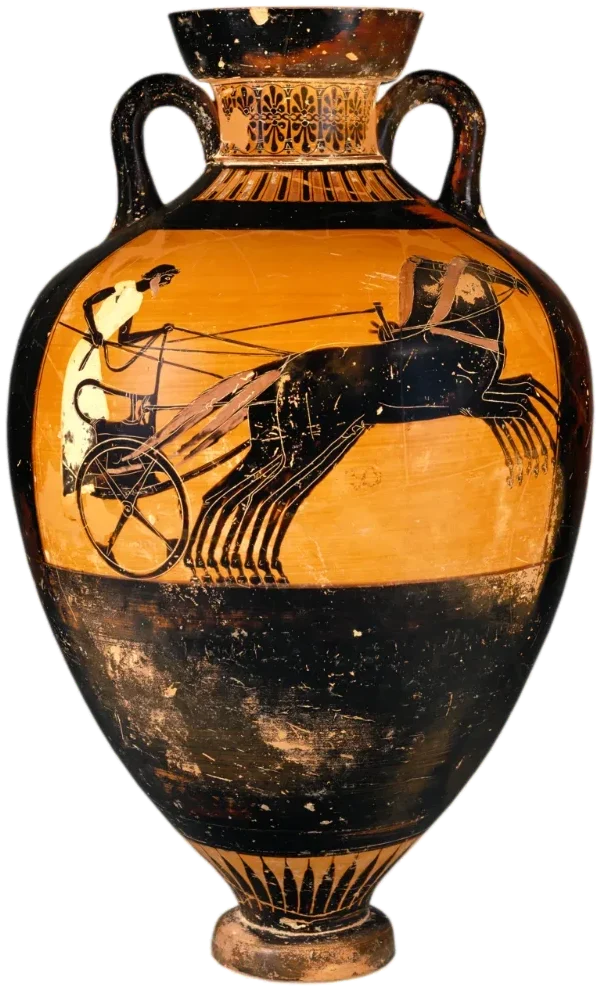
Text and translation
The uninterrupted Greek with its English translation, line by line.
Show text and translation
ἔτι Συρακοσίαν φιλεῖ
Bacchylides · Ode 4 · for Hieron of Syracuse, chariot race, Pythian games of 470 BCE · two strophes (lines 1–20) · aeolic cola with dactyls · text of Jebb (Perseus) with Maehler’s readings and scheme (2004)
How to read each line
A guide to the Greek, syllables, pitch marks and quantities.
Show the reading key
- Above each line: the line as the edition prints it, each word placed over its own syllables. The main row: the same Greek divided into metrical syllables, each written as it is pronounced. A consonant that closes a syllable is written with it (λόθ | ρο); an elided word is closed up with the next vowel (ν’ἀ); a final consonant carried into the next word is set with a thin space (ς ἰ). Wider gaps mark word-ends.
- Above the syllables: the pitch of each syllable, from the accents. Under them: the quantity of each syllable as it falls in the line, then the transliteration, syllable by syllable, with accented syllables in capitals.
- Under each line: a line-for-line translation. In the right margin of the scansion: the line type, its scheme, and its analysis into cola.
Key to the labels
The names, patterns and symbols used beside this poem.
Show the labels and symbols
The labels in the right margin of the scansion below give the line’s analysis as the scheme file states it, then its scheme and, where the analysis notes them, the period-end, a brevis in longo or a hiatus. ‖ marks the end of a period, ||| the end of the stanza; a line without a period-end runs on into the next (synapheia). × is an anceps, long or short; the last position of every period is indifferent. A click on any syllable highlights the colon it belongs to and explains it. The sources of the labels, with their page numbers, are given line by line under Prosody, line by line.
| Label | Name and shape | What it is |
|---|---|---|
| glyc | Glyconic (gl)⏓ ⏓ — ⏑ ⏑ — ⏑ — | The glyconic, the principal aeolic colon: a base of two ancipitia, a choriamb and ⏑ —.[7] In this ode Maehler prints it as ⏑ ⏑ ⏑ — ⏑ ⏑ — ⏑ —, nine syllables for its eight positions: one position of the base is realised as two shorts.[8] In verse 7 he prints the eighth sign as ⟨⏑⟩, because in the second strophe that short exists only in Maas’s correction, which he prints (17: ὀλυμπιονικ⟨ί⟩ας)[9]. |
| hipn | Hipponactean (hipp)⏓ ⏓ — ⏑ ⏑ — ⏑ — — | The glyconic with an extra long at the end.[7] In verse 2 its base is printed as three shorts (one position realised as two shorts), in verse 10 as — ⏑.[8] |
| da4 | Dactylic tetrameter (4 da)— ⏑ ⏑ — ⏑ ⏑ — ⏑ ⏑ — — | Three dactyls and a spondee, as Maehler prints verse 3.[8] |
| dec | Decasyllable (= ⏑ — gl)⏑ — ⏓ ⏒ — ⏑ ⏑ — ⏑ — | Ten syllables which Maehler explains as a glyconic preceded by ⏑ —.[8] Its third and fourth positions, the base of the glyconic, are ancipitia: ⏓ and ⏒ in his scheme. |
| cr | Cretic (cr)— ⏑ — | The cretic, an iambic unit.[7] It closes verse 4. |
| da6 | Dactylic hexameter, catalectic (6 da∧)— ⏑ ⏑ — ⏑ ⏑ — ⏑ ⏑ — ⏑ ⏑ — ⏑ ⏑ — | Five dactyls and a final long, the length of the epic hexameter; Maehler writes it over verses 5–6, with a recurring word-end after the third dactyl, where the written line ends.[8] |
| ba | Baccheus (ba)⏑ — — | The iambic unit ⏑ — —.[7] It follows the hexameter in verse 6 and opens verse 8. |
| hipp1 | Hagesichorean (∧hipp)⏓ — ⏑ ⏑ — ⏑ — — | The hipponactean shortened by its first position; Maehler writes ∧hipp and calls it the hagesichorean, a term coined by West.[7] In verse 8 Maehler gives two analyses: ba ∧hipp, or a choriambic dimeter and a baccheus.[8] |
| chodim | Choriambic dimeter (chodim)⏓ ⏓ ⏓ ⏓ — ⏑ ⏑ — | A flexible base of four ancipitia followed by a choriamb.[10] In verse 9 Bacchylides even splits one long into two shorts: ⏑ ⏑ ⏑ — ⏑ — ⏑ ⏑ —.[11] In verse 8 it is Maehler’s second analysis of the first eight positions. |
Scansion
A short ode in two strophes: glyconics, hipponacteans and a choriambic dimeter with dactylic runs between them, a dactylic hexameter written over two lines, and resolutions in the aeolic bases. The two strophes are laid out against Maehler’s scheme, which marks no period-end inside the strophe.
Even now the city of Syracuse is dear
to Apollo of the golden hair,
and he does honour to Hieron, just guardian of its people;
for a third time, beside the navel of the earth under its lofty cliffs,
he is hymned as a Pythian victor
thanks to the prowess of his fleet-footed horses.
… (lost) … the sweet-singing
cockerel of Urania, queen of the lyre, …
… (lost); yet with a ready mind
… (lost) … he rained down his songs.
And a fourth time, if someone straight
… (lost) … had held the balance of Justice,
we would be praising the son of Deinomenes.
It falls to him, in Cirrha’s hollows by the sea,
alone of all who live on earth, having accomplished this,
to wreathe himself with crowns
and two victories at Olympia
to be celebrated. What is better than, dear
to the gods, of blessings of every sort
to receive one’s portion from them?
Metre
- The poem. Hieron’s chariot victory at Delphi is dated by the scholia on Pindar’s Pythians to the 29th Pythiad, 470 BCE. Both poets celebrated it: Bacchylides with this short ode for a performance at Delphi, presumably immediately after the race, Pindar with the long first Pythian for a performance at Aitna. Pindar calls Hieron ruler of Aitna, Bacchylides ruler of Syracuse; Maehler thinks that Hieron was officially announced at Delphi as a Syracusan.[12] His racehorse had already won the Pythian races of 482 and 478, so this was his third Pythian win with horses.[13]
- Form. The ode has just two strophes and no epode, as do odes 6, 7 and 8 (the monostrophic odes, p. 14)[14]. In 1938 Medea Norsa recognized two fragments of the great London papyrus in Cairo; the first, PSI XII 1278A, gives the middle parts of lines 4–12 and shows how closely the two strophes answer each other in metre and in content: Apollo “honours” Hieron (1–3) ~ “we would honour him” (11–13); the present victory (4–6 ~ 14–16); Apollo’s temple (4) ~ Kirrha (14); “Apollo loves Syracuse” (1) ~ “dear to the gods” (19).[14]
- The metre. Maehler heads the scheme “metrum: aeolica et dactylica” and refers to p. 16, where he lists ode 4 among the iambic and aeolic odes, “combined with dactyls”.[15] The aeolic cola are the glyconic (gl, ⏓ ⏓ — ⏑ ⏑ — ⏑ —), the hipponactean (hipp, the glyconic with an extra long), the hagesichorean (∧hipp, the hipponactean without its first position), the decasyllable that Maehler explains as ⏑ — + gl, and the choriambic dimeter (chodim), a flexible base of four ancipitia and a choriamb.[16] The dactylic cola are a tetrameter (verse 3) and a catalectic hexameter written over verses 5–6. Iambic units close two verses: a cretic (4) and a baccheus (6), and a baccheus opens verse 8. Maehler prints every verse as it is realised, so where a position of an aeolic base is realised as two shorts, his scheme shows three shorts at the start (verses 1, 2, 7, 9); he cites verse 9 ~ 19 as a place where Bacchylides goes so far as to resolve a long into two shorts.[17] For verse 8 he gives two analyses, ba ∧hipp or chodim ba; the colon/foot switch shows the second.
- Periods. Maehler marks recurring word-ends (|) after verses 2–6 and 8–9 and the end of the strophe (|||), but no period-end (‖) inside the strophe.[18] Each strophe is therefore set here as one period: the verses run on, a final consonant passes to the next verse, and only the last syllable of the strophe is free.[19] The dactylic hexameter of verses 5–6 runs over two written lines, divided after the third dactyl at a recurring word-end.[8]
- Responsion. The two strophes answer each other position for position. In the first strophe verses 7, 9 and 10 have lost their beginnings, and in the second verse 12 (and verse 11, which is restored by supplements); those lines are scanned against the positions that survive, and their syllable numbers count from the first of them. Verse 7 has a short in its eighth position (the ἀ- of ἀναξιφόρμιγγος), which the papyrus text of verse 17 lacks: Maehler prints Maas’s correction ὀλυμπιονικ⟨ί⟩ας and marks the sign ⟨⏑⟩ in his scheme.[20]
- Prosody. The workbench uses the epic rules, with the metre deciding where they leave a choice. Maehler marks with a loop the stop + liquid that does not make position, as in χρυσοκόμας (2), where ὁ stays short.[21] A final diphthong is shortened before a vowel (correption): -ται before ὠ- (5–6), which Maehler prints with a breve.[22] Two vowels inside a word are sung as one syllable in Δεινομένεος (13), marked with a loop.[23] μοῦνον (15) is the epic form with a long first syllable.[24] Doric long ᾱ for Ionic η in ἁδυεπής, Οὐρανίας, Δίκας, χρυσοκόμας and others.[25]
- Text. Jebb’s text, with Maehler’s text in lines 4–12, which uses the fragment PSI XII 1278A, found after Jebb’s edition;[26] with Maehler’s reading Κ[ί]ρρας (14), Jebb’s Κρίσ]ας; and with Maas’s ὀλυμπιονικ⟨ί⟩ας (17), printed by Maehler, where Jebb has Ὀλυμπιονίκας. At 14 the papyrus is corrupt; Jebb’s πάρεστίν νιν (Blass) is kept, and Maehler’s alternative is given in the note. Brackets mark supplements; … marks a gap. Macrons and breves on doubtful vowels are editorial aids and are not shown on the page.
Prosody, line by line
Every syllable, with the reason for its length. Quantities are read from the vowel where the spelling shows it, from the consonants that follow (“position”), from the accent where it tells, and from the metre where nothing else does. Editors’ notes on the text follow in the boxed paragraphs.
- 4.1
Line 4.1 · ἔτι Συρακοσίαν φιλεῖ
ἔτι Συρακοσίαν φιλεῖ
ἔτιΣυρακοσίανφιλεῖthe period runs on into 4.2 (synapheia).
The label in the margin, with its sources: Maehler 2004, p. 37, as printed: ⏑ ⏑ ⏑ — ⏑ ⏑ — ⏑ —.
- 1 ⏑ἔἔ is short by nature.
- 2 ⏑τιι is short by the metre (position 2 must be short).
- 3 ⏑Συυ is short by the metre (position 3 must be short).
- 4 —ραᾱ is long (its length is not shown by the ordinary spelling).
- 5 ⏑κοο is short by nature.
- 6 ⏑σίί is short by the metre (position 6 must be short).
- 7 —ανα is a vowel of unknown length; closed by ν: long by position.
- 8 ⏑φιι is short by the metre (position 8 must be short).
- 9 —λεῖεῖ is a diphthong, long by nature; the line-end is not a period-end: the period runs on into the next line (synapheia), so this syllable keeps its own length, with no brevis in longo, and a word may run over into the next line.[27]
⏑ ⏑ ⏑ — ⏑ ⏑ — ⏑ — (gl):[8] nine syllables for the eight positions of the glyconic, one position of the base realised as two shorts. Συρακοσίαν has a long ᾱ in its second syllable, as in Σῠρᾱ́κουσαι,[28] which fills the fourth position. ἔτι: Apollo “still” loves Syracuse, after Hieron had been successful twice before; φιλεῖν expresses a god’s special care for a favourite city, here the victor’s.[14] There is no period-end, so the verse runs on.- 4.2
Line 4.2 · πόλιν ὁ χρυσοκόμας Ἀπόλλων,
πόλιν ὁ χρυσοκόμας Ἀπόλλων,
πόλιν ὁχρυσοκόμαςἈπόλλω,continues 4.1 · one period (synapheia); the period runs on into 4.3 (synapheia).
The label in the margin, with its sources: Maehler 2004, p. 37, as printed: ⏑ ⏑ ⏑ — ⏑ ⏑ — ⏑ — — |.
- 1 ⏑πόό is short by nature.
- 2 ⏑λιι is short by the metre (position 2 must be short).
- 3 ⏑ν ὁὁ is short by nature; the next word begins with χρ, a stop + liquid that does not make position here, so the syllable stays short; the first consonant belongs to the previous word and is carried over to this vowel.
- 4 —χρυυ is long by the metre (position 4 must be long).
- 5 ⏑σοο is short by nature.
- 6 ⏑κόό is short by nature.
- 7 —μαςα is long by the metre (position 7 must be long).
- 8 ⏑ἈἈ is short by the metre (position 8 must be short).
- 9 —πόλό is short by nature; closed by λ: long by position.
- 10 —λω,ω is long by nature; the line-end is not a period-end: the period runs on into the next line (synapheia), so this syllable keeps its own length, with no brevis in longo, and a word may run over into the next line.[27]
- 4.3
Line 4.3 · ἀστύθεμίν θ’ Ἱέρωνα γεραίρει·
ἀστύθεμίν θ’ Ἱέρωνα γεραίρει·
ν ἀστύθεμίνθ’Ἱέρωναγεραίρει·continues 4.2 · one period (synapheia); the period runs on into 4.4 (synapheia).
The label in the margin, with its sources: Maehler 2004, p. 37, as printed: — ⏑ ⏑ — ⏑ ⏑ — ⏑ ⏑ — — |.
- 1 —ν ἀσἀ is a vowel of unknown length; closed by σ: long by position; the first consonant belongs to the previous word and is carried over to this vowel.
- 2 ⏑τύύ is short by the metre (position 2 must be short).
- 3 ⏑θεε is short by nature.
- 4 —μίνί is a vowel of unknown length; closed by ν: long by position.
- 5 ⏑θ’ἹἹ is short by the metre (position 5 must be short); the apostrophe marks an elided vowel; the consonant before it joins this syllable.
- 6 ⏑έέ is short by nature.
- 7 —ρωω is long by nature.
- 8 ⏑ναα is short by the accent rule: acute on the antepenult requires a short final syllable.
- 9 ⏑γεε is short by nature.
- 10 —ραίαί is a diphthong, long by nature.
- 11 —ρει·ει is a diphthong, long by nature; the next word begins with τρ: the syllable is closed before it: long by position; the line-end is not a period-end: the period runs on into the next line (synapheia), so this syllable keeps its own length, with no brevis in longo, and a word may run over into the next line.[27]
— ⏑ ⏑ — ⏑ ⏑ — ⏑ ⏑ — — | (4 da).[8] ἀστύθεμις, “righteous ruler”, occurs only here; it is one of the rare compounds in Bacchylides made up of two nouns,[30] with a short υ (ἀστῠ́θεμις)[28]. θ’ is τε elided, its τ aspirated before Ἱέρωνα.[31] The papyrus punctuates after γεραίρει, as after the answering verse 13.[32]- 4.4
Line 4.4 · τρίτον γὰρ παρ’ ὀμφαλὸν ὑψιδείρου χθονὸς
τρίτον γὰρ παρ’ ὀμφαλὸν ὑψιδείρου χθονὸς
τρίτονγὰρπαρ’[ὀμ][φα]λὸν ὑψιδείρουχθονὸςcontinues 4.3 · one period (synapheia); the period runs on into 4.5 (synapheia).
The label in the margin, with its sources: Maehler 2004, p. 37, as printed: ⏑ — ⏓ ⏒ — ⏑ ⏑ — ⏑ — — ⏑ — |.
- 1 ⏑τρίί is short by the metre (position 1 must be short).
- 2 —τονο is short by nature; closed by ν: long by position.
- 3 —γὰρὰ is a vowel of unknown length; closed by ρ: long by position; the position is anceps.
- 4 ⏑παᾰ is short (its length is not shown by the ordinary spelling); the position is anceps.
- 5 —ρ’[ὀμ]ὀ is short by nature; closed by μ: long by position; the apostrophe marks an elided vowel; the consonant before it joins this syllable.
- 6 ⏑[φα]α is short by the metre (position 6 must be short).
- 7 ⏑λὸὸ is short by nature.
- 8 —ν ὑψ is a double consonant (two sounds) and closes the syllable: long by position; the first consonant belongs to the previous word and is carried over to this vowel.
- 9 ⏑ψιι is short by the metre (position 9 must be short).
- 10 —δείεί is a diphthong, long by nature.
- 11 —ρουου is a diphthong, long by nature; the next word begins with χθ: the syllable is closed before it: long by position.
- 12 ⏑χθοο is short by nature.
- 13 —νὸςὸ is short by nature; closed by ς: long by position; the line-end is not a period-end: the period runs on into the next line (synapheia), so this syllable keeps its own length, with no brevis in longo, and a word may run over into the next line.[27]
⏑ — ⏓ ⏒ — ⏑ ⏑ — ⏑ — — ⏑ — | (decasyllable, = ⏑ — gl, and cretic).[8] The two ancipitia are realised long (γάρ) and short (πα-: παρά has a short α)[28]. τρίτον: after the racehorse’s wins at Delphi in 482 and 478, the chariot victory of 470 made three Pythian successes with horses for Hieron.[30] The ὀμφαλός, the stone “navel” in Apollo’s temple, was held to mark the middle of the earth; “the high-ridged land” refers to the cliffs of the Phaidriades above the sanctuary.[30] παρ’ is elided.[31]- 4.5
Line 4.5 · Πυθιόνικος ἀείδεται
Πυθιόνικος ἀείδεται
Πυ[θ]ιόνικος ἀ[εί][δε]ταιcontinues 4.4 · one period (synapheia); the period runs on into 4.6 (synapheia).
The label in the margin, with its sources: Maehler 2004, p. 37, as printed: — ⏑ ⏑ — ⏑ ⏑ — ⏑ ⏑ |, the first part of the hexameter labelled on the next verse.
- 1 —Πυῡ is long (its length is not shown by the ordinary spelling).
- 2 ⏑[θ]ιι is short by the metre (position 2 must be short).
- 3 ⏑όό is short by nature.
- 4 —νιῑ is long (its length is not shown by the ordinary spelling).
- 5 ⏑κοο is short by nature.
- 6 ⏑ς ἀἀ is short by the metre (position 6 must be short); the first consonant belongs to the previous word and is carried over to this vowel.
- 7 —[εί]εί is a diphthong, long by nature.
- 8 ⏑[δε]ε is short by nature.
- 9 ⏑ταιαι is a diphthong, long by nature; shortened before the vowel that begins the next word (epic correption), as the metre requires; the line-end is not a period-end: the period runs on into the next line (synapheia), so this syllable keeps its own length, with no brevis in longo, and a word may run over into the next line.[27]
— ⏑ ⏑ — ⏑ ⏑ — ⏑ ⏑ |, the first part of the catalectic dactylic hexameter labelled on verse 6:[8] verse 6 continues verse 5, one colon over two written lines. Πυθιόνικος has long υ and long ι (Πῡθιόνῑκος)[28]. The -ται of ἀείδεται is shortened before the ὠ- of verse 6 (correption), and Maehler prints it ταῐ̆.[22] The brackets are those of Maehler’s text.- 4.6
Line 4.6 · ὠκυπόδων ἀρετᾷ σὺν ἵππων.
ὠκυπόδων ἀρετᾷ σὺν ἵππων.
ὠ[κυ]πόδωνἀρ[ε][τᾷ]σὺν ἵππων.continues 4.5 · one period (synapheia); the period runs on into 4.7 (synapheia).
The label in the margin, with its sources: Maehler 2004, p. 37, as printed: — ⏑ ⏑ — ⏑ ⏑ — | ⏑ — — |.
- 1 —ὠὠ is long by nature.
- 2 ⏑[κυ]υ is short by the metre (position 2 must be short).
- 3 ⏑πόό is short by nature.
- 4 —δωνω is long by nature.
- 5 ⏑ἀἀ is short by the metre (position 5 must be short).
- 6 ⏑ρ[ε]ε is short by nature.
- 7 —[τᾷ]ᾷ is long by nature.
- 8 ⏑σὺὺ is short by the metre (position 8 must be short).
- 9 —ν ἵπἵ is a vowel of unknown length; closed by π: long by position; the first consonant belongs to the previous word and is carried over to this vowel.
- 10 —πων.ω is long by nature; closed by ν: long by position; the line-end is not a period-end: the period runs on into the next line (synapheia), so this syllable keeps its own length, with no brevis in longo, and a word may run over into the next line.[27]
- 4.7
Line 4.7 · … ἁδυεπὴς ἀνα-
… ἁδυεπὴς ἀνα-
ἁδυεπὴςἀ[να]-continues 4.6 · one period (synapheia); the period runs on into 4.8 (synapheia).
The label in the margin, with its sources: Maehler 2004, p. 37, as printed: ⏑ ⏑ ⏑ — ⏑ ⏑ — <⏑> —. Positions 1–3 are lost; the syllable numbers on this line count from position 4.
- 1 —ἁἁ is long by the metre (position 1 must be long).
- 2 ⏑δυυ is short by the metre (position 2 must be short).
- 3 ⏑εε is short by nature.
- 4 —πὴςὴ is long by nature.
- 5 ⏑ἀἀ is short by the metre (position 5 must be short).
- 6 —[να]-ξ is a double consonant (two sounds) and closes the syllable: long by position; the line-end is not a period-end: the period runs on into the next line (synapheia), so this syllable keeps its own length, with no brevis in longo, and a word may run over into the next line.[27]
Only positions 4–9 of ⏑ ⏑ ⏑ — ⏑ ⏑ — ⟨⏑⟩ — (gl) survive;[8] the syllable numbers on this line count from position 4. Of the lost beginning the papyrus keeps only an ε, which is left out of the line here; Snell’s ἔ[λακε δ’], “(the cockerel) crowed”, would fit the space, which matches the gap in line 12.[33] ἁδυεπής, “sweet-voiced”, is the Doric form of ἡδυεπής,[28] with the long ᾱ. The short ἀ- of ἀναξιφόρμιγγος fills the eighth position, which Maehler marks ⟨⏑⟩ because the second strophe has it only by correction.[34] ἀ[ναξιφόρ]μιγγος, “lord of the lyre”, is supplied by Maas, after Pindar O. 2.1;[35] the word is divided between verses 7 and 8.Campbell prints the supplements of Snell and Maehler in lines 7–11, [ἔλακε δ’] … ποτὲ μ]έν … νῦν νέο]υς … ἔτι δὲ τέ]τρατον, and θεὸς] in 12.[36]
- 4.8
Line 4.8 · ξιφόρμιγγος Οὐρανίας ἀλέκτωρ
ξιφόρμιγγος Οὐρανίας ἀλέκτωρ
[ξι][φόρ]μιγγος Οὐρ[α][ν]ίαςἀλέκτωρcontinues 4.7 · one period (synapheia); the period runs on into 4.9 (synapheia).
The label in the margin, with its sources: Maehler 2004, p. 37, as printed: ⏑ — — ⏑ — ⏑ ⏑ — ⏑ — — |.
- 1 ⏑[ξι]ι is short by the metre (position 1 must be short).
- 2 —[φόρ]ό is short by nature; closed by ρ: long by position.
- 3 —μιγι is a vowel of unknown length; closed by γ: long by position.
- 4 ⏑γοο is short by nature.
- 5 —ς ΟὐΟὐ is a diphthong, long by nature; the first consonant belongs to the previous word and is carried over to this vowel.
- 6 ⏑ρ[α]α is short by the metre (position 6 must be short).
- 7 ⏑[ν]ίί is short by the metre (position 7 must be short).
- 8 —αςα is long by the metre (position 8 must be long).
- 9 ⏑ἀἀ is short by the metre (position 9 must be short).
- 10 —λέκέ is short by nature; closed by κ: long by position.
- 11 —τωρω is long by nature; closed by ρ: long by position; the line-end is not a period-end: the period runs on into the next line (synapheia), so this syllable keeps its own length, with no brevis in longo, and a word may run over into the next line.[27]
⏑ — — ⏑ — ⏑ ⏑ — ⏑ — — | (ba ∧hipp, or chodim ba).[8] The -να- at the end of verse 7 is long by position before ξ, which counts as two consonants.[37] Οὐρανίας has the Doric long ᾱ in its ending, as the eighth position requires. The fragments in Florence made it clear that the cockerel (ἀλέκτωρ) of the Muse Ourania stands for the poet, as the nightingale does in ode 3.[30]- 4.9
Line 4.9 · …εν· ἀλλ’ ἑκόντι νόῳ
…εν· ἀλλ’ ἑκόντι νόῳ
ε·ν ἀλλ’ἑκ[όν]τινόῳcontinues 4.8 · one period (synapheia); the period runs on into 4.10 (synapheia).
The label in the margin, with its sources: Maehler 2004, p. 37, as printed: ⏑ ⏑ ⏑ — ⏑ — ⏑ ⏑ — |. Positions 1–2 are lost; the syllable numbers on this line count from position 3.
- 1 ⏑ε·ε is short by nature.
- 2 —ν ἀλἀ is a vowel of unknown length; closed by λ: long by position; the first consonant belongs to the previous word and is carried over to this vowel.
- 3 ⏑λ’ἑἑ is short by nature; the apostrophe marks an elided vowel; the consonant before it joins this syllable.
- 4 —κ[όν]ό is short by nature; closed by ν: long by position.
- 5 ⏑τιι is short by the metre (position 5 must be short).
- 6 ⏑νόό is short by nature.
- 7 —ῳῳ is long by nature; the line-end is not a period-end: the period runs on into the next line (synapheia), so this syllable keeps its own length, with no brevis in longo, and a word may run over into the next line.[27]
Only positions 3–9 of ⏑ ⏑ ⏑ — ⏑ — ⏑ ⏑ — (chodim) survive;[8] the syllable numbers on this line count from position 3. ἀλλ’ implies a contrast with what preceded, which cannot have been a negative, because no long syllable such as οὐ or μή can be supplied at the beginnings of 7 and 9; Maehler suggests a contrast of past and present, e.g. [ποτὲ μ]έν … ἀλλ’ ἑκ[όν]τι νόῳ.[30] The ν of ]εν passes to ἀλλ’, so the ε is short. ἀλλ’ is elided.[31]- 4.10
Line 4.10 · …ους ἐπέσεισεν ὕμνους.
…ους ἐπέσεισεν ὕμνους.
[ο]υςἐπέσεισεν ὕμνους.continues 4.9 · one period (synapheia).
The label in the margin, with its sources: Maehler 2004, p. 37, as printed: — ⏑ — ⏑ ⏑ — ⏑ — — |||. Positions 1–2 are lost; the syllable numbers on this line count from position 3.
- 1 —[ο]υςου is a diphthong, long by nature.
- 2 ⏑ἐἐ is short by nature.
- 3 ⏑πέέ is short by nature.
- 4 —σειει is a diphthong, long by nature.
- 5 ⏑σεε is short by nature.
- 6 —ν ὕμὕ is a vowel of unknown length; closed by μ: long by position; the first consonant belongs to the previous word and is carried over to this vowel.
- 7 ×νους.ου is a diphthong, long by nature; closed by ς: long by position; the last position of the period is indifferent.
Only positions 3–9 of — ⏑ — ⏑ ⏑ — ⏑ — — ||| (hipp) survive;[8] the syllable numbers on this line count from position 3. ἐπέσεισεν is Lobel’s reading, from a scholion in papyrus M;[38] the commentary in papyrus B (P.Oxy. 2367) seems to have explained it metaphorically, “to shower with”; the idea behind the metaphor is the φυλλοβολία, the showering with leaves.[35] The ς of the lost word before it passes to ἐπέσεισεν. The first strophe ends here.- 4.11
Line 4.11 · ἔτι δὲ τέτρατον εἴ τις ὀρ-
ἔτι δὲ τέτρατον εἴ τις ὀρ-
[ἔ][τι][δὲ][τέ]τρατον εἴτις ὀρthe period runs on into 4.12 (synapheia).
The label in the margin, with its sources: Maehler 2004, p. 37 (verse 1); the beginning is supplemented (Pfeiffer, Gallavotti).
- 1 ⏑[ἔ]ἔ is short by nature.
- 2 ⏑[τι]ι is short by the metre (position 2 must be short).
- 3 ⏑[δὲ]ὲ is short by nature.
- 4 —[τέ]τέ is short by nature; closed by τ before a liquid: stop + liquid makes position, as it usually does in epic.
- 5 ⏑ραα is short by the metre (position 5 must be short).
- 6 ⏑τοο is short by nature.
- 7 —ν εἴεἴ is a diphthong, long by nature; the first consonant belongs to the previous word and is carried over to this vowel.
- 8 ⏑τιι is short by the metre (position 8 must be short).
- 9 —ς ὀρὀ is short by nature; closed by ρ: long by position; the first consonant belongs to the previous word and is carried over to this vowel; the line-end is not a period-end: the period runs on into the next line (synapheia), so this syllable keeps its own length, with no brevis in longo, and a word may run over into the next line.[27]
⏑ ⏑ ⏑ — ⏑ ⏑ — ⏑ — (gl).[8] ἔτι δέ is Pfeiffer’s supplement, τέ]τρατον Gallavotti’s.[38] τε- is long by position before τρ. Lines 11–13 are an unfulfilled condition: had some power acted otherwise, the chorus would now be celebrating a fourth victory of Hieron.[35] The word that begins with ὀρ- is divided between verses 11 and 12.- 4.12
Line 4.12 · … εἷλκε Δίκας τάλαντον
… εἷλκε Δίκας τάλαντον
εἷλκεΔίκαςτάλαν[τον]continues 4.11 · one period (synapheia); the period runs on into 4.13 (synapheia).
The label in the margin, with its sources: Maehler 2004, p. 37 (verse 2). Positions 1–3 are lost; the syllable numbers on this line count from position 4.
- 1 —εἷλεἷ is a diphthong, long by nature; closed by λ: long by position.
- 2 ⏑κεε is short by nature.
- 3 ⏑Δίί is short by the metre (position 3 must be short).
- 4 —καςα is a vowel of unknown length; closed by ς: long by position.
- 5 ⏑τάά is short by the metre (position 5 must be short).
- 6 —λανα is a vowel of unknown length; closed by ν: long by position.
- 7 —[τον]ο is short by nature; closed by ν: long by position; the line-end is not a period-end: the period runs on into the next line (synapheia), so this syllable keeps its own length, with no brevis in longo, and a word may run over into the next line.[27]
Only positions 4–10 of ⏑ ⏑ ⏑ — ⏑ ⏑ — ⏑ — — (hipp) survive;[8] the syllable numbers on this line count from position 4. Snell supplemented ὀρ[θὰ θεὸς] … τάλαν[τα], making a god the one who would have held the scales straight; Maehler agrees that the subject is a god, since in all the early parallels it is Zeus who holds the scales, and thinks that Hieron might have won a fourth victory if the scales of Dike had been held straight.[39] Maehler’s text gives the last syllable only as a long (τάλαν[τ –); Jebb’s supplement τάλαν[τον], printed here, gives the long before the Δ- of verse 13. Δίκας has the Doric long ᾱ.Campbell prints τάλαν[τα, plural; its last syllable would then be short where line 2 has the long -λων.[36]
- 4.13
Line 4.13 · Δεινομένε‿ος κ’ ἐγεραίρομεν υἱόν.
Δεινομένε‿ος κ’ ἐγεραίρομεν υἱόν.
Δεινομένε‿οςκ’ἐγερα[ί][ρ]ομεν υἱόν.continues 4.12 · one period (synapheia); the period runs on into 4.14 (synapheia).
The label in the margin, with its sources: Maehler 2004, p. 37 (verse 3).
- 1 —Δειει is a diphthong, long by nature.
- 2 ⏑νοο is short by nature.
- 3 ⏑μέέ is short by nature.
- 4 —νε‿οςεο is two vowels of one word pronounced together as one long syllable (synizesis); closed by ς: long by position.
- 5 ⏑κ’ἐἐ is short by nature; the apostrophe marks an elided vowel; the consonant before it joins this syllable.
- 6 ⏑γεε is short by nature.
- 7 —ρα[ί]αί is a diphthong, long by nature.
- 8 ⏑[ρ]οο is short by nature.
- 9 ⏑μεε is short by nature.
- 10 —ν υἱυἱ is a diphthong, long by nature; the first consonant belongs to the previous word and is carried over to this vowel.
- 11 —όν.ό is short by nature; closed by ν: long by position; the line-end is not a period-end: the period runs on into the next line (synapheia), so this syllable keeps its own length, with no brevis in longo, and a word may run over into the next line.[27]
— ⏑ ⏑ — ⏑ ⏑ — ⏑ ⏑ — — | (4 da).[8] The εο of Δεινομένεος is sung as one syllable, which Maehler marks with a loop;[40] synecphonesis inside a word is frequent where the first vowel is ε.[41] κ’ is κε (= ἄν) elided. The verse echoes Ἱέρωνα γεραίρει in the answering verse 3, with punctuation in the papyrus after both.[32]- 4.14
Line 4.14 · πάρεστίν νιν ἀγχιάλοισι Κίρρας μυχοῖς
πάρεστίν νιν ἀγχιάλοισι Κίρρας μυχοῖς
πάρεστίννιν ἀγχιάλοισιΚ[ί]ρραςμυχοῖςcontinues 4.13 · one period (synapheia); the period runs on into 4.15 (synapheia).
The label in the margin, with its sources: Maehler 2004, p. 37 (verse 4); the first word is corrupt in the papyrus.
- 1 ⏑πάά is short by the metre (position 1 must be short).
- 2 —ρεσε is short by nature; closed by σ: long by position.
- 3 —τίνί is a vowel of unknown length; closed by ν: long by position; the position is anceps.
- 4 ⏑νιῐ is short (its length is not shown by the ordinary spelling); the position is anceps.
- 5 —ν ἀγἀ is a vowel of unknown length; closed by γ: long by position; the first consonant belongs to the previous word and is carried over to this vowel.
- 6 ⏑χιι is short by the metre (position 6 must be short).
- 7 ⏑άά is short by the metre (position 7 must be short).
- 8 —λοιοι is a diphthong, long by nature.
- 9 ⏑σιι is short by the accent rule: acute on the antepenult requires a short final syllable.
- 10 —Κ[ί]ρί is a vowel of unknown length; closed by ρ: long by position.
- 11 —ραςα is a vowel of unknown length; closed by ς: long by position.
- 12 ⏑μυυ is short by the metre (position 12 must be short).
- 13 —χοῖςοῖ is a diphthong, long by nature; closed by ς: long by position; the line-end is not a period-end: the period runs on into the next line (synapheia), so this syllable keeps its own length, with no brevis in longo, and a word may run over into the next line.[27]
⏑ — ⏓ ⏒ — ⏑ ⏑ — ⏑ — — ⏑ — | (decasyllable and cretic).[8] The papyrus has ΠΑΡΕΣΤΙΑΝ, which Maehler obelizes: the metre requires ⏑ — — ⏑, not ⏑ — ⏑ —, and the infinitives of 16 and 18 need a finite verb, so Blass’s πάρεστιν is necessary; Maehler prefers πάρεστιν δ’ ἐν to Blass’s πάρεστίν νιν, which Jebb prints and which is kept here; both give ⏑ — — ⏑; the ι of νιν is short (νῐν)[28].[42] Κ[ί]ρρας is Maehler’s reading of the papyrus, where Jebb supplemented Κρίσ]ας; LSJ s.v. Κρῖσα gives Κίρρα as another name of the place. “The seaside glens of Kirrha” answer the navel of verse 4: the chariot race was held in the plain near Kirrha, below the sanctuary.[32] The -σι of ἀγχιάλοισι is short before Κ-.Campbell prints Maehler’s πάρεστιν δ’ ἐν for Jebb’s πάρεστίν νιν; the scansion is the same.[36]
- 4.15
Line 4.15 · μοῦνον ἐπιχθονίων τάδε
μοῦνον ἐπιχθονίων τάδε
μοῦνον ἐπιχθονίωντάδεcontinues 4.14 · one period (synapheia); the period runs on into 4.16 (synapheia).
The label in the margin, with its sources: Maehler 2004, p. 37 (verse 5).
- 1 —μοῦοῦ is a diphthong, long by nature.
- 2 ⏑νοο is short by nature.
- 3 ⏑ν ἐἐ is short by nature; the first consonant belongs to the previous word and is carried over to this vowel.
- 4 —πιχι is a vowel of unknown length; closed by χ: long by position.
- 5 ⏑θοο is short by nature.
- 6 ⏑νίί is short by the metre (position 6 must be short).
- 7 —ωνω is long by nature; closed by ν: long by position.
- 8 ⏑τάά is short by the metre (position 8 must be short).
- 9 ⏑δεε is short by nature; the line-end is not a period-end: the period runs on into the next line (synapheia), so this syllable keeps its own length, with no brevis in longo, and a word may run over into the next line.[27]
— ⏑ ⏑ — ⏑ ⏑ — ⏑ ⏑ |, the first part of the catalectic hexameter, which continues in verse 16.[8] μοῦνον, “alone”, is the epic form with a long first syllable, used for metrical convenience.[24] μοῦνον ἐπιχθονίων is a frequent topos in eulogies; when Bacchylides makes Hieron the one man to have won three times at Delphi, he means victories with horses, as verse 6 has already shown.[43] The ν of μοῦνον passes to ἐπιχθονίων.- 4.16
Line 4.16 · μησάμενον στεφάνοις ἐρέπτειν
μησάμενον στεφάνοις ἐρέπτειν
μησάμενονστεφάνοιςἐρέπτεινcontinues 4.15 · one period (synapheia); the period runs on into 4.17 (synapheia).
The label in the margin, with its sources: Maehler 2004, p. 37 (verse 6).
- 1 —μηη is long by nature.
- 2 ⏑σάά is short by the metre (position 2 must be short).
- 3 ⏑μεε is short by nature.
- 4 —νονο is short by nature; closed by ν: long by position.
- 5 ⏑στεε is short by nature.
- 6 ⏑φάά is short by the metre (position 6 must be short).
- 7 —νοιςοι is a diphthong, long by nature.
- 8 ⏑ἐἐ is short by nature.
- 9 —ρέπέ is short by nature; closed by π: long by position.
- 10 —τεινει is a diphthong, long by nature; closed by ν: long by position; the line-end is not a period-end: the period runs on into the next line (synapheia), so this syllable keeps its own length, with no brevis in longo, and a word may run over into the next line.[27]
- 4.17
Line 4.17 · δύο τ’ ὀλυμπιονικ⟨ί⟩ας
δύο τ’ ὀλυμπιονικ⟨ί⟩ας
δύοτ’ὀλυμπιονικίαcontinues 4.16 · one period (synapheia); the period runs on into 4.18 (synapheia).
The label in the margin, with its sources: Maehler 2004, p. 37 (verse 7): the short in the eighth position (<⏑>) is Maas’s addition, ὀλυμπιονικ⟨ί⟩ας, printed by Maehler (p. 106).
- 1 ⏑δύύ is short by the metre (position 1 must be short).
- 2 ⏑οο is short by nature.
- 3 ⏑τ’ὀὀ is short by nature; the apostrophe marks an elided vowel; the consonant before it joins this syllable.
- 4 —λυμυ is a vowel of unknown length; closed by μ: long by position.
- 5 ⏑πιι is short by the metre (position 5 must be short).
- 6 ⏑οο is short by nature.
- 7 —νιι is long by the metre (position 7 must be long).
- 8 ⏑κίί is short by the metre (position 8 must be short).
- 9 —αᾱ is long (its length is not shown by the ordinary spelling); the line-end is not a period-end: the period runs on into the next line (synapheia), so this syllable keeps its own length, with no brevis in longo, and a word may run over into the next line.[27]
⏑ ⏑ ⏑ — ⏑ ⏑ — ⏑ — (gl).[8] ὀλυμπιονικ⟨ί⟩ας, “Olympic victories”, is Maas’s correction, printed by Maehler (cf. ἀεθλονικία, Pindar N. 3.7); the papyrus has ὀλυμπιονίκας, which Jebb prints and which is one syllable short of the answering verse 7.[20] They are the wins of Hieron’s racehorse in 476, the subject of Bacchylides 5 and Pindar O. 1, and in 472.[9] The ι of -νικ- is long (Ὀλυμπιονίκης [ῑ])[28]; the accusative plural -ίας has a long ᾱ, and its ς passes to ἀείδειν.- 4.18
Line 4.18 · ἀείδειν. τί φέρτερον ἢ θεοῖσιν
ἀείδειν. τί φέρτερον ἢ θεοῖσιν
ς ἀείδειν.τίφέρτερον ἢθεοῖσινcontinues 4.17 · one period (synapheia); the period runs on into 4.19 (synapheia).
The label in the margin, with its sources: Maehler 2004, p. 37 (verse 8).
- 1 ⏑ς ἀἀ is short by the metre (position 1 must be short); the first consonant belongs to the previous word and is carried over to this vowel.
- 2 —είεί is a diphthong, long by nature.
- 3 —δειν.ει is a diphthong, long by nature; closed by ν: long by position.
- 4 ⏑τίί is short by the metre (position 4 must be short).
- 5 —φέρέ is short by nature; closed by ρ: long by position.
- 6 ⏑τεε is short by nature.
- 7 ⏑ροο is short by nature.
- 8 —ν ἢἢ is long by nature; the first consonant belongs to the previous word and is carried over to this vowel.
- 9 ⏑θεε is short by nature.
- 10 —οῖοῖ is a diphthong, long by nature.
- 11 —σινι is a vowel of unknown length; closed by ν: long by position; the line-end is not a period-end: the period runs on into the next line (synapheia), so this syllable keeps its own length, with no brevis in longo, and a word may run over into the next line.[27]
- 4.19
Line 4.19 · φίλον ἐόντα παντοδαπῶν
φίλον ἐόντα παντοδαπῶν
φίλον ἐόνταπαντο[δ]απῶνcontinues 4.18 · one period (synapheia); the period runs on into 4.20 (synapheia).
The label in the margin, with its sources: Maehler 2004, p. 37 (verse 9): one long split into two shorts (Maehler 2004, p. 17).
- 1 ⏑φίί is short by the metre (position 1 must be short).
- 2 ⏑λοο is short by nature.
- 3 ⏑ν ἐἐ is short by nature; the first consonant belongs to the previous word and is carried over to this vowel.
- 4 —όνό is short by nature; closed by ν: long by position.
- 5 ⏑ταα is short by the metre (position 5 must be short).
- 6 —πανα is a vowel of unknown length; closed by ν: long by position.
- 7 ⏑τοο is short by nature.
- 8 ⏑[δ]αα is short by the metre (position 8 must be short).
- 9 —πῶνῶ is long by nature; closed by ν: long by position; the line-end is not a period-end: the period runs on into the next line (synapheia), so this syllable keeps its own length, with no brevis in longo, and a word may run over into the next line.[27]
⏑ ⏑ ⏑ — ⏑ — ⏑ ⏑ — | (chodim):[8] Maehler cites 4.9 ~ 19 for a choriambic dimeter in which one long is split into two shorts.[10] ἐόντα has three syllables here, as the nine syllables of the verse require. θεοῖσιν φίλον ἐόντα harks back to the opening sentence, so rounding off the ode.[9] παντοδαπός has a short α (παντοδᾰπός)[28].- 4.20
Line 4.20 · λαγχάνειν ἄπο μοῖραν ἐσθλῶν;
λαγχάνειν ἄπο μοῖραν ἐσθλῶν;
λαγχάνεινἄπομοῖρα[ν] ἐσθλῶν;continues 4.19 · one period (synapheia).
The label in the margin, with its sources: Maehler 2004, p. 37 (verse 10); end of the second strophe and of the ode.
- 1 —λαγα is a vowel of unknown length; closed by γ: long by position.
- 2 ⏑χάά is short by the metre (position 2 must be short).
- 3 —νεινει is a diphthong, long by nature.
- 4 ⏑ἄἄ is short by the metre (position 4 must be short).
- 5 ⏑ποο is short by nature.
- 6 —μοῖοῖ is a diphthong, long by nature.
- 7 ⏑ραα is short by the accent rule: circumflex on the penult requires a short final syllable.
- 8 —[ν] ἐσἐ is short by nature; closed by σ: long by position; the first consonant belongs to the previous word and is carried over to this vowel.
- 9 ×θλῶν;ῶ is long by nature; closed by ν: long by position; the last position of the period is indifferent.
Notes
- ^ a b Maehler 2004, pp. 9, 100.
- ^ Maehler 2004, pp. 100–101.
- ^ Fearn 2022, p. 347.
- ^ Maehler 2004, p. 101.
- ^ Maehler 2004, p. 9.
- ^ Maehler 2004, pp. 28–29, 102.
- ^ a b c d e Maehler 2004, p. 16.
- ^ a b c d e f g h i j k l m n o p q r s t u v w x y z aa Maehler 2004, p. 37.
- ^ a b c d e Maehler 2004, p. 106.
- ^ a b Maehler 2004, p. 17.
- ^ Maehler 2004, p. 17, citing 4.9 and 19.
- ^ Maehler 2004, pp. 100–101.
- ^ Maehler 2004, pp. 101, 103.
- ^ a b c Maehler 2004, p. 102.
- ^ Maehler 2004, pp. 16, 37.
- ^ Maehler 2004, pp. 16–17, 37.
- ^ Maehler 2004, pp. 17, 37.
- ^ Maehler 2004, pp. 31, 37.
- ^ West 1987, p. 12.
- ^ a b Maehler 2004, pp. 37, 106.
- ^ a b Maehler 2004, pp. 12, 31, 37.
- ^ a b Maehler 2004, pp. 13, 38; West 1987, p. 14.
- ^ Maehler 2004, pp. 13, 38; West 1987, p. 15.
- ^ a b Maehler 2004, p. 13.
- ^ Maehler 2004, p. 11.
- ^ Maehler 2004, pp. 37–38, 102.
- ^ a b c d e f g h i j k l m n o p q r West 1987, pp. 3–4.
- ^ a b c d e f g h i LSJ s.v.
- ^ Maehler 2004, pp. 102–103.
- ^ a b c d e f Maehler 2004, p. 103.
- ^ a b c West 1987, p. 13.
- ^ a b c d Maehler 2004, p. 105.
- ^ Maehler 2004, pp. 38, 104.
- ^ See 17.
- ^ a b c Maehler 2004, p. 104.
- ^ a b c Campbell 1992, p. 136.
- ^ West 1987, p. 12 n. 1.
- ^ a b Maehler 2004, p. 38, apparatus.
- ^ Maehler 2004, pp. 104–105.
- ^ Maehler 2004, pp. 13, 38.
- ^ West 1987, p. 15.
- ^ Maehler 2004, pp. 38, 105.
- ^ Maehler 2004, pp. 105–106.
Text and sources
- Text: Bacchylides, The Poems and Fragments, ed. R. C. Jebb (Cambridge 1905), Ode 4 (Perseus: tlg0199.tlg001.perseus-grc2), licensed CC BY-SA 4.0 (the licence stated in the Perseus file), with Maehler’s text in lines 4–12 and at 14 and 17 as stated in the notes. Ties, macrons and breves are editorial aids to the scansion and are not shown on the page.
- Metrical scheme and analysis: H. Maehler, Bacchylides: A Selection (Cambridge Greek and Latin Classics, Cambridge 2004), pp. 37–38 (the scheme and text of Ode 4), pp. 14, 16–17 (metre), pp. 11–13 (language and prosody), p. 31 (sigla), pp. 100–106 (commentary); read from the page images.
- M. L. West, Introduction to Greek Metre (Oxford 1987), pp. 12–15 (syllables, double consonants, elision, correption, synecphonesis); checked against the page images. Also West 1987, pp. 3–4 (synapheia and period-end); pp. 34 and 35 n. 1 (the third period of the Sapphic and Alcaic stanzas, divided between two lines of writing in antiquity).
- Vowel quantities: Liddell–Scott–Jones (Perseus Digital Library, CC BY-SA), s.vv. Συράκουσαι, χρυσοκόμης, παρά, νιν, ἀστύθεμις, Πυθιόνικος, ἡδυεπής, Κρῖσα, Ὀλυμπιονίκης, παντοδαπός.
- Translation: metrehelp.org, CC BY-SA 4.0.
- D. A. Campbell, Greek Lyric IV: Bacchylides, Corinna, and Others (Loeb Classical Library 461, Cambridge, MA 1992), Bacchylides, Ode 4 (pp. 136–137), compared line by line: he prints modern supplements in lines 7–12 and Maehler’s text in 14 (see the notes).
Quotations from copyrighted works are not covered by this page’s licence.
Ode 6 — for Lachon of Ceos (complete)
Synopsis
A short song for Lachon of Ceos, son of Aristomenes. He won the boys’ sprint at Olympia in 452 BC, the 82nd Olympiad. The date comes from the list of Olympic victors on an Oxyrhynchus papyrus. A victor list from Iulis on Ceos records two Nemean wins by the same Lachon as a boy.[1] It is Bacchylides’ latest securely dated ode.[2] 452 is also the date of his last datable poem in another account.[3] Ode 7 celebrates the same victory.[1] Where Ode 6 was sung is disputed. Its words “before the temple” (or “before the house”) could mean the temple of Zeus at Olympia, or the father’s house at Iulis. Maehler suggests that Ode 6 was sung at Olympia, and Ode 7, if it was a longer triadic ode, at home.[4] The song has three parts: the announcement, the earlier Cean victories at Olympia, and Lachon’s own, which it presents as the latest in that line.[5] Bacchylides came from Iulis on Ceos and was a nephew of Simonides.[2] The ode survives in the London papyrus of the late second or early third century AD.[6]
The whole song is given below: two strophes of eight lines.
Text and translation
The uninterrupted Greek with its English translation, line by line.
Show text and translation
Λάχων Διὸς μεγίστου
Bacchylides · Ode 6 · for Lachon of Ceos, boys’ foot-race at Olympia, 452 BC · two responding strophes · aeolic metre (Maehler) or “simple triple meter” (Hendry) · text of Jebb (Perseus), scheme of Maehler 2004
How to read each line
A guide to the Greek, syllables, pitch marks and quantities.
Show the reading key
- Above each line: the line as the edition prints it, each word placed over its own syllables. The main row: the same Greek divided into metrical syllables, each written as it is pronounced. A consonant that closes a syllable is written with it (λόθ | ρο); an elided word is closed up with the next vowel (ν’ἀ); a final consonant carried into the next word is set with a thin space (ς ἰ). Wider gaps mark word-ends.
- Above the syllables: the pitch of each syllable, from the accents. Under them: the quantity of each syllable as it falls in the line, then the transliteration, syllable by syllable, with accented syllables in capitals.
- Under each line: a line-for-line translation. In the right margin of the scansion: the line type, its scheme, and its analysis into cola.
Key to the labels
The names, patterns and symbols used beside this poem.
Show the labels and symbols
The labels in the right margin of the scansion below give the line’s analysis as the scheme file states it, then its scheme and, where the analysis notes them, the period-end, a brevis in longo or a hiatus. ‖ marks the end of a period, ||| the end of the stanza; a line without a period-end runs on into the next (synapheia). × is an anceps, long or short; the last position of every period is indifferent. A click on any syllable highlights the colon it belongs to and explains it. The sources of the labels, with their page numbers, are given line by line under Prosody, line by line.
| Label | Name and shape | What it is |
|---|---|---|
| ia | Iambic metron (ia)⏓ — ⏑ — | The iambic metron.[7] In this ode its anceps is short wherever it occurs. |
| ba | Baccheus (ba)⏑ — — | The baccheus ⏑ — —, one of the iambic metres.[7] |
| anacl | Ionic dimeter with anaclasis (anacl)⏑ ⏑ — ⏑ — ⏑ — — | Maehler lists the ionic dimeter (⏑ ⏑ — — ⏑ ⏑ — —) among the iambic metres, “also with 'anaclasis’ (i.e. long and short syllables reversed: ⏑ ⏑ — ⏑ — ⏑ — —, noted anacl)”.[7] West’s symbol for it is 2io÷, ionic dimeter with anaclasis, ⏑ ⏑ — ⏒ — ⏑ — —.[8] |
| cho | Choriamb (cho)— ⏑ ⏑ — | The choriamb — ⏑ ⏑ —, the core of the aeolic cola; Maehler labels two in succession “2 cho”.[9] |
| reiz | Shortened pherecratean (∧pher)⏑ — ⏑ ⏑ — ⏑ | Maehler’s ∧pher, the reizianum ⏓ — ⏑ ⏑ — —.[7] In verse 4 Maehler prints its last position short; it ends a period, where the last syllable is free.[10] |
| lec | Lekythion (lec)— ⏑ — ⏑ — ⏑ — | The lekythion — ⏑ — ⏑ — ⏑ —.[7] |
| glyc | Glyconic (gl)⏑ — — ⏑ ⏑ — ⏑ — | The glyconic ⏓ ⏓ — ⏑ ⏑ — ⏑ —,[7] here with the base ⏑ —. |
| hipn | Hipponactean (hipp)— ⏑ — ⏑ ⏑ — ⏑ — — | The hipponactean ⏓ ⏓ — ⏑ ⏑ — ⏑ — —,[7] here with the base — ⏑. |
| fin | Closing colon ((∧pher))⏑ ⏑ — ⏑ — — | Maehler labels the last verse “(∧pher)”, in brackets:[9] its shape ⏑ ⏑ — ⏑ — — is not exactly the reizianum ⏓ — ⏑ ⏑ — — of his table,[7] so the label is tentative. |
The feet
| Foot and shape | Where |
|---|---|
| Iamb (⏑ —) in triple time⏑ — | Hendry’s basic unit: a single iamb, one bar of three short time-units (Hendry 1994, part 1). He stresses that the units are the single iamb and trochee, not iambic or trochaic metra.[11] |
| Trochee (— ⏑) in triple time— ⏑ | Hendry’s other unit: a single trochee, one bar of three short time-units (Hendry 1994, part 1). When the bar runs across the verse-end, its first half is at the end of one verse and its second at the start of the next. |
| Period-end with rest— | The last syllable of a period: Hendry counts a rest after it, “equivalent to a single short (two shorts in line 2)”, which completes the bar (Hendry 1994, part 1 and n. 17). |
| Closing bar with rest⏑ — | The last bar of a period whose final long is followed by a rest (Hendry 1994, part 1). Hendry writes it uu. |
Scansion
A sixteen-line victory song in two strophes, read two ways: as Maehler’s aeolic cola (iambic metron, baccheus, anaclastic ionic, choriambs, lekythion, glyconic, hipponactean) and, on the foot layer, as Hendry’s unbroken run of single iambs and trochees in triple time.
Lachon from Zeus the highest
has gained, by his speed of foot, the noblest
renown, a victor where the Alpheus pours out its stream,
added to all the times that before this
Ceos, nurse of the vine,
was celebrated in song at Olympia
for prevailing in boxing and in the sprint,
by youths whose hair
was heavy with crowns.
And you, now, the song-commanding
Urania’s hymn, thanks to Victory,
son of Aristomenes,
O child swift as the wind,
honours with songs in front of the house,
since by taking the sprint
you have made Ceos famous.
Metre
- The ode. Odes 6 and 7 are both for Lachon of Ceos, son of Aristomenes, who won the boys’ sprint (στάδιον) at the 82nd Olympiad, 452 BC; the date comes from a papyrus list of victors.[12] It is the latest securely dated ode of Bacchylides.[13] It is one of the monostrophic odes:[14] two strophes of eight verses. Its structure ignores the division into strophes: three sections of increasing length (1–3, 4–9, 10–16), with verbal and metrical echoes between them.[15]
- Maehler’s analysis. Maehler heads the scheme “metrum: aeolicum” and analyses it as ia ba | anacl ‖ 2 cho ba | ∧pher ‖ lec ‖ gl hipp | (∧pher) |||:[9] an iambic metron and a baccheus, an ionic dimeter with anaclasis, two choriambs and a baccheus, a shortened pherecratean, a lekythion, a glyconic and a hipponactean, and a closing colon that he labels ∧pher in brackets. He defines these cola on p. 16. Hendry notes that the scheme in Maehler’s 1982 edition is identical (Hendry 1994, part 1 and n. 4).
- Hendry’s analysis. Hendry finds Maehler’s eleven metra of eight kinds too varied for so short a poem, and argues that the ode is “in a triple meter, with a rest, equivalent to a single short (two shorts in line 2) at each period-end”: grouped in pairs, its syllables turn out to be iambs and trochees in no particular order (Hendry 1994, part 1). He follows R. Führer in omitting the period-end after verse 4, which gives three periods of 8, 12 and 12 bars, a ratio of 2 : 3 : 3, which he thinks could hardly be chance. Apart from period-end there is no anceps anywhere in the ode.[16] He argues that a poet would hardly fall into triple time by chance, and suggests that the simple rhythm suited a hastily trained chorus of amateurs greeting the victor (Hendry 1994, parts 2–3). The foot layer of this page (the colon/foot switch) shows his bars; a bar that runs across the verse-end is marked in both verses. Hendry himself calls part of his argument speculative and ends “with a non liquet” on how the metre should be named (Hendry 1994, introduction and part 4).
- Responsion. The two strophes answer each other syllable for syllable, and the echoes Maehler notes are metrical as well as verbal: πύξ τε καὶ στάδιον κρατεῦσαν (7) is taken up by ὅτι στάδιον κρατήσας (15), and ἄεισάν ποτ’ Ὀλυμπίᾳ (6) by γεραίρει προδόμοις ἀοιδαῖς (14).[17]
- Periods. Maehler’s scheme marks period-end (‖) after verses 2, 4 and 5 and recurring word-end (|) after verses 1, 3 and 7.[18] The workbench follows Maehler. Within a period the verses run on: the ς of νίκας (11) passes to Ἀριστομένειον (12).
- Text and colometry. Jebb’s text; at 7–8 and 15–16 the verse-division is Maehler’s (κρατεῦσαν | στεφάνοις, κρατήσας | Κέον), which his scheme requires; Jebb divides κρατεῦ-|σαν and κρατή-|σας. In line 3 the end of the line is lost: Jebb prints the supplement νικῶν, Maehler leaves the gap (⏑ — —) and discusses Housman’s ἀέθλων, Schwartz’s ἶσον and his own τοῖον or ῥέξας;[19] all fill the same positions. Square brackets mark supplements; the page brackets every syllable that contains a supplied letter.
- Prosody. The workbench uses the epic rules. Ἀλφεοῦ (3) is sung as three syllables, -εοῦ as one, which Maehler marks with a loop.[20] Doric long ᾱ for Ionic η: ἕκατι (11), ποδάνεμον (13).[21]
Prosody, line by line
Every syllable, with the reason for its length. Quantities are read from the vowel where the spelling shows it, from the consonants that follow (“position”), from the accent where it tells, and from the metre where nothing else does. Editors’ notes on the text follow in the boxed paragraphs.
- 6.1
Line 6.1 · Λάχων Διὸς μεγίστου
Λάχων Διὸς μεγίστου
ΛάχωνΔιὸςμεγίστουthe period runs on into 6.2 (synapheia).
The label in the margin, with its sources: Maehler: ia ba | anacl ‖ (verses 1–2); recurring word-end at the verse-end.
- 1 ⏑Λάά is short by the metre (position 1 must be short).
- 2 —χωνω is long by nature; closed by ν: long by position.
- 3 ⏑Διι is short by the metre (position 3 must be short).
- 4 —ὸςὸ is short by nature; closed by ς: long by position.
- 5 ⏑μεε is short by nature.
- 6 —γίσί is a vowel of unknown length; closed by σ: long by position.
- 7 —τουου is a diphthong, long by nature; the line-end is not a period-end: the period runs on into the next line (synapheia), so this syllable keeps its own length, with no brevis in longo, and a word may run over into the next line.[22]
ia ba, Maehler’s first colon, followed by a recurring word-end.[9] Λάχων … λάχε is a pun on the victor’s name, a type Bacchylides uses only here.[15] Διός is a genitive with λάχε, “won from Zeus”.[23] Its ς closes the syllable before μ. In Hendry’s bars the verse is three iambs and the first half of a trochee that runs into verse 2 (Hendry 1994, part 1).- 6.2
Line 6.2 · λάχε φέρτατον πόδεσσι
λάχε φέρτατον πόδεσσι
λάχεφέρτατονπόδεσσιcontinues 6.1 · one period (synapheia); brevis in longo at period-end (a short in the final long position).
The label in the margin, with its sources: period-end; Hendry: the period is u– u– u– –u u– u– u– u, 8 bars with the rest.
- 1 ⏑λάά is short by the metre (position 1 must be short).
- 2 ⏑χεε is short by nature.
- 3 —φέρέ is short by nature; closed by ρ: long by position.
- 4 ⏑ταα is short by the metre (position 4 must be short).
- 5 —τονο is short by nature; closed by ν: long by position.
- 6 ⏑πόό is short by nature.
- 7 —δεσε is short by nature; closed by σ: long by position.
- 8 ×σιι is short by the accent rule: acute on the antepenult requires a short final syllable; the last position of the period is indifferent; a short here is brevis in longo.
anacl ‖, an ionic dimeter with anaclasis, ⏑ ⏑ — ⏑ — ⏑ — —.[24] The final -σι of πόδεσσι is short in the long position at period-end, which the pause allows (brevis in longo)[10]; the responding verse has the long -που (10). πόδεσσι is the epic dative plural in -εσσι.[21] Hendry ends this first period with a rest of two shorts, the one exception to his rest of one short (Hendry 1994, part 1 and n. 17).- 6.3
Line 6.3 · κῦδος ἐπʼ Ἀλφε‿οῦ προχοαῖσι νικῶν,
κῦδος ἐπʼ Ἀλφε‿οῦ προχοαῖσι νικῶν,
κῦδος ἐπ’Ἀλφε‿οῦπροχοαῖσ[ι][νι][κῶν],the period runs on into 6.4 (synapheia).
The label in the margin, with its sources: Maehler: 2 cho ba | ∧pher ‖ (verses 3–4).
- 1 —κῦῦ carries a circumflex, so it is long.
- 2 ⏑δοο is short by nature.
- 3 ⏑ς ἐἐ is short by nature; the first consonant belongs to the previous word and is carried over to this vowel.
- 4 —π’ἈλἈ is a vowel of unknown length; closed by λ: long by position; the apostrophe marks an elided vowel; the consonant before it joins this syllable.
- 5 —φε‿οῦεοῦ is two vowels of one word pronounced together as one long syllable (synizesis); the next word begins with πρ: the syllable is closed before it: long by position.
- 6 ⏑προο is short by nature.
- 7 ⏑χοο is short by nature.
- 8 —αῖαῖ is a diphthong, long by nature.
- 9 ⏑σ[ι]ι is short by the accent rule: circumflex on the penult requires a short final syllable.
- 10 —[νι]ι is long by the metre (position 10 must be long).
- 11 —[κῶν],ῶ is long by nature; closed by ν: long by position; the line-end is not a period-end: the period runs on into the next line (synapheia), so this syllable keeps its own length, with no brevis in longo, and a word may run over into the next line.[22]
2 cho ba.[9] Ἀλφεοῦ is sung with synizesis, -εοῦ as one syllable, which Maehler marks with a loop; the papyrus has ΛΑΦΕΙΟΥ, corrected.[9] The ς of κῦδος passes to ἐπ’, which is elided before Ἀλφεοῦ. The end of the line is a supplement: Jebb’s νικῶν, printed here, or one of the words Maehler discusses;[23] all scan ⏑ — — after προχοαῖσ-.Campbell leaves the end of line 3 as a gap, ⏑ — —, with Jebb’s κάλ’ αὔξων and Housman’s ἀέθλων in his apparatus.[25]
- 6.4
Line 6.4 · διʼ ὅσσα πάροιθεν
διʼ ὅσσα πάροιθεν
δι’ὅσσαπάροιθενcontinues 6.3 · one period (synapheia).
The label in the margin, with its sources: period-end in Maehler’s scheme; Hendry and Führer omit it.
- 1 ⏑δι’ι is short by the metre (position 1 must be short); the apostrophe marks an elided vowel; the consonant before it joins this syllable.
- 2 —ὅσὅ is short by nature; closed by σ: long by position.
- 3 ⏑σαα is short by the metre (position 3 must be short).
- 4 ⏑πάά is short by the metre (position 4 must be short).
- 5 —ροιοι is a diphthong, long by nature.
- 6 ×θενε is short by nature; closed by ν: long by position; the last position of the period is indifferent.
∧pher ‖.[9] δι’ is the elided διά, and its ι is a syllable of its own, the short first position. Maehler prints the last position short (-θεν) and a period-end after it, which Hendry and Führer omit (Hendry 1994, part 1). Maehler explains πάροιθεν as “in earlier times”: earlier Cean victories at Olympia set Lachon’s in perspective.[23]- 6.5
Line 6.5 · ἀμπελοτρόφον Κέον
ἀμπελοτρόφον Κέον
ἀμπελοτρόφονΚέονThe label in the margin, with its sources: period-end; Hendry: verses 3–5 are one period of 12 bars.
- 1 —ἀμἀ is a vowel of unknown length; closed by μ: long by position.
- 2 ⏑πεε is short by nature.
- 3 —λοτο is short by nature; closed by τ before a liquid: stop + liquid makes position, as it usually does in epic.
- 4 ⏑ρόό is short by nature.
- 5 —φονο is short by nature; closed by ν: long by position.
- 6 ⏑Κέέ is short by nature.
- 7 ×ονο is short by nature; closed by ν: long by position; the last position of the period is indifferent.
- 6.6
Line 6.6 · ἄεισάν ποτʼ Ὀλυμπίᾳ
ἄεισάν ποτʼ Ὀλυμπίᾳ
ἄεισάνποτ’Ὀλυμπίᾳthe period runs on into 6.7 (synapheia).
The label in the margin, with its sources: Maehler: gl hipp | (verses 6–7).
- 1 ⏑ἄἄ is short by the metre (position 1 must be short).
- 2 —ειει is a diphthong, long by nature.
- 3 —σάνά is a vowel of unknown length; closed by ν: long by position.
- 4 ⏑ποο is short by nature.
- 5 ⏑τ’ὈὈ is short by nature; the apostrophe marks an elided vowel; the consonant before it joins this syllable.
- 6 —λυμυ is a vowel of unknown length; closed by μ: long by position.
- 7 ⏑πίί is short by the metre (position 7 must be short).
- 8 —ᾳᾳ is long by nature; the line-end is not a period-end: the period runs on into the next line (synapheia), so this syllable keeps its own length, with no brevis in longo, and a word may run over into the next line.[22]
- 6.7
Line 6.7 · πύξ τε καὶ στάδιον κρατεῦσαν
πύξ τε καὶ στάδιον κρατεῦσαν
πύξτεκαὶστάδιονκρατεῦ[σαν]continues 6.6 · one period (synapheia); the period runs on into 6.8 (synapheia).
- 1 —πύξύ is a vowel of unknown length; closed by ξ: long by position.
- 2 ⏑τεε is short by nature.
- 3 —καὶαὶ is a diphthong, long by nature; the next word begins with στ: the syllable is closed before it: long by position.
- 4 ⏑στάά is short by the metre (position 4 must be short).
- 5 ⏑διι is short by the metre (position 5 must be short).
- 6 —ονο is short by nature; closed by ν: long by position.
- 7 ⏑κραα is short by the metre (position 7 must be short).
- 8 —τεῦεῦ is a diphthong, long by nature.
- 9 —[σαν]α is a vowel of unknown length; closed by ν: long by position; the line-end is not a period-end: the period runs on into the next line (synapheia), so this syllable keeps its own length, with no brevis in longo, and a word may run over into the next line.[22]
hipp, ending with a recurring word-end.[9] καί stays long before στ-. Jebb divides κρατεῦ-|σαν; Maehler’s verse ends with κρατεῦ[σαν], as his scheme requires, and the syllable -σαν is his and Jebb’s supplement. κρατεῦσαν is a Doric participle agreeing with Κέον. The verse is echoed by στάδιον κρατήσας in 15.[27]- 6.8
Line 6.8 · στεφάνοις ἐθείρας
στεφάνοις ἐθείρας
στεφάνοιςἐθείραςcontinues 6.7 · one period (synapheia).
The label in the margin, with its sources: end of strophe; Hendry: verses 6–8 are one period of 12 bars.
- 1 ⏑στεε is short by nature.
- 2 ⏑φάά is short by the metre (position 2 must be short).
- 3 —νοιςοι is a diphthong, long by nature.
- 4 ⏑ἐἐ is short by nature.
- 5 —θείεί is a diphthong, long by nature.
- 6 ×ραςα is a vowel of unknown length; closed by ς: long by position; the last position of the period is indifferent.
- 6.9
Line 6.9 · νεανίαι βρύοντες.
νεανίαι βρύοντες.
νεανίαιβρύοντες.the period runs on into 6.10 (synapheia).
The label in the margin, with its sources: Maehler: ia ba | anacl ‖ (verses 1–2); recurring word-end at the verse-end.
- 1 ⏑νεε is short by nature.
- 2 —αα is long by the metre (position 2 must be long).
- 3 ⏑νίί is short by the metre (position 3 must be short).
- 4 —αιαι is a diphthong, long by nature; the next word begins with βρ: the syllable is closed before it: long by position.
- 5 ⏑βρύύ is short by the metre (position 5 must be short).
- 6 —ονο is short by nature; closed by ν: long by position.
- 7 —τες.ε is short by nature; closed by ς: long by position; the line-end is not a period-end: the period runs on into the next line (synapheia), so this syllable keeps its own length, with no brevis in longo, and a word may run over into the next line.[22]
The second strophe answers the first: ia ba.[9] νεανίαι has a long ᾱ in its second syllable. The diphthong -αι before βρ- is long.- 6.10
Line 6.10 · σὲ δὲ νῦν ἀναξιμόλπου
σὲ δὲ νῦν ἀναξιμόλπου
σὲδὲνῦνἀναξιμόλπουcontinues 6.9 · one period (synapheia).
The label in the margin, with its sources: period-end; Hendry: the period is u– u– u– –u u– u– u– u, 8 bars with the rest.
- 1 ⏑σὲὲ is short by nature.
- 2 ⏑δὲὲ is short by nature.
- 3 —νῦνῦ carries a circumflex, so it is long.
- 4 ⏑ἀἀ is short by the metre (position 4 must be short).
- 5 —ναξ is a double consonant (two sounds) and closes the syllable: long by position.
- 6 ⏑ξιι is short by the metre (position 6 must be short).
- 7 —μόλό is short by nature; closed by λ: long by position.
- 8 ×πουου is a diphthong, long by nature; the last position of the period is indifferent.
- 6.11
Line 6.11 · Οὐρανίας ὕμνος ἕκατι νίκας,
Οὐρανίας ὕμνος ἕκατι νίκας,
Οὐρανίαςὕμνος ἕκατινίκ[α],the period runs on into 6.12 (synapheia).
The label in the margin, with its sources: Maehler: 2 cho ba | ∧pher ‖ (verses 3–4).
- 1 —ΟὐΟὐ is a diphthong, long by nature.
- 2 ⏑ραα is short by the metre (position 2 must be short).
- 3 ⏑νίί is short by the metre (position 3 must be short).
- 4 —αςα is long by the metre (position 4 must be long).
- 5 —ὕμὕ is a vowel of unknown length; closed by μ: long by position.
- 6 ⏑νοο is short by nature.
- 7 ⏑ς ἕἕ is short by nature; the first consonant belongs to the previous word and is carried over to this vowel.
- 8 —καα is long by the metre (position 8 must be long).
- 9 ⏑τιι is short by the accent rule: acute on the antepenult requires a short final syllable.
- 10 —νίί is long by the metre (position 10 must be long).
- 11 —κ[α],α is long by the metre (position 11 must be long); the line-end is not a period-end: the period runs on into the next line (synapheia), so this syllable keeps its own length, with no brevis in longo, and a word may run over into the next line.[22]
2 cho ba.[9] ἕκατι has the Doric long ᾱ in its second syllable. The song is Urania’s, and Maehler takes ἕκατι Νίκας to mean that it honours the victor by Victory’s favour;[26] Maehler prints Νίκ[ας] as the goddess. The end of the word is a supplement, and its ς passes to the next verse, since 11–12 are one period.- 6.12
Line 6.12 · Ἀριστομένειον
Ἀριστομένειον
[ς] Ἀριστομένειονcontinues 6.11 · one period (synapheia).
The label in the margin, with its sources: period-end in Maehler’s scheme; Hendry and Führer omit it.
- 1 ⏑[ς] ἈἈ is short by the metre (position 1 must be short); the first consonant belongs to the previous word and is carried over to this vowel.
- 2 —ρισι is a vowel of unknown length; closed by σ: long by position.
- 3 ⏑τοο is short by nature.
- 4 ⏑μέέ is short by nature.
- 5 —νειει is a diphthong, long by nature.
- 6 ×ονο is short by nature; closed by ν: long by position; the last position of the period is indifferent.
∧pher ‖.[9] Ἀριστομένειον, “son of Aristomenes”, is an adjective; its first syllable is short.- 6.13
Line 6.13 · ὦ ποδάνεμον τέκος,
ὦ ποδάνεμον τέκος,
ὦποδάνεμοντέκος,The label in the margin, with its sources: period-end; Hendry: verses 3–5 are one period of 12 bars.
- 1 —ὦὦ is long by nature.
- 2 ⏑ποο is short by nature.
- 3 —δάά is long by the metre (position 3 must be long).
- 4 ⏑νεε is short by nature.
- 5 —μονο is short by nature; closed by ν: long by position.
- 6 ⏑τέέ is short by nature.
- 7 ×κος,ο is short by nature; closed by ς: long by position; the last position of the period is indifferent.
- 6.14
Line 6.14 · γεραίρει προδόμοις ἀοι-
γεραίρει προδόμοις ἀοι-
γεραίρειπροδόμοιςἀοι-the period runs on into 6.15 (synapheia).
The label in the margin, with its sources: Maehler: gl hipp | (verses 6–7).
- 1 ⏑γεε is short by nature.
- 2 —ραίαί is a diphthong, long by nature.
- 3 —ρειει is a diphthong, long by nature; the next word begins with πρ: the syllable is closed before it: long by position.
- 4 ⏑προο is short by nature.
- 5 ⏑δόό is short by nature.
- 6 —μοιςοι is a diphthong, long by nature.
- 7 ⏑ἀἀ is short by the metre (position 7 must be short).
- 8 —οι-οι is a diphthong, long by nature; the line-end is not a period-end: the period runs on into the next line (synapheia), so this syllable keeps its own length, with no brevis in longo, and a word may run over into the next line.[22]
gl.[9] προδόμοις ἀοιδαῖς (14–15), “with songs in front of the house”. Maehler argues that the house is not the victor’s (or his father’s) on Ceos but the house of Zeus, his temple at Olympia, partly because προδόμοις ἀοι- responds to ποτ’ Ὀλυμπίᾳ in 6.[28] Jebb took it the other way: “This short ode was sung before the house of Aristomenes, Lachon’s father, in Ceos (v. 14)”, quoted by Hendry, who finds Jebb’s view made more plausible by the simple metre and reports that Maehler’s 1982 commentary agreed with it (Hendry 1994, part 3 and n. 12). The place of performance is disputed; the translation leaves “the house” open. The word ἀοιδαῖς is divided between verses 14 and 15.Campbell keeps ἀοιδαῖς whole in line 14.[25]
- 6.15
Line 6.15 · δαῖς, ὅτι στάδιον κρατήσας
δαῖς, ὅτι στάδιον κρατήσας
δαῖς,ὅτιστάδιονκρατήσαςcontinues 6.14 · one period (synapheia); the period runs on into 6.16 (synapheia).
- 1 —δαῖς,αῖ is a diphthong, long by nature.
- 2 ⏑ὅὅ is short by nature.
- 3 —τιthe next word begins with στ: the syllable is closed before it: long by position.
- 4 ⏑στάά is short by the metre (position 4 must be short).
- 5 ⏑διι is short by the metre (position 5 must be short).
- 6 —ονο is short by nature; closed by ν: long by position.
- 7 ⏑κραα is short by the metre (position 7 must be short).
- 8 —τήή is long by nature.
- 9 —σαςα is a vowel of unknown length; closed by ς: long by position; the line-end is not a period-end: the period runs on into the next line (synapheia), so this syllable keeps its own length, with no brevis in longo, and a word may run over into the next line.[22]
- 6.16
Line 6.16 · Κέον εὐκλέϊξας.
Κέον εὐκλέϊξας.
Κέον εὐκλέϊξας.continues 6.15 · one period (synapheia).
The label in the margin, with its sources: end of strophe; Hendry: verses 6–8 are one period of 12 bars.
- 1 ⏑Κέέ is short by nature.
- 2 ⏑οο is short by nature.
- 3 —ν εὐεὐ is a diphthong, long by nature; the first consonant belongs to the previous word and is carried over to this vowel.
- 4 ⏑κλέέ is short by nature.
- 5 —ϊξ is a double consonant (two sounds) and closes the syllable: long by position.
- 6 ×ξας.α is a vowel of unknown length; closed by ς: long by position; the last position of the period is indifferent.
Notes
- ^ a b Maehler 2004, p. 129.
- ^ a b Maehler 2004, p. 9.
- ^ Pelliccia 2009, p. 241.
- ^ Maehler 2004, pp. 129–130.
- ^ Maehler 2004, p. 130.
- ^ Maehler 2004, pp. 28–29.
- ^ a b c d e f g h Maehler 2004, p. 16.
- ^ West 1987, p. x.
- ^ a b c d e f g h i j k l m n o p q r s Maehler 2004, p. 46.
- ^ a b West 1987, p. 4.
- ^ Hendry 1994, n. 7.
- ^ Maehler 2004, p. 129.
- ^ Maehler 2004, p. 9.
- ^ Maehler 2004, p. 14.
- ^ a b c d Maehler 2004, p. 130.
- ^ Hendry 1994, n. 10.
- ^ Maehler 2004, pp. 130–2.
- ^ Maehler 2004, pp. 31, 46.
- ^ Maehler 2004, pp. 46, 131.
- ^ Maehler 2004, pp. 13, 46.
- ^ a b Maehler 2004, p. 11.
- ^ a b c d e f g h West 1987, pp. 3–4.
- ^ a b c d e Maehler 2004, p. 131.
- ^ Maehler 2004, pp. 16, 46.
- ^ a b Campbell 1992, p. 154.
- ^ a b c d e f Maehler 2004, p. 132.
- ^ Maehler 2004, pp. 130, 132.
- ^ Maehler 2004, pp. 129–30, 132.
- ^ Maehler 2004, p. 12.
Text and sources
- Text: Bacchylides, The Poems and Fragments, ed. R. C. Jebb (Cambridge 1905), Ode 6, from the Perseus Digital Library (tlg0199.tlg001.perseus-grc2), licensed CC BY-SA 4.0 (the licence stated in the Perseus file); verse-division at 7–8 and 15–16 after Maehler 2004. Ties, macrons and breves are editorial aids to the scansion and are not shown on the page.
- Metrical scheme and analysis: H. Maehler, Bacchylides: A Selection (Cambridge Greek and Latin Classics, Cambridge 2004), p. 46 (the scheme and text of Ode 6), pp. 9, 14, 16 (date; monostrophic odes; aeolic and iambic cola), pp. 11–13 (language and prosody), p. 31 (sigla), pp. 129–32 (commentary); read from the page images.
- M. Hendry, ‘The Meter of Bacchylides 2 and 6’, Liverpool Classical Monthly 19 (1994), 110–14, parts 1–4 and nn. 4, 7, 10, 17.
- M. L. West, Introduction to Greek Metre (Oxford 1987), p. 4 (brevis in longo), p. x (symbols); checked against the page images. Also West 1987, p. 3 (synapheia and period-end); pp. 34 and 35 n. 1 (the third period of the Sapphic and Alcaic stanzas, divided between two lines of writing in antiquity).
- Translation: metrehelp.org, CC BY-SA 4.0.
- D. A. Campbell, Greek Lyric IV: Bacchylides, Corinna, and Others (Loeb Classical Library 461, Cambridge, MA 1992), Bacchylides, Ode 6 (pp. 154–155), compared line by line.
Quotations from copyrighted works are not covered by this page’s licence.
Ode 11 — for Alexidamus of Metapontum (first triad)
Synopsis
For Alexidamus of Metapontum, son of Phaiscus, who won the boys’ wrestling at the Pythian Games at Delphi. The date is not known. The ode itself shows that it was sung in the victor’s home town, a Greek colony on the coast of southern Italy.[1] Metapontum, like Phlius, was one of the less well-known places whose victors Bacchylides served.[2] The myth tells how the daughters of Proetus, king of Argos, were driven mad by Hera and cured by Artemis. Other writers, such as Pherecydes, give the cure to the seer Melampus. Maehler suggests that Bacchylides gave it to Artemis because she was Metapontum’s protector, worshipped at a rural sanctuary outside the town.[3] Bacchylides also linked the town’s foundation to Achaeans returning from Troy. So the victory proves the Metapontians to be the true heirs of Homer’s Achaeans.[4] Bacchylides of Ceos, nephew of Simonides, was born perhaps around 520 BC, and Metapontum was one of many cities for which he wrote.[5] The ode survives in the London papyrus of the late second or early third century AD.[6]
The first triad, lines 1–42, is given below: the prayer to Victory, the win at Delphi, and the Olympic victory that the boy was denied.
Text and translation
The uninterrupted Greek with its English translation, line by line.
Show text and translation
Νίκα γλυκύδωρε
Bacchylides · Ode 11 · for Alexidamus of Metapontum, boys’ wrestling at Delphi · strophe, antistrophe and epode (lines 1–42) · dactylo-epitrite · text of Jebb (Perseus), scheme of Maehler 2004
How to read each line
A guide to the Greek, syllables, pitch marks and quantities.
Show the reading key
- Above each line: the line as the edition prints it, each word placed over its own syllables. The main row: the same Greek divided into metrical syllables, each written as it is pronounced. A consonant that closes a syllable is written with it (λόθ | ρο); an elided word is closed up with the next vowel (ν’ἀ); a final consonant carried into the next word is set with a thin space (ς ἰ). Wider gaps mark word-ends.
- Above the syllables: the pitch of each syllable, from the accents. Under them: the quantity of each syllable as it falls in the line, then the transliteration, syllable by syllable, with accented syllables in capitals.
- Under each line: a line-for-line translation. In the right margin of the scansion: the line type, its scheme, and its analysis into cola.
Key to the labels
The names, patterns and symbols used beside this poem.
Show the labels and symbols
The labels in the right margin of the scansion below give the line’s analysis as the scheme file states it, then its scheme and, where the analysis notes them, the period-end, a brevis in longo or a hiatus. ‖ marks the end of a period, ||| the end of the stanza; a line without a period-end runs on into the next (synapheia). × is an anceps, long or short; the last position of every period is indifferent. A click on any syllable highlights the colon it belongs to and explains it. The sources of the labels, with their page numbers, are given line by line under Prosody, line by line.
| Label | Name and shape | What it is |
|---|---|---|
| link | Link-syllable (–)— | The syllable before, between or after the D and e units, an anceps that is usually long.[7] Maehler prints this link —. |
| D | Hemiepes (D)— ⏑ ⏑ — ⏑ ⏑ — | Maas’s D, the “half-hexameter”.[8] Ode 11 is one of the longer victory odes that Maehler names as composed in dactylo-epitrite.[7] |
| E | Epitrite pair (E)— ⏑ — ⏓ — ⏑ — | Maas’s E, two e-units joined by an anceps.[7] In this ode Maehler prints the anceps long in every E. |
| e | Cretic (e)— ⏑ — | Maas’s e.[8] |
| d1 | d¹— ⏑ ⏑ — | Maas’s d¹, the first half of D.[7] It ends the seventh verse of the strophe. |
| linkx | Link-syllable, anceps (⏓)⏓ | A link that Maehler marks ⏓, anceps.[7] |
| links | Short link (⏑)⏑ | A link that Maehler prints short (⏑), in the second verse of the epode.[9] |
Scansion
The first triad of the ode for a boy wrestler from southern Italy: a prayer to Victory, the victory at Delphi, the Olympic victory he was cheated of, and Artemis, laid out against Maehler’s dactylo-epitrite scheme.
Victory, sweet-giving, the highest
honour your father has bestowed on you,
he who is enthroned aloft, of the sons of Uranus;
and on Olympus, rich in gold,
standing at the side of Zeus,
you decide the end of prowess for the immortals
and for mortal men as well.
Be kind, child of Styx with her deep
tresses, who rules straight: for your sake
Metapontum now too, with its stout-limbed
young men, is filled with their
revels and good cheer — the city honoured by the gods;
they hymn the Pythian victor,
the wondrous son of Phaïscus.
With kindly eye the son born on Delos
to deep-belted Leto
welcomed him; and many
crowns of flowers around Alexidamus
fell on the plain
of Cirrha, because of his mighty
wrestling that won every fall;
the sun never saw him,
that day at any rate, go down to the earth.
And I will declare that in the sacred
fields of holy Pelops as well,
beside the fair-streaming Alpheus, if someone had not bent away
the course of straight justice,
with the grey-green olive that welcomes all
he would have wreathed his locks
and come back to the plain where calves are reared, and to his homeland.
[No cunning of evil mind]
in the land of lovely dances brought the boy low
with crafty devices;
but either a god was responsible, or
the far-straying opinions of men
tore the supreme prize from his grasp.
But now Artemis of the open country,
goddess of the golden spindle, a splendid
victory has granted — the gentle one, renowned for her bow.
For her the son of Abas once
set up an altar, a place of many prayers,
he and his daughters in their lovely robes.
Metre
- The ode. Ode 11 celebrates the victory of Alexidamus, son of Phaïscus, of Metapontum, in the boys’ wrestling at the Pythian games; its date is not known, and lines 10–14 place the performance in Metapontum, the victor’s own city.[10] It has three triads, 126 lines. Maehler describes its careful structure: the first part (1–39) begins and ends with victory (1 Νίκα γλυκύδωρε ~ 39 νίκαν ἔδωκε), and the myth of the daughters of Proetus (40–112) is a ring-composition.[11] This page gives the first triad.
- The metre. Maehler heads the scheme “metrum: dactyloepitr. Α′–Γ′”,[9] and names ode 11 among the longer victory odes in dactylo-epitrite.[7] The strophe is – D – E – ‖ – D E – ‖ D | – D e – d¹ | – D | – D ⏓ e – ‖ – D – D | – D ⏓ e – ‖ – D – E – |||; the epode – D | – D | ⏑ e – | D | – D E – ‖ – D – E ‖ – D ⏓ e | – D | – D ‖ E – e – ‖ – D – D E – |||.[12] The units are Maas’s D (— ⏑ ⏑ — ⏑ ⏑ —), d¹ (— ⏑ ⏑ —), e (— ⏑ —) and E (— ⏑ — ⏓ — ⏑ —), with link-syllables, mostly long.[8] Maehler prints one label for two or three verses; the right margin gives each verse its share.
- Two slips in the printed scheme. Maehler’s line for strophe verse 13 has eight positions, but his label (– D – E – for verses 13–14) and the text in both the strophe and the antistrophe (ὑμνεῦσι δὲ Πυθιόνικον; εἰ μή τις ἀπέτραπεν ὀρθᾶς) need nine, – D –; the workbench uses nine. His label for epode verses 12–14 begins with a link (– D – D E –), but his scheme line for verse 12 and the text (τᾷ ποτ’ Ἀβαντιάδας) begin with D; the workbench follows the scheme line.
- Responsion and period-end. The antistrophe answers the strophe syllable for syllable, with no resolution or contraction anywhere. Brevis in longo shows the period-ends after strophe verse 9 (ἕκατι, 9) and epode verse 11 (ἔδωκε, 39).[13] ‖ marks a period-end, | a word-end recurring in the same place in every strophe, ||| the end of strophe or epode.[14]
- Prosody. The workbench uses the epic rules. Stop + liquid makes position wherever the metre needs a long (βαθυπλοκάμου 8, πορτιτρόφον 30, ἀπέτραπεν 27), and Maehler marks with a loop the places where it does not, as πάτραν (30) and παραπλῆγι φρένας (45, in the second triad).[15] Synizesis is tied where Jebb and Maehler mark it: θε‿ότιμον (12), ἵλε‿ῳ (15), ἀνθέ‿ων (18), Ἀλφε‿όν (26). καί is shortened before a vowel in 24 (correption)[16].
- Text. Jebb’s text. The beginning of the poem is damaged, and Jebb’s supplements at 1–3 (μεγίσταν, ὤπασσε τιμάν, Οὐρανιδᾶν), at 30 and the whole of 31 are printed in square brackets. Maehler supplements 1 differently (μόνᾳ γάρ, Ed. Fraenkel) and leaves 2–3 and 31 open;[17] his readings have the same metrical shape wherever he prints one. In 4 Maehler prints ⟨τ’⟩ (Snell) for Jebb’s δ’, and in 26 πάρα for παρά: neither changes the scansion.
Prosody, line by line
Every syllable, with the reason for its length. Quantities are read from the vowel where the spelling shows it, from the consonants that follow (“position”), from the accent where it tells, and from the metre where nothing else does. Editors’ notes on the text follow in the boxed paragraphs.
- 11.1
Line 11.1 · Νίκα γλυκύδωρε, μεγίσταν
Νίκα γλυκύδωρε, μεγίσταν
Νίκα[γλυ][κύ][δω][ρε],[με][γίσ][ταν]the period runs on into 11.2 (synapheia).
The label in the margin, with its sources: link, D, link (Maehler: – D – E – ‖, verses 1–2).
- 1 —Νίί is long by the metre (position 1 must be long).
- 2 —καα is a vowel of unknown length; the next word begins with γλ: the syllable is closed before it: long by position.
- 3 ⏑[γλυ]υ is short by the metre (position 3 must be short).
- 4 ⏑[κύ]ύ is short by the metre (position 4 must be short).
- 5 —[δω]ω is long by nature.
- 6 ⏑[ρε],ε is short by nature.
- 7 ⏑[με]ε is short by nature.
- 8 —[γίσ]ί is a vowel of unknown length; closed by σ: long by position.
- 9 —[ταν]α is a vowel of unknown length; closed by ν: long by position; the line-end is not a period-end: the period runs on into the next line (synapheia), so this syllable keeps its own length, with no brevis in longo, and a word may run over into the next line.[18]
– D –, the first verse of the period – D – E – ‖.[9] Νίκα is the Doric form of Νίκη, and its final ᾱ is long, the first long of D. Jebb prints γλυκύδωρε, μεγίσταν in brackets as supplements; Maehler prints γλυκύδωρε as text and supplements [μόνᾱι γάρ] (Ed. Fraenkel), with the same shape.[19] Maehler compares γλυκύδωρος with Homer’s ἠπιόδωρος.[20] The verse runs on.Campbell prints Snell’s supplements in lines 1–3, [γ]λυκύδωρε· κλυτὰν γὰρ / … τιμὰν ἔδωκεν / … Οὐρανίδας, and ⟨τ’⟩ in line 4.[21] The supplied syllables have the same quantities as Jebb’s.
- 11.2
Line 11.2 · σοὶ πατὴρ ὤπασσε τιμὰν
σοὶ πατὴρ ὤπασσε τιμὰν
σοὶπατ[ὴρ][ὤ][πασ][σε][τι][μὰν]continues 11.1 · one period (synapheia).
- 1 —σοὶοὶ is a diphthong, long by nature.
- 2 ⏑παα is short by the metre (position 2 must be short).
- 3 —τ[ὴρ]ὴ is long by nature.
- 4 —[ὤ]ὤ is long by nature.
- 5 —[πασ]α is a vowel of unknown length; closed by σ: long by position.
- 6 ⏑[σε]ε is short by nature.
- 7 —[τι]ι is long by the metre (position 7 must be long).
- 8 ×[μὰν]ὰ is a vowel of unknown length; closed by ν: long by position; the last position of the period is indifferent.
E – ‖.[9] Jebb’s supplement ὤπασσε τιμάν is printed in brackets; Maehler leaves the gap (— — ⏑ — —). His apparatus records Hense’s τιμὰν ἔδωκεν and his own τεθμὸν δέδωκεν, and his commentary considers a verb such as ἔδωκε, δέδωκε or ὤπασσε with an object such as σταθμάν, τεθμόν or τάλαντον, “the scales”.[22] The anceps of E is ὤ-, long. The ι of τιμάν is long, as the E needs.- 11.3
Line 11.3 · ὑψίζυγος Οὐρανιδᾶν
ὑψίζυγος Οὐρανιδᾶν
ὑψίζυγ[ο][ς Οὐ][ρα][νι][δᾶ]the period runs on into 11.4 (synapheia).
The label in the margin, with its sources: link, D (Maehler: – D E – ‖, verses 3–4).
- 1 —ὑψ is a double consonant (two sounds) and closes the syllable: long by position.
- 2 —ψίζ is a double consonant (two sounds) and closes the syllable: long by position.
- 3 ⏑ζυυ is short by the metre (position 3 must be short).
- 4 ⏑γ[ο]ο is short by nature.
- 5 —[ς Οὐ]Οὐ is a diphthong, long by nature; the first consonant belongs to the previous word and is carried over to this vowel.
- 6 ⏑[ρα]α is short by the metre (position 6 must be short).
- 7 ⏑[νι]ι is short by the metre (position 7 must be short).
- 8 —[δᾶ]ᾶ carries a circumflex, so it is long; the line-end is not a period-end: the period runs on into the next line (synapheia), so this syllable keeps its own length, with no brevis in longo, and a word may run over into the next line.[18]
- 11.4
Line 11.4 · ἐν πολυχρύσῳ δ’ Ὀλύμπῳ
ἐν πολυχρύσῳ δ’ Ὀλύμπῳ
[ν] ἐνπολυχρύσῳδ’Ὀλύμπῳcontinues 11.3 · one period (synapheia).
- 1 —[ν] ἐνἐ is short by nature; closed by ν: long by position; the first consonant belongs to the previous word and is carried over to this vowel.
- 2 ⏑ποο is short by nature.
- 3 —λυχυ is a vowel of unknown length; closed by χ before a liquid: stop + liquid makes position, as it usually does in epic.
- 4 —ρύύ is long by the metre (position 4 must be long).
- 5 —σῳῳ is long by nature.
- 6 ⏑δ’ὈὈ is short by nature; the apostrophe marks an elided vowel; the consonant before it joins this syllable.
- 7 —λύμύ is a vowel of unknown length; closed by μ: long by position.
- 8 ×πῳῳ is long by nature; the last position of the period is indifferent.
- 11.5
Line 11.5 · Ζηνὶ παρισταμένα
Ζηνὶ παρισταμένα
Ζηνὶπαρισταμέναthe period runs on into 11.6 (synapheia).
The label in the margin, with its sources: D, recurring word-end (Maehler: D | – D e – d¹ |, verses 5–7).
- 1 —Ζηη is long by nature.
- 2 ⏑νὶὶ is short by the metre (position 2 must be short).
- 3 ⏑παα is short by the metre (position 3 must be short).
- 4 —ρισι is a vowel of unknown length; closed by σ: long by position.
- 5 ⏑ταα is short by the metre (position 5 must be short).
- 6 ⏑μέέ is short by nature.
- 7 —ναα is a vowel of unknown length; the next word begins with κρ: the syllable is closed before it: long by position; the line-end is not a period-end: the period runs on into the next line (synapheia), so this syllable keeps its own length, with no brevis in longo, and a word may run over into the next line.[18]
- 11.6
Line 11.6 · κρίνεις τέλος ἀθανάτοι-
κρίνεις τέλος ἀθανάτοι-
κρίνειςτέλος ἀθανάτοι-continues 11.5 · one period (synapheia); the period runs on into 11.7 (synapheia).
- 1 —κρίί is long by the metre (position 1 must be long).
- 2 —νειςει is a diphthong, long by nature; closed by ς: long by position.
- 3 ⏑τέέ is short by nature.
- 4 ⏑λοο is short by nature.
- 5 —ς ἀἀ is long by the metre (position 5 must be long); the first consonant belongs to the previous word and is carried over to this vowel.
- 6 ⏑θαα is short by the metre (position 6 must be short).
- 7 ⏑νάά is short by the metre (position 7 must be short).
- 8 —τοι-οι is a diphthong, long by nature; the line-end is not a period-end: the period runs on into the next line (synapheia), so this syllable keeps its own length, with no brevis in longo, and a word may run over into the next line.[18]
- 11.7
Line 11.7 · σίν τε καὶ θνατοῖς ἀρετᾶς.
σίν τε καὶ θνατοῖς ἀρετᾶς.
σίντεκαὶθνατοῖςἀρετᾶ.continues 11.6 · one period (synapheia); the period runs on into 11.8 (synapheia).
- 1 —σίνί is a vowel of unknown length; closed by ν: long by position.
- 2 ⏑τεε is short by nature.
- 3 —καὶαὶ is a diphthong, long by nature; the next word begins with θν: the syllable is closed before it: long by position.
- 4 —θναα is long by the metre (position 4 must be long).
- 5 —τοῖςοῖ is a diphthong, long by nature.
- 6 ⏑ἀἀ is short by the metre (position 6 must be short).
- 7 ⏑ρεε is short by nature.
- 8 —τᾶ.ᾶ carries a circumflex, so it is long; the line-end is not a period-end: the period runs on into the next line (synapheia), so this syllable keeps its own length, with no brevis in longo, and a word may run over into the next line.[18]
e – d¹, with recurring word-end.[9] καί is long before θν. θνατοῖς has the Doric long ᾱ, the link. ἀρετᾶς is a Doric genitive; its ς passes to ἔλλαθι, since the verse runs on.- 11.8
Line 11.8 · ἔλλαθι, βαθυπλοκάμου
ἔλλαθι, βαθυπλοκάμου
ς ἔλλαθι,[βα][θυ]πλοκάμουcontinues 11.7 · one period (synapheia); the period runs on into 11.9 (synapheia).
- 1 —ς ἔλἔ is short by nature; closed by λ: long by position; the first consonant belongs to the previous word and is carried over to this vowel.
- 2 —λαα is long by the metre (position 2 must be long).
- 3 ⏑θι,ι is short by the accent rule: acute on the antepenult requires a short final syllable.
- 4 ⏑[βα]α is short by the metre (position 4 must be short).
- 5 —[θυ]πυ is a vowel of unknown length; closed by π before a liquid: stop + liquid makes position, as it usually does in epic.
- 6 ⏑λοο is short by nature.
- 7 ⏑κάά is short by the metre (position 7 must be short).
- 8 —μουου is a diphthong, long by nature; the line-end is not a period-end: the period runs on into the next line (synapheia), so this syllable keeps its own length, with no brevis in longo, and a word may run over into the next line.[18]
- 11.9
Line 11.9 · κούρα Στυγὸς ὀρθοδίκου· σέθεν δ’ ἕκατι
κούρα Στυγὸς ὀρθοδίκου· σέθεν δ’ ἕκατι
κούρα[Στυ][γὸ][ς ὀρ]θοδίκου·σέθενδ’ἕκατιcontinues 11.8 · one period (synapheia); brevis in longo at period-end (a short in the final long position).
- 1 —κούού is a diphthong, long by nature.
- 2 —ραthe next word begins with Στ: the syllable is closed before it: long by position.
- 3 ⏑[Στυ]υ is short by the metre (position 3 must be short).
- 4 ⏑[γὸ]ὸ is short by nature.
- 5 —[ς ὀρ]ὀ is short by nature; closed by ρ: long by position; the first consonant belongs to the previous word and is carried over to this vowel.
- 6 ⏑θοο is short by nature.
- 7 ⏑δίί is short by the metre (position 7 must be short).
- 8 —κου·ου is a diphthong, long by nature.
- 9 ⏑σέέ is short by nature; the position is anceps.
- 10 —θενε is short by nature; closed by ν: long by position.
- 11 ⏑δ’ἕἕ is short by nature; the apostrophe marks an elided vowel; the consonant before it joins this syllable.
- 12 —καα is long by the metre (position 12 must be long).
- 13 ×τιι is short by the accent rule: acute on the antepenult requires a short final syllable; the last position of the period is indifferent; a short here is brevis in longo.
- 11.10
Line 11.10 · καὶ νῦν Μεταπόντιον εὐ-
καὶ νῦν Μεταπόντιον εὐ-
καὶνῦνΜεταπόντιον εὐ-the period runs on into 11.11 (synapheia).
The label in the margin, with its sources: link, D (Maehler: – D – D |, verses 10–11).
- 1 —καὶαὶ is a diphthong, long by nature.
- 2 —νῦνῦ carries a circumflex, so it is long; closed by ν: long by position.
- 3 ⏑Μεε is short by nature.
- 4 ⏑ταα is short by the metre (position 4 must be short).
- 5 —πόνό is short by nature; closed by ν: long by position.
- 6 ⏑τιι is short by the metre (position 6 must be short).
- 7 ⏑οο is short by nature.
- 8 —ν εὐ-εὐ is a diphthong, long by nature; the first consonant belongs to the previous word and is carried over to this vowel; the line-end is not a period-end: the period runs on into the next line (synapheia), so this syllable keeps its own length, with no brevis in longo, and a word may run over into the next line.[18]
- 11.11
Line 11.11 · γυίων κατέχουσι νέων
γυίων κατέχουσι νέων
γυίων[κα][τέ][χ]ουσινέωνcontinues 11.10 · one period (synapheia); the period runs on into 11.12 (synapheia).
- 1 —γυίυί is a diphthong, long by nature.
- 2 —ωνω is long by nature; closed by ν: long by position.
- 3 ⏑[κα]α is short by the metre (position 3 must be short).
- 4 ⏑[τέ]έ is short by nature.
- 5 —[χ]ουου is a diphthong, long by nature.
- 6 ⏑σιι is short by the accent rule: acute on the antepenult requires a short final syllable.
- 7 ⏑νέέ is short by nature.
- 8 —ωνω is long by nature; closed by ν: long by position; the line-end is not a period-end: the period runs on into the next line (synapheia), so this syllable keeps its own length, with no brevis in longo, and a word may run over into the next line.[18]
– D |.[9] Jebb and Maehler supplement κατέχουσι. The final -ων of νέων is long by nature and closed by ν before κῶμοι.- 11.12
Line 11.12 · κῶμοί τε καὶ εὐφροσύναι θε‿ότιμον ἄστυ·
κῶμοί τε καὶ εὐφροσύναι θε‿ότιμον ἄστυ·
κῶμοίτεκαὶεὐφροσύναιθε‿ότιμον ἄστυ·continues 11.11 · one period (synapheia).
- 1 —κῶῶ is long by nature.
- 2 —μοίοί is a diphthong, long by nature.
- 3 ⏑τεε is short by nature.
- 4 ⏑καὶαὶ is a diphthong, long by nature; shortened before the vowel that begins the next word (epic correption), as the metre requires.
- 5 —εὐεὐ is a diphthong, long by nature.
- 6 ⏑φροο is short by nature.
- 7 ⏑σύύ is short by the metre (position 7 must be short).
- 8 —ναιαι is a diphthong, long by nature.
- 9 —θε‿όεό is two vowels of one word pronounced together as one long syllable (synizesis); the position is anceps.
- 10 —τιι is long by the metre (position 10 must be long).
- 11 ⏑μοο is short by nature.
- 12 —ν ἄσἄ is a vowel of unknown length; closed by σ: long by position; the first consonant belongs to the previous word and is carried over to this vowel.
- 13 ×τυ·υ is of unknown length; the position is anceps, so either scans; the last position of the period is indifferent.
– D ⏓ e – ‖.[9] καί is shortened before εὐφροσύναι (correption)[27]. θεότιμον is sung as three syllables, θεο- as one, which Maehler marks with a loop;[23] the tie marks it here. The anceps link, -ναι, is long. Praise of the victor’s home town is a standard element of victory odes.[25]- 11.13
Line 11.13 · ὑμνεῦσι δὲ Πυθιόνικον
ὑμνεῦσι δὲ Πυθιόνικον
ὑμνεῦσιδὲΠυθιόνικονthe period runs on into 11.14 (synapheia).
The label in the margin, with its sources: link, D, link (Maehler: – D – E – |||, verses 13–14; his scheme line for verse 13 prints eight positions, the text and the label have nine).
- 1 —ὑμὑ is a vowel of unknown length; closed by μ: long by position.
- 2 —νεῦεῦ is a diphthong, long by nature.
- 3 ⏑σιι is short by the accent rule: circumflex on the penult requires a short final syllable.
- 4 ⏑δὲὲ is short by nature.
- 5 —Πυυ is long by the metre (position 5 must be long).
- 6 ⏑θιι is short by the metre (position 6 must be short).
- 7 ⏑όό is short by nature.
- 8 —νιι is long by the metre (position 8 must be long).
- 9 —κονο is short by nature; closed by ν: long by position; the line-end is not a period-end: the period runs on into the next line (synapheia), so this syllable keeps its own length, with no brevis in longo, and a word may run over into the next line.[18]
- 11.14
Line 11.14 · παῖδα θαητὸν Φαΐσκου.
παῖδα θαητὸν Φαΐσκου.
παῖδαθαητὸνΦαΐσκου.continues 11.13 · one period (synapheia).
- 1 —παῖαῖ is a diphthong, long by nature.
- 2 ⏑δαα is short by the accent rule: circumflex on the penult requires a short final syllable.
- 3 —θαα is long by the metre (position 3 must be long).
- 4 —ηη is long by nature.
- 5 —τὸνὸ is short by nature; closed by ν: long by position.
- 6 ⏑Φαα is short by the metre (position 6 must be short).
- 7 —ΐσΐ is a vowel of unknown length; closed by σ: long by position.
- 8 ×κου.ου is a diphthong, long by nature; the last position of the period is indifferent.
- 11.15
Line 11.15 · ἵλε‿ῳ νιν ὁ Δαλογενὴς υἱ-
ἵλε‿ῳ νιν ὁ Δαλογενὴς υἱ-
ἵλε‿ῳνιν ὁΔαλογενὴςυἱ-the period runs on into 11.16 (synapheia).
The label in the margin, with its sources: link, D, link (Maehler: – D – E – ‖, verses 1–2).
- 1 —ἵἵ is long by the metre (position 1 must be long).
- 2 —λε‿ῳεῳ is two vowels of one word pronounced together as one long syllable (synizesis).
- 3 ⏑νιι is short by the metre (position 3 must be short).
- 4 ⏑ν ὁὁ is short by nature; the first consonant belongs to the previous word and is carried over to this vowel.
- 5 —Δαα is long by the metre (position 5 must be long).
- 6 ⏑λοο is short by nature.
- 7 ⏑γεε is short by nature.
- 8 —νὴςὴ is long by nature.
- 9 —υἱ-υἱ is a diphthong, long by nature; the line-end is not a period-end: the period runs on into the next line (synapheia), so this syllable keeps its own length, with no brevis in longo, and a word may run over into the next line.[18]
The antistrophe answers the strophe: – D –.[9] ἵλεῳ is sung as two syllables, -εῳ as one, which Maehler marks with a loop.[23] The ν of νιν passes to ὁ. The word υἱός is divided between verses 15 and 16. ἵλεῳ takes up ἔλλαθι (8).[28]- 11.16
Line 11.16 · ὸς βαθυζώνοιο Λατοῦς
ὸς βαθυζώνοιο Λατοῦς
ὸςβαθυζώνοιοΛατοῦςcontinues 11.15 · one period (synapheia).
- 1 —ὸςὸ is short by nature; closed by ς: long by position.
- 2 ⏑βαα is short by the metre (position 2 must be short).
- 3 —θυζ is a double consonant (two sounds) and closes the syllable: long by position.
- 4 —ζώώ is long by nature.
- 5 —νοιοι is a diphthong, long by nature.
- 6 ⏑οο is short by nature.
- 7 —Λαα is long by the metre (position 7 must be long).
- 8 ×τοῦςοῦ is a diphthong, long by nature; closed by ς: long by position; the last position of the period is indifferent.
- 11.17
Line 11.17 · δέκτο βλεφάρῳ· πολέες
δέκτο βλεφάρῳ· πολέες
δέκτοβλεφάρῳ·πολέεςthe period runs on into 11.18 (synapheia).
The label in the margin, with its sources: link, D (Maehler: – D E – ‖, verses 3–4).
- 1 —δέκέ is short by nature; closed by κ: long by position.
- 2 —τοο is short by nature; the next word begins with βλ: the syllable is closed before it: long by position.
- 3 ⏑βλεε is short by nature.
- 4 ⏑φάά is short by the metre (position 4 must be short).
- 5 —ρῳ·ῳ is long by nature.
- 6 ⏑ποο is short by nature.
- 7 ⏑λέέ is short by nature.
- 8 —εςε is short by nature; closed by ς: long by position; the line-end is not a period-end: the period runs on into the next line (synapheia), so this syllable keeps its own length, with no brevis in longo, and a word may run over into the next line.[18]
– D.[9] The δέκ- of δέκτο is long by position, and -το is long before βλ-, which makes position here. πολέες is three syllables.- 11.18
Line 11.18 · δ’ ἀμφ’ Ἀλεξίδαμον ἀνθέ‿ων
δ’ ἀμφ’ Ἀλεξίδαμον ἀνθέ‿ων
δ’ἀμφ’Ἀλεξίδαμον ἀνθέ‿ωνcontinues 11.17 · one period (synapheia).
The label in the margin, with its sources: E, link; period-end. Maehler prints the anceps of E — here, but in this verse it is short (Ἀλεξι-); the workbench marks it ×.
- 1 —δ’ἀμἀ is a vowel of unknown length; closed by μ: long by position; the apostrophe marks an elided vowel; the consonant before it joins this syllable.
- 2 ⏑φ’ἈἈ is short by the metre (position 2 must be short); the apostrophe marks an elided vowel; the consonant before it joins this syllable.
- 3 —λεε is short by nature; ξ is a double consonant (two sounds) and closes the syllable: long by position.
- 4 ⏑ξίῐ́ is short (its length is not shown by the ordinary spelling); the position is anceps.
- 5 —δαα is long by the metre (position 5 must be long).
- 6 ⏑μοο is short by nature.
- 7 —ν ἀνἀ is a vowel of unknown length; closed by ν: long by position; the first consonant belongs to the previous word and is carried over to this vowel.
- 8 ×θέ‿ωνέω is two vowels of one word pronounced together as one long syllable (synizesis); closed by ν: long by position; the last position of the period is indifferent.
E – ‖.[9] δ’ and ἀμφ’ are elided. ἀνθέων is sung as two syllables, -έων as one.[23] The anceps of E is -ξι- of Ἀλεξίδαμον, a short syllable: the ι of the compounding element ἀλεξι- is short, as Homer’s ἀλεξίκακος (⏑ — ⏑ ⏑ ⏑) shows (Iliad 10.20, Perseus), and its ξ belongs to the syllable before. Maehler’s printed scheme has — in this position, but the anceps is short here and again in the second antistrophe (λιπόντες, 60), so the margin shows × for this verse. Ἀλεξίδαμον has the Doric δᾶμος, with long ᾱ. The ῐ of Ἀλεξίδαμον is short (the metre of ἀλεξίκακος, ⏑ — ⏑ ⏑ ⏑, at Iliad 10.20, as the note says); the metre does not show it here, and the input marks it.- 11.19
Line 11.19 · ἐν πεδίῳ στέφανοι
ἐν πεδίῳ στέφανοι
ἐνπεδίῳστέφανοιthe period runs on into 11.20 (synapheia).
The label in the margin, with its sources: D, recurring word-end (Maehler: D | – D e – d¹ |, verses 5–7).
- 1 —ἐνἐ is short by nature; closed by ν: long by position.
- 2 ⏑πεε is short by nature.
- 3 ⏑δίί is short by the metre (position 3 must be short).
- 4 —ῳῳ is long by nature; the next word begins with στ: the syllable is closed before it: long by position.
- 5 ⏑στέέ is short by nature.
- 6 ⏑φαα is short by the metre (position 6 must be short).
- 7 —νοιοι is a diphthong, long by nature; the line-end is not a period-end: the period runs on into the next line (synapheia), so this syllable keeps its own length, with no brevis in longo, and a word may run over into the next line.[18]
- 11.20
Line 11.20 · Κίρρας ἔπεσον κρατερᾶς
Κίρρας ἔπεσον κρατερᾶς
Κίρραςἔπεσονκρατερᾶcontinues 11.19 · one period (synapheia); the period runs on into 11.21 (synapheia).
- 1 —Κίρί is a vowel of unknown length; closed by ρ: long by position.
- 2 —ραςα is long by the metre (position 2 must be long).
- 3 ⏑ἔἔ is short by nature.
- 4 ⏑πεε is short by nature.
- 5 —σονο is short by nature; closed by ν: long by position.
- 6 ⏑κραα is short by the metre (position 6 must be short).
- 7 ⏑τεε is short by nature.
- 8 —ρᾶᾶ carries a circumflex, so it is long; the line-end is not a period-end: the period runs on into the next line (synapheia), so this syllable keeps its own length, with no brevis in longo, and a word may run over into the next line.[18]
– D.[9] Κίρ- is long by position before ρρ, and the Doric genitive -ρᾱς is long by nature. The -σον of ἔπεσον is long by position before κρ.- 11.21
Line 11.21 · ἦρα παννίκοιο πάλας·
ἦρα παννίκοιο πάλας·
ς ἦραπαννίκοιοπάλα·continues 11.20 · one period (synapheia); the period runs on into 11.22 (synapheia).
- 1 —ς ἦἦ is long by nature; the first consonant belongs to the previous word and is carried over to this vowel.
- 2 ⏑ραα is short by the accent rule: circumflex on the penult requires a short final syllable.
- 3 —πανα is a vowel of unknown length; closed by ν: long by position.
- 4 —νίί is long by the metre (position 4 must be long).
- 5 —κοιοι is a diphthong, long by nature.
- 6 ⏑οο is short by nature.
- 7 ⏑πάά is short by the metre (position 7 must be short).
- 8 —λα·α is long by the metre (position 8 must be long); the line-end is not a period-end: the period runs on into the next line (synapheia), so this syllable keeps its own length, with no brevis in longo, and a word may run over into the next line.[18]
- 11.22
Line 11.22 · οὐκ εἶδέ νιν ἀέλιος
οὐκ εἶδέ νιν ἀέλιος
ς οὐκεἶδένιν ἀέλιοςcontinues 11.21 · one period (synapheia); the period runs on into 11.23 (synapheia).
- 1 —ς οὐκοὐ is a diphthong, long by nature; the first consonant belongs to the previous word and is carried over to this vowel.
- 2 —εἶεἶ is a diphthong, long by nature.
- 3 ⏑δέέ is short by nature.
- 4 ⏑νιι is short by the metre (position 4 must be short).
- 5 —ν ἀἀ is long by the metre (position 5 must be long); the first consonant belongs to the previous word and is carried over to this vowel.
- 6 ⏑έέ is short by nature.
- 7 ⏑λιι is short by the metre (position 7 must be short).
- 8 —οςο is short by nature; closed by ς: long by position; the line-end is not a period-end: the period runs on into the next line (synapheia), so this syllable keeps its own length, with no brevis in longo, and a word may run over into the next line.[18]
- 11.23
Line 11.23 · κείνῳ γε σὺν ἄματι πρὸς γαίᾳ πεσόντα.
κείνῳ γε σὺν ἄματι πρὸς γαίᾳ πεσόντα.
κείνῳγεσὺν ἄματιπρὸςγαίᾳπεσόντα.continues 11.22 · one period (synapheia).
- 1 —κείεί is a diphthong, long by nature.
- 2 —νῳῳ is long by nature.
- 3 ⏑γεε is short by nature.
- 4 ⏑σὺὺ is short by the metre (position 4 must be short).
- 5 —ν ἄἄ is long by the metre (position 5 must be long); the first consonant belongs to the previous word and is carried over to this vowel.
- 6 ⏑μαα is short by the metre (position 6 must be short).
- 7 ⏑τιι is short by the accent rule (the accent falls too far back for a long final syllable); the next word begins with πρ, a stop + liquid that does not make position here, so the syllable stays short.
- 8 —πρὸςὸ is short by nature; closed by ς: long by position.
- 9 —γαίαί is a diphthong, long by nature; the position is anceps.
- 10 —ᾳᾳ is long by nature.
- 11 ⏑πεε is short by nature.
- 12 —σόνό is short by nature; closed by ν: long by position.
- 13 ×τα.α is of unknown length; the position is anceps, so either scans; the last position of the period is indifferent.
– D ⏓ e – ‖.[9] The ν of σύν passes to ἄματι, so σύ- is short; ἄματι has the Doric ᾱ. The anceps link is γαί-, long, and γαίᾳ’s final -ᾳ is the first long of e.- 11.24
Line 11.24 · φάσω δὲ καὶ ἐν ζαθέοις
φάσω δὲ καὶ ἐν ζαθέοις
φάσωδὲκαὶἐνζαθέοιthe period runs on into 11.25 (synapheia).
The label in the margin, with its sources: link, D (Maehler: – D – D |, verses 10–11).
- 1 —φάά is long by the metre (position 1 must be long).
- 2 —σωω is long by nature.
- 3 ⏑δὲὲ is short by nature.
- 4 ⏑καὶαὶ is a diphthong, long by nature; shortened before the vowel that begins the next word (epic correption), as the metre requires.
- 5 —ἐνἐ is short by nature; closed by ν: long by position.
- 6 ⏑ζαα is short by the metre (position 6 must be short).
- 7 ⏑θέέ is short by nature.
- 8 —οιοι is a diphthong, long by nature; the line-end is not a period-end: the period runs on into the next line (synapheia), so this syllable keeps its own length, with no brevis in longo, and a word may run over into the next line.[18]
- 11.25
Line 11.25 · ἁγνοῦ Πέλοπος δαπέδοις
ἁγνοῦ Πέλοπος δαπέδοις
ς ἁγνοῦΠέλοποςδαπέδοιcontinues 11.24 · one period (synapheia); the period runs on into 11.26 (synapheia).
- 1 —ς ἁγἁ is a vowel of unknown length; closed by γ: long by position; γν is one of the four clusters (γμ, γν, δμ, δν) that never leave the syllable before them short;[30] the first consonant belongs to the previous word and is carried over to this vowel.
- 2 —νοῦοῦ is a diphthong, long by nature.
- 3 ⏑Πέέ is short by nature.
- 4 ⏑λοο is short by nature.
- 5 —ποςο is short by nature; closed by ς: long by position.
- 6 ⏑δαα is short by the metre (position 6 must be short).
- 7 ⏑πέέ is short by nature.
- 8 —δοιοι is a diphthong, long by nature; the line-end is not a period-end: the period runs on into the next line (synapheia), so this syllable keeps its own length, with no brevis in longo, and a word may run over into the next line.[18]
– D |.[9] ἁγνοῦ is long by position; the ς of Πέλοπος passes to δαπέδοις, and the ς of δαπέδοις to Ἀλφεόν, since the verse runs on.- 11.26
Line 11.26 · Ἀλφε‿ὸν παρὰ καλλιρόαν, δίκας κέλευθον
Ἀλφε‿ὸν παρὰ καλλιρόαν, δίκας κέλευθον
ς Ἀλφε‿ὸνπαρὰκαλλιρόαν,δίκαςκέλευθονcontinues 11.25 · one period (synapheia).
- 1 —ς ἈλἈ is a vowel of unknown length; closed by λ: long by position; the first consonant belongs to the previous word and is carried over to this vowel.
- 2 —φε‿ὸνεὸ is two vowels of one word pronounced together as one long syllable (synizesis); closed by ν: long by position.
- 3 ⏑παα is short by the metre (position 3 must be short).
- 4 ⏑ρὰὰ is short by the metre (position 4 must be short).
- 5 —καλα is a vowel of unknown length; closed by λ: long by position.
- 6 ⏑λιι is short by the metre (position 6 must be short).
- 7 ⏑ρόό is short by nature.
- 8 —αν,α is a vowel of unknown length; closed by ν: long by position.
- 9 ⏑δίῐ́ is short (its length is not shown by the ordinary spelling); the position is anceps.
- 10 —καςα is a vowel of unknown length; closed by ς: long by position.
- 11 ⏑κέέ is short by nature.
- 12 —λευευ is a diphthong, long by nature.
- 13 ×θονο is short by nature; closed by ν: long by position; the last position of the period is indifferent.
- 11.27
Line 11.27 · εἰ μή τις ἀπέτραπεν ὀρθᾶς,
εἰ μή τις ἀπέτραπεν ὀρθᾶς,
εἰμήτις ἀπέτραπεν ὀρθᾶς,the period runs on into 11.28 (synapheia).
The label in the margin, with its sources: link, D, link (Maehler: – D – E – |||, verses 13–14; his scheme line for verse 13 prints eight positions, the text and the label have nine).
- 1 —εἰεἰ is a diphthong, long by nature.
- 2 —μήή is long by nature.
- 3 ⏑τιι is short by the metre (position 3 must be short).
- 4 ⏑ς ἀἀ is short by the metre (position 4 must be short); the first consonant belongs to the previous word and is carried over to this vowel.
- 5 —πέτέ is short by nature; closed by τ before a liquid: stop + liquid makes position, as it usually does in epic.
- 6 ⏑ραα is short by the metre (position 6 must be short).
- 7 ⏑πεε is short by nature.
- 8 —ν ὀρὀ is short by nature; closed by ρ: long by position; the first consonant belongs to the previous word and is carried over to this vowel.
- 9 —θᾶς,ᾶ carries a circumflex, so it is long; closed by ς: long by position; the line-end is not a period-end: the period runs on into the next line (synapheia), so this syllable keeps its own length, with no brevis in longo, and a word may run over into the next line.[18]
– D –,[9] nine positions, as verse 13. The -πέτ- of ἀπέτραπεν is long by position before τρ. ὀρθᾶς, a Doric genitive, is the final link.- 11.28
Line 11.28 · παγξένῳ χαίταν ἐλαίᾳ
παγξένῳ χαίταν ἐλαίᾳ
παγξένῳχαίτανἐλαίᾳcontinues 11.27 · one period (synapheia).
- 1 —παγα is a vowel of unknown length; closed by γ: long by position.
- 2 ⏑ξέέ is short by nature.
- 3 —νῳῳ is long by nature.
- 4 —χαίαί is a diphthong, long by nature.
- 5 —τανα is long by the metre (position 5 must be long).
- 6 ⏑ἐἐ is short by nature.
- 7 —λαίαί is a diphthong, long by nature.
- 8 ×ᾳᾳ is long by nature; the last position of the period is indifferent.
E – ||| ends the antistrophe.[9] παγξένῳ is long by position (γξ). ἐλαίᾳ is three syllables, its -ᾳ the final position.- 11.29
Line 11.29 · γλαυκᾷ στεφανωσάμενον
γλαυκᾷ στεφανωσάμενον
γλαυκᾷστεφανωσάμενονthe period runs on into 11.30 (synapheia).
The label in the margin, with its sources: link, D; recurring word-end (Maehler: – D | – D | ⏑ e – |, verses 1–2).
- 1 —γλαυαυ is a diphthong, long by nature.
- 2 —κᾷᾷ is long by nature; the next word begins with στ: the syllable is closed before it: long by position.
- 3 ⏑στεε is short by nature.
- 4 ⏑φαα is short by the metre (position 4 must be short).
- 5 —νωω is long by nature.
- 6 ⏑σάά is short by the metre (position 6 must be short).
- 7 ⏑μεε is short by nature.
- 8 —νονο is short by nature; closed by ν: long by position; the line-end is not a period-end: the period runs on into the next line (synapheia), so this syllable keeps its own length, with no brevis in longo, and a word may run over into the next line.[18]
- 11.30
Line 11.30 · πορτιτρόφον ἂν πεδίον πάτραν θ’ ἱκέσθαι.
πορτιτρόφον ἂν πεδίον πάτραν θ’ ἱκέσθαι.
πορτιτρόφ[ο][ν ἂν][πε][δί][ον][πά][τ]ρανθ’ἱκέσθαι.continues 11.29 · one period (synapheia); hiatus inside the line; the period runs on into 11.31 (synapheia).
- 1 —πορο is short by nature; closed by ρ: long by position.
- 2 —τιτι is a vowel of unknown length; closed by τ before a liquid: stop + liquid makes position, as it usually does in epic.
- 3 ⏑ρόό is short by nature.
- 4 ⏑φ[ο]ο is short by nature.
- 5 —[ν ἂν]ἂ is a vowel of unknown length; closed by ν: long by position; the first consonant belongs to the previous word and is carried over to this vowel.
- 6 ⏑[πε]ε is short by nature.
- 7 ⏑[δί]ί is short by the metre (position 7 must be short).
- 8 —[ον]ο is short by nature; closed by ν: long by position.
- 9 ⏑[πά]ά is a vowel of unknown length; τρ is carried whole into the next syllable, so this syllable stays open and short (correption before a stop + liquid cluster, as the metre needs).
- 10 —[τ]ρανα is a vowel of unknown length; closed by ν: long by position.
- 11 ⏑θ’ἱἱ is short by the metre (position 11 must be short); the apostrophe marks an elided vowel; the consonant before it joins this syllable.
- 12 —κέσέ is short by nature; closed by σ: long by position.
- 13 —θαι.αι is a diphthong, long by nature; the next word begins with a vowel and nothing is elided: hiatus; the line-end is not a period-end: the period runs on into the next line (synapheia), so this syllable keeps its own length, with no brevis in longo, and a word may run over into the next line.[18]
– D | ⏑ e – |.[9] The -τιτ- of πορτιτρόφον is long by position before τρ, as D requires. Jebb supplements ἂν πεδίον πάτραν, Maehler Ἰταλίαν πάτραν (Platt), with the same metrical shape.[31] Before the τρ of πάτραν the syllable πα- stays short, which Maehler marks with a loop; it is the short link (⏑) of his scheme. The verse ends with a recurring word-end, not a period-end, and the workbench reports hiatus between ἱκέσθαι and Jebb’s supplement οὔ in 31; since verse 31 is entirely a modern supplement, nothing can be concluded from it.Campbell leaves gaps where Jebb supplies the end of line 30 and the whole of line 31.[32] His translation takes lines 31–33 to say that at Olympia the boy brought down his opponents by his skill; Jebb’s supplement, printed here, makes them say that no cunning brought him down.
- 11.31
Line 11.31 · οὔ τι δόλος κακόφρων
οὔ τι δόλος κακόφρων
[οὔ][τι][δό][λος][κα][κό][φρων]continues 11.30 · one period (synapheia); the period runs on into 11.32 (synapheia).
- 1 —[οὔ]οὔ is a diphthong, long by nature.
- 2 ⏑[τι]ι is short by the metre (position 2 must be short).
- 3 ⏑[δό]ό is short by nature.
- 4 —[λος]ο is short by nature; closed by ς: long by position.
- 5 ⏑[κα]α is short by the metre (position 5 must be short).
- 6 ⏑[κό]ό is short by nature; φρ is carried whole into the next syllable, so this syllable stays open and short (correption before a stop + liquid cluster, as the metre needs).
- 7 —[φρων]ω is long by nature; closed by ν: long by position; the line-end is not a period-end: the period runs on into the next line (synapheia), so this syllable keeps its own length, with no brevis in longo, and a word may run over into the next line.[18]
- 11.32
Line 11.32 · παῖδ’ ἐν χθονὶ καλλιχόρῳ
παῖδ’ ἐν χθονὶ καλλιχόρῳ
παῖδ’ἐνχθονὶκαλλιχόρῳcontinues 11.31 · one period (synapheia); the period runs on into 11.33 (synapheia).
The label in the margin, with its sources: link, D (Maehler: – D E – ‖, verses 4–5).
- 1 —παῖαῖ is a diphthong, long by nature.
- 2 —δ’ἐνἐ is short by nature; closed by ν: long by position; the apostrophe marks an elided vowel; the consonant before it joins this syllable.
- 3 ⏑χθοο is short by nature.
- 4 ⏑νὶὶ is short by the metre (position 4 must be short).
- 5 —καλα is a vowel of unknown length; closed by λ: long by position.
- 6 ⏑λιι is short by the metre (position 6 must be short).
- 7 ⏑χόό is short by nature.
- 8 —ρῳῳ is long by nature; the line-end is not a period-end: the period runs on into the next line (synapheia), so this syllable keeps its own length, with no brevis in longo, and a word may run over into the next line.[18]
– D.[9] παῖδ’ is elided before ἐν, which is long before χθ-. The -λι- of καλλιχόρῳ stays short.- 11.33
Line 11.33 · ποικίλαις τέχναις πέλασσεν·
ποικίλαις τέχναις πέλασσεν·
ποικίλαιςτέχναιςπέλασσεν·continues 11.32 · one period (synapheia).
- 1 —ποιοι is a diphthong, long by nature.
- 2 ⏑κίί is short by the metre (position 2 must be short).
- 3 —λαιςαι is a diphthong, long by nature; closed by ς: long by position.
- 4 —τέχέ is short by nature; closed by χ before a nasal: stop + nasal makes position, as it usually does in epic.
- 5 —ναιςαι is a diphthong, long by nature; closed by ς: long by position.
- 6 ⏑πέέ is short by nature.
- 7 —λασα is a vowel of unknown length; closed by σ: long by position.
- 8 ×σεν·ε is short by nature; closed by ν: long by position; the last position of the period is indifferent.
E – ‖.[9] The -κί- of ποικίλαις is short; τέχναις is long by position before χν. The anceps of E (τέχ-) is long.- 11.34
Line 11.34 · ἀλλ’ ἢ θεὸς αἴτιος, ἢ
ἀλλ’ ἢ θεὸς αἴτιος, ἢ
ἀλλ’ἢθεὸς αἴτιο,ς ἢthe period runs on into 11.35 (synapheia).
The label in the margin, with its sources: link, D (Maehler: – D – E ‖, verses 6–7).
- 1 —ἀλἀ is a vowel of unknown length; closed by λ: long by position.
- 2 —λ’ἢἢ is long by nature; the apostrophe marks an elided vowel; the consonant before it joins this syllable.
- 3 ⏑θεε is short by nature.
- 4 ⏑ὸὸ is short by nature.
- 5 —ς αἴαἴ is a diphthong, long by nature; the first consonant belongs to the previous word and is carried over to this vowel.
- 6 ⏑τιι is short by the metre (position 6 must be short).
- 7 ⏑ο,ο is short by nature.
- 8 —ς ἢἢ is long by nature; the next word begins with γν: the syllable is closed before it: long by position; the first consonant belongs to the previous word and is carried over to this vowel; the line-end is not a period-end: the period runs on into the next line (synapheia), so this syllable keeps its own length, with no brevis in longo, and a word may run over into the next line.[18]
– D.[9] ἀλλ’ is elided before ἤ. The diphthong of αἴτιος keeps its length. ἤ at the end of the verse is long and passes on.- 11.35
Line 11.35 · γνῶμαι πολύπλαγκτοι βροτῶν
γνῶμαι πολύπλαγκτοι βροτῶν
γνῶμαιπολύπλαγκτοιβροτῶνcontinues 11.34 · one period (synapheia).
- 1 —γνῶῶ is long by nature.
- 2 —μαιαι is a diphthong, long by nature.
- 3 ⏑ποο is short by nature.
- 4 —λύπύ is a vowel of unknown length; closed by π before a liquid: stop + liquid makes position, as it usually does in epic.
- 5 —λαγκα is a vowel of unknown length; closed by γκ: long by position.
- 6 —τοιοι is a diphthong, long by nature; the next word begins with βρ: the syllable is closed before it: long by position.
- 7 ⏑βροο is short by nature.
- 8 ×τῶνῶ is long by nature; closed by ν: long by position; the last position of the period is indifferent.
– E ‖.[9] The -λύπ- of πολύπλαγκτοι is long by position before πλ, the anceps of E (-πλαγκ-) long.- 11.36
Line 11.36 · ἄμερσαν ὑπέρτατον ἐκ χειρῶν γέρας.
ἄμερσαν ὑπέρτατον ἐκ χειρῶν γέρας.
[ἄ]μερσαν ὑπέρτατον ἐκχειρῶνγέρας.the period runs on into 11.37 (synapheia).
- 1 —[ἄ]ἄ is long by the metre (position 1 must be long).
- 2 —μερε is short by nature; closed by ρ: long by position.
- 3 ⏑σαα is short by the accent rule: acute on the antepenult requires a short final syllable.
- 4 ⏑ν ὑὑ is short by the metre (position 4 must be short); the first consonant belongs to the previous word and is carried over to this vowel.
- 5 —πέρέ is short by nature; closed by ρ: long by position.
- 6 ⏑ταα is short by the metre (position 6 must be short).
- 7 ⏑τοο is short by nature.
- 8 —ν ἐκἐ is short by nature; closed by κ: long by position; the first consonant belongs to the previous word and is carried over to this vowel.
- 9 —χειει is a diphthong, long by nature; the position is anceps.
- 10 —ρῶνῶ is long by nature; closed by ν: long by position.
- 11 ⏑γέέ is short by nature.
- 12 —ρας.α is a vowel of unknown length; closed by ς: long by position; the line-end is not a period-end: the period runs on into the next line (synapheia), so this syllable keeps its own length, with no brevis in longo, and a word may run over into the next line.[18]
– D ⏓ e |.[9] [ἄ]μερσαν is supplemented; its ν passes to ὑπέρτατον. The anceps link is ἐκ, long before χ.- 11.37
Line 11.37 · νῦν δ’ Ἄρτεμις ἀγροτέρα
νῦν δ’ Ἄρτεμις ἀγροτέρα
νῦνδ’Ἄρτεμις ἀγροτέραcontinues 11.36 · one period (synapheia); the period runs on into 11.38 (synapheia).
- 1 —νῦνῦ carries a circumflex, so it is long; closed by ν: long by position.
- 2 —δ’ἌρἌ is a vowel of unknown length; closed by ρ: long by position; the apostrophe marks an elided vowel; the consonant before it joins this syllable.
- 3 ⏑τεε is short by nature.
- 4 ⏑μιι is short by the accent rule: acute on the antepenult requires a short final syllable.
- 5 —ς ἀγἀ is a vowel of unknown length; closed by γ before a liquid: stop + liquid makes position, as it usually does in epic; the first consonant belongs to the previous word and is carried over to this vowel.
- 6 ⏑ροο is short by nature.
- 7 ⏑τέέ is short by nature.
- 8 —ραα is a vowel of unknown length; the next word begins with χρ: the syllable is closed before it: long by position; the line-end is not a period-end: the period runs on into the next line (synapheia), so this syllable keeps its own length, with no brevis in longo, and a word may run over into the next line.[18]
– D |.[9] The δ’ of δέ is elided before Ἄρτεμις, and δ’Ἄρ- is long. ἀγροτέρα has its -ρᾱ long; the ἀγ- is long by position before γρ.- 11.38
Line 11.38 · χρυσαλάκατος λιπαρὰν
χρυσαλάκατος λιπαρὰν
χρυσαλάκατοςλιπαρὰνcontinues 11.37 · one period (synapheia).
- 1 —χρυυ is long by the metre (position 1 must be long).
- 2 —σαα is long by the metre (position 2 must be long).
- 3 ⏑λάά is short by the metre (position 3 must be short).
- 4 ⏑καα is short by the metre (position 4 must be short).
- 5 —τοςο is short by nature; closed by ς: long by position.
- 6 ⏑λιι is short by the metre (position 6 must be short).
- 7 ⏑παα is short by the metre (position 7 must be short).
- 8 ×ρὰνὰ is a vowel of unknown length; closed by ν: long by position; the last position of the period is indifferent.
– D ‖.[9] χρυσαλάκατος has the long υ of χρυσός. λιπαράν ends the period.- 11.39
Line 11.39 · ἡμέρα τοξόκλυτος νίκαν ἔδωκε.
ἡμέρα τοξόκλυτος νίκαν ἔδωκε.
[ἡ][μέ]ρατοξόκλυτοςνίκανἔδωκε.brevis in longo at period-end (a short in the final long position).
- 1 —[ἡ]ἡ is long by nature.
- 2 ⏑[μέ]έ is short by nature.
- 3 —ραα is long by the metre (position 3 must be long).
- 4 —τοο is short by nature; ξ is a double consonant (two sounds) and closes the syllable: long by position.
- 5 —ξόκό is short by nature; closed by κ before a liquid: stop + liquid makes position, as it usually does in epic.
- 6 ⏑λυυ is short by the metre (position 6 must be short).
- 7 —τοςο is short by nature; closed by ς: long by position.
- 8 —νίί is long by the metre (position 8 must be long).
- 9 —κανα is long by the metre (position 9 must be long).
- 10 ⏑ἔἔ is short by nature.
- 11 —δωω is long by nature.
- 12 ×κε.ε is short by nature; the last position of the period is indifferent; a short here is brevis in longo.
E – e – ‖.[9] Jebb prints ἡμέ]ρα, “gentle”; Maehler reads Ἡμ]έρα, the cult name of Artemis at Metapontum, which “marks the transition” from the first part of the ode to the second.[33] The quantities are the same. The -ξόκ- of τοξόκλυτος is long by position. ἔδωκε ends the period with a short in the long position, brevis in longo.[26]- 11.40
Line 11.40 · τᾷ ποτ’ Ἀβαντιάδας
τᾷ ποτ’ Ἀβαντιάδας
τᾷποτ’Ἀβαντιάδαςthe period runs on into 11.41 (synapheia).
The label in the margin, with its sources: D (Maehler: – D – D E – |||, verses 12–14; his label begins with a link that neither his scheme nor the text has).
- 1 —τᾷᾷ is long by nature.
- 2 ⏑ποο is short by nature.
- 3 ⏑τ’ἈἈ is short by the metre (position 3 must be short); the apostrophe marks an elided vowel; the consonant before it joins this syllable.
- 4 —βανα is a vowel of unknown length; closed by ν: long by position.
- 5 ⏑τιι is short by the metre (position 5 must be short).
- 6 ⏑άά is short by the metre (position 6 must be short).
- 7 —δαςα is a vowel of unknown length; closed by ς: long by position; the line-end is not a period-end: the period runs on into the next line (synapheia), so this syllable keeps its own length, with no brevis in longo, and a word may run over into the next line.[18]
- 11.41
Line 11.41 · βωμὸν κατένασσε πολύλ-
βωμὸν κατένασσε πολύλ-
βωμὸνκατένασσεπολύλ-continues 11.40 · one period (synapheia); the period runs on into 11.42 (synapheia).
- 1 —βωω is long by nature.
- 2 —μὸνὸ is short by nature; closed by ν: long by position.
- 3 ⏑καα is short by the metre (position 3 must be short).
- 4 ⏑τέέ is short by nature.
- 5 —νασα is a vowel of unknown length; closed by σ: long by position.
- 6 ⏑σεε is short by nature.
- 7 ⏑ποο is short by nature.
- 8 —λύλ-ύ is a vowel of unknown length; closed by λ: long by position; the line-end is not a period-end: the period runs on into the next line (synapheia), so this syllable keeps its own length, with no brevis in longo, and a word may run over into the next line.[18]
– D.[23] The word πολύλλιστον is divided between verses 41 and 42; its -λύλ- is long by position.- 11.42
Line 11.42 · λιστον εὔπεπλοί τε κοῦραι·
λιστον εὔπεπλοί τε κοῦραι·
λιστον εὔπεπλοίτεκοῦραι·continues 11.41 · one period (synapheia).
- 1 —λισι is a vowel of unknown length; closed by σ: long by position.
- 2 ⏑τοο is short by nature.
- 3 —ν εὔεὔ is a diphthong, long by nature; the first consonant belongs to the previous word and is carried over to this vowel.
- 4 —πεπε is short by nature; closed by π before a liquid: stop + liquid makes position, as it usually does in epic.
- 5 —λοίοί is a diphthong, long by nature.
- 6 ⏑τεε is short by nature.
- 7 —κοῦοῦ is a diphthong, long by nature.
- 8 ×ραι·αι is a diphthong, long by nature; the last position of the period is indifferent.
Notes
- ^ Maehler 2004, p. 133.
- ^ Fearn 2022, p. 347.
- ^ Maehler 2004, pp. 133–136.
- ^ Maehler 2004, pp. 133, 156.
- ^ Maehler 2004, pp. 9–10.
- ^ Maehler 2004, pp. 28–29.
- ^ a b c d e f Maehler 2004, p. 15.
- ^ a b c Maehler 2004, p. 15; West 1987, p. 43.
- ^ a b c d e f g h i j k l m n o p q r s t u v w x y z aa ab ac ad ae af ag ah ai aj ak al am an ao Maehler 2004, p. 47.
- ^ Maehler 2004, p. 133.
- ^ Maehler 2004, pp. 24, 138.
- ^ Maehler 2004, pp. 47–48.
- ^ Maehler 2004, p. 14; West 1987, p. 4.
- ^ Maehler 2004, p. 31.
- ^ Maehler 2004, pp. 12–13, 47–49.
- ^ a b Maehler 2004, p. 13; West 1987, p. 14.
- ^ Maehler 2004, pp. 47–49, 138–9.
- ^ a b c d e f g h i j k l m n o p q r s t u v w x y z aa West 1987, pp. 3–4.
- ^ Maehler 2004, pp. 48, 138.
- ^ Maehler 2004, p. 19.
- ^ Campbell 1992, p. 176.
- ^ Maehler 2004, pp. 48, 138–9.
- ^ a b c d e f g Maehler 2004, p. 48.
- ^ a b c d e Maehler 2004, p. 139.
- ^ a b c d Maehler 2004, p. 140.
- ^ a b West 1987, p. 4.
- ^ West 1987, p. 14.
- ^ a b c d e Maehler 2004, p. 141.
- ^ Maehler 2004, p. 11.
- ^ West 1987, p. 16.
- ^ a b c Maehler 2004, p. 49.
- ^ Campbell 1992, p. 178.
- ^ Maehler 2004, pp. 49, 138.
- ^ Maehler 2004, p. 47; see the note on the label in the Metre section.
- ^ Maehler 2004, p. 134.
- ^ Maehler 2004, p. 138.
Text and sources
- Text: Bacchylides, The Poems and Fragments, ed. R. C. Jebb (Cambridge 1905), Ode 11.1–42, from the Perseus Digital Library (tlg0199.tlg001.perseus-grc2), licensed CC BY-SA 4.0 (the licence stated in the Perseus file); Jebb’s supplements in square brackets. Ties and marks are editorial aids to the scansion and are not shown on the page.
- Metrical scheme and analysis: H. Maehler, Bacchylides: A Selection (Cambridge Greek and Latin Classics, Cambridge 2004), pp. 47–48 (the scheme of Ode 11), pp. 48–49 (text and apparatus), pp. 11–15, 19, 24, 31 (introduction, sigla), pp. 133–41 (commentary); read from the page images.
- M. L. West, Introduction to Greek Metre (Oxford 1987), p. 4, pp. 14–16, 43 (checked against page images). Also West 1987, p. 3 (synapheia and period-end); pp. 34 and 35 n. 1 (the third period of the Sapphic and Alcaic stanzas, divided between two lines of writing in antiquity).
- Translation: metrehelp.org, CC BY-SA 4.0.
- D. A. Campbell, Greek Lyric IV: Bacchylides, Corinna, and Others (Loeb Classical Library 461, Cambridge, MA 1992), Bacchylides, Ode 11.1–42 (pp. 176–179), compared line by line: supplements differ in lines 1–4 and 30–31; line-division differs in 6–7, 10–11, 15–16 and 41–42.
Quotations from copyrighted works are not covered by this page’s licence.
Ode 13 — for Pytheas of Aeginathe fourth triad (100–132)
Synopsis
For Pytheas of Aegina, son of Lampon, who won the pancration for boys (or, Jebb thought, for youths) at the Nemean Games. Pindar celebrates the same victory in his Fifth Nemean.[1] The date is disputed. Jebb suggests 481 BC, and in any case not after 479; Blass suggests 479 or 477.[2] Fearn places it in the mid to late 480s.[3] The poem tells a myth of Heracles and the Nemean lion, and of the victor’s return home. Then it turns to the nymph Aegina, whose girls sing of the heroes descended from Aeacus, Achilles and Ajax. They sing of Ajax at the fight by the ships, when Achilles had withdrawn and the Trojans took heart. For this victory Pindar gives the Aeacids five lines, where Bacchylides gives them more than sixty.[4] Bacchylides came from Iulis on Ceos.[5] The ode’s opening is lost; the rest survives in the London papyrus.[6]
The fourth triad, lines 100–132 in Jebb’s numbering, is given below: Achilles and Ajax at Troy, and the simile of sailors saved at dawn.
Text and translation
The uninterrupted Greek with its English translation, line by line.
Show text and translation
τῶν θʼ υἷας ἀερσιμάχους
Bacchylides · Ode 13 · for Pytheas of Aegina, boys’ pancration at Nemea · strophe, antistrophe and epode · text and scheme of Jebb 1905 (via Perseus) · dactylo-epitrite
How to read each line
A guide to the Greek, syllables, pitch marks and quantities.
Show the reading key
- Above each line: the line as the edition prints it, each word placed over its own syllables. The main row: the same Greek divided into metrical syllables, each written as it is pronounced. A consonant that closes a syllable is written with it (λόθ | ρο); an elided word is closed up with the next vowel (ν’ἀ); a final consonant carried into the next word is set with a thin space (ς ἰ). Wider gaps mark word-ends.
- Above the syllables: the pitch of each syllable, from the accents. Under them: the quantity of each syllable as it falls in the line, then the transliteration, syllable by syllable, with accented syllables in capitals.
- Under each line: a line-for-line translation. In the right margin of the scansion: the line type, its scheme, and its analysis into cola.
Key to the labels
The names, patterns and symbols used beside this poem.
Show the labels and symbols
The labels in the right margin of the scansion below give the line’s analysis as the scheme file states it, then its scheme and, where the analysis notes them, the period-end, a brevis in longo or a hiatus. ‖ marks the end of a period, ||| the end of the stanza; a line without a period-end runs on into the next (synapheia). × is an anceps, long or short; the last position of every period is indifferent. A click on any syllable highlights the colon it belongs to and explains it. The sources of the labels, with their page numbers, are given line by line under Prosody, line by line.
| Label | Name and shape | What it is |
|---|---|---|
| link | Link-syllable (—)— | The syllable, usually long, that stands before, between and after the units.[7] Jebb prints it long. |
| D | Hemiepes (D)— ⏑ ⏑ — ⏑ ⏑ — | The dactylic unit of dactylo-epitrite.[7] |
| anc | Anceps (×)× | A position Jebb marks as either long or short.[8] |
| e | Cretic (e)— ⏑ — | The iambo-trochaic unit of dactylo-epitrite.[7] |
| ph | Pherecratean (ph)— — — ⏑ ⏑ — × | Jebb calls this verse a pherecratic; its second syllable is long in every strophe where it survives.[9] In West’s units it is two link-syllables, d and a final anceps. |
| fin | Final long (—)— | A long after the last unit of the verse. |
Scansion
The best-preserved triad of the ode: Achilles and Ajax at Troy, and the simile of sailors saved at dawn. The scheme is the one Jebb printed in 1905; his supplements for the gaps in the papyrus are shown in brackets.
and of their sons, who rouse the battle,
swift Achilles,
and fair Eriboia’s
high-hearted son, a help in the war-cry,
Ajax, the shield-bearing hero,
who, standing on the stern,
held back the bold-hearted man
as he pressed on to set the ships ablaze
with wondrous fire,
Hector of the bronze belt,
at the time when the son of Peleus
had stirred up his harsh wrath against the Argives
and set the Dardanians free
from ruin.
Before then they would not leave the many-towered,
wondrous city of Ilion,
but in terror
shrank from the sharp fighting
whenever, driving them in rout across the plain,
Achilles raged,
shaking his man-slaying spear.
But when he ceased from war,
the fearless son
of the violet-crowned Nereid —
as on the dark-flowering Thracian sea the seafarers
are torn by Boreas beneath the
waves,
when he meets them as night comes up,
but he ceases with the dawn that brings light to mortals,
and a fair breeze lays the sea flat,
and they fill the sail with the south wind’s breath
and gladly reach the shore they had
not hoped to see —
Metre
- The ode. Jebb numbers it XII [XIII]: an ode for Pytheas of Aegina, winner of the boys’ pancration at Nemea, perhaps in 481 and probably not after 479.[10] Pindar’s fifth Nemean was written for the same victory; where Pindar gives the Aeacids five lines, Bacchylides gives more than sixty to an epic episode with Achilles and Ajax at its centre.[11] The papyrus has lost the first triad except a few line-ends, and much of the ode survives with gaps (the Perseus text of Jebb). The fourth triad is almost complete; Jebb’s supplements fill the right-hand ends of several lines.
- Triads. Bacchylides’ longer odes are built in triads: strophe and antistrophe have the same metrical pattern, the epode a different but related one.[12] Here the strophe has twelve verses and the epode nine.[8] The division of the text into strophes and short verses goes back to Aristophanes of Byzantium, who used responsion and the pauses shown by hiatus and brevis in longo.[12]
- Dactylo-epitrite. Jebb calls the metre dactylo-epitritic,[8] and Maehler names the longer victory odes as the typical place for it in Bacchylides.[13] It combines the dactylic hemiepes D (— ⏑ ⏑ — ⏑ ⏑ —) with iambo-trochaic units, e (— ⏑ —), often joined by a link-syllable that is usually long.[14] Maehler adds that the link was not part of the metre’s original conception, quoting West’s remark that Greek poets build with cola and need no mortar.[13]
- Jebb’s scheme. The margin follows the scheme Jebb prints for this ode,[8] in which he divides each verse into feet with commas and marks some verse-ends with a stroke. The labels in West’s units (D, e, links) are this page’s reading of Jebb’s feet, not Jebb’s own; Jebb calls the third verse of the strophe a pherecratic. A ‖ in the margin stands where Jebb marks a stroke, and also after 104 and 108 (and the answering 116 and 120), where Jebb’s own supplements leave hiatus at the line-end; hiatus shows a pause, that is a period-end.[12] The other lines run on.
- Jebb’s notes on the metre. Jebb observes that the pherecratic verse has a long second syllable wherever it survives, including 102 and 114 here; that the fourth verse of the strophe ends in a short syllable only once, at 115 ἄστυ; that the first syllable of the third epode verse is always short (126 here); that the seventh epode verse never resolves its first long and the eighth ends short only at 131; and that in 132 the ι of ἐξίκοντο may be long or short.[15] In Jebb’s wording the pherecratic is the strophe’s “second” verse, though it is the third line of his scheme.[9]
- Text. Jebb’s text (Perseus). Brackets mark letters lost in the papyrus and supplied by Jebb or the editors he follows; ⟨θʼ⟩ in 100 is an editor’s addition. The modern standard text (Snell–Maehler, as printed by Campbell) supplies several gaps differently: ἀερσιμάχας 100, βοά[σω] 103, χαλ[κοκορυστά]ν 109, [ἐν στήθεσσι μ]ᾶνιν 111, θ[υμὸν ἀνέρων] 124, ἀνατ[ε]λλομένας 127; it divides 106–107 and 125–126 differently and has no θʼ in 100.[16] All of these fit the same scheme; the translation follows Jebb’s.
- Prosody. Synecphonesis, which Jebb marks with a tie under the two vowels (Ἀχιλλέα 101, εὐειδέος 102, βοαθόον 103, φαεσιμβρότῳ 128), makes two vowels one syllable.[17] Correption shortens a long vowel or diphthong before another vowel.[18] A stop followed by a liquid or nasal may close the syllable before it or not.[19] Editorial macrons and breves in the input settle hidden quantities, each with its source in the note on the line; they are not shown on the page.
Prosody, line by line
Every syllable, with the reason for its length. Quantities are read from the vowel where the spelling shows it, from the consonants that follow (“position”), from the accent where it tells, and from the metre where nothing else does. Editors’ notes on the text follow in the boxed paragraphs.
- 13.100
Line 13.100 · τῶν ⟨θʼ⟩ υἷας ἀερσιμάχους,
τῶν ⟨θʼ⟩ υἷας ἀερσιμάχους,
τῶνθ’υἷας ἀερσιμάχους,the period runs on into 13.101 (synapheia).
The label in the margin, with its sources: Jebb 1905, p. 110 (strophe 1).
- 1 —τῶνῶ is long by nature; closed by ν: long by position.
- 2 —θ’υἷυἷ is a diphthong, long by nature; the apostrophe marks an elided vowel; the consonant before it joins this syllable.
- 3 ⏑αα is short by the accent rule: circumflex on the penult requires a short final syllable.
- 4 ⏑ς ἀἀ is short by the metre (position 4 must be short); the first consonant belongs to the previous word and is carried over to this vowel.
- 5 —ερε is short by nature; closed by ρ: long by position.
- 6 ⏑σιι is short by the metre (position 6 must be short).
- 7 ⏑μάά is short by the metre (position 7 must be short).
- 8 —χους,ου is a diphthong, long by nature; closed by ς: long by position; the line-end is not a period-end: the period runs on into the next line (synapheia), so this syllable keeps its own length, with no brevis in longo, and a word may run over into the next line.[20]
- 13.101
Line 13.101 · ταχύν τʼ Ἀχιλλέ‿α
ταχύν τʼ Ἀχιλλέ‿α
ταχύντ’Ἀχιλλέ‿αcontinues 13.100 · one period (synapheia).
The label in the margin, with its sources: Jebb 1905, p. 110 (strophe 2).
- 1 ⏑ταᾰ is short (its length is not shown by the ordinary spelling); the position is anceps.
- 2 —χύνύ is a vowel of unknown length; closed by ν: long by position.
- 3 ⏑τ’ἈἈ is short by the metre (position 3 must be short); the apostrophe marks an elided vowel; the consonant before it joins this syllable.
- 4 —χιλι is a vowel of unknown length; closed by λ: long by position.
- 5 ×λέ‿αέα is two vowels of one word pronounced together as one long syllable (synizesis); the last position of the period is indifferent.
× e ×.[24] τᾰχύν has a short α, so the opening anceps is short here.[25] Ἀχιλλέα: Jebb’s tie joins -έα into one syllable (synecphonesis)[17]. Jebb marks a stroke after this verse.- 13.102
Line 13.102 · εὐειδέ‿ος τʼ Ἐριβοίας
εὐειδέ‿ος τʼ Ἐριβοίας
εὐειδέ‿οςτ’ἘριβοίαςThe label in the margin, with its sources: pherecratean (Jebb) ‖ · Jebb 1905, p. 110 (strophe 3).
- 1 —εὐεὐ is a diphthong, long by nature.
- 2 —ειει is a diphthong, long by nature.
- 3 —δέ‿οςέο is two vowels of one word pronounced together as one long syllable (synizesis); closed by ς: long by position.
- 4 ⏑τ’ἘἘ is short by nature; the apostrophe marks an elided vowel; the consonant before it joins this syllable.
- 5 ⏑ριι is short by the metre (position 5 must be short).
- 6 —βοίοί is a diphthong, long by nature.
- 7 ×αςα is a vowel of unknown length; closed by ς: long by position; the last position of the period is indifferent.
The pherecratic, — — — ⏑ ⏑ — ×.[26] εὐειδέος: -έος one syllable (synecphonesis), and closed by the following τʼ, so long: Jebb notes that this second syllable of the verse is long in every strophe where it survives, here and at 114.- 13.103
Line 13.103 · παῖδʼ ὑπέρθυμον βοαθό‿ον
παῖδʼ ὑπέρθυμον βοαθό‿ον
παῖδ’ὑπέρθυμονβοα[θό‿ον]The label in the margin, with its sources: Jebb 1905, p. 110 (strophe 4).
- 1 —παῖαῖ is a diphthong, long by nature.
- 2 ⏑δ’ὑὑ is short by the metre (position 2 must be short); the apostrophe marks an elided vowel; the consonant before it joins this syllable.
- 3 —πέρέ is short by nature; closed by ρ: long by position.
- 4 —θυῡ is long (its length is not shown by the ordinary spelling); the position is anceps.
- 5 —μονο is short by nature; closed by ν: long by position.
- 6 ⏑βοο is short by nature.
- 7 —αᾱ is long (its length is not shown by the ordinary spelling).
- 8 ×[θό‿ον]όο is two vowels of one word pronounced together as one long syllable (synizesis); closed by ν: long by position; the last position of the period is indifferent.
- 13.104
Line 13.104 · Αἴαντα σακεσφόρον ἥρω,
Αἴαντα σακεσφόρον ἥρω,
Αἴαντασακεσφόρον ἥ[ρω],The label in the margin, with its sources: Jebb 1905, p. 110 (strophe 5); ‖: hiatus ἥ[ρω].
- 1 —ΑἴΑἴ is a diphthong, long by nature.
- 2 —ανα is a vowel of unknown length; closed by ν: long by position.
- 3 ⏑ταα is short by the accent rule: acute on the antepenult requires a short final syllable.
- 4 ⏑σαα is short by the metre (position 4 must be short).
- 5 —κεσε is short by nature; closed by σ: long by position.
- 6 ⏑φόό is short by nature.
- 7 ⏑ροο is short by nature.
- 8 —ν ἥἥ is long by nature; the first consonant belongs to the previous word and is carried over to this vowel.
- 9 ×[ρω],ω is long by nature; the last position of the period is indifferent.
- 13.105
Line 13.105 · ὅς τʼ ἐπὶ πρύμνᾳ σταθεὶς
ὅς τʼ ἐπὶ πρύμνᾳ σταθεὶς
ὅςτ’ἐπὶπρύμνᾳσταθεὶthe period runs on into 13.106 (synapheia).
The label in the margin, with its sources: Jebb 1905, p. 110 (strophe 6).
- 1 —ὅςὅ is short by nature; closed by ς: long by position.
- 2 ⏑τ’ἐἐ is short by nature; the apostrophe marks an elided vowel; the consonant before it joins this syllable.
- 3 —πὶὶ is a vowel of unknown length; the next word begins with πρ: the syllable is closed before it: long by position.
- 4 —πρύμύ is a vowel of unknown length; closed by μ: long by position.
- 5 —νᾳᾳ is long by nature; the next word begins with στ: the syllable is closed before it: long by position.
- 6 ⏑σταα is short by the metre (position 6 must be short).
- 7 —θεὶεὶ is a diphthong, long by nature; the line-end is not a period-end: the period runs on into the next line (synapheia), so this syllable keeps its own length, with no brevis in longo, and a word may run over into the next line.[20]
- 13.106
Line 13.106 · ἔσχεν θρασυκάρδιον ὁρ-
ἔσχεν θρασυκάρδιον ὁρ-
ς ἔσχενθρασυκάρδιον [ὁρ]continues 13.105 · one period (synapheia); the period runs on into 13.107 (synapheia).
The label in the margin, with its sources: Jebb 1905, p. 110 (strophe 7).
- 1 —ς ἔσἔ is short by nature; closed by σ: long by position; the first consonant belongs to the previous word and is carried over to this vowel.
- 2 —χενε is short by nature; closed by ν: long by position.
- 3 ⏑θραα is short by the metre (position 3 must be short).
- 4 ⏑συυ is short by the metre (position 4 must be short).
- 5 —κάρά is a vowel of unknown length; closed by ρ: long by position.
- 6 ⏑διι is short by the metre (position 6 must be short).
- 7 ⏑οο is short by nature.
- 8 —ν [ὁρ]ὁ is short by nature; closed by ρ: long by position; the first consonant belongs to the previous word and is carried over to this vowel; the line-end is not a period-end: the period runs on into the next line (synapheia), so this syllable keeps its own length, with no brevis in longo, and a word may run over into the next line.[20]
– D.[35] The participle ὁρ|μαίνοντα is divided between two lines in Jebb’s text, and the line runs on. θρασυκάρδιον: θρα- short, the θρ not closing the syllable before it.- 13.107
Line 13.107 · μαίνοντα νᾶας
μαίνοντα νᾶας
μαίνονταν[ᾶ][ας]continues 13.106 · one period (synapheia).
The label in the margin, with its sources: Jebb 1905, p. 110 (strophe 8).
- 1 —μαίαί is a diphthong, long by nature; the position is anceps.
- 2 —νονο is short by nature; closed by ν: long by position.
- 3 ⏑ταα is short by the accent rule: acute on the antepenult requires a short final syllable.
- 4 —ν[ᾶ]ᾶ carries a circumflex, so it is long.
- 5 ×[ας]α is a vowel of unknown length; closed by ς: long by position; the last position of the period is indifferent.
× e –,[36] with a long anceps (μαί-). Jebb marks a stroke after the verse. ν[ᾶας] is supplied.- 13.108
Line 13.108 · θεσπεσίῳ πυρὶ καῦσαι
θεσπεσίῳ πυρὶ καῦσαι
θεσπεσίῳπυ[ρὶ][καῦ][σαι]The label in the margin, with its sources: Jebb 1905, p. 110 (strophe 9); ‖: hiatus καῦσαι].
- 1 —θεσε is short by nature; closed by σ: long by position.
- 2 ⏑πεε is short by nature.
- 3 ⏑σίί is short by the metre (position 3 must be short).
- 4 —ῳῳ is long by nature.
- 5 ⏑πυυ is short by the metre (position 5 must be short).
- 6 ⏑[ρὶ]ὶ is short by the metre (position 6 must be short).
- 7 —[καῦ]αῦ is a diphthong, long by nature.
- 8 ×[σαι]αι is a diphthong, long by nature; the last position of the period is indifferent.
D ×.[37] θεσπεσίῳ: the -ῳ fills the last long of D, before πυ-. πυ[ρὶ καῦσαι] is Jebb’s supplement; with it the line ends in hiatus before Ἕκτορα, so a period ends here, as after 104.- 13.109
Line 13.109 · Ἕκτορα χαλκεομίτραν,
Ἕκτορα χαλκεομίτραν,
Ἕκτοραχαλ[κε][ο][μίτ][ρα],the period runs on into 13.110 (synapheia).
The label in the margin, with its sources: Jebb 1905, p. 110 (strophe 10).
- 1 —ἝκἝ is short by nature; closed by κ: long by position.
- 2 ⏑τοο is short by nature.
- 3 ⏑ραα is short by the accent rule: acute on the antepenult requires a short final syllable.
- 4 —χαλα is a vowel of unknown length; closed by λ: long by position.
- 5 ⏑[κε]ε is short by nature.
- 6 ⏑[ο]ο is short by nature.
- 7 —[μίτ]ί is a vowel of unknown length; closed by τ before a liquid: stop + liquid makes position, as it usually does in epic.
- 8 —[ρα],ᾱ is long (its length is not shown by the ordinary spelling); the position is anceps; the line-end is not a period-end: the period runs on into the next line (synapheia), so this syllable keeps its own length, with no brevis in longo, and a word may run over into the next line.[20]
D ×.[38] χαλ[κεομίτρα]ν, “with bronze war-belt”, is Jebb’s supplement; LSJ records χαλκεομίτρας as probable in this line.[39] The length of its last α, in the anceps, is not settled by any source here, so it is drawn ○. Campbell prints χαλ[κοκορυστά]ν.[30] The ᾱ of χαλ[κεομίτρα]ν is long (Smyth §§ 214 D 1 and 222: masculines of the first declension have -ᾱν in the accusative, Doric for Attic -ην; the Ionic form of this compound has η, αἰολομίτρην at Il. 5.707); the metre does not show it here, and the input marks it.- 13.110
Line 13.110 · ὁππότε Πηλεΐδας
ὁππότε Πηλεΐδας
ν ὁππότεΠ[η][λε][ΐ][δας]continues 13.109 · one period (synapheia); the period runs on into 13.111 (synapheia).
The label in the margin, with its sources: Jebb 1905, p. 110 (strophe 11).
- 1 —ν ὁπὁ is short by nature; closed by π: long by position; the first consonant belongs to the previous word and is carried over to this vowel.
- 2 ⏑πόό is short by nature.
- 3 ⏑τεε is short by nature.
- 4 —Π[η]η is long by nature.
- 5 ⏑[λε]ε is short by nature.
- 6 ⏑[ΐ]ΐ is short by the metre (position 6 must be short).
- 7 —[δας]α is a vowel of unknown length; closed by ς: long by position; the line-end is not a period-end: the period runs on into the next line (synapheia), so this syllable keeps its own length, with no brevis in longo, and a word may run over into the next line.[20]
D.[40] Π[ηλεΐδας] is supplied.- 13.111
Line 13.111 · τραχεῖαν Ἀργείοισι μᾶνιν
τραχεῖαν Ἀργείοισι μᾶνιν
τραχεῖαν [Ἀρ][γεί][οι][σι][μ]ᾶνινcontinues 13.110 · one period (synapheia).
The label in the margin, with its sources: Jebb 1905, p. 110 (strophe 12).
- 1 —τραα is long by the metre (position 1 must be long).
- 2 —χεῖεῖ is a diphthong, long by nature.
- 3 ⏑αα is short by the accent rule: circumflex on the penult requires a short final syllable.
- 4 —ν [Ἀρ]Ἀ is a vowel of unknown length; closed by ρ: long by position; the first consonant belongs to the previous word and is carried over to this vowel.
- 5 —[γεί]εί is a diphthong, long by nature; the position is anceps.
- 6 —[οι]οι is a diphthong, long by nature.
- 7 ⏑[σι]ι is short by the accent rule: acute on the antepenult requires a short final syllable.
- 8 —[μ]ᾶᾶ carries a circumflex, so it is long.
- 9 ×νινι is a vowel of unknown length; closed by ν: long by position; the last position of the period is indifferent.
- 13.112
Line 13.112 · ὠρίνατο, Δαρδανίδας
ὠρίνατο, Δαρδανίδας
ὠρίνατ[ο],[Δαρ][δα][νί][δας]the period runs on into 13.113 (synapheia).
The label in the margin, with its sources: Jebb 1905, p. 110 (antistrophe 1).
- 1 —ὠὠ is long by nature.
- 2 —ρίί is long by the metre (position 2 must be long).
- 3 ⏑ναα is short by the metre (position 3 must be short).
- 4 ⏑τ[ο],ο is short by nature.
- 5 —[Δαρ]α is a vowel of unknown length; closed by ρ: long by position.
- 6 ⏑[δα]α is short by the metre (position 6 must be short).
- 7 ⏑[νί]ί is short by the metre (position 7 must be short).
- 8 —[δας]α is a vowel of unknown length; closed by ς: long by position; the line-end is not a period-end: the period runs on into the next line (synapheia), so this syllable keeps its own length, with no brevis in longo, and a word may run over into the next line.[20]
– D, as in 100. ὠρίνατ[ο] and Δαρδανίδας are supplied in part. The line runs on, the sentence continuing from 111.- 13.113
Line 13.113 · τʼ ἔλυσεν ἄτας·
τʼ ἔλυσεν ἄτας·
τ’ἔλυσεν ἄ[τας]·continues 13.112 · one period (synapheia).
The label in the margin, with its sources: Jebb 1905, p. 110 (antistrophe 2).
- 1 ⏑τ’ἔἔ is short by nature; the apostrophe marks an elided vowel; the consonant before it joins this syllable; the position is anceps.
- 2 —λυυ is long by the metre (position 2 must be long).
- 3 ⏑σεε is short by nature.
- 4 —ν ἄἄ is long by the metre (position 4 must be long); the first consonant belongs to the previous word and is carried over to this vowel.
- 5 ×[τας]·α is a vowel of unknown length; closed by ς: long by position; the last position of the period is indifferent.
× e ×, as in 101, the anceps short (τʼ ἔ-). ἄ[τας] is supplied.- 13.114
Line 13.114 · οἳ πρὶν μὲν πολύπυργον
οἳ πρὶν μὲν πολύπυργον
οἳπρὶνμὲν[πο][λύ][πυρ][γο]νThe label in the margin, with its sources: pherecratean (Jebb) ‖ · Jebb 1905, p. 110 (antistrophe 3).
- 1 —οἳοἳ is a diphthong, long by nature; the next word begins with πρ: the syllable is closed before it: long by position.
- 2 —πρὶνὶ is a vowel of unknown length; closed by ν: long by position.
- 3 —μὲνὲ is short by nature; closed by ν: long by position.
- 4 ⏑[πο]ο is short by nature.
- 5 ⏑[λύ]ύ is short by the metre (position 5 must be short).
- 6 —[πυρ]υ is a vowel of unknown length; closed by ρ: long by position.
- 7 ×[γο]νο is short by nature; closed by ν: long by position; the last position of the period is indifferent.
The pherecratic, as in 102; its second syllable, πρὶν, is long, as Jebb notes for 114.[9] [πολύπυργο]ν is supplied.- 13.115
Line 13.115 · Ἰλίου θαητὸν ἄστυ
Ἰλίου θαητὸν ἄστυ
Ἰλίουθαητὸν ἄστυThe label in the margin, with its sources: Jebb 1905, p. 110 (antistrophe 4).
- 1 —ἸἸ is long by the metre (position 1 must be long).
- 2 ⏑λίί is short by the metre (position 2 must be short).
- 3 —ουου is a diphthong, long by nature.
- 4 —θαᾱ is long (its length is not shown by the ordinary spelling); the position is anceps.
- 5 —ηη is long by nature.
- 6 ⏑τὸὸ is short by nature.
- 7 —ν ἄσἄ is a vowel of unknown length; closed by σ: long by position; the first consonant belongs to the previous word and is carried over to this vowel.
- 8 ×τυυ is of unknown length; the position is anceps, so either scans; the last position of the period is indifferent.
- 13.116
Line 13.116 · οὐ λεῖπον, ἀτυζόμενοι δὲ
οὐ λεῖπον, ἀτυζόμενοι δὲ
οὐλεῖπο,ν ἀτυζόμενοι[δὲ]The label in the margin, with its sources: Jebb 1905, p. 110 (antistrophe 5); ‖ as in 104.
- 1 —οὐοὐ is a diphthong, long by nature.
- 2 —λεῖεῖ is a diphthong, long by nature.
- 3 ⏑πο,ο is short by nature.
- 4 ⏑ν ἀἀ is short by the metre (position 4 must be short); the first consonant belongs to the previous word and is carried over to this vowel.
- 5 —τυζ is a double consonant (two sounds) and closes the syllable: long by position.
- 6 ⏑ζόό is short by nature.
- 7 ⏑μεε is short by nature.
- 8 —νοιοι is a diphthong, long by nature.
- 9 ×[δὲ]ὲ is short by nature; the last position of the period is indifferent; a short here is brevis in longo.
– D ×, as in 104. The ν of λεῖπον passes to ἀτυζόμενοι. [δὲ] is supplied. Period-end as in 104.- 13.117
Line 13.117 · πτᾶσσον ὀξεῖαν μάχαν,
πτᾶσσον ὀξεῖαν μάχαν,
[πτ]ᾶσσον ὀξεῖανμάχα,the period runs on into 13.118 (synapheia).
The label in the margin, with its sources: Jebb 1905, p. 110 (antistrophe 6).
- 1 —[πτ]ᾶσᾶ carries a circumflex, so it is long; closed by σ: long by position.
- 2 ⏑σοο is short by nature.
- 3 —ν ὀὀ is short by nature; ξ is a double consonant (two sounds) and closes the syllable: long by position; the first consonant belongs to the previous word and is carried over to this vowel.
- 4 —ξεῖεῖ is a diphthong, long by nature.
- 5 —ανα is a vowel of unknown length; closed by ν: long by position.
- 6 ⏑μάά is short by the metre (position 6 must be short).
- 7 —χα,α is long by the metre (position 7 must be long); the line-end is not a period-end: the period runs on into the next line (synapheia), so this syllable keeps its own length, with no brevis in longo, and a word may run over into the next line.[20]
e – e, as in 105. [πτ]ᾶσσον: the double σ closes πτᾶσ-. ὀξεῖαν: ὀξ- long before ξ.[45]- 13.118
Line 13.118 · εὖτʼ ἐν πεδίῳ κλονέων
εὖτʼ ἐν πεδίῳ κλονέων
ν εὖτ’ἐνπεδίῳκλονέωνcontinues 13.117 · one period (synapheia); the period runs on into 13.119 (synapheia).
The label in the margin, with its sources: Jebb 1905, p. 110 (antistrophe 7).
- 1 —ν εὖεὖ is a diphthong, long by nature; the first consonant belongs to the previous word and is carried over to this vowel.
- 2 —τ’ἐνἐ is short by nature; closed by ν: long by position; the apostrophe marks an elided vowel; the consonant before it joins this syllable.
- 3 ⏑πεε is short by nature.
- 4 ⏑δίί is short by the metre (position 4 must be short).
- 5 —ῳῳ is long by nature; the next word begins with κλ: the syllable is closed before it: long by position.
- 6 ⏑κλοο is short by nature.
- 7 ⏑νέέ is short by nature.
- 8 —ωνω is long by nature; closed by ν: long by position; the line-end is not a period-end: the period runs on into the next line (synapheia), so this syllable keeps its own length, with no brevis in longo, and a word may run over into the next line.[20]
– D, as in 106. εὖτʼ is elided. ἐν πεδίῳ: the ν of ἐν closes the syllable before π.- 13.119
Line 13.119 · μαίνοιτʼ Ἀχιλλεύς,
μαίνοιτʼ Ἀχιλλεύς,
μαίνοιτ’Ἀχιλλεύς,continues 13.118 · one period (synapheia).
The label in the margin, with its sources: Jebb 1905, p. 110 (antistrophe 8).
- 1 —μαίαί is a diphthong, long by nature; the position is anceps.
- 2 —νοιοι is a diphthong, long by nature.
- 3 ⏑τ’ἈἈ is short by the metre (position 3 must be short); the apostrophe marks an elided vowel; the consonant before it joins this syllable.
- 4 —χιλι is a vowel of unknown length; closed by λ: long by position.
- 5 ×λεύς,εύ is a diphthong, long by nature; closed by ς: long by position; the last position of the period is indifferent.
× e –, as in 107, the anceps long (μαί-). μαίνοιτʼ is elided before Ἀχιλλεύς.- 13.120
Line 13.120 · λαοφόνον δόρυ σείων·
λαοφόνον δόρυ σείων·
λαοφόνονδόρυσείων·The label in the margin, with its sources: Jebb 1905, p. 110 (antistrophe 9); ‖ as in 108.
- 1 —λαα is long by the metre (position 1 must be long).
- 2 ⏑οο is short by nature.
- 3 ⏑φόό is short by nature.
- 4 —νονο is short by nature; closed by ν: long by position.
- 5 ⏑δόό is short by nature.
- 6 ⏑ρυυ is short by the metre (position 6 must be short).
- 7 —σείεί is a diphthong, long by nature.
- 8 ×ων·ω is long by nature; closed by ν: long by position; the last position of the period is indifferent.
D ×, as in 108, with a period-end after it. λαοφόνον: λᾱ- long.- 13.121
Line 13.121 · ἀλλʼ ὅτε δὴ πολέμοιο
ἀλλʼ ὅτε δὴ πολέμοιο
ἀλλ’ὅτεδὴπολέμοιοthe period runs on into 13.122 (synapheia).
The label in the margin, with its sources: Jebb 1905, p. 110 (antistrophe 10).
- 1 —ἀλἀ is a vowel of unknown length; closed by λ: long by position.
- 2 ⏑λ’ὅὅ is short by nature; the apostrophe marks an elided vowel; the consonant before it joins this syllable.
- 3 ⏑τεε is short by nature.
- 4 —δὴὴ is long by nature.
- 5 ⏑ποο is short by nature.
- 6 ⏑λέέ is short by nature.
- 7 —μοιοι is a diphthong, long by nature.
- 8 ⏑οο is short by nature; the position is anceps; the line-end is not a period-end: the period runs on into the next line (synapheia), so this syllable keeps its own length, with no brevis in longo, and a word may run over into the next line.[20]
D ×, as in 109. ἀλλʼ is elided; the ν of σείων (120) passes to ἀλλʼ. πολέμοιο ends in a short anceps before λῆξεν (122).- 13.122
Line 13.122 · λῆξεν ἰοστεφάνου
λῆξεν ἰοστεφάνου
λῆξεν ἰοστεφάνουcontinues 13.121 · one period (synapheia); the period runs on into 13.123 (synapheia).
The label in the margin, with its sources: Jebb 1905, p. 110 (antistrophe 11).
- 1 —λῆῆ is long by nature; ξ is a double consonant (two sounds) and closes the syllable: long by position.
- 2 ⏑ξεε is short by nature.
- 3 ⏑ν ἰἰ is short by the metre (position 3 must be short); the first consonant belongs to the previous word and is carried over to this vowel.
- 4 —οσο is short by nature; closed by σ: long by position.
- 5 ⏑τεε is short by nature.
- 6 ⏑φάά is short by the metre (position 6 must be short).
- 7 —νουου is a diphthong, long by nature; the line-end is not a period-end: the period runs on into the next line (synapheia), so this syllable keeps its own length, with no brevis in longo, and a word may run over into the next line.[20]
D, as in 110. ἰοστεφάνου: the ν of λῆξεν passes to ἰο-.- 13.123
Line 13.123 · Νηρῇδος ἀτρόμητος υἱός·
Νηρῇδος ἀτρόμητος υἱός·
Νηρῇδος ἀτρόμητος υἱός·continues 13.122 · one period (synapheia).
The label in the margin, with its sources: Jebb 1905, p. 110 (antistrophe 12).
- 1 —Νηη is long by nature.
- 2 —ρῇῇ is long by nature.
- 3 ⏑δοο is short by nature.
- 4 —ς ἀτἀ is a vowel of unknown length; closed by τ before a liquid: stop + liquid makes position, as it usually does in epic; the first consonant belongs to the previous word and is carried over to this vowel.
- 5 ⏑ρόό is short by nature; the position is anceps.
- 6 —μηη is long by nature.
- 7 ⏑τοο is short by nature.
- 8 —ς υἱυἱ is a diphthong, long by nature; the first consonant belongs to the previous word and is carried over to this vowel.
- 9 ×ός·ό is short by nature; closed by ς: long by position; the last position of the period is indifferent.
– e × e ×, as in 111. Νηρῇδος: the ς passes to ἀτρόμητος, and ἀτ- is long, τρ closing the syllable. ἀτρόμητος is cited by LSJ from this line.[46] End of the antistrophe.- 13.124
Line 13.124 · ὥστʼ ἐν κυανανθέϊ Θρᾳκὶ ναυβάτας
ὥστʼ ἐν κυανανθέϊ Θρᾳκὶ ναυβάτας
ὥστ’ἐνκυανανθέϊΘ[ρᾳ][κὶ][ναυ][βά][τας]the period runs on into 13.125 (synapheia).
The label in the margin, with its sources: Jebb 1905, p. 110 (epode 1).
- 1 —ὥσὥ is long by nature; closed by σ: long by position.
- 2 —τ’ἐνἐ is short by nature; closed by ν: long by position; the apostrophe marks an elided vowel; the consonant before it joins this syllable.
- 3 ⏑κυυ is short by the metre (position 3 must be short).
- 4 ⏑αα is short by the metre (position 4 must be short).
- 5 —νανα is a vowel of unknown length; closed by ν: long by position.
- 6 ⏑θέέ is short by nature.
- 7 ⏑ϊϊ is a vowel of unknown length; the next word begins with Θρ, a stop + liquid that does not make position here, so the syllable stays short.
- 8 —Θ[ρᾳ]ᾳ is long by nature.
- 9 ⏑[κὶ]ῐ̀ is short (its length is not shown by the ordinary spelling); the position is anceps.
- 10 —[ναυ]αυ is a diphthong, long by nature.
- 11 ⏑[βά]ά is short by the metre (position 11 must be short).
- 12 —[τας]α is a vowel of unknown length; closed by ς: long by position; the line-end is not a period-end: the period runs on into the next line (synapheia), so this syllable keeps its own length, with no brevis in longo, and a word may run over into the next line.[20]
– D × e.[47] ὥστʼ is elided. κυανανθέϊ, “dark-blossoming”, of the sea, is cited by LSJ from this line.[48] Θ[ρᾳκὶ ναυβάτας] is Jebb’s supplement, the anceps -κί drawn ○; Campbell prints θ[υμὸν ἀνέρων].[49] The simile runs to the end of the epode. The ῐ of Θ[ρᾳκὶ is short (the metre: Θρῃκί fills the short seventh position of the trimeter at E. Hec. 19, 890 and 1055); the metre does not show it here, and the input marks it.- 13.125
Line 13.125 · πόντῳ βορέας ὑπὸ κύ-
πόντῳ βορέας ὑπὸ κύ-
πόντῳβορέαςὑπὸκύ-continues 13.124 · one period (synapheia); the period runs on into 13.126 (synapheia).
The label in the margin, with its sources: Jebb 1905, p. 110 (epode 2).
- 1 —πόνό is short by nature; closed by ν: long by position.
- 2 —τῳῳ is long by nature.
- 3 ⏑βοο is short by nature.
- 4 ⏑ρέέ is short by nature.
- 5 —αςα is long by the metre (position 5 must be long).
- 6 ⏑ὑὑ is short by the metre (position 6 must be short).
- 7 ⏑πὸὸ is short by nature.
- 8 —κύ-ύ is long by the metre (position 8 must be long); the line-end is not a period-end: the period runs on into the next line (synapheia), so this syllable keeps its own length, with no brevis in longo, and a word may run over into the next line.[20]
– D.[50] βορέας: its final syllable is long and fills the last long of D. The word κύ|μασιν runs over into the next line.- 13.126
Line 13.126 · μασιν δαΐζει
μασιν δαΐζει
μασινδαΐζειcontinues 13.125 · one period (synapheia); the period runs on into 13.127 (synapheia).
The label in the margin, with its sources: Jebb 1905, p. 110 (epode 3).
- 1 ⏑μαα is short by the metre (position 1 must be short).
- 2 —σινι is a vowel of unknown length; closed by ν: long by position.
- 3 ⏑δαα is short by the metre (position 3 must be short).
- 4 —ΐζ is a double consonant (two sounds) and closes the syllable: long by position.
- 5 —ζειει is a diphthong, long by nature; the line-end is not a period-end: the period runs on into the next line (synapheia), so this syllable keeps its own length, with no brevis in longo, and a word may run over into the next line.[20]
- 13.127
Line 13.127 · νυκτὸς ἀντάσας, ἀνατελλομένᾳ
νυκτὸς ἀντάσας, ἀνατελλομένᾳ
νυκτὸς ἀντάσας,ἀνατ[ελ][λο][μέ][νᾳ]continues 13.126 · one period (synapheia); the period runs on into 13.128 (synapheia).
The label in the margin, with its sources: Jebb 1905, p. 110 (epode 4).
- 1 —νυκυ is a vowel of unknown length; closed by κ: long by position.
- 2 ⏑τὸὸ is short by nature.
- 3 —ς ἀνἀ is a vowel of unknown length; closed by ν: long by position; the first consonant belongs to the previous word and is carried over to this vowel.
- 4 —τάά is long by the metre (position 4 must be long).
- 5 —σας,α is long by the metre (position 5 must be long).
- 6 ⏑ἀἀ is short by the metre (position 6 must be short).
- 7 ⏑ναα is short by the metre (position 7 must be short).
- 8 —τ[ελ]ε is short by nature; closed by λ: long by position.
- 9 ⏑[λο]ο is short by nature.
- 10 ⏑[μέ]έ is short by nature.
- 11 —[νᾳ]ᾳ is long by nature; the line-end is not a period-end: the period runs on into the next line (synapheia), so this syllable keeps its own length, with no brevis in longo, and a word may run over into the next line.[20]
- 13.128
Line 13.128 · λῆξεν δὲ σὺν φα‿εσιμβρότῳ
λῆξεν δὲ σὺν φα‿εσιμβρότῳ
λῆξενδὲσὺνφα‿εσιμβρότῳcontinues 13.127 · one period (synapheia).
The label in the margin, with its sources: Jebb 1905, p. 110 (epode 5).
- 1 —λῆῆ is long by nature; ξ is a double consonant (two sounds) and closes the syllable: long by position.
- 2 —ξενε is short by nature; closed by ν: long by position.
- 3 ⏑δὲὲ is short by nature.
- 4 —σὺνὺ is a vowel of unknown length; closed by ν: long by position.
- 5 —φα‿εαε is two vowels of one word pronounced together as one long syllable (synizesis).
- 6 —σιμι is a vowel of unknown length; closed by μ: long by position.
- 7 ⏑βρόό is short by nature.
- 8 ×τῳῳ is long by nature; the last position of the period is indifferent.
- 13.129
Line 13.129 · ἀοῖ, στόρεσεν δέ τε πόντον
ἀοῖ, στόρεσεν δέ τε πόντον
ἀοῖ,στόρεσενδέτεπόντοthe period runs on into 13.130 (synapheia).
The label in the margin, with its sources: Jebb 1905, p. 110 (epode 6).
- 1 —ἀἀ is long by the metre (position 1 must be long).
- 2 —οῖ,οῖ is a diphthong, long by nature; the next word begins with στ: the syllable is closed before it: long by position.
- 3 ⏑στόό is short by nature.
- 4 ⏑ρεε is short by nature.
- 5 —σενε is short by nature; closed by ν: long by position.
- 6 ⏑δέέ is short by nature.
- 7 ⏑τεε is short by nature.
- 8 —πόνό is short by nature; closed by ν: long by position.
- 9 ⏑τοο is short by nature; the position is anceps; the line-end is not a period-end: the period runs on into the next line (synapheia), so this syllable keeps its own length, with no brevis in longo, and a word may run over into the next line.[20]
– D ×.[56] ἀοῖ is the Doric dative of ἠώς, dawn. The ν of πόντον passes to οὐρία.- 13.130
Line 13.130 · οὐρία· νότου δὲ κόλπωσαν πνοᾷ
οὐρία· νότου δὲ κόλπωσαν πνοᾷ
ν οὐρία·νότουδὲκόλπ[ω][σαν][πνο][ᾷ]continues 13.129 · one period (synapheia).
The label in the margin, with its sources: Jebb 1905, p. 110 (epode 7).
- 1 —ν οὐοὐ is a diphthong, long by nature; the first consonant belongs to the previous word and is carried over to this vowel.
- 2 ⏑ρίί is short by the metre (position 2 must be short).
- 3 —α·α is long by the metre (position 3 must be long).
- 4 ⏑νόό is short by nature; the position is anceps.
- 5 —τουου is a diphthong, long by nature.
- 6 ⏑δὲὲ is short by nature.
- 7 —κόλό is short by nature; closed by λ: long by position.
- 8 —π[ω]ω is long by nature; the position is anceps.
- 9 —[σαν]α is a vowel of unknown length; closed by ν: long by position.
- 10 ⏑[πνο]ο is short by nature.
- 11 ×[ᾷ]ᾷ is long by nature; the last position of the period is indifferent.
- 13.131
Line 13.131 · ἱστίον, ἁρπαλέως τʼ ἄ-
ἱστίον, ἁρπαλέως τʼ ἄ-
ἱστίο,ν ἁρπαλέωςτ’ἄ-the period runs on into 13.132 (synapheia).
The label in the margin, with its sources: Jebb 1905, p. 110 (epode 8).
- 1 —ἱσἱ is a vowel of unknown length; closed by σ: long by position.
- 2 ⏑τίί is short by the metre (position 2 must be short).
- 3 ⏑ο,ο is short by nature.
- 4 —ν ἁρἁ is a vowel of unknown length; closed by ρ: long by position; the first consonant belongs to the previous word and is carried over to this vowel.
- 5 ⏑παα is short by the metre (position 5 must be short).
- 6 ⏑λέέ is short by nature.
- 7 —ωςω is long by nature; closed by ς: long by position.
- 8 ⏑τ’ἄ-ᾰ̓́ is short (its length is not shown by the ordinary spelling); the apostrophe marks an elided vowel; the consonant before it joins this syllable; the position is anceps; the line-end is not a period-end: the period runs on into the next line (synapheia), so this syllable keeps its own length, with no brevis in longo, and a word may run over into the next line.[20]
D ×.[59] The word ἄ|ελπτον is divided between this line and the next, so the verse ends in a short syllable (τʼ ἄ-): Jebb notes that this is the only place where it does.[60] Campbell writes ⟨τʼ⟩, an editor’s addition, where Jebb has τʼ.[49] The ᾰ of ἄ- is short (the metre: ἄελπτον fills the short third position of the trimeter at E. Med. 225 and Supp. 731); the metre does not show it here, and the input marks it.- 13.132
Line 13.132 · ελπτον ἐξίκοντο χέρσον·
ελπτον ἐξίκοντο χέρσον·
ελπτον ἐξίκοντοχέρσον·continues 13.131 · one period (synapheia).
The label in the margin, with its sources: Jebb 1905, p. 110 (epode 9).
- 1 —ελπε is short by nature; closed by λπ: long by position.
- 2 ⏑τοο is short by nature.
- 3 —ν ἐἐ is short by nature; ξ is a double consonant (two sounds) and closes the syllable: long by position; the first consonant belongs to the previous word and is carried over to this vowel.
- 4 ○ξίί is of unknown length; the position is anceps, so either scans.
- 5 —κονο is short by nature; closed by ν: long by position.
- 6 ⏑τοο is short by nature.
- 7 —χέρέ is short by nature; closed by ρ: long by position.
- 8 ×σον·ο is short by nature; closed by ν: long by position; the last position of the period is indifferent.
e × e –.[61] ἄελπτον, “unhoped for”.[62] ἐξίκοντο: Jebb notes that the fourth syllable of this verse is normally long, and that here the ι of ἐξίκοντο may be long or short,[63] so the anceps is drawn ○. End of the epode and of the triad. The ι of ἐξίκοντο is left ○: the ι of ἱκέσθαι varies, long in epic (ἵκετο in the princeps at A.R. 1.12) and either in tragedy (ἀφίκετο long in position 8 at E. Med. 12, ἱκέσθαι short in position 3 at E. El. 1356), as Jebb[64] allows; position 4 here is anceps, so the metre does not decide.
Notes
- ^ Jebb 1905, pp. 212, 214.
- ^ Jebb 1905, pp. 212, 214, 216 n. 1.
- ^ Fearn 2022, p. 347.
- ^ Jebb 1905, pp. 216–217.
- ^ Maehler 2004, p. 9.
- ^ Jebb 1905, p. 216; Maehler 2004, pp. 28–29.
- ^ a b c West 1987, p. 43.
- ^ a b c d Jebb 1905, p. 110.
- ^ a b c Jebb 1905, p. 110 n. 2.
- ^ Jebb 1905, p. 212.
- ^ Jebb 1905, p. 216.
- ^ a b c d Maehler 2004, p. 14.
- ^ a b Maehler 2004, p. 15.
- ^ West 1987, p. 43; Maehler 2004, p. 15.
- ^ Jebb 1905, p. 110 nn. 2–7.
- ^ Campbell 1992, pp. 192–195.
- ^ a b West 1987, pp. 14–15.
- ^ West 1987, p. 14.
- ^ a b West 1987, p. 16.
- ^ a b c d e f g h i j k l m n o p West 1987, pp. 3–4.
- ^ Jebb 1905, p. 110, strophe verse 1.
- ^ See the Text note.
- ^ LSJ s.v. ἀερσίμαχος.
- ^ Jebb 1905, p. 110, verse 2.
- ^ LSJ s.v. ταχύς.
- ^ Jebb 1905, p. 110, verse 3 and n. 2.
- ^ Jebb 1905, p. 110, verse 4.
- ^ LSJ s.v. θυμός.
- ^ LSJ s.vv. βοαθόος, βοηθόος, citing this passage as probable.
- ^ a b c Campbell 1992, p. 192.
- ^ Jebb 1905, p. 110, verse 5.
- ^ LSJ s.v. σακεσφόρος.
- ^ Jebb 1905, p. 110, verse 6.
- ^ West 1987, p. 13.
- ^ Jebb 1905, p. 110, verse 7.
- ^ Jebb 1905, p. 110, verse 8.
- ^ Jebb 1905, p. 110, verse 9.
- ^ Jebb 1905, p. 110, verse 10.
- ^ LSJ s.v. χαλκεομίτρας.
- ^ Jebb 1905, p. 110, verse 11.
- ^ Jebb 1905, p. 110, verse 12.
- ^ LSJ s.vv. θαητός, θηητός.
- ^ Jebb 1905, p. 110 n. 3.
- ^ West 1987, p. 4.
- ^ West 1987, p. 12 n. 1.
- ^ LSJ s.v. ἀτρόμητος.
- ^ Jebb 1905, p. 110, epode verse 1.
- ^ LSJ s.v. κυανανθής.
- ^ a b c Campbell 1992, p. 194.
- ^ Jebb 1905, p. 110, epode verse 2.
- ^ Jebb 1905, p. 110, epode verse 3.
- ^ Jebb 1905, p. 110 n. 4.
- ^ Jebb 1905, p. 110, epode verse 4.
- ^ Jebb 1905, p. 110, epode verse 5.
- ^ LSJ s.v. φαεσίμβροτος.
- ^ Jebb 1905, p. 110, epode verse 6.
- ^ Jebb 1905, p. 110, epode verse 7.
- ^ Jebb 1905, p. 110 n. 5.
- ^ Jebb 1905, p. 110, epode verse 8.
- ^ Jebb 1905, p. 110 n. 6.
- ^ Jebb 1905, p. 110, epode verse 9.
- ^ LSJ s.v. ἄελπτος.
- ^ Jebb 1905, p. 110 n. 7.
- ^ Jebb 1905.
Text and sources
- Text: Bacchylides, ed. Sir Richard Jebb, Bacchylides: The Poems and Fragments (Cambridge 1905), from the Perseus Digital Library (urn:cts:greekLit:tlg0199.tlg001.perseus-grc2), Ode 13.100–132, licensed CC BY-SA 4.0; Jebb’s supplements in brackets.
- Scheme: Jebb 1905, p. 110 (“Ode XII. [XIII.]”: strophe of 12 verses, epode of 9, with notes 1–7), read on the archive.org page image; introduction to the ode, pp. 212, 216.
- H. Maehler, Bacchylides: A Selection (Cambridge 2004), pp. 14–15 (triads, periods, dactylo-epitrite).
- M. L. West, Introduction to Greek Metre (Oxford 1987), pp. 4, 12–16 (prosody), 43 (dactylo-epitrite units). Also West 1987, p. 3 (synapheia and period-end); pp. 34 and 35 n. 1 (the third period of the Sapphic and Alcaic stanzas, divided between two lines of writing in antiquity).
- Vowel quantities: Liddell–Scott–Jones (Perseus Digital Library, CC BY-SA), s.vv. ἀερσίμαχος, ταχύς, θυμός, βοαθόος, βοηθόος, σακεσφόρος, χαλκεομίτρας, θαητός, θηητός, ἀτρόμητος, κυανανθής, φαεσίμβροτος, ἄελπτος.
- D. A. Campbell, Greek Lyric IV: Bacchylides, Corinna, and Others (Loeb Classical Library 461, Cambridge, MA 1992), pp. 192–195 (Ode 13.100–132), compared line by line.
- Translation: metrehelp.org, CC BY-SA 4.0.
Quotations from copyrighted works are not covered by this page’s licence.
Ode 15 — The sons of Antenor (lines 37–63)
Synopsis
The first poem in Bacchylides’ book of dithyrambs. The papyrus titles it “The Sons of Antenor, or the Demand for Helen”.[1] Before the war, Odysseus and Menelaus go to Troy as envoys, to ask for Helen’s return. Theano, priestess of Athena and wife of Antenor, receives them, and Antenor’s sons escort them. Antenor reports their message to Priam. In the Trojan assembly Menelaus warns against Insolence, which destroyed even the Giants.[2] The story draws on the epic Cypria, and on Antenor’s account in the Iliad.[3] No date is known. Maehler thinks Athens the likeliest place, perhaps at the Panathenaia, since Menelaus’ speech echoes Solon and the battle of gods and Giants was that festival’s theme. The fifty sons of Antenor may stand for a dithyrambic chorus of fifty.[1] The poem has no frame at all, and it leaves Menelaus’ words hanging.[4] It survives in the London papyrus, whose second roll held the dithyrambs in alphabetical order.[5]
Lines 37–63 are given below: the end of the second epode and the third triad, with the assembly and Menelaus’ speech.
Text and translation
The uninterrupted Greek with its English translation, line by line.
Show text and translation
ἆγον, πατὴρ δ’ εὔβουλος ἥρως
Bacchylides · Ode 15 (dithyramb 1) · “The sons of Antenor, or the demand for Helen’s return” · the end of the second epode and the whole third triad (lines 37–63) · dactylo-epitrite · text of Jebb (Perseus) with Maehler’s brackets and scheme (2004)
How to read each line
A guide to the Greek, syllables, pitch marks and quantities.
Show the reading key
- Above each line: the line as the edition prints it, each word placed over its own syllables. The main row: the same Greek divided into metrical syllables, each written as it is pronounced. A consonant that closes a syllable is written with it (λόθ | ρο); an elided word is closed up with the next vowel (ν’ἀ); a final consonant carried into the next word is set with a thin space (ς ἰ). Wider gaps mark word-ends.
- Above the syllables: the pitch of each syllable, from the accents. Under them: the quantity of each syllable as it falls in the line, then the transliteration, syllable by syllable, with accented syllables in capitals.
- Under each line: a line-for-line translation. In the right margin of the scansion: the line type, its scheme, and its analysis into cola.
Key to the labels
The names, patterns and symbols used beside this poem.
Show the labels and symbols
The labels in the right margin of the scansion below give the line’s analysis as the scheme file states it, then its scheme and, where the analysis notes them, the period-end, a brevis in longo or a hiatus. ‖ marks the end of a period, ||| the end of the stanza; a line without a period-end runs on into the next (synapheia). × is an anceps, long or short; the last position of every period is indifferent. A click on any syllable highlights the colon it belongs to and explains it. The sources of the labels, with their page numbers, are given line by line under Prosody, line by line.
| Label | Name and shape | What it is |
|---|---|---|
| lk | Link-syllable (–)— | The syllable that precedes, follows or links the units. Maas stated that the units are often preceded, followed or linked by one anceps, which is usually long.[6] In this ode Maehler prints the link as a long (—) everywhere except in strophe verses 2 and 3. |
| E | Epitrite pair (E)— ⏑ — ⏒ — ⏑ — | Maas’s E, — ⏑ — ⏒ — ⏑ —: two e-units joined by an anceps.[6] In this scheme Maehler prints its middle anceps as a long. |
| e | Cretic (e)— ⏑ — | Maas’s e, the iambic-trochaic unit of dactylo-epitrite.[6] |
| D | Hemiepes (D)— ⏑ ⏑ — ⏑ ⏑ — | The hemiepes or “half-hexameter”, Maas’s D, the dactylic unit of dactylo-epitrite.[6] |
| lkx | Link-syllable, anceps (⏒)⏒ | The link that Maehler prints as an anceps (⏒), in strophe verses 2 and 3.[7] |
Scansion
The best-preserved part of the first dithyramb: the Trojan assembly and Menelaus’ speech on Justice and Insolence, in regular dactylo-epitrite. A complete strophe, antistrophe and epode are set against Maehler’s scheme, with the end of the epode before them, so that two epodes can be compared verse by verse.
brought them in; and their father, the hero of good counsel,
made known all of it to King Priam
and his children — the Achaeans’ account.
Then heralds, rushing through the wide
city,
mustered the Trojan companies
into the meeting-place that holds the army.
All around ran the word, loud and clear;
and lifting their hands to the deathless gods
they asked for an end to their troubles.
Muse, who first took up the speech of just claims?
Menelaus, scion of Pleisthenes, in a voice that charmed with words
spoke out, having shared his speech with the Graces in their lovely robes:
“Trojans, beloved of Ares,
Zeus, high-ruling, whose eyes are on all things,
bears no blame for the great griefs of mortals;
rather, she lies open in the midst, for all
people to reach: upright Justice, follower of holy
Good Order and of prudent Themis.
The sons of the fortunate make her their companion at home.
But she who, on slippery gains and on wild follies
past all limit, thrives without shame,
Hybris, who quickly bestows on a man riches and power
not his own, and afterwards
sends him down to deep destruction —
it was she who also the arrogant
sons of Earth, the Giants, brought to ruin.”
Metre
- The poem. The first ode in Bacchylides’ book of dithyrambs had a double title, partly preserved in the papyrus: Ἀντηνορίδαι ἢ Ἑλένης ἀπαίτησις, “Antenor’s sons, or the demanding of Helen”.[8] Its story comes from the Cypria and the Iliad: Menelaus and Odysseus come to Troy as ambassadors to demand Helen back, Antenor’s wife Theano receives them, and the Trojans hold an assembly.[9] Maehler thinks Athens the most likely place of performance, perhaps the Panathenaia, in view of Menelaus’ speech, which echoes Solon, and its warning against the Insolence that destroyed the Giants, whose battle with the gods was the theme of that festival.[10] Of the first column of the papyrus only the ends of the first fourteen lines survive, and much of the second triad is lost;[11] lines 37–63, given here, are complete.
- The metre. Maehler heads the scheme “metrum: dactyloepitr.”[7] and names this dithyramb among the poems in dactylo-epitrite; he calls its metre conventional dactylo-epitrite, in contrast to the innovations of ode 19.[6] It combines the hemiepes D (— ⏑ ⏑ — ⏑ ⏑ —) with the iambic-trochaic units e (— ⏑ —) and E (— ⏑ — ⏒ — ⏑ —), in Maas’s notation, with link-syllables before, after or between them, usually long.[6] The right margin gives each verse Maehler’s labels; a click on a syllable shows the unit. In this scheme every link but two is printed as a long, and so is the middle anceps of every E; the two links that Maehler prints as ancipitia (⏒), in strophe verses 2 and 3, are short in 44, 45 and 51 (δι-, θε-, ὃ-) and long in 52 (οὐκ).
- Periods. Maehler marks period-end (‖) in the strophe after verses 2 and 6, and the end of strophe and epode (|||); elsewhere he marks only word-ends that recur in the same place (|).[12] So the strophe has three periods (verses 1–2, 3–6 and 7), and the epode, in which he marks no period-end at all, is a single period of seven written lines. Within a period the verses run on: a final consonant passes to the next verse (Ἀχαιῶν | ἔνθα 39–40, θανάτοις | εὔχοντο 45–46, ἁγνᾶς | Εὐνομίας 54–55, ἀφροσύναις | ἐξαισίοις 57–58), a word may be divided between two verses (εὐ-|ρεῖαν 40–41), and the last syllable of a verse is not free.[13] In the epode Maehler’s single label – D – E – D | stands against verse 6 and covers verses 4–6 (39–41, 60–62): one colon-sequence written over three lines.
- Responsion. Strophe and antistrophe (43–49, 50–56) answer each other position for position, and so do the two epodes (37–42 and 58–63, verses 2–7; verse 1 of the second epode, line 36, is lost). Every syllable of the 27 lines fills its position in Maehler’s scheme.
- Prosody. The workbench uses the epic rules, with the metre deciding where they leave a choice. Every stop + liquid in this passage makes position (διέδραμεν, εὐπέπλοισι, ἀφροσύναις, Ὕβρις, ἀλλότριον), as it does in Bacchylides in three cases out of four.[14] A final diphthong is shortened before a vowel in καὶ ἀφροσύναις (57) and καὶ ὑπερφιάλους (62): correption, which Maehler says is most often found with καί.[15] The Doric long ᾱ for Ionic η[16] gives κάρυκες, σάμαινεν, αὐδάεις, Μενέλαος, γάρυϊ, θνατοῖς, Δίκαν, Εὐνομίας, ἁ, κείνα. The ϊ of γάρυϊ is a syllable of its own. Χάρισσιν (49) doubles its σ only to give the metre the long it needs.[17]
- Text. Jebb’s text from Perseus, with the brackets that Maehler prints for supplements at 51 (ὑψ[ιμέδων ὅ]ς), 53 ([μέσ]ῳ), 59 (πλοῦτ[ο]ν, where Jebb has πλ[οῦτον]), 62 ([κε]ίνα) and 63 ([Γᾶς], Kenyon’s supplement, which Maehler calls certain).[18] At 44 Maehler prints πάντᾳ, Jebb παντᾷ; at 59 Maehler θόως, Jebb θοῶς; the quantities are the same. Macrons on doubtful vowels are editorial aids and are not shown on the page.
Prosody, line by line
Every syllable, with the reason for its length. Quantities are read from the vowel where the spelling shows it, from the consonants that follow (“position”), from the accent where it tells, and from the metre where nothing else does. Editors’ notes on the text follow in the boxed paragraphs.
- 15.37
Line 15.37 · ἆγον, πατὴρ δ’ εὔβουλος ἥρως
ἆγον, πατὴρ δ’ εὔβουλος ἥρως
ἆγον,πατὴρδ’εὔβουλος ἥρωςthe period runs on into 15.38 (synapheia).
The label in the margin, with its sources: Maehler 2004, p. 53, epode verse 2, as printed: — — ⏑ — — — ⏑ — —.
- 1 —ἆἆ carries a circumflex, so it is long.
- 2 —γον,ο is short by nature; closed by ν: long by position.
- 3 ⏑παα is short by the metre (position 3 must be short).
- 4 —τὴρὴ is long by nature; closed by ρ: long by position.
- 5 —δ’εὔεὔ is a diphthong, long by nature; the apostrophe marks an elided vowel; the consonant before it joins this syllable.
- 6 —βουου is a diphthong, long by nature.
- 7 ⏑λοο is short by nature.
- 8 —ς ἥἥ is long by nature; the first consonant belongs to the previous word and is carried over to this vowel.
- 9 —ρωςω is long by nature; closed by ς: long by position; the line-end is not a period-end: the period runs on into the next line (synapheia), so this syllable keeps its own length, with no brevis in longo, and a word may run over into the next line.[19]
– E – | (epode verse 2).[7] The subject of ἆγον has to be Antenor’s sons by Theano: they bring the envoys to the place of assembly while Antenor reports to Priam, and he is called “wise-counselling” because in the Iliad he had urged peace.[20] Verse 1 of this epode (line 36) is lost, so the period, which began there, is shown from its second verse. δ’ is elided.[21] The ς of εὔβουλος passes to ἥρως, so -λο- is short.- 15.38
Line 15.38 · πάντα σάμαινεν Πριάμῳ βασιλεῖ
πάντα σάμαινεν Πριάμῳ βασιλεῖ
πάντασάμαινενΠριάμῳβασιλεῖcontinues 15.37 · one period (synapheia); the period runs on into 15.39 (synapheia).
The label in the margin, with its sources: Maehler 2004, p. 53, epode verse 3, as printed: — ⏑ — — — ⏑ ⏑ — ⏑ ⏑ —.
- 1 —πάνά is a vowel of unknown length; closed by ν: long by position.
- 2 ⏑ταα is short by the metre (position 2 must be short).
- 3 —σάά is long by the metre (position 3 must be long).
- 4 —μαιαι is a diphthong, long by nature.
- 5 —νενε is short by nature; closed by ν: long by position.
- 6 ⏑Πριι is short by the metre (position 6 must be short).
- 7 ⏑άά is short by the metre (position 7 must be short).
- 8 —μῳῳ is long by nature.
- 9 ⏑βαα is short by the metre (position 9 must be short).
- 10 ⏑σιι is short by the metre (position 10 must be short).
- 11 —λεῖεῖ is a diphthong, long by nature; the line-end is not a period-end: the period runs on into the next line (synapheia), so this syllable keeps its own length, with no brevis in longo, and a word may run over into the next line.[19]
- 15.39
Line 15.39 · παίδεσσί τε μῦθον Ἀχαιῶν.
παίδεσσί τε μῦθον Ἀχαιῶν.
παίδεσσίτεμῦθον Ἀχαιῶ.continues 15.38 · one period (synapheia); the period runs on into 15.40 (synapheia).
The label in the margin, with its sources: Maehler 2004, p. 53, epode verse 4, as printed: — — ⏑ ⏑ — ⏑ ⏑ — —.
- 1 —παίαί is a diphthong, long by nature.
- 2 —δεσε is short by nature; closed by σ: long by position.
- 3 ⏑σίί is short by the accent rule: acute on the antepenult requires a short final syllable.
- 4 ⏑τεε is short by nature.
- 5 —μῦῦ carries a circumflex, so it is long.
- 6 ⏑θοο is short by nature.
- 7 ⏑ν ἈἈ is short by the metre (position 7 must be short); the first consonant belongs to the previous word and is carried over to this vowel.
- 8 —χαιαι is a diphthong, long by nature.
- 9 —ῶ.ῶ is long by nature; the line-end is not a period-end: the period runs on into the next line (synapheia), so this syllable keeps its own length, with no brevis in longo, and a word may run over into the next line.[19]
– D –,[7] the first of the three verses (4–6) that Maehler labels together – D – E – D |. πάντα … μῦθον Ἀχαιῶν (38–39): Antenor sets out for Priam and his sons everything the Achaeans have said.[24] The ν of Ἀχαιῶν passes to ἔνθα in 40, across the full stop: a sentence may end inside a period without breaking its continuity.[13]- 15.40
Line 15.40 · ἔνθα κάρυκες δι’ εὐ-
ἔνθα κάρυκες δι’ εὐ-
ν ἔνθακάρυκεςδι’εὐ-continues 15.39 · one period (synapheia); the period runs on into 15.41 (synapheia).
The label in the margin, with its sources: Maehler 2004, p. 53, epode verse 5, as printed: — ⏑ — — — ⏑ —.
- 1 —ν ἔνἔ is short by nature; closed by ν: long by position; the first consonant belongs to the previous word and is carried over to this vowel.
- 2 ⏑θαα is short by the metre (position 2 must be short).
- 3 —κάά is long by the metre (position 3 must be long).
- 4 —ρυυ is long by the metre (position 4 must be long).
- 5 —κεςε is short by nature; closed by ς: long by position.
- 6 ⏑δι’ι is short by the metre (position 6 must be short); the apostrophe marks an elided vowel; the consonant before it joins this syllable.
- 7 —εὐ-εὐ is a diphthong, long by nature; the line-end is not a period-end: the period runs on into the next line (synapheia), so this syllable keeps its own length, with no brevis in longo, and a word may run over into the next line.[19]
- 15.41
Line 15.41 · ρεῖαν πόλιν ὀρνύμενοι
ρεῖαν πόλιν ὀρνύμενοι
ρεῖανπόλιν ὀρνύμενοιcontinues 15.40 · one period (synapheia); the period runs on into 15.42 (synapheia).
The label in the margin, with its sources: Maehler 2004, p. 53, epode verse 6, as printed: — — ⏑ ⏑ — ⏑ ⏑ —.
- 1 —ρεῖεῖ is a diphthong, long by nature.
- 2 —ανα is a vowel of unknown length; closed by ν: long by position.
- 3 ⏑πόό is short by nature.
- 4 ⏑λιι is short by the metre (position 4 must be short).
- 5 —ν ὀρὀ is short by nature; closed by ρ: long by position; the first consonant belongs to the previous word and is carried over to this vowel.
- 6 ⏑νύύ is short by the metre (position 6 must be short).
- 7 ⏑μεε is short by nature.
- 8 —νοιοι is a diphthong, long by nature; the next word begins with Τρ: the syllable is closed before it: long by position; the line-end is not a period-end: the period runs on into the next line (synapheia), so this syllable keeps its own length, with no brevis in longo, and a word may run over into the next line.[19]
– D |,[7] ending – D – E – D. The verse runs on into 42.- 15.42
Line 15.42 · Τρώων ἀόλλιζον φάλαγγας
Τρώων ἀόλλιζον φάλαγγας
Τρώωνἀόλλιζονφάλαγγαςcontinues 15.41 · one period (synapheia).
The label in the margin, with its sources: Maehler 2004, p. 53, epode verse 7, as printed: — — ⏑ — — — ⏑ — —.
- 1 —Τρώώ is long by nature.
- 2 —ωνω is long by nature.
- 3 ⏑ἀἀ is short by the metre (position 3 must be short).
- 4 —όλό is short by nature; closed by λ: long by position.
- 5 —λιζ is a double consonant (two sounds) and closes the syllable: long by position.
- 6 —ζονο is short by nature; closed by ν: long by position.
- 7 ⏑φάά is short by the metre (position 7 must be short).
- 8 —λαγα is a vowel of unknown length; closed by γ: long by position.
- 9 ×γαςα is a vowel of unknown length; closed by ς: long by position; the last position of the period is indifferent.
- 15.43
Line 15.43 · δεξίστρατον εἰς ἀγοράν.
δεξίστρατον εἰς ἀγοράν.
δεξίστρατον εἰςἀγοράν.the period runs on into 15.44 (synapheia).
The label in the margin, with its sources: Maehler 2004, p. 53, strophe verse 1, as printed: — — ⏑ ⏑ — ⏑ ⏑ —.
- 1 —δεε is short by nature; ξ is a double consonant (two sounds) and closes the syllable: long by position.
- 2 —ξίσί is a vowel of unknown length; closed by σ: long by position.
- 3 ⏑τραα is short by the metre (position 3 must be short).
- 4 ⏑τοο is short by nature.
- 5 —ν εἰςεἰ is a diphthong, long by nature; the first consonant belongs to the previous word and is carried over to this vowel.
- 6 ⏑ἀἀ is short by the metre (position 6 must be short).
- 7 ⏑γοο is short by nature.
- 8 —ράν.ά is a vowel of unknown length; closed by ν: long by position; the line-end is not a period-end: the period runs on into the next line (synapheia), so this syllable keeps its own length, with no brevis in longo, and a word may run over into the next line.[19]
- 15.44
Line 15.44 · παντᾷ δὲ διέδραμεν αὐδάεις λόγος·
παντᾷ δὲ διέδραμεν αὐδάεις λόγος·
παντᾷδὲδιέδραμεν αὐδάειςλόγος·continues 15.43 · one period (synapheia).
The label in the margin, with its sources: Maehler 2004, p. 53, strophe verse 2, as printed: — — ⏑ ⏑ — ⏑ ⏑ — ⏒ — ⏑ —.
- 1 —πανα is a vowel of unknown length; closed by ν: long by position.
- 2 —τᾷᾷ is long by nature.
- 3 ⏑δὲὲ is short by nature.
- 4 ⏑διι is short by the metre (position 4 must be short).
- 5 —έδέ is short by nature; closed by δ before a liquid: stop + liquid makes position, as it usually does in epic.
- 6 ⏑ραα is short by the metre (position 6 must be short).
- 7 ⏑μεε is short by nature.
- 8 —ν αὐαὐ is a diphthong, long by nature; the first consonant belongs to the previous word and is carried over to this vowel.
- 9 —δάᾱ́ is long (its length is not shown by the ordinary spelling); the position is anceps.
- 10 —ειςει is a diphthong, long by nature; closed by ς: long by position.
- 11 ⏑λόό is short by nature.
- 12 ×γος·ο is short by nature; closed by ς: long by position; the last position of the period is indifferent.
– D ⏒ e ‖.[7] In διέδραμεν the δ closes -έδ- before ρ: stop + liquid making position. αὐδάεις λόγος is “a clear message”, not “the loud rumour” (Jebb): αὐδάεις, like φωνάεις, means “voiced, articulate”.[26] Its ᾱ is the Doric form of the η of αὐδήεις.[28] The link anceps (⏒) is -δι- (short). The period ends here.- 15.45
Line 15.45 · θεοῖς δ’ ἀνίσχοντες χέρας ἀθανάτοις
θεοῖς δ’ ἀνίσχοντες χέρας ἀθανάτοις
θεοῖςδ’ἀνίσχοντεςχέρας ἀθανάτοιthe period runs on into 15.46 (synapheia).
The label in the margin, with its sources: Maehler 2004, p. 53, strophe verse 3, as printed: ⏒ — ⏑ — — — ⏑ ⏑ — ⏑ ⏑ —.
- 1 ⏑θεε is short by nature; the position is anceps.
- 2 —οῖςοῖ is a diphthong, long by nature; closed by ς: long by position.
- 3 ⏑δ’ἀἀ is short by the metre (position 3 must be short); the apostrophe marks an elided vowel; the consonant before it joins this syllable.
- 4 —νίσί is a vowel of unknown length; closed by σ: long by position.
- 5 —χονο is short by nature; closed by ν: long by position.
- 6 —τεςε is short by nature; closed by ς: long by position.
- 7 ⏑χέέ is short by nature.
- 8 ⏑ραα is short by the metre (position 8 must be short).
- 9 —ς ἀἀ is long by the metre (position 9 must be long); the first consonant belongs to the previous word and is carried over to this vowel.
- 10 ⏑θαα is short by the metre (position 10 must be short).
- 11 ⏑νάά is short by the metre (position 11 must be short).
- 12 —τοιοι is a diphthong, long by nature; the line-end is not a period-end: the period runs on into the next line (synapheia), so this syllable keeps its own length, with no brevis in longo, and a word may run over into the next line.[19]
⏒ e – D |.[7] The anceps is θε- (short). θεοῖς … χέρας: the Trojans lift their hands to the gods and pray for an end to their troubles, as Greeks and Trojans pray in the Iliad.[26] δ’ is elided. The ς of ἀθανάτοις passes to εὔχοντο.Campbell prints Barrett’s θεοῖσ⟨ιν⟩, which adds a syllable at the start of the verse; with Jebb’s θεοῖς, printed here, the first syllable stands in the ⏒ of Maehler’s scheme.[29]
- 15.46
Line 15.46 · εὔχοντο παύσασθαι δυᾶν.
εὔχοντο παύσασθαι δυᾶν.
ς εὔχοντοπαύσασθαιδυᾶν.continues 15.45 · one period (synapheia); the period runs on into 15.47 (synapheia).
The label in the margin, with its sources: Maehler 2004, p. 53, strophe verse 4, as printed: — — ⏑ — — — ⏑ —.
- 1 —ς εὔεὔ is a diphthong, long by nature; the first consonant belongs to the previous word and is carried over to this vowel.
- 2 —χονο is short by nature; closed by ν: long by position.
- 3 ⏑τοο is short by nature.
- 4 —παύαύ is a diphthong, long by nature.
- 5 —σασα is a vowel of unknown length; closed by σ: long by position.
- 6 —θαιαι is a diphthong, long by nature.
- 7 ⏑δυυ is short by the metre (position 7 must be short).
- 8 —ᾶν.ᾶ carries a circumflex, so it is long; closed by ν: long by position; the line-end is not a period-end: the period runs on into the next line (synapheia), so this syllable keeps its own length, with no brevis in longo, and a word may run over into the next line.[19]
– E |.[7] The middle anceps of E is -σασ-, long. δυᾶν, “sufferings”, has the Doric genitive plural in -ᾶν.- 15.47
Line 15.47 · Μοῦσα, τίς πρῶτος λόγων ἆρχεν δικαίων;
Μοῦσα, τίς πρῶτος λόγων ἆρχεν δικαίων;
Μοῦσα,τίςπρῶτοςλόγωνἆρχενδικαίων;continues 15.46 · one period (synapheia); the period runs on into 15.48 (synapheia).
The label in the margin, with its sources: Maehler 2004, p. 53, strophe verse 5, as printed: — ⏑ — — — ⏑ — — — ⏑ — —.
- 1 —Μοῦοῦ is a diphthong, long by nature.
- 2 ⏑σα,α is short by the accent rule: circumflex on the penult requires a short final syllable.
- 3 —τίςί is a vowel of unknown length; closed by ς: long by position.
- 4 —πρῶῶ is long by nature.
- 5 —τοςο is short by nature; closed by ς: long by position.
- 6 ⏑λόό is short by nature.
- 7 —γωνω is long by nature.
- 8 —ἆρἆ carries a circumflex, so it is long; closed by ρ: long by position.
- 9 —χενε is short by nature; closed by ν: long by position.
- 10 ⏑διι is short by the metre (position 10 must be short).
- 11 —καίαί is a diphthong, long by nature.
- 12 —ων;ω is long by nature; closed by ν: long by position; the line-end is not a period-end: the period runs on into the next line (synapheia), so this syllable keeps its own length, with no brevis in longo, and a word may run over into the next line.[19]
- 15.48
Line 15.48 · Πλεισθενίδας Μενέλαος γάρυϊ θελξιεπεῖ
Πλεισθενίδας Μενέλαος γάρυϊ θελξιεπεῖ
ΠλεισθενίδαςΜενέλαοςγάρυϊθελξιεπεῖcontinues 15.47 · one period (synapheia).
The label in the margin, with its sources: Maehler 2004, p. 53, strophe verse 6, as printed: — ⏑ ⏑ — ⏑ ⏑ — — — ⏑ ⏑ — ⏑ ⏑ —.
- 1 —Πλεισει is a diphthong, long by nature; closed by σ: long by position.
- 2 ⏑θεε is short by nature.
- 3 ⏑νίί is short by the metre (position 3 must be short).
- 4 —δαςα is a vowel of unknown length; closed by ς: long by position.
- 5 ⏑Μεε is short by nature.
- 6 ⏑νέέ is short by nature.
- 7 —λαα is long by the metre (position 7 must be long).
- 8 —οςο is short by nature; closed by ς: long by position.
- 9 —γάά is long by the metre (position 9 must be long).
- 10 ⏑ρυυ is short by the metre (position 10 must be short).
- 11 ⏑ϊϊ is short by the accent rule: acute on the antepenult requires a short final syllable.
- 12 —θελε is short by nature; closed by λ: long by position.
- 13 ⏑ξιι is short by the metre (position 13 must be short).
- 14 ⏑εε is short by nature.
- 15 ×πεῖεῖ is a diphthong, long by nature; the last position of the period is indifferent.
D – D ‖.[7] Πλεισθενίδας: B. calls Menelaus “descendant of Pleisthenes”, not Atreides as in the answering verse of the first strophe, to avoid any reminder of the crimes of Atreus.[30] Μενέλαος has a long ᾱ,[25] and γάρυϊ is Doric for γήρυϊ,[31] with long ᾱ; its ϊ is a syllable of its own. The link between the two D is -ος, closed by ς before γ. The period ends here.- 15.49
Line 15.49 · φθέγξατ’, εὐπέπλοισι κοινώσας Χάρισσιν·
φθέγξατ’, εὐπέπλοισι κοινώσας Χάρισσιν·
φθέγξατ’,εὐπέπλοισικοινώσαςΧάρισσιν·The label in the margin, with its sources: Maehler 2004, p. 53, strophe verse 7, as printed: — ⏑ — — — ⏑ — — — ⏑ — —.
- 1 —φθέγέ is short by nature; closed by γ: long by position.
- 2 ⏑ξαα is short by the metre (position 2 must be short).
- 3 —τ’,εὐεὐ is a diphthong, long by nature; the apostrophe marks an elided vowel; the consonant before it joins this syllable.
- 4 —πέπέ is short by nature; closed by π before a liquid: stop + liquid makes position, as it usually does in epic.
- 5 —λοιοι is a diphthong, long by nature.
- 6 ⏑σιι is short by the accent rule: acute on the antepenult requires a short final syllable.
- 7 —κοιοι is a diphthong, long by nature.
- 8 —νώώ is long by nature.
- 9 —σαςα is a vowel of unknown length; closed by ς: long by position.
- 10 ⏑Χάά is short by the metre (position 10 must be short).
- 11 —ρισι is a vowel of unknown length; closed by σ: long by position.
- 12 ×σιν·ι is a vowel of unknown length; closed by ν: long by position; the last position of the period is indifferent.
E – e – |||.[7] φθέγξατ’ is elided before εὐπέπλοισι, whose -πέπ- is long by position before πλ. Menelaus makes his speech “common to the Graces”, who give it grace.[17] The spelling Χάρισσιν is “an artificial lengthening to suit the metre”, on the analogy of Homeric ἔπεσσι:[17] -ρισ- is long, the final link. The strophe ends here.- 15.50
Line 15.50 · ὦ Τρῶες ἀρηΐφιλοι,
ὦ Τρῶες ἀρηΐφιλοι,
ὦΤρῶες ἀρηΐφιλοι,the period runs on into 15.51 (synapheia).
The label in the margin, with its sources: Maehler 2004, p. 53, strophe verse 1 (antistrophe), as printed: — — ⏑ ⏑ — ⏑ ⏑ —.
- 1 —ὦὦ is long by nature; the next word begins with Τρ: the syllable is closed before it: long by position.
- 2 —Τρῶῶ is long by nature.
- 3 ⏑εε is short by nature.
- 4 ⏑ς ἀἀ is short by the metre (position 4 must be short); the first consonant belongs to the previous word and is carried over to this vowel.
- 5 —ρηη is long by nature.
- 6 ⏑ΐΐ is short by the metre (position 6 must be short).
- 7 ⏑φιι is short by the metre (position 7 must be short).
- 8 —λοι,οι is a diphthong, long by nature; the next word begins with the double consonant Ζ: the syllable is closed before it: long by position; the line-end is not a period-end: the period runs on into the next line (synapheia), so this syllable keeps its own length, with no brevis in longo, and a word may run over into the next line.[19]
- 15.51
Line 15.51 · Ζεὺς ὑψιμέδων, ὃς ἅπαντα δέρκεται,
Ζεὺς ὑψιμέδων, ὃς ἅπαντα δέρκεται,
Ζεὺςὑψ[ι][μέ][δων],[ὃ]ς ἅπανταδέρκεται,continues 15.50 · one period (synapheia).
The label in the margin, with its sources: Maehler 2004, p. 53, strophe verse 2 (antistrophe), as printed: — — ⏑ ⏑ — ⏑ ⏑ — ⏒ — ⏑ —.
- 1 —Ζεὺςεὺ is a diphthong, long by nature.
- 2 —ὑψ is a double consonant (two sounds) and closes the syllable: long by position.
- 3 ⏑ψ[ι]ι is short by the metre (position 3 must be short).
- 4 ⏑[μέ]έ is short by nature.
- 5 —[δων],ω is long by nature.
- 6 ⏑[ὃ]ὃ is short by nature.
- 7 ⏑ς ἅἅ is short by the metre (position 7 must be short); the first consonant belongs to the previous word and is carried over to this vowel.
- 8 —πανα is a vowel of unknown length; closed by ν: long by position.
- 9 ⏑ταα is short by the accent rule: acute on the antepenult requires a short final syllable; the position is anceps.
- 10 —δέρέ is short by nature; closed by ρ: long by position.
- 11 ⏑κεε is short by nature.
- 12 ×ται,αι is a diphthong, long by nature; the last position of the period is indifferent.
- 15.52
Line 15.52 · οὐκ αἴτιος θνατοῖς μεγάλων ἀχέων,
οὐκ αἴτιος θνατοῖς μεγάλων ἀχέων,
οὐκαἴτιοςθνατοῖςμεγάλωνἀχέω,the period runs on into 15.53 (synapheia).
The label in the margin, with its sources: Maehler 2004, p. 53, strophe verse 3 (antistrophe), as printed: ⏒ — ⏑ — — — ⏑ ⏑ — ⏑ ⏑ —.
- 1 —οὐκοὐ is a diphthong, long by nature; the position is anceps.
- 2 —αἴαἴ is a diphthong, long by nature.
- 3 ⏑τιι is short by the metre (position 3 must be short).
- 4 —οςο is short by nature; closed by ς: long by position.
- 5 —θναα is long by the metre (position 5 must be long).
- 6 —τοῖςοῖ is a diphthong, long by nature; closed by ς: long by position.
- 7 ⏑μεε is short by nature.
- 8 ⏑γάά is short by the metre (position 8 must be short).
- 9 —λωνω is long by nature.
- 10 ⏑ἀἀ is short by the metre (position 10 must be short).
- 11 ⏑χέέ is short by nature.
- 12 —ω,ω is long by nature; the line-end is not a period-end: the period runs on into the next line (synapheia), so this syllable keeps its own length, with no brevis in longo, and a word may run over into the next line.[19]
- 15.53
Line 15.53 · ἀλλ’ ἐν μέσῳ κεῖται κιχεῖν
ἀλλ’ ἐν μέσῳ κεῖται κιχεῖν
ν ἀλλ’ἐν[μέ][σ]ῳκεῖταικιχεῖνcontinues 15.52 · one period (synapheia); the period runs on into 15.54 (synapheia).
The label in the margin, with its sources: Maehler 2004, p. 53, strophe verse 4 (antistrophe), as printed: — — ⏑ — — — ⏑ —.
- 1 —ν ἀλἀ is a vowel of unknown length; closed by λ: long by position; the first consonant belongs to the previous word and is carried over to this vowel.
- 2 —λ’ἐνἐ is short by nature; closed by ν: long by position; the apostrophe marks an elided vowel; the consonant before it joins this syllable.
- 3 ⏑[μέ]έ is short by nature.
- 4 —[σ]ῳῳ is long by nature.
- 5 —κεῖεῖ is a diphthong, long by nature.
- 6 —ταιαι is a diphthong, long by nature.
- 7 ⏑κιι is short by the metre (position 7 must be short).
- 8 —χεῖνεῖ is a diphthong, long by nature; closed by ν: long by position; the line-end is not a period-end: the period runs on into the next line (synapheia), so this syllable keeps its own length, with no brevis in longo, and a word may run over into the next line.[19]
- 15.54
Line 15.54 · πᾶσιν ἀνθρώποις Δίκαν ἰθεῖαν, ἁγνᾶς
πᾶσιν ἀνθρώποις Δίκαν ἰθεῖαν, ἁγνᾶς
πᾶσιν ἀνθρώποιςΔίκανἰθεῖα,ν ἁγνᾶcontinues 15.53 · one period (synapheia); the period runs on into 15.55 (synapheia).
The label in the margin, with its sources: Maehler 2004, p. 53, strophe verse 5 (antistrophe), as printed: — ⏑ — — — ⏑ — — — ⏑ — —.
- 1 —πᾶᾶ carries a circumflex, so it is long.
- 2 ⏑σιι is short by the accent rule: circumflex on the penult requires a short final syllable.
- 3 —ν ἀνἀ is a vowel of unknown length; closed by ν: long by position; the first consonant belongs to the previous word and is carried over to this vowel.
- 4 —θρώώ is long by nature.
- 5 —ποιςοι is a diphthong, long by nature; closed by ς: long by position.
- 6 ⏑Δίί is short by the metre (position 6 must be short).
- 7 —κανα is long by the metre (position 7 must be long).
- 8 —ἰἰ is long by the metre (position 8 must be long).
- 9 —θεῖεῖ is a diphthong, long by nature.
- 10 ⏑α,α is short by the accent rule: circumflex on the penult requires a short final syllable.
- 11 —ν ἁγἁ is a vowel of unknown length; closed by γ: long by position; γν is one of the four clusters (γμ, γν, δμ, δν) that never leave the syllable before them short;[34] the first consonant belongs to the previous word and is carried over to this vowel.
- 12 —νᾶᾶ carries a circumflex, so it is long; the line-end is not a period-end: the period runs on into the next line (synapheia), so this syllable keeps its own length, with no brevis in longo, and a word may run over into the next line.[19]
- 15.55
Line 15.55 · Εὐνομίας ἀκόλουθον καὶ πινυτᾶς Θέμιτος·
Εὐνομίας ἀκόλουθον καὶ πινυτᾶς Θέμιτος·
ς ΕὐνομίαςἀκόλουθονκαὶπινυτᾶςΘέμιτος·continues 15.54 · one period (synapheia).
The label in the margin, with its sources: Maehler 2004, p. 53, strophe verse 6 (antistrophe), as printed: — ⏑ ⏑ — ⏑ ⏑ — — — ⏑ ⏑ — ⏑ ⏑ —.
- 1 —ς ΕὐΕὐ is a diphthong, long by nature; the first consonant belongs to the previous word and is carried over to this vowel.
- 2 ⏑νοο is short by nature.
- 3 ⏑μίί is short by the metre (position 3 must be short).
- 4 —αςα is long by the metre (position 4 must be long).
- 5 ⏑ἀἀ is short by the metre (position 5 must be short).
- 6 ⏑κόό is short by nature.
- 7 —λουου is a diphthong, long by nature.
- 8 —θονο is short by nature; closed by ν: long by position.
- 9 —καὶαὶ is a diphthong, long by nature.
- 10 ⏑πιι is short by the metre (position 10 must be short).
- 11 ⏑νυυ is short by the metre (position 11 must be short).
- 12 —τᾶςᾶ carries a circumflex, so it is long; closed by ς: long by position.
- 13 ⏑Θέέ is short by nature.
- 14 ⏑μιι is short by the metre (position 14 must be short).
- 15 ×τος·ο is short by nature; closed by ς: long by position; the last position of the period is indifferent.
- 15.56
Line 15.56 · ὀλβίων παῖδές νιν αἱρεῦνται σύνοικον.
ὀλβίων παῖδές νιν αἱρεῦνται σύνοικον.
ὀλβίωνπαῖδέςνιν αἱρεῦνταισύνοικον.The label in the margin, with its sources: Maehler 2004, p. 53, strophe verse 7 (antistrophe), as printed: — ⏑ — — — ⏑ — — — ⏑ — —.
- 1 —ὀλὀ is short by nature; closed by λ: long by position.
- 2 ⏑βίί is short by the metre (position 2 must be short).
- 3 —ωνω is long by nature; closed by ν: long by position.
- 4 —παῖαῖ is a diphthong, long by nature.
- 5 —δέςέ is short by nature; closed by ς: long by position.
- 6 ⏑νιι is short by the metre (position 6 must be short).
- 7 —ν αἱαἱ is a diphthong, long by nature; the first consonant belongs to the previous word and is carried over to this vowel.
- 8 —ρεῦνεῦ is a diphthong, long by nature; closed by ν: long by position.
- 9 —ταιαι is a diphthong, long by nature.
- 10 ⏑σύύ is short by the metre (position 10 must be short).
- 11 —νοιοι is a diphthong, long by nature.
- 12 ×κον.ο is short by nature; closed by ν: long by position; the last position of the period is indifferent.
- 15.57
Line 15.57 · ἁ δ’ αἰόλοις κέρδεσσι καὶ ἀφροσύναις
ἁ δ’ αἰόλοις κέρδεσσι καὶ ἀφροσύναις
ἁδ’αἰόλοιςκέρδεσσικαὶἀφροσύναιthe period runs on into 15.58 (synapheia).
The label in the margin, with its sources: Maehler 2004, p. 53, epode verse 1, as printed: — — ⏑ — — — ⏑ ⏑ — ⏑ ⏑ —.
- 1 —ἁἁ is long by the metre (position 1 must be long).
- 2 —δ’αἰαἰ is a diphthong, long by nature; the apostrophe marks an elided vowel; the consonant before it joins this syllable.
- 3 ⏑όό is short by nature.
- 4 —λοιςοι is a diphthong, long by nature; closed by ς: long by position.
- 5 —κέρέ is short by nature; closed by ρ: long by position.
- 6 —δεσε is short by nature; closed by σ: long by position.
- 7 ⏑σιι is short by the accent rule: acute on the antepenult requires a short final syllable.
- 8 ⏑καὶαὶ is a diphthong, long by nature; shortened before the vowel that begins the next word (epic correption), as the metre requires.
- 9 —ἀφἀ is a vowel of unknown length; closed by φ before a liquid: stop + liquid makes position, as it usually does in epic.
- 10 ⏑ροο is short by nature.
- 11 ⏑σύύ is short by the metre (position 11 must be short).
- 12 —ναιαι is a diphthong, long by nature; the line-end is not a period-end: the period runs on into the next line (synapheia), so this syllable keeps its own length, with no brevis in longo, and a word may run over into the next line.[19]
– e – D | (epode verse 1).[7] ἁ, the feminine article, has the Doric long ᾱ.[16] δ’ is elided. The -αὶ of καί is shortened before ἀφροσύναις (correption)[15]. Hybris is the opposite of Dike, as in Hesiod and in Solon’s Eunomia.[35] The ς of ἀφροσύναις passes to ἐξαισίοις.- 15.58
Line 15.58 · ἐξαισίοις θάλλουσ’ ἀθαμβὴς
ἐξαισίοις θάλλουσ’ ἀθαμβὴς
ς ἐξαισίοιςθάλλουσ’ἀθαμβὴcontinues 15.57 · one period (synapheia); the period runs on into 15.59 (synapheia).
The label in the margin, with its sources: Maehler 2004, p. 53, epode verse 2, as printed: — — ⏑ — — — ⏑ — —.
- 1 —ς ἐἐ is short by nature; ξ is a double consonant (two sounds) and closes the syllable: long by position; the first consonant belongs to the previous word and is carried over to this vowel.
- 2 —ξαιαι is a diphthong, long by nature.
- 3 ⏑σίί is short by the metre (position 3 must be short).
- 4 —οιςοι is a diphthong, long by nature; closed by ς: long by position.
- 5 —θάλά is a vowel of unknown length; closed by λ: long by position.
- 6 —λουου is a diphthong, long by nature.
- 7 ⏑σ’ἀἀ is short by the metre (position 7 must be short); the apostrophe marks an elided vowel; the consonant before it joins this syllable.
- 8 —θαμα is a vowel of unknown length; closed by μ: long by position.
- 9 —βὴὴ is long by nature; the line-end is not a period-end: the period runs on into the next line (synapheia), so this syllable keeps its own length, with no brevis in longo, and a word may run over into the next line.[19]
- 15.59
Line 15.59 · Ὕβρις, ἃ πλοῦτον δύναμίν τε θοῶς
Ὕβρις, ἃ πλοῦτον δύναμίν τε θοῶς
ς Ὕβρι,ς ἃπλοῦτ[ο]νδύναμίντεθοῶcontinues 15.58 · one period (synapheia); the period runs on into 15.60 (synapheia).
The label in the margin, with its sources: Maehler 2004, p. 53, epode verse 3, as printed: — ⏑ — — — ⏑ ⏑ — ⏑ ⏑ —.
- 1 —ς ὝβὝ is a vowel of unknown length; closed by β before a liquid: stop + liquid makes position, as it usually does in epic; the first consonant belongs to the previous word and is carried over to this vowel.
- 2 ⏑ρι,ι is short by the metre (position 2 must be short).
- 3 —ς ἃἃ is a vowel of unknown length; the next word begins with πλ: the syllable is closed before it: long by position; the first consonant belongs to the previous word and is carried over to this vowel.
- 4 —πλοῦοῦ is a diphthong, long by nature.
- 5 —τ[ο]νο is short by nature; closed by ν: long by position.
- 6 ⏑δύύ is short by the metre (position 6 must be short).
- 7 ⏑ναα is short by the metre (position 7 must be short).
- 8 —μίνί is a vowel of unknown length; closed by ν: long by position.
- 9 ⏑τεε is short by nature.
- 10 ⏑θοο is short by nature.
- 11 —ῶῶ is long by nature; the line-end is not a period-end: the period runs on into the next line (synapheia), so this syllable keeps its own length, with no brevis in longo, and a word may run over into the next line.[19]
- 15.60
Line 15.60 · ἀλλότριον ὤπασεν, αὖτις
ἀλλότριον ὤπασεν, αὖτις
ς ἀλλότριον ὤπασε,ν αὖτιςcontinues 15.59 · one period (synapheia); the period runs on into 15.61 (synapheia).
The label in the margin, with its sources: Maehler 2004, p. 53, epode verse 4, as printed: — — ⏑ ⏑ — ⏑ ⏑ — —.
- 1 —ς ἀλἀ is a vowel of unknown length; closed by λ: long by position; the first consonant belongs to the previous word and is carried over to this vowel.
- 2 —λότό is short by nature; closed by τ before a liquid: stop + liquid makes position, as it usually does in epic.
- 3 ⏑ριι is short by the metre (position 3 must be short).
- 4 ⏑οο is short by nature.
- 5 —ν ὤὤ is long by nature; the first consonant belongs to the previous word and is carried over to this vowel.
- 6 ⏑παα is short by the metre (position 6 must be short).
- 7 ⏑σε,ε is short by nature.
- 8 —ν αὖαὖ is a diphthong, long by nature; the first consonant belongs to the previous word and is carried over to this vowel.
- 9 —τιςι is a vowel of unknown length; closed by ς: long by position; the line-end is not a period-end: the period runs on into the next line (synapheia), so this syllable keeps its own length, with no brevis in longo, and a word may run over into the next line.[19]
- 15.61
Line 15.61 · δ’ ἐς βαθὺν πέμπει φθόρον,
δ’ ἐς βαθὺν πέμπει φθόρον,
δ’ἐςβαθὺνπέμπειφθόρον,continues 15.60 · one period (synapheia); the period runs on into 15.62 (synapheia).
The label in the margin, with its sources: Maehler 2004, p. 53, epode verse 5, as printed: — ⏑ — — — ⏑ —.
- 1 —δ’ἐςἐ is short by nature; closed by ς: long by position; the apostrophe marks an elided vowel; the consonant before it joins this syllable.
- 2 ⏑βαα is short by the metre (position 2 must be short).
- 3 —θὺνὺ is a vowel of unknown length; closed by ν: long by position.
- 4 —πέμέ is short by nature; closed by μ: long by position.
- 5 —πειει is a diphthong, long by nature; the next word begins with φθ: the syllable is closed before it: long by position.
- 6 ⏑φθόό is short by nature.
- 7 —ρον,ο is short by nature; closed by ν: long by position; the line-end is not a period-end: the period runs on into the next line (synapheia), so this syllable keeps its own length, with no brevis in longo, and a word may run over into the next line.[19]
E,[7] within – D – E – D, as in 40. δ’ is elided. The middle anceps of E is -πει, long.- 15.62
Line 15.62 · κείνα καὶ ὑπερφιάλους
κείνα καὶ ὑπερφιάλους
[κε]ίνακαὶὑπερφιάλουςcontinues 15.61 · one period (synapheia); the period runs on into 15.63 (synapheia).
The label in the margin, with its sources: Maehler 2004, p. 53, epode verse 6, as printed: — — ⏑ ⏑ — ⏑ ⏑ —.
- 1 —[κε]ίεί is a diphthong, long by nature.
- 2 —ναα is long by the metre (position 2 must be long).
- 3 ⏑καὶαὶ is a diphthong, long by nature; shortened before the vowel that begins the next word (epic correption), as the metre requires.
- 4 ⏑ὑὑ is short by the metre (position 4 must be short).
- 5 —περε is short by nature; closed by ρ: long by position.
- 6 ⏑φιι is short by the metre (position 6 must be short).
- 7 ⏑άά is short by the metre (position 7 must be short).
- 8 —λουςου is a diphthong, long by nature; closed by ς: long by position; the line-end is not a period-end: the period runs on into the next line (synapheia), so this syllable keeps its own length, with no brevis in longo, and a word may run over into the next line.[19]
- 15.63
Line 15.63 · Γᾶς παῖδας ὤλεσσεν Γίγαντας.
Γᾶς παῖδας ὤλεσσεν Γίγαντας.
[Γᾶς]παῖδας ὤλεσσενΓίγαντας.continues 15.62 · one period (synapheia).
The label in the margin, with its sources: Maehler 2004, p. 53, epode verse 7, as printed: — — ⏑ — — — ⏑ — —.
- 1 —[Γᾶς]ᾶ carries a circumflex, so it is long; closed by ς: long by position.
- 2 —παῖαῖ is a diphthong, long by nature.
- 3 ⏑δαα is short by the accent rule: circumflex on the penult requires a short final syllable.
- 4 —ς ὤὤ is long by nature; the first consonant belongs to the previous word and is carried over to this vowel.
- 5 —λεσε is short by nature; closed by σ: long by position.
- 6 —σενε is short by nature; closed by ν: long by position.
- 7 ⏑Γίί is short by the metre (position 7 must be short).
- 8 —γανα is a vowel of unknown length; closed by ν: long by position.
- 9 ×τας.α is a vowel of unknown length; closed by ς: long by position; the last position of the period is indifferent.
Notes
- ^ a b Maehler 2004, p. 157.
- ^ Maehler 2004, pp. 157–159.
- ^ Maehler 2004, p. 158.
- ^ Fearn 2022, p. 348.
- ^ Maehler 2004, p. 28.
- ^ a b c d e f Maehler 2004, p. 15.
- ^ a b c d e f g h i j k l m n o p q r s t u v w x y z aa ab ac Maehler 2004, p. 53.
- ^ Maehler 2004, p. 157.
- ^ Maehler 2004, p. 158.
- ^ Maehler 2004, pp. 157–158.
- ^ Maehler 2004, pp. 53–54, 158.
- ^ Maehler 2004, pp. 31, 53.
- ^ a b West 1987, p. 12.
- ^ Maehler 2004, p. 12.
- ^ a b c Maehler 2004, p. 13; West 1987, p. 14.
- ^ a b Maehler 2004, p. 11.
- ^ a b c d e Maehler 2004, p. 162.
- ^ Maehler 2004, pp. 54–55, 164.
- ^ a b c d e f g h i j k l m n o p q r s West 1987, pp. 3–4.
- ^ Maehler 2004, pp. 160–161.
- ^ West 1987, p. 13.
- ^ LSJ s.v. σημαίνω, σᾱμαίνω.
- ^ Maehler 2004, p. 11, citing this word.
- ^ Maehler 2004, p. 159.
- ^ a b c d e LSJ s.v.
- ^ a b c d e Maehler 2004, p. 161.
- ^ West 1987, p. 12 n. 1.
- ^ LSJ s.v.; Maehler 2004, p. 11.
- ^ Campbell 1992, p. 210.
- ^ Maehler 2004, pp. 161–162.
- ^ LSJ s.v. γῆρυς, Dor. γᾶρυς.
- ^ Maehler 2004, p. 54.
- ^ Maehler 2004, pp. 54, 162.
- ^ West 1987, p. 16.
- ^ a b c d e Maehler 2004, p. 163.
- ^ a b c d Maehler 2004, p. 164.
- ^ a b Maehler 2004, p. 55.
Text and sources
- Text: Bacchylides, The Poems and Fragments, ed. R. C. Jebb (Cambridge 1905), Ode 15.37–63 (Perseus: tlg0199.tlg002.perseus-grc2), licensed CC BY-SA 4.0 (the licence stated in the Perseus file), with Maehler’s brackets at 51, 53, 59, 62, 63. Macrons are editorial aids to the scansion and are not shown on the page.
- Metrical scheme and analysis: H. Maehler, Bacchylides: A Selection (Cambridge Greek and Latin Classics, Cambridge 2004), p. 53 (the scheme of Ode 15), pp. 54–55 (text), pp. 11–15 (language, prosody, metre), p. 31 (sigla), pp. 157–164 (commentary); read from the page images.
- M. L. West, Introduction to Greek Metre (Oxford 1987), pp. 12–14 (period, syllables, elision, correption), 16 (γμ, γν, δμ, δν always make position); checked against the page images. Also West 1987, pp. 3–4 (synapheia and period-end); pp. 34 and 35 n. 1 (the third period of the Sapphic and Alcaic stanzas, divided between two lines of writing in antiquity).
- Vowel quantities: Liddell–Scott–Jones (Perseus Digital Library, CC BY-SA), s.vv. σημαίνω, κῆρυξ, ἀολλίζω, δεξίστρατος, αὐδήεις, Μενέλαος, γῆρυς, ἀρηΐφιλος, ἰθύς.
- Translation: metrehelp.org, CC BY-SA 4.0.
- D. A. Campbell, Greek Lyric IV: Bacchylides, Corinna, and Others (Loeb Classical Library 461, Cambridge, MA 1992), Bacchylides, Ode 15.37–63 (pp. 208–211), compared line by line: the same words except θεοῖσ⟨ιν⟩ in line 45 (see the note); lines 51–56 are also quoted by Clement (p. 210).
Quotations from copyrighted works are not covered by this page’s licence.
Ode 17 — Theseus and Minos (first triad)
Synopsis
“The Youths, or Theseus”, sung by a chorus from Ceos to Apollo on Delos.[1] Minos is taking the seven boys and seven girls of Athens to Crete. When he lays hands on Eriboea, Theseus defies him. Minos challenges him to prove himself Poseidon’s son by fetching a ring from the sea. Theseus leaps in, and Amphitrite welcomes him in his father’s palace. He comes up from the sea unwetted, as the young Athenians cry out for joy.[2] The poem is placed among the dithyrambs, but it ends with a prayer to Delian Apollo, and it may have been a paean.[3] Maehler dates it to the early 490s. A cup painted by Onesimos shows the scene, and so gives a date before which the poem was composed. Maehler rejects Severyns’ link with the founding of the Delian League.[4] The episode seems to be Bacchylides’ own invention.[5] Bacchylides came from Iulis on Ceos.[6] The poem survives in the London papyrus.[7]
The first triad, lines 1–66, is given below: the quarrel on the ship.
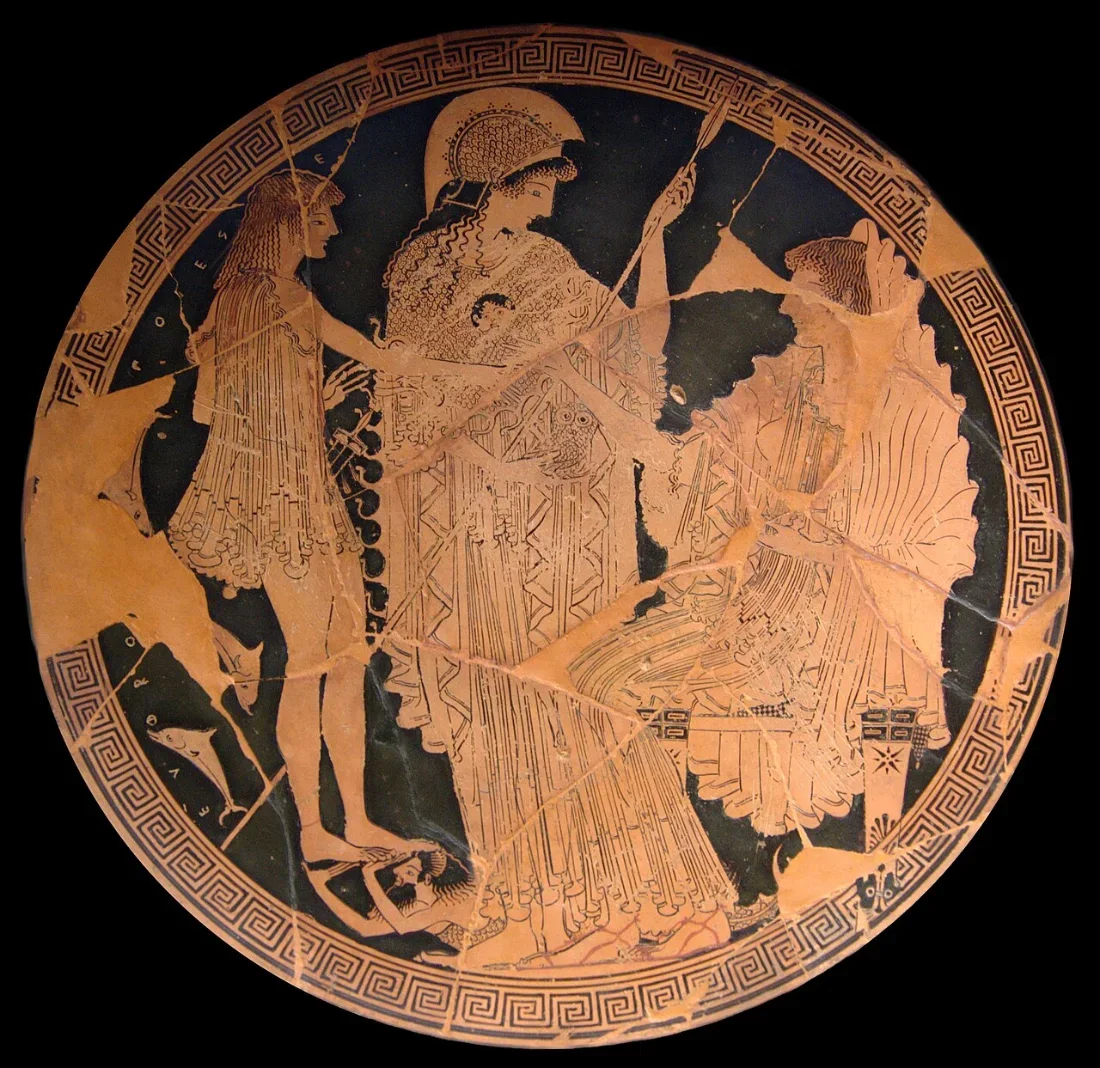
Text and translation
The uninterrupted Greek with its English translation, line by line.
Show text and translation
Κυανόπρῳρα μὲν ναῦς μενέκτυπον
Bacchylides · Ode 17 (dithyramb 3) · “The Youths, or Theseus”, for the Delian festival · strophe, antistrophe and epode (lines 1–66) · iambic-cretic metre · text of Jebb (Perseus), scheme of Maehler 2004
How to read each line
A guide to the Greek, syllables, pitch marks and quantities.
Show the reading key
- Above each line: the line as the edition prints it, each word placed over its own syllables. The main row: the same Greek divided into metrical syllables, each written as it is pronounced. A consonant that closes a syllable is written with it (λόθ | ρο); an elided word is closed up with the next vowel (ν’ἀ); a final consonant carried into the next word is set with a thin space (ς ἰ). Wider gaps mark word-ends.
- Above the syllables: the pitch of each syllable, from the accents. Under them: the quantity of each syllable as it falls in the line, then the transliteration, syllable by syllable, with accented syllables in capitals.
- Under each line: a line-for-line translation. In the right margin of the scansion: the line type, its scheme, and its analysis into cola.
Key to the labels
The names, patterns and symbols used beside this poem.
Show the labels and symbols
The labels in the right margin of the scansion below give the line’s analysis as the scheme file states it, then its scheme and, where the analysis notes them, the period-end, a brevis in longo or a hiatus. ‖ marks the end of a period, ||| the end of the stanza; a line without a period-end runs on into the next (synapheia). × is an anceps, long or short; the last position of every period is indifferent. A click on any syllable highlights the colon it belongs to and explains it. The sources of the labels, with their page numbers, are given line by line under Prosody, line by line.
| Label | Name and shape | What it is |
|---|---|---|
| c | Colon of the scheme— | One verse of Maehler’s scheme, or the part of a verse between recurring word-ends.[8] Maehler calls the metre “e iambis ortum”, grown out of iambics.[9] He analyses it as built from cretics (— ⏑ —) and the “long cretic” (— ⏑ — ⏑ —), with paeons (— ⏑ ⏑ ⏑ or ⏑ ⏑ ⏑ —) and link-syllables, and reads verses that seem to begin with iambics as cretics with a preceding syllable.[10] West counts the ode among the few that are almost wholly composed of iambic metra.[11] |
Scansion
The quarrel of Theseus and Minos on the ship to Crete, laid out against Maehler’s scheme for this unusual “Cretan” metre of cretics, paeons and iambic-looking cola: every syllable placed, the antistrophe set against the strophe, and the corrupt verses 37–38 shown as they stand.
The ship with the dark-blue prow was bearing Theseus, who holds firm when the battle roars,
and twice seven shining
youths of the Ionians,
and it was slicing the Cretan sea;
for on its sail, seen from far off,
the breezes of the north wind were falling,
thanks to famous Athena of the war-aegis.
And Minos’ heart was pricked
by the dire gifts of the goddess
with the lovely headband, the Cyprian:
he could no longer hold his hand
back from the maiden, but laid it
on her white cheeks.
Eriboea shouted for the bronze-
corsleted offspring
of Pandion; Theseus saw,
and under his brows
he spun his dark gaze, and harsh pain
clawed at his heart,
and he spoke: “Son of Zeus, greatest of all,
the spirit you steer within
your breast is no longer
holy. Hero, curb your arrogant force.
Whatever the all-ruling fate of the gods
has granted us with a nod, and the balance of Justice inclines to,
that allotted
share we shall live out, when
it comes. You, though, check your heavy
purpose. Even if it was you that the good
daughter of Phoenix bore in Zeus’ bed under Ida’s brow,
after lying with him, the girl
of lovely name, the strongest
of mortals, still I too
was born of the daughter of rich Pittheus,
who lay with the sea-god
Poseidon, and a golden
veil was given her by the violet-tressed
Nereids.
And so, commander of the Cnossians,
I tell you to hold in your outrage, cause
of many tears; for I would not wish
to look on the delightful light of deathless
Dawn, once you had overpowered one of these young people
against
their will. Before that we shall show what our hands
can do; what comes after, a god will judge.”
So the hero, brave with the spear, spoke;
the sailors were astonished
at the man’s towering
daring; and the son-in-law of the Sun was angry at heart,
and he began to weave a fresh
scheme, and said: “Zeus, father great in strength,
listen: if truly the girl
from Phoenicia, white-armed, bore me to you,
now send down from the sky a quick
lightning flash with hair of fire,
a sign for all to recognise; and if
Troezenian Aethra likewise bore you
to the Earth-shaker, Posei-
don, then this golden
ornament, bright on my hand,
fetch back out of the deep sea,
hurling your body boldly into your father’s halls.
You will learn whether my prayer is heard
by Cronus’ son,
the master of thunder, who governs all.”
Metre
- The poem. Ode 17 tells of Theseus’ voyage to Crete with the fourteen young Athenians, “twice seven”.[12] In the papyrus it stands among the dithyrambs, but Maehler thinks it “appears to be a paean rather than a dithyramb”; it is the only one of these poems whose ending speaks of its own performance and of the chorus singing it.[13] It has two triads, 132 lines; the strophe and antistrophe have 23 verses and the epode 20.[8] It was commissioned from Athens for the great Delian festival and can be dated to the early 490s.[14] The last lines pray to Apollo of Delos to welcome the choruses of the Ceans (130–2). This page gives the first triad.
- A metre grown out of iambics. Maehler heads his scheme “metrum e iambis ortum” and calls it a form without precedent, which scholars have analysed in several ways and with conflicting results.[15] He argues that the metre is predominantly “Cretan”: cretics (— ⏑ —) and paeons (cretics with a resolved long, ⏑ ⏑ ⏑ — or — ⏑ ⏑ ⏑), with a new colon made by expanding the cretic, the “long cretic” — ⏑ — ⏑ —, and with link-syllables, as in dactylo-epitrite. Verses that seem to begin with iambics he reads as cretics with a preceding syllable, and the apparent lekythion as cr ⏑ cr, not cr ia.[10] The right margin gives each verse its share of his printed scheme; the analysis line beside it cites what he says of that verse.
- West’s reading, and the triseme. West counts Bacchylides 17 among the few odes almost wholly composed of iambic metra, unsyncopated and syncopated.[11] In this ode, he points out, “at eight places the metrical scheme admits responsion between syncopated and unsyncopated iambics”, usually ⏕ ⏑ — against ⏒ — ⏑ —; for West that shows the two took the same time, the missing short being absorbed by a neighbouring long, which becomes a triseme.[16] Maehler’s scheme records places where the strophes differ by one syllable with a bracketed short, “(⏑)”. Maehler’s and West’s descriptions differ: the authorities do not agree on how this metre should be analysed.
- Responsion in this triad. The antistrophe answers the strophe syllable for syllable, with three exceptions. At verse 17 (17 ~ 40) the antistrophe has the optional first short of Maehler’s scheme (κέλομαι) and the strophe does not (μέλαν). At verses 14–15 (37–38) the antistrophe is one long syllable short and Maehler obelizes κάλυμμα;[17] those two verses are scanned as they stand, and their labels say so. And Maehler’s printed scheme for verse 13 lacks a final long that the text has here and in the other three strophes (13, 36, 79, 102); the workbench uses seven positions. Resolutions coincide at verses 5 and 20 (τηλαυγέϊ γάρ ~ σὺ δὲ βαρεῖαν; Διὸς υἱέ ~ φάος ἐπεί).
- Periods. Maehler marks period-end (‖) after strophe verses 4 and 20 (and, with a query, 3) and epode verses 7 and 14; elsewhere he marks only word-ends that recur in the same place (|).[18] Everything between two period-ends runs on, so a final consonant passes to the next verse and the last syllable is not free.
- Prosody. The workbench uses the epic rules. Bacchylides lets a stop with a liquid or nasal leave the syllable before it short in several places that Maehler marks with a loop: Κυανόπρῳρα (1), πεπρωμέναν (26), ἀφνεοῦ (34), Κνωσίων (39), πρόσθε (45), Τροιζηνία (58), χρύσεον (60), πατρός (63), ἀναξιβρόντας (66).[19] Synizesis is tied: Κνωσί‿ων (39), ἠϊθέ‿ων (43), μεδέ‿ων (66).[20] Jebb prints the digamma of ϝοι (18, 37); before this pronoun hiatus is the rule.[21] Doric and epic forms include the long ᾱ (Ἀθάνας, ἕκατι, Ἀοῦς, σᾶμα), the unaugmented θίγεν (12) and ἴδεν (16), the uncontracted Ἰαόνων (3), and the infinitive ἐρύκεν (41).[22] West notes that Simonides and Bacchylides have “a brief dactylic burst in mid-strophe”,[23] which matches Maehler’s observation that the cretics of strophe verses 9–11 briefly change into “dactyls”.[10]
- Text. Jebb’s text throughout; where Maehler reads differently the quantities are the same (8 δέ for τε, 10 ἁγνά for αἰνά, 23 μεγάλαυχον for μεγαλοῦχον, 50 χόλωσεν for χολώσατ’, 53 νύμφα for κούρα, 54 τέκεν for τέκε, 66 ἀναξιβρέντας), except at 42, where Maehler’s elided ἀμβρότοι’ scans the same as Jebb’s ἀμβρότου but cannot be divided by the workbench, so Jebb’s word is kept. The only change of verse-division is at 61–62, where Maehler’s scheme divides ἔνεγ|κε. Marks on doubtful vowels are editorial aids and are not shown on the page.
Prosody, line by line
Every syllable, with the reason for its length. Quantities are read from the vowel where the spelling shows it, from the consonants that follow (“position”), from the accent where it tells, and from the metre where nothing else does. Editors’ notes on the text follow in the boxed paragraphs.
- 17.1
Line 17.1 · Κυανόπρῳρα μὲν ναῦς μενέκτυπον
Κυανόπρῳρα μὲν ναῦς μενέκτυπον
Κυανόπρῳραμὲνναῦςμενέκτυπονthe period runs on into 17.2 (synapheia).
The label in the margin, with its sources: Maehler 2004, p. 57, as printed: ⏒ ⏑ ⏑ — ⏑ — — ⏑ — ⏑ —. Maehler: the long cretic (— ⏑ — ⏑ —, or with a resolved or anceps first or last position) occurs twice in verse 1, and the verse begins with a paeon ⏓ ⏑ ⏑ — at period-start (p. 17).
- 1 ⏑Κυῠ is short (its length is not shown by the ordinary spelling); the position is anceps.
- 2 ⏑αα is short by the metre (position 2 must be short).
- 3 ⏑νόό is short by nature; πρ is carried whole into the next syllable, so this syllable stays open and short (correption before a stop + liquid cluster, as the metre needs).
- 4 —πρῳῳ is long by nature.
- 5 ⏑ραα is short by the accent rule: acute on the antepenult requires a short final syllable.
- 6 —μὲνὲ is short by nature; closed by ν: long by position.
- 7 —ναῦςαῦ is a diphthong, long by nature; closed by ς: long by position.
- 8 ⏑μεε is short by nature.
- 9 —νέκέ is short by nature; closed by κ: long by position.
- 10 ⏑τυυ is short by the metre (position 10 must be short).
- 11 —πονο is short by nature; closed by ν: long by position; the line-end is not a period-end: the period runs on into the next line (synapheia), so this syllable keeps its own length, with no brevis in longo, and a word may run over into the next line.[24]
Maehler prints ⏒ ⏑ ⏑ — ⏑ — — ⏑ — ⏑ —: a paeon in the form ⏓ ⏑ ⏑ — at the start of the period, and the long cretic — ⏑ — ⏑ — twice in this verse.[15] The first position is the short κυ- of κυανός. Maehler marks the πρ of Κυανόπρῳρα with a loop, his sign that stop + liquid does not lengthen the syllable before it, so -νό- is short.[25]- 17.2
Line 17.2 · Θησέα δὶς ἑπτά τʼ ἀγλαοὺς ἄγουσα
Θησέα δὶς ἑπτά τʼ ἀγλαοὺς ἄγουσα
Θησέαδὶς ἑπτάτ’ἀγλαοὺςἄγουσαcontinues 17.1 · one period (synapheia); the period runs on into 17.3 (synapheia).
The label in the margin, with its sources: Maehler 2004, p. 57, as printed: — ⏑ ⏑ ⏑ — ⏑ — ⏑ — | ⏑ — ⏒. long cretic; seemingly iambic opening, read by Maehler as cretics with a preceding syllable (p. 17); recurring word-end after the ninth position.
- 1 —Θηη is long by nature.
- 2 ⏑σέέ is short by nature.
- 3 ⏑αα is short by the metre (position 3 must be short).
- 4 ⏑δὶὶ is short by the metre (position 4 must be short).
- 5 —ς ἑπἑ is short by nature; closed by π: long by position; the first consonant belongs to the previous word and is carried over to this vowel.
- 6 ⏑τάά is short by the metre (position 6 must be short).
- 7 —τ’ἀγἀ is a vowel of unknown length; closed by γ before a liquid: stop + liquid makes position, as it usually does in epic; the apostrophe marks an elided vowel; the consonant before it joins this syllable.
- 8 ⏑λαα is short by the metre (position 8 must be short).
- 9 —οὺςοὺ is a diphthong, long by nature.
- 10 ⏑ἄἄ is short by the metre (position 10 must be short).
- 11 —γουου is a diphthong, long by nature.
- 12 ⏑σαα is short by the accent rule: acute on the antepenult requires a short final syllable; the position is anceps; the line-end is not a period-end: the period runs on into the next line (synapheia), so this syllable keeps its own length, with no brevis in longo, and a word may run over into the next line.[24]
— ⏑ ⏑ ⏑ — ⏑ — ⏑ — | ⏑ — ⏒, with a recurring word-end after the ninth position (ἀγλαούς | ἄγουσα).[9] The ς of δίς passes to ἑπτά, so δί- is short. The -τ’ἀγ- of τ’ ἀγλαούς is long by position before γλ. The last position, which Maehler prints ⏒, is short (-σα).- 17.3
Line 17.3 · κούρους Ἰαόνων
κούρους Ἰαόνων
κούρουςἸαόνωνcontinues 17.2 · one period (synapheia).
The label in the margin, with its sources: Maehler 2004, p. 57, as printed: — — ⏑ — ⏑ — ‖?. long cretic (p. 17); Maehler queries the period-end (‖?).
- 1 —κούού is a diphthong, long by nature.
- 2 —ρουςου is a diphthong, long by nature.
- 3 ⏑ἸἸ is short by the metre (position 3 must be short).
- 4 —αα is long by the metre (position 4 must be long).
- 5 ⏑όό is short by nature.
- 6 ×νωνω is long by nature; closed by ν: long by position; the last position of the period is indifferent.
— — ⏑ — ⏑ —, the long cretic with a preceding long.[10] Ἰαόνων is an uncontracted form;[26] its α is long (Ἰᾰ̄ονες)[27]. Maehler marks a period-end here with a query (‖?); the workbench treats the verse as ending a period, which the antistrophe needs (πεπρωμέναν, 26, whose final ν would otherwise pass to αἶσαν).- 17.4
Line 17.4 · Κρητικὸν τάμνε πέλαγος·
Κρητικὸν τάμνε πέλαγος·
Κρητικὸντάμνεπέλαγος·The label in the margin, with its sources: Maehler 2004, p. 57, as printed: — ⏑ — — ⏑ ⏑ ⏑ ⏓ ‖. period-end.
- 1 —Κρηη is long by nature.
- 2 ⏑τιι is short by the metre (position 2 must be short).
- 3 —κὸνὸ is short by nature; closed by ν: long by position.
- 4 —τάμά is a vowel of unknown length; closed by μ: long by position.
- 5 ⏑νεε is short by nature.
- 6 ⏑πέέ is short by nature.
- 7 ⏑λαα is short by the metre (position 7 must be short).
- 8 ×γος·ο is short by nature; closed by ς: long by position; the last position of the period is indifferent.
— ⏑ — — ⏑ ⏑ ⏑ ⏓ ‖.[9] The last three syllables of πέλαγος are short; the final -γος ends the period.- 17.5
Line 17.5 · τηλαυγέϊ γὰρ ἐν φάρεϊ
τηλαυγέϊ γὰρ ἐν φάρεϊ
τηλαυγέϊγὰρ [ἐν]φάρεϊthe period runs on into 17.6 (synapheia).
The label in the margin, with its sources: Maehler 2004, p. 57, as printed: — — ⏑ ⏔ — — ⏑ ⏑. Maehler reads verses that seem to begin with iambics, as this one, as cretics with a preceding syllable (p. 17).
- 1 —τηη is long by nature.
- 2 —λαυαυ is a diphthong, long by nature.
- 3 ⏑γέέ is short by nature.
- 4 ⏑ϊϊ is short by the metre (position 4 must be short); with its neighbour it resolves the long of position 4 into two shorts.
- 5 ⏑γὰὰ is short by the metre (position 4 must be short); with its neighbour it resolves the long of position 4 into two shorts.
- 6 —ρ [ἐν]ἐ is short by nature; closed by ν: long by position; the first consonant belongs to the previous word and is carried over to this vowel.
- 7 —φάά is long by the metre (position 6 must be long).
- 8 ⏑ρεε is short by nature.
- 9 ⏑ϊϊ is short by the accent rule: acute on the antepenult requires a short final syllable; the line-end is not a period-end: the period runs on into the next line (synapheia), so this syllable keeps its own length, with no brevis in longo, and a word may run over into the next line.[24]
— — ⏑ ⏔ — — ⏑ ⏑.[9] The fourth position is resolved: -ϊ γὰρ fill one long. τηλαυγέϊ and φάρεϊ have the uncontracted dative -εϊ, the ϊ a syllable of its own. φᾶρος has a long ᾱ. The verse runs on into verse 6.- 17.6
Line 17.6 · βορήϊαι πίτνον αὖραι
βορήϊαι πίτνον αὖραι
βορήϊαιπίτνον αὖραιcontinues 17.5 · one period (synapheia); the period runs on into 17.7 (synapheia).
The label in the margin, with its sources: Maehler 2004, p. 57, as printed: ⏑ — ⏑ — — ⏑ ⏔ —.
- 1 ⏑βοο is short by nature.
- 2 —ρήή is long by nature.
- 3 ⏑ϊϊ is short by the metre (position 3 must be short).
- 4 —αιαι is a diphthong, long by nature.
- 5 —πίτί is a vowel of unknown length; closed by τ before a nasal: stop + nasal makes position, as it usually does in epic.
- 6 ⏑νοο is short by nature.
- 7 —ν αὖαὖ is a diphthong, long by nature; the first consonant belongs to the previous word and is carried over to this vowel.
- 8 —ραιαι is a diphthong, long by nature; the next word begins with κλ: the syllable is closed before it: long by position; the line-end is not a period-end: the period runs on into the next line (synapheia), so this syllable keeps its own length, with no brevis in longo, and a word may run over into the next line.[24]
⏑ — ⏑ — — ⏑ ⏔ —.[9] βορήϊαι has ϊ as a syllable of its own; the diphthong -αι before πίτνον is long. The ν of πίτνον passes to αὖραι, whose αὖ- fills the long that Maehler marks ⏔.- 17.7
Line 17.7 · κλυτᾶς ἕκατι πολεμαίγιδος Ἀθάνας·
κλυτᾶς ἕκατι πολεμαίγιδος Ἀθάνας·
κλυτᾶςἕκατιπ[ο]λεμαίγιδος Ἀθάνας·continues 17.6 · one period (synapheia); the period runs on into 17.8 (synapheia).
The label in the margin, with its sources: Maehler 2004, p. 57, as printed: ⏑ — | ⏑ — ⏑ ⏑ ⏑ — ⏑ ⏑ ⏑ — — |. recurring word-end after the second position and at verse-end; seemingly iambic opening read as cretics with a preceding syllable (p. 17).
- 1 ⏑κλυυ is short by the metre (position 1 must be short).
- 2 —τᾶςᾶ carries a circumflex, so it is long.
- 3 ⏑ἕἕ is short by nature.
- 4 —καα is long by the metre (position 4 must be long).
- 5 ⏑τιι is short by the accent rule: acute on the antepenult requires a short final syllable.
- 6 ⏑π[ο]ο is short by nature.
- 7 ⏑λεε is short by nature.
- 8 —μαίαί is a diphthong, long by nature.
- 9 ⏑γιι is short by the metre (position 9 must be short).
- 10 ⏑δοο is short by nature.
- 11 ⏑ς ἈἈ is short by the metre (position 11 must be short); the first consonant belongs to the previous word and is carried over to this vowel.
- 12 —θάά is long by the metre (position 12 must be long).
- 13 —νας·α is a vowel of unknown length; closed by ς: long by position; the line-end is not a period-end: the period runs on into the next line (synapheia), so this syllable keeps its own length, with no brevis in longo, and a word may run over into the next line.[24]
⏑ — | ⏑ — ⏑ ⏑ ⏑ — ⏑ ⏑ ⏑ — — |, with word-end after κλυτᾶς in every strophe.[9] ἕκατι has the Doric long ᾱ. Jebb supplements πολεμαίγιδος, Maehler πελεμαίγιδος; the quantities are the same. The two runs of three shorts, -τι πο-λε- and -γι-δο-ς Ἀ-, each followed by a long, are paeons (⏑ ⏑ ⏑ —), which Maehler counts as “resolved” cretics.[10]Campbell prints [π]ελεμαίγιδος, “aegis-shaking” (Wackernagel, Housman), for Kenyon’s πολεμαίγιδος;[28] the scansion is the same.
- 17.8
Line 17.8 · κνίσεν τε Μίνωϊ κέαρ
κνίσεν τε Μίνωϊ κέαρ
κνίσεντεΜίνωϊκέαcontinues 17.7 · one period (synapheia); the period runs on into 17.9 (synapheia).
The label in the margin, with its sources: Maehler 2004, p. 57, as printed: ⏒ — ⏑ — — ⏑ ⏑ ⏑. seemingly iambic opening; the link at period-start can be double-short here (Maehler p. 17).
- 1 ⏑κνίῐ́ is short (its length is not shown by the ordinary spelling); the position is anceps.
- 2 —σενε is short by nature; closed by ν: long by position.
- 3 ⏑τεε is short by nature.
- 4 —Μίί is long by the metre (position 4 must be long).
- 5 —νωω is long by nature.
- 6 ⏑ϊϊ is short by the accent rule: acute on the antepenult requires a short final syllable.
- 7 ⏑κέέ is short by nature.
- 8 ⏑αα is short by the metre (position 8 must be short); the line-end is not a period-end: the period runs on into the next line (synapheia), so this syllable keeps its own length, with no brevis in longo, and a word may run over into the next line.[24]
⏒ — ⏑ — — ⏑ ⏑ ⏑.[9] Maehler lists this verse among those whose link at period-start may be double-short, and among those that seem to begin with iambics.[10] The first position is short: the ι of κνίζω is short.[27] Μίνωϊ is three syllables, Μί- filling the fourth position, a long. Maehler prints κνίσεν δὲ Μίνω⟨ϊ⟩, adding the ϊ, for Jebb’s κνίσεν τε Μίνωϊ;[29] the quantities are the same. The final -αρ of κέαρ passes its ρ to ἱμεράμπυκος.- 17.9
Line 17.9 · ἱμεράμπυκος θεᾶς
ἱμεράμπυκος θεᾶς
ρ ἱμεράμπυκοςθεᾶςcontinues 17.8 · one period (synapheia); the period runs on into 17.10 (synapheia).
The label in the margin, with its sources: Maehler 2004, p. 57, as printed: — ⏑ — ⏑ — ⏑ — |. looks like a lekythion; Maehler reads it as cr ⏑ cr (p. 17). Cretics change briefly into dactyls from here to verse 11 (p. 17).
- 1 —ρ ἱἱ̄ is long (its length is not shown by the ordinary spelling); the first consonant belongs to the previous word and is carried over to this vowel.
- 2 ⏑μεε is short by nature.
- 3 —ράμά is a vowel of unknown length; closed by μ: long by position.
- 4 ⏑πυυ is short by the metre (position 4 must be short).
- 5 —κοςο is short by nature; closed by ς: long by position.
- 6 ⏑θεε is short by nature.
- 7 —ᾶςᾶ carries a circumflex, so it is long; closed by ς: long by position; the line-end is not a period-end: the period runs on into the next line (synapheia), so this syllable keeps its own length, with no brevis in longo, and a word may run over into the next line.[24]
- 17.10
Line 17.10 · Κύπριδος αἰνὰ δῶρα·
Κύπριδος αἰνὰ δῶρα·
Κύπριδος αἰνὰδῶρα·continues 17.9 · one period (synapheia); the period runs on into 17.11 (synapheia).
The label in the margin, with its sources: Maehler 2004, p. 57, as printed: — ⏑ ⏑ — ⏑ — ⏑. one of the verses 9–11 where Maehler sees the cretics change briefly into dactyls, as a variation of the lekythion (p. 17).
- 1 —Κύπύ is a vowel of unknown length; closed by π before a liquid: stop + liquid makes position, as it usually does in epic.
- 2 ⏑ριι is short by the metre (position 2 must be short).
- 3 ⏑δοο is short by nature.
- 4 —ς αἰαἰ is a diphthong, long by nature; the first consonant belongs to the previous word and is carried over to this vowel.
- 5 ⏑νὰὰ is short by the metre (position 5 must be short).
- 6 —δῶῶ is long by nature.
- 7 ⏑ρα·α is short by the accent rule: circumflex on the penult requires a short final syllable; the line-end is not a period-end: the period runs on into the next line (synapheia), so this syllable keeps its own length, with no brevis in longo, and a word may run over into the next line.[24]
- 17.11
Line 17.11 · χεῖρα δʼ οὐκέτι παρθενικᾶς
χεῖρα δʼ οὐκέτι παρθενικᾶς
χεῖραδ’οὐκέτιπαρθενικᾶcontinues 17.10 · one period (synapheia); the period runs on into 17.12 (synapheia).
The label in the margin, with its sources: Maehler 2004, p. 57, as printed: — ⏑ — ⏑ ⏑ — ⏑ ⏑ —. verses 9–11: dactylic variation of the lekythion (p. 17).
- 1 —χεῖεῖ is a diphthong, long by nature.
- 2 ⏑ραα is short by the accent rule: circumflex on the penult requires a short final syllable.
- 3 —δ’οὐοὐ is a diphthong, long by nature; the apostrophe marks an elided vowel; the consonant before it joins this syllable.
- 4 ⏑κέέ is short by nature.
- 5 ⏑τιι is short by the metre (position 5 must be short).
- 6 —παρα is a vowel of unknown length; closed by ρ: long by position.
- 7 ⏑θεε is short by nature.
- 8 ⏑νιι is short by the metre (position 8 must be short).
- 9 —κᾶᾶ carries a circumflex, so it is long; the line-end is not a period-end: the period runs on into the next line (synapheia), so this syllable keeps its own length, with no brevis in longo, and a word may run over into the next line.[24]
— ⏑ — ⏑ ⏑ — ⏑ ⏑ —, the third verse of the dactylic variation.[10] The -ρα of χεῖρα is short before δ’, which goes with οὐκέτι.- 17.12
Line 17.12 · ἄτερθʼ ἐράτυεν, θίγεν
ἄτερθʼ ἐράτυεν, θίγεν
ς ἄτερθ’ἐράτυεν,θίγενcontinues 17.11 · one period (synapheia); the period runs on into 17.13 (synapheia).
The label in the margin, with its sources: Maehler 2004, p. 57, as printed: (⏑) ⏒ — ⏑ — ⏑ — | ⏑ —. long cretic; the link at period-start can be double-short here (p. 17); the optional first short of Maehler’s scheme is absent in this triad; recurring word-end after the sixth position.
- 1 ⏑ς ἄᾰ̓́ is short (its length is not shown by the ordinary spelling); the first consonant belongs to the previous word and is carried over to this vowel; the position is anceps.
- 2 —τερε is short by nature; closed by ρ: long by position.
- 3 ⏑θ’ἐἐ is short by nature; the apostrophe marks an elided vowel; the consonant before it joins this syllable.
- 4 —ράά is long by the metre (position 4 must be long).
- 5 ⏑τυυ is short by the metre (position 5 must be short).
- 6 —εν,ε is short by nature; closed by ν: long by position.
- 7 ⏑θίί is short by the metre (position 7 must be short).
- 8 —γενε is short by nature; closed by ν: long by position; the line-end is not a period-end: the period runs on into the next line (synapheia), so this syllable keeps its own length, with no brevis in longo, and a word may run over into the next line.[24]
- 17.13
Line 17.13 · δὲ λευκᾶν παρηΐδων·
δὲ λευκᾶν παρηΐδων·
δὲλευκᾶνπαρηΐδων·continues 17.12 · one period (synapheia); the period runs on into 17.14 (synapheia).
The label in the margin, with its sources: Maehler 2004, p. 57, as printed: ⏑ — — ⏒ — ⏑ [—]. long cretic (p. 17); Maehler’s printed scheme omits the final long, which all four strophes have.
- 1 ⏑δὲὲ is short by nature.
- 2 —λευευ is a diphthong, long by nature.
- 3 —κᾶνᾶ carries a circumflex, so it is long; closed by ν: long by position.
- 4 ⏑παᾰ is short (its length is not shown by the ordinary spelling); the position is anceps.
- 5 —ρηη is long by nature.
- 6 ⏑ΐΐ is short by the metre (position 6 must be short).
- 7 —δων·ω is long by nature; closed by ν: long by position; the line-end is not a period-end: the period runs on into the next line (synapheia), so this syllable keeps its own length, with no brevis in longo, and a word may run over into the next line.[24]
Maehler prints ⏑ — — ⏒ — ⏑, six positions, but this verse has seven syllables, as do verses 36, 79 and 102, the last a long; the workbench adds the long, and the margin shows it in square brackets. The long cretic is in this verse.[10] The fourth position is the short πα- of παρηΐδων, whose -ΐ- is a syllable of its own.- 17.14
Line 17.14 · βόασέ τʼ Ἐρίβοια χαλκο-
βόασέ τʼ Ἐρίβοια χαλκο-
βόασέτ’Ἐρίβοιαχαλκο-continues 17.13 · one period (synapheia); the period runs on into 17.15 (synapheia).
The label in the margin, with its sources: Maehler 2004, p. 57, as printed: ⏑ — ⏑ ⏔ ⏕ ⏑ — ⏑. long cretic (p. 17); seemingly iambic opening (p. 17).
- 1 ⏑βόό is short by nature.
- 2 —αα is long by the metre (position 2 must be long).
- 3 ⏑σέέ is short by nature.
- 4 ⏑τ’ἘἘ is short by nature; the apostrophe marks an elided vowel; the consonant before it joins this syllable; with its neighbour it resolves the long of position 4 into two shorts.
- 5 ⏑ρίί is short by the metre (position 4 must be short); with its neighbour it resolves the long of position 4 into two shorts.
- 6 —βοιοι is a diphthong, long by nature.
- 7 ⏑αα is short by the accent rule: acute on the antepenult requires a short final syllable.
- 8 —χαλα is a vowel of unknown length; closed by λ: long by position.
- 9 ⏑κο-ο is short by nature; the line-end is not a period-end: the period runs on into the next line (synapheia), so this syllable keeps its own length, with no brevis in longo, and a word may run over into the next line.[24]
⏑ — ⏑ ⏔ ⏕ ⏑ — ⏑.[9] The fourth position is resolved (τ’ Ἐρι-) and the fifth is a single long, -βοι- of Ἐρίβοια. West lists Ἐρίβοια as one of Bacchylides’ two examples of correption inside a word, a diphthong shortened before a vowel, but gives no line;[32] in Jebb’s text of the odes the name occurs only here. In Maehler’s scheme -βοι- must be long, because a short there would put the long χαλ- into the sixth position, a short; the verse is scanned with Maehler. The two authorities’ readings of this name are therefore at odds (disputed). The word χαλκοθώρακα is divided between verses 14 and 15.Campbell prints Führer’s βόασ’ Ἐρίβοια, without τε, which leaves one short syllable fewer at the start of the verse.[28]
- 17.15
Line 17.15 · θώρακα Πανδίονος
θώρακα Πανδίονος
θώρακαΠανδίονοcontinues 17.14 · one period (synapheia); the period runs on into 17.16 (synapheia).
The label in the margin, with its sources: Maehler 2004, p. 57, as printed: — — ⏑ — — ⏑ ⏓ |. recurring word-end.
- 1 —θώώ is long by nature.
- 2 —ραᾱ is long (its length is not shown by the ordinary spelling).
- 3 ⏑καα is short by the accent rule: acute on the antepenult requires a short final syllable.
- 4 —Πανα is a vowel of unknown length; closed by ν: long by position.
- 5 —δίί is long by the metre (position 5 must be long).
- 6 ⏑οο is short by nature.
- 7 ⏑νοο is short by nature; the position is anceps; the line-end is not a period-end: the period runs on into the next line (synapheia), so this syllable keeps its own length, with no brevis in longo, and a word may run over into the next line.[24]
- 17.16
Line 17.16 · ἔκγονον· ἴδεν δὲ Θησεύς,
ἔκγονον· ἴδεν δὲ Θησεύς,
ς ἔκγονο·ν ἴδενδὲΘησεύς,continues 17.15 · one period (synapheia); the period runs on into 17.17 (synapheia).
The label in the margin, with its sources: Maehler 2004, p. 57, as printed: — ⏑ ⏑ ⏑ — ⏑ — —. long cretic (p. 17).
- 1 —ς ἔκἔ is short by nature; closed by κ: long by position; the first consonant belongs to the previous word and is carried over to this vowel.
- 2 ⏑γοο is short by nature.
- 3 ⏑νο·ο is short by nature.
- 4 ⏑ν ἴἴ is short by the metre (position 4 must be short); the first consonant belongs to the previous word and is carried over to this vowel.
- 5 —δενε is short by nature; closed by ν: long by position.
- 6 ⏑δὲὲ is short by nature.
- 7 —Θηη is long by nature.
- 8 —σεύς,εύ is a diphthong, long by nature; closed by ς: long by position; the line-end is not a period-end: the period runs on into the next line (synapheia), so this syllable keeps its own length, with no brevis in longo, and a word may run over into the next line.[24]
- 17.17
Line 17.17 · μέλαν δʼ ὑπʼ ὀφρύων
μέλαν δʼ ὑπʼ ὀφρύων
μέλανδ’ὑπ’ὀφρύωνcontinues 17.16 · one period (synapheia); the period runs on into 17.18 (synapheia).
The label in the margin, with its sources: Maehler 2004, p. 57, as printed: (⏑) ⏒ — ⏑ — ⏑ ⏓ |. long cretic (p. 17); without the optional first short.
- 1 ⏑μέέ is short by nature; the position is anceps.
- 2 —λανα is a vowel of unknown length; closed by ν: long by position.
- 3 ⏑δ’ὑὑ is short by the metre (position 3 must be short); the apostrophe marks an elided vowel; the consonant before it joins this syllable.
- 4 —π’ὀφὀ is short by nature; closed by φ before a liquid: stop + liquid makes position, as it usually does in epic; the apostrophe marks an elided vowel; the consonant before it joins this syllable.
- 5 ⏑ρύύ is short by the metre (position 5 must be short).
- 6 —ωνω is long by nature; closed by ν: long by position; the position is anceps; the line-end is not a period-end: the period runs on into the next line (synapheia), so this syllable keeps its own length, with no brevis in longo, and a word may run over into the next line.[24]
(⏑) ⏒ — ⏑ — ⏑ ⏓ |.[9] The strophe does not have the optional first short; the antistrophe does (κέλομαι, 40). The ν of μέλαν does not pass on, since δ’ follows; -λαν is long. ὑπ’ is elided before ὀφρύων, whose ὀφ- is long by position before φρ.- 17.18
Line 17.18 · δίνασεν ὄμμα, καρδίαν τέ ϝοι
δίνασεν ὄμμα, καρδίαν τέ ϝοι
δίνασεν ὄμμα,καρδίαντέϝοιcontinues 17.17 · one period (synapheia); the period runs on into 17.19 (synapheia).
The label in the margin, with its sources: Maehler 2004, p. 57, as printed: ⏓ — ⏑ — ⏑ — ⏑ — ⏑ —. long cretic (p. 17); seemingly iambic opening; the link at period-start can be double-short (p. 17).
- 1 —δίῑ́ is long (its length is not shown by the ordinary spelling); the position is anceps.
- 2 —ναα is long by the metre (position 2 must be long).
- 3 ⏑σεε is short by nature.
- 4 —ν ὄμὄ is short by nature; closed by μ: long by position; the first consonant belongs to the previous word and is carried over to this vowel.
- 5 ⏑μα,α is short by the metre (position 5 must be short).
- 6 —καρα is a vowel of unknown length; closed by ρ: long by position.
- 7 ⏑δίί is short by the metre (position 7 must be short).
- 8 —ανα is a vowel of unknown length; closed by ν: long by position.
- 9 ⏑τέέ is short by nature.
- 10 —ϝοιοι is a diphthong, long by nature; the next word begins with σχ: the syllable is closed before it: long by position; the line-end is not a period-end: the period runs on into the next line (synapheia), so this syllable keeps its own length, with no brevis in longo, and a word may run over into the next line.[24]
- 17.19
Line 17.19 · σχέτλιον ἄμυξεν ἄλγος,
σχέτλιον ἄμυξεν ἄλγος,
σχέτλιον ἄμυξεν ἄλγο,continues 17.18 · one period (synapheia); the period runs on into 17.20 (synapheia).
The label in the margin, with its sources: Maehler 2004, p. 57, as printed: — ⏑ ⏑ ⏑ — ⏑ — ⏓ |. long cretic (p. 17); recurring word-end.
- 1 —σχέτέ is short by nature; closed by τ before a liquid: stop + liquid makes position, as it usually does in epic.
- 2 ⏑λιι is short by the metre (position 2 must be short).
- 3 ⏑οο is short by nature.
- 4 ⏑ν ἄἄ is short by the metre (position 4 must be short); the first consonant belongs to the previous word and is carried over to this vowel.
- 5 —μυξ is a double consonant (two sounds) and closes the syllable: long by position.
- 6 ⏑ξεε is short by nature.
- 7 —ν ἄλἄ is a vowel of unknown length; closed by λ: long by position; the first consonant belongs to the previous word and is carried over to this vowel.
- 8 ⏑γο,ο is short by nature; the position is anceps; the line-end is not a period-end: the period runs on into the next line (synapheia), so this syllable keeps its own length, with no brevis in longo, and a word may run over into the next line.[24]
— ⏑ ⏑ ⏑ — ⏑ — ⏓ |.[9] The -σχέτ- of σχέτλιον is long by position before τλ. The ξ of ἄμυξεν closes -μυξ-.- 17.20
Line 17.20 · εἶρέν τε· Διὸς υἱὲ φερτάτου,
εἶρέν τε· Διὸς υἱὲ φερτάτου,
ς εἶρέντε·Διὸς υἱὲφερτάτου,continues 17.19 · one period (synapheia).
The label in the margin, with its sources: Maehler 2004, p. 57, as printed: ⏓ — ⏑ ⏔ ⏕ ⏑ — ⏑ — ‖. long cretic; seemingly iambic opening; the link at period-start can be double-short here (p. 17); period-end.
- 1 —ς εἶεἶ is a diphthong, long by nature; the first consonant belongs to the previous word and is carried over to this vowel; the position is anceps.
- 2 —ρένέ is short by nature; closed by ν: long by position.
- 3 ⏑τε·ε is short by nature.
- 4 ⏑Διι is short by the metre (position 4 must be short); with its neighbour it resolves the long of position 4 into two shorts.
- 5 ⏑ὸὸ is short by nature; with its neighbour it resolves the long of position 4 into two shorts.
- 6 —ς υἱυἱ is a diphthong, long by nature; the first consonant belongs to the previous word and is carried over to this vowel.
- 7 ⏑ὲὲ is short by nature.
- 8 —φερε is short by nature; closed by ρ: long by position.
- 9 ⏑τάά is short by the metre (position 8 must be short).
- 10 ×του,ου is a diphthong, long by nature; the last position of the period is indifferent.
- 17.21
Line 17.21 · ὅσιον οὐκέτι τεᾶν
ὅσιον οὐκέτι τεᾶν
ὅσιον οὐκέτιτεᾶthe period runs on into 17.22 (synapheia).
The label in the margin, with its sources: Maehler 2004, p. 57, as printed: ⏓ ⏒ ⏑ — ⏑ ⏑ ⏑ —. paeon at period-start in the form ⏓ ⏓ ⏑ — (Maehler p. 17).
- 1 ⏑ὅὅ is short by nature; the position is anceps.
- 2 ⏑σιῐ is short (its length is not shown by the ordinary spelling); the position is anceps.
- 3 ⏑οο is short by nature.
- 4 —ν οὐοὐ is a diphthong, long by nature; the first consonant belongs to the previous word and is carried over to this vowel.
- 5 ⏑κέέ is short by nature.
- 6 ⏑τιι is short by the metre (position 6 must be short).
- 7 ⏑τεε is short by nature.
- 8 —ᾶᾶ carries a circumflex, so it is long; the line-end is not a period-end: the period runs on into the next line (synapheia), so this syllable keeps its own length, with no brevis in longo, and a word may run over into the next line.[24]
⏓ ⏒ ⏑ — ⏑ ⏑ ⏑ —: a paeon at the start of the period in the form ⏓ ⏓ ⏑ —.[10] The first two positions are short (ὅ-σῐ-). τεᾶν is two syllables.- 17.22
Line 17.22 · ἔσω κυβερνᾷς φρενῶν
ἔσω κυβερνᾷς φρενῶν
ν ἔσωκυβερνᾷςφρενῶνcontinues 17.21 · one period (synapheia); the period runs on into 17.23 (synapheia).
The label in the margin, with its sources: Maehler 2004, p. 57, as printed: ⏑ — ⏑ — — ⏑ — |. seemingly iambic opening (p. 17); recurring word-end.
- 1 ⏑ν ἔἔ is short by nature; the first consonant belongs to the previous word and is carried over to this vowel.
- 2 —σωω is long by nature.
- 3 ⏑κυυ is short by the metre (position 3 must be short).
- 4 —βερε is short by nature; closed by ρ: long by position.
- 5 —νᾷςᾷ is long by nature; closed by ς: long by position.
- 6 ⏑φρεε is short by nature.
- 7 —νῶνῶ is long by nature; closed by ν: long by position; the line-end is not a period-end: the period runs on into the next line (synapheia), so this syllable keeps its own length, with no brevis in longo, and a word may run over into the next line.[24]
⏑ — ⏑ — — ⏑ — |.[9] κυβερνᾷς is long before φρ in any case; φρε- is short.- 17.23
Line 17.23 · θυμόν· ἴσχε μεγαλοῦχον ἥρως βίαν.
θυμόν· ἴσχε μεγαλοῦχον ἥρως βίαν.
θυμό·ν ἴσχεμεγαλοῦχον ἥρωςβίαν.continues 17.22 · one period (synapheia).
The label in the margin, with its sources: Maehler 2004, p. 57, as printed: — ⏑ — ⏑ ⏑ ⏑ — ⏑ ⏕ — ⏑ ⏓ |||. long cretic (p. 17); end of strophe.
- 1 —θυυ is long by the metre (position 1 must be long).
- 2 ⏑μό·ό is short by nature.
- 3 —ν ἴσἴ is a vowel of unknown length; closed by σ: long by position; the first consonant belongs to the previous word and is carried over to this vowel.
- 4 ⏑χεε is short by nature.
- 5 ⏑μεε is short by nature.
- 6 ⏑γαα is short by the metre (position 6 must be short).
- 7 —λοῦοῦ is a diphthong, long by nature.
- 8 ⏑χοο is short by nature.
- 9 —ν ἥἥ is long by nature; the first consonant belongs to the previous word and is carried over to this vowel.
- 10 —ρωςω is long by nature; closed by ς: long by position.
- 11 ⏑βίί is short by the metre (position 11 must be short).
- 12 ×αν.α is a vowel of unknown length; closed by ν: long by position; the last position of the period is indifferent.
— ⏑ — ⏑ ⏑ ⏑ — ⏑ ⏕ — ⏑ ⏓ ||| ends the strophe.[29] θυμόν has a long υ. The ν of θυμόν passes to ἴσχε, and that of μεγαλοῦχον to ἥρως. Maehler reads μεγάλαυχον; the quantities are the same.- 17.24
Line 17.24 · ὅ τι μὲν ἐκ θεῶν μοῖρα παγκρατὴς
ὅ τι μὲν ἐκ θεῶν μοῖρα παγκρατὴς
ὅτιμὲν ἐκθεῶνμοῖραπαγκρατὴthe period runs on into 17.25 (synapheia).
The label in the margin, with its sources: Maehler 2004, p. 57, as printed: ⏒ ⏑ ⏑ — ⏑ — — ⏑ — ⏑ —. Maehler: the long cretic (— ⏑ — ⏑ —, or with a resolved or anceps first or last position) occurs twice in verse 1, and the verse begins with a paeon ⏓ ⏑ ⏑ — at period-start (p. 17).
- 1 ⏑ὅὅ is short by nature; the position is anceps.
- 2 ⏑τιι is short by the metre (position 2 must be short).
- 3 ⏑μὲὲ is short by nature.
- 4 —ν ἐκἐ is short by nature; closed by κ: long by position; the first consonant belongs to the previous word and is carried over to this vowel.
- 5 ⏑θεε is short by nature.
- 6 —ῶνῶ is long by nature; closed by ν: long by position.
- 7 —μοῖοῖ is a diphthong, long by nature.
- 8 ⏑ραα is short by the accent rule: circumflex on the penult requires a short final syllable.
- 9 —παγα is a vowel of unknown length; closed by γ: long by position.
- 10 ⏑κραα is short by the metre (position 10 must be short).
- 11 —τὴὴ is long by nature; the line-end is not a period-end: the period runs on into the next line (synapheia), so this syllable keeps its own length, with no brevis in longo, and a word may run over into the next line.[24]
The antistrophe begins with the paeon and long cretics of verse 1.[9] The first position is short (ὅ). θεῶν is two syllables. The -παγ- of παγκρατής is long by position.- 17.25
Line 17.25 · ἄμμι κατένευσε καὶ Δίκας ῥέπει τά-
ἄμμι κατένευσε καὶ Δίκας ῥέπει τά-
ς ἄμμικατένευσεκαὶΔίκαςῥέπειτά-continues 17.24 · one period (synapheia); the period runs on into 17.26 (synapheia).
The label in the margin, with its sources: Maehler 2004, p. 57, as printed: — ⏑ ⏑ ⏑ — ⏑ — ⏑ — | ⏑ — ⏒. long cretic; seemingly iambic opening, read by Maehler as cretics with a preceding syllable (p. 17); recurring word-end after the ninth position.
- 1 —ς ἄμἄ is a vowel of unknown length; closed by μ: long by position; the first consonant belongs to the previous word and is carried over to this vowel.
- 2 ⏑μιι is short by the metre (position 2 must be short).
- 3 ⏑καα is short by the metre (position 3 must be short).
- 4 ⏑τέέ is short by nature.
- 5 —νευευ is a diphthong, long by nature.
- 6 ⏑σεε is short by nature.
- 7 —καὶαὶ is a diphthong, long by nature.
- 8 ⏑Δίί is short by the metre (position 8 must be short).
- 9 —καςα is a vowel of unknown length; closed by ς: long by position.
- 10 ⏑ῥέέ is short by nature.
- 11 —πειει is a diphthong, long by nature.
- 12 ⏑τά-ᾰ́ is short (its length is not shown by the ordinary spelling); the position is anceps; the line-end is not a period-end: the period runs on into the next line (synapheia), so this syllable keeps its own length, with no brevis in longo, and a word may run over into the next line.[24]
As verse 2. The ς of Δίκας closes its syllable before ῥ-. The last position, Maehler’s ⏒, is the short τα- of τάλαντον, which is divided between verses 25 and 26.- 17.26
Line 17.26 · λαντον, πεπρωμέναν
λαντον, πεπρωμέναν
λαντον,πεπρωμένανcontinues 17.25 · one period (synapheia).
The label in the margin, with its sources: Maehler 2004, p. 57, as printed: — — ⏑ — ⏑ — ‖?. long cretic (p. 17); Maehler queries the period-end (‖?).
- 1 —λανα is a vowel of unknown length; closed by ν: long by position.
- 2 —τον,ο is short by nature; closed by ν: long by position.
- 3 ⏑πεε is short by nature; πρ is carried whole into the next syllable, so this syllable stays open and short (correption before a stop + liquid cluster, as the metre needs).
- 4 —πρωω is long by nature.
- 5 ⏑μέέ is short by nature.
- 6 ×νανα is a vowel of unknown length; closed by ν: long by position; the last position of the period is indifferent.
As verse 3. Maehler marks the πρ of πεπρωμέναν with a loop: -πε- stays short.[35] The final -ναν ends the period queried by Maehler; the next verse begins with a vowel, so without a period-end the ν would pass on and leave -να short.- 17.27
Line 17.27 · αἶσαν ἐκπλήσομεν, ὅταν
αἶσαν ἐκπλήσομεν, ὅταν
αἶσαν ἐκπλήσομε,ν ὅτανThe label in the margin, with its sources: Maehler 2004, p. 57, as printed: — ⏑ — — ⏑ ⏑ ⏑ ⏓ ‖. period-end.
- 1 —αἶαἶ is a diphthong, long by nature.
- 2 ⏑σαα is short by the accent rule: circumflex on the penult requires a short final syllable.
- 3 —ν ἐκἐ is short by nature; closed by κ: long by position; the first consonant belongs to the previous word and is carried over to this vowel.
- 4 —πλήή is long by nature.
- 5 ⏑σοο is short by nature.
- 6 ⏑με,ε is short by nature.
- 7 ⏑ν ὅὅ is short by nature; the first consonant belongs to the previous word and is carried over to this vowel.
- 8 ×τανα is a vowel of unknown length; closed by ν: long by position; the last position of the period is indifferent.
As verse 4, ending a period. The -ἐκ- of ἐκπλήσομεν is long by position.- 17.28
Line 17.28 · ἔλθῃ· σὺ δὲ βαρεῖαν κάτε-
ἔλθῃ· σὺ δὲ βαρεῖαν κάτε-
ἔλθῃ·σὺδὲβαρεῖανκάτε-the period runs on into 17.29 (synapheia).
The label in the margin, with its sources: Maehler 2004, p. 57, as printed: — — ⏑ ⏔ — — ⏑ ⏑. Maehler reads verses that seem to begin with iambics, as this one, as cretics with a preceding syllable (p. 17).
- 1 —ἔλἔ is short by nature; closed by λ: long by position.
- 2 —θῃ·ῃ is long by nature.
- 3 ⏑σὺὺ is short by the metre (position 3 must be short).
- 4 ⏑δὲὲ is short by nature; with its neighbour it resolves the long of position 4 into two shorts.
- 5 ⏑βαα is short by the metre (position 4 must be short); with its neighbour it resolves the long of position 4 into two shorts.
- 6 —ρεῖεῖ is a diphthong, long by nature.
- 7 —ανα is a vowel of unknown length; closed by ν: long by position.
- 8 ⏑κάά is short by the metre (position 7 must be short).
- 9 ⏑τε-ε is short by nature; the line-end is not a period-end: the period runs on into the next line (synapheia), so this syllable keeps its own length, with no brevis in longo, and a word may run over into the next line.[24]
As verse 5, with the fourth position resolved again (δὲ βα-). ἔλθῃ fills the second long. The word κάτεχε is divided between verses 28 and 29.- 17.29
Line 17.29 · χε μῆτιν. εἰ καί σε κεδνὰ
χε μῆτιν. εἰ καί σε κεδνὰ
χεμῆτι.ν εἰκαίσεκεδνὰcontinues 17.28 · one period (synapheia); the period runs on into 17.30 (synapheia).
The label in the margin, with its sources: Maehler 2004, p. 57, as printed: ⏑ — ⏑ — — ⏑ ⏔ —.
- 1 ⏑χεε is short by nature.
- 2 —μῆῆ is long by nature.
- 3 ⏑τι.ι is short by the accent rule: circumflex on the penult requires a short final syllable.
- 4 —ν εἰεἰ is a diphthong, long by nature; the first consonant belongs to the previous word and is carried over to this vowel.
- 5 —καίαί is a diphthong, long by nature.
- 6 ⏑σεε is short by nature.
- 7 —κεδε is short by nature; closed by δ: long by position; δν is one of the four clusters (γμ, γν, δμ, δν) that never leave the syllable before them short.[21]
- 8 —νὰὰ is long by the metre (position 8 must be long); the line-end is not a period-end: the period runs on into the next line (synapheia), so this syllable keeps its own length, with no brevis in longo, and a word may run over into the next line.[24]
As verse 6. κεδνά, feminine with κόρα (32), has a long final ᾱ, which fills the last long. The δν of κεδνά always makes position,[21] so κεδ- fills the long Maehler marks ⏔.- 17.30
Line 17.30 · τέκεν λέχει Διὸς ὑπὸ κρόταφον Ἴδας
τέκεν λέχει Διὸς ὑπὸ κρόταφον Ἴδας
τέκενλέχειΔιὸς ὑπὸκρόταφον Ἴδαςcontinues 17.29 · one period (synapheia); the period runs on into 17.31 (synapheia).
The label in the margin, with its sources: Maehler 2004, p. 57, as printed: ⏑ — | ⏑ — ⏑ ⏑ ⏑ — ⏑ ⏑ ⏑ — — |. recurring word-end after the second position and at verse-end; seemingly iambic opening read as cretics with a preceding syllable (p. 17).
- 1 ⏑τέέ is short by nature.
- 2 —κενε is short by nature; closed by ν: long by position.
- 3 ⏑λέέ is short by nature.
- 4 —χειει is a diphthong, long by nature.
- 5 ⏑Διι is short by the metre (position 5 must be short).
- 6 ⏑ὸὸ is short by nature.
- 7 ⏑ς ὑὑ is short by the metre (position 7 must be short); the first consonant belongs to the previous word and is carried over to this vowel.
- 8 —πὸὸ is short by nature; the next word begins with κρ: the syllable is closed before it: long by position.
- 9 ⏑κρόό is short by nature.
- 10 ⏑ταα is short by the metre (position 10 must be short).
- 11 ⏑φοο is short by nature.
- 12 —ν ἼἼ is long by the metre (position 12 must be long); the first consonant belongs to the previous word and is carried over to this vowel.
- 13 —δαςα is a vowel of unknown length; closed by ς: long by position; the line-end is not a period-end: the period runs on into the next line (synapheia), so this syllable keeps its own length, with no brevis in longo, and a word may run over into the next line.[24]
As verse 7, with word-end after τέκεν. The -πὸκ- before κρόταφον is long by position. Δι-ὸ-σὑ- and -ρό-τα-φο- are paeons.- 17.31
Line 17.31 · μιγεῖσα Φοίνικος ἐρα-
μιγεῖσα Φοίνικος ἐρα-
μιγεῖσαΦοίνικος ἐρα-continues 17.30 · one period (synapheia); the period runs on into 17.32 (synapheia).
The label in the margin, with its sources: Maehler 2004, p. 57, as printed: ⏒ — ⏑ — — ⏑ ⏑ ⏑. seemingly iambic opening; the link at period-start can be double-short here (Maehler p. 17).
- 1 ⏑μιῐ is short (its length is not shown by the ordinary spelling); the position is anceps.
- 2 —γεῖεῖ is a diphthong, long by nature.
- 3 ⏑σαα is short by the accent rule: circumflex on the penult requires a short final syllable.
- 4 —Φοίοί is a diphthong, long by nature.
- 5 —νιῑ is long (its length is not shown by the ordinary spelling).
- 6 ⏑κοο is short by nature.
- 7 ⏑ς ἐἐ is short by nature; the first consonant belongs to the previous word and is carried over to this vowel.
- 8 ⏑ρα-α is short by the metre (position 8 must be short); the line-end is not a period-end: the period runs on into the next line (synapheia), so this syllable keeps its own length, with no brevis in longo, and a word may run over into the next line.[24]
As verse 8. The first position is short (μῐ-). The ι of Φοίνικος is long (Φοίνῑκος)[36]. The word ἐρατώνυμος is divided between verses 31 and 32.- 17.32
Line 17.32 · τώνυμος κόρα βροτῶν
τώνυμος κόρα βροτῶν
τώνυμοςκόραβροτῶνcontinues 17.31 · one period (synapheia); the period runs on into 17.33 (synapheia).
The label in the margin, with its sources: Maehler 2004, p. 57, as printed: — ⏑ — ⏑ — ⏑ — |. looks like a lekythion; Maehler reads it as cr ⏑ cr (p. 17). Cretics change briefly into dactyls from here to verse 11 (p. 17).
- 1 —τώώ is long by nature.
- 2 ⏑νυυ is short by the metre (position 2 must be short).
- 3 —μοςο is short by nature; closed by ς: long by position.
- 4 ⏑κόό is short by nature.
- 5 —ραα is a vowel of unknown length; the next word begins with βρ: the syllable is closed before it: long by position.
- 6 ⏑βροο is short by nature.
- 7 —τῶνῶ is long by nature; closed by ν: long by position; the line-end is not a period-end: the period runs on into the next line (synapheia), so this syllable keeps its own length, with no brevis in longo, and a word may run over into the next line.[24]
As verse 9. -τώ- is long by nature.- 17.33
Line 17.33 · φέρτατον, ἀλλὰ κἀμὲ
φέρτατον, ἀλλὰ κἀμὲ
φέρτατο,ν ἀλλὰκἀμὲcontinues 17.32 · one period (synapheia); the period runs on into 17.34 (synapheia).
The label in the margin, with its sources: Maehler 2004, p. 57, as printed: — ⏑ ⏑ — ⏑ — ⏑. one of the verses 9–11 where Maehler sees the cretics change briefly into dactyls, as a variation of the lekythion (p. 17).
- 1 —φέρέ is short by nature; closed by ρ: long by position.
- 2 ⏑ταα is short by the metre (position 2 must be short).
- 3 ⏑το,ο is short by nature.
- 4 —ν ἀλἀ is a vowel of unknown length; closed by λ: long by position; the first consonant belongs to the previous word and is carried over to this vowel.
- 5 ⏑λὰὰ is short by the metre (position 5 must be short).
- 6 —κἀἀ is long by crasis: the coronis marks two words contracted into one long vowel.
- 7 ⏑μὲὲ is short by nature; the line-end is not a period-end: the period runs on into the next line (synapheia), so this syllable keeps its own length, with no brevis in longo, and a word may run over into the next line.[24]
As verse 10. The -φέρ- of φέρτατον is long by position, and κἀμέ is a crasis of καὶ ἐμέ.- 17.34
Line 17.34 · Πιτθέος θυγάτηρ ἀφνεοῦ
Πιτθέος θυγάτηρ ἀφνεοῦ
Πιτθέοςθυγάτηρἀφνεοῦcontinues 17.33 · one period (synapheia); the period runs on into 17.35 (synapheia).
The label in the margin, with its sources: Maehler 2004, p. 57, as printed: — ⏑ — ⏑ ⏑ — ⏑ ⏑ —. verses 9–11: dactylic variation of the lekythion (p. 17).
- 1 —Πιτι is a vowel of unknown length; closed by τ: long by position.
- 2 ⏑θέέ is short by nature.
- 3 —οςο is short by nature; closed by ς: long by position.
- 4 ⏑θυυ is short by the metre (position 4 must be short).
- 5 ⏑γάά is short by the metre (position 5 must be short).
- 6 —τηρη is long by nature.
- 7 ⏑ἀἀ is a vowel of unknown length; φν is carried whole into the next syllable, so this syllable stays open and short (correption before a stop + nasal cluster, as the metre needs).
- 8 ⏑φνεε is short by nature.
- 9 —οῦοῦ is a diphthong, long by nature; the next word begins with πλ: the syllable is closed before it: long by position; the line-end is not a period-end: the period runs on into the next line (synapheia), so this syllable keeps its own length, with no brevis in longo, and a word may run over into the next line.[24]
As verse 11. Maehler marks the φν of ἀφνεοῦ with a loop and cites the word as one of the few cases where a stop with a nasal does not make position;[37] the ἀ- is short, as the seventh position requires.- 17.35
Line 17.35 · πλαθεῖσα ποντίῳ τέκεν
πλαθεῖσα ποντίῳ τέκεν
πλαθεῖσαποντίῳτέκενcontinues 17.34 · one period (synapheia); the period runs on into 17.36 (synapheia).
The label in the margin, with its sources: Maehler 2004, p. 57, as printed: (⏑) ⏒ — ⏑ — ⏑ — | ⏑ —. long cretic; the link at period-start can be double-short here (p. 17); the optional first short of Maehler’s scheme is absent in this triad; recurring word-end after the sixth position.
- 1 —πλαᾱ is long (its length is not shown by the ordinary spelling); the position is anceps.
- 2 —θεῖεῖ is a diphthong, long by nature.
- 3 ⏑σαα is short by the accent rule: circumflex on the penult requires a short final syllable.
- 4 —πονο is short by nature; closed by ν: long by position.
- 5 ⏑τίί is short by the metre (position 5 must be short).
- 6 —ῳῳ is long by nature.
- 7 ⏑τέέ is short by nature.
- 8 —κενε is short by nature; closed by ν: long by position; the line-end is not a period-end: the period runs on into the next line (synapheia), so this syllable keeps its own length, with no brevis in longo, and a word may run over into the next line.[24]
As verse 12, without the optional first short. The first position is πλᾱ- of πλαθεῖσα, long: the verb is πλάθω, with ᾱ.[27] ποντίῳ is three syllables.- 17.36
Line 17.36 · Ποσειδᾶνι, χρύσεον
Ποσειδᾶνι, χρύσεον
Ποσειδᾶνι,χρύσεονcontinues 17.35 · one period (synapheia); the period runs on into 17.37 (synapheia).
The label in the margin, with its sources: Maehler 2004, p. 57, as printed: ⏑ — — ⏒ — ⏑ [—]. long cretic (p. 17); Maehler’s printed scheme omits the final long, which all four strophes have.
- 1 ⏑Ποο is short by nature.
- 2 —σειει is a diphthong, long by nature.
- 3 —δᾶᾶ carries a circumflex, so it is long.
- 4 —νι,ῐ is short (its length is not shown by the ordinary spelling); the next word begins with χρ: the syllable is closed before it: long by position; the position is anceps.
- 5 —χρύύ is long by the metre (position 5 must be long).
- 6 ⏑σεε is short by nature.
- 7 —ονο is short by nature; closed by ν: long by position; the line-end is not a period-end: the period runs on into the next line (synapheia), so this syllable keeps its own length, with no brevis in longo, and a word may run over into the next line.[24]
As verse 13, with seven syllables against Maehler’s printed six. Ποσειδᾶνι has a short final ι, but the syllable is long by position before χρ- of χρύσεον.- 17.37
Line 17.37 · τέ ϝοι δόσαν ἰόπλοκοι
τέ ϝοι δόσαν ἰόπλοκοι
τέϝοιδόσαν ἰόπλοκοιcontinues 17.36 · one period (synapheia); the period runs on into 17.38 (synapheia).
The label in the margin, with its sources: Maehler 2004, p. 57, as printed: ⏑ — ⏑ ⏔ ⏕ ⏑ — ⏑. Maehler 2004, p. 180: lines 36–38 are one long syllable short; this verse has one position fewer than the strophe (verse 14), so it is scanned here as it stands, not against the scheme.
- 1 ⏑τέέ is short by nature.
- 2 —ϝοιοι is a diphthong, long by nature.
- 3 ⏑δόό is short by nature.
- 4 ⏑σαα is short by the metre (position 4 must be short); with its neighbour it resolves the long of position 4 into two shorts.
- 5 ⏑ν ἰἰ is short by the metre (position 4 must be short); the first consonant belongs to the previous word and is carried over to this vowel; with its neighbour it resolves the long of position 4 into two shorts.
- 6 —όπό is short by nature; closed by π before a liquid: stop + liquid makes position, as it usually does in epic.
- 7 ⏑λοο is short by nature.
- 8 —κοιοι is a diphthong, long by nature; the line-end is not a period-end: the period runs on into the next line (synapheia), so this syllable keeps its own length, with no brevis in longo, and a word may run over into the next line.[24]
Lines 36–38 do not answer the strophe: Maehler notes that line 38 seems to lack one long syllable.[38] As transmitted, this verse has one position fewer than verse 14, so it is scanned as it stands: τέ ϝοι δόσα- νἰ- όπ- λο- κοι, with -σα νἰ- two shorts. Maehler 2004 reads τέ οἱ for Jebb’s τέ ϝοι, with the same quantities. Maehler cites ἰόπλοκοι here as a word without digamma,[37] so the ν of δόσαν passes to it.- 17.38
Line 17.38 · κάλυμμα Νηρηΐδες.
κάλυμμα Νηρηΐδες.
κάλυμμαΝηρηΐδες.continues 17.37 · one period (synapheia); the period runs on into 17.39 (synapheia).
The label in the margin, with its sources: Maehler 2004, p. 57, as printed: — — ⏑ — — ⏑ ⏓ |. Maehler obelizes καλυμμα and notes that Maas suspected κάλυμμα to be a gloss for a four-syllable word ⏑ — — ⏑ (Maehler 2004, pp. 59, 180); scanned as it stands.
- 1 ⏑κάά is short by the metre (position 1 must be short).
- 2 —λυμυ is a vowel of unknown length; closed by μ: long by position.
- 3 ⏑μαα is short by the accent rule: acute on the antepenult requires a short final syllable.
- 4 —Νηη is long by nature.
- 5 —ρηη is long by nature.
- 6 ⏑ΐΐ is short by the metre (position 6 must be short).
- 7 —δες.ε is short by nature; closed by ς: long by position; the position is anceps; the line-end is not a period-end: the period runs on into the next line (synapheia), so this syllable keeps its own length, with no brevis in longo, and a word may run over into the next line.[24]
Maehler obelizes καλυμμα.[39] Maas suspected that κάλυμμα was a gloss that had ousted the word Bacchylides wrote, and Maehler suggests that a four-syllable word ⏑ — — ⏑ for a golden object should be sought.[38] As it stands the verse begins with a short where verse 15 has a long, and it is scanned as transmitted. The margin gives Maehler’s scheme beside the actual shape.- 17.39
Line 17.39 · τῶ σε, πολέμαρχε Κνωσί‿ων,
τῶ σε, πολέμαρχε Κνωσί‿ων,
τῶσε,πολέμαρχεΚνωσί‿ων,continues 17.38 · one period (synapheia); the period runs on into 17.40 (synapheia).
The label in the margin, with its sources: Maehler 2004, p. 57, as printed: — ⏑ ⏑ ⏑ — ⏑ — —. long cretic (p. 17).
- 1 —τῶῶ is long by nature.
- 2 ⏑σε,ε is short by nature.
- 3 ⏑ποο is short by nature.
- 4 ⏑λέέ is short by nature.
- 5 —μαρα is a vowel of unknown length; closed by ρ: long by position.
- 6 ⏑χεε is short by nature; the next word begins with Κν, a stop + nasal that does not make position here, so the syllable stays short.
- 7 —Κνωω is long by nature.
- 8 —σί‿ων,ίω is two vowels of one word pronounced together as one long syllable (synizesis); closed by ν: long by position; the line-end is not a period-end: the period runs on into the next line (synapheia), so this syllable keeps its own length, with no brevis in longo, and a word may run over into the next line.[24]
- 17.40
Line 17.40 · κέλομαι πολύστονον
κέλομαι πολύστονον
κέλομαιπολύστονοcontinues 17.39 · one period (synapheia); the period runs on into 17.41 (synapheia).
The label in the margin, with its sources: Maehler 2004, p. 57, as printed: (⏑) ⏒ — ⏑ — ⏑ ⏓ |. long cretic (p. 17); here with the optional first short (κέ-).
- 1 ⏑κέέ is short by nature.
- 2 ⏑λοο is short by nature; the position is anceps.
- 3 —μαιαι is a diphthong, long by nature.
- 4 ⏑ποο is short by nature.
- 5 —λύσύ is a vowel of unknown length; closed by σ: long by position.
- 6 ⏑τοο is short by nature.
- 7 ⏑νοο is short by nature; the position is anceps; the line-end is not a period-end: the period runs on into the next line (synapheia), so this syllable keeps its own length, with no brevis in longo, and a word may run over into the next line.[24]
- 17.41
Line 17.41 · ἐρύκεν ὕβριν· οὐ γὰρ ἂν θελοι-
ἐρύκεν ὕβριν· οὐ γὰρ ἂν θελοι-
ν ἐρύκεν ὕβρι·ν οὐγὰρ ἂνθελοιcontinues 17.40 · one period (synapheia); the period runs on into 17.42 (synapheia).
The label in the margin, with its sources: Maehler 2004, p. 57, as printed: ⏓ — ⏑ — ⏑ — ⏑ — ⏑ —. long cretic (p. 17); seemingly iambic opening; the link at period-start can be double-short (p. 17).
- 1 ⏑ν ἐἐ is short by nature; the first consonant belongs to the previous word and is carried over to this vowel; the position is anceps.
- 2 —ρύῡ́ is long (its length is not shown by the ordinary spelling).
- 3 ⏑κεε is short by nature.
- 4 —ν ὕβὕ is a vowel of unknown length; closed by β before a liquid: stop + liquid makes position, as it usually does in epic; the first consonant belongs to the previous word and is carried over to this vowel.
- 5 ⏑ρι·ι is short by the metre (position 5 must be short).
- 6 —ν οὐοὐ is a diphthong, long by nature; the first consonant belongs to the previous word and is carried over to this vowel.
- 7 ⏑γὰὰ is short by the metre (position 7 must be short).
- 8 —ρ ἂνἂ is a vowel of unknown length; closed by ν: long by position; the first consonant belongs to the previous word and is carried over to this vowel.
- 9 ⏑θεε is short by nature.
- 10 —λοιοι is a diphthong, long by nature; the line-end is not a period-end: the period runs on into the next line (synapheia), so this syllable keeps its own length, with no brevis in longo, and a word may run over into the next line.[24]
As verse 18. ἐρύκεν is the Doric infinitive in -εν; Maehler notes that the metre needs the short ending here,[38] and lists the form among those used before a vowel.[35] Its υ is long (ἐρῡ́κω)[27]. The ν of ὕβριν passes to οὐ, and the ρ of γάρ to ἄν. The word θέλοιμι is divided between verses 41 and 42.- 17.42
Line 17.42 · μʼ ἀμβρότου ἐραννὸν Ἀοῦς
μʼ ἀμβρότου ἐραννὸν Ἀοῦς
μ’ἀμβρότουἐραννὸν Ἀοῦcontinues 17.41 · one period (synapheia); the period runs on into 17.43 (synapheia).
The label in the margin, with its sources: Maehler 2004, p. 57, as printed: — ⏑ ⏑ ⏑ — ⏑ — ⏓ |. long cretic (p. 17); recurring word-end.
- 1 —μ’ἀμἀ is a vowel of unknown length; closed by μ: long by position; the apostrophe marks an elided vowel; the consonant before it joins this syllable.
- 2 ⏑βρόό is short by nature.
- 3 ⏑τουου is a diphthong, long by nature; shortened before the vowel that begins the next word (epic correption), as the metre requires.
- 4 ⏑ἐἐ is short by nature.
- 5 —ρανα is a vowel of unknown length; closed by ν: long by position.
- 6 ⏑νὸὸ is short by nature.
- 7 —ν ἈἈ is long by the metre (position 7 must be long); the first consonant belongs to the previous word and is carried over to this vowel.
- 8 —οῦοῦ is a diphthong, long by nature; the position is anceps; the line-end is not a period-end: the period runs on into the next line (synapheia), so this syllable keeps its own length, with no brevis in longo, and a word may run over into the next line.[24]
As verse 19. ἀμβρότου is shortened before ἐραννόν (correption)[32], and fills a short. Maehler prints μ’ ἀμβρότοι’ ἐραννὸν Ἀο[ῦς],[39] the epic genitive -οιο elided; that reading has the same eight syllables and the same three shorts after the first long. Jebb’s ἀμβρότου is printed here because the workbench cannot divide an elided -οι’. Ἀοῦς has the Doric long ᾱ.Campbell prints θέλοιμ’ / ἀμβρότοι’ ἐραννὸν;[40] the scansion is the same.
- 17.43
Line 17.43 · ἰδεῖν φάος, ἐπεί τινʼ ἠϊθέ‿ων
ἰδεῖν φάος, ἐπεί τινʼ ἠϊθέ‿ων
ς ἰδεῖνφάο,ς ἐπείτιν’ἠϊθέ‿ωνcontinues 17.42 · one period (synapheia).
The label in the margin, with its sources: Maehler 2004, p. 57, as printed: ⏓ — ⏑ ⏔ ⏕ ⏑ — ⏑ — ‖. long cretic; seemingly iambic opening; the link at period-start can be double-short here (p. 17); period-end.
- 1 ⏑ς ἰῐ̓ is short (its length is not shown by the ordinary spelling); the first consonant belongs to the previous word and is carried over to this vowel; the position is anceps.
- 2 —δεῖνεῖ is a diphthong, long by nature; closed by ν: long by position.
- 3 ⏑φάά is short by the metre (position 3 must be short).
- 4 ⏑ο,ο is short by nature; with its neighbour it resolves the long of position 4 into two shorts.
- 5 ⏑ς ἐἐ is short by nature; the first consonant belongs to the previous word and is carried over to this vowel; with its neighbour it resolves the long of position 4 into two shorts.
- 6 —πείεί is a diphthong, long by nature.
- 7 ⏑τιι is short by the metre (position 6 must be short).
- 8 —ν’ἠἠ is long by nature; the apostrophe marks an elided vowel; the consonant before it joins this syllable.
- 9 ⏑ϊϊ is short by the metre (position 8 must be short).
- 10 ×θέ‿ωνέω is two vowels of one word pronounced together as one long syllable (synizesis); closed by ν: long by position; the last position of the period is indifferent.
As verse 20, with the fourth position resolved (-ος ἐ-) and the fifth a long (-πεί). ἠϊθέων is sung as three syllables, -έων as one: Jebb marks the synizesis with a ligature and Maehler with a loop, and Maehler cites the word.[37] The period ends here.- 17.44
Line 17.44 · σὺ δαμάσειας ἀέκον-
σὺ δαμάσειας ἀέκον-
σὺδαμάσειας ἀέκον-the period runs on into 17.45 (synapheia).
The label in the margin, with its sources: Maehler 2004, p. 57, as printed: ⏓ ⏒ ⏑ — ⏑ ⏑ ⏑ —. paeon at period-start in the form ⏓ ⏓ ⏑ — (Maehler p. 17).
- 1 ⏑σὺῠ̀ is short (its length is not shown by the ordinary spelling); the position is anceps.
- 2 ⏑δαᾰ is short (its length is not shown by the ordinary spelling); the position is anceps.
- 3 ⏑μάά is short by the metre (position 3 must be short).
- 4 —σειει is a diphthong, long by nature.
- 5 ⏑αα is short by the accent rule: acute on the antepenult requires a short final syllable.
- 6 ⏑ς ἀἀ is short by the metre (position 6 must be short); the first consonant belongs to the previous word and is carried over to this vowel.
- 7 ⏑έέ is short by nature.
- 8 —κον-ο is short by nature; closed by ν: long by position; the line-end is not a period-end: the period runs on into the next line (synapheia), so this syllable keeps its own length, with no brevis in longo, and a word may run over into the next line.[24]
As verse 21: a paeon ⏓ ⏓ ⏑ — at period-start, here σῠ δᾰ μά -σει.[10] The word ἀέκοντα is divided between verses 44 and 45.- 17.45
Line 17.45 · τα· πρόσθε χειρῶν βίαν
τα· πρόσθε χειρῶν βίαν
τα·πρόσθεχειρῶνβίανcontinues 17.44 · one period (synapheia); the period runs on into 17.46 (synapheia).
The label in the margin, with its sources: Maehler 2004, p. 57, as printed: ⏑ — ⏑ — — ⏑ — |. seemingly iambic opening (p. 17); recurring word-end.
- 1 ⏑τα·α is short by the accent rule (the accent falls too far back for a long final syllable); the next word begins with πρ, a stop + liquid that does not make position here, so the syllable stays short.
- 2 —πρόσό is short by nature; closed by σ: long by position.
- 3 ⏑θεε is short by nature.
- 4 —χειει is a diphthong, long by nature.
- 5 —ρῶνῶ is long by nature; closed by ν: long by position.
- 6 ⏑βίί is short by the metre (position 6 must be short).
- 7 —ανα is a vowel of unknown length; closed by ν: long by position; the line-end is not a period-end: the period runs on into the next line (synapheia), so this syllable keeps its own length, with no brevis in longo, and a word may run over into the next line.[24]
As verse 22. Maehler marks the πρ of πρόσθε with a loop: -τα before it stays short.[39]- 17.46
Line 17.46 · δείξομεν· τὰ δʼ ἐπιόντα δαίμων κρινεῖ.
δείξομεν· τὰ δʼ ἐπιόντα δαίμων κρινεῖ.
δείξομεν·τὰδ’ἐπιόνταδαίμωνκρινεῖ.continues 17.45 · one period (synapheia).
The label in the margin, with its sources: Maehler 2004, p. 57, as printed: — ⏑ — ⏑ ⏑ ⏑ — ⏑ ⏕ — ⏑ ⏓ |||. long cretic (p. 17); end of strophe.
- 1 —δείεί is a diphthong, long by nature; ξ is a double consonant (two sounds) and closes the syllable: long by position.
- 2 ⏑ξοο is short by nature.
- 3 —μεν·ε is short by nature; closed by ν: long by position.
- 4 ⏑τὰὰ is short by the metre (position 4 must be short).
- 5 ⏑δ’ἐἐ is short by nature; the apostrophe marks an elided vowel; the consonant before it joins this syllable.
- 6 ⏑πιι is short by the metre (position 6 must be short).
- 7 —όνό is short by nature; closed by ν: long by position.
- 8 ⏑ταα is short by the metre (position 8 must be short).
- 9 —δαίαί is a diphthong, long by nature.
- 10 —μωνω is long by nature; closed by ν: long by position.
- 11 ⏑κριι is short by the metre (position 11 must be short).
- 12 ×νεῖ.εῖ is a diphthong, long by nature; the last position of the period is indifferent.
As verse 23, ending the antistrophe. τὰ δ’ ἐπι- are three shorts; the long Maehler marks ⏕ is δαί-, a single long.- 17.47
Line 17.47 · τόσʼ εἶπεν ἀρέταιχμος ἥρως·
τόσʼ εἶπεν ἀρέταιχμος ἥρως·
[τό][σ’εἶ]πεν ἀρέταιχμος ἥρως·the period runs on into 17.48 (synapheia).
The label in the margin, with its sources: Maehler 2004, p. 57, as printed: ⏑ — ⏑ ⏑ ⏑ — ⏑ — — |. seemingly iambic opening, read by Maehler as cretics with a preceding syllable (p. 17).
- 1 ⏑[τό]ό is short by nature.
- 2 —[σ’εἶ]εἶ is a diphthong, long by nature; the apostrophe marks an elided vowel; the consonant before it joins this syllable.
- 3 ⏑πεε is short by nature.
- 4 ⏑ν ἀἀ is short by the metre (position 4 must be short); the first consonant belongs to the previous word and is carried over to this vowel.
- 5 ⏑ρέέ is short by nature.
- 6 —ταιαι is a diphthong, long by nature.
- 7 ⏑χμοο is short by nature.
- 8 —ς ἥἥ is long by nature; the first consonant belongs to the previous word and is carried over to this vowel.
- 9 —ρως·ω is long by nature; closed by ς: long by position; the line-end is not a period-end: the period runs on into the next line (synapheia), so this syllable keeps its own length, with no brevis in longo, and a word may run over into the next line.[24]
- 17.48
Line 17.48 · τάφον δὲ ναυβάται
τάφον δὲ ναυβάται
τάφονδὲναυβάταιcontinues 17.47 · one period (synapheia); the period runs on into 17.49 (synapheia).
The label in the margin, with its sources: Maehler 2004, p. 57, as printed: ⏑ — ⏑ — ⏑ — |. long cretic; seemingly iambic opening (p. 17).
- 1 ⏑τάά is short by the metre (position 1 must be short).
- 2 —φονο is short by nature; closed by ν: long by position.
- 3 ⏑δὲὲ is short by nature.
- 4 —ναυαυ is a diphthong, long by nature.
- 5 ⏑βάά is short by the metre (position 5 must be short).
- 6 —ταιαι is a diphthong, long by nature; the line-end is not a period-end: the period runs on into the next line (synapheia), so this syllable keeps its own length, with no brevis in longo, and a word may run over into the next line.[24]
⏑ — ⏑ — ⏑ — |.[9] The -φον of τάφον is long before δέ.- 17.49
Line 17.49 · φωτὸς ὑπεράφανον
φωτὸς ὑπεράφανον
[φω][τὸ][ς] ὑπεράφανονcontinues 17.48 · one period (synapheia); the period runs on into 17.50 (synapheia).
The label in the margin, with its sources: Maehler 2004, p. 57, as printed: — ⏑ ⏑ ⏑ — ⏑ — |. long cretic (p. 17).
- 1 —[φω]ω is long by nature.
- 2 ⏑[τὸ]ὸ is short by nature.
- 3 ⏑[ς] ὑὑ is short by the metre (position 3 must be short); the first consonant belongs to the previous word and is carried over to this vowel.
- 4 ⏑πεε is short by nature.
- 5 —ράά is long by the metre (position 5 must be long).
- 6 ⏑φαα is short by the metre (position 6 must be short).
- 7 —νονο is short by nature; closed by ν: long by position; the line-end is not a period-end: the period runs on into the next line (synapheia), so this syllable keeps its own length, with no brevis in longo, and a word may run over into the next line.[24]
— ⏑ ⏑ ⏑ — ⏑ — |.[9] The ς of φωτός passes to ὑπεράφανον, whose -ρά- has the Doric long ᾱ.- 17.50
Line 17.50 · θάρσος· Ἁλίου τε γαμβρῷ χολώσατʼ ἦτορ,
θάρσος· Ἁλίου τε γαμβρῷ χολώσατʼ ἦτορ,
θάρσο·ς Ἁλίουτεγαμβρῷχολώ[σα][τ’ἦ][το],continues 17.49 · one period (synapheia); the period runs on into 17.51 (synapheia).
The label in the margin, with its sources: Maehler 2004, p. 57, as printed: — ⏑ ⏓⏓ ⏑ — ⏑ — — ⏑ — ⏑ — ⏑ |. Maehler’s ⏓⏓ is filled here by one long syllable (the ᾱ of Ἁλίου) and in the second epode by two shorts (δόλιος, 116).
- 1 —θάρά is a vowel of unknown length; closed by ρ: long by position.
- 2 ⏑σο·ο is short by nature.
- 3 —ς ἉἉ is long by the metre (position 3 must be long); the first consonant belongs to the previous word and is carried over to this vowel; a single long contracts the two shorts of the biceps at position 3.
- 4 ⏑λίί is short by the metre (position 4 must be short).
- 5 —ουου is a diphthong, long by nature.
- 6 ⏑τεε is short by nature.
- 7 —γαμα is a vowel of unknown length; closed by μ: long by position.
- 8 —βρῷῷ is long by nature.
- 9 ⏑χοο is short by nature.
- 10 —λώώ is long by nature.
- 11 ⏑[σα]α is short by the metre (position 11 must be short).
- 12 —[τ’ἦ]ἦ is long by nature; the apostrophe marks an elided vowel; the consonant before it joins this syllable.
- 13 ⏑[το],ο is short by nature; the line-end is not a period-end: the period runs on into the next line (synapheia), so this syllable keeps its own length, with no brevis in longo, and a word may run over into the next line.[24]
— ⏑ ⏓⏓ ⏑ — ⏑ — — ⏑ — ⏑ — ⏑ |.[9] Maehler’s ⏓⏓ is filled here by one long syllable, the Doric long ᾱ of Ἁλίου, and in the second epode by two shorts (δόλιος, 116), so it is scanned as a biceps. Jebb supplements χολώ[σατ’ ἦτορ; Maehler prints χόλωσεν ἦτορ, with the same quantities. Maehler explains that Theseus is the subject of the verb.[41] The ρ of ἦτορ passes to ὕφαινε.Campbell prints χόλωσεν ἦτορ, active;[42] the scansion is the same.
- 17.51
Line 17.51 · ὕφαινέ τε ποταινίαν
ὕφαινέ τε ποταινίαν
[ρ] ὕφαινέτεποταινίανcontinues 17.50 · one period (synapheia); the period runs on into 17.52 (synapheia).
The label in the margin, with its sources: Maehler 2004, p. 57, as printed: ⏑ — ⏑ ⏑ ⏑ — ⏑ — |. seemingly iambic opening (p. 17).
- 1 ⏑[ρ] ὕὕ is short by the metre (position 1 must be short); the first consonant belongs to the previous word and is carried over to this vowel.
- 2 —φαιαι is a diphthong, long by nature.
- 3 ⏑νέέ is short by nature.
- 4 ⏑τεε is short by nature.
- 5 ⏑ποο is short by nature.
- 6 —ταιαι is a diphthong, long by nature.
- 7 ⏑νίί is short by the metre (position 7 must be short).
- 8 —ανα is a vowel of unknown length; closed by ν: long by position; the line-end is not a period-end: the period runs on into the next line (synapheia), so this syllable keeps its own length, with no brevis in longo, and a word may run over into the next line.[24]
⏑ — ⏑ ⏑ ⏑ — ⏑ — |, read by Maehler as cretics with a preceding syllable.[10]- 17.52
Line 17.52 · μῆτιν, εἶπέν τε· μεγαλοσθενὲς
μῆτιν, εἶπέν τε· μεγαλοσθενὲς
μῆτι,ν εἶπέντε·μεγαλοσθενὲςcontinues 17.51 · one period (synapheia); the period runs on into 17.53 (synapheia).
The label in the margin, with its sources: Maehler 2004, p. 57, as printed: — ⏑ — — ⏑ ⏑ ⏑ — ⏑ — |.
- 1 —μῆῆ is long by nature.
- 2 ⏑τι,ι is short by the accent rule: circumflex on the penult requires a short final syllable.
- 3 —ν εἶεἶ is a diphthong, long by nature; the first consonant belongs to the previous word and is carried over to this vowel.
- 4 —πένέ is short by nature; closed by ν: long by position.
- 5 ⏑τε·ε is short by nature.
- 6 ⏑μεε is short by nature.
- 7 ⏑γαα is short by the metre (position 7 must be short).
- 8 —λοσο is short by nature; closed by σ: long by position.
- 9 ⏑θεε is short by nature.
- 10 —νὲςὲ is short by nature; closed by ς: long by position; the line-end is not a period-end: the period runs on into the next line (synapheia), so this syllable keeps its own length, with no brevis in longo, and a word may run over into the next line.[24]
— ⏑ — — ⏑ ⏑ ⏑ — ⏑ — |.[9] The ν of μῆτιν passes to εἶπεν. The -λοσ- of μεγαλοσθενές is long by position.- 17.53
Line 17.53 · Ζεῦ πάτερ, ἄκουσον· εἴπερ με κούρα
Ζεῦ πάτερ, ἄκουσον· εἴπερ με κούρα
Ζεῦπάτε,ρ ἄκουσο·ν εἴπερμ[ε][κού][ρ]αcontinues 17.52 · one period (synapheia).
The label in the margin, with its sources: Maehler 2004, p. 57, as printed: — ⏑ ⏑ ⏑ — ⏑ — — ⏑ — — ‖. period-end.
- 1 —Ζεῦεῦ is a diphthong, long by nature.
- 2 ⏑πάά is short by the metre (position 2 must be short).
- 3 ⏑τε,ε is short by nature.
- 4 ⏑ρ ἄἄ is short by the metre (position 4 must be short); the first consonant belongs to the previous word and is carried over to this vowel.
- 5 —κουου is a diphthong, long by nature.
- 6 ⏑σο·ο is short by nature.
- 7 —ν εἴεἴ is a diphthong, long by nature; the first consonant belongs to the previous word and is carried over to this vowel.
- 8 —περε is short by nature; closed by ρ: long by position.
- 9 ⏑μ[ε]ε is short by nature.
- 10 —[κού]ού is a diphthong, long by nature.
- 11 ×[ρ]αᾱ is long (its length is not shown by the ordinary spelling); the last position of the period is indifferent.
- 17.54
Line 17.54 · Φοίνισσα λευκώλενος σοὶ τέκε,
Φοίνισσα λευκώλενος σοὶ τέκε,
Φοίνισσαλευκώλενοςσοὶτέκε,the period runs on into 17.55 (synapheia).
The label in the margin, with its sources: Maehler 2004, p. 57, as printed: — — ⏑ — — ⏑ — — ⏑ ⏓ |. seemingly iambic opening (p. 17).
- 1 —Φοίοί is a diphthong, long by nature.
- 2 —νισι is a vowel of unknown length; closed by σ: long by position.
- 3 ⏑σαα is short by the accent rule: acute on the antepenult requires a short final syllable.
- 4 —λευευ is a diphthong, long by nature.
- 5 —κώώ is long by nature.
- 6 ⏑λεε is short by nature.
- 7 —νοςο is short by nature; closed by ς: long by position.
- 8 —σοὶοὶ is a diphthong, long by nature.
- 9 ⏑τέέ is short by nature.
- 10 ⏑κε,ε is short by nature; the position is anceps; the line-end is not a period-end: the period runs on into the next line (synapheia), so this syllable keeps its own length, with no brevis in longo, and a word may run over into the next line.[24]
— — ⏑ — — ⏑ — — ⏑ ⏓ |.[9] Jebb prints τέκε, Maehler τέκεν; the last position is anceps, so both scan.- 17.55
Line 17.55 · νῦν πρόπεμπʼ ἀπʼ οὐρανοῦ θοὰν
νῦν πρόπεμπʼ ἀπʼ οὐρανοῦ θοὰν
νῦνπρόπεμπ’ἀπ’οὐρανοῦθ[ο][ὰν]continues 17.54 · one period (synapheia); the period runs on into 17.56 (synapheia).
The label in the margin, with its sources: Maehler 2004, p. 57, as printed: — ⏑ — ⏑ — ⏑ — ⏑ — |. long cretic (p. 17).
- 1 —νῦνῦ carries a circumflex, so it is long; closed by ν: long by position.
- 2 ⏑πρόό is short by nature.
- 3 —πεμε is short by nature; closed by μ: long by position.
- 4 ⏑π’ἀἀ is short by the metre (position 4 must be short); the apostrophe marks an elided vowel; the consonant before it joins this syllable.
- 5 —π’οὐοὐ is a diphthong, long by nature; the apostrophe marks an elided vowel; the consonant before it joins this syllable.
- 6 ⏑ραα is short by the metre (position 6 must be short).
- 7 —νοῦοῦ is a diphthong, long by nature.
- 8 ⏑θ[ο]ο is short by nature.
- 9 —[ὰν]ὰ is a vowel of unknown length; closed by ν: long by position; the line-end is not a period-end: the period runs on into the next line (synapheia), so this syllable keeps its own length, with no brevis in longo, and a word may run over into the next line.[24]
— ⏑ — ⏑ — ⏑ — ⏑ — |.[9] πρόπεμπ’ and ἀπ’ are elided. The -πρό- of πρόπεμπ’ is short after νῦν, which is long in any case.- 17.56
Line 17.56 · πυριέθειραν ἀστραπὰν
πυριέθειραν ἀστραπὰν
πυριέθειραν ἀστραπὰνcontinues 17.55 · one period (synapheia); the period runs on into 17.57 (synapheia).
The label in the margin, with its sources: Maehler 2004, p. 57, as printed: ⏑ ⏑ ⏑ — ⏑ — ⏑ — |. apparent lekythion read by Maehler as cr ⏑ cr (p. 17).
- 1 ⏑πυυ is short by the metre (position 1 must be short).
- 2 ⏑ριι is short by the metre (position 2 must be short).
- 3 ⏑έέ is short by nature.
- 4 —θειει is a diphthong, long by nature.
- 5 ⏑ραα is short by the accent rule: acute on the antepenult requires a short final syllable.
- 6 —ν ἀσἀ is a vowel of unknown length; closed by σ: long by position; the first consonant belongs to the previous word and is carried over to this vowel.
- 7 ⏑τραα is short by the metre (position 7 must be short).
- 8 —πὰνὰ is a vowel of unknown length; closed by ν: long by position; the line-end is not a period-end: the period runs on into the next line (synapheia), so this syllable keeps its own length, with no brevis in longo, and a word may run over into the next line.[24]
- 17.57
Line 17.57 · σᾶμʼ ἀρίγνωτον· εἰ
σᾶμʼ ἀρίγνωτον· εἰ
σᾶμ’ἀρίγνωτο·ν εἰcontinues 17.56 · one period (synapheia); the period runs on into 17.58 (synapheia).
The label in the margin, with its sources: Maehler 2004, p. 57, as printed: — ⏑ — — ⏑ —.
- 1 —σᾶᾶ carries a circumflex, so it is long.
- 2 ⏑μ’ἀἀ is short by the metre (position 2 must be short); the apostrophe marks an elided vowel; the consonant before it joins this syllable.
- 3 —ρίγί is a vowel of unknown length; closed by γ: long by position; γν is one of the four clusters (γμ, γν, δμ, δν) that never leave the syllable before them short.[21]
- 4 —νωω is long by nature.
- 5 ⏑το·ο is short by nature.
- 6 —ν εἰεἰ is a diphthong, long by nature; the first consonant belongs to the previous word and is carried over to this vowel; the line-end is not a period-end: the period runs on into the next line (synapheia), so this syllable keeps its own length, with no brevis in longo, and a word may run over into the next line.[24]
- 17.58
Line 17.58 · δὲ καὶ σὲ Τροιζηνία σεισίχθονι
δὲ καὶ σὲ Τροιζηνία σεισίχθονι
δὲκαὶσὲΤροιζηνίασεισίχθονιcontinues 17.57 · one period (synapheia); the period runs on into 17.59 (synapheia).
The label in the margin, with its sources: Maehler 2004, p. 57, as printed: ⏑ — ⏑ — — ⏑ — | — — ⏑ ⏑. seemingly iambic opening (p. 17); recurring word-end after the seventh position.
- 1 ⏑δὲὲ is short by nature.
- 2 —καὶαὶ is a diphthong, long by nature.
- 3 ⏑σὲὲ is short by nature; the next word begins with Τρ, a stop + liquid that does not make position here, so the syllable stays short.
- 4 —Τροιοι is a diphthong, long by nature; ζ is a double consonant (two sounds) and closes the syllable: long by position.
- 5 —ζηη is long by nature.
- 6 ⏑νίί is short by the metre (position 6 must be short).
- 7 —αα is long by the metre (position 7 must be long).
- 8 —σειει is a diphthong, long by nature.
- 9 —σίχί is a vowel of unknown length; closed by χ: long by position.
- 10 ⏑θοο is short by nature.
- 11 ⏑νιι is short by the accent rule: acute on the antepenult requires a short final syllable; the line-end is not a period-end: the period runs on into the next line (synapheia), so this syllable keeps its own length, with no brevis in longo, and a word may run over into the next line.[24]
- 17.59
Line 17.59 · φύτευσεν Αἴθρα Ποσει-
φύτευσεν Αἴθρα Ποσει-
φύτευσεν ΑἴθραΠοσει-continues 17.58 · one period (synapheia); the period runs on into 17.60 (synapheia).
The label in the margin, with its sources: Maehler 2004, p. 57, as printed: ⏑ — ⏑ — — ⏑ —. seemingly iambic opening (p. 17).
- 1 ⏑φύύ is short by the metre (position 1 must be short).
- 2 —τευευ is a diphthong, long by nature.
- 3 ⏑σεε is short by nature.
- 4 —ν ΑἴΑἴ is a diphthong, long by nature; the first consonant belongs to the previous word and is carried over to this vowel.
- 5 —θραα is long by the metre (position 5 must be long).
- 6 ⏑Ποο is short by nature.
- 7 —σει-ει is a diphthong, long by nature; the line-end is not a period-end: the period runs on into the next line (synapheia), so this syllable keeps its own length, with no brevis in longo, and a word may run over into the next line.[24]
⏑ — ⏑ — — ⏑ —.[9] The ν of φύτευσεν passes to Αἴθρα, whose final ᾱ is long. The name Ποσειδᾶνι is divided between verses 59 and 60.- 17.60
Line 17.60 · δᾶνι, τόνδε χρύσεον
δᾶνι, τόνδε χρύσεον
δᾶνι,τόνδεχρύσεονcontinues 17.59 · one period (synapheia).
The label in the margin, with its sources: Maehler 2004, p. 57, as printed: — ⏑ — ⏑ — ⏑ — ‖. apparent lekythion, cr ⏑ cr in Maehler’s reading (p. 17); period-end.
- 1 —δᾶᾶ carries a circumflex, so it is long.
- 2 ⏑νι,ι is short by the accent rule: circumflex on the penult requires a short final syllable.
- 3 —τόνό is short by nature; closed by ν: long by position.
- 4 ⏑δεε is short by nature; the next word begins with χρ, a stop + liquid that does not make position here, so the syllable stays short.
- 5 —χρύύ is long by the metre (position 5 must be long).
- 6 ⏑σεε is short by nature.
- 7 ×ονο is short by nature; closed by ν: long by position; the last position of the period is indifferent.
- 17.61
Line 17.61 · χειρὸς ἀγλαὸν ἔνεγ-
χειρὸς ἀγλαὸν ἔνεγ-
χειρὸς ἀγλαὸν ἔνεγ-the period runs on into 17.62 (synapheia).
The label in the margin, with its sources: Maehler 2004, p. 57, as printed: — ⏑ — ⏑ ⏑ ⏑ —. long cretic (p. 17); Maehler’s colometry divides ἔνεγ|κε between this verse and the next.
- 1 —χειει is a diphthong, long by nature.
- 2 ⏑ρὸὸ is short by nature.
- 3 —ς ἀγἀ is a vowel of unknown length; closed by γ before a liquid: stop + liquid makes position, as it usually does in epic; the first consonant belongs to the previous word and is carried over to this vowel.
- 4 ⏑λαα is short by the metre (position 4 must be short).
- 5 ⏑ὸὸ is short by nature.
- 6 ⏑ν ἔἔ is short by nature; the first consonant belongs to the previous word and is carried over to this vowel.
- 7 —νεγ-ε is short by nature; closed by γ: long by position; the line-end is not a period-end: the period runs on into the next line (synapheia), so this syllable keeps its own length, with no brevis in longo, and a word may run over into the next line.[24]
- 17.62
Line 17.62 · κε κόσμον ἐκ βαθείας ἁλός,
κε κόσμον ἐκ βαθείας ἁλός,
κεκόσμον ἐκβαθείαςἁλός,continues 17.61 · one period (synapheia); the period runs on into 17.63 (synapheia).
The label in the margin, with its sources: Maehler 2004, p. 57, as printed: ⏑ — ⏑ — ⏑ — — ⏑ — |.
- 1 ⏑κεε is short by nature.
- 2 —κόσό is short by nature; closed by σ: long by position.
- 3 ⏑μοο is short by nature.
- 4 —ν ἐκἐ is short by nature; closed by κ: long by position; the first consonant belongs to the previous word and is carried over to this vowel.
- 5 ⏑βαα is short by the metre (position 5 must be short).
- 6 —θείεί is a diphthong, long by nature.
- 7 —αςα is long by the metre (position 7 must be long).
- 8 ⏑ἁἁ is short by the metre (position 8 must be short).
- 9 —λός,ό is short by nature; closed by ς: long by position; the line-end is not a period-end: the period runs on into the next line (synapheia), so this syllable keeps its own length, with no brevis in longo, and a word may run over into the next line.[24]
⏑ — ⏑ — ⏑ — — ⏑ — |.[29] βαθείας is a genitive with long final ᾱ.- 17.63
Line 17.63 · δικὼν θράσει σῶμα πατρὸς ἐς δόμους.
δικὼν θράσει σῶμα πατρὸς ἐς δόμους.
δικὼνθράσεισῶμαπατρὸς ἐςδόμου.continues 17.62 · one period (synapheia); the period runs on into 17.64 (synapheia).
The label in the margin, with its sources: Maehler 2004, p. 57, as printed: ⏑ — ⏑ — — ⏑ ⏑ ⏑ — ⏑ ⏓ |. seemingly iambic opening (p. 17).
- 1 ⏑διι is short by the metre (position 1 must be short).
- 2 —κὼνὼ is long by nature; closed by ν: long by position.
- 3 ⏑θράά is short by the metre (position 3 must be short).
- 4 —σειει is a diphthong, long by nature.
- 5 —σῶῶ is long by nature.
- 6 ⏑μαα is short by the accent rule: circumflex on the penult requires a short final syllable.
- 7 ⏑παα is a vowel of unknown length; τρ is carried whole into the next syllable, so this syllable stays open and short (correption before a stop + liquid cluster, as the metre needs).
- 8 ⏑τρὸὸ is short by nature.
- 9 —ς ἐςἐ is short by nature; closed by ς: long by position; the first consonant belongs to the previous word and is carried over to this vowel.
- 10 ⏑δόό is short by nature.
- 11 —μου.ου is a diphthong, long by nature; the position is anceps; the line-end is not a period-end: the period runs on into the next line (synapheia), so this syllable keeps its own length, with no brevis in longo, and a word may run over into the next line.[24]
- 17.64
Line 17.64 · εἴσεαι δʼ αἴ κʼ ἐμᾶς κλύῃ
εἴσεαι δʼ αἴ κʼ ἐμᾶς κλύῃ
ς εἴσεαιδ’αἴκ’ἐμᾶςκλύῃcontinues 17.63 · one period (synapheia); the period runs on into 17.65 (synapheia).
The label in the margin, with its sources: Maehler 2004, p. 57, as printed: — ⏑ ⏕ — ⏑ — ⏑ —. long cretic (p. 17).
- 1 —ς εἴεἴ is a diphthong, long by nature; the first consonant belongs to the previous word and is carried over to this vowel.
- 2 ⏑σεε is short by nature.
- 3 —αιαι is a diphthong, long by nature.
- 4 —δ’αἴαἴ is a diphthong, long by nature; the apostrophe marks an elided vowel; the consonant before it joins this syllable.
- 5 ⏑κ’ἐἐ is short by nature; the apostrophe marks an elided vowel; the consonant before it joins this syllable.
- 6 —μᾶςᾶ carries a circumflex, so it is long; closed by ς: long by position.
- 7 ⏑κλύύ is short by the metre (position 7 must be short).
- 8 —ῃῃ is long by nature; the next word begins with Κρ: the syllable is closed before it: long by position; the line-end is not a period-end: the period runs on into the next line (synapheia), so this syllable keeps its own length, with no brevis in longo, and a word may run over into the next line.[24]
— ⏑ ⏕ — ⏑ — ⏑ —.[29] εἴσεαι is three syllables; the long Maehler marks ⏕ is -αι, a single long. αἴ κ’ (εἰ κε, “whether”) is elided before ἐμᾶς.- 17.65
Line 17.65 · Κρόνιος εὐχᾶς
Κρόνιος εὐχᾶς
Κρόνιος εὐχᾶcontinues 17.64 · one period (synapheia); the period runs on into 17.66 (synapheia).
The label in the margin, with its sources: Maehler 2004, p. 57, as printed: ⏑ ⏑ ⏑ — — |.
- 1 ⏑Κρόό is short by nature.
- 2 ⏑νιι is short by the metre (position 2 must be short).
- 3 ⏑οο is short by nature.
- 4 —ς εὐεὐ is a diphthong, long by nature; the first consonant belongs to the previous word and is carried over to this vowel.
- 5 —χᾶᾶ carries a circumflex, so it is long; the line-end is not a period-end: the period runs on into the next line (synapheia), so this syllable keeps its own length, with no brevis in longo, and a word may run over into the next line.[24]
⏑ ⏑ ⏑ — — |.[29] Κρόνιος has three short syllables before εὐχᾶς.- 17.66
Line 17.66 · ἀναξιβρόντας ὁ πάντων μεδέ‿ων.
ἀναξιβρόντας ὁ πάντων μεδέ‿ων.
ς ἀναξιβρόνταςὁπάντωνμεδέ‿ων.continues 17.65 · one period (synapheia).
The label in the margin, with its sources: Maehler 2004, p. 57, as printed: ⏑ — ⏑ ⏕ — ⏑ — — ⏑ — |||. seemingly iambic opening (p. 17); end of epode.
- 1 ⏑ς ἀἀ is short by the metre (position 1 must be short); the first consonant belongs to the previous word and is carried over to this vowel.
- 2 —ναξ is a double consonant (two sounds) and closes the syllable: long by position.
- 3 ⏑ξιι is a vowel of unknown length; βρ is carried whole into the next syllable, so this syllable stays open and short (correption before a stop + liquid cluster, as the metre needs).
- 4 —βρόνό is short by nature; closed by ν: long by position.
- 5 —ταςα is long by the metre (position 5 must be long).
- 6 ⏑ὁὁ is short by nature.
- 7 —πάνά is a vowel of unknown length; closed by ν: long by position.
- 8 —τωνω is long by nature; closed by ν: long by position.
- 9 ⏑μεε is short by nature.
- 10 ×δέ‿ων.έω is two vowels of one word pronounced together as one long syllable (synizesis); closed by ν: long by position; the last position of the period is indifferent.
⏑ — ⏑ ⏕ — ⏑ — — ⏑ — ||| ends the epode and the triad.[29] Maehler marks the βρ of ἀναξιβρέντας with a loop (-ξι- stays short) and the synizesis of μεδέων.[43] He reads ἀναξιβρέντας, “the Lord of thunder”, keeping the papyrus reading against Kenyon’s -βρόντας, which Jebb prints;[41] the quantities are the same. Its final -ᾱς is long.Campbell prints ἀναξιβρέντας.[42]
Notes
- ^ Maehler 2004, pp. vii, 172; Fearn 2022, p. 348.
- ^ Maehler 2004, p. 173; Fearn 2022, p. 357.
- ^ Maehler 2004, pp. 172–173.
- ^ Maehler 2004, pp. 9, 174–175.
- ^ Maehler 2004, p. 174.
- ^ Maehler 2004, p. 9.
- ^ Maehler 2004, p. 28.
- ^ a b Maehler 2004, pp. 57–58.
- ^ a b c d e f g h i j k l m n o p q r s t u v w x y z aa ab ac ad Maehler 2004, p. 57.
- ^ a b c d e f g h i j k l m n o Maehler 2004, p. 17.
- ^ a b West 1987, p. 46.
- ^ Maehler 2004, pp. 17, 180.
- ^ Maehler 2004, p. 23.
- ^ Maehler 2004, p. 9.
- ^ a b c Maehler 2004, pp. 17, 57.
- ^ West 1987, p. 47.
- ^ Maehler 2004, pp. 59, 180.
- ^ Maehler 2004, pp. 31, 57–58.
- ^ Maehler 2004, pp. 12–13; West 1987, p. 16.
- ^ Maehler 2004, p. 13; West 1987, p. 15.
- ^ a b c d e West 1987, p. 16.
- ^ Maehler 2004, pp. 11–12, 180.
- ^ West 1987, p. 46 n. 8.
- ^ a b c d e f g h i j k l m n o p q r s t u v w x y z aa ab ac ad ae af ag ah ai aj ak al am an ao ap aq ar as at au av aw ax ay az ba bb bc West 1987, pp. 3–4.
- ^ Maehler 2004, pp. 12–13.
- ^ a b c Maehler 2004, p. 11.
- ^ a b c d LSJ s.v.
- ^ a b Campbell 1992, p. 216.
- ^ a b c d e f g h Maehler 2004, p. 58.
- ^ LSJ s.v. ἵμερος.
- ^ LSJ s.v.; Maehler 2004, p. 11.
- ^ a b c West 1987, p. 14.
- ^ LSJ s.v. θώραξ.
- ^ Maehler 2004, pp. 11–12.
- ^ a b Maehler 2004, p. 12.
- ^ LSJ s.v. φοῖνιξ.
- ^ a b c Maehler 2004, p. 13.
- ^ a b c d Maehler 2004, p. 180.
- ^ a b c d e Maehler 2004, p. 59.
- ^ a b Campbell 1992, p. 218.
- ^ a b c d Maehler 2004, p. 181.
- ^ a b c Campbell 1992, p. 220.
- ^ a b c Maehler 2004, p. 60.
Text and sources
- Text: Bacchylides, The Poems and Fragments, ed. R. C. Jebb (Cambridge 1905), Ode 17.1–66, from the Perseus Digital Library (tlg0199.tlg002.perseus-grc2), licensed CC BY-SA 4.0 (the licence stated in the Perseus file). Verse-division after Maehler’s scheme (61–62). Ties, macrons and breves are editorial aids to the scansion and are not shown on the page.
- Metrical scheme and analysis: H. Maehler, Bacchylides: A Selection (Cambridge Greek and Latin Classics, Cambridge 2004), pp. 57–58 (the scheme of Ode 17), p. 17 (its analysis), p. 9 (date and occasion), p. 23 (a paean rather than a dithyramb), pp. 11–13 (language and prosody), p. 31 (sigla), pp. 58–60 (text), pp. 180–81 (commentary on 17.26–68); read from the page images.
- M. L. West, Introduction to Greek Metre (Oxford 1987), pp. 14–16 (correption, synecphonesis, stop + liquid), pp. 46–47 (iambic odes; the responsion of syncopated and unsyncopated iambics in Bacchylides 17); checked against the page images. Also West 1987, pp. 3–4 (synapheia and period-end); pp. 34 and 35 n. 1 (the third period of the Sapphic and Alcaic stanzas, divided between two lines of writing in antiquity).
- Translation: metrehelp.org, CC BY-SA 4.0.
- D. A. Campbell, Greek Lyric IV: Bacchylides, Corinna, and Others (Loeb Classical Library 461, Cambridge, MA 1992), Bacchylides, Ode 17.1–66 (pp. 216–221), compared line by line: differences in lines 7, 14, 39, 42, 50, 53–54 and 66 (see the notes), τέ οἱ for τέ ϝοι in 18 and 37, and a different line-division in 28–29, 31–33, 41–45 and 61–62.
Quotations from copyrighted works are not covered by this page’s licence.
Ode 18 — Theseus (complete)
Synopsis
“Theseus, for the Athenians”, a dithyramb made entirely of dialogue, in four stanzas. The chorus asks King Aegeus why the trumpet has called the people to arms. Aegeus reports a herald’s news of a young stranger approaching Athens: his five great deeds on the way, his weapons and his dress. The youth is Theseus. Neither king nor chorus knows it, but the audience does.[1] The poem is a unique hybrid between choral song and dramatic exchange, with no frame to place it.[2] It was certainly for Athens, but at which festival is unclear. The Great Dionysia, Thargelia, Hephaestia, Theseia and Great Panathenaia have all been proposed.[3] An ephebe was a young Athenian in military training. If Theseus is drawn as an ephebe, the poem may date from 460–444 BC, when ephebes garrisoned the Isthmus. Following a conjecture of Barron, Maehler entertains performance at the Panathenaia of 458, with allusions to the sons of Cimon, while calling the idea speculative.[1] Bacchylides came from Iulis on Ceos.[4] The poem survives in the London papyrus.[5]
The whole poem is given below, all four stanzas.
Text and translation
The uninterrupted Greek with its English translation, line by line.
Show text and translation
βασιλεῦ τᾶν ἱερᾶν Ἀθανᾶν
Bacchylides · Ode 18 (dithyramb 4) · “Theseus”, for the Athenians · four responding strophes, a dialogue of chorus and King Aegeus · aeolic metre · text of Jebb (Perseus), scheme of Maehler 2004
How to read each line
A guide to the Greek, syllables, pitch marks and quantities.
Show the reading key
- Above each line: the line as the edition prints it, each word placed over its own syllables. The main row: the same Greek divided into metrical syllables, each written as it is pronounced. A consonant that closes a syllable is written with it (λόθ | ρο); an elided word is closed up with the next vowel (ν’ἀ); a final consonant carried into the next word is set with a thin space (ς ἰ). Wider gaps mark word-ends.
- Above the syllables: the pitch of each syllable, from the accents. Under them: the quantity of each syllable as it falls in the line, then the transliteration, syllable by syllable, with accented syllables in capitals.
- Under each line: a line-for-line translation. In the right margin of the scansion: the line type, its scheme, and its analysis into cola.
Key to the labels
The names, patterns and symbols used beside this poem.
Show the labels and symbols
The labels in the right margin of the scansion below give the line’s analysis as the scheme file states it, then its scheme and, where the analysis notes them, the period-end, a brevis in longo or a hiatus. ‖ marks the end of a period, ||| the end of the stanza; a line without a period-end runs on into the next (synapheia). × is an anceps, long or short; the last position of every period is indifferent. A click on any syllable highlights the colon it belongs to and explains it. The sources of the labels, with their page numbers, are given line by line under Prosody, line by line.
| Label | Name and shape | What it is |
|---|---|---|
| hipn | Hipponactean (hipp)⏓ ⏓ — ⏑ ⏑ — ⏑ — — | The glyconic with an extra long at the end.[6] In verses 1 and 3 the first base position is resolved into two shorts (⏑ ⏑), as Maehler’s scheme prints it; West notes that the aeolic base of Bacchylides and Pindar is o o “with the first position resolvable”.[7] |
| tel | Telesillean (∧gl)⏓ — ⏑ ⏑ — ⏑ — | The telesilleion, a glyconic shortened by its first position.[6] |
| ba | Baccheus (ba)⏑ — — | The baccheus ⏑ — —, one of the iambic metres.[6] Here it closes a period after a telesillean or a glyconic. |
| glyc | Glyconic (gl)⏓ ⏓ — ⏑ ⏑ — ⏑ — | The glyconic, the principal aeolic colon: a two-position “base” of ancipitia, the choriamb — ⏑ ⏑ —, and ⏑ —.[6] Aeolic cola are so called because they first occur in Sappho and Alcaeus.[8] In verse 5 the first position may also be two shorts, as Maehler’s scheme shows.[9] |
| ia | Iambic metron (ia)⏓ — ⏑ — | The iambic metron.[10] In verse 12 it has the form ⏑ — ⏑ —. |
| ext | Short and long (⏑ —)⏑ — | The ⏑ — that follows the iambic metron in verse 7, which Maehler labels ia⏑–.[9] |
| lec | Lekythion (lec)— ⏑ — ⏑ — ⏑ — | The lekythion, one of the iambic metres.[6] Maehler prints all its positions fixed in this ode.[9] |
Scansion
The whole of Bacchylides’ dramatic dithyramb: four strophes of glyconics, hipponacteans and their relatives, sung alternately by the Athenians and their king, each answering the first position for position. Every line is scanned against Maehler’s scheme.
Lord of sacred Athens,
king of the Ionians who live softly,
what is this new war-song
the trumpet with its bronze bell has blared?
Is some enemy commander
throwing a ring round the frontiers
of our country?
Or are thieves bent on mischief
driving the flocks of sheep away by force,
against the herdsmen’s will?
Or what is it that gnaws your heart?
Tell us; for I believe that you, if any man,
have brave young men
to stand by you,
son of Pandion and of Creusa.
A herald has just arrived on foot, after the long
journey on the road from the Isthmus,
and he tells of a powerful man’s deeds
beyond words: he has slain the arrogant
Sinis, who surpassed all mortals
in strength, child of the Loosener,
the Earth-shaker, Cronus’ son;
he has killed the sow that slew men in the woodland
of Cremmyon, and reckless
Sciron too;
he has put an end to Cercyon’s wrestling-ground,
and Procoptes has dropped the heavy
mallet of Polypemon,
since he has met a stronger
man. I am afraid of where this will end.
Who does he say this man is? Where is he from,
and how is he equipped?
Does he come at the head of a large force
armed for war?
Or does he travel alone with his servants,
like a wayfarer roaming
into foreign lands,
a man so strong, so brave
and so daring that he has stopped
the might of such men?
Surely a god is spurring him on
to devise justice for the unjust;
for one who keeps on acting
cannot easily escape misfortune.
In the length of time everything comes to its end.
Only two men attend him,
he says; on his bright shoulders
he carries a sword with an ivory hilt,
and in his hands two smooth javelins;
a well-wrought Spartan cap
sits on his flame-haired head;
a crimson tunic
is about his chest, and a thick woollen
Thessalian cloak; from his eyes
there glitters a red Lemnian
fire; he is a lad
just come to manhood, intent on the playthings of Ares,
war and the clangour
of bronze in battle;
and the city he seeks is Athens, lover of splendour.
Metre
- The poem. Two things set Ode 18 apart from every other surviving dithyramb of Bacchylides or Pindar: it is built of four strophes rather than triads, sung in turn by two speakers, and it has no narrative at all, only dialogue.[11] The first and third strophes are sung by Athenian citizens, the second and fourth by their king, Aegeus, son of Pandion, who reports a herald’s news of an unnamed young hero, Theseus, on his way to Athens.[11] The festival is uncertain; Maehler discusses a performance in which ephebes played a part, perhaps at the Panathenaea of 458, as a speculation.[12] It is one of the monostrophic poems of Bacchylides, which repeat one strophe several times.[13]
- Aeolic metre. Maehler heads the scheme “metrum: aeolicum”.[9] Its cola are the glyconic (gl, ⏓ ⏓ — ⏑ ⏑ — ⏑ —), the hipponactean (hipp, a glyconic with an extra long), the telesillean (∧gl, a glyconic without its first position), the baccheus (ba, ⏑ — —), the iambic metron (ia) and the lekythion (lec, — ⏑ — ⏑ — ⏑ —).[6] Maehler’s labels for the fifteen verses run: hipp ∧gl ba ‖ hipp ∧gl ba ‖ gl hipp ia⏑– | gl ‖ hipp ∧gl ‖ hipp ∧gl ia ‖ gl lec | gl ba |||. He prints one label for each pair of verses; the right margin gives each verse its share.
- The base. The first two positions of a glyconic or hipponactean, the “base”, are free.[6] In Bacchylides and Pindar the base is o o “with the first position resolvable” into two shorts.[7] Maehler prints the base of verses 1 and 3 resolved in all four strophes (⏑ ⏑ — and ⏑ ⏑ ⏑) and that of verse 5 as either a long or two shorts. In this ode the base is otherwise fixed where Maehler prints it fixed, and the strophes answer each other exactly.
- Periods and word-end. Maehler’s ‖ marks the end of a period, | a word-end recurring in the same place throughout the poem, ⁝ a word-end in most instances, and ⁝ – : a word-end either before or after the syllable.[14] The six periods are verses 1–2, 3–4, 5–8, 9–10, 11–12 and 13–15. Within a period the verses run on: consonants pass across the verse-end and the last syllable is not free. At the end of verse 5 the word-end falls either after the glyconic (χθονὸς | δυσμενής) or one syllable later (Λάκαι|ναν, 50–51), which is why Maehler prints the doubtful word-end mark there.
- The text. Jebb’s text, with one exception. At 52–53 Jebb prints Platt’s transposition, στέρνοις τε πορφύρεον | χιτῶν’ ἄμφι, which makes verse 8 of the fourth strophe begin with a short syllable (χῐ-) where the other three strophes have a long; Maehler keeps the papyrus order, χιτῶνα πορφύρεον | στέρνοις τ’ ἀμφί, for this reason among others.[15] Maehler’s order is printed here. Elsewhere Maehler’s differences from Jebb do not change the scansion (16 ἦλθε⟨ν⟩, 24 Κρεμ⟨μ⟩υῶνος, 36 στ⟨ε⟩ίχειν, 39 ὅς τ⟨οσ⟩ούτων, 46 δύο οἱ for δύο ϝοι).
- Prosody. The scansion follows epic prosody. A stop with a liquid makes position here wherever the metre needs a long, as in ἁβροβίων (2), ἔκλαγε (3) and ὄφρα (42).[16] Synizesis is shown with ties: πορφύρε‿ον (52), which Jebb and Maehler both mark. Doric long ᾱ is everywhere (Ἀθανᾶν, ἁμετέρας, στραταγέτας, ἀέκατι, κᾶρυξ, θνατῶν, ἀλλοδαμίαν, Λαμνίαν), with genitive plurals in -ᾶν.[17] Where an α, ι or υ stands in an anceps position, the Greek text has no added mark of vowel length.
Prosody, line by line
Every syllable, with the reason for its length. Quantities are read from the vowel where the spelling shows it, from the consonants that follow (“position”), from the accent where it tells, and from the metre where nothing else does. Editors’ notes on the text follow in the boxed paragraphs.
- 18.1
Line 18.1 · βασιλεῦ τᾶν ἱερᾶν Ἀθανᾶν,
βασιλεῦ τᾶν ἱερᾶν Ἀθανᾶν,
βασιλεῦτᾶνἱερᾶνἈθανᾶν,the period runs on into 18.2 (synapheia).
The label in the margin, with its sources: hipponactean, its first base position resolved into two shorts (Maehler prints ⏑ ⏑ —); Maehler’s label for verses 1–2: hipp ∧gl ba ‖.
- 1 ⏑βαα is short by the metre (position 1 must be short).
- 2 ⏑σιι is short by the metre (position 2 must be short).
- 3 —λεῦεῦ is a diphthong, long by nature.
- 4 —τᾶνᾶ carries a circumflex, so it is long.
- 5 ⏑ἱἱ is short by the metre (position 5 must be short).
- 6 ⏑εε is short by nature.
- 7 —ρᾶνᾶ carries a circumflex, so it is long.
- 8 ⏑ἈἈ is short by the metre (position 8 must be short).
- 9 —θαα is long by the metre (position 9 must be long).
- 10 —νᾶν,ᾶ carries a circumflex, so it is long; closed by ν: long by position; the line-end is not a period-end: the period runs on into the next line (synapheia), so this syllable keeps its own length, with no brevis in longo, and a word may run over into the next line.[18]
- 18.2
Line 18.2 · τῶν ἁβροβίων ἄναξ Ἰώνων,
τῶν ἁβροβίων ἄναξ Ἰώνων,
τῶνἁβροβίωνἄναξἸώνων,continues 18.1 · one period (synapheia).
- 1 —τῶνῶ is long by nature; the position is anceps.
- 2 —ἁβἁ is a vowel of unknown length; closed by β before a liquid: stop + liquid makes position, as it usually does in epic.
- 3 ⏑ροο is short by nature.
- 4 ⏑βίί is short by the metre (position 4 must be short).
- 5 —ωνω is long by nature.
- 6 ⏑ἄἄ is short by the metre (position 6 must be short).
- 7 —ναξξ is a double consonant (two sounds) and closes the syllable: long by position.
- 8 ⏑ἸἸ is short by the metre (position 8 must be short).
- 9 —ώώ is long by nature.
- 10 ×νων,ω is long by nature; closed by ν: long by position; the last position of the period is indifferent.
Telesillean and baccheus, ∧gl ba, ending the first period.[9] The ἁβ- of ἁβροβίων is long by position before βρ, as the second position requires.[19] The ξ of ἄναξ makes -ναξ long. Maehler compares Ἰώνων with Ἰαόνων at 17.3: the Athenians regarded themselves as Ionians.[11]- 18.3
Line 18.3 · τί νέον ἔκλαγε χαλκοκώδων
τί νέον ἔκλαγε χαλκοκώδων
τίνέον ἔκλαγεχαλκοκώδωνthe period runs on into 18.4 (synapheia).
The label in the margin, with its sources: hipponactean with both base positions short, the first resolved (⏑ ⏑ ⏑); word-end before or after the last syllable (Maehler’s ⁝ – ⁝); Maehler’s label for verses 3–4: hipp ∧gl ba ‖.
- 1 ⏑τίί is short by the metre (position 1 must be short).
- 2 ⏑νέέ is short by nature.
- 3 ⏑οο is short by nature.
- 4 —ν ἔκἔ is short by nature; closed by κ before a liquid: stop + liquid makes position, as it usually does in epic; the first consonant belongs to the previous word and is carried over to this vowel.
- 5 ⏑λαα is short by the metre (position 5 must be short).
- 6 ⏑γεε is short by nature.
- 7 —χαλα is a vowel of unknown length; closed by λ: long by position.
- 8 ⏑κοο is short by nature.
- 9 —κώώ is long by nature.
- 10 —δωνω is long by nature; closed by ν: long by position; the line-end is not a period-end: the period runs on into the next line (synapheia), so this syllable keeps its own length, with no brevis in longo, and a word may run over into the next line.[18]
- 18.4
Line 18.4 · σάλπιγξ πολεμηΐαν ἀοιδάν;
σάλπιγξ πολεμηΐαν ἀοιδάν;
σάλπιγξπολεμηΐανἀοιδάν;continues 18.3 · one period (synapheia).
- 1 —σάλά is a vowel of unknown length; closed by λ: long by position; the position is anceps.
- 2 —πιγξι is a vowel of unknown length; closed by γξ: long by position.
- 3 ⏑ποο is short by nature.
- 4 ⏑λεε is short by nature.
- 5 —μηη is long by nature.
- 6 ⏑ΐΐ is short by the metre (position 6 must be short).
- 7 —ανα is long by the metre (position 7 must be long).
- 8 ⏑ἀἀ is short by the metre (position 8 must be short).
- 9 —οιοι is a diphthong, long by nature.
- 10 ×δάν;ά is a vowel of unknown length; closed by ν: long by position; the last position of the period is indifferent.
∧gl ba ‖.[9] The first position, σάλ-, is long by position. πολεμηΐαν has ϊ as a syllable of its own, and its accusative -ᾱν is long. ἀοιδάν is three syllables.- 18.5
Line 18.5 · ἦ τις ἁμετέρας χθονὸς
ἦ τις ἁμετέρας χθονὸς
ἦτις ἁμετέραςχθονὸςthe period runs on into 18.6 (synapheia).
The label in the margin, with its sources: glyconic, its first position long or two shorts (Maehler’s ⏑⏑ ⏓); word-end in most strophes after it (⁝); Maehler’s label for verses 5–7: gl hipp ia⏑– |.
- 1 —ἦἦ is long by nature; the position is anceps.
- 2 ⏑τιῐ is short (its length is not shown by the ordinary spelling); the position is anceps.
- 3 —ς ἁἁ is long by the metre (position 3 must be long); the first consonant belongs to the previous word and is carried over to this vowel.
- 4 ⏑μεε is short by nature.
- 5 ⏑τέέ is short by nature.
- 6 —ραςα is a vowel of unknown length; closed by ς: long by position.
- 7 ⏑χθοο is short by nature.
- 8 —νὸςὸ is short by nature; closed by ς: long by position; the line-end is not a period-end: the period runs on into the next line (synapheia), so this syllable keeps its own length, with no brevis in longo, and a word may run over into the next line.[18]
Glyconic.[9] The base is ἦ τῐ-; the ς of τις passes to ἁμετέρας, whose ἁ- is the Doric long ᾱ of ἡμέτερος. Word-end follows the glyconic here (Maehler’s ⁝).- 18.6
Line 18.6 · δυσμενὴς ὅριʼ ἀμφιβάλλει
δυσμενὴς ὅριʼ ἀμφιβάλλει
δυσμενὴςὅρι’ἀμφιβάλλειcontinues 18.5 · one period (synapheia); the period runs on into 18.7 (synapheia).
The label in the margin, with its sources: hipponactean; word-end either before or after its first syllable (Maehler’s ⁝ – :); recurring word-end at the end.
- 1 —δυσυ is a vowel of unknown length; closed by σ: long by position.
- 2 ⏑μεε is short by nature; the position is anceps.
- 3 —νὴςὴ is long by nature.
- 4 ⏑ὅὅ is short by nature.
- 5 ⏑ρι’ι is short by the metre (position 5 must be short); the apostrophe marks an elided vowel; the consonant before it joins this syllable.
- 6 —ἀμἀ is a vowel of unknown length; closed by μ: long by position.
- 7 ⏑φιι is short by the metre (position 7 must be short).
- 8 —βάλά is a vowel of unknown length; closed by λ: long by position.
- 9 —λειει is a diphthong, long by nature; the next word begins with στ: the syllable is closed before it: long by position; the line-end is not a period-end: the period runs on into the next line (synapheia), so this syllable keeps its own length, with no brevis in longo, and a word may run over into the next line.[18]
- 18.7
Line 18.7 · στραταγέτας ἀνήρ;
στραταγέτας ἀνήρ;
στραταγέταςἀνή;continues 18.6 · one period (synapheia); the period runs on into 18.8 (synapheia).
- 1 ⏑στραᾰ is short (its length is not shown by the ordinary spelling); the position is anceps.
- 2 —ταα is long by the metre (position 2 must be long).
- 3 ⏑γέέ is short by nature.
- 4 —ταςα is long by the metre (position 4 must be long).
- 5 ⏑ἀἀ is short by the metre (position 5 must be short).
- 6 —νή;ή is long by nature; the line-end is not a period-end: the period runs on into the next line (synapheia), so this syllable keeps its own length, with no brevis in longo, and a word may run over into the next line.[18]
ia ⏑ —, Maehler’s ia⏑–.[9] στραταγέτας has a short first syllable and two Doric long ᾱ, in the second and fourth positions; its ς passes to ἀνήρ. The verse runs on into verse 8, carrying the ρ of ἀνήρ.- 18.8
Line 18.8 · ἢ λῃσταὶ κακομάχανοι
ἢ λῃσταὶ κακομάχανοι
ρ ἢλῃσταὶκακομάχανοιcontinues 18.7 · one period (synapheia).
- 1 —ρ ἢἢ is long by nature; the first consonant belongs to the previous word and is carried over to this vowel.
- 2 —λῃσῃ is long by nature; closed by σ: long by position.
- 3 —ταὶαὶ is a diphthong, long by nature.
- 4 ⏑καα is short by the metre (position 4 must be short).
- 5 ⏑κοο is short by nature.
- 6 —μάά is long by the metre (position 6 must be long).
- 7 ⏑χαα is short by the metre (position 7 must be short).
- 8 ×νοιοι is a diphthong, long by nature; the last position of the period is indifferent.
- 18.9
Line 18.9 · ποιμένων ἀέκατι μήλων
ποιμένων ἀέκατι μήλων
ποιμένωνἀέκατιμήλωνthe period runs on into 18.10 (synapheia).
The label in the margin, with its sources: hipponactean with base — ⏑; recurring word-end; Maehler’s label for verses 9–10: hipp ∧gl ‖.
- 1 —ποιοι is a diphthong, long by nature.
- 2 ⏑μέέ is short by nature.
- 3 —νωνω is long by nature.
- 4 ⏑ἀἀ is short by the metre (position 4 must be short).
- 5 ⏑έέ is short by nature.
- 6 —καα is long by the metre (position 6 must be long).
- 7 ⏑τιι is short by the accent rule: acute on the antepenult requires a short final syllable.
- 8 —μήή is long by nature.
- 9 —λωνω is long by nature; closed by ν: long by position; the line-end is not a period-end: the period runs on into the next line (synapheia), so this syllable keeps its own length, with no brevis in longo, and a word may run over into the next line.[18]
Hipponactean with base — ⏑.[9] ἀέκατι is the Doric form of ἀέκητι, with long ᾱ; the ν of ποιμένων passes to it. The verse runs on.- 18.10
Line 18.10 · σεύοντʼ ἀγέλας βίᾳ;
σεύοντʼ ἀγέλας βίᾳ;
σεύοντ’ἀγέλαςβίᾳ;continues 18.9 · one period (synapheia).
- 1 —σεύεύ is a diphthong, long by nature.
- 2 —ονο is short by nature; closed by ν: long by position.
- 3 ⏑τ’ἀἀ is short by the metre (position 3 must be short); the apostrophe marks an elided vowel; the consonant before it joins this syllable.
- 4 ⏑γέέ is short by nature.
- 5 —λαςα is a vowel of unknown length; closed by ς: long by position.
- 6 ⏑βίί is short by the metre (position 6 must be short).
- 7 ×ᾳ;ᾳ is long by nature; the last position of the period is indifferent.
∧gl ‖.[9] The first position, σεύ-, is long, as Maehler prints it. σεύοντ’ is elided before ἀγέλας. The final -ᾳ of βίᾳ ends the period.- 18.11
Line 18.11 · ἢ τί τοι κραδίαν ἀμύσσει;
ἢ τί τοι κραδίαν ἀμύσσει;
ἢτίτοικραδίανἀμύσσει;the period runs on into 18.12 (synapheia).
The label in the margin, with its sources: hipponactean; recurring word-end; Maehler’s label for verses 11–12: hipp ∧gl ia ‖.
- 1 —ἢἢ is long by nature.
- 2 ⏑τίῐ́ is short (its length is not shown by the ordinary spelling); the position is anceps.
- 3 —τοιοι is a diphthong, long by nature; the next word begins with κρ: the syllable is closed before it: long by position.
- 4 ⏑κραα is short by the metre (position 4 must be short).
- 5 ⏑δίί is short by the metre (position 5 must be short).
- 6 —ανα is long by the metre (position 6 must be long).
- 7 ⏑ἀἀ is short by the metre (position 7 must be short).
- 8 —μύσύ is a vowel of unknown length; closed by σ: long by position.
- 9 —σει;ει is a diphthong, long by nature; the next word begins with φθ: the syllable is closed before it: long by position; the line-end is not a period-end: the period runs on into the next line (synapheia), so this syllable keeps its own length, with no brevis in longo, and a word may run over into the next line.[18]
- 18.12
Line 18.12 · φθέγγευ· δοκέω γὰρ εἴ τινι βροτῶν
φθέγγευ· δοκέω γὰρ εἴ τινι βροτῶν
φθέγγευ·δοκέωγὰρ εἴτινιβροτῶνcontinues 18.11 · one period (synapheia).
- 1 —φθέγέ is short by nature; closed by γ: long by position; the position is anceps.
- 2 —γευ·ευ is a diphthong, long by nature.
- 3 ⏑δοο is short by nature.
- 4 ⏑κέέ is short by nature.
- 5 —ωω is long by nature.
- 6 ⏑γὰὰ is short by the metre (position 6 must be short).
- 7 —ρ εἴεἴ is a diphthong, long by nature; the first consonant belongs to the previous word and is carried over to this vowel.
- 8 ⏑τιι is short by the metre (position 8 must be short).
- 9 —νιι is a vowel of unknown length; the next word begins with βρ: the syllable is closed before it: long by position.
- 10 ⏑βροο is short by nature.
- 11 ×τῶνῶ is long by nature; closed by ν: long by position; the last position of the period is indifferent.
- 18.13
Line 18.13 · ἀλκίμων ἐπικουρίαν
ἀλκίμων ἐπικουρίαν
ἀλκίμωνἐπικουρίανthe period runs on into 18.14 (synapheia).
The label in the margin, with its sources: glyconic; Maehler’s label for verses 13–14: gl lec |.
- 1 —ἀλἀ is a vowel of unknown length; closed by λ: long by position.
- 2 ⏑κίῐ́ is short (its length is not shown by the ordinary spelling); the position is anceps.
- 3 —μωνω is long by nature.
- 4 ⏑ἐἐ is short by nature.
- 5 ⏑πιι is short by the metre (position 5 must be short).
- 6 —κουου is a diphthong, long by nature.
- 7 ⏑ρίί is short by the metre (position 7 must be short).
- 8 —ανα is a vowel of unknown length; closed by ν: long by position; the line-end is not a period-end: the period runs on into the next line (synapheia), so this syllable keeps its own length, with no brevis in longo, and a word may run over into the next line.[18]
Glyconic, the first part of the period gl lec |.[9] The base is ἀλ- κῐ-. The ν of ἀλκίμων passes to ἐπικουρίαν, whose accusative -ᾱν is long.- 18.14
Line 18.14 · καὶ τὶν ἔμμεναι νέων,
καὶ τὶν ἔμμεναι νέων,
καὶτὶν ἔμμεναινέω,continues 18.13 · one period (synapheia); the period runs on into 18.15 (synapheia).
- 1 —καὶαὶ is a diphthong, long by nature.
- 2 ⏑τὶὶ is short by the metre (position 2 must be short).
- 3 —ν ἔμἔ is short by nature; closed by μ: long by position; the first consonant belongs to the previous word and is carried over to this vowel.
- 4 ⏑μεε is short by nature.
- 5 —ναιαι is a diphthong, long by nature.
- 6 ⏑νέέ is short by nature.
- 7 —ω,ω is long by nature; the line-end is not a period-end: the period runs on into the next line (synapheia), so this syllable keeps its own length, with no brevis in longo, and a word may run over into the next line.[18]
- 18.15
Line 18.15 · ὦ Πανδίονος υἱὲ καὶ Κρεούσας.
ὦ Πανδίονος υἱὲ καὶ Κρεούσας.
ν ὦΠανδίονος υἱὲκαὶΚρεούσας.continues 18.14 · one period (synapheia).
- 1 —ν ὦὦ is long by nature; the first consonant belongs to the previous word and is carried over to this vowel.
- 2 —Πανα is a vowel of unknown length; closed by ν: long by position.
- 3 —δίί is long by the metre (position 3 must be long).
- 4 ⏑οο is short by nature.
- 5 ⏑νοο is short by nature.
- 6 —ς υἱυἱ is a diphthong, long by nature; the first consonant belongs to the previous word and is carried over to this vowel.
- 7 ⏑ὲὲ is short by nature.
- 8 —καὶαὶ is a diphthong, long by nature; the next word begins with Κρ: the syllable is closed before it: long by position.
- 9 ⏑Κρεε is short by nature.
- 10 —ούού is a diphthong, long by nature.
- 11 ×σας.α is a vowel of unknown length; closed by ς: long by position; the last position of the period is indifferent.
- 18.16
Line 18.16 · νέον ἦλθεν δολιχὰν ἀμείψας
νέον ἦλθεν δολιχὰν ἀμείψας
[νέ]ον ἦλθενδολιχὰνἀμείψαςthe period runs on into 18.17 (synapheia).
The label in the margin, with its sources: hipponactean, its first base position resolved into two shorts (Maehler prints ⏑ ⏑ —); Maehler’s label for verses 1–2: hipp ∧gl ba ‖.
- 1 ⏑[νέ]έ is short by nature.
- 2 ⏑οο is short by nature.
- 3 —ν ἦλἦ is long by nature; closed by λ: long by position; the first consonant belongs to the previous word and is carried over to this vowel.
- 4 —θενε is short by nature; closed by ν: long by position.
- 5 ⏑δοο is short by nature.
- 6 ⏑λιι is short by the metre (position 6 must be short).
- 7 —χὰνὰ is long by the metre (position 7 must be long).
- 8 ⏑ἀἀ is short by the metre (position 8 must be short).
- 9 —μείεί is a diphthong, long by nature; ψ is a double consonant (two sounds) and closes the syllable: long by position.
- 10 —ψαςα is a vowel of unknown length; closed by ς: long by position; the line-end is not a period-end: the period runs on into the next line (synapheia), so this syllable keeps its own length, with no brevis in longo, and a word may run over into the next line.[18]
- 18.17
Line 18.17 · κᾶρυξ ποσὶν Ἰσθμίαν κέλευθον·
κᾶρυξ ποσὶν Ἰσθμίαν κέλευθον·
κᾶρυξποσὶν Ἰσθμίανκέλευθον·continues 18.16 · one period (synapheia).
- 1 —κᾶᾶ carries a circumflex, so it is long; the position is anceps.
- 2 —ρυξυ is a vowel of unknown length; closed by ξ: long by position.
- 3 ⏑ποο is short by nature.
- 4 ⏑σὶὶ is short by the metre (position 4 must be short).
- 5 —ν ἸσἸ is a vowel of unknown length; closed by σ: long by position; the first consonant belongs to the previous word and is carried over to this vowel.
- 6 ⏑θμίί is short by the metre (position 6 must be short).
- 7 —ανα is a vowel of unknown length; closed by ν: long by position.
- 8 ⏑κέέ is short by nature.
- 9 —λευευ is a diphthong, long by nature.
- 10 ×θον·ο is short by nature; closed by ν: long by position; the last position of the period is indifferent.
∧gl ba ‖. κᾶρυξ is the Doric κῆρυξ. The ν of ποσίν passes to Ἰσθμίαν, whose Ἰσθ- is long by position.- 18.18
Line 18.18 · ἄφατα δʼ ἔργα λέγει κραταιοῦ
ἄφατα δʼ ἔργα λέγει κραταιοῦ
ἄφαταδ’ἔργαλέγεικραταιοῦthe period runs on into 18.19 (synapheia).
The label in the margin, with its sources: hipponactean with both base positions short, the first resolved (⏑ ⏑ ⏑); word-end before or after the last syllable (Maehler’s ⁝ – ⁝); Maehler’s label for verses 3–4: hipp ∧gl ba ‖.
- 1 ⏑ἄἄ is short by the metre (position 1 must be short).
- 2 ⏑φαα is short by the metre (position 2 must be short).
- 3 ⏑ταα is short by the accent rule: acute on the antepenult requires a short final syllable.
- 4 —δ’ἔρἔ is short by nature; closed by ρ: long by position; the apostrophe marks an elided vowel; the consonant before it joins this syllable.
- 5 ⏑γαα is short by the metre (position 5 must be short).
- 6 ⏑λέέ is short by nature.
- 7 —γειει is a diphthong, long by nature; the next word begins with κρ: the syllable is closed before it: long by position.
- 8 ⏑κραα is short by the metre (position 8 must be short).
- 9 —ταιαι is a diphthong, long by nature.
- 10 —οῦοῦ is a diphthong, long by nature; the line-end is not a period-end: the period runs on into the next line (synapheia), so this syllable keeps its own length, with no brevis in longo, and a word may run over into the next line.[18]
Hipponactean with the base ⏑ ⏑ ⏑. The δ’ of δέ is elided before ἔργα, and δ’ἔρ- is long by position. Word-end follows the last syllable, κραταιοῦ.- 18.19
Line 18.19 · φωτός· τὸν ὑπέρβιόν τʼ ἔπεφνεν
φωτός· τὸν ὑπέρβιόν τʼ ἔπεφνεν
φωτός·τὸν ὑπέρβιόντ’ἔπεφνενcontinues 18.18 · one period (synapheia).
- 1 —φωω is long by nature; the position is anceps.
- 2 —τός·ό is short by nature; closed by ς: long by position.
- 3 ⏑τὸὸ is short by nature.
- 4 ⏑ν ὑὑ is short by the metre (position 4 must be short); the first consonant belongs to the previous word and is carried over to this vowel.
- 5 —πέρέ is short by nature; closed by ρ: long by position.
- 6 ⏑βιι is short by the metre (position 6 must be short).
- 7 —όνό is short by nature; closed by ν: long by position.
- 8 ⏑τ’ἔἔ is short by nature; the apostrophe marks an elided vowel; the consonant before it joins this syllable.
- 9 —πεφε is short by nature; closed by φ before a nasal: stop + nasal makes position, as it usually does in epic.
- 10 ×νενε is short by nature; closed by ν: long by position; the last position of the period is indifferent.
∧gl ba ‖. The ν of τόν passes to ὑπέρβιον. τ’ is elided before ἔπεφνεν.- 18.20
Line 18.20 · Σίνιν, ὃς ἰσχύϊ φέρτατος
Σίνιν, ὃς ἰσχύϊ φέρτατος
Σίνι,ν ὃς ἰσχύϊφέρτατοςthe period runs on into 18.21 (synapheia).
The label in the margin, with its sources: glyconic, its first position long or two shorts (Maehler’s ⏑⏑ ⏓); word-end in most strophes after it (⁝); Maehler’s label for verses 5–7: gl hipp ia⏑– |.
- 1 ⏑Σίί is short by the metre (position 1 must be short); with its neighbour it fills the anceps of position 1 with two shorts.
- 2 ⏑νι,ι is short by the metre (position 1 must be short); with its neighbour it fills the anceps of position 1 with two shorts.
- 3 ⏑ν ὃὃ is short by nature; the first consonant belongs to the previous word and is carried over to this vowel; the position is anceps.
- 4 —ς ἰσἰ is a vowel of unknown length; closed by σ: long by position; the first consonant belongs to the previous word and is carried over to this vowel.
- 5 ⏑χύύ is short by the metre (position 4 must be short).
- 6 ⏑ϊϊ is short by the metre (position 5 must be short).
- 7 —φέρέ is short by nature; closed by ρ: long by position.
- 8 ⏑ταα is short by the metre (position 7 must be short).
- 9 —τοςο is short by nature; closed by ς: long by position; the line-end is not a period-end: the period runs on into the next line (synapheia), so this syllable keeps its own length, with no brevis in longo, and a word may run over into the next line.[18]
Glyconic, its first position resolved into two shorts (Σῐ́-νῐ-), the form Maehler marks in this verse.[9] The ν of Σίνιν passes to ὅς. ἰσχύϊ has ϊ as a syllable of its own.- 18.21
Line 18.21 · θνατῶν ἦν, Κρονίδα Λυταίου
θνατῶν ἦν, Κρονίδα Λυταίου
θνατῶνἦν,ΚρονίδαΛυταίουcontinues 18.20 · one period (synapheia); the period runs on into 18.22 (synapheia).
The label in the margin, with its sources: hipponactean; word-end either before or after its first syllable (Maehler’s ⁝ – :); recurring word-end at the end.
- 1 —θναα is long by the metre (position 1 must be long).
- 2 —τῶνῶ is long by nature; the position is anceps.
- 3 —ἦν,ἦ is long by nature; closed by ν: long by position.
- 4 ⏑Κροο is short by nature.
- 5 ⏑νίί is short by the metre (position 5 must be short).
- 6 —δαα is long by the metre (position 6 must be long).
- 7 ⏑Λυυ is short by the metre (position 7 must be short).
- 8 —ταίαί is a diphthong, long by nature.
- 9 —ουου is a diphthong, long by nature; the line-end is not a period-end: the period runs on into the next line (synapheia), so this syllable keeps its own length, with no brevis in longo, and a word may run over into the next line.[18]
Hipponactean. θνατῶν has the Doric ᾱ. Κρονίδα is a Doric genitive with long ᾱ.- 18.22
Line 18.22 · σεισίχθονος τέκος·
σεισίχθονος τέκος·
σεισίχθονοςτέκος·continues 18.21 · one period (synapheia); the period runs on into 18.23 (synapheia).
- 1 —σειει is a diphthong, long by nature; the position is anceps.
- 2 —σίχί is a vowel of unknown length; closed by χ: long by position.
- 3 ⏑θοο is short by nature.
- 4 —νοςο is short by nature; closed by ς: long by position.
- 5 ⏑τέέ is short by nature.
- 6 —κος·ο is short by nature; closed by ς: long by position; the line-end is not a period-end: the period runs on into the next line (synapheia), so this syllable keeps its own length, with no brevis in longo, and a word may run over into the next line.[18]
ia ⏑ —. σεισίχθονος is long in its first two syllables, the -σίχ- long by position before χθ.- 18.23
Line 18.23 · σῦν τʼ ἀνδροκτόνον ἐν νάπαις
σῦν τʼ ἀνδροκτόνον ἐν νάπαις
σῦντ’ἀνδροκτόνον ἐννάπαιςcontinues 18.22 · one period (synapheia).
- 1 —σῦνῦ carries a circumflex, so it is long; closed by ν: long by position.
- 2 —τ’ἀνἀ is a vowel of unknown length; closed by ν: long by position; the apostrophe marks an elided vowel; the consonant before it joins this syllable.
- 3 —δροκο is short by nature; closed by κ: long by position.
- 4 ⏑τόό is short by nature.
- 5 ⏑νοο is short by nature.
- 6 —ν ἐνἐ is short by nature; closed by ν: long by position; the first consonant belongs to the previous word and is carried over to this vowel.
- 7 ⏑νάά is short by the metre (position 7 must be short).
- 8 ×παιςαι is a diphthong, long by nature; closed by ς: long by position; the last position of the period is indifferent.
Glyconic ending the period. σῦν is long by nature; the -δροκ- of ἀνδροκτόνον is long by position.- 18.24
Line 18.24 · Κρεμμυῶνος, ἀτάσθαλόν τε
Κρεμμυῶνος, ἀτάσθαλόν τε
Κρεμμυῶνο,ς ἀτάσθαλόντεthe period runs on into 18.25 (synapheia).
The label in the margin, with its sources: hipponactean with base — ⏑; recurring word-end; Maehler’s label for verses 9–10: hipp ∧gl ‖.
- 1 —Κρεμε is short by nature; closed by μ: long by position.
- 2 ⏑μυυ is short by the metre (position 2 must be short).
- 3 —ῶῶ is long by nature.
- 4 ⏑νο,ο is short by nature.
- 5 ⏑ς ἀἀ is short by the metre (position 5 must be short); the first consonant belongs to the previous word and is carried over to this vowel.
- 6 —τάσά is a vowel of unknown length; closed by σ: long by position.
- 7 ⏑θαα is short by the metre (position 7 must be short).
- 8 —λόνό is short by nature; closed by ν: long by position.
- 9 —τεε is short by nature; the next word begins with Σκ: the syllable is closed before it: long by position; the line-end is not a period-end: the period runs on into the next line (synapheia), so this syllable keeps its own length, with no brevis in longo, and a word may run over into the next line.[18]
Hipponactean. Maehler prints Κρεμ⟨μ⟩υῶνος and notes that ancient sources are split between Κρεμμ- and Κρομμ-.[22] The ς passes to ἀτάσθαλον. The verse runs on, so τε before Σκ- is long by position.- 18.25
Line 18.25 · Σκίρωνα κατέκτανεν·
Σκίρωνα κατέκτανεν·
Σκίρωνακατέκτανεν·continues 18.24 · one period (synapheia).
- 1 —Σκίί is long by the metre (position 1 must be long).
- 2 —ρωω is long by nature.
- 3 ⏑ναα is short by the accent rule: acute on the antepenult requires a short final syllable.
- 4 ⏑καα is short by the metre (position 4 must be short).
- 5 —τέκέ is short by nature; closed by κ: long by position.
- 6 ⏑ταα is short by the metre (position 6 must be short).
- 7 ×νεν·ε is short by nature; closed by ν: long by position; the last position of the period is indifferent.
∧gl ‖. The first position, Σκί-, is long, as Maehler prints it. The final -νεν ends the period.- 18.26
Line 18.26 · τάν τε Κερκυόνος παλαίστραν
τάν τε Κερκυόνος παλαίστραν
τάντεΚερκυόνοςπαλαίστραthe period runs on into 18.27 (synapheia).
The label in the margin, with its sources: hipponactean; recurring word-end; Maehler’s label for verses 11–12: hipp ∧gl ia ‖.
- 1 —τάνά is a vowel of unknown length; closed by ν: long by position.
- 2 ⏑τεε is short by nature; the position is anceps.
- 3 —Κερε is short by nature; closed by ρ: long by position.
- 4 ⏑κυυ is short by the metre (position 4 must be short).
- 5 ⏑όό is short by nature.
- 6 —νοςο is short by nature; closed by ς: long by position.
- 7 ⏑παα is short by the metre (position 7 must be short).
- 8 —λαίσαί is a diphthong, long by nature; closed by σ: long by position.
- 9 —τραα is long by the metre (position 9 must be long); the line-end is not a period-end: the period runs on into the next line (synapheia), so this syllable keeps its own length, with no brevis in longo, and a word may run over into the next line.[18]
Hipponactean. τάν and Κερ- are long; the base is τάν τε.- 18.27
Line 18.27 · ἔσχεν, Πολυπήμονός τε καρτερὰν
ἔσχεν, Πολυπήμονός τε καρτερὰν
ν ἔσχεν,Πολυπήμονόςτεκαρτερὰνcontinues 18.26 · one period (synapheia).
- 1 —ν ἔσἔ is short by nature; closed by σ: long by position; the first consonant belongs to the previous word and is carried over to this vowel; the position is anceps.
- 2 —χεν,ε is short by nature; closed by ν: long by position.
- 3 ⏑Ποο is short by nature.
- 4 ⏑λυυ is short by the metre (position 4 must be short).
- 5 —πήή is long by nature.
- 6 ⏑μοο is short by nature.
- 7 —νόςό is short by nature; closed by ς: long by position.
- 8 ⏑τεε is short by nature.
- 9 —καρα is a vowel of unknown length; closed by ρ: long by position.
- 10 ⏑τεε is short by nature.
- 11 ×ρὰνὰ is a vowel of unknown length; closed by ν: long by position; the last position of the period is indifferent.
∧gl ia ‖. ἔσχεν is the anceps of the telesillean, long by position. Πολυπήμονος has two short syllables before -πή-.Campbell prints σφῦραν ἐξέβαλλεν Προκόπτας as one line.[23] With the double λ the syllable -βαλ- is long, where the glyconic scanned here needs a short.
- 18.28
Line 18.28 · σφῦραν ἐξέβαλεν Προκό-
σφῦραν ἐξέβαλεν Προκό-
σφῦραν ἐξέβαλενΠροκόπ-the period runs on into 18.29 (synapheia).
The label in the margin, with its sources: glyconic; Maehler’s label for verses 13–14: gl lec |.
- 1 —σφῦῦ carries a circumflex, so it is long.
- 2 ⏑ραα is short by the accent rule: circumflex on the penult requires a short final syllable; the position is anceps.
- 3 —ν ἐἐ is short by nature; ξ is a double consonant (two sounds) and closes the syllable: long by position; the first consonant belongs to the previous word and is carried over to this vowel.
- 4 ⏑ξέέ is short by nature.
- 5 ⏑βαα is short by the metre (position 5 must be short).
- 6 —λενε is short by nature; closed by ν: long by position.
- 7 ⏑Προο is short by nature.
- 8 —κόπ-ό is short by nature; closed by π: long by position; the line-end is not a period-end: the period runs on into the next line (synapheia), so this syllable keeps its own length, with no brevis in longo, and a word may run over into the next line.[18]
Glyconic. The word Προκόπτας is divided between verses 28 and 29, and its -κόπ- is long by position, filling the last position of the glyconic.- 18.29
Line 18.29 · πτας, ἀρείονος τυχὼν
πτας, ἀρείονος τυχὼν
τας,ἀρείονοςτυχὼνcontinues 18.28 · one period (synapheia); the period runs on into 18.30 (synapheia).
- 1 —τας,α is long by the metre (position 1 must be long).
- 2 ⏑ἀἀ is short by the metre (position 2 must be short).
- 3 —ρείεί is a diphthong, long by nature.
- 4 ⏑οο is short by nature.
- 5 —νοςο is short by nature; closed by ς: long by position.
- 6 ⏑τυυ is short by the metre (position 6 must be short).
- 7 —χὼνὼ is long by nature; closed by ν: long by position; the line-end is not a period-end: the period runs on into the next line (synapheia), so this syllable keeps its own length, with no brevis in longo, and a word may run over into the next line.[18]
Lekythion. Προκόπτας has the Doric nominative in -ᾱς; its ς passes to ἀρείονος. Maehler notes that other sources call him simply Procrustes.[24]- 18.30
Line 18.30 · φωτός. ταῦτα δέδοιχʼ ὅπᾳ τελεῖται.
φωτός. ταῦτα δέδοιχʼ ὅπᾳ τελεῖται.
φωτός.ταῦταδέδοιχ’ὅπᾳτελεῖται.continues 18.29 · one period (synapheia).
- 1 —φωω is long by nature.
- 2 —τός.ό is short by nature; closed by ς: long by position.
- 3 —ταῦαῦ is a diphthong, long by nature.
- 4 ⏑ταα is short by the accent rule: circumflex on the penult requires a short final syllable.
- 5 ⏑δέέ is short by nature.
- 6 —δοιοι is a diphthong, long by nature.
- 7 ⏑χ’ὅὅ is short by nature; the apostrophe marks an elided vowel; the consonant before it joins this syllable.
- 8 —πᾳᾳ is long by nature.
- 9 ⏑τεε is short by nature.
- 10 —λεῖεῖ is a diphthong, long by nature.
- 11 ×ται.αι is a diphthong, long by nature; the last position of the period is indifferent.
gl ba ||| ends the strophe. δέδοιχ’ is elided before ὅπᾳ, and the χ passes to it.- 18.31
Line 18.31 · τίνα δʼ ἔμμεν πόθεν ἄνδρα τοῦτον
τίνα δʼ ἔμμεν πόθεν ἄνδρα τοῦτον
τίναδ’ἔμμενπόθεν ἄνδρατοῦτονthe period runs on into 18.32 (synapheia).
The label in the margin, with its sources: hipponactean, its first base position resolved into two shorts (Maehler prints ⏑ ⏑ —); Maehler’s label for verses 1–2: hipp ∧gl ba ‖.
- 1 ⏑τίί is short by the metre (position 1 must be short).
- 2 ⏑ναα is short by the metre (position 2 must be short).
- 3 —δ’ἔμἔ is short by nature; closed by μ: long by position; the apostrophe marks an elided vowel; the consonant before it joins this syllable.
- 4 —μενε is short by nature; closed by ν: long by position.
- 5 ⏑πόό is short by nature.
- 6 ⏑θεε is short by nature.
- 7 —ν ἄνἄ is a vowel of unknown length; closed by ν: long by position; the first consonant belongs to the previous word and is carried over to this vowel.
- 8 ⏑δραα is short by the metre (position 8 must be short).
- 9 —τοῦοῦ is a diphthong, long by nature.
- 10 —τονο is short by nature; closed by ν: long by position; the line-end is not a period-end: the period runs on into the next line (synapheia), so this syllable keeps its own length, with no brevis in longo, and a word may run over into the next line.[18]
The third strophe, the chorus again. Hipponactean with the base ⏑ ⏑ —: the δ’ of δέ elided before ἔμμεν makes δ’ἔμ- long.- 18.32
Line 18.32 · λέγει, τίνα τε στολὰν ἔχοντα;
λέγει, τίνα τε στολὰν ἔχοντα;
λέγει,τίνατεστολὰνἔχοντα;continues 18.31 · one period (synapheia).
- 1 ⏑λέέ is short by nature; the position is anceps.
- 2 —γει,ει is a diphthong, long by nature.
- 3 ⏑τίί is short by the metre (position 3 must be short).
- 4 ⏑ναα is short by the metre (position 4 must be short).
- 5 —τεε is short by nature; the next word begins with στ: the syllable is closed before it: long by position.
- 6 ⏑στοο is short by nature.
- 7 —λὰνὰ is long by the metre (position 7 must be long).
- 8 ⏑ἔἔ is short by nature.
- 9 —χονο is short by nature; closed by ν: long by position.
- 10 ×τα;α is short by the accent rule: acute on the antepenult requires a short final syllable; the last position of the period is indifferent; a short here is brevis in longo.
∧gl ba ‖. τε is long by position before στολάν. The ν of στολάν passes to ἔχοντα.- 18.33
Line 18.33 · πότερα σὺν πολεμηΐοις ὅ-
πότερα σὺν πολεμηΐοις ὅ-
πότερασὺνπολεμηΐοιςὅ-the period runs on into 18.34 (synapheia).
The label in the margin, with its sources: hipponactean with both base positions short, the first resolved (⏑ ⏑ ⏑); word-end before or after the last syllable (Maehler’s ⁝ – ⁝); Maehler’s label for verses 3–4: hipp ∧gl ba ‖.
- 1 ⏑πόό is short by nature.
- 2 ⏑τεε is short by nature.
- 3 ⏑ραα is short by the accent rule: acute on the antepenult requires a short final syllable.
- 4 —σὺνὺ is a vowel of unknown length; closed by ν: long by position.
- 5 ⏑ποο is short by nature.
- 6 ⏑λεε is short by nature.
- 7 —μηη is long by nature.
- 8 ⏑ΐΐ is short by the metre (position 8 must be short).
- 9 —οιςοι is a diphthong, long by nature.
- 10 —ὅ-ὅ is short by nature; closed by π before a liquid: stop + liquid makes position, as it usually does in epic; the line-end is not a period-end: the period runs on into the next line (synapheia), so this syllable keeps its own length, with no brevis in longo, and a word may run over into the next line.[18]
Hipponactean with the base ⏑ ⏑ ⏑. The word ὅπλοισι is divided between verses 33 and 34, and ὅπ- is long by position before πλ. Word-end comes before this last syllable, Maehler’s ⁝ – ⁝.[14]- 18.34
Line 18.34 · πλοισι στρατιὰν ἄγοντα πολλάν;
πλοισι στρατιὰν ἄγοντα πολλάν;
πλοισιστρατιὰνἄγονταπολλάν;continues 18.33 · one period (synapheia).
- 1 —πλοιοι is a diphthong, long by nature; the position is anceps.
- 2 —σιthe next word begins with στ: the syllable is closed before it: long by position.
- 3 ⏑στραα is short by the metre (position 3 must be short).
- 4 ⏑τιι is short by the metre (position 4 must be short).
- 5 —ὰνὰ is long by the metre (position 5 must be long).
- 6 ⏑ἄἄ is short by the metre (position 6 must be short).
- 7 —γονο is short by nature; closed by ν: long by position.
- 8 ⏑ταα is short by the accent rule: acute on the antepenult requires a short final syllable.
- 9 —πολο is short by nature; closed by λ: long by position.
- 10 ×λάν;ά is a vowel of unknown length; closed by ν: long by position; the last position of the period is indifferent.
∧gl ba ‖. -σι of ὅπλοισι is long by position before στρ. στρατιάν has a long accusative -ᾱν.- 18.35
Line 18.35 · ἢ μοῦνον σὺν ὀπάοσιν
ἢ μοῦνον σὺν ὀπάοσιν
ἢμοῦνονσὺν ὀπάοσινthe period runs on into 18.36 (synapheia).
The label in the margin, with its sources: glyconic, its first position long or two shorts (Maehler’s ⏑⏑ ⏓); word-end in most strophes after it (⁝); Maehler’s label for verses 5–7: gl hipp ia⏑– |.
- 1 —ἢἢ is long by nature; the position is anceps.
- 2 —μοῦοῦ is a diphthong, long by nature; the position is anceps.
- 3 —νονο is short by nature; closed by ν: long by position.
- 4 ⏑σὺὺ is short by the metre (position 4 must be short).
- 5 ⏑ν ὀὀ is short by nature; the first consonant belongs to the previous word and is carried over to this vowel.
- 6 —πάά is long by the metre (position 6 must be long).
- 7 ⏑οο is short by nature.
- 8 —σινι is a vowel of unknown length; closed by ν: long by position; the line-end is not a period-end: the period runs on into the next line (synapheia), so this syllable keeps its own length, with no brevis in longo, and a word may run over into the next line.[18]
Glyconic. Perseus prints ὀπ.άοσιν with a stray stop, removed here; the word is ὀπάοσιν, “attendants”. The ν of σύν passes to ὀπάοσιν.- 18.36
Line 18.36 · στείχειν ἔμπορον οἷʼ ἀλάταν
στείχειν ἔμπορον οἷʼ ἀλάταν
στείχεινἔμπορον οἷ’ἀλάταcontinues 18.35 · one period (synapheia); the period runs on into 18.37 (synapheia).
The label in the margin, with its sources: hipponactean; word-end either before or after its first syllable (Maehler’s ⁝ – :); recurring word-end at the end.
- 1 —στείεί is a diphthong, long by nature.
- 2 —χεινει is a diphthong, long by nature; the position is anceps.
- 3 —ἔμἔ is short by nature; closed by μ: long by position.
- 4 ⏑ποο is short by nature.
- 5 ⏑ροο is short by nature.
- 6 —ν οἷ’οἷ is a diphthong, long by nature; the apostrophe marks an elided vowel; the consonant before it joins this syllable; the first consonant belongs to the previous word and is carried over to this vowel.
- 7 ⏑ἀἀ is short by the metre (position 7 must be short).
- 8 —λάά is long by the metre (position 8 must be long).
- 9 —ταα is long by the metre (position 9 must be long); the line-end is not a period-end: the period runs on into the next line (synapheia), so this syllable keeps its own length, with no brevis in longo, and a word may run over into the next line.[18]
Hipponactean. Jebb prints στείχειν, Maehler στ⟨ε⟩ίχειν: the same scansion. οἷ’ is the elided οἷα, and the diphthong stands before ἀλάταν, whose -λά- is a long ᾱ.- 18.37
Line 18.37 · ἐπʼ ἀλλοδαμίαν,
ἐπʼ ἀλλοδαμίαν,
ν ἐπ’ἀλλοδαμία,continues 18.36 · one period (synapheia); the period runs on into 18.38 (synapheia).
- 1 ⏑ν ἐἐ is short by nature; the first consonant belongs to the previous word and is carried over to this vowel; the position is anceps.
- 2 —π’ἀλἀ is a vowel of unknown length; closed by λ: long by position; the apostrophe marks an elided vowel; the consonant before it joins this syllable.
- 3 ⏑λοο is short by nature.
- 4 —δαα is long by the metre (position 4 must be long).
- 5 ⏑μίί is short by the metre (position 5 must be short).
- 6 —α,α is long by the metre (position 6 must be long); the line-end is not a period-end: the period runs on into the next line (synapheia), so this syllable keeps its own length, with no brevis in longo, and a word may run over into the next line.[18]
ia ⏑ —. ἐπ’ is elided before ἀλλοδαμίαν, whose -δᾱ- is the Doric long ᾱ of δῆμος.- 18.38
Line 18.38 · ἰσχυρόν τε καὶ ἄλκιμον
ἰσχυρόν τε καὶ ἄλκιμον
ν ἰσχυρόντεκαὶἄλκιμονcontinues 18.37 · one period (synapheia).
- 1 —ν ἰσἰ is a vowel of unknown length; closed by σ: long by position; the first consonant belongs to the previous word and is carried over to this vowel.
- 2 —χυυ is long by the metre (position 2 must be long).
- 3 —ρόνό is short by nature; closed by ν: long by position.
- 4 ⏑τεε is short by nature.
- 5 ⏑καὶαὶ is a diphthong, long by nature; shortened before the vowel that begins the next word (epic correption), as the metre requires.
- 6 —ἄλἄ is a vowel of unknown length; closed by λ: long by position.
- 7 ⏑κιι is short by the metre (position 7 must be short).
- 8 ×μονο is short by nature; closed by ν: long by position; the last position of the period is indifferent.
Glyconic ending the period. ἰσχυρόν has a long υ. καί is shortened before ἄλκιμον (correption)[25].- 18.39
Line 18.39 · ὧδε καὶ θρασύν, ὅς τε τούτων
ὧδε καὶ θρασύν, ὅς τε τούτων
ὧδεκαὶθρασύ,ν ὅςτετούτωthe period runs on into 18.40 (synapheia).
The label in the margin, with its sources: hipponactean with base — ⏑; recurring word-end; Maehler’s label for verses 9–10: hipp ∧gl ‖.
- 1 —ὧὧ is long by nature.
- 2 ⏑δεε is short by nature.
- 3 —καὶαὶ is a diphthong, long by nature; the next word begins with θρ: the syllable is closed before it: long by position.
- 4 ⏑θραα is short by the metre (position 4 must be short).
- 5 ⏑σύ,ύ is short by the metre (position 5 must be short).
- 6 —ν ὅςὅ is short by nature; closed by ς: long by position; the first consonant belongs to the previous word and is carried over to this vowel.
- 7 ⏑τεε is short by nature.
- 8 —τούού is a diphthong, long by nature.
- 9 —τωω is long by nature; the line-end is not a period-end: the period runs on into the next line (synapheia), so this syllable keeps its own length, with no brevis in longo, and a word may run over into the next line.[18]
Hipponactean. Jebb prints ὅς τε τούτων, Maehler ὅς τ⟨οσ⟩ούτων (Platt’s supplement): both scan — ⏑ — —.Campbell prints Platt’s ὃς τ⟨οσ⟩ούτων for ὅς τε τούτων;[26] the scansion is the same.
- 18.40
Line 18.40 · ἀνδρῶν κρατερὸν σθένος
ἀνδρῶν κρατερὸν σθένος
ν ἀνδρῶνκρατερὸνσθένοςcontinues 18.39 · one period (synapheia).
- 1 —ν ἀνἀ is a vowel of unknown length; closed by ν: long by position; the first consonant belongs to the previous word and is carried over to this vowel.
- 2 —δρῶνῶ is long by nature; closed by ν: long by position.
- 3 ⏑κραα is short by the metre (position 3 must be short).
- 4 ⏑τεε is short by nature.
- 5 —ρὸνὸ is short by nature; closed by ν: long by position.
- 6 ⏑σθέέ is short by nature.
- 7 ×νοςο is short by nature; closed by ς: long by position; the last position of the period is indifferent.
∧gl ‖. The first position, ἀν-, is long.- 18.41
Line 18.41 · ἔσχεν; ἦ θεὸς αὐτὸν ὁρμᾷ,
ἔσχεν; ἦ θεὸς αὐτὸν ὁρμᾷ,
ἔσχε;ν ἦθεὸς αὐτὸν ὁρμᾷ,the period runs on into 18.42 (synapheia).
The label in the margin, with its sources: hipponactean; recurring word-end; Maehler’s label for verses 11–12: hipp ∧gl ia ‖.
- 1 —ἔσἔ is short by nature; closed by σ: long by position.
- 2 ⏑χε;ε is short by nature; the position is anceps.
- 3 —ν ἦἦ is long by nature; the first consonant belongs to the previous word and is carried over to this vowel.
- 4 ⏑θεε is short by nature.
- 5 ⏑ὸὸ is short by nature.
- 6 —ς αὐαὐ is a diphthong, long by nature; the first consonant belongs to the previous word and is carried over to this vowel.
- 7 ⏑τὸὸ is short by nature.
- 8 —ν ὁρὁ is short by nature; closed by ρ: long by position; the first consonant belongs to the previous word and is carried over to this vowel.
- 9 —μᾷ,ᾷ is long by nature; the line-end is not a period-end: the period runs on into the next line (synapheia), so this syllable keeps its own length, with no brevis in longo, and a word may run over into the next line.[18]
Hipponactean. ἔσχεν is followed by ἦ, the affirmative particle, which Maehler defends against the disjunctive ἤ.[27] The ς of θεός passes to αὐτόν, and the ν of αὐτόν to ὁρμᾷ.- 18.42
Line 18.42 · δίκας ἀδίκοισιν ὄφρα μήσεται·
δίκας ἀδίκοισιν ὄφρα μήσεται·
δίκαςἀδίκοισιν ὄφραμήσεται·continues 18.41 · one period (synapheia).
- 1 ⏑δίῐ́ is short (its length is not shown by the ordinary spelling); the position is anceps.
- 2 —καςα is long by the metre (position 2 must be long).
- 3 ⏑ἀἀ is short by the metre (position 3 must be short).
- 4 ⏑δίί is short by the metre (position 4 must be short).
- 5 —κοιοι is a diphthong, long by nature.
- 6 ⏑σιι is short by the accent rule: acute on the antepenult requires a short final syllable.
- 7 —ν ὄφὄ is short by nature; closed by φ before a liquid: stop + liquid makes position, as it usually does in epic; the first consonant belongs to the previous word and is carried over to this vowel.
- 8 ⏑ραα is short by the metre (position 8 must be short).
- 9 —μήή is long by nature.
- 10 ⏑σεε is short by nature.
- 11 ×ται·αι is a diphthong, long by nature; the last position of the period is indifferent.
∧gl ia ‖. δίκας has a short first syllable and a long Doric accusative plural -ᾱς; its ς passes to ἀδίκοισιν. The ὄφ- of ὄφρα is long by position before φρ.- 18.43
Line 18.43 · οὐ γὰρ ῥᾴδιον αἰὲν ἔρ-
οὐ γὰρ ῥᾴδιον αἰὲν ἔρ-
οὐγὰρῥᾴδιον αἰὲν ἔρ-the period runs on into 18.44 (synapheia).
The label in the margin, with its sources: glyconic; Maehler’s label for verses 13–14: gl lec |.
- 1 —οὐοὐ is a diphthong, long by nature.
- 2 —γὰρὰ is a vowel of unknown length; closed by ρ: long by position; the position is anceps.
- 3 —ῥᾴᾴ is long by nature.
- 4 ⏑διι is short by the metre (position 4 must be short).
- 5 ⏑οο is short by nature.
- 6 —ν αἰαἰ is a diphthong, long by nature; the first consonant belongs to the previous word and is carried over to this vowel.
- 7 ⏑ὲὲ is short by nature.
- 8 —ν ἔρ-ἔ is short by nature; closed by ρ: long by position; the first consonant belongs to the previous word and is carried over to this vowel; the line-end is not a period-end: the period runs on into the next line (synapheia), so this syllable keeps its own length, with no brevis in longo, and a word may run over into the next line.[18]
- 18.44
Line 18.44 · δοντα μὴ ʼντυχεῖν κακῷ.
δοντα μὴ ʼντυχεῖν κακῷ.
δονταμὴντυχεῖνκακῷ.continues 18.43 · one period (synapheia); the period runs on into 18.45 (synapheia).
- 1 —δονο is short by nature; closed by ν: long by position.
- 2 ⏑ταα is short by the accent rule: acute on the antepenult requires a short final syllable.
- 3 —μὴὴ is long by nature; the next word begins with ντ: the syllable is closed before it: long by position.
- 4 ⏑ντυυ is short by the metre (position 4 must be short).
- 5 —χεῖνεῖ is a diphthong, long by nature; closed by ν: long by position.
- 6 ⏑καα is short by the metre (position 6 must be short).
- 7 —κῷ.ῷ is long by nature; the line-end is not a period-end: the period runs on into the next line (synapheia), so this syllable keeps its own length, with no brevis in longo, and a word may run over into the next line.[18]
Lekythion. μὴ ’ντυχεῖν stands for μὴ ἐντυχεῖν, with the ἐ- suppressed after the long vowel (prodelision)[29]; μή fills the long position.- 18.45
Line 18.45 · πάντʼ ἐν τῷ δολιχῷ χρόνῳ τελεῖται.
πάντʼ ἐν τῷ δολιχῷ χρόνῳ τελεῖται.
πάντ’ἐντῷδολιχῷχρόνῳτελεῖται.continues 18.44 · one period (synapheia).
- 1 —πάνά is a vowel of unknown length; closed by ν: long by position.
- 2 —τ’ἐνἐ is short by nature; closed by ν: long by position; the apostrophe marks an elided vowel; the consonant before it joins this syllable.
- 3 —τῷῷ is long by nature.
- 4 ⏑δοο is short by nature.
- 5 ⏑λιι is short by the metre (position 5 must be short).
- 6 —χῷῷ is long by nature; the next word begins with χρ: the syllable is closed before it: long by position.
- 7 ⏑χρόό is short by nature.
- 8 —νῳῳ is long by nature.
- 9 ⏑τεε is short by nature.
- 10 —λεῖεῖ is a diphthong, long by nature.
- 11 ×ται.αι is a diphthong, long by nature; the last position of the period is indifferent.
gl ba ||| ends the strophe. πάντ’ is elided before ἐν. Maehler takes τελεῖται here and in 30 as a future, “will be accomplished”.[24]- 18.46
Line 18.46 · δύο ϝοι φῶτε μόνους ἁμαρτεῖν
δύο ϝοι φῶτε μόνους ἁμαρτεῖν
δύοϝοιφῶτεμόνουςἁμαρτεῖνthe period runs on into 18.47 (synapheia).
The label in the margin, with its sources: hipponactean, its first base position resolved into two shorts (Maehler prints ⏑ ⏑ —); Maehler’s label for verses 1–2: hipp ∧gl ba ‖.
- 1 ⏑δύύ is short by the metre (position 1 must be short).
- 2 ⏑οο is short by nature.
- 3 —ϝοιοι is a diphthong, long by nature.
- 4 —φῶῶ is long by nature.
- 5 ⏑τεε is short by nature.
- 6 ⏑μόό is short by nature.
- 7 —νουςου is a diphthong, long by nature.
- 8 ⏑ἁἁ is short by the metre (position 8 must be short).
- 9 —μαρα is a vowel of unknown length; closed by ρ: long by position.
- 10 —τεῖνεῖ is a diphthong, long by nature; closed by ν: long by position; the line-end is not a period-end: the period runs on into the next line (synapheia), so this syllable keeps its own length, with no brevis in longo, and a word may run over into the next line.[18]
The fourth strophe, Aegeus again. Hipponactean with the base ⏑ ⏑ —. Jebb prints the digamma of ϝοι, Maehler οἱ; in either case δύο keeps both its syllables, and hiatus before this pronoun is normal.[19] φῶτε is a dual with the plural μόνους, a combination Maehler illustrates.[30]Campbell prints δύο οἱ without the digamma, and in 48 marks ⟨ἐλεφαντόκωπον⟩ as Desrousseaux’s supplement.[26]
- 18.47
Line 18.47 · λέγει, περὶ φαιδίμοισι δʼ ὤμοις
λέγει, περὶ φαιδίμοισι δʼ ὤμοις
λέγει,περὶφαιδίμοισιδ’ὤμοιςcontinues 18.46 · one period (synapheia).
- 1 ⏑λέέ is short by nature; the position is anceps.
- 2 —γει,ει is a diphthong, long by nature.
- 3 ⏑πεε is short by nature.
- 4 ⏑ρὶὶ is short by the metre (position 4 must be short).
- 5 —φαιαι is a diphthong, long by nature.
- 6 ⏑δίί is short by the metre (position 6 must be short).
- 7 —μοιοι is a diphthong, long by nature.
- 8 ⏑σιι is short by the accent rule: acute on the antepenult requires a short final syllable.
- 9 —δ’ὤὤ is long by nature; the apostrophe marks an elided vowel; the consonant before it joins this syllable.
- 10 ×μοιςοι is a diphthong, long by nature; closed by ς: long by position; the last position of the period is indifferent.
∧gl ba ‖. δ’ is elided before ὤμοις.- 18.48
Line 18.48 · ξίφος ἔχειν ἐλεφαντόκωπον·
ξίφος ἔχειν ἐλεφαντόκωπον·
ξίφος ἔχεινἐλεφαντόκωπον·the period runs on into 18.49 (synapheia).
The label in the margin, with its sources: hipponactean with both base positions short, the first resolved (⏑ ⏑ ⏑); word-end before or after the last syllable (Maehler’s ⁝ – ⁝); Maehler’s label for verses 3–4: hipp ∧gl ba ‖.
- 1 ⏑ξίί is short by the metre (position 1 must be short).
- 2 ⏑φοο is short by nature.
- 3 ⏑ς ἔἔ is short by nature; the first consonant belongs to the previous word and is carried over to this vowel.
- 4 —χεινει is a diphthong, long by nature.
- 5 ⏑ἐἐ is short by nature.
- 6 ⏑λεε is short by nature.
- 7 —φανα is a vowel of unknown length; closed by ν: long by position.
- 8 ⏑τόό is short by nature.
- 9 —κωω is long by nature.
- 10 —πον·ο is short by nature; closed by ν: long by position; the line-end is not a period-end: the period runs on into the next line (synapheia), so this syllable keeps its own length, with no brevis in longo, and a word may run over into the next line.[18]
Hipponactean with the base ⏑ ⏑ ⏑. The second half of this line was left blank by the scribe; the supplement ἐλεφαντόκωπον, “ivory-hilted”, is Desrousseaux’s and “has been universally accepted”.[31] Its shape, ⏑ ⏑ — ⏑ — —, is exactly what the metre requires.- 18.49
Line 18.49 · ξεστοὺς δὲ δύʼ ἐν χέρεσσʼ ἄκοντας
ξεστοὺς δὲ δύʼ ἐν χέρεσσʼ ἄκοντας
ξεστοὺςδὲδύ’ἐνχέρεσσ’ἄκονταςcontinues 18.48 · one period (synapheia).
- 1 —ξεσε is short by nature; closed by σ: long by position; the position is anceps.
- 2 —τοὺςοὺ is a diphthong, long by nature; closed by ς: long by position.
- 3 ⏑δὲὲ is short by nature.
- 4 ⏑δύ’ύ is short by the metre (position 4 must be short); the apostrophe marks an elided vowel; the consonant before it joins this syllable.
- 5 —ἐνἐ is short by nature; closed by ν: long by position.
- 6 ⏑χέέ is short by nature.
- 7 —ρεσε is short by nature; closed by σ: long by position.
- 8 ⏑σ’ἄἄ is short by the metre (position 8 must be short); the apostrophe marks an elided vowel; the consonant before it joins this syllable.
- 9 —κονο is short by nature; closed by ν: long by position.
- 10 ×ταςα is a vowel of unknown length; closed by ς: long by position; the last position of the period is indifferent.
∧gl ba ‖. δύ’ is the elided δύο, so its first syllable δῠ- stands short before ἐν, which is long by position before χ. Maehler notes that Homer’s fighters usually carry two spears.[30] χέρεσσ’ is elided before ἄκοντας.- 18.50
Line 18.50 · κηὔτυκτον κυνέαν Λάκαι-
κηὔτυκτον κυνέαν Λάκαι-
κηὔτυκτονκυνέανΛάκαι-the period runs on into 18.51 (synapheia).
The label in the margin, with its sources: glyconic, its first position long or two shorts (Maehler’s ⏑⏑ ⏓); word-end in most strophes after it (⁝); Maehler’s label for verses 5–7: gl hipp ia⏑– |.
- 1 —κηὔηὔ is a diphthong, long by nature; the position is anceps.
- 2 —τυκυ is a vowel of unknown length; closed by κ: long by position; the position is anceps.
- 3 —τονο is short by nature; closed by ν: long by position.
- 4 ⏑κυυ is short by the metre (position 4 must be short).
- 5 ⏑νέέ is short by nature.
- 6 —ανα is a vowel of unknown length; closed by ν: long by position.
- 7 ⏑Λάά is short by the metre (position 7 must be short).
- 8 —και-αι is a diphthong, long by nature; the line-end is not a period-end: the period runs on into the next line (synapheia), so this syllable keeps its own length, with no brevis in longo, and a word may run over into the next line.[18]
Glyconic. κηὔτυκτον is a crasis of καὶ εὔτυκτον. κυνέαν has a long accusative -ᾱν. The word Λάκαιναν is divided between verses 50 and 51, so word-end in this strophe falls one syllable after the glyconic.- 18.51
Line 18.51 · ναν κρατὸς πέρι πυρσοχαίτου·
ναν κρατὸς πέρι πυρσοχαίτου·
νανκρατὸςπέριπυρσοχαίτου·continues 18.50 · one period (synapheia); the period runs on into 18.52 (synapheia).
The label in the margin, with its sources: hipponactean; word-end either before or after its first syllable (Maehler’s ⁝ – :); recurring word-end at the end.
- 1 —νανα is a vowel of unknown length; closed by ν: long by position.
- 2 ⏑κραᾰ is short (its length is not shown by the ordinary spelling); the position is anceps.
- 3 —τὸςὸ is short by nature; closed by ς: long by position.
- 4 ⏑πέέ is short by nature.
- 5 ⏑ριι is short by the metre (position 5 must be short).
- 6 —πυρυ is a vowel of unknown length; closed by ρ: long by position.
- 7 ⏑σοο is short by nature.
- 8 —χαίαί is a diphthong, long by nature.
- 9 —του·ου is a diphthong, long by nature; the line-end is not a period-end: the period runs on into the next line (synapheia), so this syllable keeps its own length, with no brevis in longo, and a word may run over into the next line.[18]
Hipponactean. The papyrus has ὑπέρ, which does not fit the metre and may be a gloss that ousted πέρι, the word Jebb and Maehler print.[32] κρᾰ- is short; the ς of κρατός closes -τὸς before π.- 18.52
Line 18.52 · χιτῶνα πορφύρε‿ον
χιτῶνα πορφύρε‿ον
χιτῶναπορφύρε‿ονcontinues 18.51 · one period (synapheia); the period runs on into 18.53 (synapheia).
- 1 ⏑χιῐ is short (its length is not shown by the ordinary spelling); the position is anceps.
- 2 —τῶῶ is long by nature.
- 3 ⏑ναα is short by the accent rule: circumflex on the penult requires a short final syllable.
- 4 —πορο is short by nature; closed by ρ: long by position.
- 5 ⏑φύύ is short by the metre (position 5 must be short).
- 6 —ρε‿ονεο is two vowels of one word pronounced together as one long syllable (synizesis); closed by ν: long by position; the line-end is not a period-end: the period runs on into the next line (synapheia), so this syllable keeps its own length, with no brevis in longo, and a word may run over into the next line.[18]
ia ⏑ —. Maehler 2004 reads χιτῶνα πορφύρεον | στέρνοις τ’ ἀμφί, the papyrus order, printed here; Jebb prints Platt’s transposition στέρνοις τε πορφύρεον | χιτῶν’ ἄμφι. Maehler rejects it because it would make verse 53 begin with a short syllable where the corresponding lines 8, 23 and 38 begin with a long, and would separate ἀμφί from στέρνοις.[15] πορφύρεον is sung as three syllables, -εον as one, marked by Jebb and Maehler.- 18.53
Line 18.53 · στέρνοις τʼ ἀμφί, καὶ οὔλιον
στέρνοις τʼ ἀμφί, καὶ οὔλιον
στέρνοιςτ’ἀμφί,καὶοὔλιονcontinues 18.52 · one period (synapheia).
- 1 —στέρέ is short by nature; closed by ρ: long by position.
- 2 —νοιςοι is a diphthong, long by nature; closed by ς: long by position.
- 3 —τ’ἀμἀ is a vowel of unknown length; closed by μ: long by position; the apostrophe marks an elided vowel; the consonant before it joins this syllable.
- 4 ⏑φί,ί is short by the metre (position 4 must be short).
- 5 ⏑καὶαὶ is a diphthong, long by nature; shortened before the vowel that begins the next word (epic correption), as the metre requires.
- 6 —οὔοὔ is a diphthong, long by nature.
- 7 ⏑λιι is short by the metre (position 7 must be short).
- 8 ×ονο is short by nature; closed by ν: long by position; the last position of the period is indifferent.
- 18.54
Line 18.54 · Θεσσαλὰν χλαμύδʼ· ὀμμάτων δὲ
Θεσσαλὰν χλαμύδʼ· ὀμμάτων δὲ
Θεσσαλὰνχλαμύδ’·ὀμμάτωνδὲthe period runs on into 18.55 (synapheia).
The label in the margin, with its sources: hipponactean with base — ⏑; recurring word-end; Maehler’s label for verses 9–10: hipp ∧gl ‖.
- 1 —Θεσε is short by nature; closed by σ: long by position.
- 2 ⏑σαα is short by the metre (position 2 must be short).
- 3 —λὰνὰ is a vowel of unknown length; closed by ν: long by position.
- 4 ⏑χλαα is short by the metre (position 4 must be short).
- 5 ⏑μύύ is short by the metre (position 5 must be short).
- 6 —δ’·ὀμὀ is short by nature; closed by μ: long by position; the apostrophe marks an elided vowel; the consonant before it joins this syllable.
- 7 ⏑μάά is short by the metre (position 7 must be short).
- 8 —τωνω is long by nature; closed by ν: long by position.
- 9 —δὲὲ is short by nature; the next word begins with στ: the syllable is closed before it: long by position; the line-end is not a period-end: the period runs on into the next line (synapheia), so this syllable keeps its own length, with no brevis in longo, and a word may run over into the next line.[18]
Hipponactean. Θεσσαλάν has the Doric -ᾱν. χλαμύδ’ is elided before ὀμμάτων.- 18.55
Line 18.55 · στίλβειν ἄπο Λαμνίαν
στίλβειν ἄπο Λαμνίαν
στίλβεινἄποΛαμνίανcontinues 18.54 · one period (synapheia).
- 1 —στίλί is a vowel of unknown length; closed by λ: long by position.
- 2 —βεινει is a diphthong, long by nature.
- 3 ⏑ἄἄ is short by the metre (position 3 must be short).
- 4 ⏑ποο is short by nature.
- 5 —Λαμα is a vowel of unknown length; closed by μ: long by position.
- 6 ⏑νίί is short by the metre (position 6 must be short).
- 7 ×ανα is a vowel of unknown length; closed by ν: long by position; the last position of the period is indifferent.
∧gl ‖. The first position, στίλ-, is long. The ν of στίλβειν passes to ἄπο. Λαμνίαν, “Lemnian”, has the Doric ᾱ; Maehler discusses the phrase “Lemnian fire”.[15]- 18.56
Line 18.56 · φοίνισσαν φλόγα· παῖδα δʼ ἔμμεν
φοίνισσαν φλόγα· παῖδα δʼ ἔμμεν
φοίνισσανφλόγα·παῖδαδ’ἔμμενthe period runs on into 18.57 (synapheia).
The label in the margin, with its sources: hipponactean; recurring word-end; Maehler’s label for verses 11–12: hipp ∧gl ia ‖.
- 1 —φοίοί is a diphthong, long by nature.
- 2 —νισι is a vowel of unknown length; closed by σ: long by position; the position is anceps.
- 3 —σανα is a vowel of unknown length; closed by ν: long by position.
- 4 ⏑φλόό is short by nature.
- 5 ⏑γα·α is short by the metre (position 5 must be short).
- 6 —παῖαῖ is a diphthong, long by nature.
- 7 ⏑δαα is short by the accent rule: circumflex on the penult requires a short final syllable.
- 8 —δ’ἔμἔ is short by nature; closed by μ: long by position; the apostrophe marks an elided vowel; the consonant before it joins this syllable.
- 9 —μενε is short by nature; closed by ν: long by position; the line-end is not a period-end: the period runs on into the next line (synapheia), so this syllable keeps its own length, with no brevis in longo, and a word may run over into the next line.[18]
Hipponactean. The -νισ- of φοίνισσαν is long by position. Jebb prints ἔμμεν, Maehler ἔμ⟨μ⟩εν: the same scansion.- 18.57
Line 18.57 · πρώθηβον, ἀρηΐων δʼ ἀθυρμάτων
πρώθηβον, ἀρηΐων δʼ ἀθυρμάτων
πρώθηβο,ν ἀρηΐωνδ’ἀθυρμάτωνcontinues 18.56 · one period (synapheia).
- 1 —πρώώ is long by nature; the position is anceps.
- 2 —θηη is long by nature.
- 3 ⏑βο,ο is short by nature.
- 4 ⏑ν ἀἀ is short by the metre (position 4 must be short); the first consonant belongs to the previous word and is carried over to this vowel.
- 5 —ρηη is long by nature.
- 6 ⏑ΐΐ is short by the metre (position 6 must be short).
- 7 —ωνω is long by nature; closed by ν: long by position.
- 8 ⏑δ’ἀἀ is short by the metre (position 8 must be short); the apostrophe marks an elided vowel; the consonant before it joins this syllable.
- 9 —θυρυ is a vowel of unknown length; closed by ρ: long by position.
- 10 ⏑μάά is short by the metre (position 10 must be short).
- 11 ×τωνω is long by nature; closed by ν: long by position; the last position of the period is indifferent.
∧gl ia ‖. The ν of πρώθηβον passes to ἀρηΐων, whose ϊ is a syllable of its own. δ’ is elided before ἀθυρμάτων.- 18.58
Line 18.58 · μεμνᾶσθαι πολέμου τε καὶ
μεμνᾶσθαι πολέμου τε καὶ
μεμνᾶσθαιπολέμουτεκαὶthe period runs on into 18.59 (synapheia).
The label in the margin, with its sources: glyconic; Maehler’s label for verses 13–14: gl lec |.
- 1 —μεμε is short by nature; closed by μ: long by position.
- 2 —νᾶσᾶ carries a circumflex, so it is long; closed by σ: long by position; the position is anceps.
- 3 —θαιαι is a diphthong, long by nature.
- 4 ⏑ποο is short by nature.
- 5 ⏑λέέ is short by nature.
- 6 —μουου is a diphthong, long by nature.
- 7 ⏑τεε is short by nature.
- 8 —καὶαὶ is a diphthong, long by nature; the line-end is not a period-end: the period runs on into the next line (synapheia), so this syllable keeps its own length, with no brevis in longo, and a word may run over into the next line.[18]
Glyconic. The base is μεμ-νᾶσ-, and καί is long before χαλκεοκτύπου.- 18.59
Line 18.59 · χαλκεοκτύπου μάχας·
χαλκεοκτύπου μάχας·
χαλκεοκτύπουμάχας·continues 18.58 · one period (synapheia); the period runs on into 18.60 (synapheia).
- 1 —χαλα is a vowel of unknown length; closed by λ: long by position.
- 2 ⏑κεε is short by nature.
- 3 —οκο is short by nature; closed by κ: long by position.
- 4 ⏑τύύ is short by the metre (position 4 must be short).
- 5 —πουου is a diphthong, long by nature.
- 6 ⏑μάά is short by the metre (position 6 must be short).
- 7 —χας·α is a vowel of unknown length; closed by ς: long by position; the line-end is not a period-end: the period runs on into the next line (synapheia), so this syllable keeps its own length, with no brevis in longo, and a word may run over into the next line.[18]
Lekythion. χαλκεοκτύπου keeps -κε-οκ- as two syllables, the second long by position.- 18.60
Line 18.60 · δίζησθαι δὲ φιλαγλάους Ἀθάνας.
δίζησθαι δὲ φιλαγλάους Ἀθάνας.
δίζησθαιδὲφιλαγλάουςἈθάνας.continues 18.59 · one period (synapheia).
- 1 —δίζ is a double consonant (two sounds) and closes the syllable: long by position.
- 2 —ζηση is long by nature; closed by σ: long by position.
- 3 —θαιαι is a diphthong, long by nature.
- 4 ⏑δὲὲ is short by nature.
- 5 ⏑φιι is short by the metre (position 5 must be short).
- 6 —λαγα is a vowel of unknown length; closed by γ before a liquid: stop + liquid makes position, as it usually does in epic.
- 7 ⏑λάά is short by the metre (position 7 must be short).
- 8 —ουςου is a diphthong, long by nature.
- 9 ⏑ἈἈ is short by the metre (position 9 must be short).
- 10 —θάά is long by the metre (position 10 must be long).
- 11 ×νας.α is a vowel of unknown length; closed by ς: long by position; the last position of the period is indifferent.
gl ba ||| ends the poem. The papyrus had only the first letter of this line before φιλ-; the rest of the first half was supplied by a corrector.[31] The δί- of δίζησθαι is long, and the final -νας of Ἀθάνας closes the strophe.
Notes
- ^ a b Maehler 2004, pp. 189–191.
- ^ Fearn 2022, pp. 348–349.
- ^ Maehler 2004, p. 189.
- ^ Maehler 2004, p. 9.
- ^ Maehler 2004, p. 28.
- ^ a b c d e f g Maehler 2004, p. 16.
- ^ a b West 1987, p. 44.
- ^ Maehler 2004, p. 16 n. 22.
- ^ a b c d e f g h i j k l m n o p q r s t Maehler 2004, p. 62.
- ^ Maehler 2004, p. 16; West 1987, p. 46.
- ^ a b c d Maehler 2004, p. 193.
- ^ Maehler 2004, pp. 189–91.
- ^ Maehler 2004, p. 14.
- ^ a b c Maehler 2004, p. 31.
- ^ a b c d Maehler 2004, p. 203.
- ^ Maehler 2004, p. 12; West 1987, p. 16.
- ^ a b c d Maehler 2004, p. 11.
- ^ a b c d e f g h i j k l m n o p q r s t u v w x y z aa ab ac ad ae af ag ah ai aj West 1987, pp. 3–4.
- ^ a b c West 1987, p. 16.
- ^ a b c d Maehler 2004, p. 195.
- ^ Maehler 2004, p. 63.
- ^ Maehler 2004, p. 197.
- ^ Campbell 1992, p. 228.
- ^ a b Maehler 2004, p. 198.
- ^ Maehler 2004, p. 13; West 1987, p. 14.
- ^ a b Campbell 1992, p. 230.
- ^ Maehler 2004, p. 199.
- ^ Maehler 2004, p. 13.
- ^ West 1987, p. 15.
- ^ a b Maehler 2004, p. 201.
- ^ a b Maehler 2004, pp. 64, 201.
- ^ Maehler 2004, p. 202.
- ^ West 1987, p. 14.
Text and sources
- Text: Bacchylides, The Poems and Fragments, ed. R. C. Jebb (Cambridge 1905), Ode 18, from the Perseus Digital Library (tlg0199.tlg002.perseus-grc2), licensed CC BY-SA 4.0 (the licence stated in the Perseus file); at 52–53 the papyrus order printed by Maehler 2004. Stray stops in the Perseus text at 7 and 35 removed. Ties, macrons and breves are editorial aids to the scansion and are not shown on the page.
- Metrical scheme and analysis: H. Maehler, Bacchylides: A Selection (Cambridge Greek and Latin Classics, Cambridge 2004), p. 62 (the scheme of Ode 18), pp. 11–13 (language and prosody: Doric ᾱ, the loop for synizesis, correption, digamma), pp. 14, 16 (monostrophic odes; aeolic cola), p. 31 (sigla), pp. 62–64 (text and apparatus), pp. 189–203 (commentary); read from the page images.
- M. L. West, Introduction to Greek Metre (Oxford 1987), pp. 14–16 (correption, prodelision, hiatus, stop + liquid), p. 44 (the aeolic base in Bacchylides and Pindar), p. 46 (the iambic metron in Pindar and Bacchylides); checked against the page images. Also West 1987, pp. 3–4 (synapheia and period-end); pp. 34 and 35 n. 1 (the third period of the Sapphic and Alcaic stanzas, divided between two lines of writing in antiquity).
- Translation: metrehelp.org, CC BY-SA 4.0.
- D. A. Campbell, Greek Lyric IV: Bacchylides, Corinna, and Others (Loeb Classical Library 461, Cambridge, MA 1992), Bacchylides, Ode 18.1–60 (pp. 226–231), compared line by line: he marks the speakers, Aegeus and the chorus; differences in lines 27, 39, 46 and 48 (see the notes), and a different line-division in 27–29, 32–33, 43–44 and 50–51.
Quotations from copyrighted works are not covered by this page’s licence.
Ode 20 — Idasfor the Spartans (1–11)
Synopsis
“Idas, for the Spartans”. It is the last poem in what survives of Bacchylides’ book of dithyrambs, which was arranged by the first letters of the titles.[1] It opens by recalling the song that Spartan girls once sang at the wedding of Idas and Marpessa. This suggests that it too was sung by a chorus of girls. It may have been sung at one of the Spartan festivals of Artemis, whose stories of abducted girls resemble this one.[2] It was almost certainly performed at Sparta.[3] In the myth, Idas, son of Aphareus, carried off Marpessa from her dance, with the swift horses that Poseidon had given him. Her father Euenus killed her suitors in chariot races. He pursued the pair, and drowned himself in the river later named after him. In another strand of the story, Apollo tried to take Marpessa from Idas.[4] How much of this the poem told is unknown, and no date is known. Bacchylides came from Iulis on Ceos.[5] Only the first eleven verses of the poem survive, all broken off at the end.[6]
Those eleven verse-beginnings are given below; verses 9–11 begin a second strophe.
Text and translation
The uninterrupted Greek with its English translation, line by line.
Show text and translation
Σπάρτᾳ ποτʼ ἐν εὐρυχόρῳ
Bacchylides · Ode 20 (dithyramb 6) · Idas, for the Lacedaemonians · the eleven surviving verse-beginnings · Jebb’s text (Perseus) and metre (1905), with Maehler 2004
How to read each line
A guide to the Greek, syllables, pitch marks and quantities.
Show the reading key
- Above each line: the line as the edition prints it, each word placed over its own syllables. The main row: the same Greek divided into metrical syllables, each written as it is pronounced. A consonant that closes a syllable is written with it (λόθ | ρο); an elided word is closed up with the next vowel (ν’ἀ); a final consonant carried into the next word is set with a thin space (ς ἰ). Wider gaps mark word-ends.
- Above the syllables: the pitch of each syllable, from the accents. Under them: the quantity of each syllable as it falls in the line, then the transliteration, syllable by syllable, with accented syllables in capitals.
- Under each line: a line-for-line translation. In the right margin of the scansion: the line type, its scheme, and its analysis into cola.
Key to the labels
The names, patterns and symbols used beside this poem.
Show the labels and symbols
The labels in the right margin of the scansion below give the line’s analysis as the scheme file states it, then its scheme and, where the analysis notes them, the period-end, a brevis in longo or a hiatus. ‖ marks the end of a period, ||| the end of the stanza; a line without a period-end runs on into the next (synapheia). × is an anceps, long or short; the last position of every period is indifferent. A click on any syllable highlights the colon it belongs to and explains it. The sources of the labels, with their page numbers, are given line by line under Prosody, line by line.
| Label | Name and shape | What it is |
|---|---|---|
| anc | Anceps (×)× | The single syllable before the D, long or short.[7] |
| D | Hemiepes (D)— ⏑ ⏑ — ⏑ ⏑ — | The dactylic unit of dactylo-epitrite.[8] In this ode it follows a single anceps at the start of every verse.[9] |
| tail | Following long (—)— | A long after the D, as Jebb prints it at the end of the surviving part of the verse;[10] what followed is lost. |
| Dpart | Beginning of a D— ⏑ ⏑ — | The first part of a D; the rest of the verse is lost. |
| Dsh | Shortened D— ⏑ ⏑ — ⏑ — | The D with its second double-short replaced by a single short, which slows the rhythm like a clausula.[9] Jebb calls it a form of the prosodiac that Aristophanes uses in the wedding song of the Birds.[10] |
Scansion
Only the beginnings of eleven verses survive, but they are enough to show the rhythm: every verse opens with one syllable and a D, the hemiepes of dactylo-epitrite, and the eighth with a shortened D. Verses 9–11 begin a second strophe and answer 1–3.
Once in spacious Sparta
the fair-haired [daughters] of the Lacedaemonians,
the girls, sang such a song as this,
when he was bringing home the lovely-cheeked
girl, bold-hearted Idas,
Marpessa, violet-[haired] …
having escaped death …
the sea-lord Poseidon …
and horses for him, swift as the wind …
to well-built Pleuron …
the son of Ares of the golden shield …
Metre
- The poem. The London papyrus preserves the first eleven verses of this poem, all broken off at the end.[10] The Spartan girls sang their song when Idas brought Marpessa home as his bride, so it would have been a wedding song, and Bacchylides seems to follow a pattern set by wedding songs; Maehler adds that the poem itself need not be one, and that as a whole it seems to be a dithyramb.[11] In the myth Idas, son of Aphareus, carried Marpessa off in a chariot drawn by swift horses from his divine father Poseidon, and drove west towards Pleuron; her father Euenos pursued them but could not cross the river Lykormas.[12]
- The metre. Maehler heads the poem “metrum: dactyloepitr.”.[13] He describes a strophe of eight verses, each beginning with a D preceded by one syllable, except that the D of the eighth verse is shortened (— ⏑ ⏑ — ⏑ —), which slows the rhythm like a clausula.[9] Jebb, a century earlier, says the same in other terms: all eleven verses begin ⏓ — ⏑ ⏑, the rhythm being the prosodiac, ⏓ — ⏑ ⏑ — ⏑ ⏑ —, and verse 8 differs in having — ⏑ — after the opening ⏓ — ⏑ ⏑.[10] The margin follows Jebb’s scheme of the surviving parts[10] with Maehler’s labels; the D is the dactylic unit of dactylo-epitrite.[14]
- Two strophes. In the papyrus (and in Jebb’s text) verse 9 begins a new strophe, and Maehler thinks it likely that 1–3 respond with 9–11.[11] Jebb’s schemes for 9–11 are those of 1–3;[10] the side-by-side view sets them against each other.
- Lost endings. Every verse breaks off. Each line is scanned only as far as the text goes, with the supplements Jebb prints in square brackets, and is set as a period of its own: the last syllable shown is not a real verse-end, and nothing is claimed about how the verse went on. Jebb suggests possible endings for some verses;[10] Maehler offers, exempli gratia, a continuation of 7–8.[15]
- Prosody. The workbench scans with the epic rules. ἄγετο (4) has a long first syllable in Jebb’s scheme (⏑ — ⏑ ⏑ …), which the augmented imperfect gives: ἄγω makes its imperfect with η-,[16] Doric ᾱ-;[17] the page marks it long. In ἰότριχα (6) Bacchylides ignores the digamma: the last syllable of Μάρπησσαν is not lengthened.[11] Jebb prints the digamma in ϝοι (9). Macrons are editorial aids and are not shown on the page.
- Text. Jebb’s text (Perseus), with his supplements. Campbell prints κ[ελάδησαν in 3 (after Gomperz and Jurenka), where Jebb has κ[όραι ὕμνευν and Maehler κ[ελάδησαν παρθένοι; Campbell supplements Λακεδα[ιμονίων κόραι in 2 and prints τέ οἱ in 9.[18] These change only the lost parts of the verses, after the × D.
Prosody, line by line
Every syllable, with the reason for its length. Quantities are read from the vowel where the spelling shows it, from the consonants that follow (“position”), from the accent where it tells, and from the metre where nothing else does. Editors’ notes on the text follow in the boxed paragraphs.
- 20.1
Line 20.1 · Σπάρτᾳ ποτʼ ἐν εὐρυχόρῳ
Σπάρτᾳ ποτʼ ἐν εὐρυχόρῳ
Σπάρτᾳποτ’ἐν ε[ὐ][ρυ][χό][ρῳ]The label in the margin, with its sources: Jebb 1905, p. 120; Maehler 2004, p. 16.
- 1 —Σπάρά is a vowel of unknown length; closed by ρ: long by position; the position is anceps.
- 2 —τᾳᾳ is long by nature.
- 3 ⏑ποο is short by nature.
- 4 ⏑τ’ἐἐ is short by nature; the apostrophe marks an elided vowel; the consonant before it joins this syllable.
- 5 —ν ε[ὐ]εὐ is a diphthong, long by nature; the first consonant belongs to the previous word and is carried over to this vowel.
- 6 ⏑[ρυ]υ is short by the metre (position 6 must be short).
- 7 ⏑[χό]ό is short by nature.
- 8 ×[ρῳ]ῳ is long by nature; the last position of the period is indifferent.
- 20.2
Line 20.2 · ξανθαὶ Λακεδαιμονίων
ξανθαὶ Λακεδαιμονίων
ξανθαὶΛακεδαιμον[ί][ων]The label in the margin, with its sources: Jebb 1905, p. 120.
- 1 —ξανα is a vowel of unknown length; closed by ν: long by position; the position is anceps.
- 2 —θαὶαὶ is a diphthong, long by nature.
- 3 ⏑Λαα is short by the metre (position 3 must be short).
- 4 ⏑κεε is short by nature.
- 5 —δαιαι is a diphthong, long by nature.
- 6 ⏑μοο is short by nature.
- 7 ⏑ν[ί]ί is short by the metre (position 7 must be short).
- 8 ×[ων]ω is long by nature; closed by ν: long by position; the last position of the period is indifferent.
- 20.3
Line 20.3 · τοιόνδε μέλος κόραι ὕμνευν,
τοιόνδε μέλος κόραι ὕμνευν,
τοιόνδεμέλοςκ[ό][ραι][ὕμ][νευν],The label in the margin, with its sources: Jebb 1905, p. 120.
- 1 —τοιοι is a diphthong, long by nature; the position is anceps.
- 2 —όνό is short by nature; closed by ν: long by position.
- 3 ⏑δεε is short by nature.
- 4 ⏑μέέ is short by nature.
- 5 —λοςο is short by nature; closed by ς: long by position.
- 6 ⏑κ[ό]ό is short by nature.
- 7 ⏑[ραι]αι is a diphthong, long by nature; shortened before the vowel that begins the next word (epic correption), as the metre requires.
- 8 —[ὕμ]ὕ is a vowel of unknown length; closed by μ: long by position.
- 9 ×[νευν],ευ is a diphthong, long by nature; closed by ν: long by position; the last position of the period is indifferent.
- 20.4
Line 20.4 · ὅτʼ ἄγετο καλλιπάρᾳον
ὅτʼ ἄγετο καλλιπάρᾳον
ὅτ’ἄγετοκαλλιπά[ρᾳ][ον]The label in the margin, with its sources: Jebb 1905, p. 120.
- 1 ⏑ὅὅ is short by nature; the position is anceps.
- 2 —τ’ἄᾱ̓́ is long (its length is not shown by the ordinary spelling); the apostrophe marks an elided vowel; the consonant before it joins this syllable.
- 3 ⏑γεε is short by nature.
- 4 ⏑τοο is short by nature.
- 5 —καλα is a vowel of unknown length; closed by λ: long by position.
- 6 ⏑λιι is short by the metre (position 6 must be short).
- 7 ⏑πάά is short by the metre (position 7 must be short).
- 8 —[ρᾳ]ᾳ is long by nature.
- 9 ×[ον]ο is short by nature; closed by ν: long by position; the last position of the period is indifferent.
× D —:[10] ὅ- | -τ’ ᾱ-γε-το καλ-λι-πά-ρᾳ- | -ον. The anceps is short, and the second syllable must be long, from the augment;[24] Maehler prints the α with a macron and calls the verb the imperfect.[25] καλλιπάρῃος, “fair-cheeked”: Jebb’s supplement καλλιπά[ρᾳον; Campbell also records καλλίπα[χυν.[22]- 20.5
Line 20.5 · κόραν θρασυκάρδιος Ἴδας
κόραν θρασυκάρδιος Ἴδας
κόρανθρασυκάρ[δι][ο][ς Ἴ][δας]The label in the margin, with its sources: Jebb 1905, p. 120.
- 1 ⏑κόό is short by nature; the position is anceps.
- 2 —ρανα is a vowel of unknown length; closed by ν: long by position.
- 3 ⏑θραα is short by the metre (position 3 must be short).
- 4 ⏑συυ is short by the metre (position 4 must be short).
- 5 —κάρά is a vowel of unknown length; closed by ρ: long by position.
- 6 ⏑[δι]ι is short by the metre (position 6 must be short).
- 7 ⏑[ο]ο is short by nature.
- 8 —[ς Ἴ]Ἴ is long by the metre (position 8 must be long); the first consonant belongs to the previous word and is carried over to this vowel.
- 9 ×[δας]α is a vowel of unknown length; closed by ς: long by position; the last position of the period is indifferent.
× D —:[10] κό- | -ραν θρα-συ-κάρ-δι-ος Ἴ- | -δας. -ραν is closed by θ; θρ leaves θρα- open and short.[26] The ς of -διος passes to Ἴδας, so the ι of Ἴδας must be long to fill the last long of the D, as Jebb’s scheme requires;[10] LSJ has no entry for the name. θρασυκάρδιος, “bold of heart”, is an epic epithet; LSJ cites this ode for it (Jebb numbers the ode 19)[21].- 20.6
Line 20.6 · Μάρπησσαν ἰότ
Μάρπησσαν ἰότ
Μάρπησσαν ἰότThe label in the margin, with its sources: Jebb 1905, p. 120 (he continues ⏑ ⏑ — —, from his supplement).
- 1 —Μάρά is a vowel of unknown length; closed by ρ: long by position; the position is anceps.
- 2 —πηση is long by nature; closed by σ: long by position.
- 3 ⏑σαα is short by the accent rule: acute on the antepenult requires a short final syllable.
- 4 ⏑ν ἰἰ is short by the metre (position 4 must be short); the first consonant belongs to the previous word and is carried over to this vowel.
- 5 ×ότό is short by nature; closed by τ: long by position; the last position of the period is indifferent.
- 20.7
Line 20.7 · φυγὼν θανάτου τ
φυγὼν θανάτου τ
φυγὼνθανάτου τThe label in the margin, with its sources: Jebb 1905, p. 120 (he continues ⏑ ⏑ — —).
- 1 ⏑φυῠ is short (its length is not shown by the ordinary spelling); the position is anceps.
- 2 —γὼνὼ is long by nature; closed by ν: long by position.
- 3 ⏑θαα is short by the metre (position 3 must be short).
- 4 ⏑νάά is short by the metre (position 4 must be short).
- 5 ×του του is a diphthong, long by nature; closed by τ: long by position; the last position of the period is indifferent.
× — ⏑ ⏑ — …: φυ- | -γὼν θα-νά-του, the τ that follows closing -του. Pingel supplements τ[έλος αἰπύ.[22] The ῠ of φυγὼν is short (the metre: φυγών fills a short of the dactyl at A.R. 3.468, φυγεῖν the short eleventh position of the trimeter at E. Cyc. 194); the metre does not show it here, and the input marks it.- 20.8
Line 20.8 · ἀναξίαλος Ποσειδὰν
ἀναξίαλος Ποσειδὰν
ἀναξίαλοςΠοσει[δὰν]The label in the margin, with its sources: Jebb 1905, p. 120; Maehler 2004, pp. 16, 222.
- 1 ⏑ἀᾰ̓ is short (its length is not shown by the ordinary spelling); the position is anceps.
- 2 —ναξ is a double consonant (two sounds) and closes the syllable: long by position.
- 3 ⏑ξίί is short by the metre (position 3 must be short).
- 4 ⏑αα is short by the metre (position 4 must be short).
- 5 —λοςο is short by nature; closed by ς: long by position.
- 6 ⏑Ποο is short by nature.
- 7 —σειει is a diphthong, long by nature.
- 8 ×[δὰν]ὰ is a vowel of unknown length; closed by ν: long by position; the last position of the period is indifferent.
× D shortened —:[19] ἀ- | -ναξ-ί-α-λος Πο-σει- | -δάν. The ξ closes -ναξ-.[27] ἀναξίαλος, “lord of the sea”, is cited by LSJ from this passage alone.[28] Maehler notes a difficulty: ⏑ — ⏑ ⏑ — ⏑ — — does not fit easily into dactylo-epitrites, and suggests that verse 8 might be a clausula ending ⏑ — —, the last verse of the strophe.[29] The papyrus has ποσι[ for Ποσει-; Maehler and Campbell print Ποσ⟨ε⟩ι[δάν.[30] The ᾰ of ἀναξίαλος is short;[31] the metre does not show it here, and the input marks it.- 20.9
Line 20.9 · ἵππους τέ ϝοι ἰσανέμους
ἵππους τέ ϝοι ἰσανέμους
ἵππουςτέϝοιἰσαν[έ][μους]The label in the margin, with its sources: Jebb 1905, p. 120 (answers verse 1).
- 1 —ἵπἵ is a vowel of unknown length; closed by π: long by position; the position is anceps.
- 2 —πουςου is a diphthong, long by nature; closed by ς: long by position.
- 3 ⏑τέέ is short by nature.
- 4 ⏑ϝοιοι is a diphthong, long by nature; shortened before the vowel that begins the next word (epic correption), as the metre requires.
- 5 —ἰἰ is long by the metre (position 5 must be long).
- 6 ⏑σαα is short by the metre (position 6 must be short).
- 7 ⏑ν[έ]έ is short by nature.
- 8 ×[μους]ου is a diphthong, long by nature; closed by ς: long by position; the last position of the period is indifferent.
× D, answering verse 1: ἵπ- | -πους τέ ϝοι ἰ-σα-νέ-μους. ϝοι is shortened before ἰ- (correption)[23]; Jebb writes the digamma, which prevents elision of τε. The ι of ἰσ- must be long: ἶσος has a long ι in early epic and once in Bacchylides (1.62), a short one at 5.46.[32] ἰσάνεμος, “swift as the wind”.[21]- 20.10
Line 20.10 · Πλευρῶνʼ ἐς ἐϋκτιμέναν
Πλευρῶνʼ ἐς ἐϋκτιμέναν
Πλευρῶν’ἐς ἐϋκτ[ι][μέ][ναν]The label in the margin, with its sources: Jebb 1905, p. 120 (answers verse 2).
- 1 —Πλευευ is a diphthong, long by nature; the position is anceps.
- 2 —ρῶῶ is long by nature.
- 3 ⏑ν’ἐἐ is short by nature; the apostrophe marks an elided vowel; the consonant before it joins this syllable.
- 4 ⏑ς ἐἐ is short by nature; the first consonant belongs to the previous word and is carried over to this vowel.
- 5 —ϋκϋ is a vowel of unknown length; closed by κ: long by position.
- 6 ⏑τ[ι]ι is short by the metre (position 6 must be short).
- 7 ⏑[μέ]έ is short by nature.
- 8 ×[ναν]α is a vowel of unknown length; closed by ν: long by position; the last position of the period is indifferent.
× D, answering verse 2: Πλευ- | -ρῶ-ν’ ἐ-ς ἐ-ϋκ-τι-μέ-ναν. Πλευρῶν’ is the accusative Πλευρῶνα elided;[33] the ς of ἐς passes to ἐϋκτιμέναν, so ἐ- is short; -ϋκ- is closed by κ.- 20.11
Line 20.11 · χρυσάσπιδος υἱὸν Ἄρηος
χρυσάσπιδος υἱὸν Ἄρηος
χρυσάσπιδος υἱὸ[ν Ἄ][ρη][ος]The label in the margin, with its sources: Jebb 1905, p. 120 (answers verse 3).
- 1 —χρυῡ is long (its length is not shown by the ordinary spelling); the position is anceps.
- 2 —σάσά is a vowel of unknown length; closed by σ: long by position.
- 3 ⏑πιι is short by the metre (position 3 must be short).
- 4 ⏑δοο is short by nature.
- 5 —ς υἱυἱ is a diphthong, long by nature; the first consonant belongs to the previous word and is carried over to this vowel.
- 6 ⏑ὸὸ is short by nature.
- 7 ⏑[ν Ἄ]Ἄ is short by the metre (position 7 must be short); the first consonant belongs to the previous word and is carried over to this vowel.
- 8 —[ρη]η is long by nature.
- 9 ×[ος]ο is short by nature; closed by ς: long by position; the last position of the period is indifferent.
Notes
- ^ Maehler 2004, p. 28.
- ^ Maehler 2004, p. 219.
- ^ Maehler 2004, p. 10.
- ^ Maehler 2004, p. 220.
- ^ Maehler 2004, p. 9.
- ^ Jebb 1905, p. 120.
- ^ Maehler 2004, p. 16; Jebb 1905, p. 120, who marks it ⏓.
- ^ West 1987, p. 43; Maehler 2004, p. 15.
- ^ a b c Maehler 2004, p. 16.
- ^ a b c d e f g h i j k Jebb 1905, p. 120.
- ^ a b c d e Maehler 2004, p. 221.
- ^ Maehler 2004, p. 220.
- ^ a b Maehler 2004, p. 67.
- ^ West 1987, p. 43.
- ^ Maehler 2004, pp. 221–222.
- ^ LSJ s.v. ἄγω.
- ^ Maehler 2004, p. 11, on Doric ᾱ.
- ^ a b Campbell 1992, p. 236; Maehler 2004, p. 67.
- ^ a b Maehler 2004, p. 16; Jebb 1905, p. 120.
- ^ Maehler 2004, p. 221; Campbell 1992, p. 236.
- ^ a b c LSJ s.v.
- ^ a b c Campbell 1992, p. 236.
- ^ a b West 1987, p. 14.
- ^ See the Metre section.
- ^ Maehler 2004, pp. 67, 221.
- ^ West 1987, p. 16.
- ^ West 1987, p. 12 n. 1.
- ^ LSJ s.v., as B. 19.8.
- ^ a b Maehler 2004, p. 222.
- ^ Maehler 2004, pp. 67, 222; Campbell 1992, p. 236.
- ^ LSJ s.v. ἄναξ: [ᾰ].
- ^ LSJ s.v. ἴσος.
- ^ West 1987, p. 13.
- ^ LSJ s.v. χρυσός.
- ^ LSJ s.v. Ἄρης.
Text and sources
- Text: Bacchylides, The Poems and Fragments, ed. R. C. Jebb (Cambridge 1905), from the Perseus Digital Library (urn:cts:greekLit:tlg0199.tlg002.perseus-grc2, poem 20), CC BY-SA 4.0; supplements in square brackets as Jebb prints them.
- R. C. Jebb, Bacchylides: The Poems and Fragments (Cambridge 1905), p. 120 (metre of the Idas poem: the opening ⏓ — ⏑ ⏑, the prosodiac, the scheme of the eleven verses); public domain; read on the page image (archive.org, bacchylidespoems00bacciala).
- H. Maehler, Bacchylides: A Selection (Cambridge 2004), pp. 11, 15–16 (Doric ᾱ; D; the strophe of ode 20), 67 (text and apparatus), 220–222 (commentary); checked against the page images.
- M. L. West, Introduction to Greek Metre (Oxford 1987), pp. 12–16, 43.
- Liddell–Scott–Jones (Perseus Digital Library, CC BY-SA), s.vv. ἄγω, ἀναξίαλος, Ἄρης, εὐρύχορος, θρασυκάρδιος, ἴσος, ἰσάνεμος, χρυσός.
- D. A. Campbell, Greek Lyric IV (Loeb Classical Library 461, Cambridge, MA 1992), pp. 236–237 (Bacchylides 20), compared line by line.
- Translation: metrehelp.org, CC BY-SA 4.0.
Quotations from copyrighted works are not covered by this page’s licence.


