Poets and playwrightsIonian monody
Anacreon
Anacreon of Teos: songs of love and wine, and their lyric metres.
About · 1 of 5
Who Anacreon was
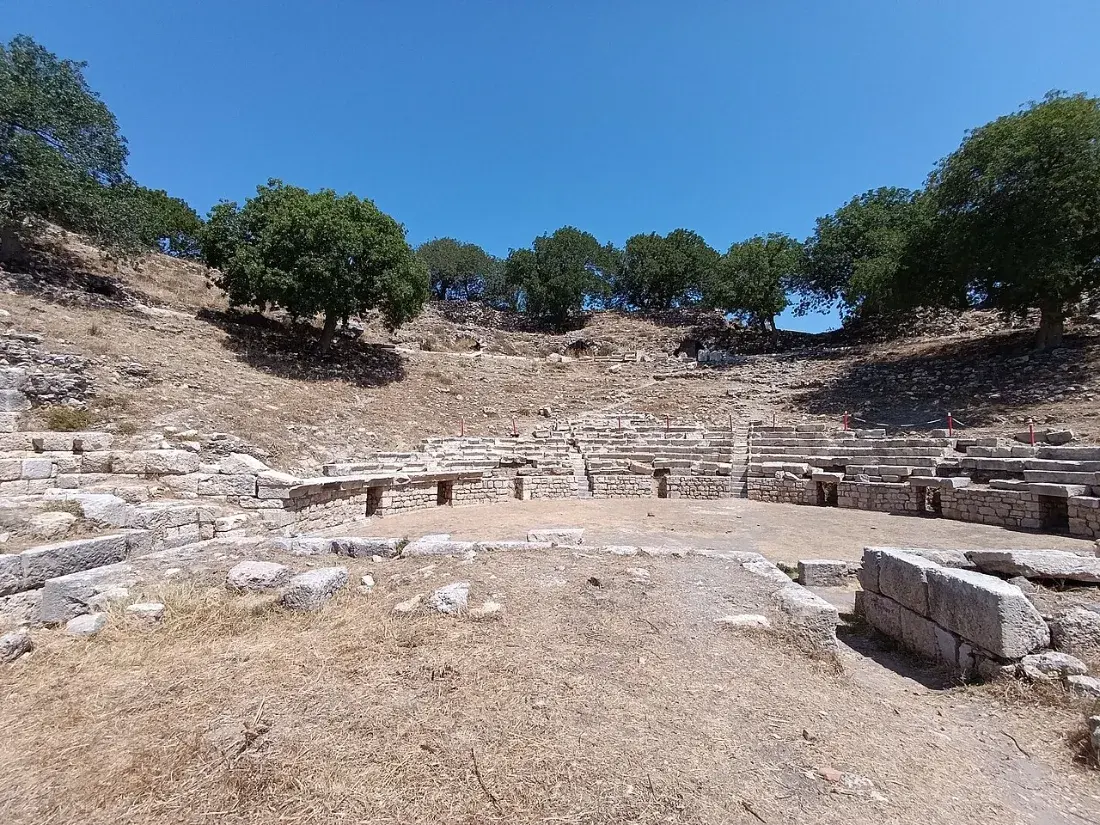
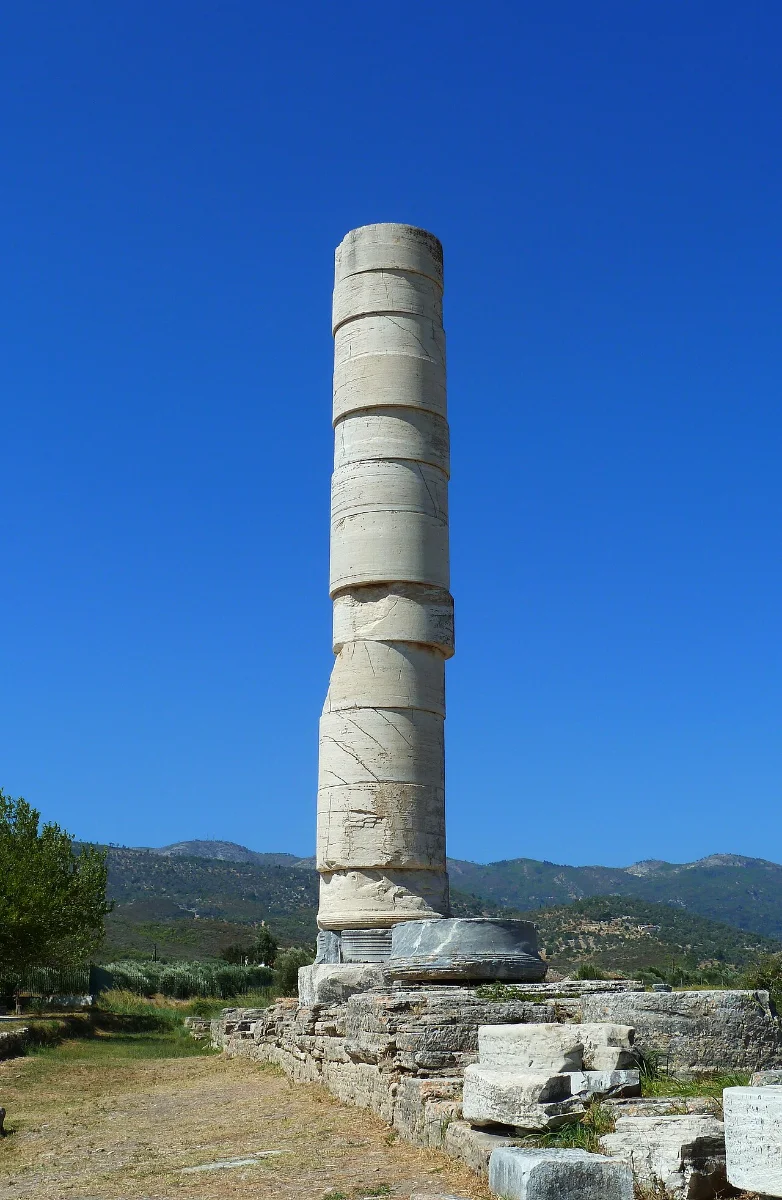
Teos, Abdera, Samos, Athens. All sources agree that Anacreon was born at Teos, on the coast of Asia Minor.[1] When the Medes under Harpagus attacked Teos, he left with the Teians who settled at Abdera in Thrace (Strabo; the Suda). He then went to Samos, to the court of the tyrant Polycrates. After Polycrates’ death in 522 BC he went to Athens. He was invited there by the Pisistratid Hipparchus (died 514), who also brought Simonides to the city.[2] The same sequence is given elsewhere: Teos, Abdera (founded about 540 BC), Samos under Polycrates, and Athens under Hipparchus.[3]
In the pseudo-Platonic Hipparchus, Hipparchus sends a fifty-oared ship to fetch him. Herodotus shows Anacreon with Polycrates in the dining room near the end of the tyrant’s life.[4]
The other places are less certain. Cingano treats the move to Abdera as secure. Budelmann calls Abdera “more likely”, and lists Thessaly among further residences that “have been suggested”.[5] The Thessalian stay rests on two epigrams of doubtful authenticity, and Cingano judges it to stand “on thin ice”.[6] Campbell leaves open whether he went to Thessaly after Hipparchus was murdered in 514.[3] On Samos he probably overlapped with Ibycus, his slightly older contemporary, and in Athens with Simonides.[7]
Date. A floruit is the peak of a poet’s career, as ancient chronographers dated it. Eusebius put Anacreon’s floruit in Ol. 61.1 (536/535 BC).[8] The Suda’s chronology is “multiple and controversial”, but Anacreon’s dates are better grounded than those of Ibycus. He lived through the second half of the sixth century.[9] His life ran from the mid-sixth century into the early fifth.[10] One source has him live long enough to know Aeschylus’ early tragedies.[11]
Patrons and friends. In Athens and elsewhere he was linked with leading families. He praised Critias, grandfather of the oligarch Critias. He was also linked with Pericles’ father Xanthippus, though the story of a farewell to Xanthippus raises problems of chronology.[12] For Polycrates and Hipparchus, his presence was part of a larger cultural programme.[13]
What he composed. He wrote lyric, iambus (including tetrameters) and elegy. Hephaestion quotes him “in the elegies”.[14] Epigrams were also transmitted under his name. Some are clearly later, and the authenticity of the rest cannot be proved.[6] His lyric included hymns, drinking-songs and a few partheneia.[6]
Almost all the fragments are short pieces for the symposium, the drinking-party, suited to solo performance. The evidence for public poetry is slight. It rests chiefly on a partheneion fragment (501 PMG) that some assign to him, and on Critias’ mention of women’s choruses.[15]
An Ionian singer. He is the one poet to have composed lyric in Ionic.[6] His language is a literary Ionic, with small admixtures from epic and East Aeolic. This places him in the tradition of iambus and elegy rather than of sung lyric. An ancient source derives his form Δεόνυσος (Deonysos), for Διόνυσος (Dionysos), from the speech of Samos.[16] The dialect may have made his songs feel less foreign to Samian and Athenian audiences.[17]
Lyric is traditionally divided into choral lyric, in Doric, and monody, in Aeolic. This division is unproductive, partly because Anacreon’s own language in turn helped to shape that of Simonides.[18] In metre he stands beside Archilochus and Hipponax as a poet of the simple Ionian strophe. Yet his rhythms are far more varied than anything left by the Ionian poets before him.[19]
Notes
- ^ Budelmann 2009, p. 227; Campbell 1988, p. 3.
- ^ Cingano 2022, p. 297.
- ^ a b Campbell 1988, p. 3.
- ^ Budelmann 2009, pp. 227–228.
- ^ Cingano 2022, p. 297; Budelmann 2009, p. 228 with n. 4.
- ^ a b c d Cingano 2022, p. 298.
- ^ Krummen 2009, p. 199; Cingano 2022, p. 291; Budelmann 2009, p. 228.
- ^ Campbell 1988, p. 4.
- ^ Cingano 2022, p. 297 with n. 20.
- ^ Budelmann 2009, p. 386; de Kreij 2022, p. 151.
- ^ Cingano 2022, p. 297 n. 21; Campbell 1988, p. 3.
- ^ Cingano 2022, p. 297 with n. 22; Budelmann 2009, p. 228 with n. 3.
- ^ Budelmann 2009, p. 228.
- ^ Hephaestion, Ench. 1.6.
- ^ Budelmann 2009, p. 228 with n. 6; Campbell 1988, p. 4.
- ^ de Kreij 2022, pp. 151, 153.
- ^ Budelmann 2009, pp. 230–231.
- ^ de Kreij 2022, pp. 142, 149.
- ^ West 1987, pp. 31, 40.
About · 2 of 5
Drink, desire, and more
The image: drink and desire. Already in antiquity Anacreon was the poet of wine and love. Antipater’s epitaph says that his whole life was poured out to the Muses, Dionysus and Eros. A speaker in Athenaeus says that he made all poetry “hang on drunkenness”, and Cicero calls it all love poetry.[1] Pausanias calls him the first poet after Sappho to make love his main theme.[2]
“Drink and desire” is far too narrow a description: it is a stereotype. Yet it is not baseless. These themes dominate even the fragments quoted by grammarians and metricians, whose choices were not driven by content.[3]
Other themes. Several fragments are abusive. The chief of these is the twelve-line attack on the upstart Artemon (388), who has traded his rags for earrings and a parasol. Others give traditional wisdom in the first person, as in 395 on old age and death, and in the elegiac fr. 2 W on keeping strife out of the symposium. Some hint at cult, such as the address to Artemis (348). Politics appears in 353, though too little survives to say what kind.[4] The songs to boys and women should not be read as autobiography.[5]
Manner. His songs are witty, and they imagine scenes: Eros throwing a ball, or the poet leaping from the Leucadian cliff. They are also simple. The dialect is Ionic and the songs are short; no fragment has more than twelve lines. The lines are short, in four-line strophes, with straightforward rhythms and plain syntax.[6] The word δηὖτε (dēute), “once again”, marks erotic song, and it is particularly frequent in Anacreon.[7]
PMG 358 (interpretation disputed). In the best-known song, Eros invites a white-haired singer to play with a girl from Lesbos. She scorns his hair and “gapes at another”. Most read “another” as another girl, with an allusion to Sappho’s Lesbos. Woodbury took it as another head of hair, that is, a younger man. Gentili and Giangrande proposed an obscene sense. Cingano adds that the girl may be a prostitute.[8] The ancient claim that the song was addressed to Sappho is chronologically impossible.[9] The text and metre are on the Metres tab.
Reperformance. His patrons and travels suggest that his fame spread across the Aegean in his lifetime. In fifth-century Athens he was known as a composer of skolia, simple songs that the symposiasts themselves could sing. His songs were generic and transferable, and so they suited repeated performance.[10]
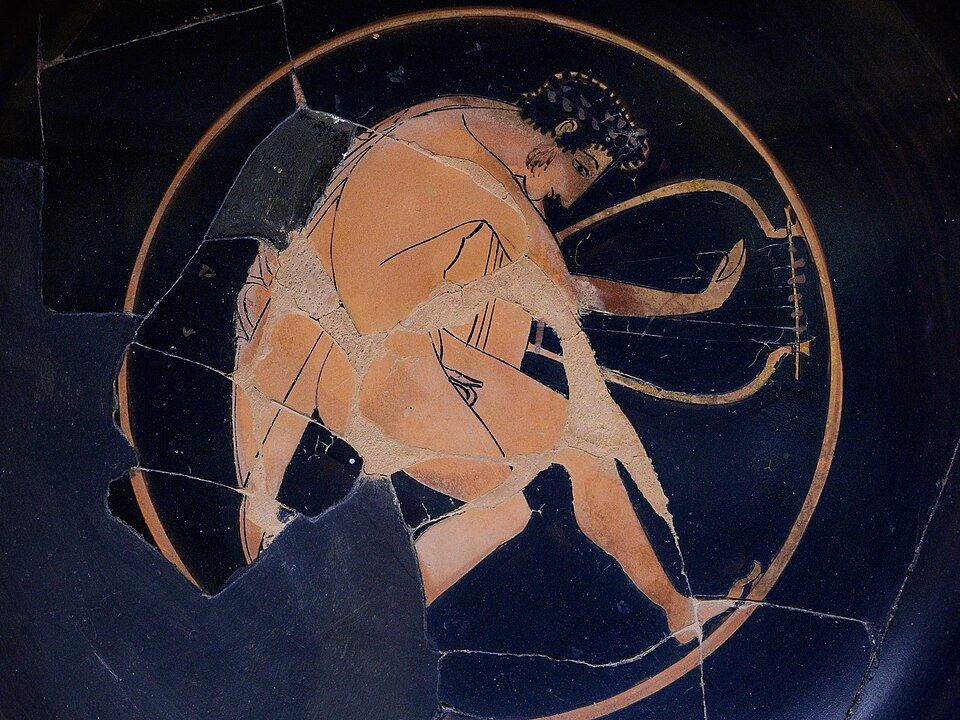
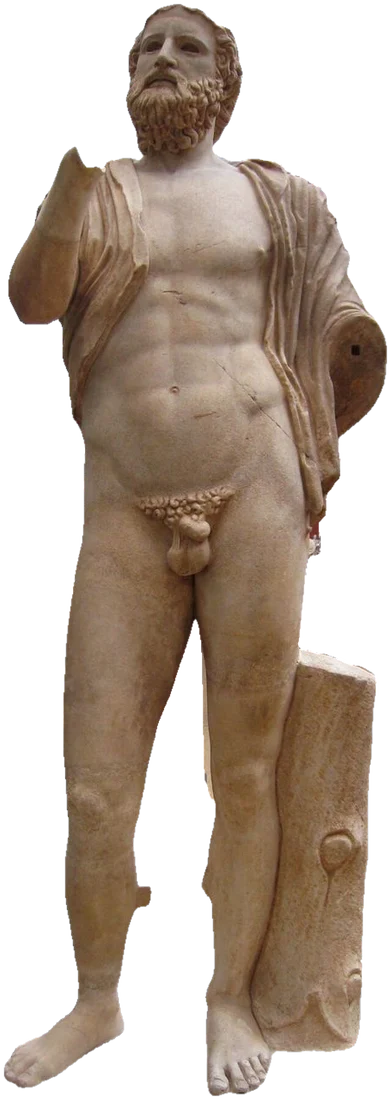
Pictures. Three Attic vases of about 520–490 BC are inscribed with his name, more than for any lyric poet but Sappho. They show him as a reveller, singing to the barbitos, which he was later said to have invented. On a krater attributed to the Kleophrades Painter he and his companions wear long robes and turbans and carry parasols. A larger group of “Anacreontic” vases shares this costume. Whether these images are satirical is debated.[11] A fifth-century statue of him, mentioned by Pausanias, survives in later copies.[12]
How later readers framed him. In Athenaeus, the speaker Myrtilus quotes fr. 360 PMG (“Boy with the look of a girl, I am searching for you, but you do not listen; you do not know that you hold the reins of my soul”). He sets it beside Pindar’s encomium of Theoxenus. So Pindar’s weighty, elaborate manner is set against Anacreon’s lighter and plainer one.[13] An epigram of Antipater of Sidon has Anacreon admit that his poetry now consists of books, whereas once he sang at the revels of Dionysus (AP 7.26).[14]
Notes
- ^ Budelmann 2009, p. 227.
- ^ Cingano 2022, p. 298.
- ^ Budelmann 2009, pp. 231–233.
- ^ Budelmann 2009, p. 232; Cingano 2022, pp. 299, 301.
- ^ Cingano 2022, p. 300.
- ^ Budelmann 2009, pp. 229–231.
- ^ Budelmann 2009, p. 235; Cingano 2022, p. 300.
- ^ Budelmann 2009, pp. 229–230 with n. 11; Cingano 2022, pp. 300–301 with n. 31.
- ^ Budelmann 2009, p. 229 with n. 9; Cingano 2022, p. 300 n. 30.
- ^ Budelmann 2009, p. 234.
- ^ Budelmann 2009, pp. 235–236; Cingano 2022, p. 298 with n. 24.
- ^ Cingano 2022, p. 298 with n. 24.
- ^ Phillips 2022, pp. 124–125.
- ^ Phillips 2022, p. 121.
About · 3 of 5
Transmission, and the Anacreontea
Early interest and Alexandria. Before Alexandria, Anacreon interested the school of Plato and Aristotle (Chamaeleon, Clearchus, Heraclides Ponticus).[1] He belonged to the canon of nine lyric poets whose works the Alexandrians gathered, ordered and normalised in spelling.[2] Zenodotus and Didymus studied him. Aristophanes of Byzantium edited him, and Aristarchus edited and commented on him.[3] Elsewhere Aristarchus is said to have edited Alcaeus “and (probably) Anacreon”.[4]
The number of books is unknown. The sources name the first three. Whether they were arranged by metre, as Sappho’s were, cannot be told. The first book opened with the hymn to Artemis (348).[5] Campbell, on the evidence of a testimonium, thinks there were five books in all (test. 13).[6]
Athens before the Peripatos. The pseudo-Platonic Hipparchus credits the tyrant’s son with three things, all done “to educate the citizens”. He introduced Homer’s performances at the Panathenaea. He fetched Anacreon from Samos by state ship. And he kept Simonides at his side. Nagy reads the three together as a Panathenaic programme, a rescue of the Ionian lyric tradition after Polycrates’ fall. He argues that kitharodes performed Anacreon’s songs as repertoire in the Panathenaic contests. In his view, that is why the vases show Anacreon singing to the barbitos or the kithara.[7]
Among the Peripatetics, Chamaeleon wrote a monograph On Anacreon. It quoted the poems and used them to explain the poet’s life. Its surviving fragments cite the songs on Artemon (PMG 372 and 388). Another fragment reports the view that a song of Anacreon was addressed to Sappho.[8]
Papyri. Ancient commentaries on his poems survive in several papyri (P.Oxy. 2321, 3695, 3722, 4454; P.Ryl. 35). The papyri of Anacreon are collected, with commentary, in the Commentaria et lexica Graeca in papyris reperta.[9]
P.Oxy. 2321 (fr. 346) shows how dialect and metre decide attribution. Its Ionic dialect and its metre make its ascription to Anacreon one that “will hardly be disputed”, in Lobel’s words. Yet its three-line stanzas of anaclastic ionics have no exact parallel in his other fragments.[10]
Quotation. Much survives because later authors quoted it. In Athenaeus, the speaker Myrtilus cites fr. 360 PMG beside Sappho, Pindar, Philoxenus and Ibycus on lovers’ attention to the eyes. The grouping invites both a sense of the “lyrical” and attention to differences.[11]
Hephaestion uses him to illustrate many metres. They include the iambic dimeter and its catalectic form (“Anacreontean”), the trochaic tetrameter, the dactylic tetrameter catalectic, choriambic trimeters and the Priapean. They also include ionics, among them the anaclastic dimeter (“frequent in Anacreon”), the encomiologic, and two asynartete combinations.[12] He also quotes him “in the elegies” (1.6). These lines are scanned on the Metres tabs.
Editions and dialect. The lyric fragments are cited from Page’s PMG, and the elegiac and iambic ones from West’s IEG.[13] De Kreij uses PMG with P.Oxy. 3722.[14] Bernsdorff’s edition with commentary (2020) keeps the PMG numbers.[15]
Quoted fragments may have been Atticised when they were quoted or later copied. Majuscule script writes in capitals; minuscule is the later lower-case script. Around the ninth century manuscripts changed from majuscule to minuscule, and the change obscured accents and breathings.[2] On the other hand, printed texts are more Ionic than the manuscripts. Editors have consistently removed the long α (ā) that the manuscripts sometimes give.[16]
The Anacreontea are not Anacreon. About sixty poems, the Carmina Anacreontea, survive in the main manuscript of the Palatine Anthology. They were probably drawn from earlier collections.[17] Their date is disputed. West spreads them over a long period, from the late Hellenistic age to the fifth century AD.[18] Budelmann, on internal evidence and especially prosody, dates them from possibly the first century BC to the sixth century AD. Cingano likewise gives the first century BC to the sixth AD.[19]
Their metres are mostly related to the two that antiquity called “Anacreontic”: the catalectic iambic dimeter and the anaclastic ionic dimeter.[17] The hemiambic is another name for the catalectic iambic dimeter. It is the staple of the Anacreontea, sometimes in four-line stanzas, beside the anacreontic proper. Later poems betray themselves by false quantities, and they show the influence of accent.[20]
Aulus Gellius heard such poems sung as Anacreontea. Their authenticity was not doubted until nineteenth-century philology separated them from Anacreon.[21] Nothing on this page’s Metres tabs is drawn from the Anacreontea.
Notes
- ^ Cingano 2022, p. 298; Campbell 1988, p. 4.
- ^ a b de Kreij 2022, p. 143.
- ^ Cingano 2022, p. 298.
- ^ Phillips 2022, p. 120.
- ^ Cingano 2022, p. 298 with n. 26.
- ^ Campbell 1988, p. 4.
- ^ Nagy 2020, pp. 100–103.
- ^ Hadjimichael 2020, pp. 159, 167–171.
- ^ Cingano 2022, pp. 298, 302; Sampson 2022, p. 110.
- ^ Sampson 2022, p. 111.
- ^ Phillips 2022, pp. 124–125.
- ^ Hephaestion, Ench. 5.2–3, 6.4, 7.2, 9.2–3, 10.4, 12.4–5, 15.10, 15.20, 15.22.
- ^ Cingano 2022, p. 290 n. 1.
- ^ de Kreij 2022, p. 151.
- ^ Cingano 2022, p. 302.
- ^ de Kreij 2022, p. 152 n. 27.
- ^ a b Budelmann 2009, p. 238.
- ^ West 1987, p. 71.
- ^ Budelmann 2009, p. 238; Cingano 2022, p. 301.
- ^ West 1987, pp. 71, 74.
- ^ Budelmann 2009, pp. 238–239; Cingano 2022, p. 301.
About · 4 of 5
His metres
Anacreon was an Ionian. But his range of rhythms is far wider than anything that survives from the Ionian poets before him, and aeolic cola and ionics bulk large in it.[1] The mixture of glyconics and pherecrateans was a favourite of his.[2] The anaclastic ionic dimeter came to be named after him.[3] Three families of metre matter most. Hephaestion’s further examples are on the next tab.
Aeolic: glyconics and choriambs
PMG 358.1–4 is a stanza of three glyconics and a pherecratean. Word-end closes off each colon, yet the four run on in synapheia, as one continuous unit.[1] The Greek follows Smyth’s text, with πορφυρῆι (porphyrēi), “purple”, in line 1:
σφαίρηι δηὖτέ με πορφυρῆι
βάλλων χρῡσοκόμης Ἔρως
νήνῑ ποικιλοσαμβάλωι
συμπαίζειν προκαλεῖται.
sphairēi dēute me porphyrēi / ballōn chrȳsokomēs Erōs / nēnī poikilosambalōi / sympaizein prokaleitai.
“Golden-haired Eros hits me once again with his purple ball, and calls me out to play with the girl of the embroidered sandals.”
gl ‖ gl ‖ gl ‖ ph |||: three glyconics, ○ ○ — ⏑ ⏑ — ⏑ —, and a pherecratean, ○ ○ — ⏑ ⏑ — —, the glyconic one position shorter, ending on two longs. Both base positions are long in every line.
Anacreon, PMG 358.1–4: Smyth 1900 pp. 46–47, public domain
synthetic ∿
The song’s eight lines may be complete.[4]
The aeolic base is less free than elsewhere. At least one of its two opening syllables must be long, and normally both are.[1] The glyconic variant ¨gl (— ⏑ ⏑ — × — ⏑ —) is used with its catalectic form, the aristophanean, and with the ithyphallic. Expanded with choriambs, it yields the “iambo-choriambic” verses: — ⏑ ⏑ — — ⏑ ⏑ — × — ⏑ — × — ⏑ — (¨glᶜ ia) and — ⏑ ⏑ — — ⏑ ⏑ — — ⏑ ⏑ — × — ⏑ — (¨gl²ᶜ). These two are used interchangeably. With an iambic dimeter added, they form the strophe of 388:[5]
πρὶν μὲν ἔχων βερβέριον, καλύμματ’ ἐσφηκωμένα,
prin men echōn berberion, kalymmat’ esphēkōmena,
“Once he went about in a shabby smock, with head-wraps pinched in like a wasp …”
¨glᶜ ia: the anaclastic glyconic — ⏑ ⏑ — × — ⏑ —, with one more choriamb (red) inside it, and an iambic metron × — ⏑ — at the end.
Anacreon, PMG 388.1: Bergk 1882 III p. 262; metrical analysis[5]
synthetic ∿
The catalectic counterpart (¨glᶜ ia∧ or ar²ᶜ) ends ⏑ — ⏑ — —. In PMG 378 Anacreon used it with the first position resolved, and the resolution continued through the whole song. Apart from one doubtful case in Ibycus, no earlier resolution is known in the sequence — ⏑ ⏑. Before this, resolution was found only in the sequence — ⏑ —.[6] Hephaestion says the same in his own terms. Anacreon contrived to make the first syzygy of tribrach and iamb throughout a whole song, so that the resolution is common to the choriambic and the iambic:[7]
ἀναπέτομαι δὴ πρὸς Ὄλυμπον πτερύγεσσι κούφαις
anapetomai dē pros Olympon pterygessi kouphais
“I fly up to Olympus on light wings.”
The first long of the line is resolved into two shorts (red), ἀνα-. Anacreon kept this resolution through the whole song. West prints κούφηις.
Anacreon, PMG 378.1, Hephaestion’s text[7]
synthetic ∿
Ionics and the anacreontic
Anacreon’s ionics are mostly of the anaclastic variety, ⏑ ⏑ — ⏑ — ⏑ — —. This colon is the anacreontic, written 2io÷. It is the anaclastic equivalent of the ionic dimeter ⏑ ⏑ — — ⏑ ⏑ — —. It usually comes in pairs joined in synapheia.[8] Here is PMG 395.1–6 from Smyth’s text:
πολιοὶ μὲν ἧμιν ἤδη κρόταφοι, κάρη τε λευκόν,
χαρίεσσα δ’ οὐκέτ’ ἥβη πάρα, γηραλέοι δ’ ὀδόντες,
γλυκεροῦ δ’ οὐκέτι πολλὸς βιότου χρόνος λέλειπται.
polioi men hēmin ēdē krotaphoi, karē te leukon, / chariessa d’ ouket’ hēbē para, gēraleoi d’ odontes, / glykerou d’ ouketi pollos biotou chronos leleiptai.
“My temples are grey now and my head is white; lovely youth has left me, my teeth are an old man’s teeth, and of sweet life there is little time remaining.”
Each line is two anacreontics, ⏑ ⏑ — ⏑ — ⏑ — —, except the first half of the last (red), a straight ionic dimeter, ⏑ ⏑ — — ⏑ ⏑ — —. The -λέοι of γηραλέοι counts as one syllable.
Anacreon, PMG 395.1–6: Smyth 1900 p. 49, public domain
synthetic ∿
The penultimate colon changes the rhythm: it is a straight ionic (⏑ ⏑ — — ⏑ ⏑ — —). The change sharpens the outline of the strophe, and the song’s other strophe repeats the pattern exactly.[6] This “neatly-turned recursion” is one of Anacreon’s metrical tropes.[3] PMG 352 is in plain ionic tetrameters.
Anacreon also uses ionic trimeters, which Sappho had used before him: ⏑ ⏑ — ⏑ — ⏑ — — ⏑ ⏑ — — (÷3io) and ⏑ ⏑ — — ⏑ ⏑ — ⏑ — ⏑ — — (3io÷). There is also a lengthened variant, ⏑ ⏑ — — ⏑ ⏑ — ⏑ — ⏑ — ⏑ — —, which inserts one more ⏑ — in the middle.[6] That last is the shape of PMG 413. Hephaestion quotes it as an ionic tetrameter “brachycatalectic”, in which Anacreon composed whole songs:[9]
μεγάλῳ δηῦτέ μ’ ἔρως ἔκοψεν ὥστε χαλκεὺς
πελέκει, χειμερίῃ δ’ ἔλουσεν ἐν χαράδρῃ.
megalōi dēute m’ erōs ekopsen hōste chalkeus / pelekei, cheimeriēi d’ elousen en charadrēi.
“Again Eros has hit me, like a smith swinging a mighty axe, and plunged me in a winter torrent.”
West’s lengthened variant of the ionic trimeter: one more ⏑ — (red) in the middle.
Anacreon, PMG 413, Hephaestion’s text[9]
synthetic ∿
In PMG 346 fr. 1, what would be straightforward aeolic (¨gl ¨gl arᶜ) has its cola dovetailed. Word-end falls regularly one position later than one would expect, so that the whole looks thoroughly ionic.[10] Its three-line stanzas are varieties of anaclastic ionics.[11]
Notes
- ^ a b c West 1987, p. 40.
- ^ Budelmann 2009, p. 231.
- ^ a b D’Angour 2022, p. 137.
- ^ Budelmann 2009, pp. 229, 231; Cingano 2022, p. 300.
- ^ a b West 1987, pp. 40–41.
- ^ a b c West 1987, p. 41.
- ^ a b Hephaestion, Ench. 9.3.
- ^ West 1987, pp. 33, 41.
- ^ a b Hephaestion, Ench. 12.4.
- ^ West 1987, pp. 41–42.
- ^ Sampson 2022, p. 111.
About · 5 of 5
Hephaestion's examples
Hephaestion’s handbook quotes Anacreon to illustrate a wide range of forms. Often he adds that Anacreon composed whole songs in them. The Greek below is Hephaestion’s text. The labels in the last column use West’s notation.[1] The PMG numbers are those of the edited fragments; the older number printed in the digitised Consbruch text is in brackets.
| PMG (Consbruch no.) | Line | Scansion | Form |
|---|---|---|---|
| 428 (89), Ench. 5.2 | ἐρῶ τε δηῦτε κοὐκ ἐρῶ / καὶ μαίνομαι κοὐ μαίνομαι erō te dēute kouk erō / kai mainomai kou mainomai “Again I love, and love not; I rave, and do not rave” |
⏑ — ⏑ — ⏑ — ⏑ — / — — ⏑ — — — ⏑ — | 2ia; whole songs, Hephaestion says |
| 429 (92), Ench. 5.3 | ὁ μὲν θέλων μάχεσθαι, / πάρεστι γάρ, μαχέσθω ho men thelōn machesthai, / paresti gar, machesthō “whoever wants a fight, let him fight: the chance is there” |
⏑ — ⏑ — ⏑ — — | 2ia∧, which Hephaestion says is called “Anacreontean” |
| 418 (76), Ench. 6.4 | κλῦθί μευ γέροντος εὐέθειρα χρυσόπεπλε κούρα klȳthi meu gerontos euetheira chrysopeple koura “listen to an old man, fair-tressed girl in your robe of gold” |
— ⏑ — ⏑ — ⏑ — ⏑ — ⏑ — ⏑ — ⏑ — — | 4tr acatalectic |
| 394a (67), Ench. 7.2 | ἁδύμελες χαρίεσσα χελιδοῖ hadymeles chariessa chelidoi “sweet-songed, graceful swallow” |
— ⏑ ⏑ — ⏑ ⏑ — ⏑ ⏑ — — | 4da∧; whole songs |
| 382 (31), Ench. 9.2 | δακρυόεσσάν τ’ ἐφίλησεν αἰχμάν dakryoessan t’ ephilēsen aichman “and he loved the spear that brings tears” |
— ⏑ ⏑ — — ⏑ ⏑ — ⏑ — — | arᶜ (Hephaestion: a choriambic trimeter) |
| 373 (17), Ench. 10.4 | ἠρίστησα μὲν ἰτρίου λεπτοῦ μικρὸν ἀποκλάς ēristēsa men itriou leptou mikron apoklas “I lunched on a scrap broken off a thin sesame-cake” |
— — — ⏑ ⏑ — ⏑ — ¦ — — — ⏑ ⏑ — — | gl ¦ ph, the “Priapean”. Glyconics and pherecrateans were Anacreon’s favourite mix: straightforward, like all his rhythms, and imitated by Aeschylus[2] |
| 400 (61), Ench. 12.5 | παρὰ δηῦτε Πυθόμανδρον / κατέδυν ἔρωτα φεύγων para dēute Pythomandron / katedyn erōta pheugōn “once more I slipped in at Pythomandros’ side, running from Eros” |
⏑ ⏑ — ⏑ — ⏑ — — | 2io÷, which Hephaestion calls “frequent in Anacreon”. The anaclastic ionic, with its two central syllables interchanged, was Anacreon’s favourite rhythm. The same rhythm returns in the parodos of the Bacchae[3] |
| 393 (70), Ench. 15.10 | Ὀρσόλοπος μὲν Ἄρης φιλέει μεναιχμάν Orsolopos men Arēs phileei menaichman “battle-rousing Ares loves the man who holds his ground with the spear” |
— ⏑ ⏑ — ⏑ ⏑ — ¦ ⏑ — ⏑ — — | D ¦ pe, Hephaestion’s “encomiologic”, used by Anacreon “in several songs” |
| (95), Ench. 1.6 | οὐδέ τί τοι πρὸς θυμόν, ὅμως γε μὲν ὡς ἀδοιάστως oude ti toi pros thymon, homōs ge men hōs adoiastōs “and not at all to your heart’s liking; still, without a doubt …” |
— ⏑ ⏑ — — — ⏑ ⏑ — ⏑ ⏑ — ⏑ ⏑ — — | hexameter, “in the elegies” |
| 387 (30), Ench. 15.20 | τὸν λυροποιὸν ἠρόμην Στράττιν εἰ κομήσει ton lyropoion ēromēn Strattin ei komēsei “I asked Strattis, the lyre-maker, if he means to wear his hair long” |
— ⏑ ⏑ — ⏑ — ⏑ — ¦ — ⏑ — ⏑ — — | choriamb + iambic metron, then ithyphallic |
Notes on the scansions. In 418 the -ρα of εὐέθειρα (euetheira), “fair-tressed”, stays short before χρυσό- (chryso-). Early poetry normally admits this short treatment of stop + liquid at the beginning of a word.[4]
κλῦθί μευ γέροντος εὐέθειρα χρυσόπεπλε κούρα.
klȳthi meu gerontos euetheira chrysopeple koura.
“listen to an old man, fair-tressed girl in your robe of gold”
-ρα (red) stays short before χρ at the start of the next word; -πεπ- (red) is long before πλ inside the word.
Anacreon, PMG 418, quoted by Hephaestion, Ench. 6.4
synthetic ∿
In 373 the first syllables of ἰτρίου (itriou), “sesame-cake”, and of -ποκλάς (in ἀποκλάς (apoklas), “breaking off”) are long before the stop + liquid inside the word. In 400 the first syllable of Πυθόμανδρον (Pythomandron) must be long for the metre.
In 393 the -έει of φιλέει (phileei), “loves”, is one syllable. Synecphonesis is the merging of two vowels into one syllable. Within a word it is frequent where the first vowel is ε.[5]
In the elegiac line, the δοι of ἀδοιάστως (adoiastōs), “without a doubt”, is shortened before the following vowel. This is an example of correption inside the word (ἀδοῐάστως).[6]
οὐδέ τί τοι πρὸς θυμόν, ὅμως γε μὲν ὡς ἀδοιάστως·
oude ti toi pros thymon, homōs ge men hōs adoiastōs;
“and not at all to your heart’s liking; still, without a doubt …”
The diphthong of -δοι- (red) is shortened before the vowel that follows inside the same word: correption within the word.
Anacreon, elegiac fragment, quoted by Hephaestion, Ench. 1.6
synthetic ∿
Hephaestion quotes the line for the same reason: it is a rare case of a “common” syllable inside a word in epic verse.[7] A few poets occasionally allow correption inside a word: Anacreon, Archilochus, Tyrtaeus, Hipponax, Stesichorus, Pindar and Bacchylides. Another example is θυῐ́οντα (thyionta). The tendency belongs to the language, and it is “most prominent in Ionic”.[6]
387 is the line in which, Hephaestion says, Anacreon added the ithyphallic “not to an iambic but to a choriambic mixed with iambics”.[8]
Notes
Anacreon: frr. 358, 388 and 395 (σφαίρηι δηὖτέ με πορφυρῆι…)
Synopsis
Three of Anacreon’s songs, used by West to illustrate his metres.[1] PMG 358 is the ball song. Eros calls the white-haired singer to play with a girl from Lesbos. She scorns his hair and gapes at “another”: most likely another girl, though some read another man’s hair.[2] PMG 388, his longest fragment, mocks the upstart Artemon, who has traded his shabby clothes for earrings and a parasol.[3] PMG 395 laments grey temples, lost youth and the little life that is left, and it fears death. Like his other wisdom pieces, it keeps the singer’s own “I”.[3] All three may be complete; no fragment of Anacreon runs beyond twelve lines.[4] Athenaeus preserves 358 (13.599c) and 388 (12.533f–534a). 395 comes from the Anthology of Stobaeus (4.51.12), in its chapter on death and its inevitability.[5] Anacreon was born at Teos and lived through the second half of the sixth century BC. He sang at the courts of Polycrates of Samos and Hipparchus of Athens,[6] mostly short songs for solo performance at the symposium.[7]
The passages are given below in the wording of Smyth and Bergk’s public-domain editions: 358.1–4, 388.1–6 and 395.1–6.
Text and translation
The uninterrupted Greek with its English translation, line by line.
Show text and translation
σφαίρηι δηὖτέ με πορφυρῆι
Anacreon · PMG 358.1–4, 388.1–6, 395.1–6 · Greek wording from Smyth 1900 and Bergk 1882; metrical analysis after West
How to read each line
A guide to the Greek, syllables, pitch marks and quantities.
Show the reading key
- Above each line: the line as the edition prints it, each word placed over its own syllables. The main row: the same Greek divided into metrical syllables, each written as it is pronounced. A consonant that closes a syllable is written with it (λόθ | ρο); an elided word is closed up with the next vowel (ν’ἀ); a final consonant carried into the next word is set with a thin space (ς ἰ). Wider gaps mark word-ends.
- Above the syllables: the pitch of each syllable, from the accents. Under them: the quantity of each syllable as it falls in the line, then the transliteration, syllable by syllable, with accented syllables in capitals.
- Under each line: a line-for-line translation. In the right margin of the scansion: the line type, its scheme, and its analysis into cola.
Key to the labels
The names, patterns and symbols used beside this poem.
Show the labels and symbols
The labels in the right margin of the scansion below name the cola, the rhythmic units each line is built from (Voigt’s and West’s analysis). A caret before a name (∧hipp) means the colon has lost its first position (acephalous). × marks an anceps position, which takes a long or a short. A click on any syllable highlights its colon, or, with the colon/foot switch, its foot. After the scheme, ‖ marks the end of a period and ||| the end of the strophe.[8] A line that ends without either runs on into the next line (synapheia): the two are one period, with no metrical break between them,[9] and the page sets them together and links them. The sources of the labels, with their page numbers, are given line by line under Prosody, line by line.
| Label | Name and shape | What it is |
|---|---|---|
| an-gl | Glyconic (gl)× × — ⏑ ⏑ — ⏑ — | The main aeolic colon: the aeolic base × ×, a choriamb and ⏑ —.[10] In Anacreon the freedom of the base is restricted, since at least one of its two syllables must be long, and usually both are.[11] |
| an-ph | Pherecratean (ph)× × — ⏑ ⏑ — — | The catalectic of the glyconic, one position shorter at the end.[10] It closes the stanza of PMG 358.[11] |
| an-glc | Anaclastic glyconic with choriambic expansion (¨glᶜ)— ⏑ ⏑ — — ⏑ ⏑ — × — ⏑ — | The glyconic variant ¨gl, — ⏑ ⏑ — × — ⏑ —, with one choriamb added.[11] Followed by an iambic metron it makes ¨glᶜ ia, which the strophe of PMG 388 treats as interchangeable with ¨gl²ᶜ.[12] |
| an-iam | Iambic metron (ia)× — ⏑ — | The iambic metron that completes ¨glᶜ ia.[11] |
| an-2ia | Iambic dimeter (2ia)× — ⏑ — × — ⏑ — | Two iambic metra.[10] In PMG 388 it completes each strophe.[13] |
| an-gl2c | Anaclastic glyconic with double choriambic expansion (¨gl²ᶜ)— ⏑ ⏑ — — ⏑ ⏑ — — ⏑ ⏑ — × — ⏑ — | The glyconic variant ¨gl, — ⏑ ⏑ — × — ⏑ —, with two choriambs added.[11] West calls it and ¨glᶜ ia iambo-choriambic verses, treated as interchangeable in PMG 388.[12] |
| an-ana | Anacreontic (2io÷)⏑ ⏑ — ⏑ — ⏑ — — | The anaclastic equivalent of the ionic dimeter.[10] Anacreon’s ionics are mostly of this variety, and the colon occurs mostly in paired series in synapheia.[13] |
| an-2io | Ionic dimeter (2io)⏑ ⏑ — — ⏑ ⏑ — — | Two ionic metra ⏑ ⏑ — —.[10] In PMG 395 this straight ionic stands in the penultimate colon among anacreontics, and West says the variation gives the strophe a clearer shape.[13] |
The feet
| Foot and shape | Where |
|---|---|
| Aeolic base× × | Two free positions at the start of an aeolic colon.[10] In Anacreon at least one of the two must be long, and usually both are.[11] |
| Choriamb— ⏑ ⏑ — | The core of the aeolic cola.[10] |
| Close of the glyconic⏑ — | The last two positions of the glyconic. |
| Close of the pherecratean— | The single long that ends the pherecratean, one position shorter than the glyconic. |
| Iambic metron× — ⏑ — | One iambic metron. |
| Anacreontic⏑ ⏑ — ⏑ — ⏑ — — | The anaclastic equivalent of the ionic dimeter ⏑ ⏑ — — ⏑ ⏑ — —:[10] a short and a long element of the dimeter change places.[14] West marks ionic anaclasis with the sign ÷.[15] |
| Ionic metron⏑ ⏑ — — | One ionic metron.[10] |
Scansion
The three passages West uses to show Anacreon’s range: a stanza of glyconics closed by a pherecratean, the iambo-choriambic strophe of the Artemon song, and anacreontics in synapheia with a straight ionic for contrast. Every syllable’s quantity is given with its reason, with West’s colon labels in the margin.
Hitting me once more with a purple ball,
Eros of the golden locks
invites me to sport with a girl
in gaily patterned sandals.
In the old days he had a ragged mantle and head-wraps cinched in like a wasp,
dice of wood dangling at his ears, and about
his flanks ⟨he went about in⟩ an ox’s bare ⟨skin⟩,
the filthy casing of a sorry shield; with women who sold bread
and whores by choice the scoundrel Artemon kept company,
earning a living by fraud.
Grey now are my temples, and my head is white;
lovely youth is here no more, my teeth are aged,
and of sweet life there remains no great span of time.
Metre
- Why these passages. West introduces Anacreon as an Ionian whose rhythms range much more widely than those of the Ionian poets before him, with aeolic cola and ionics prominent in his work.[11] He quotes the three passages on this tab to show the two families at work, and his labels are given in the margin of each line. The Greek wording comes from the public-domain editions of Smyth and Bergk. The ball in 358 is purple in this text. West’s analysis applies to the same metrical shapes.[12]
- PMG 358: glyconics and a pherecratean. The stanza is three glyconics (gl, × × — ⏑ ⏑ — ⏑ —) and a pherecratean (ph, × × — ⏑ ⏑ — —), the catalectic form of the glyconic.[16] West notes that each of the four cola ends with a word but that they run on in synapheia, so that the end of each line is not a pause and its last syllable keeps its real length.[11] Anacreon limits the freedom of the aeolic base: he never lets both syllables be short and mostly makes both long, as in every line of this stanza.[11] Budelmann calls this mix of glyconics and pherecrateans a favourite rhythm of Anacreon’s and notes that its strophes are only four lines long;[17] Cingano describes the song as composed in glyconics with a final pherecratean.[18]
- PMG 388: iambo-choriambic verses. West derives these from the glyconic variant ¨gl, — ⏑ ⏑ — × — ⏑ —. With choriambic expansion it yields — ⏑ ⏑ — — ⏑ ⏑ — × — ⏑ — × — ⏑ — (¨glᶜ ia) or — ⏑ ⏑ — — ⏑ ⏑ — — ⏑ ⏑ — × — ⏑ — (¨gl²ᶜ). The two shapes stand for each other freely, and with an iambic dimeter added they form the strophe of 388.[12] In the first strophe both long verses are ¨glᶜ ia, and in the second both are ¨gl²ᶜ. The song mocks Artemon, a man who rose from rags to riches; Cingano counts its twelve lines as skilfully constructed mockery,[19] and Budelmann calls it the longest of Anacreon’s abusive pieces.[20]
- PMG 395: anacreontics. Most of Anacreon’s ionics are anaclastic, ⏑ ⏑ — ⏑ — ⏑ — — (2io÷), a colon he usually sets in pairs joined in synapheia (on the anacreontic as an anaclastic ionic dimeter also Battezzato 2021, p. 126)[13]. The penultimate colon here is a straight ionic dimeter, ⏑ ⏑ — — ⏑ ⏑ — — (2io), and West says this variation gives the strophe a clearer shape; the second strophe of the song has the same arrangement exactly.[13] D’Angour calls the device a metrical trope of Anacreon’s and quotes the same lines.[14]
- West’s marks in the text. West marks long vowels of α ι υ that the reader could not otherwise know (χρῡσοκόμης, νήνῑ, ψῑλὸν, εἴλῡμα, ὁμῑλέων), and the input carries the same marks; the page does not show them. He marks two vowels sung as one syllable (synizesis) with a curve beneath them, in ὁμιλέων (388.5) and γηραλέοι (395.4), and the input ties them with ‿. In 388.3 he prints π’λευρῆισι with a syllable-marker between π and λ, the printed sign West describes for showing that a stop + liquid closes the syllable before it;[21] the page shows the word without the marker, and the scanner reaches the same division.
- Prosody. A syllable counts as long when its vowel is long or a diphthong, or when a consonant closes it; a final consonant before a vowel is carried into the next syllable.[22] Short final vowels are elided before a vowel.[23] Two vowels at a word-juncture may run together as one long syllable, most often when the first word is a monosyllable such as καί or δή:[24] δηὖτε is δὴ αὖτε and κἀθελο- is καὶ ἐθελο-. Within a word, two vowels are often sung as one syllable where the first is ε,[24] as in -λέων and -λέοι. There is no resolution, hiatus or correption in these lines. The last position of a period may hold a short syllable, called brevis in longo.[8]
- Dialect. The language is Ionic: long α has become η, as in σφαίρηι, the first word of 358.[25]
Prosody, line by line
Every syllable, with the reason for its length. Quantities are read from the vowel where the spelling shows it, from the consonants that follow (“position”), from the accent where it tells, and from the metre where nothing else does. Editors’ notes on the text follow in the boxed paragraphs.
- 358.1
Line 358.1 · σφαίρηι δηὖτέ με πορφυρῆι
σφαίρηι δηὖτέ με πορφυρῆι
σφαίρηιδηὖτέμεπορφυρῆιthe period runs on into 358.2 (synapheia).
The label in the margin, with its sources: gl (West).
- 1 —σφαίαί is a diphthong, long by nature; the position is anceps.
- 2 —ρηιηι is a diphthong, long by nature; the position is anceps.
- 3 —δηὖηὖ is a diphthong, long by nature.
- 4 ⏑τέέ is short by nature.
- 5 ⏑μεε is short by nature.
- 6 —πορο is short by nature; closed by ρ: long by position.
- 7 ⏑φυυ is short by the metre (position 7 must be short).
- 8 —ρῆιῆι is a diphthong, long by nature; the line-end is not a period-end: the period runs on into the next line (synapheia), so this syllable keeps its own length, with no brevis in longo, and a word may run over into the next line.[26]
PMG 358.1. The ball is purple: πορφυρῆι is the reading of the public-domain edition.[27] The last three syllables are — ⏑ —: πορ is closed by ρ; φυ is short; ρῆι is long. δηὖτε is δὴ αὖτε, “again”, run together into one word, which is crasis.[24] The diphthong ηυ makes one long syllable. The base σφαί ρηι is long long.[11] Iota is written beside the long vowel here, rather than beneath it as in Smyth.
The later editions of Campbell and Budelmann also describe a purple ball; West uses a different adjective with the same quantities.[28]
- 358.2
Line 358.2 · βάλλων χρυσοκόμης Ἔρως
βάλλων χρυσοκόμης Ἔρως
βάλλωνχρυσοκόμηςἜρωςcontinues 358.1 · one period (synapheia); the period runs on into 358.3 (synapheia).
The label in the margin, with its sources: gl (West).
- 1 —βάλά is a vowel of unknown length; closed by λ: long by position; the position is anceps.
- 2 —λωνω is long by nature; closed by ν: long by position; the position is anceps.
- 3 —χρυῡ is long (its length is not shown by the ordinary spelling).
- 4 ⏑σοο is short by nature.
- 5 ⏑κόό is short by nature.
- 6 —μηςη is long by nature.
- 7 ⏑ἜἜ is short by nature.
- 8 —ρωςω is long by nature; closed by ς: long by position; the line-end is not a period-end: the period runs on into the next line (synapheia), so this syllable keeps its own length, with no brevis in longo, and a word may run over into the next line.[26]
PMG 358.2. The base βάλ λων is long long, both syllables closed by a consonant.[22] West marks the υ of χρῡσοκόμης long,[11] and LSJ gives the same quantity (s.v. χρυσοκόμης); the syllable fills the first long of the choriamb. The line runs on into the next without a pause (synapheia, p. 40), so the ς of Ἔρως closes its syllable before the ν of νήνι.
- 358.3
Line 358.3 · νήνι ποικιλοσαμβάλωι
νήνι ποικιλοσαμβάλωι
νήνιποικιλοσαμβάλωιcontinues 358.2 · one period (synapheia); the period runs on into 358.4 (synapheia).
The label in the margin, with its sources: gl (West).
- 1 —νήή is long by nature; the position is anceps.
- 2 —νιῑ is long (its length is not shown by the ordinary spelling); the position is anceps.
- 3 —ποιοι is a diphthong, long by nature.
- 4 ⏑κιι is short by the metre (position 4 must be short).
- 5 ⏑λοο is short by nature.
- 6 —σαμα is a vowel of unknown length; closed by μ: long by position.
- 7 ⏑βάά is short by the metre (position 7 must be short).
- 8 —λωιωι is a diphthong, long by nature; the line-end is not a period-end: the period runs on into the next line (synapheia), so this syllable keeps its own length, with no brevis in longo, and a word may run over into the next line.[26]
PMG 358.3. νήνῑ is the dative of νῆνις, “girl”, a contracted Ionic form of νεᾶνις.[29] West marks its final ι long,[11] and the input does the same, so the base is long long. In ποικιλοσαμβάλωι, “with fancy sandals”, the ι of ποικιλ- and the α of -σαμβαλ- are short,[30] filling the short positions 4 and 7. σαμ is long because it is closed by μ.
- 358.4
Line 358.4 · συμπαίζειν προκαλεῖται.
συμπαίζειν προκαλεῖται.
συμπαίζεινπροκαλεῖται.continues 358.3 · one period (synapheia).
The label in the margin, with its sources: ph (West).
- 1 —συμυ is a vowel of unknown length; closed by μ: long by position; the position is anceps.
- 2 —παίαί is a diphthong, long by nature; ζ is a double consonant (two sounds) and closes the syllable: long by position; the position is anceps.
- 3 —ζεινει is a diphthong, long by nature; closed by ν: long by position.
- 4 ⏑προο is short by nature.
- 5 ⏑καα is short by the metre (position 5 must be short).
- 6 —λεῖεῖ is a diphthong, long by nature.
- 7 ×ται.αι is a diphthong, long by nature; the position is anceps.
PMG 358.4. The pherecratean closes the stanza. The ζ of συμπαίζειν counts as two consonants, so παί is long in any case.[31] The ο of προ- stays short before κ, filling position 4. The last syllable stands at the end of the stanza, where the position is indifferent;[8] here it is long. Athenaeus’ text continues the song for four more lines, in the same stanza; the whole song is scanned on the tab “The ball and Artemon”.
- 388.1
Line 388.1 · πρὶν μὲν ἔχων βερβέριον, καλύμματ’ ἐσφηκωμένα,
πρὶν μὲν ἔχων βερβέριον, καλύμματ’ ἐσφηκωμένα,
πρὶνμὲν ἔχωνβερβέριον,καλύμματ’ἐσφηκωμένα,The label in the margin, with its sources: ¨glᶜ ia (West).
- 1 —πρὶνὶ is a vowel of unknown length; closed by ν: long by position.
- 2 ⏑μὲὲ is short by nature.
- 3 ⏑ν ἔἔ is short by nature; the first consonant belongs to the previous word and is carried over to this vowel.
- 4 —χωνω is long by nature; closed by ν: long by position.
- 5 —βερε is short by nature; closed by ρ: long by position.
- 6 ⏑βέέ is short by nature.
- 7 ⏑ριι is short by the metre (position 7 must be short).
- 8 —ον,ο is short by nature; closed by ν: long by position.
- 9 ⏑καᾰ is short (its length is not shown by the ordinary spelling); the position is anceps.
- 10 —λύμύ is a vowel of unknown length; closed by μ: long by position.
- 11 ⏑μαα is short by the metre (position 11 must be short).
- 12 —τ’ἐσἐ is short by nature; closed by σ: long by position; the apostrophe marks an elided vowel; the consonant before it joins this syllable.
- 13 —φηη is long by nature; the position is anceps.
- 14 —κωω is long by nature.
- 15 ⏑μέέ is short by nature.
- 16 ×να,ᾰ is short (its length is not shown by the ordinary spelling); the position is anceps.
PMG 388.1, the first verse of the strophe, ¨glᶜ ia. The first syllable πρὶν is long, being closed by ν.[22] μὲν before a vowel gives its ν to the next syllable, so μὲ is short, filling position 2.[22] βερβέριον is a shabby garment;[32] its ι is short here, in position 7. The α of καλύμματ’ is short,[33] at the anceps position 9, and the input marks it with a breve; the final α of καλύμματ(α) is elided before ἐσφηκωμένα.[23] The verse ends a period (‖, p. 41), so its last position is indifferent; the final α of ἐσφηκωμένα is short, a short syllable in the last long position, which is brevis in longo.[8] The input marks that α with a breve so that it is not taken for long.
- 388.2
Line 388.2 · καὶ ξυλίνους ἀστραγάλους ἐν ὠσὶ καὶ ψιλὸν περὶ
καὶ ξυλίνους ἀστραγάλους ἐν ὠσὶ καὶ ψιλὸν περὶ
καὶξυλίνουςἀστραγάλουςἐν ὠσὶκαὶψιλὸνπερὶthe period runs on into 388.3 (synapheia).
The label in the margin, with its sources: ¨glᶜ ia (West).
- 1 —καὶαὶ is a diphthong, long by nature; the next word begins with the double consonant ξ: the syllable is closed before it: long by position.
- 2 ⏑ξυυ is short by the metre (position 2 must be short).
- 3 ⏑λίί is short by the metre (position 3 must be short).
- 4 —νουςου is a diphthong, long by nature.
- 5 —ἀσἀ is a vowel of unknown length; closed by σ: long by position.
- 6 ⏑τραα is short by the metre (position 6 must be short).
- 7 ⏑γάά is short by the metre (position 7 must be short).
- 8 —λουςου is a diphthong, long by nature.
- 9 ⏑ἐἐ is short by nature; the position is anceps.
- 10 —ν ὠὠ is long by nature; the first consonant belongs to the previous word and is carried over to this vowel.
- 11 ⏑σὶὶ is short by the metre (position 11 must be short).
- 12 —καὶαὶ is a diphthong, long by nature; the next word begins with the double consonant ψ: the syllable is closed before it: long by position.
- 13 —ψιῑ is long (its length is not shown by the ordinary spelling); the position is anceps.
- 14 —λὸνὸ is short by nature; closed by ν: long by position.
- 15 ⏑πεε is short by nature.
- 16 —ρὶὶ is a vowel of unknown length; the next word begins with πλ: the syllable is closed before it: long by position; the line-end is not a period-end: the period runs on into the next line (synapheia), so this syllable keeps its own length, with no brevis in longo, and a word may run over into the next line.[26]
PMG 388.2, ¨glᶜ ia again. καὶ is long, and it is closed in any case before ξ, which counts as two consonants.[31] In ξυλίνους and ἀστραγάλους the ι and the α before λ are short,[34] filling the short positions of the two choriambs. ἐν before ὠσὶ gives its ν to the next syllable, so ἐ is short in the anceps position 9. West marks ψῑλὸν with a long ι,[35] filling the second anceps (position 13) with a long syllable. West marks word-end with | at the end of this line, not period-end: the verse runs on into the iambic dimeter, and the short ι of περὶ is closed by the π of πλευρῆισι, which belongs to its syllable.[36]
- 388.3
Line 388.3 · πλευρῆισι ⟨δέρμ’ ἤει⟩ βοός,
πλευρῆισι ⟨δέρμ’ ἤει⟩ βοός,
πλευρῆισιδέρμ’ἤειβοός,continues 388.2 · one period (synapheia).
The label in the margin, with its sources: 2ia (West).
- 1 —πλευευ is a diphthong, long by nature; the position is anceps.
- 2 —ρῆιῆι is a diphthong, long by nature.
- 3 ⏑σιι is short by the accent rule: circumflex on the penult requires a short final syllable.
- 4 —δέρέ is short by nature; closed by ρ: long by position.
- 5 —μ’ἤἤ is long by nature; the apostrophe marks an elided vowel; the consonant before it joins this syllable; the position is anceps.
- 6 —ειει is a diphthong, long by nature.
- 7 ⏑βοο is short by nature.
- 8 ×ός,ό is short by nature; closed by ς: long by position; the position is anceps.
PMG 388.3, the iambic dimeter that ends the strophe (|||). West prints π’λευρῆισι with a syllable-marker between π and λ, showing that the stop + liquid is divided, with the π closing the syllable before it;[21] that makes ρὶ at the end of the previous line long. The words ⟨δέρμ’ ἤει⟩, “he went in a hide”, are Bergk’s supplement filling a gap in the transmitted text;[37] Athenaeus’ text (12.534a, ed. Kaibel) has a gap marked by dots at this point. The syllables of the supplement are scanned like the rest. δέρμ(α) is elided before ἤει.[23] The old edition spells the verb ἤει. It has two syllables, ἤ-ει, both long. The last syllable, ός, stands at strophe-end and is indifferent.[8]
- 388.4
Line 388.4 · νήπλυτον εἴλυμα κακῆς ἀσπίδος ἀρτοπωλίσιν
νήπλυτον εἴλυμα κακῆς ἀσπίδος ἀρτοπωλίσιν
νήπλυτον εἴλυμακακῆςἀσπίδος ἀρτοπωλίσινThe label in the margin, with its sources: ¨gl²ᶜ (West).
- 1 —νήή is long by nature.
- 2 ⏑πλυυ is short by the metre (position 2 must be short).
- 3 ⏑τοο is short by nature.
- 4 —ν εἴεἴ is a diphthong, long by nature; the first consonant belongs to the previous word and is carried over to this vowel.
- 5 —λυῡ is long (its length is not shown by the ordinary spelling).
- 6 ⏑μαα is short by the accent rule: acute on the antepenult requires a short final syllable.
- 7 ⏑καα is short by the metre (position 7 must be short).
- 8 —κῆςῆ is long by nature.
- 9 —ἀσἀ is a vowel of unknown length; closed by σ: long by position.
- 10 ⏑πίί is short by the metre (position 10 must be short).
- 11 ⏑δοο is short by nature.
- 12 —ς ἀρἀ is a vowel of unknown length; closed by ρ: long by position; the first consonant belongs to the previous word and is carried over to this vowel.
- 13 ⏑τοο is short by nature; the position is anceps.
- 14 —πωω is long by nature.
- 15 ⏑λίί is short by the metre (position 15 must be short).
- 16 ×σινι is a vowel of unknown length; closed by ν: long by position; the position is anceps.
PMG 388.4, ¨gl²ᶜ. The reading νήπλυτον, “unwashed”, is already printed in Bergk’s edition;[37] LSJ records the word as a conjecture in this passage (s.v. νήπλυτος), and Athenaeus’ text (ed. Kaibel) reads νεόπλυτον. The υ of νήπλυτον is short,[38] filling position 2. West marks εἴλῡμα, “wrapper”, with a long υ.[39] The ν of νήπλυτον and the ς of ἀσπίδος are carried into the next syllable before a vowel,[22] so το and δο are short. The anceps at position 13 is short (το of ἀρτοπωλίσιν). The verse ends a period (‖), so its last position is indifferent.[8]
- 388.5
Line 388.5 · κἀθελοπόρνοισιν ὁμιλέ‿ων ὁ πονηρὸς Ἀρτέμων
κἀθελοπόρνοισιν ὁμιλέ‿ων ὁ πονηρὸς Ἀρτέμων
κἀθελοπόρνοισιν ὁμιλέ‿ωνὁπονηρὸς Ἀρτέμωνthe period runs on into 388.6 (synapheia).
The label in the margin, with its sources: ¨gl²ᶜ (West).
- 1 —κἀἀ is long by crasis: the coronis marks two words contracted into one long vowel.
- 2 ⏑θεε is short by nature.
- 3 ⏑λοο is short by nature.
- 4 —πόρό is short by nature; closed by ρ: long by position.
- 5 —νοιοι is a diphthong, long by nature.
- 6 ⏑σιι is short by the accent rule: acute on the antepenult requires a short final syllable.
- 7 ⏑ν ὁὁ is short by nature; the first consonant belongs to the previous word and is carried over to this vowel.
- 8 —μιῑ is long (its length is not shown by the ordinary spelling).
- 9 —λέ‿ωνέω is two vowels of one word pronounced together as one long syllable (synizesis).
- 10 ⏑ὁὁ is short by nature.
- 11 ⏑ποο is short by nature.
- 12 —νηη is long by nature.
- 13 ⏑ρὸὸ is short by nature; the position is anceps.
- 14 —ς ἈρἈ is a vowel of unknown length; closed by ρ: long by position; the first consonant belongs to the previous word and is carried over to this vowel.
- 15 ⏑τέέ is short by nature.
- 16 —μωνω is long by nature; closed by ν: long by position; the line-end is not a period-end: the period runs on into the next line (synapheia), so this syllable keeps its own length, with no brevis in longo, and a word may run over into the next line.[26]
PMG 388.5, ¨gl²ᶜ again. κἀθελοπόρνοισιν is καὶ ἐθελοπόρνοισιν written with crasis:[24] the coronis marks the two words run together into one long syllable. ἐθελόπορνος means “whoring of one’s own will”.[32] West marks ὁμῑλέων with a long ι,[40] and with a curve under -έων to show that ε and ω are sung as one syllable (synizesis), which is frequent within a word where the first vowel is ε;[24] the input ties the two vowels. The ς of πονηρὸς is carried before Ἀρτέμων, so ρὸ is short in the anceps position 13. The line runs on into the dimeter (|, not ‖).
- 388.6
Line 388.6 · κίβδηλον εὑρίσκων βίον.
κίβδηλον εὑρίσκων βίον.
κίβδηλον εὑρίσκωνβίον.continues 388.5 · one period (synapheia).
The label in the margin, with its sources: 2ia (West).
- 1 —κίβί is a vowel of unknown length; closed by β: long by position; the position is anceps.
- 2 —δηη is long by nature.
- 3 ⏑λοο is short by nature.
- 4 —ν εὑεὑ is a diphthong, long by nature; the first consonant belongs to the previous word and is carried over to this vowel.
- 5 —ρίσί is a vowel of unknown length; closed by σ: long by position; the position is anceps.
- 6 —κωνω is long by nature; closed by ν: long by position.
- 7 ⏑βίί is short by the metre (position 7 must be short).
- 8 ×ον.ο is short by nature; closed by ν: long by position; the position is anceps.
- 395.1–2
Line 395.1–2 · πολιοὶ μὲν ἧμιν ἤδη κρόταφοι, κάρη τε λευκόν,
πολιοὶ μὲν ἧμιν ἤδη κρόταφοι, κάρη τε λευκόν,
πολιοὶμὲν ἧμιν ἤδηκρόταφοι,κάρητελευκόν,the period runs on into 395.3–4 (synapheia).
The label in the margin, with its sources: 2io÷ | 2io÷ (West).
- 1 ⏑ποο is short by nature.
- 2 ⏑λιι is short by the metre (position 2 must be short).
- 3 —οὶοὶ is a diphthong, long by nature.
- 4 ⏑μὲὲ is short by nature.
- 5 —ν ἧἧ is long by nature; the first consonant belongs to the previous word and is carried over to this vowel.
- 6 ⏑μιι is short by the accent rule: circumflex on the penult requires a short final syllable.
- 7 —ν ἤἤ is long by nature; the first consonant belongs to the previous word and is carried over to this vowel.
- 8 —δηη is long by nature; the next word begins with κρ: the syllable is closed before it: long by position.
- 9 ⏑κρόό is short by nature.
- 10 ⏑ταα is short by the metre (position 10 must be short).
- 11 —φοι,οι is a diphthong, long by nature.
- 12 ⏑κάά is short by the metre (position 12 must be short).
- 13 —ρηη is long by nature.
- 14 ⏑τεε is short by nature.
- 15 —λευευ is a diphthong, long by nature.
- 16 —κόν,ό is short by nature; closed by ν: long by position; the line-end is not a period-end: the period runs on into the next line (synapheia), so this syllable keeps its own length, with no brevis in longo, and a word may run over into the next line.[26]
PMG 395.1–2, two anacreontics in synapheia, with word-end between them. West prints ἧμιν, with circumflex and rough breathing; D’Angour’s quotation of the same lines accents ἡμὶν.[14] Either way the η is long and the ι short. The ν of μὲν and of ἧμιν is carried before the next vowel,[22] so μὲ and μι are short. In πολιοὶ the ι is short before the vowel; within the word ι and οι stay separate syllables. The α of κρόταφοι and of κάρη is short.[41] The line runs on: the ν of λευκόν closes its syllable before the χ of χαρίεσσα.
Campbell divides fr. 395 into six short lines, with the same words.[42]
- 395.3–4
Line 395.3–4 · χαρίεσσα δ’ οὐκέτ’ ἥβη πάρα, γηραλέ‿οι δ’ ὀδόντες,
χαρίεσσα δ’ οὐκέτ’ ἥβη πάρα, γηραλέ‿οι δ’ ὀδόντες,
χαρίεσσαδ’οὐκέτ’ἥβηπάρα,γηραλέ‿οιδ’ὀδόντες,continues 395.1–2 · one period (synapheia); the period runs on into 395.5–6 (synapheia).
The label in the margin, with its sources: 2io÷ | 2io÷ (West).
- 1 ⏑χαα is short by the metre (position 1 must be short).
- 2 ⏑ρίί is short by the metre (position 2 must be short).
- 3 —εσε is short by nature; closed by σ: long by position.
- 4 ⏑σαα is short by the accent rule: acute on the antepenult requires a short final syllable.
- 5 —δ’οὐοὐ is a diphthong, long by nature; the apostrophe marks an elided vowel; the consonant before it joins this syllable.
- 6 ⏑κέέ is short by nature.
- 7 —τ’ἥἥ is long by nature; the apostrophe marks an elided vowel; the consonant before it joins this syllable.
- 8 —βηη is long by nature.
- 9 ⏑πάά is short by the metre (position 9 must be short).
- 10 ⏑ρα,α is short by the metre (position 10 must be short).
- 11 —γηη is long by nature.
- 12 ⏑ραα is short by the metre (position 12 must be short).
- 13 —λέ‿οιέοι is two vowels of one word pronounced together as one long syllable (synizesis).
- 14 ⏑δ’ὀὀ is short by nature; the apostrophe marks an elided vowel; the consonant before it joins this syllable.
- 15 —δόνό is short by nature; closed by ν: long by position.
- 16 —τες,ε is short by nature; closed by ς: long by position; the line-end is not a period-end: the period runs on into the next line (synapheia), so this syllable keeps its own length, with no brevis in longo, and a word may run over into the next line.[26]
PMG 395.3–4. δ’ and τ’ are elided before οὐκέτ’ and ἥβη.[23] πάρα stands for πάρεστι, “is here”;[43] both its vowels are short. West marks -λέοι of γηραλέοι with a curve beneath, as one syllable by synizesis, frequent within a word where the first vowel is ε;[44] the input ties the vowels. Without it the colon would have a syllable too many. The α of γηραλέοι is short.[45] The ς of ὀδόντες closes its syllable before the γλ of γλυκεροῦ, since the line runs on.
- 395.5–6
Line 395.5–6 · γλυκεροῦ δ’ οὐκέτι πολλὸς βιότου χρόνος λέλειπται.
γλυκεροῦ δ’ οὐκέτι πολλὸς βιότου χρόνος λέλειπται.
γλυκεροῦδ’οὐκέτιπολλὸςβιότουχρόνοςλέλειπται.continues 395.3–4 · one period (synapheia).
The label in the margin, with its sources: 2io | 2io÷ (West).
- 1 ⏑γλυυ is short by the metre (position 1 must be short).
- 2 ⏑κεε is short by nature.
- 3 —ροῦοῦ is a diphthong, long by nature.
- 4 —δ’οὐοὐ is a diphthong, long by nature; the apostrophe marks an elided vowel; the consonant before it joins this syllable.
- 5 ⏑κέέ is short by nature.
- 6 ⏑τιι is short by the metre (position 6 must be short).
- 7 —πολο is short by nature; closed by λ: long by position.
- 8 —λὸςὸ is short by nature; closed by ς: long by position.
- 9 ⏑βιι is short by the metre (position 9 must be short).
- 10 ⏑όό is short by nature.
- 11 —τουου is a diphthong, long by nature; the next word begins with χρ: the syllable is closed before it: long by position.
- 12 ⏑χρόό is short by nature.
- 13 —νοςο is short by nature; closed by ς: long by position.
- 14 ⏑λέέ is short by nature.
- 15 —λειπει is a diphthong, long by nature; closed by π: long by position.
- 16 ×ται.αι is a diphthong, long by nature; the position is anceps.
PMG 395.5–6. The first colon is the straight ionic dimeter ⏑ ⏑ — — ⏑ ⏑ — — that West singles out:[13] οὐ and πολλὸς give the two pairs of longs. The second is an anacreontic again. τοῦ before χρόνος is long by its diphthong, and the following χρ does not affect it. The last syllable ends the strophe (|||) and is indifferent.[8] D’Angour quotes these two cola as the example of an ionic dimeter inserted as the penultimate member of a series of anacreontics.[14]
Notes
- ^ West 1987, pp. 40–41.
- ^ Budelmann 2009, pp. 229–230; Cingano 2022, pp. 300–301.
- ^ a b Budelmann 2009, p. 232.
- ^ Budelmann 2009, p. 231; Cingano 2022, p. 298.
- ^ Campbell 1988, p. 78.
- ^ Cingano 2022, p. 297.
- ^ Budelmann 2009, p. 228.
- ^ a b c d e f g h West 1987, p. 4.
- ^ West 1987, p. 3.
- ^ a b c d e f g h i West 1987, p. 33.
- ^ a b c d e f g h i j k l m West 1987, p. 40.
- ^ a b c d West 1987, pp. 40–41.
- ^ a b c d e f g h i West 1987, p. 41.
- ^ a b c d D’Angour 2022, p. 137.
- ^ West 1987, p. x.
- ^ West 1987, pp. 33, 40.
- ^ Budelmann 2009, p. 231.
- ^ Cingano 2022, p. 300.
- ^ Cingano 2022, p. 301.
- ^ Budelmann 2009, p. 232.
- ^ a b West 1987, p. 17.
- ^ a b c d e f g West 1987, p. 12.
- ^ a b c d West 1987, p. 13.
- ^ a b c d e West 1987, p. 15.
- ^ de Kreij 2022, p. 152; Budelmann 2009, pp. 230–231.
- ^ a b c d e f g West 1987, pp. 3–4.
- ^ Smyth 1900, p. 46.
- ^ Campbell 1988, p. 56; Budelmann 2009, p. 229; West 1987, p. 40.
- ^ LSJ s.v. νεᾶνις.
- ^ LSJ s.vv. ποικίλος, σάνδαλον.
- ^ a b West 1987, p. 12 n. 1.
- ^ a b LSJ s.v.
- ^ LSJ s.v. κάλυμμα.
- ^ LSJ s.v. ἀστράγαλος.
- ^ West 1987, p. 41; LSJ s.v. ψιλός.
- ^ See the note on the next line.
- ^ a b Bergk 1882, p. 262.
- ^ LSJ.
- ^ West 1987, p. 41; LSJ s.v. εἴλυμα.
- ^ LSJ s.v. ὁμιλέω.
- ^ LSJ s.v. κάρα: Ionic κάρη, with short α.
- ^ Campbell 1988, p. 78.
- ^ LSJ s.v. παρά.
- ^ West 1987, pp. 15, 41.
- ^ LSJ s.v. γηραλέος.
Text and sources
- Greek wording: H. W. Smyth, Greek Melic Poets (London 1900), pp. 46–47 (358.1–4) and 49 (395.1–6); T. Bergk, Poetae lyrici Graeci, fourth edition, III (Leipzig 1882), p. 262 (388.1–6). Both are public domain. Accents, punctuation, iota presentation and supplement brackets are normalized; hidden quantity and synizesis marks serve the scansion. Smyth’s page images.
- Metre and prosody: West 1987, pp. x (signs), 4 (period-end, brevis in longo), 12–13 (syllables, elision), 15 (crasis, synizesis), 17 (the syllable-marker), 33 (aeolic and ionic cola), 40–41 (Anacreon), checked against the page images. Also West 1987, p. 3 (synapheia and period-end); pp. 34 and 35 n. 1 (the third period of the Sapphic and Alcaic stanzas, divided between two lines of writing in antiquity).
- Athenaeus, Deipnosophistae 12.533f–534a and 13.599c, ed. G. Kaibel, Perseus Digital Library (CC BY-SA), for the readings compared in the notes.
- F. Budelmann, ‘Anacreon and the Anacreontea’, in F. Budelmann (ed.), The Cambridge Companion to Greek Lyric (Cambridge 2009), pp. 229–232.
- E. Cingano, ‘Ibycus and Anacreon’, ch. 20, and A. D’Angour, ‘Meter and Music’, ch. 9, and M. de Kreij, ‘The Lyric Dialects’, ch. 10, in L. Swift (ed.), A Companion to Greek Lyric (Wiley 2022), pp. 300–301, 137 and 152.
- L. Battezzato, ‘Sappho’s Metres and Music’, in P. J. Finglass and A. Kelly (eds), The Cambridge Companion to Sappho (Cambridge 2021), p. 126 (the anacreontic).
- Quantities of α ι υ: Liddell–Scott–Jones, Greek–English Lexicon, Perseus Digital Library (CC BY-SA), s.vv. cited in the notes.
- D. A. Campbell, Greek Lyric II: Anacreon, Anacreontea, Choral Lyric from Olympus to Alcman (Loeb Classical Library 143, Cambridge, MA 1988), frr. 358 (p. 56), 388 (pp. 74–77) and 395 (p. 78), compared line by line: his numbers are those of PMG. He differs from West at 358.1 and in the lineation of 395 (see the notes).
Quotations from copyrighted works are not covered by this page’s licence.
The ball and Artemon (Athenaeus)
Anacreon: the ball song (fr. 358) and the Artemon song, strophe 3 (fr. 388.7–9)
Synopsis
Two songs of Anacreon preserved by Athenaeus. PMG 358 has eight lines and may be complete. Golden-haired Eros strikes the singer with a ball and calls him to play with a girl in fancy sandals. But she is from Lesbos: she finds fault with his white hair and gapes at “another”. This is most likely another girl, though some take it as another man’s hair.[1] There was a story that the song was addressed to Sappho. It is chronologically impossible; Chamaeleon first told it in the fourth century BC, and Athenaeus repeats it (13.599c). The mention of Lesbos probably helped it along.[2] PMG 388 has twelve lines and is perhaps complete. It mocks Artemon, an upstart who has traded his shabby clothes for a fancy outfit with earrings and a parasol.[3] Athenaeus quotes it at 12.533f–534a. Anacreon was born at Teos and lived through the second half of the sixth century BC. He worked for Polycrates of Samos (died 522) and Hipparchus at Athens (died 514).[4] Almost all his fragments are short songs for solo performance at the symposium.[5]
The whole of 358 is given below, with the third stanza of 388 (lines 7–9), on Artemon’s past.
Text and translation
The uninterrupted Greek with its English translation, line by line.
Show text and translation
σφαίρῃ δεῦτέ με πορφυρέῃ
Anacreon · PMG 358 complete, 388.7–9 · Greek text: Athenaeus, Deipnosophistae 13.599c and 12.533f–534a, ed. G. Kaibel (Perseus Digital Library)
How to read each line
A guide to the Greek, syllables, pitch marks and quantities.
Show the reading key
- Above each line: the line as the edition prints it, each word placed over its own syllables. The main row: the same Greek divided into metrical syllables, each written as it is pronounced. A consonant that closes a syllable is written with it (λόθ | ρο); an elided word is closed up with the next vowel (ν’ἀ); a final consonant carried into the next word is set with a thin space (ς ἰ). Wider gaps mark word-ends.
- Above the syllables: the pitch of each syllable, from the accents. Under them: the quantity of each syllable as it falls in the line, then the transliteration, syllable by syllable, with accented syllables in capitals.
- Under each line: a line-for-line translation. In the right margin of the scansion: the line type, its scheme, and its analysis into cola.
Key to the labels
The names, patterns and symbols used beside this poem.
Show the labels and symbols
The labels in the right margin of the scansion below name the cola, the rhythmic units each line is built from (Voigt’s and West’s analysis). A caret before a name (∧hipp) means the colon has lost its first position (acephalous). × marks an anceps position, which takes a long or a short. A click on any syllable highlights its colon, or, with the colon/foot switch, its foot. After the scheme, ‖ marks the end of a period and ||| the end of the strophe.[6] A line that ends without either runs on into the next line (synapheia): the two are one period, with no metrical break between them,[7] and the page sets them together and links them. The sources of the labels, with their page numbers, are given line by line under Prosody, line by line.
| Label | Name and shape | What it is |
|---|---|---|
| an-gl | Glyconic (gl)× × — ⏑ ⏑ — ⏑ — | The main aeolic colon: the aeolic base × ×, a choriamb and ⏑ —.[8] In Anacreon the freedom of the base is restricted, since at least one of its two syllables must be long, and usually both are.[9] |
| an-ph | Pherecratean (ph)× × — ⏑ ⏑ — — | The catalectic of the glyconic, one position shorter at the end.[8] It closes the stanza of PMG 358.[9] |
| an-gl2c | Anaclastic glyconic with double choriambic expansion (¨gl²ᶜ)— ⏑ ⏑ — — ⏑ ⏑ — — ⏑ ⏑ — × — ⏑ — | The glyconic variant ¨gl, — ⏑ ⏑ — × — ⏑ —, with two choriambs added.[9] West calls it and ¨glᶜ ia iambo-choriambic verses, treated as interchangeable in PMG 388.[10] |
| an-glan | Anaclastic glyconic (¨gl)— ⏑ ⏑ — × — ⏑ — | The glyconic variant West writes ¨gl: a choriamb followed by × — ⏑ —.[9] With one or two choriambs added it gives the long verses of PMG 388.[10] In 388.8 it is followed by a whole iambic dimeter instead. |
| an-2ia | Iambic dimeter (2ia)× — ⏑ — × — ⏑ — | Two iambic metra.[8] In PMG 388 it completes each strophe.[11] |
The feet
| Foot and shape | Where |
|---|---|
| Aeolic base× × | Two free positions at the start of an aeolic colon.[8] In Anacreon at least one of the two must be long, and usually both are.[9] |
| Choriamb— ⏑ ⏑ — | The core of the aeolic cola.[8] |
| Close of the glyconic⏑ — | The last two positions of the glyconic. |
| Close of the pherecratean— | The single long that ends the pherecratean, one position shorter than the glyconic. |
| Iambic metron× — ⏑ — | One iambic metron. |
Scansion
The whole of the ball song, two four-line stanzas of glyconics closed by a pherecratean, and the third strophe of the song against Artemon, in the text in which Athenaeus preserves them. Every syllable’s quantity is given with its reason; where a line does not follow the patterns West prints, the commentary says so.
Hitting me once more with a crimson ball,
Eros of the golden locks
invites me to sport with a girl
in gaily patterned sandals.
But she — since she hails from well-founded
Lesbos — sneers at my hair,
because it is white,
and gawps at some other one.
Many times with his neck set in the wooden stocks, many times on the wheel,
many times with his back lashed by a whip of hide, and with his hair
and beard torn out;
Metre
- Why these lines. The first tab of this page has the passages West prints (PMG 358.1–4, 388.1–6, 395.1–6)[10]. This tab gives the rest of the ball song and the next strophe of the Artemon song, in the text of Athenaeus, who quotes both: the ball song from Chamaeleon’s book on Sappho (13.599c), the Artemon song from Chamaeleon’s book on Anacreon (12.533f–534a).
- PMG 358: two stanzas gl gl gl ph. Each stanza is three glyconics (gl, × × — ⏑ ⏑ — ⏑ —) and a pherecratean (ph, × × — ⏑ ⏑ — —), the catalectic form of the glyconic.[8] West prints the first stanza with the marks gl | gl | gl | ph |||: word-end separates the cola, yet they run on without a pause, in synapheia.[9] So inside the stanza the end of a line is not a pause, and its last syllable keeps its real length; only the pherecratean’s last syllable, at stanza-end, is indifferent.[6] Anacreon never lets both syllables of the aeolic base be short, and mostly makes both long:[9] in all eight lines of this song both are long. Budelmann notes that the song may be complete in its eight lines, that Anacreon’s strophes are only four lines long, and that the mix of glyconics and pherecrateans is a favourite rhythm of his;[13] Cingano describes it as composed in glyconics with a final pherecratean.[14]
- PMG 388: the third strophe. West analyses the strophe of 388 from its first two strophes: a long iambo-choriambic verse, either ¨glᶜ ia (— ⏑ ⏑ — — ⏑ ⏑ — × — ⏑ — × — ⏑ —) or ¨gl²ᶜ (— ⏑ ⏑ — — ⏑ ⏑ — — ⏑ ⏑ — × — ⏑ —), the two being treated as interchangeable, twice, and an iambic dimeter to close.[10] In the third strophe the first verse is ¨gl²ᶜ and the dimeter is regular. The second verse fits neither shape when its vowels are given the quantities LSJ records.[15]
- The text. The Greek is Kaibel’s text of Athenaeus, with his parentheses in 358.5–7, his iota subscripts and his punctuation. It differs from the text West prints for 358.1–4 in three words: Kaibel has δεῦτε, πορφυρέῃ and νήνι, West δηὖτε, ποικίληι and νήνῑ;[9] Budelmann prints δηὖτε and πορφυρῆι.[16] The scansion is the same in every version. The input marks four long vowels that the spelling does not show and that the metre needs: χρῡσοκόμης and νήνῑ, as West marks them;[9] σκῡτίνῃ and μάστῑγι, as LSJ marks them (s.vv. σκύτινος, μάστιξ). The page does not show these marks.
- Prosody. A syllable counts as long when its vowel is long or a diphthong, or when a consonant closes it.[17] A final consonant before a vowel goes with the next syllable,[18] so that μὲν ἐμὴν is scanned μὲ-νἐ-μὴν. ζ and ξ count as two consonants.[19] Short final vowels are elided before a vowel:[20] δ’, ἀπ’, τ’. In πορφυρέῃ two vowels within the word are sung as one syllable, which is frequent where the first vowel is ε (synizesis)[21]. Stop + liquid (προ-, τρο-) does not occur in a doubtful position in these lines. The last position of a period may hold either a long or a short syllable.[6]
- Dialect. The language is Ionic: long α has become η, as in σφαίρῃ.[22] The article with a possessive pronoun, τὴν … ἐμὴν κόμην (358.6), may be a colloquialism.[23]
- The last line of the ball song. πρὸς δ’ ἄλλην τινὰ χάσκει is usually taken to mean that the girl gapes after another girl; some scholars refer ἄλλην τινά to κόμην, “some other hair”, either another man’s or, in an obscene reading, pubic hair. Budelmann prefers “another girl”;[24] Cingano sets out the readings and doubts how far modern interpretations can be pinned down.[25] The translation keeps the ambiguity of the Greek. The metre is the same on every reading.
Prosody, line by line
Every syllable, with the reason for its length. Quantities are read from the vowel where the spelling shows it, from the consonants that follow (“position”), from the accent where it tells, and from the metre where nothing else does. Editors’ notes on the text follow in the boxed paragraphs.
- 358.1
Line 358.1 · σφαίρῃ δεῦτέ με πορφυρέ‿ῃ
σφαίρῃ δεῦτέ με πορφυρέ‿ῃ
σφαίρῃδεῦτέμεπορφυρέ‿ῃthe period runs on into 358.2 (synapheia).
The label in the margin, with its sources: gl (West).
- 1 —σφαίαί is a diphthong, long by nature; the position is anceps.
- 2 —ρῃῃ is long by nature; the position is anceps.
- 3 —δεῦεῦ is a diphthong, long by nature.
- 4 ⏑τέέ is short by nature.
- 5 ⏑μεε is short by nature.
- 6 —πορο is short by nature; closed by ρ: long by position.
- 7 ⏑φυυ is short by the metre (position 7 must be short).
- 8 —ρέ‿ῃέῃ is two vowels of one word pronounced together as one long syllable (synizesis); the line-end is not a period-end: the period runs on into the next line (synapheia), so this syllable keeps its own length, with no brevis in longo, and a word may run over into the next line.[26]
PMG 358.1. Kaibel’s text has δεῦτε, where West and Budelmann print δηὖτε, δὴ αὖτε (“again”) run together by crasis;[21] either spelling has a diphthong, so the syllable is long. Cingano notes how often Anacreon uses this adverb.[14] Kaibel’s πορφυρέῃ, “purple”, has three vowels after the ρ; the line is a glyconic only if -έῃ is sung as one syllable, which is synizesis, frequent where the first vowel is ε,[21] and the input ties the two vowels. Budelmann prints the contracted πορφυρῆι,[16] which needs no synizesis; West prints ποικίληι, “many-coloured”.[9] The base σφαί ρῃ is long long. σφαίρῃ shows the Ionic η for long α.[27] The line runs on into the next without a pause (synapheia)[9].
Campbell prints σφαίρῃ δηὖτέ με πορφυρῇ, with δηὖτε and Barnes’s correction of the manuscripts’ πορφυρενι.[28]
- 358.2
Line 358.2 · βάλλων χρυσοκόμης Ἔρως
βάλλων χρυσοκόμης Ἔρως
βάλλωνχρυσοκόμηςἜρωςcontinues 358.1 · one period (synapheia); the period runs on into 358.3 (synapheia).
The label in the margin, with its sources: gl (West).
- 1 —βάλά is a vowel of unknown length; closed by λ: long by position; the position is anceps.
- 2 —λωνω is long by nature; closed by ν: long by position; the position is anceps.
- 3 —χρυῡ is long (its length is not shown by the ordinary spelling).
- 4 ⏑σοο is short by nature.
- 5 ⏑κόό is short by nature.
- 6 —μηςη is long by nature.
- 7 ⏑ἜἜ is short by nature.
- 8 —ρωςω is long by nature; closed by ς: long by position; the line-end is not a period-end: the period runs on into the next line (synapheia), so this syllable keeps its own length, with no brevis in longo, and a word may run over into the next line.[26]
- 358.3
Line 358.3 · νήνι ποικιλοσαμβάλῳ
νήνι ποικιλοσαμβάλῳ
νήνιποικιλοσαμβάλῳcontinues 358.2 · one period (synapheia); the period runs on into 358.4 (synapheia).
The label in the margin, with its sources: gl (West).
- 1 —νήή is long by nature; the position is anceps.
- 2 —νιῑ is long (its length is not shown by the ordinary spelling); the position is anceps.
- 3 —ποιοι is a diphthong, long by nature.
- 4 ⏑κιι is short by the metre (position 4 must be short).
- 5 ⏑λοο is short by nature.
- 6 —σαμα is a vowel of unknown length; closed by μ: long by position.
- 7 ⏑βάά is short by the metre (position 7 must be short).
- 8 —λῳῳ is long by nature; the line-end is not a period-end: the period runs on into the next line (synapheia), so this syllable keeps its own length, with no brevis in longo, and a word may run over into the next line.[26]
PMG 358.3. νῆνις, “girl”, is the contracted Ionic form of νεᾶνις.[29] Kaibel’s text does not mark its final ι, but West prints νήνῑ with a long mark,[9] and the input follows him; with it the base is long long, as West says it is in every line of this stanza.[9] In ποικιλοσαμβάλῳ, “with fancy sandals”, the short vowels of -κιλ- and -βαλ- fill the short positions; σαμ is long because it is closed by μ.
- 358.4
Line 358.4 · συμπαίζειν προκαλεῖται.
συμπαίζειν προκαλεῖται.
συμπαίζεινπροκαλεῖται.continues 358.3 · one period (synapheia).
The label in the margin, with its sources: ph (West).
- 1 —συμυ is a vowel of unknown length; closed by μ: long by position; the position is anceps.
- 2 —παίαί is a diphthong, long by nature; ζ is a double consonant (two sounds) and closes the syllable: long by position; the position is anceps.
- 3 —ζεινει is a diphthong, long by nature; closed by ν: long by position.
- 4 ⏑προο is short by nature.
- 5 ⏑καα is short by the metre (position 5 must be short).
- 6 —λεῖεῖ is a diphthong, long by nature.
- 7 ×ται.αι is a diphthong, long by nature; the position is anceps.
PMG 358.4. The pherecratean ends the first stanza (|||). The ζ of συμπαίζειν counts as two consonants, so παί is long in any case.[19] The ο of προ- stays short before κ, filling position 4. The last syllable stands at stanza-end, where the position is indifferent;[6] here it is long.
- 358.5
Line 358.5 · ἣ δ’ (ἐστὶν γὰρ ἀπ’ εὐκτίτου
ἣ δ’ (ἐστὶν γὰρ ἀπ’ εὐκτίτου
ἣδ’ἐστὶνγὰρ ἀπ’εὐκτίτουthe period runs on into 358.6 (synapheia).
The label in the margin, with its sources: gl (West).
- 1 —ἣἣ is long by nature; the position is anceps.
- 2 —δ’ἐσἐ is short by nature; closed by σ: long by position; the apostrophe marks an elided vowel; the consonant before it joins this syllable; the position is anceps.
- 3 —τὶνὶ is a vowel of unknown length; closed by ν: long by position.
- 4 ⏑γὰὰ is short by the metre (position 4 must be short).
- 5 ⏑ρ ἀἀ is short by the metre (position 5 must be short); the first consonant belongs to the previous word and is carried over to this vowel.
- 6 —π’εὐκεὐ is a diphthong, long by nature; closed by κ: long by position; the apostrophe marks an elided vowel; the consonant before it joins this syllable.
- 7 ⏑τίί is short by the metre (position 7 must be short).
- 8 —τουου is a diphthong, long by nature; the line-end is not a period-end: the period runs on into the next line (synapheia), so this syllable keeps its own length, with no brevis in longo, and a word may run over into the next line.[26]
PMG 358.5. The parentheses are Kaibel’s. δ’ is δέ elided before ἐστὶν and ἀπ’ is ἀπό elided before εὐκτίτου.[20] The ρ of γὰρ goes with the next syllable before the vowel of ἀπ’,[18] so γὰ is short, and so is ρἀ, whose π goes on to εὐ-: the choriamb, positions 3–6, is τὶν γὰ ρἀ π’εὐκ. Budelmann notes that “well-built” is the Homeric epithet of Lesbos.[30] The ι of εὐκτίτου is short, in position 7.
- 358.6
Line 358.6 · Λέσβου) τὴν μὲν ἐμὴν κόμην
Λέσβου) τὴν μὲν ἐμὴν κόμην
Λέσβουτὴνμὲν ἐμὴνκόμηνcontinues 358.5 · one period (synapheia); the period runs on into 358.7 (synapheia).
The label in the margin, with its sources: gl (West).
- 1 —Λέσέ is short by nature; closed by σ: long by position; the position is anceps.
- 2 —βουου is a diphthong, long by nature; the position is anceps.
- 3 —τὴνὴ is long by nature; closed by ν: long by position.
- 4 ⏑μὲὲ is short by nature.
- 5 ⏑ν ἐἐ is short by nature; the first consonant belongs to the previous word and is carried over to this vowel.
- 6 —μὴνὴ is long by nature; closed by ν: long by position.
- 7 ⏑κόό is short by nature.
- 8 —μηνη is long by nature; closed by ν: long by position; the line-end is not a period-end: the period runs on into the next line (synapheia), so this syllable keeps its own length, with no brevis in longo, and a word may run over into the next line.[26]
- 358.7
Line 358.7 · (λευκὴ γάρ) καταμέμφεται,
(λευκὴ γάρ) καταμέμφεται,
λευκὴγάρκαταμέμφεται,continues 358.6 · one period (synapheia); the period runs on into 358.8 (synapheia).
The label in the margin, with its sources: gl (West).
- 1 —λευευ is a diphthong, long by nature; the position is anceps.
- 2 —κὴὴ is long by nature; the position is anceps.
- 3 —γάρά is a vowel of unknown length; closed by ρ: long by position.
- 4 ⏑καα is short by the metre (position 4 must be short).
- 5 ⏑ταα is short by the metre (position 5 must be short).
- 6 —μέμέ is short by nature; closed by μ: long by position.
- 7 ⏑φεε is short by nature.
- 8 —ται,αι is a diphthong, long by nature; the next word begins with πρ: the syllable is closed before it: long by position; the line-end is not a period-end: the period runs on into the next line (synapheia), so this syllable keeps its own length, with no brevis in longo, and a word may run over into the next line.[26]
PMG 358.7. λευ κὴ is long long; γάρ is long, closed by ρ before the κ of καταμέμφεται, and opens the choriamb γάρ κα τα μέμ. The line runs on into the pherecratean.
- 358.8
Line 358.8 · πρὸς δ’ ἄλλην τινὰ χάσκει.
πρὸς δ’ ἄλλην τινὰ χάσκει.
πρὸςδ’ἄλληντινὰχάσκει.continues 358.7 · one period (synapheia).
The label in the margin, with its sources: ph (West).
- 1 —πρὸςὸ is short by nature; closed by ς: long by position; the position is anceps.
- 2 —δ’ἄλἄ is a vowel of unknown length; closed by λ: long by position; the apostrophe marks an elided vowel; the consonant before it joins this syllable; the position is anceps.
- 3 —ληνη is long by nature; closed by ν: long by position.
- 4 ⏑τιι is short by the metre (position 4 must be short).
- 5 ⏑νὰὰ is short by the metre (position 5 must be short).
- 6 —χάσά is a vowel of unknown length; closed by σ: long by position.
- 7 ×κει.ει is a diphthong, long by nature; the position is anceps.
- 388.7
Line 388.7 · πολλὰ μὲν ἐν δουρὶ τιθεὶς αὐχένα, πολλὰ δ’ ἐν τροχῷ,
πολλὰ μὲν ἐν δουρὶ τιθεὶς αὐχένα, πολλὰ δ’ ἐν τροχῷ,
πολλὰμὲν ἐνδουρὶτιθεὶςαὐχένα,πολλὰδ’ἐντροχῷ,The label in the margin, with its sources: ¨gl²ᶜ (West).
- 1 —πολο is short by nature; closed by λ: long by position.
- 2 ⏑λὰᾰ̀ is short (its length is not shown by the ordinary spelling).
- 3 ⏑μὲὲ is short by nature.
- 4 —ν ἐνἐ is short by nature; closed by ν: long by position; the first consonant belongs to the previous word and is carried over to this vowel.
- 5 —δουου is a diphthong, long by nature.
- 6 ⏑ρὶὶ is short by the metre (position 6 must be short).
- 7 ⏑τιι is short by the metre (position 7 must be short).
- 8 —θεὶςεὶ is a diphthong, long by nature.
- 9 —αὐαὐ is a diphthong, long by nature.
- 10 ⏑χέέ is short by nature.
- 11 ⏑να,α is short by the metre (position 11 must be short).
- 12 —πολο is short by nature; closed by λ: long by position.
- 13 ⏑λὰᾰ̀ is short (its length is not shown by the ordinary spelling); the position is anceps.
- 14 —δ’ἐνἐ is short by nature; closed by ν: long by position; the apostrophe marks an elided vowel; the consonant before it joins this syllable.
- 15 ⏑τροο is short by nature.
- 16 ×χῷ,ῷ is long by nature; the position is anceps.
PMG 388.7, the first verse of the third strophe: ¨gl²ᶜ, — ⏑ ⏑ — — ⏑ ⏑ — — ⏑ ⏑ — × — ⏑ —.[9] The final α of πολλὰ is short, and the ν of μὲν goes with ἐν,[18] so πολ λὰ μὲ νἐν is the first choriamb. ἐν is closed before δ; δου- of δουρὶ is long by its diphthong; -ρὶ is short (position 6). The anceps (position 13) is the short λὰ of the second πολλὰ, before δ’ ἐν, where δέ is elided.[20] ἐν stays closed before the τρ of τροχῷ. West marks period-end (‖) after the first long verse of each strophe he quotes,[11] and this verse ends with a sense pause; its last position is indifferent.[6] δουρί, “wood”, and τροχός, “wheel”, are taken here as the stocks and the torture-wheel; the translation is ours.
The ᾰ of πολλὰ is short;[32] the metre does not show it here, and the input marks it.
- 388.8
Line 388.8 · πολλὰ δὲ νῶτα σκυτίνῃ μάστιγι θωμιχθείς, κόμην
πολλὰ δὲ νῶτα σκυτίνῃ μάστιγι θωμιχθείς, κόμην
πολλὰδὲνῶτασκυτίνῃμάστιγιθωμιχθείς,κόμηνthe period runs on into 388.9 (synapheia).
The label in the margin, with its sources: ¨gl 2ia (our description; West does not quote this strophe).
- 1 —πολο is short by nature; closed by λ: long by position.
- 2 ⏑λὰὰ is short by the metre (position 2 must be short).
- 3 ⏑δὲὲ is short by nature.
- 4 —νῶῶ is long by nature.
- 5 —ταthe next word begins with σκ: the syllable is closed before it: long by position; the position is anceps.
- 6 —σκυῡ is long (its length is not shown by the ordinary spelling).
- 7 ⏑τίί is short by the metre (position 7 must be short).
- 8 —νῃῃ is long by nature.
- 9 —μάσά is a vowel of unknown length; closed by σ: long by position; the position is anceps.
- 10 —τιῑ is long (its length is not shown by the ordinary spelling).
- 11 ⏑γιι is short by the accent rule: acute on the antepenult requires a short final syllable.
- 12 —θωω is long by nature.
- 13 —μιχι is a vowel of unknown length; closed by χ: long by position; the position is anceps.
- 14 —θείς,εί is a diphthong, long by nature; closed by ς: long by position.
- 15 ⏑κόό is short by nature.
- 16 —μηνη is long by nature; closed by ν: long by position; the line-end is not a period-end: the period runs on into the next line (synapheia), so this syllable keeps its own length, with no brevis in longo, and a word may run over into the next line.[26]
PMG 388.8. Two vowels whose quantity the spelling does not show decide this line. LSJ marks the υ of σκύτινος, “of leather”, long, citing this very line (s.v. σκύτινος), and the ι of μάστιξ, “whip”, long (μάστῑγος, s.v. μάστιξ); the input marks both. With these quantities the verse is — ⏑ ⏑ — | — — ⏑ — | — — ⏑ — | — — ⏑ —: a choriamb (πολ λὰ δὲ νῶ) followed by three iambic metra, each with its anceps long (τα σκῡ τι νῃ, μάσ τῑ γι θω, μιχ θείς κό μην). That is neither of the two long verses West describes for this song (¨glᶜ ia or ¨gl²ᶜ, pp. 40–41): it has an iambic metron where ¨glᶜ ia has its second choriamb. In West’s sigla it can be written ¨gl 2ia, the glyconic variant ¨gl (— ⏑ ⏑ — × — ⏑ —, p. 40) followed by an iambic dimeter. This description is ours: West does not quote this strophe. Hephaestion says that the choriambic metre is composed both pure and “mixed with the iambic” metra (ἐπίμικτον πρὸς τὰς ἰαμβικάς, Ench. 9.1), and quotes a line of Anacreon in which the second metron, before the close, is iambic.[33] τα at the end of νῶτα is long, closed by the σ of σκ-. LSJ quotes the line as νῶτον μάστιγι θωμιχθείς (s.v. θωμίζω); Kaibel’s νῶτα gives the same scansion. The verse runs on into the dimeter (|), so the ν of κόμην closes its syllable before the π of πώγωνα.
Campbell prints νῶτον for νῶτα;[34] the scansion is the same.
- 388.9
Line 388.9 · πώγωνά τ’ ἐκτετιλμένος·
πώγωνά τ’ ἐκτετιλμένος·
πώγωνάτ’ἐκτετιλμένος·continues 388.8 · one period (synapheia).
The label in the margin, with its sources: 2ia (West).
- 1 —πώώ is long by nature; the position is anceps.
- 2 —γωω is long by nature.
- 3 ⏑νάά is short by the accent rule: acute on the antepenult requires a short final syllable.
- 4 —τ’ἐκἐ is short by nature; closed by κ: long by position; the apostrophe marks an elided vowel; the consonant before it joins this syllable.
- 5 ⏑τεε is short by nature; the position is anceps.
- 6 —τιλι is a vowel of unknown length; closed by λ: long by position.
- 7 ⏑μέέ is short by nature.
- 8 ×νος·ο is short by nature; closed by ς: long by position; the position is anceps.
PMG 388.9, the iambic dimeter that ends the strophe (|||), × — ⏑ — × — ⏑ —.[11] τ’ is τε elided before ἐκτετιλμένος.[20] The anceps positions are πώ (long by nature) and τε (short). ἐκ is closed; the κ of ἐκ- does not go with the following syllable in any case.[35] LSJ cites κόμην ἐκτετιλμένος, “with his hair plucked out”, from this line (s.v. ἐκτίλλω). The last syllable is indifferent at strophe-end.[6] Athenaeus goes on with “today he mounts a carriage, decked out in golden trinkets …”, but Kaibel prints these words as prose, and the strophe after them breaks off; they are not scanned here.
Notes
- ^ Budelmann 2009, pp. 229–231; Cingano 2022, pp. 300–301.
- ^ Budelmann 2009, p. 229 and n. 9.
- ^ Budelmann 2009, p. 232; Cingano 2022, p. 301.
- ^ Cingano 2022, p. 297.
- ^ Budelmann 2009, p. 228.
- ^ a b c d e f West 1987, p. 4.
- ^ West 1987, p. 3.
- ^ a b c d e f West 1987, p. 33.
- ^ a b c d e f g h i j k l m n o p West 1987, p. 40.
- ^ a b c d West 1987, pp. 40–41.
- ^ a b c West 1987, p. 41.
- ^ See the notes on lines 9–10.
- ^ Budelmann 2009, p. 231.
- ^ a b Cingano 2022, p. 300.
- ^ See the note on line 10.
- ^ a b Budelmann 2009, p. 229.
- ^ West 1987, p. 12; Battezzato 2021, p. 121.
- ^ a b c d e West 1987, p. 12.
- ^ a b West 1987, p. 12 n. 1.
- ^ a b c d e West 1987, p. 13.
- ^ a b c West 1987, p. 15.
- ^ de Kreij 2022, p. 152, who notes that editors have partly imposed this on the manuscripts.
- ^ a b de Kreij 2022, p. 153.
- ^ Budelmann 2009, pp. 229–230 with n. 11.
- ^ Cingano 2022, pp. 300–301.
- ^ a b c d e f g West 1987, pp. 3–4.
- ^ de Kreij 2022, p. 152.
- ^ Campbell 1988, p. 56.
- ^ LSJ s.v. νῆνις, νεᾶνις.
- ^ Budelmann 2009, p. 229, citing Il. 9.129–30, 271–2.
- ^ West 1987, p. 4; for the meaning of ἄλλην τινά see the Metre section.
- ^ West 1987, p. 11: -ᾰ of the neuter plural.
- ^ Hephaestion, Ench. 9.3.
- ^ Campbell 1988, p. 76.
- ^ West 1987, p. 17.
Text and sources
- Text: Athenaeus, Deipnosophistae 13.599c (PMG 358) and 12.533f–534a (PMG 388.7–9), ed. G. Kaibel (Leipzig 1887–1890), Perseus Digital Library, tlg0008.tlg001.perseus-grc3, CC BY-SA 4.0 (licence stated in the TEI header).
- M. L. West, Introduction to Greek Metre (Oxford 1987), pp. 4 (period-end), 12–13 (syllables, double consonants, elision), 15 (crasis, synizesis), 17 (ἐκ-), 33 (aeolic cola), 40–41 (Anacreon: PMG 358, 388; the iambo-choriambic verses), checked against the page images. Also West 1987, p. 3 (synapheia and period-end); pp. 34 and 35 n. 1 (the third period of the Sapphic and Alcaic stanzas, divided between two lines of writing in antiquity).
- L. Battezzato, ‘Sappho’s Metres and Music’, in P. J. Finglass and A. Kelly (eds), The Cambridge Companion to Sappho (Cambridge 2021), p. 121 (syllable length in Greek verse).
- Hephaestion, Enchiridion 9.1 and 9.3, ed. M. Consbruch (Leipzig 1906), First1KGreek, CC BY-SA 4.0.
- F. Budelmann, ‘Anacreon and the Anacreontea’, in F. Budelmann (ed.), The Cambridge Companion to Greek Lyric (Cambridge 2009), pp. 229–231.
- E. Cingano, ‘Ibycus and Anacreon’, ch. 20, and M. de Kreij, ‘The Lyric Dialects’, ch. 10, in L. Swift (ed.), A Companion to Greek Lyric (Wiley 2022), pp. 300–301 and 152–153.
- Quantities and meanings: Liddell–Scott–Jones, Greek–English Lexicon, Perseus Digital Library (CC BY-SA), s.vv. ἐκτίλλω, θωμίζω, μάστιξ, νῆνις, σκύτινος.
- D. A. Campbell, Greek Lyric II: Anacreon, Anacreontea, Choral Lyric from Olympus to Alcman (Loeb Classical Library 143, Cambridge, MA 1988), frr. 358 (pp. 56–57) and 388 (pp. 74–77), compared line by line: his numbers are those of PMG. He differs from Kaibel’s Athenaeus at 358.1 and 388.8 (see the notes).
Quotations from copyrighted works are not covered by this page’s licence.
Anacreon in Hephaestion's handbook: twenty lines, seven metres
Synopsis
Twenty lines of Anacreon. The metrician Hephaestion, of the second century AD,[1] quotes them in his handbook as examples of seven metres.[2] They show the range of the surviving songs. One line comes from the hymn to Artemis, who looks down from the eddies of the Lethaeus on a city of brave men; the hymn may have been meant for a real cult. A lover loves and does not love, is mad and not mad. Love strikes him like a smith with a great axe. He wishes to die, as the only release from his troubles.[3] Other lines take the listener up to Olympus on light wings, or speak in the voice of a woman coming back from the river with her washing.[4] Anacreon was born at Teos and lived through the second half of the sixth century BC. He worked at the courts of Polycrates of Samos and Hipparchus of Athens.[5] Almost all his fragments are short songs for solo performance at the symposium.[6] They are in Ionic, a dialect that he alone used for lyric.[7]
The twenty lines are scanned below, in Hephaestion’s order.
Text and translation
The uninterrupted Greek with its English translation, line by line.
Show text and translation
ἐρῶ τε δηῦτε κοὐκ ἐρῶ
Anacreon · twenty lines quoted by Hephaestion, Enchiridion 1, 5, 6, 7, 9, 12, 15, in Consbruch’s edition and numbering
How to read each line
A guide to the Greek, syllables, pitch marks and quantities.
Show the reading key
- Above each line: the line as the edition prints it, each word placed over its own syllables. The main row: the same Greek divided into metrical syllables, each written as it is pronounced. A consonant that closes a syllable is written with it (λόθ | ρο); an elided word is closed up with the next vowel (ν’ἀ); a final consonant carried into the next word is set with a thin space (ς ἰ). Wider gaps mark word-ends.
- Above the syllables: the pitch of each syllable, from the accents. Under them: the quantity of each syllable as it falls in the line, then the transliteration, syllable by syllable, with accented syllables in capitals.
- Under each line: a line-for-line translation. In the right margin of the scansion: the line type, its scheme, and its analysis into cola.
Key to the labels
The names, patterns and symbols used beside this poem.
Show the labels and symbols
The labels in the right margin of the scansion below name the line, its scheme, the feet as the line realises them, and the caesurae and diaereses (the named word-ends) that fall in it. In the scheme ⏔ is a biceps, two shorts that may be contracted to one long; ⏕ is a long that may be resolved into two shorts; × is an anceps, long or short. A click on any syllable highlights its metron or colon, or, with the switch, its foot. After the scheme, ‖ marks the end of a period and ||| the end of the strophe.[8] A line that ends without either runs on into the next line (synapheia): the two are one period, with no metrical break between them,[9] and the page sets them together and links them. The sources of the labels, with their page numbers, are given line by line under Prosody, line by line.
| Label | Name and shape | What it is |
|---|---|---|
| an-gl | Glyconic (gl)× × — ⏑ ⏑ — ⏑ — | The main aeolic colon: the aeolic base × ×, a choriamb and ⏑ —.[10] In Anacreon the freedom of the base is restricted, since at least one of its two syllables must be long, and usually both are.[11] |
| hem1 | First hemiepes— ⏔ — ⏔ — | The first two and a half feet of the hexameter, up to the penthemimeral caesura; in the pentameter, its whole first half. |
| hem2 | Second half of the hexameter⏔ — ⏔ — ⏑ ⏑ — × | From the penthemimeral caesura to the line-end: the fifth foot is nearly always a dactyl, the sixth is — ×. |
| an-2ia | Iambic dimeter (2ia)× — ⏑ — × — ⏑ — | Two iambic metra.[10] In PMG 388 it completes each strophe.[12] |
| an-3ia | Iambic trimeter (3ia)× — ⏑ — × — ⏑ — × — ⏑ — | Three iambic metra.[13] Hephaestion gives this line of Anacreon as his example of the iambic trimeter.[14] |
| an-2iacat | Catalectic iambic dimeter (2ia∧)× — ⏑ — ⏑ — — | Two iambic metra, the second lacking its last position. West notes that the first position of a final catalectic metron is short, not anceps.[15] Hephaestion says the catalectic dimeter is “called Anacreontic”.[16] |
| an-4tr | Trochaic tetrameter acatalectic (4tr)— ⏑ — × — ⏑ — × — ⏑ — × — ⏑ — × | Four trochaic metra, the last complete. Hephaestion names this line of Anacreon as the notable acatalectic tetrameter.[17] |
| an-4da | Dactylic tetrameter catalectic (4da∧)— ⏔ — ⏔ — ⏔ — × | Four dactylic feet, the last reduced to two syllables.[18] Hephaestion: first used by Archilochus in his epodes, later by Anacreon for whole songs.[19] Dactylic feet admit dactyls and spondees in every place but the last.[20] |
| an-arc | Aristophanean with choriambic expansion (arᶜ)— ⏑ ⏑ — — ⏑ ⏑ — ⏑ — — | The aristophanean — ⏑ ⏑ — ⏑ — —[10] with a choriamb added; West uses the siglum arᶜ for this shape.[21] Hephaestion: the choriambic trimeter that ends in a bacchius.[22] |
| an-ar2c | Aristophanean with two choriambs added (ar²ᶜ)— ⏑ ⏑ — — ⏑ ⏑ — — ⏑ ⏑ — ⏑ — — | West gives this as one form of the catalectic counterpart of ¨glᶜ ia, and says that in PMG 378 it is used with the initial position resolved.[12] Hephaestion: Anacreon made the first syzygy of a whole song from a tribrach and an iamb, a resolution common to choriambic and iambic.[23] |
| an-chia4 | Choriambic tetrameter catalectic with the second metron iambic— ⏑ ⏑ — × — ⏑ — — ⏑ ⏑ — ⏑ — — | Hephaestion: the choriambic verse that has its second syzygy iambic before the close is frequent; his example from Anacreon is this line.[23] |
| an-chia | Choriamb + iambic metron— ⏑ ⏑ — × — ⏑ — | A choriamb followed by an iambic metron: the choriambic “mixed with the iambic”.[24] West writes this shape ¨gl.[11] |
| an-ith | Ithyphallic (ith)— ⏑ — ⏑ — — | Three trochees, the last a spondee at period-end. Hephaestion: Anacreon attached the ithyphallic not to an iambic but to a choriambic mixed with iambic.[25] West: the catalectic form of E.[26] |
| an-iolen | Ionic, West’s “lengthened mutation”⏑ ⏑ — — ⏑ ⏑ — ⏑ — ⏑ — ⏑ — — | Besides the ionic trimeters ÷3io and 3io÷ West lists “a lengthened mutation” with this shape, “with an extra ⏑ — in the middle”.[12] Hephaestion files the line under the brachycatalectic ionic, used by Anacreon for whole songs.[27] |
| an-ana | Anacreontic (2io÷)⏑ ⏑ — ⏑ — ⏑ — — | The anaclastic equivalent of the ionic dimeter.[10] Anacreon’s ionics are mostly of this variety, and the colon occurs mostly in paired series in synapheia.[12] |
| an-io1 | Ionic metron (io)⏑ ⏑ — — | A straight ionic metron after the anacreontic: ÷3io = 2io÷ + io.[12] |
The feet
| Foot and shape | Where |
|---|---|
| Aeolic base× × | Two free positions at the start of an aeolic colon.[10] In Anacreon at least one of the two must be long, and usually both are.[11] |
| Choriamb— ⏑ ⏑ — | The core of the aeolic cola.[10] |
| Close of the glyconic⏑ — | The last two positions of the glyconic. |
| First foot: dactyl or spondee— ⏔ | Scheme positions 1–2. The biceps (⏑ ⏑) may be contracted to a single long, making a spondee. |
| Second foot: dactyl or spondee— ⏔ | Scheme positions 3–4. |
| Third foot: dactyl or spondee— ⏔ | Scheme positions 5–6. The penthemimeral caesura falls after its first syllable, the “trochaic” caesura after its second. |
| Fourth foot: dactyl or spondee— ⏔ | Scheme positions 7–8. Word-end at the end of this foot, when it is a dactyl, is the bucolic diaeresis (West’s “bucolic caesura”: word-end at the end of the fourth foot after an uncontracted biceps)[28]. |
| Fifth foot: dactyl— ⏑ ⏑ | Scheme positions 9–10. A spondee here (a “spondaic line”) is rare. |
| Sixth foot— × | Scheme positions 11–12: a long and the indifferent final syllable. |
| Iambic metron× — ⏑ — | One iambic metron. |
| Bacchius⏑ — — | A short and two longs, the catalectic close of an iambic or choriambic verse.[29] |
| Trochaic metron— ⏑ — × | Two trochees; the second may be a spondee.[30] |
| Dactyl or spondee— ⏔ | A dactyl, or a spondee by contraction.[20] |
| Final disyllable— × | The last foot reduced to two syllables.[31] |
| Ionic metron⏑ ⏑ — — | One ionic metron.[10] |
| Rest of the line⏑ ⏑ — ⏑ — ⏑ — ⏑ — — | An anacreontic, ⏑ ⏑ — ⏑ — ⏑ — —, with an extra ⏑ — in the middle.[12] |
| Anacreontic⏑ ⏑ — ⏑ — ⏑ — — | The anaclastic equivalent of the ionic dimeter ⏑ ⏑ — — ⏑ ⏑ — —:[10] a short and a long element of the dimeter change places.[32] West marks ionic anaclasis with the sign ÷.[33] |
Scansion
The handbook of Hephaestion quotes Anacreon for many of the metres it describes. Twenty of those lines, each scanned against the metre Hephaestion files it under and set beside West’s siglum: glyconic, elegiac hexameter, iambic, trochaic, dactylic, choriambic and ionic, with two “common” syllables and a prodelision.
who now, I suppose, beside the Lethaeus …
It is nothing to your taste, yet even so, without a doubt …
Again I am in love and not in love,
and raving and not raving.
You seem like friendly strangers.
Whoever wishes to fight,
let him fight; it is open to him.
Listen to me, an old man, lovely-haired girl in a robe of gold.
Sweet-singing, charming swallow …
Bald Alexis is courting yet again.
… and was fond of the spear that makes men weep.
Up I fly to Olympus on nimble wings …
Back from the river I come, carrying everything gleaming,
I put it to Strattis the lyre-maker whether he would let his hair grow.
Once more Love struck me, like a smith, with a mighty
axe, and soaked me in a winter-flooded gully.
If only I might die: there could be no other
way out of these sufferings anywhere.
To Pythomandrus’ side once more
I slipped in, running from Love.
Metre
- Hephaestion’s method. The Enchiridion describes each metre by its feet or syzygies and gives short quotations as examples; Anacreon supplies many of them. The margin of each line gives the scheme of the metre Hephaestion files the line under, with West’s siglum where West uses one for that shape,[38] and the section of the Enchiridion. Hephaestion’s names are sometimes not West’s: his “antispastic” example in 1.4 is a glyconic in West’s analysis, and the line he calls brachycatalectic ionic in 12.4 has the shape of what West calls a “lengthened mutation” of the ionic trimeter.[12] The pairing of Hephaestion’s classes with West’s sigla on this page is ours, made by comparing the schemes.
- Anacreon’s metres. West finds Anacreon’s range of rhythms far wider than that of any earlier Ionian poet we have; he uses glyconics with the aeolic base restricted, iambo-choriambic verses, and ionics, mostly the anaclastic anacreontic ⏑ ⏑ — ⏑ — ⏑ — —, which usually comes in pairs of cola joined in synapheia.[39] Battezzato[40] likewise names the anacreontic after Anacreon’s frequent use of it and treats it as an anaclastic form of the ionic dimeter. The last two lines on this page are such a pair, set as one period.
- Prosody. Anacreon’s dialect is Ionic.[41] A syllable is long by nature or by position; a final consonant before a vowel goes with the next syllable; ζ ξ ψ count as two.[42] Short final vowels are elided;[43] correption can occur within a word, a tendency most prominent in Ionic, and West’s examples include Anacreon’s ἀδοιάστως,[44] which is line 2 here. Inside a word a stop + liquid makes position in early poetry.[45] The last position of each period is indifferent.[8]
- Text. The First1KGreek transcription of Consbruch’s edition, with his reference numbers (Bergk’s): (1), (95), (89), (84), (92), (76), (67), (68), (31), (24), (23), (30), (47), (50), (61). West cites the source of line 12 as PMG 378,[12] de Kreij that of line 10 as PMG 394(b),[41] Cingano that of lines 3–4 as fr. 428, which he quotes with the Ionic ἐρέω.[46] Consbruch’s lower-case ἔρως in ll. 15 and 20 is printed as it stands; the translation takes it as the god.
Prosody, line by line
Every syllable, with the reason for its length. Quantities are read from the vowel where the spelling shows it, from the consonants that follow (“position”), from the accent where it tells, and from the metre where nothing else does. Editors’ notes on the text follow in the boxed paragraphs.
- 1.1
Line 1.1 · ἥ κου νῦν ἐπὶ Ληθαίου·
ἥ κου νῦν ἐπὶ Ληθαίου·
ἥκουνῦνἐπὶΛηθαίου·The label in the margin, with its sources: gl (West p. 33); Hephaestion’s “antispastic” (Ench. 1.4).
- 1 —ἥἥ is long by nature; the position is anceps.
- 2 —κουου is a diphthong, long by nature; the position is anceps.
- 3 —νῦνῦ carries a circumflex, so it is long.
- 4 ⏑ἐἐ is short by nature.
- 5 ⏑πὶὶ is short by the metre (position 5 must be short).
- 6 —Ληη is long by nature.
- 7 ⏑θαίαί is a diphthong, long by nature; the diphthong is shortened before the vowel that follows it inside the word, as the metre requires (internal correption, frequent in Attic verse with words containing αι and οι)[44].
- 8 ×ου·ου is a diphthong, long by nature; the position is anceps.
Hephaestion 1.4 (Anacr. 1): a syllable is “common” when a long vowel or diphthong is followed by a vowel; this happens more easily at the end of a word, more rarely inside one, but it is found, and his example from Anacreon is in “antispastic”. In West’s terms the line is a glyconic, × × — ⏑ ⏑ — ⏑ —,[10] with both syllables of the base long, as they usually are in Anacreon.[11] The diphthong αι of Ληθαίου, before the vowel ου, counts as short: correption within a word.[44]
- 95.1
Line 95.1 · οὐδέ τί τοι πρὸς θυμόν, ὅμως γε μὲν ὡς ἀδοιάστως·
οὐδέ τί τοι πρὸς θυμόν, ὅμως γε μὲν ὡς ἀδοιάστως·
οὐδέτίτοιπρὸςθυμό,ν ὅμωςγεμὲν ὡςἀδοιάστως·caesura after the third trochee; hephthemimeral caesura; bucolic diaeresis.
The label in the margin, with its sources: (West p. 19); “in the elegies” (Ench. 1.6).
- 1 —οὐοὐ is a diphthong, long by nature.
- 2 ⏑δέέ is short by nature; one of the two shorts of the biceps at position 2.
- 3 ⏑τίί is short by the metre (position 2 must be short); one of the two shorts of the biceps at position 2.
- 4 —τοιοι is a diphthong, long by nature; the next word begins with πρ: the syllable is closed before it: long by position.
- 5 —πρὸςὸ is short by nature; closed by ς: long by position; a single long contracts the two shorts of the biceps at position 4.
- 6 —θυυ is long by the metre (position 5 must be long).
- 7 ⏑μό,ό is short by nature; one of the two shorts of the biceps at position 6.
- 8 ⏑ν ὅὅ is short by nature; the first consonant belongs to the previous word and is carried over to this vowel; one of the two shorts of the biceps at position 6.
- 9 —μωςω is long by nature; closed by ς: long by position.
- 10 ⏑γεε is short by nature; one of the two shorts of the biceps at position 8.
- 11 ⏑μὲὲ is short by nature; one of the two shorts of the biceps at position 8.
- 12 —ν ὡςὡ is long by nature; the first consonant belongs to the previous word and is carried over to this vowel.
- 13 ⏑ἀἀ is short by the metre (position 10 must be short); one of the two shorts of the biceps at position 10.
- 14 ⏑δοιοι is a diphthong, long by nature; the diphthong is shortened before the vowel that follows it inside the word, as the metre requires (internal correption, frequent in Attic verse with words containing αι and οι)[44]; one of the two shorts of the biceps at position 10.
- 15 —άσά is a vowel of unknown length; closed by σ: long by position.
- 16 ×τως·ω is long by nature; closed by ς: long by position; the position is anceps.
Hephaestion 1.6 (Anacr. 95): the same kind of common syllable is rarer in epic verse, yet found, and Hephaestion quotes this hexameter “from Anacreon’s elegies”. In ἀδοιάστως the οι before ά counts as short: West quotes this word as Anacreon’s example of correption within a word,[44] and LSJ marks the οι short in this passage (s.v. ἀδοιάστως). The syllable -άσ- of ἀδοιάστως is closed by στ. Caesura after the third trochee, after θυμόν;[47] the margin also names the hephthemimeral (after ὅμως) and the bucolic diaeresis (after μέν).
- 89.1
Line 89.1 · ἐρῶ τε δηῦτε κοὐκ ἐρῶ
ἐρῶ τε δηῦτε κοὐκ ἐρῶ
ἐρῶτεδηῦτεκοὐκἐρῶ- 1 ⏑ἐἐ is short by nature; the position is anceps.
- 2 —ρῶῶ is long by nature.
- 3 ⏑τεε is short by nature.
- 4 —δηῦηῦ is a diphthong, long by nature.
- 5 ⏑τεε is short by nature; the position is anceps.
- 6 —κοὐκοὐ is a diphthong, long by nature.
- 7 ⏑ἐἐ is short by nature.
- 8 ×ρῶῶ is long by nature; the position is anceps.
- 89.2
Line 89.2 · καὶ μαίνομαι κοὐ μαίνομαι·
καὶ μαίνομαι κοὐ μαίνομαι·
καὶμαίνομαικοὐμαίνομαι·- 1 —καὶαὶ is a diphthong, long by nature; the position is anceps.
- 2 —μαίαί is a diphthong, long by nature.
- 3 ⏑νοο is short by nature.
- 4 —μαιαι is a diphthong, long by nature.
- 5 —κοὐοὐ is a diphthong, long by nature; the position is anceps.
- 6 —μαίαί is a diphthong, long by nature.
- 7 ⏑νοο is short by nature.
- 8 ×μαι·αι is a diphthong, long by nature; the position is anceps.
The second dimeter. κοὐ is crasis of καὶ οὐ. Both ancipitia are long here (καὶ, κοὐ).
- 84.1
Line 84.1 · ἔστε ξένοισι μειλίχοις ἐοικότες
ἔστε ξένοισι μειλίχοις ἐοικότες
ἔστεξένοισιμειλίχοιςἐοικότεςThe label in the margin, with its sources: (West p. 25); Hephaestion: iambic trimeter (Ench. 5.2).
- 1 —ἔσἔ is short by nature; closed by σ: long by position; the position is anceps.
- 2 —τεε is short by nature; the next word begins with the double consonant ξ: the syllable is closed before it: long by position.
- 3 ⏑ξέέ is short by nature.
- 4 —νοιοι is a diphthong, long by nature.
- 5 ⏑σιι is short by the accent rule: acute on the antepenult requires a short final syllable; the position is anceps.
- 6 —μειει is a diphthong, long by nature.
- 7 ⏑λίί is short by the metre (position 7 must be short).
- 8 —χοιςοι is a diphthong, long by nature.
- 9 ⏑ἐἐ is short by nature; the position is anceps.
- 10 —οιοι is a diphthong, long by nature.
- 11 ⏑κόό is short by nature.
- 12 ×τεςε is short by nature; closed by ς: long by position; the position is anceps.
Hephaestion 5.2 (Anacr. 84): his example of the iambic trimeter, × — ⏑ — × — ⏑ — × — ⏑ —.[13] τε of ἔστε is long before the double consonant ξ of ξένοισι.[50] The σ of μειλίχοις goes with ἐοικότες.[51] The word-end after ξένοισι falls after the fifth position: the penthemimeral caesura,[13] which the catalogue form here does not mark.
- 92.1
Line 92.1 · ὁ μὲν θέλων μάχεσθαι,
ὁ μὲν θέλων μάχεσθαι,
ὁμὲνθέλωνμάχεσθαι,The label in the margin, with its sources: Hephaestion: the catalectic dimeter “called Anacreontic” (Ench. 5.3; West p. 29).
- 1 ⏑ὁὁ is short by nature; the position is anceps.
- 2 —μὲνὲ is short by nature; closed by ν: long by position.
- 3 ⏑θέέ is short by nature.
- 4 —λωνω is long by nature; closed by ν: long by position.
- 5 ⏑μάά is short by the metre (position 5 must be short).
- 6 —χεσε is short by nature; closed by σ: long by position.
- 7 ×θαι,αι is a diphthong, long by nature; the position is anceps.
Hephaestion 5.3 (Anacr. 92): “the catalectic dimeter called Anacreontic”, × — ⏑ — ⏑ — —. In catalectic iambic verse West has the final, shortened metron begin with a short:[15] here -μά- of μάχεσθαι. The ν of μὲν closes its syllable before θ.
- 92.2
Line 92.2 · πάρεστι γάρ, μαχέσθω·
πάρεστι γάρ, μαχέσθω·
πάρεστιγάρ,μαχέσθω·The label in the margin, with its sources: Hephaestion: the catalectic dimeter “called Anacreontic” (Ench. 5.3; West p. 29).
- 1 ⏑πάᾰ́ is short (its length is not shown by the ordinary spelling); the position is anceps.
- 2 —ρεσε is short by nature; closed by σ: long by position.
- 3 ⏑τιι is short by the accent rule: acute on the antepenult requires a short final syllable.
- 4 —γάρ,ά is a vowel of unknown length; closed by ρ: long by position.
- 5 ⏑μαα is short by the metre (position 5 must be short).
- 6 —χέσέ is short by nature; closed by σ: long by position.
- 7 ×θω·ω is long by nature; the position is anceps.
The second catalectic dimeter: πάρεστι γάρ, “for it is open to him”. The α of πάρ- is short;[52] the input marks it, and the page does not show the mark. The ρ of γάρ closes its syllable before μ. The two lines together are one sentence.
- 76.1
Line 76.1 · κλῦθί μευ γέροντος εὐέθειρα χρυσόπεπλε κούρα.
κλῦθί μευ γέροντος εὐέθειρα χρυσόπεπλε κούρα.
κλῦθίμευγέροντος εὐέθειραχρυσόπεπλεκούρα.- 1 —κλῦῦ carries a circumflex, so it is long.
- 2 ⏑θίί is short by the accent rule: circumflex on the penult requires a short final syllable.
- 3 —μευευ is a diphthong, long by nature.
- 4 ⏑γέέ is short by nature; the position is anceps.
- 5 —ρονο is short by nature; closed by ν: long by position.
- 6 ⏑τοο is short by nature.
- 7 —ς εὐεὐ is a diphthong, long by nature; the first consonant belongs to the previous word and is carried over to this vowel.
- 8 ⏑έέ is short by nature; the position is anceps.
- 9 —θειει is a diphthong, long by nature.
- 10 ⏑ραα is short by the accent rule (the accent falls too far back for a long final syllable); the next word begins with χρ, a stop + liquid that does not make position here, so the syllable stays short.
- 11 —χρυυ is long by the metre (position 11 must be long).
- 12 ⏑σόό is short by nature; the position is anceps.
- 13 —πεπε is short by nature; closed by π before a liquid: stop + liquid makes position, as it usually does in epic.
- 14 ⏑λεε is short by nature.
- 15 —κούού is a diphthong, long by nature.
- 16 ×ρα.α is of unknown length; the position is anceps, so either scans.
Hephaestion 6.4 (Anacr. 76): of the acatalectic trochaic verses “the tetrameter is notable”, and this is his example: four complete trochaic metra, — ⏑ — × four times. μευ is the Ionic genitive μεο with εο written ευ.[41] In χρυσόπεπλε the πλ inside the word closes πεπ-, which fills the long thirteenth position.[45] The σ of γέροντος goes with εὐέθειρα.[51]
- 67.1
Line 67.1 · ἁδύμελες χαρίεσσα χελιδοῖ
ἁδύμελες χαρίεσσα χελιδοῖ
ἁδύμελεςχαρίεσσαχελιδοῖThe label in the margin, with its sources: 4da∧ (West p. 31); Hephaestion: tetrameter catalectic in a disyllable (Ench. 7.2).
- 1 —ἁἁ is long by the metre (position 1 must be long).
- 2 ⏑δύύ is short by the metre (position 2 must be short); one of the two shorts of the biceps at position 2.
- 3 ⏑μεε is short by nature; one of the two shorts of the biceps at position 2.
- 4 —λεςε is short by nature; closed by ς: long by position.
- 5 ⏑χαα is short by the metre (position 4 must be short); one of the two shorts of the biceps at position 4.
- 6 ⏑ρίί is short by the metre (position 4 must be short); one of the two shorts of the biceps at position 4.
- 7 —εσε is short by nature; closed by σ: long by position.
- 8 ⏑σαα is short by the accent rule: acute on the antepenult requires a short final syllable; one of the two shorts of the biceps at position 6.
- 9 ⏑χεε is short by nature; one of the two shorts of the biceps at position 6.
- 10 —λιι is long by the metre (position 7 must be long).
- 11 ×δοῖοῖ is a diphthong, long by nature; the position is anceps.
Hephaestion 7.2 (Anacr. 67): the dactylic tetrameter catalectic in a disyllable, which Archilochus first used in his epodes and Anacreon later used for whole songs; West’s siglum is 4da∧.[53] ἁδύμελες, “sweet-singing”: its first syllable fills the first princeps. Three dactyls and a final disyllable.
Campbell numbers this line 394(a) and prints the Ionic ἡδυμελὲς;[54] it scans the same.
- 68.1
Line 68.1 · μνᾶται δηῦτε φαλακρὸς Ἄλεξις.
μνᾶται δηῦτε φαλακρὸς Ἄλεξις.
μνᾶταιδηῦτεφαλακρὸς Ἄλεξις.The label in the margin, with its sources: 4da∧ (West p. 31); Hephaestion: tetrameter catalectic in a disyllable (Ench. 7.2).
- 1 —μνᾶᾶ carries a circumflex, so it is long.
- 2 —ταιαι is a diphthong, long by nature; a single long contracts the two shorts of the biceps at position 2.
- 3 —δηῦηῦ is a diphthong, long by nature.
- 4 ⏑τεε is short by nature; one of the two shorts of the biceps at position 4.
- 5 ⏑φαα is short by the metre (position 4 must be short); one of the two shorts of the biceps at position 4.
- 6 —λακα is a vowel of unknown length; closed by κ before a liquid: stop + liquid makes position, as it usually does in epic.
- 7 ⏑ρὸὸ is short by nature; one of the two shorts of the biceps at position 6.
- 8 ⏑ς ἌἌ is short by the metre (position 6 must be short); the first consonant belongs to the previous word and is carried over to this vowel; one of the two shorts of the biceps at position 6.
- 9 —λεε is short by nature; ξ is a double consonant (two sounds) and closes the syllable: long by position.
- 10 ×ξις.ι is a vowel of unknown length; closed by ς: long by position; the position is anceps.
Hephaestion 7.2 (Anacr. 68), PMG 394(b) in de Kreij’s list, where μνᾶται shows the Ionic contraction of ᾱε to ᾱ.[41] The first foot is contracted (μνᾶ-ται). In φαλακρός the κρ inside the word closes λακ-,[45] and in Ἄλεξις the double consonant ξ closes λεξ-,[50] so the last foot is — ×.
Campbell numbers this line 394(b), with the same words.[54]
- 31.1
Line 31.1 · δακρυόεσσάν τ’ ἐφίλησεν αἰχμάν·
δακρυόεσσάν τ’ ἐφίλησεν αἰχμάν·
δακρυόεσσάντ’ἐφίλησεν αἰχμάν·The label in the margin, with its sources: arᶜ (West p. 42); Hephaestion: choriambic trimeter ending in a bacchius (Ench. 9.2).
- 1 —δακα is a vowel of unknown length; closed by κ before a liquid: stop + liquid makes position, as it usually does in epic.
- 2 ⏑ρυυ is short by the metre (position 2 must be short).
- 3 ⏑όό is short by nature.
- 4 —εσε is short by nature; closed by σ: long by position.
- 5 —σάνά is a vowel of unknown length; closed by ν: long by position.
- 6 ⏑τ’ἐἐ is short by nature; the apostrophe marks an elided vowel; the consonant before it joins this syllable.
- 7 ⏑φίί is short by the metre (position 7 must be short).
- 8 —ληη is long by nature.
- 9 ⏑σεε is short by nature.
- 10 —ν αἰαἰ is a diphthong, long by nature; the first consonant belongs to the previous word and is carried over to this vowel.
- 11 ×χμάν·ά is a vowel of unknown length; closed by ν: long by position; the position is anceps.
Hephaestion 9.1–2 (Anacr. 31): choriambic verses usually end, when catalectic, in the iambic close, an amphibrach or a bacchius; the trimeter is exemplified by this line: two choriambs and a bacchius, — ⏑ ⏑ — — ⏑ ⏑ — ⏑ — —, which is West’s arᶜ.[55] In δακρυόεσσαν the κρ inside the word closes δακ-.[45] τ’ is elided.[43] The ν of ἐφίλησεν goes with αἰχμάν.[51]
Campbell numbers this line 382 and prints the Ionic αἰχμήν;[56] the scansion is the same.
- 24.1
Line 24.1 · ἀναπέτομαι δὴ πρὸς Ὄλυμπον πτερύγεσσι κούφαις.
ἀναπέτομαι δὴ πρὸς Ὄλυμπον πτερύγεσσι κούφαις.
ἀναπέτομαιδὴπρὸς Ὄλυμπονπτερύγεσσικούφαις.The label in the margin, with its sources: (West p. 41, “initial position resolved”); Ench. 9.3.
- 1 ⏑ἀἀ is short by the metre (position 1 must be short); with its neighbour it resolves the long of position 1 into two shorts.
- 2 ⏑ναα is short by the metre (position 1 must be short); with its neighbour it resolves the long of position 1 into two shorts.
- 3 ⏑πέέ is short by nature.
- 4 ⏑τοο is short by nature.
- 5 —μαιαι is a diphthong, long by nature.
- 6 —δὴὴ is long by nature; the next word begins with πρ: the syllable is closed before it: long by position.
- 7 ⏑πρὸὸ is short by nature.
- 8 ⏑ς ὌὌ is short by nature; the first consonant belongs to the previous word and is carried over to this vowel.
- 9 —λυμυ is a vowel of unknown length; closed by μ: long by position.
- 10 —πονο is short by nature; closed by ν: long by position.
- 11 ⏑πτεε is short by nature.
- 12 ⏑ρύύ is short by the metre (position 11 must be short).
- 13 —γεσε is short by nature; closed by σ: long by position.
- 14 ⏑σιι is short by the accent rule: acute on the antepenult requires a short final syllable.
- 15 —κούού is a diphthong, long by nature.
- 16 ×φαις.αι is a diphthong, long by nature; closed by ς: long by position; the position is anceps.
Hephaestion 9.3 (Anacr. 24), PMG 378 in West:[12] Anacreon made the first syzygy of a whole song out of a tribrach and an iamb, ⏑ ⏑ ⏑ ⏑ —, a resolution common to choriambic and iambic verse.[23] West describes the same verse as the catalectic counterpart of ¨glᶜ ia, here in the form ar²ᶜ with its first position resolved, and, leaving aside a doubtful case in Ibycus, as the first known instance of resolution in the sequence — ⏑ ⏑.[12] ἀνα- fills the resolved first long. The σ of πρὸς goes with Ὄλυμπον.[51]
Campbell numbers it 378, quoting the line from the scholia on Aristophanes, Birds, with a second line, and prints κούφῃς.[57]
- 23.1
Line 23.1 · ἐκ ποταμοῦ ᾽πανέρχομαι πάντα φέρουσα λαμπρά,
ἐκ ποταμοῦ ᾽πανέρχομαι πάντα φέρουσα λαμπρά,
ἐκποταμοῦπανέρχομαιπάνταφέρουσαλαμπρά,- 1 —ἐκἐ is short by nature; closed by κ: long by position.
- 2 ⏑ποο is short by nature.
- 3 ⏑ταα is short by the metre (position 3 must be short).
- 4 —μοῦοῦ is a diphthong, long by nature.
- 5 ⏑παᾰ is short (its length is not shown by the ordinary spelling); the position is anceps.
- 6 —νέρέ is short by nature; closed by ρ: long by position.
- 7 ⏑χοο is short by nature.
- 8 —μαιαι is a diphthong, long by nature.
- 9 —πάνά is a vowel of unknown length; closed by ν: long by position.
- 10 ⏑ταα is short by the metre (position 10 must be short).
- 11 ⏑φέέ is short by nature.
- 12 —ρουου is a diphthong, long by nature.
- 13 ⏑σαα is short by the accent rule: acute on the antepenult requires a short final syllable.
- 14 —λαμα is a vowel of unknown length; closed by μ: long by position.
- 15 ×πρά,ᾰ́ is short (its length is not shown by the ordinary spelling); the position is anceps.
Hephaestion 9.3 (Anacr. 23): the choriambic verse with its second syzygy iambic before the close: — ⏑ ⏑ — | × — ⏑ — | — ⏑ ⏑ — | ⏑ — —. ᾽πανέρχομαι is ἐπανέρχομαι with its initial ε lost after the long final syllable of ποταμοῦ: prodelision: a long final vowel of a word of some length absorbs a short vowel at the start of the next, most often ἐ- and above all in the augment or in ἐπι-.[58] φέρουσα is feminine: the speaker is a woman. In λαμπρά the μπ closes λαμ-.
Campbell numbers this line 385, with the same words.[59]
The ᾰ of ᾽πανέρχομαι is short:[60] ἀνά (ἐπανέρχομαι); the metre does not show it here, and the input marks it.
The ᾰ of λαμπρά is short;[61] the metre does not show it here, at the end of the period, and the input marks it.
- 30.1
Line 30.1 · τὸν λυροποιὸν ἠρόμην Στράττιν εἰ κομήσει.
τὸν λυροποιὸν ἠρόμην Στράττιν εἰ κομήσει.
τὸνλυροποιὸν ἠρόμηνΣτράττιν εἰκομήσει.- 1 —τὸνὸ is short by nature; closed by ν: long by position.
- 2 ⏑λυυ is short by the metre (position 2 must be short).
- 3 ⏑ροο is short by nature.
- 4 —ποιοι is a diphthong, long by nature.
- 5 ⏑ὸὸ is short by nature; the position is anceps.
- 6 —ν ἠἠ is long by nature; the first consonant belongs to the previous word and is carried over to this vowel.
- 7 ⏑ρόό is short by nature.
- 8 —μηνη is long by nature; closed by ν: long by position.
- 9 —Στράτά is a vowel of unknown length; closed by τ: long by position.
- 10 ⏑τιι is short by the metre (position 10 must be short).
- 11 —ν εἰεἰ is a diphthong, long by nature; the first consonant belongs to the previous word and is carried over to this vowel.
- 12 ⏑κοο is short by nature.
- 13 —μήή is long by nature.
- 14 ×σει.ει is a diphthong, long by nature; the position is anceps.
Hephaestion 15.20 (Anacr. 30): Anacreon attached the ithyphallic, — ⏑ — ⏑ — —, “not to an iambic but to a choriambic mixed with the iambics”: a choriamb and an iambic metron, then the ithyphallic. The diphthong οι of λυροποιόν stays long before the vowel here (fourth position). The ν of λυροποιὸν goes with ἠρόμην, and that of Στράττιν with εἰ.[51]
Campbell numbers this line 387 and prints μυροποιὸν, “perfumer”, from Pollux; λυροποιόν, Hephaestion’s reading, is in his apparatus.[59] The translation here follows Hephaestion.
- 47.1
Line 47.1 · μεγάλῳ δηῦτέ μ’ ἔρως ἔκοψεν ὥστε χαλκεὺς
μεγάλῳ δηῦτέ μ’ ἔρως ἔκοψεν ὥστε χαλκεὺς
μεγάλῳδηῦτέμ’ἔρωςἔκοψεν ὥστεχαλκεὺςThe label in the margin, with its sources: Ionic: West’s “lengthened mutation” · (West p. 41); Hephaestion: the brachycatalectic ionic (Ench. 12.4).
- 1 ⏑μεε is short by nature.
- 2 ⏑γάά is short by the metre (position 2 must be short).
- 3 —λῳῳ is long by nature.
- 4 —δηῦηῦ is a diphthong, long by nature.
- 5 ⏑τέέ is short by nature.
- 6 ⏑μ’ἔἔ is short by nature; the apostrophe marks an elided vowel; the consonant before it joins this syllable.
- 7 —ρωςω is long by nature.
- 8 ⏑ἔἔ is short by nature.
- 9 —κοο is short by nature; ψ is a double consonant (two sounds) and closes the syllable: long by position.
- 10 ⏑ψεε is short by nature.
- 11 —ν ὥσὥ is long by nature; closed by σ: long by position; the first consonant belongs to the previous word and is carried over to this vowel.
- 12 ⏑τεε is short by nature.
- 13 —χαλα is a vowel of unknown length; closed by λ: long by position.
- 14 ×κεὺςεὺ is a diphthong, long by nature; closed by ς: long by position; the position is anceps.
Hephaestion 12.4 (Anacr. 47): “Anacreon composed whole songs in the brachycatalectic” ionic. The two lines have exactly the shape West gives for a “lengthened mutation” of the ionic trimeter, ⏑ ⏑ — — ⏑ ⏑ — ⏑ — ⏑ — ⏑ — —, in which a further ⏑ — is inserted in the middle;[12] West does not name the fragment there, so the identification is ours. In ἔκοψεν the double consonant ψ closes κοψ-;[50] its ν goes with ὥστε. μ’ is elided.[43]
- 47.2
Line 47.2 · πελέκει, χειμερίῃ δ’ ἔλουσεν ἐν χαράδρῃ.
πελέκει, χειμερίῃ δ’ ἔλουσεν ἐν χαράδρῃ.
πελέκει,χειμερίῃδ’ἔλουσεν ἐνχαράδρῃ.The label in the margin, with its sources: Ionic: West’s “lengthened mutation” · (West p. 41); Hephaestion: the brachycatalectic ionic (Ench. 12.4).
- 1 ⏑πεε is short by nature.
- 2 ⏑λέέ is short by nature.
- 3 —κει,ει is a diphthong, long by nature.
- 4 —χειει is a diphthong, long by nature.
- 5 ⏑μεε is short by nature.
- 6 ⏑ρίί is short by the metre (position 6 must be short).
- 7 —ῃῃ is long by nature.
- 8 ⏑δ’ἔἔ is short by nature; the apostrophe marks an elided vowel; the consonant before it joins this syllable.
- 9 —λουου is a diphthong, long by nature.
- 10 ⏑σεε is short by nature.
- 11 —ν ἐνἐ is short by nature; closed by ν: long by position; the first consonant belongs to the previous word and is carried over to this vowel.
- 12 ⏑χαα is short by the metre (position 12 must be short).
- 13 —ράδά is a vowel of unknown length; closed by δ before a liquid: stop + liquid makes position, as it usually does in epic.
- 14 ×ρῃ.ῃ is long by nature; the position is anceps.
- 50.1
Line 50.1 · ἀπό μοι θανεῖν γένοιτ’· οὐ γὰρ ἂν ἄλλη
ἀπό μοι θανεῖν γένοιτ’· οὐ γὰρ ἂν ἄλλη
ἀπόμοιθανεῖνγένοιτ’·οὐγὰρ ἂν ἄλληThe label in the margin, with its sources: ÷3io = 2io÷ + io (West p. 41); Hephaestion: trimeter (Ench. 12.4).
- 1 ⏑ἀἀ is short by the metre (position 1 must be short).
- 2 ⏑πόό is short by nature.
- 3 —μοιοι is a diphthong, long by nature.
- 4 ⏑θαα is short by the metre (position 4 must be short).
- 5 —νεῖνεῖ is a diphthong, long by nature; closed by ν: long by position.
- 6 ⏑γέέ is short by nature.
- 7 —νοιοι is a diphthong, long by nature.
- 8 —τ’·οὐοὐ is a diphthong, long by nature; the apostrophe marks an elided vowel; the consonant before it joins this syllable.
- 9 ⏑γὰὰ is short by the metre (position 9 must be short).
- 10 ⏑ρ ἂἂ is short by the metre (position 10 must be short); the first consonant belongs to the previous word and is carried over to this vowel.
- 11 —ν ἄλἄ is a vowel of unknown length; closed by λ: long by position; the first consonant belongs to the previous word and is carried over to this vowel.
- 12 ×ληη is long by nature; the position is anceps.
Hephaestion 12.4 (Anacr. 50): the acatalectic ionic trimeter, which in Anacreon is formed differently from Sappho’s:[27] ⏑ ⏑ — ⏑ — ⏑ — — ⏑ ⏑ — —, an anacreontic followed by a straight ionic metron, West’s ÷3io.[12] γένοιτ’ is elided;[43] the ρ of γὰρ and the ν of ἂν go with the following vowels.[51]
- 50.2
Line 50.2 · λύσις ἐκ πόνων γένοιτ’ οὐδαμὰ τῶνδε.
λύσις ἐκ πόνων γένοιτ’ οὐδαμὰ τῶνδε.
λύσις ἐκπόνωνγένοιτ’οὐδαμὰτῶνδε.The label in the margin, with its sources: ÷3io = 2io÷ + io (West p. 41); Hephaestion: trimeter (Ench. 12.4).
- 1 ⏑λύύ is short by the metre (position 1 must be short).
- 2 ⏑σιι is short by the metre (position 2 must be short).
- 3 —ς ἐκἐ is short by nature; closed by κ: long by position; the first consonant belongs to the previous word and is carried over to this vowel.
- 4 ⏑πόό is short by nature.
- 5 —νωνω is long by nature; closed by ν: long by position.
- 6 ⏑γέέ is short by nature.
- 7 —νοιοι is a diphthong, long by nature.
- 8 —τ’οὐοὐ is a diphthong, long by nature; the apostrophe marks an elided vowel; the consonant before it joins this syllable.
- 9 ⏑δαα is short by the metre (position 9 must be short).
- 10 ⏑μὰὰ is short by the metre (position 10 must be short).
- 11 —τῶνῶ is long by nature; closed by ν: long by position.
- 12 ×δε.ε is short by nature; the position is anceps.
- 61.1
Line 61.1 · παρὰ δηῦτε Πυθόμανδρον
παρὰ δηῦτε Πυθόμανδρον
παρὰδηῦτεΠυθόμανδρονthe period runs on into 61.2 (synapheia).
The label in the margin, with its sources: 2io÷ (West pp. 33, 41); Hephaestion: anaclastic ionic dimeter (Ench. 12.5).
- 1 ⏑παα is short by the metre (position 1 must be short).
- 2 ⏑ρὰὰ is short by the metre (position 2 must be short).
- 3 —δηῦηῦ is a diphthong, long by nature.
- 4 ⏑τεε is short by nature.
- 5 —Πυυ is long by the metre (position 5 must be long).
- 6 ⏑θόό is short by nature.
- 7 —μανα is a vowel of unknown length; closed by ν: long by position.
- 8 —δρονο is short by nature; closed by ν: long by position; the line-end is not a period-end: the period runs on into the next line (synapheia), so this syllable keeps its own length, with no brevis in longo, and a word may run over into the next line.[63]
Hephaestion 12.5 (Anacr. 61): the acatalectic dimeter “in the anaclastic form is frequent in Anacreon”: ⏑ ⏑ — ⏑ — ⏑ — —, the anacreontic, 2io÷.[64] West notes that it usually comes in pairs run together in synapheia,[12] so the two lines are set as one period here: the last position of this line is a true long (δρον), not an indifferent one. The υ of Πυθόμανδρον fills a long position.
- 61.2
Line 61.2 · κατέδυν ἔρωτα φεύγων·
κατέδυν ἔρωτα φεύγων·
κατέδυνἔρωταφεύγων·continues 61.1 · one period (synapheia).
The label in the margin, with its sources: 2io÷ (West pp. 33, 41); Hephaestion: anaclastic ionic dimeter (Ench. 12.5).
- 1 ⏑καα is short by the metre (position 1 must be short).
- 2 ⏑τέέ is short by nature.
- 3 —δυνυ is long by the metre (position 3 must be long).
- 4 ⏑ἔἔ is short by nature.
- 5 —ρωω is long by nature.
- 6 ⏑ταα is short by the accent rule: acute on the antepenult requires a short final syllable.
- 7 —φεύεύ is a diphthong, long by nature.
- 8 ×γων·ω is long by nature; closed by ν: long by position; the position is anceps.
Notes
- ^ Bowie 2021, p. 303.
- ^ Hephaestion, Ench. 1, 5, 6, 7, 9, 12, 15.
- ^ Cingano 2022, pp. 299–301.
- ^ Budelmann 2009, p. 230.
- ^ Cingano 2022, p. 297.
- ^ Budelmann 2009, p. 228.
- ^ Cingano 2022, p. 298.
- ^ a b West 1987, p. 4.
- ^ West 1987, p. 3.
- ^ a b c d e f g h i West 1987, p. 33.
- ^ a b c d West 1987, p. 40.
- ^ a b c d e f g h i j k l m West 1987, p. 41.
- ^ a b c West 1987, p. 25.
- ^ Hephaestion, Ench. 5.2.
- ^ a b West 1987, p. 29.
- ^ Hephaestion, Ench. 5.3.
- ^ a b Hephaestion, Ench. 6.4.
- ^ West 1987, p. 31, 4da∧.
- ^ a b Hephaestion, Ench. 7.2.
- ^ a b Hephaestion, Ench. 7.1.
- ^ West 1987, p. 42.
- ^ Hephaestion, Ench. 9.2.
- ^ a b c Hephaestion, Ench. 9.3.
- ^ Hephaestion, Ench. 9.1, 15.20.
- ^ Hephaestion, Ench. 15.20.
- ^ West 1987, p. 44.
- ^ a b Hephaestion, Ench. 12.4.
- ^ West 1987, p. 21.
- ^ Hephaestion, Ench. 5.1, 9.1.
- ^ Hephaestion, Ench. 6.1.
- ^ Hephaestion, Ench. 7.1–2.
- ^ D’Angour 2022, p. 137.
- ^ West 1987, p. x.
- ^ Hephaestion, Ench. 1.4, 1.6.
- ^ Hephaestion, Ench. 5.2–3.
- ^ Hephaestion, Ench. 9.2–3, 15.20.
- ^ Hephaestion, Ench. 12.4–5.
- ^ West 1987, pp. 25, 29, 31, 33, 41–42.
- ^ West 1987, pp. 40–41.
- ^ Battezzato 2021, p. 126.
- ^ a b c d de Kreij 2022, p. 152.
- ^ West 1987, p. 12 with n. 1.
- ^ a b c d e West 1987, p. 13.
- ^ a b c d e West 1987, p. 14.
- ^ a b c d e West 1987, p. 16.
- ^ a b Cingano 2022, p. 299.
- ^ West 1987, p. 19.
- ^ West 1987, pp. 14–15.
- ^ LSJ s.v. δηὖτε.
- ^ a b c West 1987, p. 12 n. 1.
- ^ a b c d e f g h West 1987, p. 12.
- ^ LSJ s.v. παρά: πᾰρά.
- ^ West 1987, p. 31.
- ^ a b Campbell 1988, p. 78.
- ^ West 1987, pp. 33, 42.
- ^ Campbell 1988, p. 72.
- ^ Campbell 1988, p. 68.
- ^ West 1987, p. 15.
- ^ a b Campbell 1988, p. 74.
- ^ West 1987, p. 11: all prepositions have short vowels.
- ^ West 1987, p. 11: -ᾰ of the neuter plural.
- ^ LSJ s.v. λύσις [ῠ].
- ^ West 1987, pp. 3–4.
- ^ West 1987, pp. 33, 41; Battezzato 2021, p. 126.
- ^ LSJ s.v. δύω.
Text and sources
- Text: Hephaestion, Enchiridion de metris 1.4, 1.6, 5.2–3, 6.4, 7.2, 9.2–3, 12.4–5, 15.20, ed. M. Consbruch (Leipzig 1906), First1KGreek (tlg1402.tlg001.1st1K-grc1), CC BY-SA 4.0; checked letter by letter.
- Metre and prosody: M. L. West, Introduction to Greek Metre (Oxford 1987), pp. x (÷, anaclasis in ionics), 4, 12–16, 19, 21 (the bucolic caesura), 25, 29, 31, 33, 40–42, 44 (the catalectic of E, the ithyphallic), checked against the page images. Also West 1987, p. 3 (synapheia and period-end); pp. 34 and 35 n. 1 (the third period of the Sapphic and Alcaic stanzas, divided between two lines of writing in antiquity).
- A. D’Angour, ‘Meter and Music’, ch. 9, p. 137 (anaclasis and the anacreontic), E. Cingano, ‘Ibycus and Anacreon’, ch. 20, p. 299, and M. de Kreij, ‘The Lyric Dialects’, ch. 10, p. 152, in L. Swift (ed.), A Companion to Greek Lyric (Wiley 2022).
- L. Battezzato, ‘Sappho’s Metres and Music’, in P. J. Finglass and A. Kelly (eds), The Cambridge Companion to Sappho (Cambridge 2021), p. 126 (the anacreontic).
- Meanings and quantities: Liddell–Scott–Jones, Greek–English Lexicon, Perseus Digital Library (CC BY-SA), s.vv. ἀδοιάστως, δηὖτε, δύω, λύσις, παρά.
- D. A. Campbell, Greek Lyric II: Anacreon, Anacreontea, Choral Lyric from Olympus to Alcman (Loeb Classical Library 143, Cambridge, MA 1988), frr. 378, 382, 385, 387 and 394 (pp. 68–79), compared; his numbers are those of PMG. The other lines on this page were not compared with Campbell.
Quotations from copyrighted works are not covered by this page’s licence.


