The metrical families one by one: dactylic, iambic, trochaic, aeolic, ionic, anapaestic, dochmiac and the rest.
Dochmiac · 1 of 4
The dochmius
The dochmius is a colon of five positions, ⏑ — — ⏑ —. A mora is the unit of time in verse: a short syllable lasts one mora, a long two.[1] So the dochmius is eight morae long, 1 + 2 + 2 + 1 + 2, with its longs unevenly spaced. The name comes from δόχμιος (dochmios), “askew”.[2] It describes the lurching alternation of shorts and longs, which can be rendered “di DUM DUM di DUM”.[3]
The colon should not be heard with the longs equally spaced. The rhythm ⏑ — — ⏑ — is better caught by ‘coming through the rye’ than by ‘the wise kangaroos’ or ‘the mome raths outgrabe’, so long as ‘rye’ is held for no more than two morae.[1] D’Angour suggests, from the little notated evidence there is, that the colon was heard with two principal beats, on its second and fourth elements. He offers the mnemonic “That ol’ man river, / he jus’ keeps rollin’”.[4]
In Euripides’ Medea the chorus hears the children’s cries in two dochmii of the basic shape:
ἀκούεις βοὰν ἀκούεις τέκνων;
(Chorus) Do you hear, do you hear the children’s cry?
Euripides, Medea 1273: two dochmii in their basic shape, ⏑ — — ⏑ —, with word-end after each.
synthetic ∿
Resolution and drag. Each of the three longs can be resolved. Each of the two shorts can be replaced by a long, and this is called drag.[5] Drag is the admission, systematic or otherwise, of a long syllable in a position which would normally be short.[6] With the last long resolved, the dochmius is ⏑ — — ⏑ ⏑ ⏑. With all three resolved, it is eight shorts. With both shorts dragged, it is five longs, — — — — —.[4] So the dochmius can take a bewildering number of shapes, and these are only the variants of the normal form.[7] But some variations are much commoner than others, especially two:[7]
| Form | Scheme | What has happened |
|---|---|---|
| basic | ⏑ — — ⏑ — | |
| commonest variant | ⏑ ⏑ ⏑ — ⏑ — | first long resolved |
| also common | — ⏑ ⏑ — ⏑ — | first short dragged, first long resolved |
A single line of Cassandra’s lament in the Agamemnon has all three of these shapes in a row:
Ἴτυν Ἴτυν στένουσʼ ἀμφιθαλῆ κακοῖς ἀηδὼν βίον.
laments 'Itys, Itys' through a life luxuriant in sorrows, the nightingale.
Aeschylus, Agamemnon 1144–1145: three dochmii, each in a different shape. Red: the resolved long (two shorts in place of one long) and, in the second, the dragged short (a long in place of a short).
synthetic ∿
Metron-end coincides with word-end more often than not. Responsion is usually exact: the form used at a given place in the strophe will normally be the same, or nearly so, in the antistrophe.[7] On Parker’s counts, the share of dochmii marked off by word-end is 72% in Aeschylus, 66% in Sophocles and 60% in Euripides.[8]
The rare types. Five rare, abnormal types turn up occasionally.[7] In the schemes ⏕ is a long that may be resolved. ⏒ is a short that may be dragged; it is West’s sign for a position that is usually short.[9]
| Form | Scheme as West prints it[7] | |
|---|---|---|
| 1 | catalectic | ⏒ ⏕ — — |
| 2 | hypercatalectic | ⏑ ⏕ ⏕ ⏑ — — |
| 3 | dochmius kaibelianus (kδ) | × ⏕ ⏒ ⏕ ⏒ —; basic shape × — ⏑ — ⏑ —[10] |
| 4 | hypodochmius (hδ) | — ⏑ ⏕ ⏑ ⏕; basic shape — ⏑ — ⏑ —[10] |
| 5 | double for single short | ⏑ ⏑ — ⏕ ⏑ ⏕ or ⏑ ⏕ — ⏑ ⏑ —; apparently able to respond with normal dochmii |
In the Prometheus (576 ~ 595) a hypodochmius — ⏑ — ⏑ — apparently responds with a dochmius ⏑ — — ⏑ —.[11] This is an exception to the usual exact responsion. Dochmiac units also turn up outside drama. In the aeolic odes of Simonides, Bacchylides and Pindar the dochmius, hypodochmius and kaibelianus all occur occasionally.[12] In their iambic odes the dochmius appears in Pindar only, beginning a period, and so does the hypodochmius. The kaibelianus (in Bacchylides with biceps or anceps at its start) appears only at period-end.[13]
Hephaestion’s dochmiac. The ancient handbook has the name but not the metre. For Hephaestion the “so-called dochmiac” is a five-syllable length of the antispastic metre:[14]
πενθημιμερὲς μὲν τὸ καλούμενον δοχμιακόν, οἷον κλύειν μαίεται / τὸν ἐγχώριον.
(the example) ⏑ — — ⏑ — / ⏑ — — ⏑ —
The penthemimer is the so-called dochmiac, for example: “longs to hear / the native …”
His example is the basic form twice over. Of resolution, drag, hypodochmius or kaibelianus he says nothing. The analytic apparatus for tragic dochmiacs is modern.
How to recognise one. West’s practical advice for a tragic passage crowded with short syllables runs as follows.[15] A very long run of shorts is most likely to be resolved dochmiacs. Count it off in groups of eight (⏑ ⏖ ⏖ ⏑ ⏖) and see whether word-end falls where the metra end. If the count does not work out, try an iambic dimeter (⏑ ⏖ ⏑ ⏖ ⏑ ⏖ ⏑ —), or a cretic (⏖ ⏑ ⏖) followed by a dochmius.
Two cautions go with this advice. First, a syllable is seldom lengthened by stop + liquid in dochmiacs, so when in doubt take the short scansion.[15] A final short lengthened before stop + liquid (ποτὲ βρέφος) is likewise anomalous in dochmiacs.[16] Second, a run of five longs can itself be a dochmius with both shorts dragged.[4]
Notes
- ^ a b West 1987, p. 7.
- ^ Battezzato 2005, p. 158.
- ^ D’Angour 2022, ch. 9, opening section and §’Classical Lyric Meters’.
- ^ a b c D’Angour 2022, ch. 9, §’Classical Lyric Meters’.
- ^ West 1987, p. 56; D’Angour 2022, ch. 9, §’Classical Lyric Meters’.
- ^ West 1987, p. 86.
- ^ a b c d e West 1987, p. 56.
- ^ Lourenço 2011, p. 54 n. 99.
- ^ West 1987, p. ix.
- ^ a b West 1987, p. x.
- ^ West 1987, p. 56 n. 6.
- ^ West 1987, p. 45.
- ^ West 1987, p. 46.
- ^ Hephaestion, Ench. 10.2.
- ^ a b West 1987, p. 58.
- ^ Lourenço 2011, p. 56 n. 106.
Dochmiac · 2 of 4
Usage and character
Dochmiacs are the tragic metre above all. Every surviving tragedy has them, and their tone is always urgent or emotional.[1] The dochmiac is the characteristic metre of tragic lyric, usually tied to fear, agitation or despair.[2]
D’Angour goes further. Virtually all other metres can carry a range of feelings, but the dochmiac, for him, is tied always to agitation and distress. This suggests that it was sung at a lively tempo.[3] Battezzato and Lourenço qualify this. In late Euripides dochmiacs can also express joy, as in the recognition scenes of Iphigenia among the Taurians 827–99, Ion 1439–1509 and Helen 627–97, where joy is mixed with fear or sorrow.[2] There are examples in satyric drama and in Aristophanes, though at least some of them parody tragedy. Outside drama there are hardly any.[4]
With iambics. Dochmiacs are closely associated with iambics. They often appear with trimeters, dimeters, lekythia and other iambic units, especially cretics and bacchei.[1] West’s example is Cassandra’s exchange with the chorus in the Agamemnon, 1136–45. He analyses it as δ cr cr | δ δ ‖ 3ia ‖ 3ia ‖ (chorus) δ δ δ | cr cr ∧ia∧ ‖ δ 2cr ‖ δ δ δ |||.[5] Two of Cassandra’s lines are trimeters. Here are a sung line and a spoken one, each divided into its metra:
1136 ἰὼ ἰὼ ταλαίνας κακόποτμοι τύχαι·
Cassandra (sung): Oh, oh, the ill-fated fortunes of my wretched self!
1138 ποῖ δή με δεῦρο τὴν τάλαιναν ἤγαγες;
Cassandra (spoken): Why ever did you bring me here, wretched as I am?
Aeschylus, Agamemnon 1136 and 1138, from the site’s scansion (Smyth’s text). Red: in the dochmius the first long resolved into two shorts (ὼ ἰ-); in the first cretic the last long resolved (κό-πο-). Line 1138 is a plain trimeter, three iambic metra.
synthetic ∿
West notes the Attic vocalisation of the trimeters (ἤγαγες, -μένην). He takes it as a hint that Cassandra drops for a moment into speech. One cretic is totally resolved (νόμον ἄνομον), which proves these to be genuine cretics rather than syncopated iambics.[5]
1142 νόμον ἄνομον, οἷά τις ξουθὰ
a strain that is no strain, like some quick-voiced bird,
1143 ἀκόρετος βοᾶς, φεῦ, ταλαίναις φρεσίν
never sated with crying — alas — that with a grieving heart
Aeschylus, Agamemnon 1142–1143 (chorus), from the site’s scansion. Red: νόμον ἄνομον, a cretic — ⏑ — with both longs resolved, five shorts in a row. Line 1143 is the combination δ 2cr: a dochmius, then two cretics.
synthetic ∿
Short sequences of cretics or bacchei occur here and there. So do dragged cretics, — ⏒ —, with the short replaced by a long: the cretic — ⏑ — then runs — — —. The combinations cr δ and δ cr (cr), and also ia δ and δ ia, are common. So are dimeters of the form ⏑ ⏖ ⏑ ⏖ ⏑ — ⏑ —.[5] The rule in one line: a dochmiac passage borrows from the iambic family (cretics, bacchei, trimeters), and the cretics in it are often resolved. In Aeschylus’ iambic strophes a dochmiac colon is one of the variations of rhythm he often introduces in the penultimate verse.[6] The only wholly cretic strophe in tragedy, Supp. 418–22 ~ 423–7, is followed by a strophe that starts in cretics and moves into dochmiacs.[7]
With other cola. Less often anapaestic, dactylic or aeolic cola appear in dochmiac contexts. So does — ⏑ ⏑ — ⏑ ⏑ — ⏒ —, which West takes to be the dochmiac form — ⏑ ⏑ — ⏒ — expanded by a dactyl. So does (⏑ ⏑ —) ⏑ ⏑ — ⏑ ⏑ — ⏒ —. In Euripides there is also an anapaestic metron or dimeter + an iambic colon (ia∧, ia, pe, lk, 2cr) (⏒ is West’s sign for a short that may be dragged).[5] Lyric anapaests, for their part, admit non-anapaestic cola, dochmiacs above all.[8]
Euripides. After the Andromache Euripides’ dochmiacs become predominantly astrophic. They appear in long arias and dialogues that are full of problems.[5] Many of Euripides’ lyric dialogues, mostly astrophic, use dochmiacs for a character’s reaction to news, usually one of despair.[9]
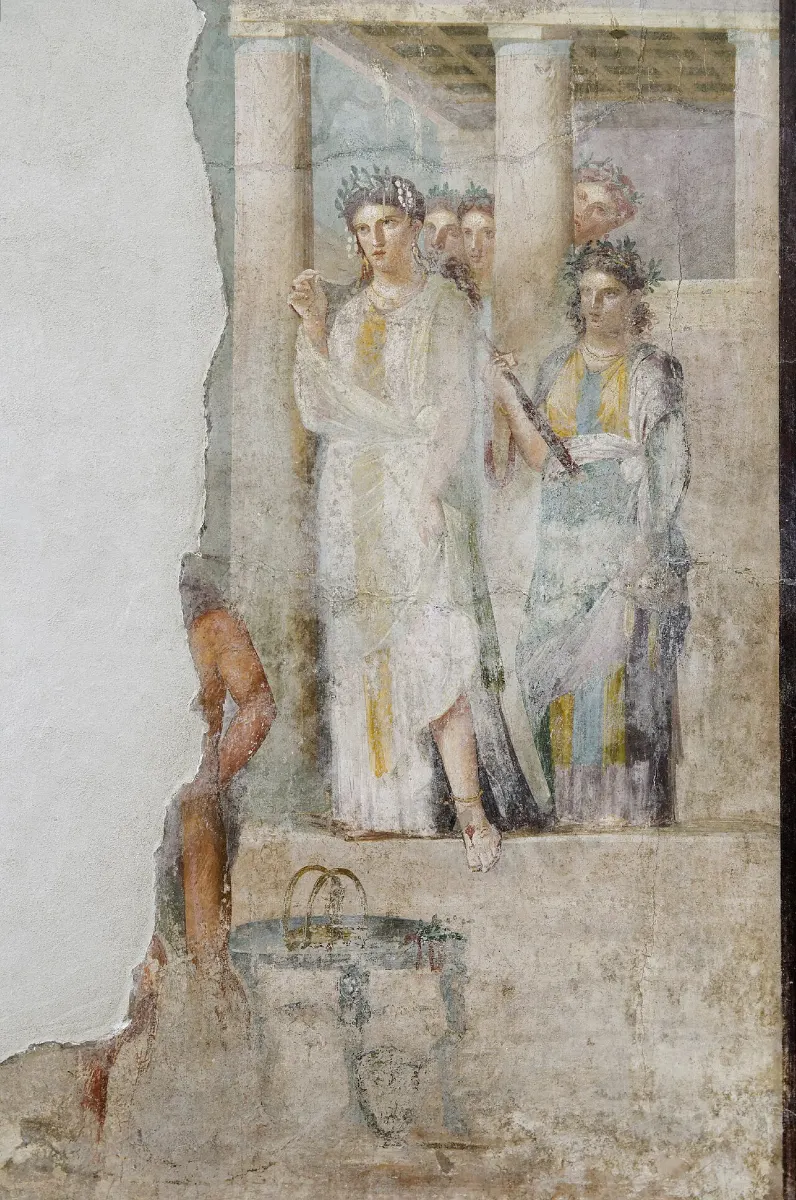
Two kinds of Euripidean song are built on dochmiacs. The first is the lyric duet between two actors, without the chorus. In eight such duets one character, usually a woman, sings, while the other, usually a man in a smaller part, answers in spoken trimeters. Examples are Hermione and the Nurse in the Andromache (825–865) and the recognition duets of the Ion (1439–1509), Iphigenia among the Taurians (827–899) and Helen (625–697).[10] The second kind is a choral song made almost wholly of dochmiacs and iambics, sung at a moment of tension. Often a character is being killed offstage while it is sung. In Medea 1251–1292 the children are killed, and in Electra 1147–1171 Clytemnestra.[11]
In these songs the aeolic metres never appear. A survey of all Euripides’ lyric finds that his aeolics and his dochmiacs exclude each other. Such a clean division is unusual in Greek song.[12]
West’s example, chosen as a manageable one, is Orestes 140–52. Chorus and Electra are in hushed exchange beside the sleeping Orestes. There is a hypodochmius, then dochmii throughout, broken by one baccheus ⏒ — — at 145.[5] His notes[13] make three points. ἆ ἆ σῦ- in 145 responds with ὀλεῖς εἰ in 157 (158 in the Perseus text), which settles that it is a baccheus (ἆ ἆ could be ⏑ —, but the first position may be dragged). There is hiatus after the interjection ναί in 148. And the long runs of shorts in 149–51 are resolved dochmiacs, to be tested by counting off in eights. The same play supplies the papyrus of Orestes 338–45 with musical notation. Its points (stigmai) apparently mark a rising beat on the first and third of the five elements of the dochmius.[14]
Dithyramb. In Timotheus’ Persae the predominantly iambic sections (ll. 1–126, 139–77) have cretic, dochmiac, dactylic, anapaestic and aeolic sequences here and there.[15] The dochmiac is a metre typical of tragedy, but it was also used in lyric, as here by Timotheus.[16]
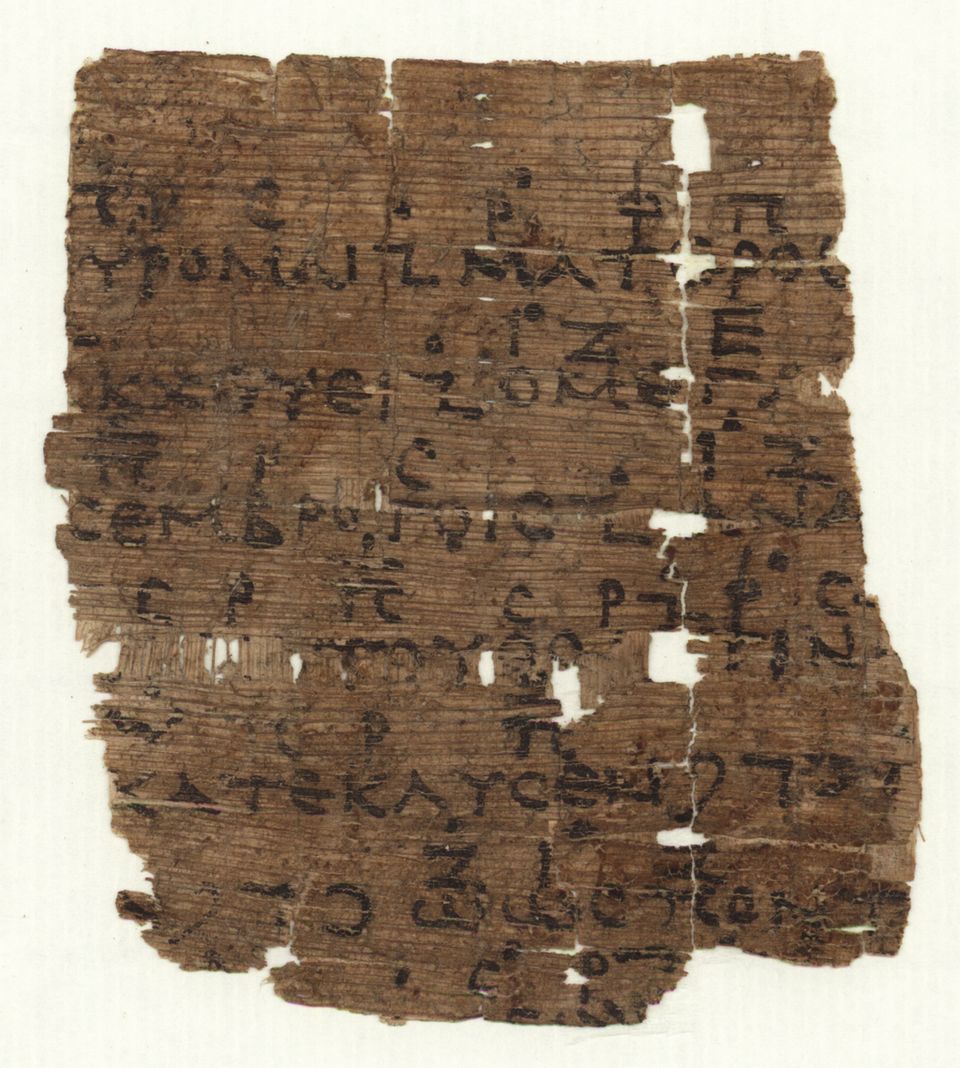
Afterwards. Later, some forms of metre harden into set patterns. Others, dactylic lyric and dochmiacs among them, drop out of use. Outside drama dochmiacs recur only in the Grenfell Erotic Fragment, which West describes as a melodramatic Hellenistic aria.[17] Lourenço sees in it a degenerate offshoot of the monodies of late Euripides.[18] The text (P.Dryton 50) is full of dochmiacs, and it is the last place where they appear.[19]
Notes
- ^ a b West 1987, p. 56.
- ^ a b Battezzato 2005, p. 158; Lourenço 2011, p. 53.
- ^ D’Angour 2022, ch. 9, §’Classical Lyric Meters’.
- ^ West 1987, p. 56; cf. Lourenço 2011, p. 53.
- ^ a b c d e f West 1987, p. 57.
- ^ West 1987, p. 53.
- ^ West 1987, p. 55.
- ^ West 1987, p. 60.
- ^ Battezzato 2005, p. 158.
- ^ Itsumi 1982, pp. 214–215.
- ^ Itsumi 1982, pp. 217–218, 220.
- ^ Itsumi 1982, pp. 215, 227.
- ^ West 1987, p. 58.
- ^ D’Angour 2022, ch. 9, §’From Meter to Music’.
- ^ West 1987, p. 70.
- ^ Battezzato 2009, p. 142.
- ^ West 1987, p. 68 with n. 1.
- ^ Lourenço 2011, p. 53.
- ^ Sampson 2022, pp. 113–114.
Dochmiac · 3 of 4
Worked example: Seven against Thebes 79–82
The Theban women rush into the orchestra as the enemy army advances on the city. This is the classic situation for dochmiacs, and West’s own first specimen.[1] Line 78, θρέομαι φοβερὰ μεγάλ’ ἄχη, opens the song. West begins his quotation at 79, and so do we. Each line is a dochmiac dimeter. Metron-boundaries are marked ¦, and in these four lines every one of them coincides with word-end.[1] So it does for most dochmii in Aeschylus: 72% on Parker’s count.[2]
79 μεθεῖται στρατός· στρατόπεδον λιπὼν
80 ῥεῖ πολὺς ὅδε λεὼς πρόδρομος ἱππότας·
81 αἰθερία κόνις με πείθει φανεῖσ’,
82 ἄναυδος σαφὴς ἔτυμος ἄγγελος.
The army is let loose; leaving its camp the great host streams on ahead, cavalry in front. The dust rising in the air persuades me, a voiceless, clear, true messenger.
Aeschylus, Seven against Thebes 79–82. Each line is two dochmii. Red: the first short dragged (ῥεῖ) and resolved longs, two shorts in place of one.
synthetic ∿
| Metron | Text | Form | What has happened |
|---|---|---|---|
| 79a | μεθεῖται στρατός | ⏑ — — ⏑ — | the basic dochmius; -ται before στρ- is long anyway, -τός before στρ- is closed |
| 79b | στρατόπεδον λιπών | ⏑ ⏑ ⏑ — ⏑ — | first long resolved, West’s commonest variant; -δον before λ- closed |
| 80a | ῥεῖ πολὺς ὅδε λεώς | — ⏑ ⏑ ⏑ ⏑ ⏑ — | first short dragged (ῥεῖ), first and second longs both resolved, as West notes[1] |
| 80b | πρόδρομος ἱππότας | ⏑ ⏑ ⏑ — ⏑ — | first long resolved; πρό- before -δρ- taken short;[3] ἱππότᾱς with long alpha, as West marks it |
| 81a | αἰθερία κόνις | — ⏑ ⏑ — ⏑ — | first short dragged, first long resolved, West’s other common variant; αἰθερίᾱ with long final alpha; -νις before μ- closed |
| 81b | με πείθει φανεῖσ’ | ⏑ — — ⏑ — | basic |
| 82a | ἄναυδος σαφής | ⏑ — — ⏑ — | basic; -δος before σ- closed |
| 82b | ἔτυμος ἄγγελος | ⏑ ⏑ ⏑ — ⏑ — | first long resolved; final -ος the free last position at period-end |
Reading the pattern. Lay the eight metra side by side and the design shows. 79 and 82 have the same shape: the basic form, followed by the commonest variant (first long resolved). 80 is the most agitated, seven syllables then six. 81 has the other common variant, — ⏑ ⏑ — ⏑ —, followed by the basic form.[1] Counting morae (a short one, a long two), the undragged metra all come to eight. The two with a dragged first position (80a, 81a) come to nine, because a long has taken the place of a short. West’s test of counting off in eights[4] is meant for long runs of short syllables, where a fully resolved dochmius gives eight shorts (⏑ ⏖ ⏖ ⏑ ⏖). These lines need no such test, since word-end falls at every metron-boundary.
Two prosodic points. First, drag. In 80a and 81a the opening short is filled by a long syllable (ῥεῖ, αἰ-). That is not an anceps in West’s sense but a “drag”. A drag is the admission of a long in a position which would normally be short. It is one of the two licences that give the dochmius its variety.[5] Second, stop + liquid. In 80b πρόδρομος the first syllable could in principle be lengthened before -δρ-.[6] Then the metron would scan — ⏑ ⏑ — ⏑ —, also a dochmius, so the metre alone does not decide. West’s rule does. Lengthening by stop + liquid is rare in dochmiacs, so in a doubtful case the short scansion is to be preferred.[4] So ⏑ ⏑ ⏑ — ⏑ —.
The character of the passage. Nothing in these four lines is unusual. There is no hypodochmius, no kaibelianus, no catalexis, only the basic form and its two commonest variants. What makes the passage sound breathless is the rate of resolution, six resolved longs in eight metra. It is also the piling of word-ends at the metron-boundaries, so that each metron is a separate cry. That is the “jerky” quality D’Angour describes, and the agitation that he links with every use of the metre.[7] Where a strophe is answered by an antistrophe, the form at a given place is normally the same, or nearly so, in the antistrophe.[1]
Notes
Dochmiac · 4 of 4
Second example: Agamemnon 1136–1155
The first worked example, from the Seven against Thebes, was dochmiacs on their own. This one shows them in the company they usually keep. West uses the passage to make two points. Dochmiacs are closely tied to iambic units, above all cretics and bacchei. And they often stand beside spoken trimeters.[1] The metre’s temper is agreed on all sides. It is the quintessential metre of dramatic lyric, expressing agitation and despair, and unknown outside drama. Its movement is rapid and slightly stuttering, for scenes of high excitement.[2]
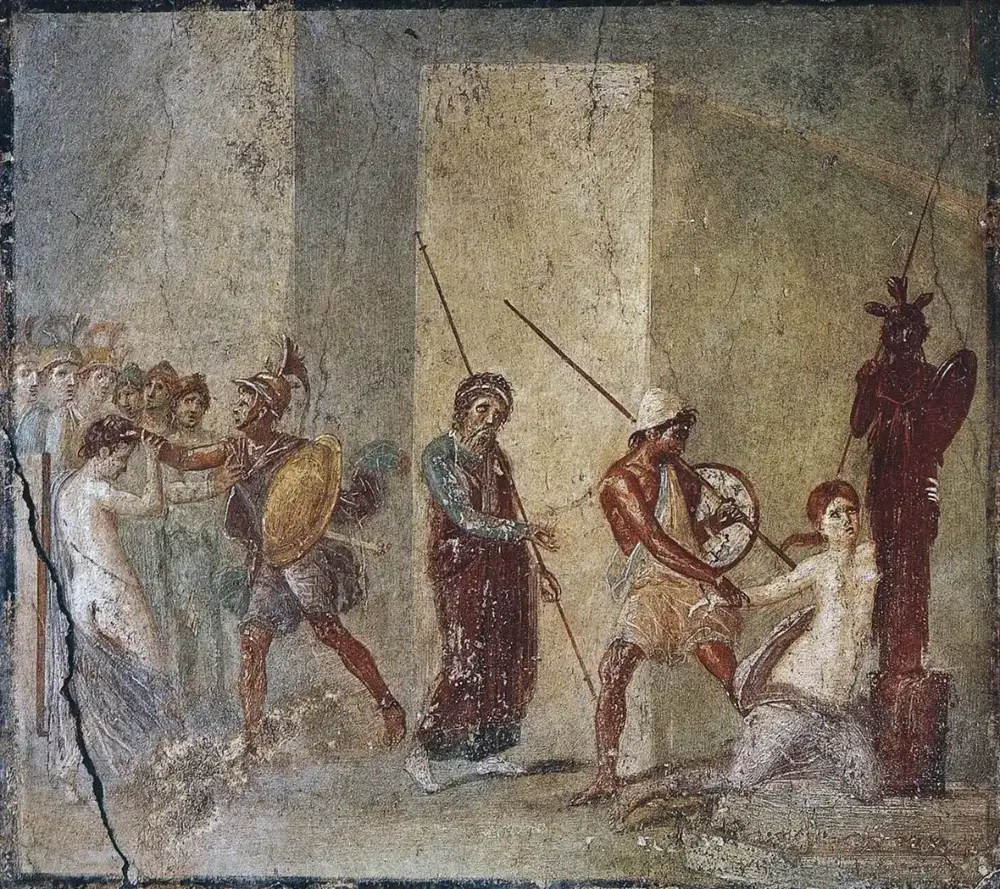
Cassandra, brought to Argos as Agamemnon’s captive, is in a lyric dialogue with the chorus. In each stanza she sings two lines and then speaks two trimeters, and the chorus answers in song. Such a mixture of song and spoken verse is called an epirrhematic dialogue. In Aeschylus no actor sings a monody on their own: Cassandra’s long lyric part belongs to an exchange with the chorus.[3] The full passage is scanned syllable by syllable on the Aeschylus page.
The strophe (1136–1145)
Below each line are its quantities, with ¦ between the units, and in brackets West’s analysis.[4] ⏖ is a long resolved into two shorts. West prints the chorus’s lines 1140–1141 and 1144–1145 as two rows each; they are joined here.
Cassandra ἰὼ ἰὼ ταλαίνας κακόποτμοι τύχαι·
τὸ γὰρ ἐμὸν θροῶ πάθος ἐπεγχύδαν.
ποῖ δή με δεῦρο τὴν τάλαιναν ἤγαγες;
οὐδέν ποτ’ εἰ μὴ ξυνθανουμένην. τί γάρ;
Chorus φρενομανής τις εἶ θεοφόρητος, ἀμφὶ δ’ αὑτᾶς θροεῖς
νόμον ἄνομον, οἷά τις ξουθὰ
ἀκόρετος βοᾶς, φεῦ, ταλαίναις φρεσίν
Ἴτυν Ἴτυν στένουσ’ ἀμφιθαλῆ κακοῖς ἀηδὼν βίον.
Cassandra: Oh, oh, the ill-fated fortunes of my wretched self! For it is my own suffering I cry out, pouring it in on top. Why ever did you bring me here, wretched as I am? For nothing, unless to die with him. For what else? Chorus: You are frenzied in mind, possessed by a god, and over yourself you cry a strain that is no strain, like some quick-voiced bird, never sated with crying – alas – that with a grieving heart laments “Itys, Itys” through a life luxuriant in sorrows, the nightingale.
Aeschylus, Agamemnon 1136–1145, in West’s analysis: δ = dochmius, cr = cretic, ia = iambic metron. Cassandra sings two lines and speaks two trimeters; the chorus answers in song.
synthetic ∿
Reading it
The dochmii. The stanza has ten dochmii. Seven take the form ⏑ ⏖ — ⏑ —, one — ⏖ — ⏑ — (the second of 1144–1145, ἀμφιθαλῆ κακοῖς), and two the basic ⏑ — — ⏑ — (the last of 1140–1141 and of 1144–1145). These are exactly the forms West names as the commonest.[5] In 1144–1145 the opening short of the second dochmius is filled by a long, σ’ ἀμ-. This is a drag. Metron-end and word-end coincide everywhere except in 1140–1141, where the second dochmius ends inside ἀμ|φί. In general they coincide more often than not.[5]
The iambic units. There are three kinds of syncopated iambic metron: the cretic — ⏑ — (∧ia), the baccheus ⏑ — — (ia∧) and the spondee — — (∧ia∧).[6] Here there are cretics after a dochmius in 1136 and in 1143, and the spondee ξουθά closes the period in 1142. Cretic and dochmius next to each other, in either order, are a common pairing.[4]
Dale reads 1140–1141 a little differently. She takes them as three dochmii, the first two with their first long resolved. Then νόμον ἄνομον is a cretic with both longs resolved, an example of the resolved cretics she finds inserted in dochmiac passages.[7] Lourenço, after Diggle, warns that in Euripides a lone cretic in the middle of a dochmiac run has no secure parallel. Iambic elements stand rather at the head of a sequence.[8]
A cretic that proves itself. In 1142, νόμον ἄνομον, “a strain that is no strain”, scans ⏖ ⏑ ⏖: a cretic with both its longs resolved. West takes this total resolution as the sign that the cretics in this passage are genuine cretics and not syncopated iambics.[4]
Trimeters and speech. Cassandra’s lines 1138–1139 are ordinary iambic trimeters with Attic vowels, ἤγαγες and ξυνθανουμένην. The sung lines have the long α of tragic lyric (ταλαίνας in 1136, αὑτᾶς in 1140). West reads this as a sign that she drops for a moment into speech.[4] Tragic lyric has a Doric colouring, and Doric alpha is one of the features used to tell sung lines from spoken ones.[9]
The opening cry. ἰὼ ἰώ fits the first dochmius only if the first ὼ is shortened before the second ἰ- (correption).[10] Then ὼ ἰ- fill the resolved long. Hiatus around exclamations of this kind is admitted in tragedy.[11]
The antistrophe (1146–1155)
West’s analysis is of the strophe only. But the antistrophe has the same form in every dochmius and every cretic. That is the usual exact responsion.[5]
| Strophe | Antistrophe | Form |
|---|---|---|
| ἰὼ ἰὼ ταλαί- (1136) | ἰὼ ἰὼ λιγεί- (1146) | ⏑ ⏖ — ⏑ — |
| νόμον ἄνομον (1142) | τὰ δ’ ἐπίφοβα (1152) | ⏖ ⏑ ⏖ |
| ἀμφιθαλῆ κακοῖς (1144) | θεσπεσίας ὁδοῦ (1154) | — ⏖ — ⏑ — |
| φρενομανής τις εἶ (1140) | πόθεν ἐπισσύτους (1150) | ⏑ ⏖ — ⏑ — |
| ἀκόρετος βοᾶς (1143) | μελοτυπεῖς ὁμοῦ (1153) | ⏑ ⏖ — ⏑ — |
The only differences are in the anceps positions of Cassandra’s trimeters, where an iambic metron allows either quantity. In 1138 ~ 1148 the first and fifth positions differ (ποῖ, -ρο against θε-, τ’ αἰ-), and in 1139 ~ 1149 the first and ninth (οὐ-, -μέ- against ἐ-, -φή-).
Speakers and period-end. Cassandra has the first four lines and the chorus the last four in both stanzas. In drama period-end shows itself only now and then, through hiatus or brevis in longo.[6] Here both appear. There is hiatus between ξουθὰ and ἀκόρετος (1142–1143). And 1149 ends with δορί, whose final ι is short, in the long last position of a trimeter. This is brevis in longo: a short syllable in a place where the rhythm expects a long.[12] In the antistrophe, too, a sentence passes from song into speech. Cassandra’s sung lines on the nightingale run on into her spoken trimeter 1148.[3]
Why dochmiacs here. The Greek name can be glossed “running askew”, and the metre is linked to fear and extreme emotion.[13] The chorus answers Cassandra’s frenzy in it. The cretics and trimeters set the dochmii off. Every dochmius returns in the same form in the antistrophe, so the agitation is not formless but sung to a repeated tune.
Notes
- ^ West 1987, pp. 56–57.
- ^ Lourenço 2011, p. 53; Landels 1999, c. pp. 121–122.
- ^ a b Battezzato 2005, p. 153.
- ^ a b c d West 1987, p. 57.
- ^ a b c West 1987, p. 56.
- ^ a b West 1987, p. 52.
- ^ Dale 1968, p. 109.
- ^ Lourenço 2011, p. 55 n. 100.
- ^ Battezzato 2005, pp. 149, 153.
- ^ West 1987, p. 14.
- ^ West 1987, p. 16.
- ^ West 1987, p. 4.
- ^ Battezzato 2005, p. 158.


