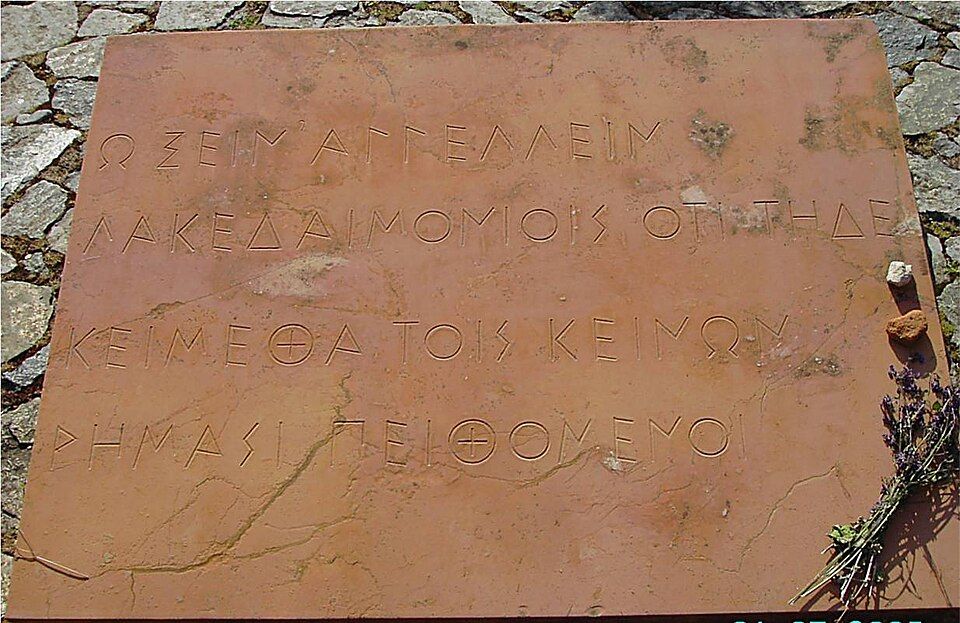
Poets and playwrightsChoral lyric
Simonides
Simonides’ choral lyric and elegiac poetry in Doric and Ionic.
About · 1 of 4
Who Simonides was
For Simonides, as for most poets of the archaic and early classical age, few facts about his life are secure.[1]
Ceos and the dates. Simonides came from Ceos, a small Ionian island close to Athens. Ceos fought on the Greek side at sea against Xerxes.[2] Ancient tradition made him a generation older than Pindar and Bacchylides.[1]
Two birth dates are transmitted, both in the Suda. One is the 56th Olympiad (556–553 BC), and the other the 62nd (532–529). The higher date is the traditional one. It was challenged by Stella (1946) and cautiously defended by Molyneux (1992).[3] The ancient testimonies are doubtful in any case. Rawles thinks the earlier date has the better support among them, but he would not put much faith in either.[1] The birth date is therefore disputed.
The start of his career is firmer. Hipparchus, who was assassinated in 514, invited him to Athens. So he was already active as a poet in the 510s. He died around 468 (the Suda and the Parian Marble). He reached the height of his career late in life, as virtually the official poet of the Persian War.[4] He was known for being long-lived. The Cambridge Companion’s chronology gives his life as running from the late second or third quarter of the sixth century to about 468.[5]
Bacchylides. Some ancient sources make Simonides the uncle of Bacchylides. Rawles thinks this “may well be true”. But he adds that for two poets from one island it is just the sort of link that would be invented. Pelliccia finds the details obscure and of doubtful reliability.[2] The relationship is disputed; the Bacchylides page gives Maehler’s view.
Patrons and places. His poems honoured some of the most powerful men in Greece.[6] Those named include these:
- Scopas, son of Creon, of Thessaly; Plato says a song on goodness was addressed to him;[7]
- Anaxilas, tyrant of Rhegium, for a victory in the mule-cart race;[8]
- the boxer Glaucus of Carystus;[9]
- the runner Astylus of Croton and Syracuse;[10]
- Hieron of Syracuse.[11]
He also wrote dithyrambs “for Athens”, as Pindar and Bacchylides did.[12] The Dorian tradition of large strophes and triads culminates in three great professional poets: Simonides, Pindar and Bacchylides.[13]
Commissions or friendships? Nicholson holds that victory odes were usually ordered by the victor or one of his family.[14] Pelliccia argues that the commission-and-fee model rests on ancient biography and gossip that cannot be trusted. In his view the poets may have written as the social equals of those they praised.[15] Hornblower, by contrast, observes that on the question of pay the tradition treats Simonides more harshly than most poets, and that “poets must eat”.[16] The point is disputed.
The anecdotes. No lyric poet, except perhaps Sappho, has gathered as many anecdotes as Simonides.[11] They make him a man of money. In Aristophanes’ Peace (695–699) he would go to sea in a sieve for profit. According to the scholia, his contemporary Xenophanes called him a skinflint.[17] The anecdotes also make him an inventor. He invented the art of memory, and identified the dead after Scopas’ dining hall collapsed (Cicero, De oratore 2.86.351–3). He also invented new letters of the alphabet. Rawles judges these claims improbable. He reads the anecdotes as reception, not historical data.[18]
Two dialects. He “code-switches” between two dialects. For melic poetry he uses a literary Doric, and for elegy a predominantly Ionic dialect. Rawles calls this “another first”, since elegy was not usually combined with choral lyric.[19] The lyric poets’ dialects can be set on a scale, from the Doric Stesichorus to the Ionic-coloured Bacchylides. Simonides stands “further toward the middle”.[20]
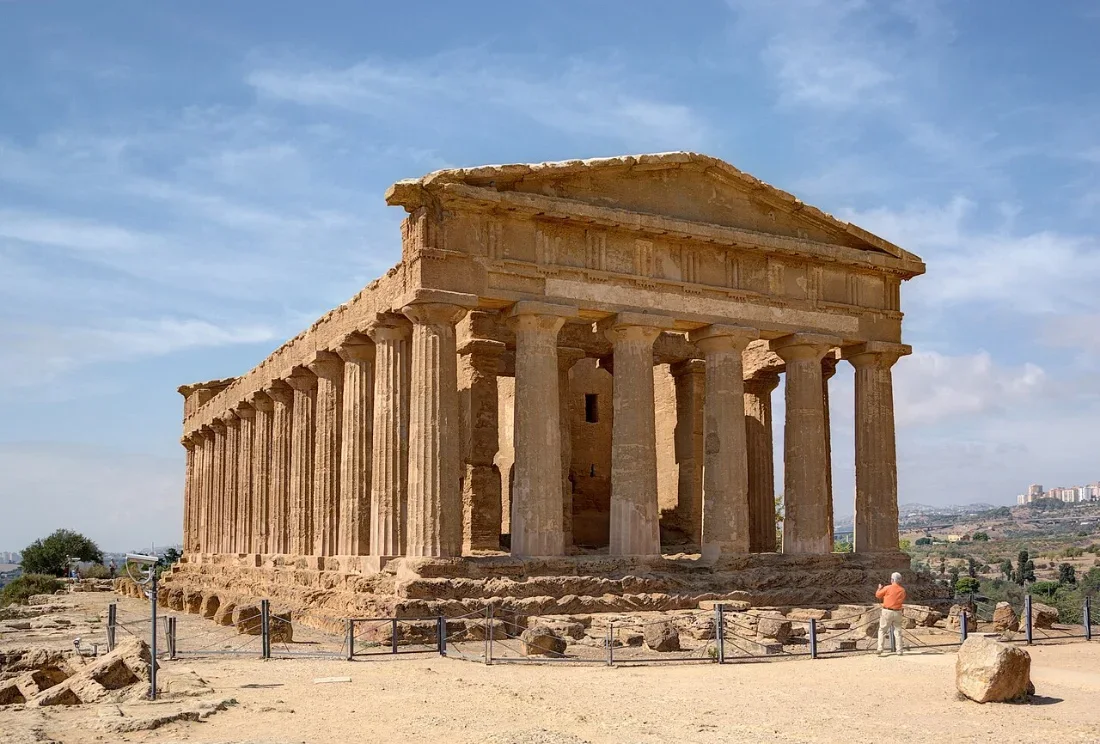
The Loeb edition. The Loeb takes the dates 556 and about 467 as generally accepted. It cites an epigram in which the poet gives his age as eighty in 477/6. It places Simonides in Athens under Hipparchus (527–514), then in Thessaly, and his last years in Sicily as a friend of Hieron. He was buried at Acragas.[21]
Scores of epigrams are ascribed to him, but scarcely any can safely be called his.[22] Inscriptions of his time did not carry the poet’s name. A collection under his name, the Sylloge Simonidea, was circulating by about 100 BC, and may have been begun by 250 BC.[23]
Notes
- ^ a b c Rawles 2022, p. 317.
- ^ a b Rawles 2022, p. 317; Pelliccia 2009, p. 241.
- ^ Pelliccia 2009, p. 241 n. 1.
- ^ Pelliccia 2009, pp. 240–241 with nn. 1, 4.
- ^ Rawles 2022, p. 317; Budelmann 2009, p. 386.
- ^ Pelliccia 2009, p. 245.
- ^ Rawles 2022, p. 321.
- ^ Rawles 2022, p. 326.
- ^ Rawles 2022, p. 325.
- ^ Nicholson 2022, p. 58 with n. 72.
- ^ a b Rawles 2022, p. 329.
- ^ Pelliccia 2009, p. 242.
- ^ West 1987, p. 42.
- ^ Nicholson 2022, p. 48.
- ^ Pelliccia 2009, pp. 245–247.
- ^ Hornblower 2009, p. 42.
- ^ Rawles 2022, p. 329 with n. 25.
- ^ Rawles 2022, pp. 329–331.
- ^ Rawles 2022, p. 318.
- ^ de Kreij 2022.
- ^ Campbell 1991, pp. 12–13.
- ^ Campbell 1991, p. 13.
- ^ Campbell 1991, pp. 519–521.
About · 2 of 4
Fragments, epigrams and transmission
How it survives. Apart from epigrams, no poem of Simonides is certainly complete. None came through the Middle Ages in manuscripts of its own, as Pindar’s victory odes did. Until the twentieth century there were only fragments quoted by other writers. The two longest are in Plato and in Dionysius of Halicarnassus.
Then papyri from Oxyrhynchus added more. In 1959 came many small melic fragments, mostly from epinicians and paeans. An epinician is an ode for a victory in the games. More followed in 1967. In 1992 came P.Oxy. 3965, a roll of elegies. It was identified by its overlaps with quotations in Plutarch and Stobaeus, and with an earlier anonymous papyrus, P.Oxy. 2327.[1] Rawles describes P.Oxy. 3965 as “a papyrus of the Roman period”. Barbantani speaks of the elegies’ discovery “on a second-century BCE papyrus”.[2] The two accounts differ on the date of the roll.
Athens. The pseudo-Platonic Hipparchus says that the tyrant’s son kept Simonides at his side with large fees and gifts. Nagy takes Simonides’ songs, with Anacreon’s, to have been part of the repertoire of the Panathenaic festival. An aulode was a singer who sang to the aulos, a reed pipe. On this view the Plataea elegy belonged to the aulodes’ programme. Simonides is also the lyric poet most present in Aristophanes.[3]
The Peripatetics were the followers of Aristotle. One of them, Chamaeleon, wrote a monograph On Simonides. Its anecdotes of the poet’s meanness build on comedy and on Aristotle.[4]
The Alexandrian books. The Alexandrian scholars organised Pindar, Bacchylides and Simonides by genre and occasion.[5] Simonides’ epinicians filled several books, perhaps as many as seven or eight. They were arranged by type of event, not by the festival, as Pindar’s were.[6]
The titles of the poems confirm the arrangement. Simonides’ epinician titles state the discipline and conspicuously omit the games. Pindar’s titles name the discipline, and Bacchylides’ name both. Twelve titles of Simonides are attested, among them those of his two sea-fight poems, on Artemisium and on Salamis.[7] Callimachus grouped the epinicians in this way (fr. 441 Pfeiffer). He gave one book the name “epinicians for runners”.[8]
Colometry, and a famous test case. A colon is a short unit of verse, and colometry is the division of a lyric text into cola. According to Dionysius of Halicarnassus, “Aristophanes or somebody else” divided the poems of Pindar and Simonides into cola.[9] Dionysius himself quoted the Danae fragment (PMG 543) written out as prose, without Aristophanes’ division into cola.[10] He challenged the reader to find its rhythm, or even its strophes (On Composition 26).
Modern scholars still do not agree on it. The division into lines printed in PMG is Page’s.[11] For a metrician the fragment is a warning. The line-breaks of a printed lyric text are an editor’s interpretation.
Readers and quoters. Quotation preserves, but it also filters. A quoted fragment serves the quoting author’s purpose. The dialect of lyric that comes to us through quotation may also have been Atticised. That could happen when it was quoted, or later, when the prose text was copied. In such texts quotations were not marked out visually.[12] The two big quotations show this. Dionysius “filleted” the Danae fragment so well that no trace of its context remains. The Scopas song is a sequence of quotations put into order by editors.[13]
The epigrams. Many epigrams were attributed to Simonides by later sources, but not by the earlier ones that quote them. An ancient collection, the so-called Sylloge Simonidea, took in a worrying amount of verse that was not his. Rawles nevertheless thinks it “overwhelmingly likely” that attributions multiplied because Simonides really did compose epigrams.[14]
The metricians quoted them too. Hephaestion lays down that “every metre ends in a complete word”. So he censures this couplet as faulty, because the name Ἀριστογείτων (Aristogeitōn) is split between the two lines:[15]
ἦ μέγ’ Ἀθηναίοισι φόως γένετ’, ἡνίκ’ Ἀριστο-
γείτων Ἵππαρχον κτεῖνε καὶ Ἁρμόδιος.
ē meg’ Athēnaioisi phoōs genet’, hēnik’ Aristo- / geitōn Hipparchon kteine kai Harmodios.
“Truly a great light dawned for the Athenians when Aristogeiton and Harmodius killed Hipparchus.”
Elegiac couplet, hexameter ‖ D | D |||. Red: the name Ἀριστογείτων (Aristogeitōn), split between the two lines, which is what Hephaestion censures; καί, shortened before Ἁρμόδιος (correption). The pentameter’s first half is contracted throughout: — — | — — | —.
Simonides, epigram quoted by Hephaestion, Ench. 4.6 (Consbruch’s text, First1KGreek, with ἦ for its ἡ and ἡνίκ’ for its ἠνίκ’); translation ours
synthetic ∿
Hephaestion explains such things by “the necessity of the names”.[15] The digital text of Hephaestion prints the first word as ἡ (hē, “the”). We read ἦ (ē, “truly”), as the sense requires. It also has ἠνίκ’ with a smooth breathing; the word is ἡνίκα (hēnika), “when”, with a rough breathing, and we print ἡνίκ’.[16] Neither change affects the scansion.
Two points of prosody are worth noting. First, καί (kai, “and”) is shortened before Ἁρμόδιος (Harmodios). A long vowel or diphthong shortened before another vowel is said to undergo correption.[17] Second, the contractions are all in the pentameter’s first half. That is the only place where the pentameter admits them.[18] The scheme is hexameter ‖ D | D |||.[19]
Editions. Fragment numbers on this site are PMG numbers for the melic poems, and West’s (W) for the elegies. The Loeb edition (vol. III) gives text and translation of the melic fragments and epigrams, but it predates P.Oxy. 3965. Poltera (2008) edits the testimonia and melic fragments with a German commentary. Sider (2020) edits the elegies and epigrams.[20] The ancient scholarship on Simonides preserved on papyrus is expected in future volumes of the Commentaria et lexica Graeca in papyris reperta.[21]
The text itself is layered. A form may be the poet’s, the Alexandrian editor’s or a copyist’s.[12]
Notes
- ^ Rawles 2022, pp. 317–318, 326–327.
- ^ Rawles 2022, p. 326; Barbantani 2009, p. 309.
- ^ Nagy 2020, pp. 100–102, 104–105; Calame 2020, pp. 117–120.
- ^ Hadjimichael 2020, pp. 159, 162–164.
- ^ Barbantani 2009, p. 300.
- ^ Rawles 2022, p. 325 with n. 11.
- ^ Prodi 2020, pp. 470–471, 480–481.
- ^ Barbantani 2009, p. 300; Morrison 2022, p. 399 n. 63.
- ^ Barbantani 2009, p. 301.
- ^ Morrison 2022, p. 399 n. 64.
- ^ Pelliccia 2009, p. 250; Rawles 2022, p. 318.
- ^ a b de Kreij 2022.
- ^ Rawles 2022, pp. 319, 321.
- ^ Rawles 2022, pp. 329–330.
- ^ a b Hephaestion, Ench. 4.6.
- ^ LSJ s.v. ἡνίκα.
- ^ West 1987, p. 14.
- ^ West 1987, p. 24.
- ^ West 1987, pp. 24, 31.
- ^ Rawles 2022, p. 327 n. 20, p. 332.
- ^ Sampson 2022, p. 110.
About · 3 of 4
His metres
Simonides, Bacchylides and Pindar are best treated together. Most of what can be said of Simonides’ metre is said of the group.[1] A triad is a group of three stanzas: a strophe, an antistrophe in the same metre, and an epode in a different one. These poets mostly used the triadic system, in which a poem consists of one triad or many.[2] Their poems fall into three main categories, dactylo-epitrite, aeolic and iambic, with some intermediate mixtures.[3] Little of Simonides survives, so for him the evidence is confined to a few fragments.
Dactylo-epitrite
Dactylo-epitrite, written D/e, is the easiest category, and a large one. It is built from these units:[3]
- d (— ⏑ ⏑ —), D (— ⏑ ⏑ — ⏑ ⏑ —) and D² (— ⏑ ⏑ — ⏑ ⏑ — ⏑ ⏑ —);
- e (— ⏑ —), E (— ⏑ — × — ⏑ —) and E² (— ⏑ — × — ⏑ — × — ⏑ —).
They are put together with or without a “link-syllable” before, between and after them. The link-syllable is usually long. D/e grew out of what Stesichorus had, with more iambo-trochaic matter.[3] It is the metre that Pindar and Bacchylides took over from Stesichorus’ Dorian tradition.[4]
Resolution is the replacement of a long by two shorts. It can occur in the sequences (⏓) ⏕ ⏑ — and, less commonly, — ⏑ ⏕ — — ⏑ —. In contraction the opposite happens: two shorts are replaced by one long. Contraction of the first pair of shorts of D occurs, as in Stesichorus, but only very rarely.[5]
What is particular to Simonides is the catalectic close. A catalectic form is one that lacks its last position. In PMG 581 periods end with catalectic forms of e and E. The catalectic form of e is — — (∧ia∧), and it also occurs in two odes of Pindar. West thinks that both poets use it to throw weight on a single word.[6] His example is the end of the line he cites as Sim. 581.6:
ἀντιτιθέντα μένος στάλας
antitithenta menos stālās
“setting against [them] the might of a gravestone”
D (— ⏑ ⏑ — ⏑ ⏑ —), then the catalectic e (e∧, — —) and period-end. Red: στάλας, both vowels long, one word filling the whole e∧.
Simonides, PMG 581.6: Greek from Bergk 1882 III p. 414, including the apparatus reading; translation ours
synthetic ∿
The last word, στάλας (stālās, “of a gravestone”), has both its vowels long (West marks them ᾱ, ā). It takes the whole catalectic e. A whole D/e strophe, with D, E and link-syllables marked, is scanned on the Pindar page (Metres: D/e).
The catalectic form of E is the ithyphallic — ⏑ — ⏑ — —. Pindar and Bacchylides do not use it. But it comes back in tragedy as a D/e clausula. A clausula is a closing cadence. The dramatists, “like Simonides”, use it both at strophe-end and elsewhere, perhaps always with period-end.[7]
Iambic
A few odes of these poets are almost wholly composed of iambic metra, with only isolated cola of other types. Examples are Simonides PMG 541, Pindar Olympian 2 and fr. 75, and Bacchylides 17.[8]
In iambic verse the unit is the metron. Its basic form is × — ⏑ —. A syncopated metron is one that has lost one of its positions. These poems use the unsyncopated forms ⏓ — ⏑ ⏕ and — ⏖ ⏑ —. They use the syncopated forms ⏕ ⏑ — and — ⏑ ⏕, and ⏑ — — and — — at period-end only. There are never more than two unsyncopated metra in a row. The forms are so juxtaposed that runs of four shorts or three longs are generally avoided.[8] Simonides and Bacchylides have a brief dactylic burst in mid-strophe.[9]
At period-end a trochaic metron — ⏑ — — (“tr”, as it were a catalectic hypodochmius) may also be found.[8] The iambic lyric of drama normally admits one kind of “trochaic” ending: ⏑ — ⏑ — | — ⏑ — — ‖. It is not the outcome of trochaic rhythm. It is a special form of period-ending, which Simonides, Bacchylides and Pindar also use.[10]
Aeolic
Most of the poems that are not D/e fall into the aeolic category. It is so called from the part played by certain asymmetrical cola: gl, tl, ph, r (reizianum), dod, and their anaclastic variants. In these poets the aeolic base is o o, and its first position can be resolved. The three poets develop an initial “motif” through the strophe, in ways that resist simple labelling.[11] West gives no Simonidean example, and none is invented here.
Rhythm and ethos
The earlier lyric music was said to be simpler than that of the later fifth century. It kept to a single tuning of the seven-stringed lyre, and probably followed the pitch-accents of the words. Yet Simonides already lengthened syllables mimetically, in pu-ur and kno-ōssōn.[12] In the same way, Simonides seems to use the catalectic e to make one word stand out.[6]
Notes
About · 4 of 4
The poems that survive
Simonides made his mark in an unusually wide range of genres:[1]
- epigram, whose full artistic potential he seems to have been the first to recognise;
- elegy, including historical elegy;
- epinicians;
- the festival genres of dithyramb and paean;
- dirges (thrēnoi) and other choral types.
Antiquity admired his pathos. Yet most surviving fragments offer practical wisdom, in a manner closer to Theognis.[2]
Danae (PMG 543). Danae has been cast adrift in a chest with the infant Perseus. She speaks to her sleeping child. She bids him sleep, and the sea, and their measureless trouble (ἄμετρον κακόν, ametron kakon). She ends with a diffident prayer to Zeus. Pelliccia admires the soliloquy addressed to a baby who cannot answer. It draws the speaker away from herself and into another’s distress. Rawles stresses the play on the contrast between royal status and present plight. He compares Hector, Andromache and the frightened Astyanax in Iliad 6.[3]
The poem’s genre and date are unknown. Pelliccia asks whether Simonides learned from Athenian drama, or the tragedians from him. For Rawles its irony and pathos would sit comfortably in a tragedy.[4] Theocritus echoes Danae’s lullaby in Alcmena’s lullaby in Idyll 24.[5]
The Scopas song (PMG 542). Plato’s Protagoras quotes, piece by piece, a song addressed to Scopas of Thessaly. It opens with the difficulty of being “truly good”. Then it rejects the saying of Pittacus, “hard it is to be noble” (our translation).[6] The apparent contradiction has occupied interpreters since Plato. One of the more successful modern solutions (Most) takes χαλεπός (chalepos) first as “impossible”, then as “difficult”. Others read the poem in the light of the rhetoric of praise and blame (Dickie, Carson, Most).
Even the order of the quotations is an editors’ reconstruction. Beresford’s radically different arrangement is disputed. Rawles thinks it forces a most unnatural reading of the way Plato presents the poem.[7]
Epinicians. An epinician is an ode for a victory in the games. Simonides may have been the first canonical poet to compose songs that count as epinician. Some scholars, though, find signs of epinician as early as Ibycus.[8] Papyri have also revealed epinician-like poems from before his time.[9] The point is disputed. Little survives. But some fragments dwell on the contest itself, more than Pindar does.[10]
Two fragments show the kind. One is for the boxer Glaucus of Carystus. Page reconstructed a phrase of it from a prose paraphrase in Lucian. It claims that not even Polydeuces or Heracles would raise his hands against him (PMG 509). The other is for Anaxilas of Rhegium’s victory in the mule-cart race. Aristotle quotes its opening, “Hail, daughters of storm-footed horses”. He adds the anecdote that Simonides wrote it only when the fee was raised (PMG 515). Anaxilas commemorated the same victory on his coins.[11] Rawles adopts Gentili’s phrase for such fragments, a “poetics of tempered praise”.[12]
The elegies. Before 1992 the elegiac fragments were few and small. The new papyrus added sympotic elegies with erotic and wisdom themes (frr. 19–22 W). Above all, it added narrative elegy on the Persian Wars. This confirmed Bowie’s hypothesis of long elegies performed at festivals.[13]
The Plataea elegy (fr. 11 W) begins with the Trojan War and Homer’s gift of fame to the Greeks. These lead into a farewell to Achilles, a call to the Muse as the poet’s “ally”, and the march of the Spartans under Pausanias. Not one line is transmitted complete. Rawles asks whether the stress on Sparta reflects a Spartan commission.[14] Morrison sees in it hymn and martial epic combined in an elegiac poem. Barbantani suggests that these war elegies served as models for Hellenistic elegies on contemporary kings. She finds the Plataea elegy alluded to in Theocritus’ Idyll 16.[15]
Notes
- ^ Pelliccia 2009, p. 250; Rawles 2022, p. 318.
- ^ Pelliccia 2009, p. 250.
- ^ Pelliccia 2009, pp. 251–252; Rawles 2022, pp. 319–321.
- ^ Pelliccia 2009, p. 252; Rawles 2022, p. 321.
- ^ Barbantani 2009, p. 305; on the metrical problem the fragment poses, see the Transmission tab.
- ^ Rawles 2022, pp. 321–323.
- ^ Rawles 2022, pp. 321 n. 5, 323–324 with nn. 7, 9.
- ^ Rawles 2022, p. 325 with n. 12.
- ^ Nicholson 2022, p. 48.
- ^ Rawles 2022, p. 325; Nicholson 2022, p. 54 n. 45.
- ^ Rawles 2022, pp. 325–326; Nicholson 2022, p. 49.
- ^ Rawles 2022, p. 326 with n. 17.
- ^ Rawles 2022, pp. 326–327 with n. 19.
- ^ Rawles 2022, pp. 327–329.
- ^ Morrison 2022, p. 400; Barbantani 2009, pp. 309–310.
Simonides: epigrams (Thermopylae, the tyrannicides)
Synopsis
Epigrams are short poems in elegiac couplets, made above all to be inscribed on tombs and monuments. By the generally accepted dates, Simonides of Ceos was born in 556 BC and died about 467. He worked at Athens under Hipparchus, in Thessaly, and finally in Sicily as Hieron’s friend.[1] He was a poet of inscribed epigrams, including epitaphs.[2] Which epigrams are his is a long-standing problem. Inscriptions of his day did not carry the poet’s name. An ancient collection under his name, the Sylloge Simonidea, was circulating by about 100 BC, and it took in much later verse. So Campbell thinks scarcely any can safely be called his.[3] Rawles still thinks it overwhelmingly likely that epigrams were credited to him because he really wrote them.[4]
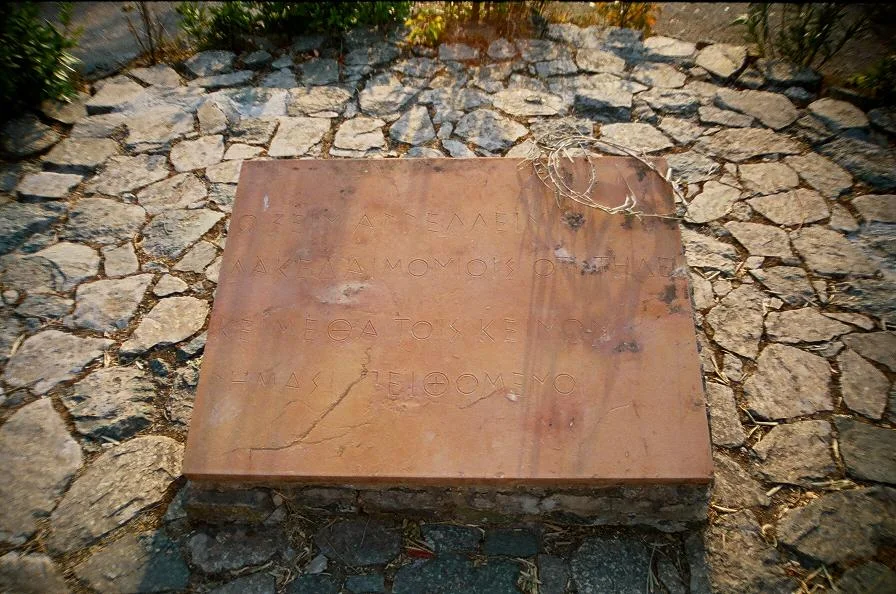
Scanned below are the epigrams for the dead of Thermopylae, as Herodotus copied them. Of these he names Simonides as author only of the one for the seer Megistias. The Spartan epitaph follows again, as the orator Lycurgus quotes it. Last comes the couplet on the killers of Hipparchus, which Hephaestion cites as Simonides’ to show a name split across the line-end (Herodotus 7.228).[5]
Text and translation
The uninterrupted Greek with its English translation, line by line.
Show text and translation
ὦ ξεῖνʼ, ἀγγέλλειν Λακεδαιμονίοις ὅτι τῇδε
Epigrams attributed to Simonides · Herodotus 7.228 (ed. Godley) · Lycurgus, Against Leocrates 109 (ed. Burtt) · Hephaestion, Enchiridion 4.6 (ed. Consbruch)
How to read each line
A guide to the Greek, syllables, pitch marks and quantities.
Show the reading key
- Above each line: the line as the edition prints it, each word placed over its own syllables. The main row: the same Greek divided into metrical syllables, each written as it is pronounced. A consonant that closes a syllable is written with it (λόθ | ρο); an elided word is closed up with the next vowel (ν’ἀ); a final consonant carried into the next word is set with a thin space (ς ἰ). Wider gaps mark word-ends.
- Above the syllables: the pitch of each syllable, from the accents. Under them: the quantity of each syllable as it falls in the line, then the transliteration, syllable by syllable, with accented syllables in capitals.
- Under each line: a line-for-line translation. In the right margin of the scansion: the line type, its scheme, and its analysis into cola.
Key to the labels
The names, patterns and symbols used beside this poem.
Show the labels and symbols
The labels in the right margin of the scansion below name the line, its scheme, the feet as the line realises them, and the caesurae and diaereses (the named word-ends) that fall in it. In the scheme ⏔ is a biceps, two shorts that may be contracted to one long; ⏕ is a long that may be resolved into two shorts; × is an anceps, long or short. A click on any syllable highlights its metron or colon, or, with the switch, its foot.
| Label | Name and shape | What it is |
|---|---|---|
| hem1 | First hemiepes— ⏔ — ⏔ — | The first two and a half feet of the hexameter, up to the penthemimeral caesura; in the pentameter, its whole first half. |
| hem2 | Second half of the hexameter⏔ — ⏔ — ⏑ ⏑ — × | From the penthemimeral caesura to the line-end: the fifth foot is nearly always a dactyl, the sixth is — ×. |
| hemp | Second hemiepes— ⏑ ⏑ — ⏑ ⏑ × | The second half of the pentameter: two dactyls and a single syllable, with no contraction allowed. |
The traditional feet
| Foot and shape | Where |
|---|---|
| First foot: dactyl or spondee— ⏔ | Scheme positions 1–2. The biceps (⏑ ⏑) may be contracted to a single long, making a spondee. |
| Second foot: dactyl or spondee— ⏔ | Scheme positions 3–4. |
| Third foot: dactyl or spondee— ⏔ | Scheme positions 5–6. The penthemimeral caesura falls after its first syllable, the “trochaic” caesura after its second. |
| Fourth foot: dactyl or spondee— ⏔ | Scheme positions 7–8. Word-end at the end of this foot, when it is a dactyl, is the bucolic diaeresis (West’s “bucolic caesura”: word-end at the end of the fourth foot after an uncontracted biceps)[6]. |
| Fifth foot: dactyl— ⏑ ⏑ | Scheme positions 9–10. A spondee here (a “spondaic line”) is rare. |
| Sixth foot— × | Scheme positions 11–12: a long and the indifferent final syllable. |
| First foot: dactyl or spondee— ⏔ | Scheme positions 1–2 of the pentameter. |
| Second foot: dactyl or spondee— ⏔ | Scheme positions 3–4. |
| Half-foot before the diaeresis— | Scheme position 5: the long that closes the first hemiepes; word-end must follow. |
| Fourth foot: dactyl— ⏑ ⏑ | Scheme positions 6–8: no contraction after the diaeresis. |
| Fifth foot: dactyl— ⏑ ⏑ | Scheme positions 9–11. |
| Final syllable× | Scheme position 12. |
Scansion
The elegiac couplet as an inscription: the three Thermopylae epigrams Herodotus copied, of which he names Simonides as author of only one; the Spartan epitaph again as Lycurgus quotes it, with two words changed; and the tyrannicide couplet Hephaestion cites as Simonides’ to show a fault, a name broken across the end of the hexameter.
Here once against three million fought
four thousand from the Peloponnese.
Stranger, tell the Lacedaemonians that here
we lie, obedient to their words.
Stranger, take word to the Lacedaemonians that here
we lie, obedient to their laws.
This is the memorial of famous Megistias, whom once the Medes
killed when they had crossed the river Spercheius,
a seer, who, though he clearly knew the fates that were coming,
could not bear to desert the leader of Sparta.
A great light, truly, broke upon the Athenians when Aristo-
geiton and Harmodius killed Hipparchus.
Metre
- Couplets for stone. Until about 550 BC the hexameter was the usual metre for verse inscriptions;[7] from the middle of the sixth century the elegiac couplet steadily took over that role.[8] The couplet is a hexameter, with less prosodic licence than in epic, and a “pentameter” — ⏔ — ⏔ — | — ⏑ ⏑ — ⏑ ⏑ — ‖, two hemiepes always divided by a word-end, with contraction only in the first.[9] The hexameter’s caesura falls in the third foot, after the princeps or after the first short (the caesura after the third trochee), or occasionally after the fourth princeps.[10]
- Who wrote them. Herodotus quotes the three Thermopylae inscriptions and says that the Amphictyons set up the epigrams and pillars, “except for the seer’s epigram”, which Simonides son of Leoprepes inscribed for Megistias out of guest-friendship (7.228.4). Rawles notes that Simonides was a poet of inscribed epigrams and epitaphs, but that many epigrams are attributed to him by later sources and not by earlier ones that quote them, that the ancient collection of “Simonidean” epigrams took in much that was not his, and that in many cases we cannot tell how an epigram got its attribution.[11] Lycurgus quotes the Spartan epitaph without naming a poet (Against Leocrates 109); Hephaestion cites the tyrannicide couplet as “from the epigrams of Simonides”.[12]
- Hephaestion’s rule. “Every metre ends in a complete word; hence such lines of Simonides’ epigrams are faulty”:[12] in the last couplet the name Ἀριστογείτων begins in the hexameter and ends in the pentameter. Hephaestion explains such cases by “the constraint of names, since there was no room”:[12] Ἀριστογείτων (⏑ — ⏑ — —) has a single short between two longs, which the hexameter and the pentameter, built of — ⏑ ⏑ and — —, cannot hold inside one verse.[13] The page shows the word split between the two lines, as the metre divides it; the last syllable of the hexameter, -το, falls in the middle of the word.
- Prosody. As in epic: a final long vowel or diphthong may be shortened before a vowel (epic correption)[14]; hiatus is admitted, often with words that originally began with ϝ;[15] a stop + liquid at the beginning of a word may leave the syllable before it short or make it long.[16] The last position of each line is indifferent at period-end.[17]
- Text. Herodotus and Lycurgus are printed as Perseus gives them. The First1KGreek transcription of Hephaestion runs the couplet together and has ἡ μέγ’ and ἠνίκ’; we print ἦ (“truly”), since φόως is neuter and ἡ cannot go with it, and ἡνίκ’ (ἡνίκα, “when”, with rough breathing)[18], and divide the lines as the metre requires. Neither change affects the scansion.
Prosody, line by line
Every syllable, with the reason for its length. Quantities are read from the vowel where the spelling shows it, from the consonants that follow (“position”), from the accent where it tells, and from the metre where nothing else does. Editors’ notes on the text follow in the boxed paragraphs.
- 1.1
Line 1.1 · μυριάσιν ποτὲ τῇδε τριηκοσίαις ἐμάχοντο
μυριάσιν ποτὲ τῇδε τριηκοσίαις ἐμάχοντο
μυριάσινποτὲτῇδετριηκοσίαιςἐμάχοντοdactyl, dactyl, dactyl, dactyl, dactyl, — ×; caesura after the third trochee.
- 1 —μυυ is long by the metre (position 1 must be long).
- 2 ⏑ριι is short by the metre (position 2 must be short); one of the two shorts of the biceps at position 2.
- 3 ⏑άά is short by the metre (position 2 must be short); one of the two shorts of the biceps at position 2.
- 4 —σινι is a vowel of unknown length; closed by ν: long by position.
- 5 ⏑ποο is short by nature; one of the two shorts of the biceps at position 4.
- 6 ⏑τὲὲ is short by nature; one of the two shorts of the biceps at position 4.
- 7 —τῇῇ is long by nature.
- 8 ⏑δεε is short by nature; the next word begins with τρ, a stop + liquid that does not make position here, so the syllable stays short; one of the two shorts of the biceps at position 6.
- 9 ⏑τριι is short by the metre (position 6 must be short); one of the two shorts of the biceps at position 6.
- 10 —ηη is long by nature.
- 11 ⏑κοο is short by nature; one of the two shorts of the biceps at position 8.
- 12 ⏑σίί is short by the metre (position 8 must be short); one of the two shorts of the biceps at position 8.
- 13 —αιςαι is a diphthong, long by nature.
- 14 ⏑ἐἐ is short by nature; one of the two shorts of the biceps at position 10.
- 15 ⏑μάά is short by the metre (position 10 must be short); one of the two shorts of the biceps at position 10.
- 16 —χονο is short by nature; closed by ν: long by position.
- 17 ×τοο is short by nature; the position is anceps.
Herodotus 7.228.1, “for all those” who fell. μυριάς has a long υ,[19] and the line opens with five dactyls. The final ε of τῇδε stays short before the τρ of τριηκοσίαις, a stop + liquid at the beginning of a word.[16] In τριηκοσίαις, “three hundred”, the ι of τρι- is short before η. Caesura after the third trochee, after τῇδε.[7] The ν of μυριάσιν closes its syllable before π.
- 1.2
Line 1.2 · ἐκ Πελοποννάσου χιλιάδες τέτορες.
ἐκ Πελοποννάσου χιλιάδες τέτορες.
ἐκΠελοποννάσουχιλιάδεςτέτορες.dactyl, spondee, —, dactyl, dactyl, ×; diaeresis after the first hemiepes.
- 1 —ἐκἐ is short by nature; closed by κ: long by position.
- 2 ⏑Πεε is short by nature; one of the two shorts of the biceps at position 2.
- 3 ⏑λοο is short by nature; one of the two shorts of the biceps at position 2.
- 4 —πονο is short by nature; closed by ν: long by position.
- 5 —νάά is long by the metre (position 4 must be long); a single long contracts the two shorts of the biceps at position 4.
- 6 —σουου is a diphthong, long by nature.
- 7 —χιι is long by the metre (position 6 must be long).
- 8 ⏑λιι is short by the metre (position 7 must be short).
- 9 ⏑άά is short by the metre (position 8 must be short).
- 10 —δεςε is short by nature; closed by ς: long by position.
- 11 ⏑τέέ is short by nature.
- 12 ⏑τοο is short by nature.
- 13 ×ρες.ε is short by nature; closed by ς: long by position; the position is anceps.
Πελοποννάσου keeps the long ᾱ where Ionic has η.[20] χιλιάδες τέτορες, “four thousands”: τέτορες is the Doric form of τέσσαρες, and LSJ cites this epigram for it (s.v. τέσσαρες). Diaeresis after Πελοποννάσου; the second biceps of the first hemiepes is contracted (-νά-).
Campbell prints Πελοποννήσου, with the manuscripts of Herodotus; Godley’s Πελοποννάσου is the reading of one manuscript, B, which Campbell gives in his apparatus.[21] The syllable is long either way.
- 2.1
Line 2.1 · ὦ ξεῖνʼ, ἀγγέλλειν Λακεδαιμονίοις ὅτι τῇδε
ὦ ξεῖνʼ, ἀγγέλλειν Λακεδαιμονίοις ὅτι τῇδε
ὦξεῖν’,ἀγγέλλεινΛακεδαιμονίοιςὅτιτῇδεspondee, spondee, dactyl, dactyl, dactyl, — ×; penthemimeral caesura.
- 1 —ὦὦ is long by nature; the next word begins with the double consonant ξ: the syllable is closed before it: long by position.
- 2 —ξεῖεῖ is a diphthong, long by nature; a single long contracts the two shorts of the biceps at position 2.
- 3 —ν’,ἀγἀ is a vowel of unknown length; closed by γ: long by position; the apostrophe marks an elided vowel; the consonant before it joins this syllable.
- 4 —γέλέ is short by nature; closed by λ: long by position; a single long contracts the two shorts of the biceps at position 4.
- 5 —λεινει is a diphthong, long by nature; closed by ν: long by position.
- 6 ⏑Λαα is short by the metre (position 6 must be short); one of the two shorts of the biceps at position 6.
- 7 ⏑κεε is short by nature; one of the two shorts of the biceps at position 6.
- 8 —δαιαι is a diphthong, long by nature.
- 9 ⏑μοο is short by nature; one of the two shorts of the biceps at position 8.
- 10 ⏑νίί is short by the metre (position 8 must be short); one of the two shorts of the biceps at position 8.
- 11 —οιςοι is a diphthong, long by nature.
- 12 ⏑ὅὅ is short by nature; one of the two shorts of the biceps at position 10.
- 13 ⏑τιι is short by the metre (position 10 must be short); one of the two shorts of the biceps at position 10.
- 14 —τῇῇ is long by nature.
- 15 ×δεε is short by nature; the position is anceps.
Herodotus 7.228.2, “for the Spartans by themselves”. ξεῖνʼ is the elided vocative ξεῖνε,[22] and its ν goes with ἀγγέλλειν.[23] ἀγγέλλειν is an infinitive used as an imperative, “tell”. The first two feet are contracted (ὦ ξεῖ-, -ν’ ἀγ-γέλ-). Penthemimeral caesura after ἀγγέλλειν.[7] The σ of Λακεδαιμονίοις goes with ὅτι.
- 2.2
Line 2.2 · κείμεθα τοῖς κείνων ῥήμασι πειθόμενοι.
κείμεθα τοῖς κείνων ῥήμασι πειθόμενοι.
κείμεθατοῖςκείνωνῥήμασιπειθόμενοι.dactyl, spondee, —, dactyl, dactyl, ×; diaeresis after the first hemiepes.
- 1 —κείεί is a diphthong, long by nature.
- 2 ⏑μεε is short by nature; one of the two shorts of the biceps at position 2.
- 3 ⏑θαα is short by the accent rule: acute on the antepenult requires a short final syllable; one of the two shorts of the biceps at position 2.
- 4 —τοῖςοῖ is a diphthong, long by nature; closed by ς: long by position.
- 5 —κείεί is a diphthong, long by nature; a single long contracts the two shorts of the biceps at position 4.
- 6 —νωνω is long by nature; closed by ν: long by position.
- 7 —ῥήή is long by nature.
- 8 ⏑μαα is short by the metre (position 7 must be short).
- 9 ⏑σιι is short by the accent rule: acute on the antepenult requires a short final syllable.
- 10 —πειει is a diphthong, long by nature.
- 11 ⏑θόό is short by nature.
- 12 ⏑μεε is short by nature.
- 13 ×νοι.οι is a diphthong, long by nature; the position is anceps.
κείμεθα, “we lie”, the usual word of epitaphs. The second biceps of the first hemiepes is contracted (τοῖς κεί-). ῥήμασι, “words, sayings”. Diaeresis after κείνων.
- 3.1
Line 3.1 · ὦ ξεῖνʼ, ἄγγειλον Λακεδαιμονίοις ὅτι τῇδε
ὦ ξεῖνʼ, ἄγγειλον Λακεδαιμονίοις ὅτι τῇδε
ὦξεῖν’,ἄγγειλονΛακεδαιμονίοιςὅτιτῇδεspondee, spondee, dactyl, dactyl, dactyl, — ×; penthemimeral caesura.
- 1 —ὦὦ is long by nature; the next word begins with the double consonant ξ: the syllable is closed before it: long by position.
- 2 —ξεῖεῖ is a diphthong, long by nature; a single long contracts the two shorts of the biceps at position 2.
- 3 —ν’,ἄγἄ is a vowel of unknown length; closed by γ: long by position; the apostrophe marks an elided vowel; the consonant before it joins this syllable.
- 4 —γειει is a diphthong, long by nature; a single long contracts the two shorts of the biceps at position 4.
- 5 —λονο is short by nature; closed by ν: long by position.
- 6 ⏑Λαα is short by the metre (position 6 must be short); one of the two shorts of the biceps at position 6.
- 7 ⏑κεε is short by nature; one of the two shorts of the biceps at position 6.
- 8 —δαιαι is a diphthong, long by nature.
- 9 ⏑μοο is short by nature; one of the two shorts of the biceps at position 8.
- 10 ⏑νίί is short by the metre (position 8 must be short); one of the two shorts of the biceps at position 8.
- 11 —οιςοι is a diphthong, long by nature.
- 12 ⏑ὅὅ is short by nature; one of the two shorts of the biceps at position 10.
- 13 ⏑τιι is short by the metre (position 10 must be short); one of the two shorts of the biceps at position 10.
- 14 —τῇῇ is long by nature.
- 15 ×δεε is short by nature; the position is anceps.
Lycurgus, Against Leocrates 109, where the orator cites the inscription on the Spartans’ grave as a testimony to their courage. He has ἄγγειλον, the aorist imperative, for Herodotus’ ἀγγέλλειν; the scansion of the line is the same (ἄγ-γει- for -ἀγ-γέλ-).
- 3.2
Line 3.2 · κείμεθα τοῖς κείνων πειθόμενοι νομίμοις.
κείμεθα τοῖς κείνων πειθόμενοι νομίμοις.
κείμεθατοῖςκείνωνπειθόμενοινομίμοις.dactyl, spondee, —, dactyl, dactyl, ×; diaeresis after the first hemiepes.
- 1 —κείεί is a diphthong, long by nature.
- 2 ⏑μεε is short by nature; one of the two shorts of the biceps at position 2.
- 3 ⏑θαα is short by the accent rule: acute on the antepenult requires a short final syllable; one of the two shorts of the biceps at position 2.
- 4 —τοῖςοῖ is a diphthong, long by nature; closed by ς: long by position.
- 5 —κείεί is a diphthong, long by nature; a single long contracts the two shorts of the biceps at position 4.
- 6 —νωνω is long by nature; closed by ν: long by position.
- 7 —πειει is a diphthong, long by nature.
- 8 ⏑θόό is short by nature.
- 9 ⏑μεε is short by nature.
- 10 —νοιοι is a diphthong, long by nature.
- 11 ⏑νοο is short by nature.
- 12 ⏑μίί is short by the metre (position 11 must be short).
- 13 ×μοις.οι is a diphthong, long by nature; closed by ς: long by position; the position is anceps.
Lycurgus again: the second half is πειθόμενοι νομίμοις, “obedient to their laws”, where Herodotus has ῥήμασι πειθόμενοι, “obedient to their words”; both scan — ⏑ ⏑ — ⏑ ⏑ ×. Diaeresis after κείνων.
This is the version of Lycurgus and Diodorus; Campbell prints Herodotus’ ἀγγέλλειν … ῥήμασι πειθόμενοι (lines 3–4 here) and gives ἄγγειλον and πειθόμενοι νομίμοις in his apparatus, with Strabo’s variant.[21]
- 4.1
Line 4.1 · μνῆμα τόδε κλεινοῖο Μεγιστία, ὅν ποτε Μῆδοι
μνῆμα τόδε κλεινοῖο Μεγιστία, ὅν ποτε Μῆδοι
μνῆματόδεκλεινοῖοΜεγιστία,ὅνποτεΜῆδοιdactyl, spondee, dactyl, dactyl, dactyl, — ×; caesura after the third trochee; bucolic diaeresis.
- 1 —μνῆῆ is long by nature.
- 2 ⏑μαα is short by the accent rule: circumflex on the penult requires a short final syllable; one of the two shorts of the biceps at position 2.
- 3 ⏑τόό is short by nature; one of the two shorts of the biceps at position 2.
- 4 —δεε is short by nature; the next word begins with κλ: the syllable is closed before it: long by position.
- 5 —κλειει is a diphthong, long by nature; a single long contracts the two shorts of the biceps at position 4.
- 6 —νοῖοῖ is a diphthong, long by nature.
- 7 ⏑οο is short by nature; one of the two shorts of the biceps at position 6.
- 8 ⏑Μεε is short by nature; one of the two shorts of the biceps at position 6.
- 9 —γισι is a vowel of unknown length; closed by σ: long by position.
- 10 ⏑τίί is short by the metre (position 8 must be short); one of the two shorts of the biceps at position 8.
- 11 ⏑α,α is short by the metre (position 8 must be short); the next word begins with a vowel and nothing is elided: hiatus; one of the two shorts of the biceps at position 8.
- 12 —ὅνὅ is short by nature; closed by ν: long by position.
- 13 ⏑ποο is short by nature; one of the two shorts of the biceps at position 10.
- 14 ⏑τεε is short by nature; one of the two shorts of the biceps at position 10.
- 15 —Μῆῆ is long by nature.
- 16 ×δοιοι is a diphthong, long by nature; the position is anceps.
Herodotus 7.228.3, the epitaph of the seer Megistias, which Herodotus says Simonides inscribed (7.228.4). The ε of τόδε, followed by the κλ of κλεινοῖο, here makes a long syllable (second princeps): at the beginning of a word the group may make position.[16] The final α of the genitive Μεγιστία stands in the biceps before ὅν and counts short there, without elision: either a short vowel in hiatus or a long one shortened by correption;[24] the scanner reports hiatus. Caesura after the third trochee, after κλεινοῖο;[7] bucolic diaeresis after Μεγιστία.
- 4.2
Line 4.2 · Σπερχειὸν ποταμὸν κτεῖναν ἀμειψάμενοι,
Σπερχειὸν ποταμὸν κτεῖναν ἀμειψάμενοι,
Σπερχειὸνποταμὸνκτεῖναν ἀμειψάμενοι,spondee, dactyl, —, dactyl, dactyl, ×; diaeresis after the first hemiepes.
- 1 —Σπερε is short by nature; closed by ρ: long by position.
- 2 —χειει is a diphthong, long by nature; a single long contracts the two shorts of the biceps at position 2.
- 3 —ὸνὸ is short by nature; closed by ν: long by position.
- 4 ⏑ποο is short by nature; one of the two shorts of the biceps at position 4.
- 5 ⏑ταα is short by the metre (position 4 must be short); one of the two shorts of the biceps at position 4.
- 6 —μὸνὸ is short by nature; closed by ν: long by position.
- 7 —κτεῖεῖ is a diphthong, long by nature.
- 8 ⏑ναα is short by the accent rule: circumflex on the penult requires a short final syllable.
- 9 ⏑ν ἀἀ is short by the metre (position 8 must be short); the first consonant belongs to the previous word and is carried over to this vowel.
- 10 —μειει is a diphthong, long by nature; ψ is a double consonant (two sounds) and closes the syllable: long by position.
- 11 ⏑ψάά is short by the metre (position 10 must be short).
- 12 ⏑μεε is short by nature.
- 13 ×νοι,οι is a diphthong, long by nature; the position is anceps.
Σπερχειόν: the Medes killed him “having crossed the Spercheius” (ἀμειψάμενοι). The ν of Σπερχειὸν and of ποταμὸν closes its syllable before a consonant.[23] The first biceps is contracted (Σπερ-χει-). Diaeresis after ποταμόν.
- 4.3
Line 4.3 · μάντιος, ὃς τότε κῆρας ἐπερχομένας σάφα εἰδώς
μάντιος, ὃς τότε κῆρας ἐπερχομένας σάφα εἰδώς
μάντιο,ς ὃςτότεκῆρας ἐπερχομέναςσάφαεἰδώςdactyl, dactyl, dactyl, dactyl, dactyl, — ×; caesura after the third trochee.
- 1 —μάνά is a vowel of unknown length; closed by ν: long by position.
- 2 ⏑τιι is short by the metre (position 2 must be short); one of the two shorts of the biceps at position 2.
- 3 ⏑ο,ο is short by nature; one of the two shorts of the biceps at position 2.
- 4 —ς ὃςὃ is short by nature; closed by ς: long by position; the first consonant belongs to the previous word and is carried over to this vowel.
- 5 ⏑τόό is short by nature; one of the two shorts of the biceps at position 4.
- 6 ⏑τεε is short by nature; one of the two shorts of the biceps at position 4.
- 7 —κῆῆ is long by nature.
- 8 ⏑ραα is short by the accent rule: circumflex on the penult requires a short final syllable; one of the two shorts of the biceps at position 6.
- 9 ⏑ς ἐἐ is short by nature; the first consonant belongs to the previous word and is carried over to this vowel; one of the two shorts of the biceps at position 6.
- 10 —περε is short by nature; closed by ρ: long by position.
- 11 ⏑χοο is short by nature; one of the two shorts of the biceps at position 8.
- 12 ⏑μέέ is short by nature; one of the two shorts of the biceps at position 8.
- 13 —ναςα is a vowel of unknown length; closed by ς: long by position.
- 14 ⏑σάά is short by the metre (position 10 must be short); one of the two shorts of the biceps at position 10.
- 15 ⏑φαα is short by the metre (position 10 must be short); the next word begins with a vowel and nothing is elided: hiatus; one of the two shorts of the biceps at position 10.
- 16 —εἰεἰ is a diphthong, long by nature.
- 17 ×δώςώ is long by nature; closed by ς: long by position; the position is anceps.
The σ of μάντιος and of κῆρας goes with the next word.[23] σάφα εἰδώς: the α of σάφα stays short in hiatus before εἰδώς, the participle of οἶδα, a verb that originally began with ϝ.[15] Five dactyls. Caesura after the third trochee, after κῆρας.[7]
Campbell prints Κῆρας with a capital, the death-spirits.[25]
- 4.4
Line 4.4 · οὐκ ἔτλη Σπάρτης ἡγεμόνα προλιπεῖν.
οὐκ ἔτλη Σπάρτης ἡγεμόνα προλιπεῖν.
οὐκἔτληΣπάρτηςἡγεμόναπρολιπεῖν.spondee, spondee, —, dactyl, dactyl, ×; diaeresis after the first hemiepes.
- 1 —οὐκοὐ is a diphthong, long by nature.
- 2 —ἔτἔ is short by nature; closed by τ before a liquid: stop + liquid makes position, as it usually does in epic; a single long contracts the two shorts of the biceps at position 2.
- 3 —ληη is long by nature; the next word begins with Σπ: the syllable is closed before it: long by position.
- 4 —Σπάρά is a vowel of unknown length; closed by ρ: long by position; a single long contracts the two shorts of the biceps at position 4.
- 5 —τηςη is long by nature.
- 6 —ἡἡ is long by nature.
- 7 ⏑γεε is short by nature.
- 8 ⏑μόό is short by nature.
- 9 —ναα is a vowel of unknown length; the next word begins with πρ: the syllable is closed before it: long by position.
- 10 ⏑προο is short by nature.
- 11 ⏑λιι is short by the metre (position 11 must be short).
- 12 ×πεῖν.εῖ is a diphthong, long by nature; closed by ν: long by position; the position is anceps.
In ἔτλη the τλ inside the word makes position.[16] The α of ἡγεμόνα is short by nature, but before the πρ of προλιπεῖν the syllable is closed and long, as the fourth position of the second hemiepes requires. West allows a stop and liquid at the start of a word to leave a short syllable short;[16] here it does not. Godley’s text has the singular ἡγεμόνα, “the leader”; Campbell prints the plural ἡγεμόνας,[25] where the syllable is long in any case. Both bicipitia of the first hemiepes are contracted. Diaeresis after Σπάρτης.
- 5.1
Line 5.1 · ἦ μέγ’ Ἀθηναίοισι φόως γένετ’, ἡνίκ’ Ἀριστο-
ἦ μέγ’ Ἀθηναίοισι φόως γένετ’, ἡνίκ’ Ἀριστο-
ἦμέγ’Ἀθηναίοισιφόωςγένετ’,ἡνίκ’Ἀριστοdactyl, spondee, dactyl, dactyl, dactyl, — ×; caesura after the third trochee; hephthemimeral caesura; bucolic diaeresis (with elision).
- 1 —ἦἦ is long by nature.
- 2 ⏑μέέ is short by nature; one of the two shorts of the biceps at position 2.
- 3 ⏑γ’ἈἈ is short by the metre (position 2 must be short); the apostrophe marks an elided vowel; the consonant before it joins this syllable; one of the two shorts of the biceps at position 2.
- 4 —θηη is long by nature.
- 5 —ναίαί is a diphthong, long by nature; a single long contracts the two shorts of the biceps at position 4.
- 6 —οιοι is a diphthong, long by nature.
- 7 ⏑σιι is short by the accent rule: acute on the antepenult requires a short final syllable; one of the two shorts of the biceps at position 6.
- 8 ⏑φόό is short by nature; one of the two shorts of the biceps at position 6.
- 9 —ωςω is long by nature; closed by ς: long by position.
- 10 ⏑γέέ is short by nature; one of the two shorts of the biceps at position 8.
- 11 ⏑νεε is short by nature; one of the two shorts of the biceps at position 8.
- 12 —τ’,ἡἡ is long by nature; the apostrophe marks an elided vowel; the consonant before it joins this syllable.
- 13 ⏑νίί is short by the metre (position 10 must be short); one of the two shorts of the biceps at position 10.
- 14 ⏑κ’ἈἈ is short by the metre (position 10 must be short); the apostrophe marks an elided vowel; the consonant before it joins this syllable; one of the two shorts of the biceps at position 10.
- 15 —ρισι is a vowel of unknown length; closed by σ: long by position.
- 16 ×τοο is short by nature; the position is anceps.
Hephaestion, Enchiridion 4.6. φόως is the epic resolved form of φάος, “light”.[26] μέγ’, γένετ’ and ἡνίκ’ are elided.[22] The line ends inside the name Ἀριστογείτων: the last syllable of the hexameter is -το-, and the word goes on into the pentameter, which is Hephaestion’s point.[12] Caesura after the third trochee, after Ἀθηναίοισι;[7] the margin also names the hephthemimeral (after φόως) and the bucolic diaeresis after γένετ’.
Campbell prints γένεθ’, with the aspirate before ἡνίκ’, and sets out the couplet as two lines with the whole name Ἀριστογείτων in the first.[27] He adds that an inscribed base from the Athenian agora, of 477/6 BC, preserves part of the same epigram.[28]
- 5.2
Line 5.2 · γείτων Ἵππαρχον κτεῖνε καὶ Ἁρμόδιος.
γείτων Ἵππαρχον κτεῖνε καὶ Ἁρμόδιος.
γείτωνἽππαρχονκτεῖνεκαὶἉρμόδιος.spondee, spondee, —, dactyl, dactyl, ×; diaeresis after the first hemiepes.
- 1 —γείεί is a diphthong, long by nature.
- 2 —τωνω is long by nature; a single long contracts the two shorts of the biceps at position 2.
- 3 —ἽπἽ is a vowel of unknown length; closed by π: long by position.
- 4 —παρα is a vowel of unknown length; closed by ρ: long by position; a single long contracts the two shorts of the biceps at position 4.
- 5 —χονο is short by nature; closed by ν: long by position.
- 6 —κτεῖεῖ is a diphthong, long by nature.
- 7 ⏑νεε is short by nature.
- 8 ⏑καὶαὶ is a diphthong, long by nature; shortened before the vowel that begins the next word (epic correption), as the metre requires.
- 9 —ἉρἉ is a vowel of unknown length; closed by ρ: long by position.
- 10 ⏑μόό is short by nature.
- 11 ⏑διι is short by the metre (position 11 must be short).
- 12 ×ος.ο is short by nature; closed by ς: long by position; the position is anceps.
The pentameter begins with the end of the name, -γείτων. καί is shortened before Ἁρμόδιος (epic correption)[14]. Both bicipitia of the first hemiepes are contracted (γεί-των Ἵπ-παρ-χον). Diaeresis after Ἵππαρχον.
Notes
- ^ Campbell 1991, pp. 12–13.
- ^ Rawles 2022, p. 329.
- ^ Campbell 1991, pp. 13, 519–521; Rawles 2022, pp. 329–330.
- ^ Rawles 2022, p. 330.
- ^ Hephaestion, Ench. 4.6.
- ^ West 1987, p. 21.
- ^ a b c d e f West 1987, p. 19.
- ^ West 1987, p. 24.
- ^ West 1987, p. 24; Battezzato 2009, p. 138.
- ^ West 1987, p. 19; Battezzato 2009, p. 138.
- ^ Rawles 2022, pp. 329–330.
- ^ a b c d Hephaestion, Ench. 4.6.
- ^ West 1987, pp. 19, 24.
- ^ a b West 1987, p. 14.
- ^ a b West 1987, pp. 15, 23.
- ^ a b c d e West 1987, p. 16.
- ^ West 1987, p. 4.
- ^ LSJ s.v. ἡνίκα.
- ^ LSJ s.v. μυριάς, which cites this epigram.
- ^ de Kreij 2022, p. 152, on the Ionic change of ᾱ to η.
- ^ a b Campbell 1991, pp. 540, 542.
- ^ a b West 1987, p. 13.
- ^ a b c West 1987, p. 12.
- ^ West 1987, pp. 14–15.
- ^ a b Campbell 1991, p. 524.
- ^ LSJ s.v. φάος.
- ^ Campbell 1991, p. 520.
- ^ Campbell 1991, pp. 520–521.
Text and sources
- Text: Herodotus 7.228, ed. A. D. Godley (Loeb), Perseus Digital Library (tlg0016.tlg001.perseus-grc2), CC BY-SA 4.0; Lycurgus, Against Leocrates 109, ed. J. O. Burtt, Perseus Digital Library (tlg0034.tlg001.perseus-grc2), CC BY-SA 4.0; Hephaestion, Enchiridion 4.6, ed. M. Consbruch (Leipzig 1906), First1KGreek (tlg1402.tlg001.1st1K-grc1), CC BY-SA 4.0, with the two corrections stated above. Checked letter by letter.
- L. Battezzato, ‘Metre and music’, in F. Budelmann (ed.), The Cambridge Companion to Greek Lyric (Cambridge 2009), ch. 7, p. 138 (the elegiac couplet; the caesurae of the hexameter).
- Metre and prosody: M. L. West, Introduction to Greek Metre (Oxford 1987), pp. 4, 12–16, 19, 21 (the bucolic caesura), 23–24, checked against the page images.
- R. Rawles, ‘Simonides’, ch. 22, pp. 329–330, and M. de Kreij, ‘The Lyric Dialects’, ch. 10, p. 152, in L. Swift (ed.), A Companion to Greek Lyric (Wiley 2022).
- Meanings and quantities: Liddell–Scott–Jones, Greek–English Lexicon, Perseus Digital Library (CC BY-SA), s.vv. ἡνίκα, μυριάς, τέσσαρες, φάος.
- D. A. Campbell, Greek Lyric III: Stesichorus, Ibycus, Simonides, and Others (Loeb Classical Library 476, Cambridge, MA 1991), Simonides, Epigrams I (pp. 520–521), VI (pp. 524–527) and XXII(a)–(b) (pp. 540–543), compared line by line; his numbers are Page’s, from Epigrammata Graeca and Further Greek Epigrams (p. 519).
Quotations from copyrighted works are not covered by this page’s licence.
Simonides: epigrams in the Greek Anthology (AP 7.249, 7.253, 7.251, 7.516, 7.77)
Synopsis
Epigrams are short poems in elegiac couplets, made above all to be inscribed on tombs and monuments. By the generally accepted dates, Simonides of Ceos was born in 556 BC and died about 467. He worked at Athens under Hipparchus, in Thessaly, and finally in Sicily as Hieron’s friend.[1] He was a poet of inscribed epigrams, including epitaphs.[2] Which epigrams are his is a long-standing problem. Inscriptions of his day did not carry the poet’s name. An ancient collection under his name, the Sylloge Simonidea, was circulating by about 100 BC, and it took in much later verse. So Campbell thinks scarcely any can safely be called his.[3] Rawles still thinks it overwhelmingly likely that epigrams were credited to him because he really wrote them.[4]
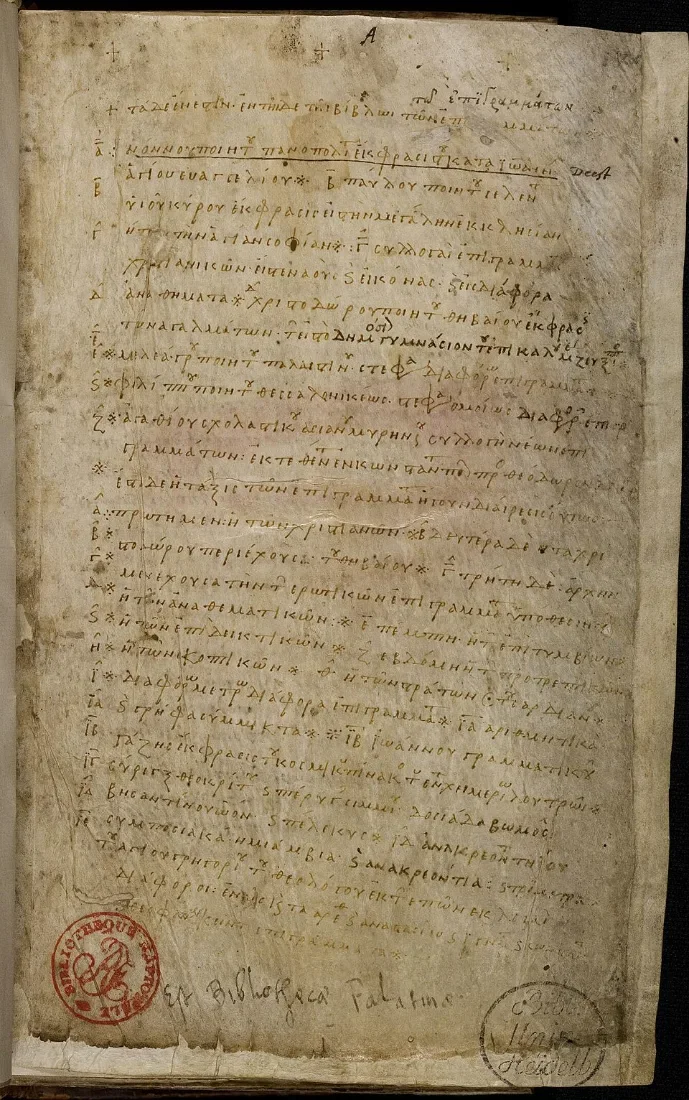
Five epigrams are scanned below, all headed “Simonides” in the Palatine Anthology. They are the Thermopylae epitaph in a third version, two epitaphs for men who died for Greece, and a pair on a drowned stranger. The poet buried the stranger, and the stranger’s ghost, in a dream, warned him off a ship that was lost. Rawles thinks the pair were composed after Simonides’ lifetime, as part of the story.[5]
Text and translation
The uninterrupted Greek with its English translation, line by line.
Show text and translation
εἰ τὸ καλῶς θνῄσκειν ἀρετῆς μέρος ἐστὶ μέγιστον,
Epigrams headed “Simonides” in the Palatine Anthology · 7.249, 7.253, 7.251, 7.516, 7.77 · ed. Paton
How to read each line
A guide to the Greek, syllables, pitch marks and quantities.
Show the reading key
- Above each line: the line as the edition prints it, each word placed over its own syllables. The main row: the same Greek divided into metrical syllables, each written as it is pronounced. A consonant that closes a syllable is written with it (λόθ | ρο); an elided word is closed up with the next vowel (ν’ἀ); a final consonant carried into the next word is set with a thin space (ς ἰ). Wider gaps mark word-ends.
- Above the syllables: the pitch of each syllable, from the accents. Under them: the quantity of each syllable as it falls in the line, then the transliteration, syllable by syllable, with accented syllables in capitals.
- Under each line: a line-for-line translation. In the right margin of the scansion: the line type, its scheme, and its analysis into cola.
Key to the labels
The names, patterns and symbols used beside this poem.
Show the labels and symbols
The labels in the right margin of the scansion below name the line, its scheme, the feet as the line realises them, and the caesurae and diaereses (the named word-ends) that fall in it. In the scheme ⏔ is a biceps, two shorts that may be contracted to one long; ⏕ is a long that may be resolved into two shorts; × is an anceps, long or short. A click on any syllable highlights its metron or colon, or, with the switch, its foot.
| Label | Name and shape | What it is |
|---|---|---|
| hem1 | First hemiepes— ⏔ — ⏔ — | The first two and a half feet of the hexameter, up to the penthemimeral caesura; in the pentameter, its whole first half. |
| hem2 | Second half of the hexameter⏔ — ⏔ — ⏑ ⏑ — × | From the penthemimeral caesura to the line-end: the fifth foot is nearly always a dactyl, the sixth is — ×. |
| hemp | Second hemiepes— ⏑ ⏑ — ⏑ ⏑ × | The second half of the pentameter: two dactyls and a single syllable, with no contraction allowed. |
The traditional feet
| Foot and shape | Where |
|---|---|
| First foot: dactyl or spondee— ⏔ | Scheme positions 1–2. The biceps (⏑ ⏑) may be contracted to a single long, making a spondee. |
| Second foot: dactyl or spondee— ⏔ | Scheme positions 3–4. |
| Third foot: dactyl or spondee— ⏔ | Scheme positions 5–6. The penthemimeral caesura falls after its first syllable, the “trochaic” caesura after its second. |
| Fourth foot: dactyl or spondee— ⏔ | Scheme positions 7–8. Word-end at the end of this foot, when it is a dactyl, is the bucolic diaeresis (West’s “bucolic caesura”: word-end at the end of the fourth foot after an uncontracted biceps)[6]. |
| Fifth foot: dactyl— ⏑ ⏑ | Scheme positions 9–10. A spondee here (a “spondaic line”) is rare. |
| Sixth foot— × | Scheme positions 11–12: a long and the indifferent final syllable. |
| First foot: dactyl or spondee— ⏔ | Scheme positions 1–2 of the pentameter. |
| Second foot: dactyl or spondee— ⏔ | Scheme positions 3–4. |
| Half-foot before the diaeresis— | Scheme position 5: the long that closes the first hemiepes; word-end must follow. |
| Fourth foot: dactyl— ⏑ ⏑ | Scheme positions 6–8: no contraction after the diaeresis. |
| Fifth foot: dactyl— ⏑ ⏑ | Scheme positions 9–11. |
| Final syllable× | Scheme position 12. |
Scansion
Five epigrams that the Anthology gives to Simonides: a third version of the Thermopylae couplet, two epitaphs for men who died for Greece, and the pair that tells the story of the drowned stranger who saved the poet’s life. A metrical lengthening, a hiatus at the pentameter’s caesura, two synizeses and one stop + nasal left short.
Stranger, carry the news to the Spartans that here
we lie, having done as they told us.
If dying nobly is the chief part of valour,
to us above all men Fortune allotted it:
we strove to set the crown of freedom on Hellas,
and lie here enjoying a praise that never ages.
These men laid a glory that cannot be put out around their own dear country,
and wrapped themselves in death’s dark cloud;
yet having died they are not dead: their valour, giving them renown from above,
leads them back up out of the halls of Hades.
Let those who murdered me find the same fate,
Zeus, guardian of guests; and may those who buried me profit from their lives.
Here stands the man who saved Simonides of Ceos,
who even when dead paid a favour back to the living.
Metre
- The couplet. A hexameter, with less prosodic licence than in epic, alternating with the “pentameter” — ⏔ — ⏔ — | — ⏑ ⏑ — ⏑ ⏑ — ‖, two hemiepes always divided by a word-end; contraction only in the first, and hiatus at the pentameter caesura very rare.[7] After the middle of the sixth century the couplet was more and more the metre of verse inscriptions.[8] The hexameter’s caesura falls in the third foot, after the princeps or after the first short, or occasionally after the fourth princeps.[9]
- Attribution. Many epigrams are given to Simonides by later sources and not by earlier ones that quote them, and the ancient collection of “Simonidean” epigrams took in much that was not his; in many cases we cannot tell how an epigram got its attribution.[10] The Anthology heads all five of these “Simonides”. For the last two, which tell the story Cicero relates of the stranger Simonides buried and the dream that kept him from a doomed voyage (de divinatione 1.56), Rawles thinks it likely that they were composed after Simonides’ lifetime, by the same process that produced the story; Sider instead takes them as couplets embedded in an autobiographical elegy of Simonides (Sider 2016, as cited by Rawles 2022, p. 330 n. 27): authorities differ.
- Prosody. As in epic: epic correption of a final long vowel or diphthong before a vowel;[11] synecphonesis within a word, frequent when the first vowel is ε;[12] metrical lengthening of a vowel in a word that could not otherwise enter the verse.[6] A stop + liquid or nasal inside a word normally makes position in early poetry, and West notes that the nasals are a little more resistant to releasing the syllable, so that the short scansion is seldom found with them before the fifth century:[13] here τεθνᾶσι (l. 9) leaves its first syllable short, τεθνηώς (l. 14) makes it long. The last position of each line is indifferent at period-end.[14]
- Text and marks. Paton’s text as Perseus gives it. Rawles quotes AP 7.77 with Σιμωνίδου and ζῶντι παρέσχε χάριν where Paton has Σιμωνίδεω and ζῶντʼ ἀπέδωκε χάριν, and punctuates AP 7.516 differently.[15] The input marks κυ̱άνεον (l. 8) as lengthened metrically, the long υ of κυδαίνουσ’ (l. 10)[16], and ties Ἀίδεω (l. 10) and Σιμωνίδεω (l. 13) into one final syllable; Perseus’ double space after Ξένιʼ (l. 12, where Rawles has a comma) is printed as one. The page does not show the marks.
Prosody, line by line
Every syllable, with the reason for its length. Quantities are read from the vowel where the spelling shows it, from the consonants that follow (“position”), from the accent where it tells, and from the metre where nothing else does. Editors’ notes on the text follow in the boxed paragraphs.
- 7.249.1
Line 7.249.1 · ὦ ξεῖνʼ, ἄγγειλον Λακεδαιμονίοις ὅτι τῇδε
ὦ ξεῖνʼ, ἄγγειλον Λακεδαιμονίοις ὅτι τῇδε
ὦξεῖν’,ἄγγειλονΛακεδαιμονίοιςὅτιτῇδεspondee, spondee, dactyl, dactyl, dactyl, — ×; penthemimeral caesura.
- 1 —ὦὦ is long by nature; the next word begins with the double consonant ξ: the syllable is closed before it: long by position.
- 2 —ξεῖεῖ is a diphthong, long by nature; a single long contracts the two shorts of the biceps at position 2.
- 3 —ν’,ἄγἄ is a vowel of unknown length; closed by γ: long by position; the apostrophe marks an elided vowel; the consonant before it joins this syllable.
- 4 —γειει is a diphthong, long by nature; a single long contracts the two shorts of the biceps at position 4.
- 5 —λονο is short by nature; closed by ν: long by position.
- 6 ⏑Λαα is short by the metre (position 6 must be short); one of the two shorts of the biceps at position 6.
- 7 ⏑κεε is short by nature; one of the two shorts of the biceps at position 6.
- 8 —δαιαι is a diphthong, long by nature.
- 9 ⏑μοο is short by nature; one of the two shorts of the biceps at position 8.
- 10 ⏑νίί is short by the metre (position 8 must be short); one of the two shorts of the biceps at position 8.
- 11 —οιςοι is a diphthong, long by nature.
- 12 ⏑ὅὅ is short by nature; one of the two shorts of the biceps at position 10.
- 13 ⏑τιι is short by the metre (position 10 must be short); one of the two shorts of the biceps at position 10.
- 14 —τῇῇ is long by nature.
- 15 ×δεε is short by nature; the position is anceps.
AP 7.249. The Anthology’s version has ἄγγειλον, the aorist imperative, as Lycurgus quotes the epitaph, but keeps ῥήμασι πειθόμενοι as Herodotus has it (Herodotus 7.228.2; Lycurgus, Against Leocrates 109)[17]. ξεῖνʼ is elided.[18] The first two feet are contracted. Penthemimeral caesura after ἄγγειλον.[9]
- 7.249.2
Line 7.249.2 · κείμεθα, τοῖς κείνων ῥήμασι πειθόμενοι.
κείμεθα, τοῖς κείνων ῥήμασι πειθόμενοι.
κείμεθα,τοῖςκείνωνῥήμασιπειθόμενοι.dactyl, spondee, —, dactyl, dactyl, ×; diaeresis after the first hemiepes.
- 1 —κείεί is a diphthong, long by nature.
- 2 ⏑μεε is short by nature; one of the two shorts of the biceps at position 2.
- 3 ⏑θα,α is short by the accent rule: acute on the antepenult requires a short final syllable; one of the two shorts of the biceps at position 2.
- 4 —τοῖςοῖ is a diphthong, long by nature; closed by ς: long by position.
- 5 —κείεί is a diphthong, long by nature; a single long contracts the two shorts of the biceps at position 4.
- 6 —νωνω is long by nature; closed by ν: long by position.
- 7 —ῥήή is long by nature.
- 8 ⏑μαα is short by the metre (position 7 must be short).
- 9 ⏑σιι is short by the accent rule: acute on the antepenult requires a short final syllable.
- 10 —πειει is a diphthong, long by nature.
- 11 ⏑θόό is short by nature.
- 12 ⏑μεε is short by nature.
- 13 ×νοι.οι is a diphthong, long by nature; the position is anceps.
- 7.253.1
Line 7.253.1 · εἰ τὸ καλῶς θνῄσκειν ἀρετῆς μέρος ἐστὶ μέγιστον,
εἰ τὸ καλῶς θνῄσκειν ἀρετῆς μέρος ἐστὶ μέγιστον,
εἰτὸκαλῶςθνῄσκεινἀρετῆςμέρος ἐστὶμέγιστον,dactyl, spondee, dactyl, dactyl, dactyl, — ×; penthemimeral caesura; hephthemimeral caesura; bucolic diaeresis.
- 1 —εἰεἰ is a diphthong, long by nature.
- 2 ⏑τὸὸ is short by nature; one of the two shorts of the biceps at position 2.
- 3 ⏑καα is short by the metre (position 2 must be short); one of the two shorts of the biceps at position 2.
- 4 —λῶςῶ is long by nature; closed by ς: long by position.
- 5 —θνῄσῄ is long by nature; closed by σ: long by position; a single long contracts the two shorts of the biceps at position 4.
- 6 —κεινει is a diphthong, long by nature.
- 7 ⏑ἀἀ is short by the metre (position 6 must be short); one of the two shorts of the biceps at position 6.
- 8 ⏑ρεε is short by nature; one of the two shorts of the biceps at position 6.
- 9 —τῆςῆ is long by nature; closed by ς: long by position.
- 10 ⏑μέέ is short by nature; one of the two shorts of the biceps at position 8.
- 11 ⏑ροο is short by nature; one of the two shorts of the biceps at position 8.
- 12 —ς ἐσἐ is short by nature; closed by σ: long by position; the first consonant belongs to the previous word and is carried over to this vowel.
- 13 ⏑τὶὶ is short by the metre (position 10 must be short); one of the two shorts of the biceps at position 10.
- 14 ⏑μέέ is short by nature; one of the two shorts of the biceps at position 10.
- 15 —γισι is a vowel of unknown length; closed by σ: long by position.
- 16 ×τον,ο is short by nature; closed by ν: long by position; the position is anceps.
AP 7.253. The first α of καλῶς is short. In θνῄσκειν the θν begins the word and the syllable before it, καλῶς, is long anyway. The σ of μέρος goes with ἐστί.[19] The second foot is contracted (λῶς θνῄσ-). The margin names penthemimeral (after θνῄσκειν), hephthemimeral (after ἀρετῆς) and bucolic (after μέρος) word-ends.[20]
- 7.253.2
Line 7.253.2 · ἡμῖν ἐκ πάντων τοῦτʼ ἀπένειμε τύχη·
ἡμῖν ἐκ πάντων τοῦτʼ ἀπένειμε τύχη·
ἡμῖνἐκπάντωντοῦτ’ἀπένειμετύχη·spondee, spondee, —, dactyl, dactyl, ×; diaeresis after the first hemiepes.
- 1 —ἡἡ is long by nature.
- 2 —μῖνῖ carries a circumflex, so it is long; a single long contracts the two shorts of the biceps at position 2.
- 3 —ἐκἐ is short by nature; closed by κ: long by position.
- 4 —πάνά is a vowel of unknown length; closed by ν: long by position; a single long contracts the two shorts of the biceps at position 4.
- 5 —τωνω is long by nature; closed by ν: long by position.
- 6 —τοῦοῦ is a diphthong, long by nature.
- 7 ⏑τ’ἀἀ is short by the metre (position 7 must be short); the apostrophe marks an elided vowel; the consonant before it joins this syllable.
- 8 ⏑πέέ is short by nature.
- 9 —νειει is a diphthong, long by nature.
- 10 ⏑μεε is short by nature.
- 11 ⏑τύύ is short by the metre (position 11 must be short).
- 12 ×χη·η is long by nature; the position is anceps.
- 7.253.3
Line 7.253.3 · Ἑλλάδι γὰρ σπεύδοντες ἐλευθερίην περιθεῖναι
Ἑλλάδι γὰρ σπεύδοντες ἐλευθερίην περιθεῖναι
Ἑλλάδιγὰρσπεύδοντες ἐλευθερίηνπεριθεῖναιdactyl, spondee, dactyl, dactyl, dactyl, — ×; caesura after the third trochee.
- 1 —ἙλἙ is short by nature; closed by λ: long by position.
- 2 ⏑λάά is short by the metre (position 2 must be short); one of the two shorts of the biceps at position 2.
- 3 ⏑διι is short by the metre (position 2 must be short); one of the two shorts of the biceps at position 2.
- 4 —γὰρὰ is a vowel of unknown length; closed by ρ: long by position.
- 5 —σπεύεύ is a diphthong, long by nature; a single long contracts the two shorts of the biceps at position 4.
- 6 —δονο is short by nature; closed by ν: long by position.
- 7 ⏑τεε is short by nature; one of the two shorts of the biceps at position 6.
- 8 ⏑ς ἐἐ is short by nature; the first consonant belongs to the previous word and is carried over to this vowel; one of the two shorts of the biceps at position 6.
- 9 —λευευ is a diphthong, long by nature.
- 10 ⏑θεε is short by nature; one of the two shorts of the biceps at position 8.
- 11 ⏑ρίί is short by the metre (position 8 must be short); one of the two shorts of the biceps at position 8.
- 12 —ηνη is long by nature; closed by ν: long by position.
- 13 ⏑πεε is short by nature; one of the two shorts of the biceps at position 10.
- 14 ⏑ριι is short by the metre (position 10 must be short); one of the two shorts of the biceps at position 10.
- 15 —θεῖεῖ is a diphthong, long by nature.
- 16 ×ναιαι is a diphthong, long by nature; the position is anceps.
- 7.253.4
Line 7.253.4 · κείμεθʼ ἀγηράτῳ χρώμενοι εὐλογίῃ.
κείμεθʼ ἀγηράτῳ χρώμενοι εὐλογίῃ.
κείμεθ’ἀγηράτῳχρώμενοιεὐλογίῃ.dactyl, spondee, —, dactyl, dactyl, ×; diaeresis after the first hemiepes.
- 1 —κείεί is a diphthong, long by nature.
- 2 ⏑μεε is short by nature; one of the two shorts of the biceps at position 2.
- 3 ⏑θ’ἀἀ is short by the metre (position 2 must be short); the apostrophe marks an elided vowel; the consonant before it joins this syllable; one of the two shorts of the biceps at position 2.
- 4 —γηη is long by nature.
- 5 —ράά is long by the metre (position 4 must be long); a single long contracts the two shorts of the biceps at position 4.
- 6 —τῳῳ is long by nature; the next word begins with χρ: the syllable is closed before it: long by position.
- 7 —χρώώ is long by nature.
- 8 ⏑μεε is short by nature.
- 9 ⏑νοιοι is a diphthong, long by nature; shortened before the vowel that begins the next word (epic correption), as the metre requires.
- 10 —εὐεὐ is a diphthong, long by nature.
- 11 ⏑λοο is short by nature.
- 12 ⏑γίί is short by the metre (position 11 must be short).
- 13 ×ῃ.ῃ is long by nature; the position is anceps.
κείμεθʼ is elided.[18] The -οι of χρώμενοι is shortened before εὐλογίῃ (epic correption, p. 14). Diaeresis after ἀγηράτῳ.
Campbell prints ἀγηράντῳ, the form LSJ cites from this line (s.v. ἀγήραντος; s.v. εὐλογία). With it the fourth syllable, -ραν-, is long by position; with ἀγηράτῳ the workbench takes the α long from the metre.[21]
- 7.251.1
Line 7.251.1 · ἄσβεστον κλέος οἵδε φίλῃ περὶ πατρίδι θέντες
ἄσβεστον κλέος οἵδε φίλῃ περὶ πατρίδι θέντες
ἄσβεστονκλέος οἵδεφίλῃπερὶπατρίδιθέντεςspondee, dactyl, dactyl, dactyl, dactyl, — ×; caesura after the third trochee; hephthemimeral caesura; bucolic diaeresis.
- 1 —ἄσἄ is a vowel of unknown length; closed by σ: long by position.
- 2 —βεσε is short by nature; closed by σ: long by position; a single long contracts the two shorts of the biceps at position 2.
- 3 —τονο is short by nature; closed by ν: long by position.
- 4 ⏑κλέέ is short by nature; one of the two shorts of the biceps at position 4.
- 5 ⏑οο is short by nature; one of the two shorts of the biceps at position 4.
- 6 —ς οἵοἵ is a diphthong, long by nature; the first consonant belongs to the previous word and is carried over to this vowel.
- 7 ⏑δεε is short by nature; one of the two shorts of the biceps at position 6.
- 8 ⏑φίί is short by the metre (position 6 must be short); one of the two shorts of the biceps at position 6.
- 9 —λῃῃ is long by nature.
- 10 ⏑πεε is short by nature; one of the two shorts of the biceps at position 8.
- 11 ⏑ρὶὶ is short by the metre (position 8 must be short); one of the two shorts of the biceps at position 8.
- 12 —πατα is a vowel of unknown length; closed by τ before a liquid: stop + liquid makes position, as it usually does in epic.
- 13 ⏑ρίί is short by the metre (position 10 must be short); one of the two shorts of the biceps at position 10.
- 14 ⏑διι is short by the metre (position 10 must be short); one of the two shorts of the biceps at position 10.
- 15 —θένέ is short by nature; closed by ν: long by position.
- 16 ×τεςε is short by nature; closed by ς: long by position; the position is anceps.
AP 7.251. In πατρίδι the τρ inside the word makes position.[13] Caesura after the third trochee, after οἵδε;[9] the margin also names the hephthemimeral after φίλῃ and a bucolic diaeresis after περί, which as a preposition counts with πατρίδι,[23] so the last is not a real break.
Campbell notes that the lemmatist of the Anthology refers this epigram, like the one before it, to Thermopylae, but that it is probably the epitaph of the Spartans who fell at Plataea.[21]
- 7.251.2
Line 7.251.2 · κυάνεον θανάτου ἀμφεβάλοντο νέφος.
κυάνεον θανάτου ἀμφεβάλοντο νέφος.
κυάνεονθανάτουἀμφεβάλοντονέφος.dactyl, dactyl, —, dactyl, dactyl, ×; diaeresis after the first hemiepes.
- 1 —κυυ is short by nature; the syllable is lengthened metrically.[6]
- 2 ⏑άά is short by the metre (position 2 must be short); one of the two shorts of the biceps at position 2.
- 3 ⏑νεε is short by nature; one of the two shorts of the biceps at position 2.
- 4 —ονο is short by nature; closed by ν: long by position.
- 5 ⏑θαα is short by the metre (position 4 must be short); one of the two shorts of the biceps at position 4.
- 6 ⏑νάά is short by the metre (position 4 must be short); one of the two shorts of the biceps at position 4.
- 7 —τουου is a diphthong, long by nature; the next word begins with a vowel and nothing is elided: hiatus.
- 8 —ἀμἀ is a vowel of unknown length; closed by μ: long by position.
- 9 ⏑φεε is short by nature.
- 10 ⏑βάά is short by the metre (position 8 must be short).
- 11 —λονο is short by nature; closed by ν: long by position.
- 12 ⏑τοο is short by nature.
- 13 ⏑νέέ is short by nature.
- 14 ×φος.ο is short by nature; closed by ς: long by position; the position is anceps.
κυάνεον, “dark”, has a short υ,[24] and the word, ⏑ ⏑ ⏑ — before its last syllable, could not enter the verse as it stands: its first syllable is lengthened metrically. West gives exactly this word as an example of metrical lengthening (κυάνεος becomes κῡάνεος)[6]. θανάτου ends the first hemiepes, and the next word begins with a vowel: hiatus at the pentameter’s caesura, with the diphthong kept long, which West calls particularly rare in the couplet.[8]
- 7.251.3
Line 7.251.3 · οὐδὲ τεθνᾶσι θανόντες, ἐπεὶ σφʼ ἀρετὴ καθύπερθε
οὐδὲ τεθνᾶσι θανόντες, ἐπεὶ σφʼ ἀρετὴ καθύπερθε
οὐδὲτεθνᾶσιθανόντε,ς ἐπεὶσφ’ἀρετὴκαθύπερθεdactyl, dactyl, dactyl, dactyl, dactyl, — ×; caesura after the third trochee; hephthemimeral caesura.
- 1 —οὐοὐ is a diphthong, long by nature.
- 2 ⏑δὲὲ is short by nature; one of the two shorts of the biceps at position 2.
- 3 ⏑τεε is short by nature; θν is carried whole into the next syllable, so this syllable stays open and short (correption before a stop + nasal cluster, as the metre needs); one of the two shorts of the biceps at position 2.
- 4 —θνᾶᾶ carries a circumflex, so it is long.
- 5 ⏑σιι is short by the accent rule: circumflex on the penult requires a short final syllable; one of the two shorts of the biceps at position 4.
- 6 ⏑θαα is short by the metre (position 4 must be short); one of the two shorts of the biceps at position 4.
- 7 —νόνό is short by nature; closed by ν: long by position.
- 8 ⏑τε,ε is short by nature; one of the two shorts of the biceps at position 6.
- 9 ⏑ς ἐἐ is short by nature; the first consonant belongs to the previous word and is carried over to this vowel; one of the two shorts of the biceps at position 6.
- 10 —πεὶεὶ is a diphthong, long by nature; the next word begins with σφ: the syllable is closed before it: long by position.
- 11 ⏑σφ’ἀἀ is short by the metre (position 8 must be short); the apostrophe marks an elided vowel; the consonant before it joins this syllable; one of the two shorts of the biceps at position 8.
- 12 ⏑ρεε is short by nature; one of the two shorts of the biceps at position 8.
- 13 —τὴὴ is long by nature.
- 14 ⏑καα is short by the metre (position 10 must be short); one of the two shorts of the biceps at position 10.
- 15 ⏑θύύ is short by the metre (position 10 must be short); one of the two shorts of the biceps at position 10.
- 16 —περε is short by nature; closed by ρ: long by position.
- 17 ×θεε is short by nature; the position is anceps.
The ε of τεθνᾶσι stays short before θν: the whole stop + nasal is taken into the next syllable, a treatment West says is seldom found with the nasals before the fifth century;[13] contrast τεθνηώς in l. 14. The σ of θανόντες goes with ἐπεί; σφʼ is elided before ἀρετή.[18] Five dactyls. Caesura after the third trochee, after θανόντες;[9] and hephthemimeral after ἐπεί.
- 7.251.4
Line 7.251.4 · κυδαίνουσ’ ἀνάγει δώματος ἐξ Ἀίδε‿ω.
κυδαίνουσ’ ἀνάγει δώματος ἐξ Ἀίδε‿ω.
κυδαίνουσ’ἀνάγειδώματος ἐξἈίδε‿ω.spondee, dactyl, —, dactyl, dactyl, ×; diaeresis after the first hemiepes.
- 1 —κυῡ is long (its length is not shown by the ordinary spelling).
- 2 —δαίαί is a diphthong, long by nature; a single long contracts the two shorts of the biceps at position 2.
- 3 —νουου is a diphthong, long by nature.
- 4 ⏑σ’ἀἀ is short by the metre (position 4 must be short); the apostrophe marks an elided vowel; the consonant before it joins this syllable; one of the two shorts of the biceps at position 4.
- 5 ⏑νάά is short by the metre (position 4 must be short); one of the two shorts of the biceps at position 4.
- 6 —γειει is a diphthong, long by nature.
- 7 —δώώ is long by nature.
- 8 ⏑μαα is short by the metre (position 7 must be short).
- 9 ⏑τοο is short by nature.
- 10 —ς ἐξἐ is short by nature; ξ is a double consonant (two sounds) and closes the syllable: long by position; the first consonant belongs to the previous word and is carried over to this vowel.
- 11 ⏑ἈἈ is short by the metre (position 10 must be short).
- 12 ⏑ίί is short by the metre (position 11 must be short).
- 13 ×δε‿ω.εω is two vowels of one word pronounced together as one long syllable (synizesis); the position is anceps.
The υ of κυδαίνουσ’ is long,[16] and the word is elided at the pentameter’s caesura.[8] The first biceps is contracted (κυ-δαί-). Ἀίδεω, the Ionic genitive, ends in a single syllable by synecphonesis (synizesis), frequent within a word when the first vowel is ε.[12] The σ of δώματος goes with ἐξ.
- 7.516.1
Line 7.516.1 · οἱ μὲν ἐμὲ κτείναντες ὁμοίων ἀντιτύχοιεν,
οἱ μὲν ἐμὲ κτείναντες ὁμοίων ἀντιτύχοιεν,
οἱμὲν ἐμὲκτείναντες ὁμοίωνἀντιτύχοιεν,dactyl, spondee, dactyl, spondee, dactyl, — ×; caesura after the third trochee; word-end after a spondaic fourth foot.
- 1 —οἱοἱ is a diphthong, long by nature.
- 2 ⏑μὲὲ is short by nature; one of the two shorts of the biceps at position 2.
- 3 ⏑ν ἐἐ is short by nature; the first consonant belongs to the previous word and is carried over to this vowel; one of the two shorts of the biceps at position 2.
- 4 —μὲὲ is short by nature; the next word begins with κτ: the syllable is closed before it: long by position.
- 5 —κτείεί is a diphthong, long by nature; a single long contracts the two shorts of the biceps at position 4.
- 6 —νανα is a vowel of unknown length; closed by ν: long by position.
- 7 ⏑τεε is short by nature; one of the two shorts of the biceps at position 6.
- 8 ⏑ς ὁὁ is short by nature; the first consonant belongs to the previous word and is carried over to this vowel; one of the two shorts of the biceps at position 6.
- 9 —μοίοί is a diphthong, long by nature.
- 10 —ωνω is long by nature; a single long contracts the two shorts of the biceps at position 8.
- 11 —ἀνἀ is a vowel of unknown length; closed by ν: long by position.
- 12 ⏑τιι is short by the metre (position 10 must be short); one of the two shorts of the biceps at position 10.
- 13 ⏑τύύ is short by the metre (position 10 must be short); one of the two shorts of the biceps at position 10.
- 14 —χοιοι is a diphthong, long by nature.
- 15 ×εν,ε is short by nature; closed by ν: long by position; the position is anceps.
- 7.516.2
Line 7.516.2 · Ζεῦ Ξένιʼ οἱ δʼ ὑπὸ γᾶν θέντες ὄναιντο βίου,
Ζεῦ Ξένιʼ οἱ δʼ ὑπὸ γᾶν θέντες ὄναιντο βίου,
ΖεῦΞένι’οἱδ’ὑπὸγᾶνθέντες ὄναιντοβίου,dactyl, dactyl, —, dactyl, dactyl, ×; diaeresis after the first hemiepes.
- 1 —Ζεῦεῦ is a diphthong, long by nature; the next word begins with the double consonant Ξ: the syllable is closed before it: long by position.
- 2 ⏑Ξέέ is short by nature; one of the two shorts of the biceps at position 2.
- 3 ⏑νι’ι is short by the metre (position 2 must be short); the apostrophe marks an elided vowel; the consonant before it joins this syllable; one of the two shorts of the biceps at position 2.
- 4 —οἱοἱ is a diphthong, long by nature.
- 5 ⏑δ’ὑὑ is short by the metre (position 4 must be short); the apostrophe marks an elided vowel; the consonant before it joins this syllable; one of the two shorts of the biceps at position 4.
- 6 ⏑πὸὸ is short by nature; one of the two shorts of the biceps at position 4.
- 7 —γᾶνᾶ carries a circumflex, so it is long; closed by ν: long by position.
- 8 —θένέ is short by nature; closed by ν: long by position.
- 9 ⏑τεε is short by nature.
- 10 ⏑ς ὄὄ is short by nature; the first consonant belongs to the previous word and is carried over to this vowel.
- 11 —ναιναι is a diphthong, long by nature; closed by ν: long by position.
- 12 ⏑τοο is short by nature.
- 13 ⏑βίί is short by the metre (position 11 must be short).
- 14 ×ου,ου is a diphthong, long by nature; the position is anceps.
- 7.77.1
Line 7.77.1 · οὗτος ὁ τοῦ Κείοιο Σιμωνίδε‿ω ἐστὶ σαωτήρ,
οὗτος ὁ τοῦ Κείοιο Σιμωνίδε‿ω ἐστὶ σαωτήρ,
οὗτος ὁτοῦΚείοιοΣιμωνίδε‿ωἐστὶσαωτήρ,dactyl, spondee, dactyl, dactyl, dactyl, — ×; caesura after the third trochee; bucolic diaeresis.
- 1 —οὗοὗ is a diphthong, long by nature.
- 2 ⏑τοο is short by nature; one of the two shorts of the biceps at position 2.
- 3 ⏑ς ὁὁ is short by nature; the first consonant belongs to the previous word and is carried over to this vowel; one of the two shorts of the biceps at position 2.
- 4 —τοῦοῦ is a diphthong, long by nature.
- 5 —Κείεί is a diphthong, long by nature; a single long contracts the two shorts of the biceps at position 4.
- 6 —οιοι is a diphthong, long by nature.
- 7 ⏑οο is short by nature; one of the two shorts of the biceps at position 6.
- 8 ⏑Σιι is short by the metre (position 6 must be short); one of the two shorts of the biceps at position 6.
- 9 —μωω is long by nature.
- 10 ⏑νίί is short by the metre (position 8 must be short); one of the two shorts of the biceps at position 8.
- 11 ⏑δε‿ωεω is two vowels of one word pronounced together as one long syllable (synizesis); shortened before the vowel that begins the next word (epic correption), as the metre requires; one of the two shorts of the biceps at position 8.
- 12 —ἐσἐ is short by nature; closed by σ: long by position.
- 13 ⏑τὶὶ is short by the metre (position 10 must be short); one of the two shorts of the biceps at position 10.
- 14 ⏑σαα is short by the metre (position 10 must be short); one of the two shorts of the biceps at position 10.
- 15 —ωω is long by nature.
- 16 ×τήρ,ή is long by nature; closed by ρ: long by position; the position is anceps.
AP 7.77, Rawles’ Simonides epigram 85.[15] Σιμωνίδεω, the Ionic genitive, ends in a single syllable by synecphonesis (synizesis)[12], and that syllable, though long, is shortened before ἐστί (epic correption, p. 14), so that it fills a short of the fourth biceps. Rawles prints Σιμωνίδου, which scans the same way (-δου shortened before ἐστί). The σ of οὗτος goes with ὁ. Caesura after the third trochee, after Κείοιο,[9] and bucolic diaeresis after Σιμωνίδεω.
Campbell prints Σιμωνίδου; the scholia and Tzetzes have Σιμωνίδεω, the form printed here.[26] With synizesis the scansion is the same.
- 7.77.2
Line 7.77.2 · ὃς καὶ τεθνηὼς ζῶντʼ ἀπέδωκε χάριν.
ὃς καὶ τεθνηὼς ζῶντʼ ἀπέδωκε χάριν.
ὃςκαὶτεθνηὼςζῶντ’ἀπέδωκεχάριν.spondee, spondee, —, dactyl, dactyl, ×; diaeresis after the first hemiepes.
- 1 —ὃςὃ is short by nature; closed by ς: long by position.
- 2 —καὶαὶ is a diphthong, long by nature; a single long contracts the two shorts of the biceps at position 2.
- 3 —τεθε is short by nature; closed by θ before a nasal: stop + nasal makes position, as it usually does in epic.
- 4 —νηη is long by nature; a single long contracts the two shorts of the biceps at position 4.
- 5 —ὼςὼ is long by nature; closed by ς: long by position.
- 6 —ζῶνῶ is long by nature; closed by ν: long by position.
- 7 ⏑τ’ἀἀ is short by the metre (position 7 must be short); the apostrophe marks an elided vowel; the consonant before it joins this syllable.
- 8 ⏑πέέ is short by nature.
- 9 —δωω is long by nature.
- 10 ⏑κεε is short by nature.
- 11 ⏑χάά is short by the metre (position 11 must be short).
- 12 ×ριν.ι is a vowel of unknown length; closed by ν: long by position; the position is anceps.
In τεθνηώς the θν makes position, so τεθ- is long,[13] unlike τε- in l. 9. Both bicipitia of the first hemiepes are contracted. ζῶντʼ is elided.[18] Diaeresis after τεθνηώς.
Campbell prints ζῶντι παρέσχε χάριν and gives ζῶντ’ ἀπέδωκε, the reading printed here, in his apparatus.[26] Both scan — ⏑ ⏑ — ⏑ ⏑ —.
Notes
- ^ Campbell 1991, pp. 12–13.
- ^ Rawles 2022, p. 329.
- ^ Campbell 1991, pp. 13, 519–521; Rawles 2022, pp. 329–330.
- ^ Rawles 2022, p. 330.
- ^ Rawles 2022, p. 330 with n. 27.
- ^ a b c d West 1987, p. 21.
- ^ West 1987, p. 24; Battezzato 2009, p. 138, on the division and the uncontracted second half.
- ^ a b c d e West 1987, p. 24.
- ^ a b c d e f g West 1987, p. 19.
- ^ Rawles 2022, pp. 329–330.
- ^ West 1987, p. 14.
- ^ a b c West 1987, p. 15.
- ^ a b c d West 1987, p. 16.
- ^ West 1987, p. 4.
- ^ a b c Rawles 2022, p. 330.
- ^ a b LSJ s.v. κυδαίνω.
- ^ See the previous tab.
- ^ a b c d e f West 1987, p. 13.
- ^ a b c d West 1987, p. 12.
- ^ West 1987, pp. 19, 21.
- ^ a b c Campbell 1991, p. 526.
- ^ a b de Kreij 2022, p. 152.
- ^ West 1987, pp. 20–21.
- ^ LSJ s.v. κυάνεος.
- ^ West 1987, p. 20.
- ^ a b c Campbell 1991, p. 588.
Text and sources
- Text: Anthologia Graeca 7.249, 7.251, 7.253, 7.516, 7.77, ed. W. R. Paton (Loeb), Perseus Digital Library (tlg7000.tlg001.perseus-grc7), CC BY-SA 4.0; checked letter by letter.
- L. Battezzato, ‘Metre and music’, in F. Budelmann (ed.), The Cambridge Companion to Greek Lyric (Cambridge 2009), ch. 7, p. 138 (the elegiac couplet; the caesurae of the hexameter).
- Metre and prosody: M. L. West, Introduction to Greek Metre (Oxford 1987), pp. 4, 12–16, 19–21, 24, checked against the page images (pp. 20–21 from a photograph).
- R. Rawles, ‘Simonides’, ch. 22, pp. 329–330 with n. 27 (citing D. Sider 2016), and M. de Kreij, ‘The Lyric Dialects’, ch. 10, p. 152, in L. Swift (ed.), A Companion to Greek Lyric (Wiley 2022).
- Quantities: Liddell–Scott–Jones, Greek–English Lexicon, Perseus Digital Library (CC BY-SA), s.vv. κυάνεος, κυδαίνω.
- D. A. Campbell, Greek Lyric III: Stesichorus, Ibycus, Simonides, and Others (Loeb Classical Library 476, Cambridge, MA 1991), Simonides, Epigrams VIII (A.P. 7.253), IX (7.251), LXXXIV (7.516) and LXXXV (7.77) (pp. 526–527, 588–589), compared line by line; his numbers are Page’s (p. 519). He holds that no epigram can be shown to be by Simonides and that the Anthology’s ascriptions carry no weight (pp. 519–520). A.P. 7.249 is his XXII(b) (p. 542).
Quotations from copyrighted works are not covered by this page’s licence.
Simonides: Thermopylae (lyric)
Synopsis
The dead of Thermopylae receive a monument of remembrance and praise. Their honour cannot be worn away by decay or time. Diodorus preserves the lyric in his account of the battle.[1] The nine lines are scanned below in the text and quantity scheme printed by Smyth. Their mixture of long–short and long–short–short groups differs from the elegiac couplets on the Epigrams tab.[2]
Text and translation
The uninterrupted Greek with its English translation, line by line.
Show text and translation
Τῶν ἐν Θερμοπύλαισι θανόντων
Simonides · the lyric for those who died at Thermopylae · Greek text: Smyth 1900, pp. 53–54
How to read each line
A guide to the Greek, syllables, pitch marks and quantities.
Show the reading key
- Above each line: the line as the edition prints it, each word placed over its own syllables. The main row: the same Greek divided into metrical syllables, each written as it is pronounced. A consonant that closes a syllable is written with it (λόθ | ρο); an elided word is closed up with the next vowel (ν’ἀ); a final consonant carried into the next word is set with a thin space (ς ἰ). Wider gaps mark word-ends.
- Above the syllables: the pitch of each syllable, from the accents. Under them: the quantity of each syllable as it falls in the line, then the transliteration, syllable by syllable, with accented syllables in capitals.
- Under each line: a line-for-line translation. In the right margin of the scansion: the line type, its scheme, and its analysis into cola.
Key to the labels
The names, patterns and symbols used beside this poem.
Show the labels and symbols
The labels in the right margin of the scansion below give the line’s analysis as the scheme file states it, then its scheme and, where the analysis notes them, the period-end, a brevis in longo or a hiatus. ‖ marks the end of a period, ||| the end of the stanza; a line without a period-end runs on into the next (synapheia). × is an anceps, long or short; the last position of every period is indifferent. A click on any syllable highlights the colon it belongs to and explains it.
| Label | Name and shape | What it is |
|---|---|---|
| v1 | Line 1— — — ⏑ ⏑ — ⏑ ⏑ — × | Two long syllables, two groups of long and two shorts, and a two-syllable close. |
| v2 | Line 2— ⏑ — ⏑ — ⏑ — ⏑ — ⏑ — ⏑ | Six long–short groups in the printed scheme. |
| v3 | Line 3— — ⏑ ⏑ — ⏑ ⏑ — — — ⏑ ⏑ — ⏑ ⏑ — ⏑ | A leading long, four groups of long and two shorts, and long–long and long–short groups. |
| v4 | Line 4— ⏑ ⏑ — ⏑ ⏑ — ⏑ — — — | Two groups of long and two shorts, a long–short group, and three longs. |
| v5 | Line 5— ⏑ — ⏑ ⏑ — ⏑ — — — ⏑ × | One three-syllable group amid pairs and the closing syllable. |
| v6 | Line 6— — ⏑ ⏑ — ⏑ ⏑ — ⏑ — ⏑ — — — ⏑ — | A leading long, two three-syllable groups, pairs, and a closing long. |
| v7 | Line 7— ⏑ ⏑ — ⏑ ⏑ — ⏑ — ⏑ — ⏑ — ⏑ — | Two three-syllable groups, four long–short groups, and a closing long. |
| v8 | Line 8— — — ⏑ ⏑ — ⏑ ⏑ — ⏑ — ⏑ — — | A long–long opening, two three-syllable groups, two long–short groups, and two closing longs. |
| v9 | Line 9— ⏑ — ⏑ ⏑ — ⏑ ⏑ — | A long–short opening, two groups of long and two shorts, and a closing long. |
Scansion
The dead receive remembrance and praise. Their honour is a burial cloth that neither decay nor time can destroy. The nine lines below follow the text and quantity scheme printed by Smyth.
Of those who died at Thermopylae,
glorious is the fortune, fair the fate;
their tomb is an altar; remembrance replaces lament, and praise replaces pity.
Such a burial cloth neither mildew
nor all-subduing time will darken.
This enclosure of noble men has taken for its inhabitant the good name
of Greece. Leonidas too bears witness,
the king of Sparta, leaving the great splendour of his valour
and enduring fame.
Metre
The lines mix pairs of syllables with groups of three. In line 1, Τῶν ἐν supplies two longs. Θερμοπύ- and -λαισι θα- each supply — ⏑ ⏑, and -νόντων closes with two longs. Line 2 instead moves through six long–short pairs: εὐκλε-, -ὴς μὲν, ἁ τύ-, -χα κα-, -λὸς δ᾽ ὁ, πότμος. These are the quantities in the printed scheme.[3]
∿ The nine lines, synthetic
A long syllable may contain a long vowel or diphthong, or be closed by a consonant.[4] Thus ὁ at the start of line 8 is long before Σπ-, although its ο is short. The open σα- of σακός in line 6 fills a long position. The pattern tells us how to read that vowel in this line.[3]
The historical name for this mixture is logaoedic. Smyth uses it here. His scheme also marks rhythmic beats, shortened or prolonged longs, and rests. The display keeps the syllable quantities, without prescribing those durations.[5] The sound is a synthetic pronunciation model. It does not recover an ancient tune or tempo.
Each printed verse is read separately here. A final long/short sign is shown as ×. The line-end marks indicate the pauses used in this teaching display; they do not establish the stanza structure of the original song. A short syllable can fill a final position before a pause.[6]
Prosody, line by line
Every syllable, with the reason for its length. Quantities are read from the vowel where the spelling shows it, from the consonants that follow (“position”), from the accent where it tells, and from the metre where nothing else does. Editors’ notes on the text follow in the boxed paragraphs.
- 1
Line 1 · Τῶν ἐν Θερμοπύλαισι θανόντων
Τῶν ἐν Θερμοπύλαισι θανόντων
ΤῶνἐνΘερμοπύλαισιθανόντων- 1 —Τῶνῶ is long by nature.
- 2 —ἐνἐ is short by nature; closed by ν: long by position.
- 3 —Θερε is short by nature; closed by ρ: long by position.
- 4 ⏑μοο is short by nature.
- 5 ⏑πύύ is short by the metre (position 5 must be short).
- 6 —λαιαι is a diphthong, long by nature.
- 7 ⏑σιι is short by the accent rule: acute on the antepenult requires a short final syllable.
- 8 ⏑θαα is short by the metre (position 8 must be short).
- 9 —νόνό is short by nature; closed by ν: long by position.
- 10 ×τωνω is long by nature; closed by ν: long by position; the last position of the period is indifferent.
Two longs, two — ⏑ ⏑ groups, and the closing pair. Θερ- is long because it is closed by ρ; -λαι- contains a diphthong; θα- is short. The word Θερμοπύλαισι keeps all five syllables.[3]- 2
Line 2 · εὐκλεὴς μὲν ἁ τύχα, καλὸς δ᾽ ὁ πότμος,
εὐκλεὴς μὲν ἁ τύχα, καλὸς δ᾽ ὁ πότμος,
εὐκλεὴςμὲν ἁτύχα,καλὸςδ’ὁπότμος,- 1 —εὐεὐ is a diphthong, long by nature.
- 2 ⏑κλεε is short by nature.
- 3 —ὴςὴ is long by nature; closed by ς: long by position.
- 4 ⏑μὲὲ is short by nature.
- 5 —ν ἁἁ is long by the metre (position 5 must be long); the first consonant belongs to the previous word and is carried over to this vowel.
- 6 ⏑τύύ is short by the metre (position 6 must be short).
- 7 —χα,α is long by the metre (position 7 must be long).
- 8 ⏑καα is short by the metre (position 8 must be short).
- 9 —λὸςὸ is short by nature; closed by ς: long by position.
- 10 ⏑δ’ὁὁ is short by nature; the apostrophe marks an elided vowel; the consonant before it joins this syllable.
- 11 —πότό is short by nature; closed by τ before a nasal: stop + nasal makes position, as it usually does in epic.
- 12 ×μος,ο is short by nature; closed by ς: long by position; the last position of the period is indifferent.
Six long–short groups. The α of ἁ and the final α of τύχα fill long positions. In μὲν ἁ the final ν goes with the following vowel in the syllable row, leaving μὲ short. Compare the quantities with the two groups of shorts in line 1.[3]- 3
Line 3 · βωμὸς δ᾽ ὁ τάφος, πρὸ γόων δὲ μνᾶστις, ὁ δ᾽ οἶκτος ἔπαινος·
βωμὸς δ᾽ ὁ τάφος, πρὸ γόων δὲ μνᾶστις, ὁ δ᾽ οἶκτος ἔπαινος·
βωμὸςδ’ὁτάφος,πρὸγόωνδὲμνᾶστι,ς ὁδ’οἶκτος ἔπαινος·- 1 —βωω is long by nature.
- 2 —μὸςὸ is short by nature; closed by ς: long by position.
- 3 ⏑δ’ὁὁ is short by nature; the apostrophe marks an elided vowel; the consonant before it joins this syllable.
- 4 ⏑τάά is short by the metre (position 4 must be short).
- 5 —φος,ο is short by nature; closed by ς: long by position.
- 6 ⏑πρὸὸ is short by nature.
- 7 ⏑γόό is short by nature.
- 8 —ωνω is long by nature; closed by ν: long by position.
- 9 —δὲὲ is short by nature; the next word begins with μν: the syllable is closed before it: long by position.
- 10 —μνᾶσᾶ carries a circumflex, so it is long; closed by σ: long by position.
- 11 ⏑τι,ι is short by the accent rule: circumflex on the penult requires a short final syllable.
- 12 ⏑ς ὁὁ is short by nature; the first consonant belongs to the previous word and is carried over to this vowel.
- 13 —δ’οἶκοἶ is a diphthong, long by nature; closed by κ: long by position; the apostrophe marks an elided vowel; the consonant before it joins this syllable.
- 14 ⏑τοο is short by nature.
- 15 ⏑ς ἔἔ is short by nature; the first consonant belongs to the previous word and is carried over to this vowel.
- 16 —παιαι is a diphthong, long by nature.
- 17 ×νος·ο is short by nature; closed by ς: long by position; the last position of the period is indifferent.
The whole sequence ends with ἔπαινος. On the printed page that word runs over at the right beside the next line; the leading bracket is a continuation mark, not a gap in the text. The long δὲ before μνᾶστις contrasts with the short δὲ in line 4.[7]- 4
Line 4 · ἐντάφιον δὲ τοιοῦτον οὔτ᾽ εὐρὼς
ἐντάφιον δὲ τοιοῦτον οὔτ᾽ εὐρὼς
ἐντάφιονδὲτοιοῦτον οὔτ’εὐρὼς- 1 —ἐνἐ is short by nature; closed by ν: long by position.
- 2 ⏑τάά is short by the metre (position 2 must be short).
- 3 ⏑φιι is short by the metre (position 3 must be short).
- 4 —ονο is short by nature; closed by ν: long by position.
- 5 ⏑δὲὲ is short by nature.
- 6 ⏑τοιοι is a diphthong, long by nature; the diphthong is shortened before the vowel that follows it inside the word, as the metre requires (internal correption, frequent in Attic verse with words containing αι and οι)[8].
- 7 —οῦοῦ is a diphthong, long by nature.
- 8 ⏑τοο is short by nature.
- 9 —ν οὔοὔ is a diphthong, long by nature; the first consonant belongs to the previous word and is carried over to this vowel.
- 10 —τ’εὐεὐ is a diphthong, long by nature; the apostrophe marks an elided vowel; the consonant before it joins this syllable.
- 11 ×ρὼςὼ is long by nature; closed by ς: long by position; the last position of the period is indifferent.
- 5
Line 5 · οὐθ᾽ ὁ πανδαμάτωρ ἀμαυρώσει χρόνος.
οὐθ᾽ ὁ πανδαμάτωρ ἀμαυρώσει χρόνος.
οὐθ’ὁπανδαμάτωρἀμαυρώσειχρόνος.- 1 —οὐοὐ is a diphthong, long by nature.
- 2 ⏑θ’ὁὁ is short by nature; the apostrophe marks an elided vowel; the consonant before it joins this syllable.
- 3 —πανα is a vowel of unknown length; closed by ν: long by position.
- 4 ⏑δαα is short by the metre (position 4 must be short).
- 5 ⏑μάά is short by the metre (position 5 must be short).
- 6 —τωρω is long by nature.
- 7 ⏑ἀἀ is short by the metre (position 7 must be short).
- 8 —μαυαυ is a diphthong, long by nature.
- 9 —ρώώ is long by nature.
- 10 —σειει is a diphthong, long by nature; the next word begins with χρ: the syllable is closed before it: long by position.
- 11 ⏑χρόό is short by nature.
- 12 ×νος.ο is short by nature; closed by ς: long by position; the last position of the period is indifferent.
οὐθ᾽ is the elided form printed in the source. The scheme has a long–long pair in -μαυρώ-, followed by σει χρό- and the closing -νος. The final syllable has short ο; the display leaves the last position free.[9]- 6
Line 6 · ἀνδρῶν ἀγαθῶν ὅδε σακὸς οἰκέταν εὐδοξίαν
ἀνδρῶν ἀγαθῶν ὅδε σακὸς οἰκέταν εὐδοξίαν
ἀνδρῶνἀγαθῶνὅδεσακὸς οἰκέτανεὐδοξίαν- 1 —ἀνἀ is a vowel of unknown length; closed by ν: long by position.
- 2 —δρῶνῶ is long by nature.
- 3 ⏑ἀἀ is short by the metre (position 3 must be short).
- 4 ⏑γαα is short by the metre (position 4 must be short).
- 5 —θῶνῶ is long by nature.
- 6 ⏑ὅὅ is short by nature.
- 7 ⏑δεε is short by nature.
- 8 —σαα is long by the metre (position 8 must be long).
- 9 ⏑κὸὸ is short by nature.
- 10 —ς οἰοἰ is a diphthong, long by nature; the first consonant belongs to the previous word and is carried over to this vowel.
- 11 ⏑κέέ is short by nature.
- 12 —τανα is long by the metre (position 12 must be long).
- 13 —εὐεὐ is a diphthong, long by nature.
- 14 —δοο is short by nature; ξ is a double consonant (two sounds) and closes the syllable: long by position.
- 15 ⏑ξίί is short by the metre (position 15 must be short).
- 16 ×ανα is a vowel of unknown length; closed by ν: long by position; the last position of the period is indifferent.
The opening ἀν- stands before the two three-syllable groups δρῶν ἀγα- and -θῶν ὅδε. The open σα- of σακός is long in the printed scheme. The next line supplies the verb εἵλετο and completes the thought: the enclosure has taken Greece’s good name as its inhabitant.[10]- 7
Line 7 · Ἑλλάδος εἵλετο· μαρτυρεῖ δὲ καὶ Λεωνίδας
Ἑλλάδος εἵλετο· μαρτυρεῖ δὲ καὶ Λεωνίδας
Ἑλλάδος εἵλετο·μαρτυρεῖδὲκαὶΛεωνίδας- 1 —ἙλἙ is short by nature; closed by λ: long by position.
- 2 ⏑λάά is short by the metre (position 2 must be short).
- 3 ⏑δοο is short by nature.
- 4 —ς εἵεἵ is a diphthong, long by nature; the first consonant belongs to the previous word and is carried over to this vowel.
- 5 ⏑λεε is short by nature.
- 6 ⏑το·ο is short by nature.
- 7 —μαρα is a vowel of unknown length; closed by ρ: long by position.
- 8 ⏑τυυ is short by the metre (position 8 must be short).
- 9 —ρεῖεῖ is a diphthong, long by nature.
- 10 ⏑δὲὲ is short by nature.
- 11 —καὶαὶ is a diphthong, long by nature.
- 12 ⏑Λεε is short by nature.
- 13 —ωω is long by nature.
- 14 ⏑νίί is short by the metre (position 14 must be short).
- 15 ×δαςα is a vowel of unknown length; closed by ς: long by position; the last position of the period is indifferent.
Ἑλλάδος and εἵλετο supply the opening groups, each — ⏑ ⏑. The rest of the line alternates long and short until the closing syllable of Λεωνίδας.[3]- 8
Line 8 · ὁ Σπάρτας βασιλεύς, ἀρετᾶς μέγαν λελοιπὼς
ὁ Σπάρτας βασιλεύς, ἀρετᾶς μέγαν λελοιπὼς
ὁΣπάρταςβασιλεύς,ἀρετᾶςμέγανλελοιπὼς- 1 —ὁὁ is short by nature; the next word begins with Σπ: the syllable is closed before it: long by position.
- 2 —Σπάρά is a vowel of unknown length; closed by ρ: long by position.
- 3 —ταςα is a vowel of unknown length; closed by ς: long by position.
- 4 ⏑βαα is short by the metre (position 4 must be short).
- 5 ⏑σιι is short by the metre (position 5 must be short).
- 6 —λεύς,εύ is a diphthong, long by nature.
- 7 ⏑ἀἀ is short by the metre (position 7 must be short).
- 8 ⏑ρεε is short by nature.
- 9 —τᾶςᾶ carries a circumflex, so it is long; closed by ς: long by position.
- 10 ⏑μέέ is short by nature.
- 11 —γανα is a vowel of unknown length; closed by ν: long by position.
- 12 ⏑λεε is short by nature.
- 13 —λοιοι is a diphthong, long by nature.
- 14 ×πὼςὼ is long by nature; closed by ς: long by position; the last position of the period is indifferent.
The initial ὁ is long by position before Σπ-. The next long is Σπάρ-, closed by ρ. Two three-syllable groups follow, -τας βασι- and -λεύς ἀρε-. The close is -λοιπὼς, two longs.[3]- 9
Line 9 · κόσμον ἀέναόν τε κλέος.
κόσμον ἀέναόν τε κλέος.
κόσμον ἀέναόντεκλέος.- 1 —κόσό is short by nature; closed by σ: long by position.
- 2 ⏑μοο is short by nature.
- 3 —ν ἀἀ is long by the metre (position 3 must be long); the first consonant belongs to the previous word and is carried over to this vowel.
- 4 ⏑έέ is short by nature.
- 5 ⏑ναα is short by the metre (position 5 must be short).
- 6 —όνό is short by nature; closed by ν: long by position.
- 7 ⏑τεε is short by nature; the next word begins with κλ, a stop + liquid that does not make position here, so the syllable stays short.
- 8 ⏑κλέέ is short by nature.
- 9 ×ος.ο is short by nature; closed by ς: long by position; the last position of the period is indifferent.
The opening κόσμον is long–short; the final ν goes with the following ἀ- in the syllable row. The initial ἀ- of ἀέναον fills a long position in this scheme. The last -ος has short ο in a free final position.[11]
The poem and its source
Diodorus quotes the lyric in his account of Thermopylae. Its surviving words honour the dead through remembrance and praise. They do not by themselves establish that the poem belonged to a song on the sea-battle at Artemision. The word ἐγκώμιον (enkōmion), “praise-song”, in the transmitting passage may have a general rather than a technical sense.[12]
Text and line division
The Greek follows Smyth’s edited text, printed as Simonides I, corresponding to Bergk’s fragment 4. His apparatus records different manuscript readings in lines 3, 6 and 7.[7] The nine lines are the complete quotation printed there; that does not prove that they were the complete original song.
A proposed division into strophe and antistrophe depends on changing the text. Bergk shortened Θερμοπύλαισι to Θερμοπύλαις in line 1, omitted ὁ in line 8, and reversed τε κλέος to κλέος τε in line 9. He then treated lines 1–5 as the end of a strophe and 6–9 as the start of its answering stanza. Smyth reports that proposal but prints the text without those changes.[13] This display follows his printed text and does not impose the proposed responsion.
Notes
- ^ Smyth 1900, pp. 308–309.
- ^ Smyth 1900, pp. 53–54.
- ^ a b c d e f g Smyth 1900, p. 53.
- ^ West 1987, p. 12.
- ^ Smyth 1900, pp. 53, 309.
- ^ West 1987, p. 4.
- ^ a b Smyth 1900, pp. 53–54.
- ^ a b West 1987, p. 14.
- ^ Smyth 1900, pp. 53–54; West 1987, p. 4.
- ^ Smyth 1900, pp. 53–54, 309.
- ^ Smyth 1900, p. 53; West 1987, p. 4.
- ^ Smyth 1900, p. 308.
- ^ Smyth 1900, p. 309.
Text and sources
- H. W. Smyth, Greek Melic Poets (London: Macmillan, 1900), Simonides I (Bergk 4), pp. 53–54 (Greek, scheme and apparatus), 308–309 (source, interpretation and metrical commentary). Public domain.
- M. L. West, Introduction to Greek Metre (Oxford, 1987), pp. 4, 12, 14: final position, syllable weight and correption.
- Translation, quantity display and synthetic pronunciation: metrehelp.org, CC BY-SA 4.0.
Quotations from copyrighted works are not covered by this page’s licence.


