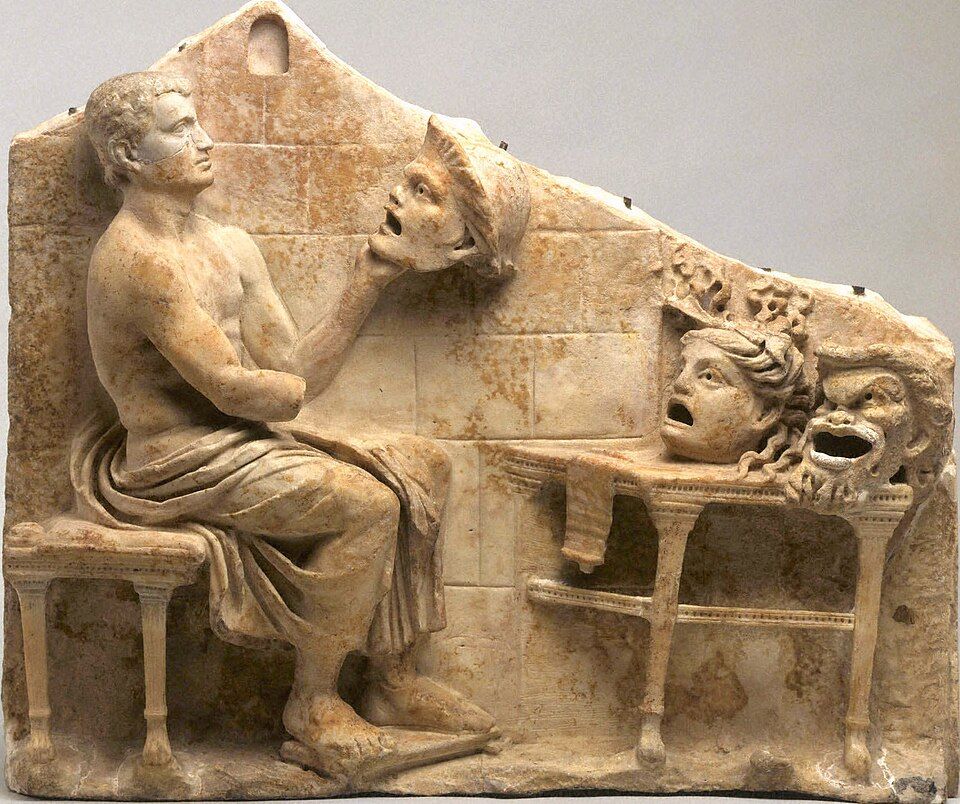
About · 1 of 3
Menander: life and career
In the metrical handbooks Menander stands for New Comedy. They record a style of versification, not a life.[1] The dates below come from two places. One is the chronology of the Cambridge Companion to Greek Tragedy. The other is the introduction to F. G. Allinson’s Loeb edition of 1921, an older work that is openly available. Where the two disagree, both are given.
Dates. The chronology puts Menander’s birth in 342/1 BC.[2] Allinson gives 343/42 for his birth and 292/91 for his death.[3] So the sources differ by a year on the birth.
Allinson names Menander’s father as Diopeithes of Cephisia. He suggests that the impulse towards the stage “may well have come from his uncle Alexis”. Alexis wrote two hundred plays, and they bridged the transition from Old to New Comedy. Menander is said to have drowned in the harbour of Piraeus at the age of fifty-two. Allinson traces this story to “an unsupported statement of a commentator on Ovid, Ibis, 589”.[3]
Career. The chronology records that Menander’s Anger won first prize in 321.[2] Allinson tells it differently. In his account Menander’s first play was the Self-Tormentor, written in his nineteenth or twentieth year. He “gained his first victory with ‘Anger’” in 316/15.[3] So the sources differ on the date of the Anger’s victory.
Menander wrote “more than one hundred plays in about thirty-three years”. Yet he won the prize only eight times. The reason, in Allinson’s words, was that his rival Philemon, “with his coarser jests, enjoyed a greater measure of popularity”.[3]
The one play that survives almost whole, the Dyscolus, has been known only since the Bodmer codex was published in 1959. It was performed in 316 BC and won first prize at the Lenaea, so it is an early play. Apart from the Dyscolus, none of the plays known in part can be dated with any confidence.[4]
Athens after 322. In 322 the Macedonian overlord of Greece replaced the Athenian democracy with an oligarchy. From then on, comedy was the Athenian drama with the widest influence. Later the Romans brought Greek drama to Latium. Their popular stage then drew most on Menander, not on Aeschylus, Sophocles or Euripides.[5]
Dramatic competitions went on. From some time between 318 and 307 BC, a single official, the agonothetes, was in charge of them instead of the choregoi.[6] Drama’s turn away from public issues is far easier to trace in comedy. There one can set Aristophanes’ old comedy beside Menander’s new.[7]
Euripides’ heir. New Comedy drew heavily on Euripides for plot and rhetoric. In Porter’s view, Menander’s comedies show Euripides’ art winning out in the end.[8] Plays such as Iphigenia among the Taurians, Ion and Helen are full of intrigues, recognitions of long-lost kin, rescues and escapes. These became staples of New Comedy. That does not mean that their first audiences found them comic.[9]
The Ion in particular looks ahead. It has the shape of the European comedy that held the stage from Menander to Oscar Wilde.[10] Hermes, who speaks its prologue, plainly anticipates the prologue gods of New Comedy.[11] A plot pattern of tragedy also appears, in a version of its own, in Menander’s Epitrepontes, “Arbitration”.[12]
In the lyric Companions. Fourth-century comedy often quoted Timotheus or echoed his words. A fragment of Menander (fr. 167 K–A) is among the passages cited to show this.[13] Did the New Music announce later forms centred on individual characters, among them New Comedy? That remains an open question.[14]
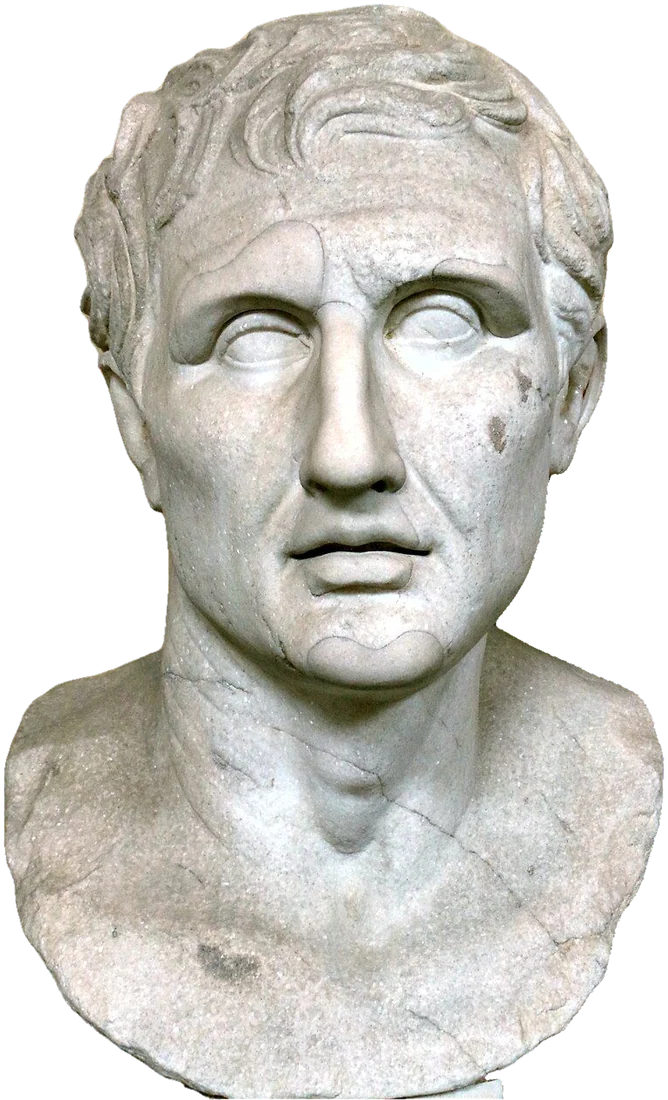
Notes
- ^ West 1987, pp. 26–29.
- ^ a b Easterling 1997, Chronology p. 354.
- ^ a b c d Allinson 1921, Introduction.
- ^ Revermann 2014, pp. 1–2.
- ^ Cartledge 1997, p. 35.
- ^ Easterling 1997, p. 212.
- ^ Burian 1997, p. 207.
- ^ Gregory 2005, p. 253.
- ^ Gregory 2005, pp. 265–266.
- ^ Seidensticker 2005, p. 53.
- ^ Mastronarde 2005, p. 330.
- ^ Burian 1997, p. 186 n. 21.
- ^ Csapo and Wilson 2009, p. 279 with n. 19.
- ^ LeVen 2022, p. 375.
About · 2 of 3
The plays and the papyri
None of Menander’s plays survived in the medieval manuscripts.[1] What can be read today comes from papyri found in Egypt and from quotations. New Comedy has gained more from papyrus finds than fourth-century tragedy. Of that tragedy there are brief quotations in plenty, but no complete plays.[2] Menander is the only poet of New Comedy who can be identified for certain on the papyri from Egypt. After Homer and Euripides he is the author found most often on them. The papyri give one complete play, the Dyscolus, one nearly complete, the Samia, and large parts of five more.[3] The plays named in the sources used here are:
| Play | What survives, and where | Source |
|---|---|---|
| Self-Tormentor | his first play, in Allinson’s account; title only | Allinson 1921, Introduction |
| Anger | first prize in 321 (Chronology) or first victory in 316/15 (Allinson); title only | Easterling 1997, Chronology p. 354; Allinson 1921 |
| Dyscolus | “virtually complete” in P. Bodmer 4 | Reynolds and Wilson 1991, p. 196 |
| Epitrepontes (“Arbitration”) | in the Cairo codex, P. Cairo inv. 43227 | Reynolds and Wilson 1991, p. 196; Burian 1997, p. 186 n. 21 |
| Samia | in the Cairo codex, and a substantial part in the Bodmer codex | Reynolds and Wilson 1991, pp. 196, 286 |
| Aspis | a substantial part in the Bodmer codex | Reynolds and Wilson 1991, p. 286 |
| Sicyonius | P. Sorbonne 72, 2272, 2273, recovered from mummy cartonnage | Reynolds and Wilson 1991, pp. 196–197 |
The Cairo codex. The Cairo papyrus was, in Allinson’s words of 1921, “discovered in Egypt in 1905”. It held “portions of five comedies and some minor fragments as yet unidentified”. Its first edition was Gustave Lefebvre’s (Cairo 1907).[4] The Epitrepontes and Samia come from it.[5]
The Bodmer codex. One codex, P. Bodmer 4, gave the Dyscolus almost entire. It also preserves a substantial part of the Aspis and the Samia. In places its Samia overlaps the fragments already known. There a classical text has two witnesses of unusually early date.[6]
Early is not the same as good. This papyrus is among the best known and most important of all, yet it is “astonishingly corrupt”. It is a warning against assuming that the oldest copy offers the best text.[7]
Papier mâché. Mummy cases were made of layers of waste papyrus stuck together. Old books no longer of use to their owners were bought up for the purpose. This material is called cartonnage, and the Sicyonius was recovered from it.[8] Other finds of the same kind are dated on Discoveries.
Who is speaking? Ancient dramatic texts marked a change of speaker only with a horizontal stroke at the beginning of a line, or a double point within it. They often omitted the characters’ names. The papyri of the Dyscolus and the Sicyonius show the muddle that resulted.[9]
Acts and the chorus. Later ancient drama developed a “five-act rule”: a play had five distinct episodes. The rule can be observed in Menander’s New Comedy and in Plautus and Terence at Rome. Fifth-century tragedy had no such rule.[10] The word “chorus” is “noted here and there in the MSS. as a stage direction”. It marks off the quasi-“acts”.[4] The same notation stands in the manuscripts of Aristophanes’ last two plays, where its meaning is disputed.[11]
The parabasis disappeared, and the chorus shrank. What remained was a standard of four songs dividing the play, which set the pattern of five acts for Western theatre. In one recurring plot of Menander’s, the main intrigue is resolved by the end of the fourth act, and a shorter fifth act raises and solves a second problem. Music still mattered to Menander, even though it has left less trace in the scripts. The aulos-player comes to the fore at the end of the Dyscolus.[12]
A silent heroine. In the Dyscolus the girl around whom the action turns is unnamed, and she does not speak. She is like a device in a film that exists only to move the plot along. A comedy might get away with it, but a tragedy built that way would be thin indeed.[13]
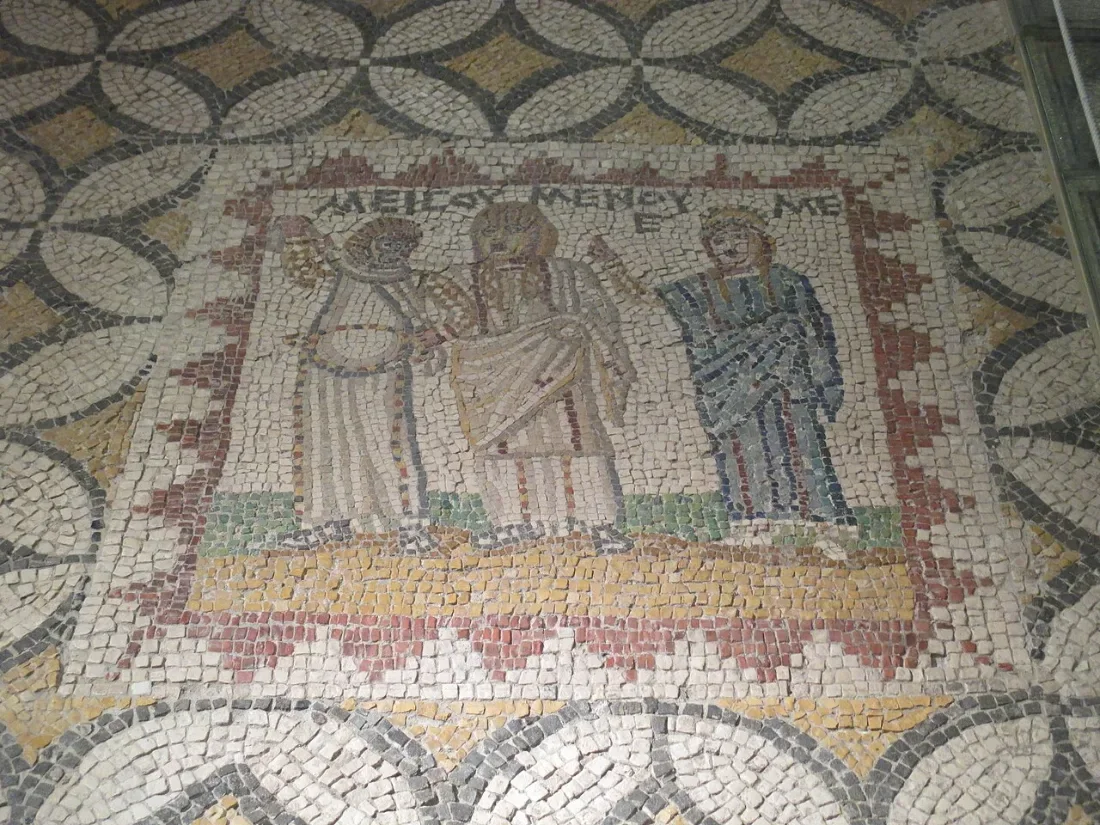
Notes
- ^ Reynolds and Wilson 1991, p. 54; see the Transmission tab.
- ^ Easterling 1997, p. 212 n. 5.
- ^ Lape 2010, p. 283.
- ^ a b Allinson 1921, Introduction.
- ^ Reynolds and Wilson 1991, p. 196.
- ^ Reynolds and Wilson 1991, pp. 196, 286.
- ^ Reynolds and Wilson 1991, p. 217.
- ^ Reynolds and Wilson 1991, p. 197.
- ^ Reynolds and Wilson 1991, p. 4.
- ^ Halleran 2005, p. 169.
- ^ Swift 2022, p. 386; see Aristophanes › Chorus and song.
- ^ Marshall 2014, p. 135.
- ^ Mossman 2005, p. 363.
About · 3 of 3
The text and its transmission
Menander’s text is followed here from the Athenian theatre to its loss at the end of antiquity; the papyri that brought parts of it back are on the Plays and papyri tab, and the general story is told on the page How the texts reached us.
Comedy in the Alexandrian Library. Under Ptolemy Philadelphus (286–247), Lycophron of Chalcis is said to have produced critical editions of the comedies. Alexander of Aetolia did the same for the tragedies. Nothing of either edition has come down to us.[1] Comedy was edited by the same methods as tragedy.[2]
Rome. The Romans took over the arts of conquered Greece. For their popular drama the chief source of inspiration was Menander, not the tragedians.[3] Roman comedy’s use of him was, in Allinson’s words, “ranging from actual translation”. Four of Terence’s six extant plays are “frankly attributed to the Greek of Menander”.[4] The five-act form is seen both in Menander and in the Roman dramatists Plautus and Terence.[5]
A school author. In the schools of the Hellenistic kingdoms, the choice of authors was left to the teacher. Menander was among the most read, with Homer, Hesiod, Euripides and Pindar. The evidence for this is a passage of Sextus Empiricus.[6] He was still read in the school at Gaza in the sixth century AD.[7]
The one exception. Under the Roman Empire there was the Atticist ideal. It required the diction of classical Athens. It also kept the Athenian classics on the school curriculum, and enough new copies were made to carry most of them through to later ages. Menander was the one exception.[8] He was still read at Gaza in the sixth century, but he was lost before the Middle Ages.[7]
At first Menander was the comic author of the schools. In late antiquity Aristophanes took his place.[9] The Atticist critic Phrynichus disapproved of Menander’s language, and that may have tipped the balance against him.[10]
Some have thought that one deliberate act of selection decided which texts survived. Menander’s case tells against that idea, and so do the late fragments of Euripides, Sappho and Callimachus.[11]
Quotation. Outside the papyri, Menander survives in fragments quoted by other writers. One of them is fr. 167 in the edition of Kassel and Austin. It is among the passages in which fourth-century comedy borrows or reworks lines of Timotheus.[12]
A collection of one-line maxims, the Sententiae, also circulated under his name. The open First1KGreek corpus has them in M. Ullmann’s edition of the Arabic tradition (1961). It catalogues them as “pseudo-Menander” (First1KGreek, tlg0541.tlg042, TEI header). The Monostichoi, 877 single lines, are mostly not his.[13]
Ancient copies. The papyri show what ancient readers had to cope with. A change of speaker was marked only by a stroke or a double point, and the speakers’ names were often left out. The confusion this caused is visible in the papyri of the Dyscolus and Sicyonius.[14] The Bodmer Dyscolus, for all its age, is full of corruptions.[15]
Greek text on this site. The Perseus Digital Library’s canonical Greek literature has no Menander: its author number, tlg0541, is absent. First1KGreek has only the Sententiae. Only one passage of a play is quoted on this site, Dyscolus 345–348 on the Metres tab. It is therefore given as West prints it, with his brackets marking letters lost in the papyrus.[16]
Notes
- ^ Kovacs 2005, p. 384.
- ^ Reynolds and Wilson 1991, p. 15.
- ^ Cartledge 1997, p. 35.
- ^ Allinson 1921, Introduction.
- ^ Halleran 2005, p. 169.
- ^ Barbantani 2009, p. 312.
- ^ a b Reynolds and Wilson 1991, p. 54.
- ^ Reynolds and Wilson 1991, p. 47.
- ^ Wilson 2014, p. 427.
- ^ Wilson 2014, p. 429.
- ^ Reynolds and Wilson 1991, pp. 53–54; see How the texts reached us › Byzantium.
- ^ Csapo and Wilson 2009, p. 279 with n. 19.
- ^ Wilson 2014, p. 428.
- ^ Reynolds and Wilson 1991, p. 4.
- ^ Reynolds and Wilson 1991, p. 217.
- ^ West 1987, p. 28.
Menander in Athenaeus: the Orge and the Naukleros
Synopsis
Both plays are lost except for quoted fragments, and their plots are unknown. The Orge (Anger) won Menander a first prize. The Cambridge chronology dates the win to 321 BC. Allinson, following the Parian Marble, makes it his first victory, in 316/15.[1] The Naukleros (The Ship-owner) seems to have begun with a messenger bringing news to old Straton. His son Theophilus is home from the Aegean, safe with his ship. Kock thought that the play turned on a quarrel between brothers.[2] Menander wrote over a hundred plays for the Athenian theatre. They were comedies of everyday life, without the lyric and the political satire of Aristophanes. By Allinson’s dating he lived 343/2–292/1 BC. The Cambridge chronology puts his birth in 342/1.[3]
Athenaeus quotes the two passages in a discussion of spendthrifts. In the first, an ageing husband tells his wife he will soon be a Ctesippus. Ctesippus, the son of the general Chabrias, sold the stones of his father’s monument to pay for his pleasures. In the second, a speaker, perhaps Theophilus, says that a man who has eaten up his inheritance should live at sea for ever (Athenaeus 4.165e–166b).[4]
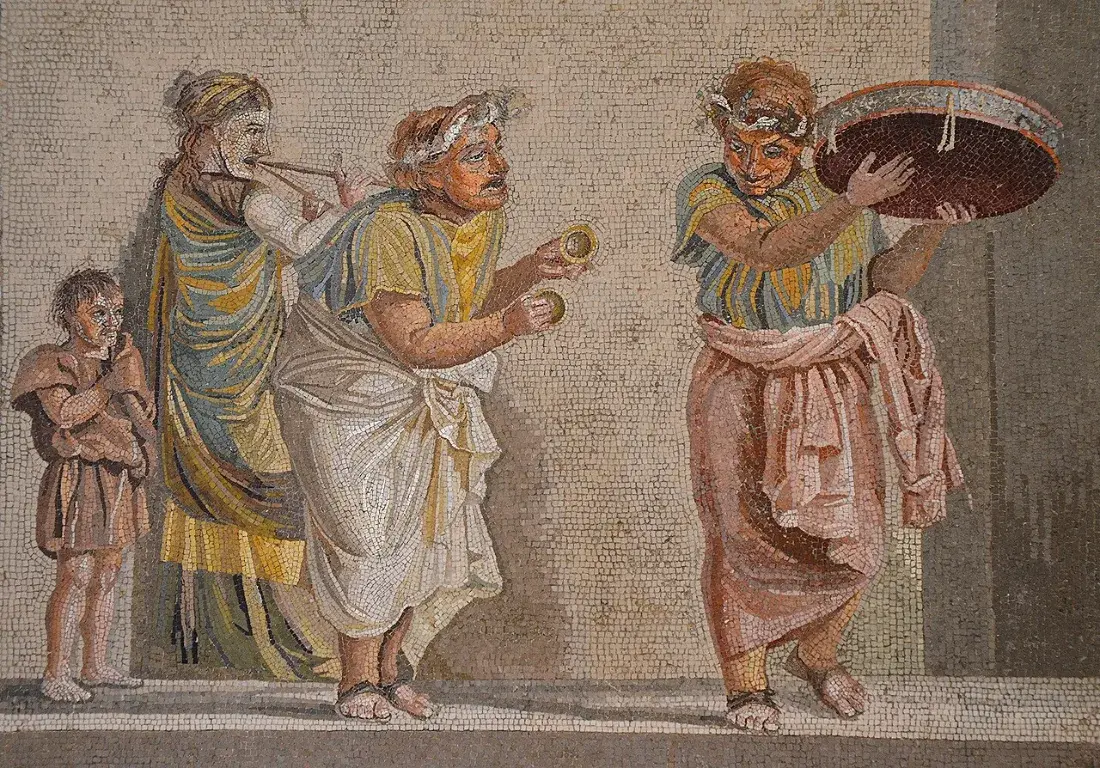
Text and translation
The uninterrupted Greek with its English translation, line by line.
Show text and translation
καίτοι νέος ποτ’ ἐγενόμην κἀγώ, γύναι·
Menander · two fragments quoted by Athenaeus, Deipnosophistae 4.166a–c · Greek text ed. Kaibel (Perseus Digital Library)
How to read each line
A guide to the Greek, syllables, pitch marks and quantities.
Show the reading key
- Above each line: the line as the edition prints it, each word placed over its own syllables. The main row: the same Greek divided into metrical syllables, each written as it is pronounced. A consonant that closes a syllable is written with it (λόθ | ρο); an elided word is closed up with the next vowel (ν’ἀ); a final consonant carried into the next word is set with a thin space (ς ἰ). Wider gaps mark word-ends.
- Above the syllables: the pitch of each syllable, from the accents. Under them: the quantity of each syllable as it falls in the line, then the transliteration, syllable by syllable, with accented syllables in capitals.
- Under each line: a line-for-line translation. In the right margin of the scansion: the line type, its scheme, and its analysis into cola.
Key to the labels
The names, patterns and symbols used beside this poem.
Show the labels and symbols
The labels in the right margin of the scansion below name the line, its scheme, the feet as the line realises them, and the caesurae and diaereses (the named word-ends) that fall in it. In the scheme ⏔ is a biceps, two shorts that may be contracted to one long; ⏕ is a long that may be resolved into two shorts; × is an anceps, long or short. A click on any syllable highlights its metron or colon, or, with the switch, its foot.
| Label | Name and shape | What it is |
|---|---|---|
| im1 | First iambic metron× — ⏑ — | Positions 1–4. The anceps may be long or short; the longs may be resolved into ⏑ ⏑. |
| im2 | Second iambic metron× — ⏑ — | Positions 5–8. The main caesura falls inside it, after position 5 (penthemimeral) or 7 (hephthemimeral). |
| im3 | Third iambic metron× — ⏑ × | Positions 9–12, the last syllable indifferent. Porson’s law, kept in early iambus and in tragedy: when the anceps at 9 is long, it and the following syllable belong to the same word, unless one of them is a monosyllable. Comedy ignores the rule.[5] |
Scansion
Two pieces of Menander’s dialogue verse, kept by Athenaeus in a chapter on spendthrifts: an old husband in the Orge (Anger) who sees himself turning into the notorious Ctesippus (lines 1–8), and a speaker in the Naukleros (The Ship-owner) on the man who eats up his father’s land (lines 9–14). Fourteen comic iambic trimeters, scanned foot by foot, with their resolutions and anapaests.
And yet I too was young once, wife;
but I did not bathe five times a day
then — but now I do; I had no fine cloak then — but now I do;
I had no perfume then — but now I do; and I shall dye my hair
and have myself plucked, by Zeus, and I shall become
a Ctesippus, not a man, in a little while,
and then, like him, I shall eat up even the stones,
every one of them — not just the land.
O dearest Mother Earth, how very precious you are,
to people of sense, a possession worth a great deal!
How right it would be, if someone inherited his father’s land
and ate it up, that he should sail for ever after
and never set foot on land, so that he would learn
what a good thing he had received and did not spare.
Metre
- The comic trimeter. The iambic metron is × — ⏑ —, and the trimeter is three metra, six feet: × — ⏑ — × — ⏑ — × — ⏑ — ‖.[6] In drama the first five longs may be resolved into two shorts, and comedy resolves even more often than tragedy.[7] In comedy any of the first five feet may also take the form of an anapaest, ⏑ ⏑ —, without the restrictions tragedy imposes.[8] On this page an anapaest in an odd foot appears as a resolved anceps, one in an even foot as a split short; a resolved long is a dactyl or tribrach foot.
- In these lines. Eleven resolutions: position 6 in lines 1, 3, 7 and 14; position 2 in lines 4, 5 and 12; position 8 in line 6; position 10 in lines 11 and 12; position 4 in line 14. Two anapaests: the fourth foot of line 5 (Δί-α καὶ) and the second foot of line 13 (δ’ἐ-πι-βαί-). Lines 2, 8, 9 and 10 have neither.
- Where the shorts belong. West notes that the two shorts of a resolved long usually lie inside a word of at least three syllables; when they are split between two words, the first word is as a rule a monosyllable or a disyllable closely tied to the next.[8] So here: ἐγε- (1), παρα- (5), κατα- (7, 12), παραλαβών (11, 14) and ἀγαθόν (14) inside words of three or more syllables, ἐν ὀλίγῳ with the monosyllable ἐν (6), οὐδὲ χλανίδ’ and οὐδὲ μύρον with the disyllable οὐδέ (3, 4), and διά, a disyllable on its own (12).
- No split anapaests. New Comedy, with very few exceptions, avoids the “split anapaest”, one in which a word that begins before the anapaestic foot ends within it.[8] Neither anapaest here is split: Δία begins with its foot (5), and ἐπιβαίνειν begins with its foot after the elided μηδ’, which ends in the foot before (13).
- Caesura and Porson’s law. Every line has a penthemimeral or a hephthemimeral caesura, or both; comedy does not require one.[5] Porson’s law, which keeps tragedy from ending a word after a long ninth position, is ignored in comedy:[5] lines 11 (πατρῴαν | παραλαβών), 12 (ἤδη | διά) and 13 (οὕτως | ᾔσθετο) have that word-end.
- Prosody. In Attic speech, and so in the dialogue of comedy, a short vowel normally stays short before a stop + liquid:[9] σφόδρ’ (9), δῆτ’ ἐχρῆν (11), πατρῴαν (11), οὐδὲ χλανίδ’ (3). Short final vowels are elided before a vowel,[10] and crasis joins καί with the next word in κἀγώ (1) and κᾆθ’ (7).[11] The last position of each line is indifferent (×), as at every period-end.[12]
- Quantities. Kaibel’s text marks no quantities. Where the scanner could not tell a short α ι υ from a long, the input marks the short vowels LSJ gives, and the notes say so: παρα- (5), κατα- (7, 12), ἀγαθόν (14); ὀλίγῳ (6) and ἁπαξάπαντας (8) are given their LSJ length in the commentary.
Prosody, line by line
Every syllable, with the reason for its length. Quantities are read from the vowel where the spelling shows it, from the consonants that follow (“position”), from the accent where it tells, and from the metre where nothing else does. Editors’ notes on the text follow in the boxed paragraphs.
- 1
Line 1 · καίτοι νέος ποτ’ ἐγενόμην κἀγώ, γύναι·
καίτοι νέος ποτ’ ἐγενόμην κἀγώ, γύναι·
καίτοινέοςποτ’ἐγενόμηνκἀγώ,γύναι·penthemimeral caesura (with elision).
- 1 —καίαί is a diphthong, long by nature; the position is anceps.
- 2 —τοιοι is a diphthong, long by nature.
- 3 ⏑νέέ is short by nature.
- 4 —οςο is short by nature; closed by ς: long by position.
- 5 ⏑ποο is short by nature; the position is anceps.
- 6 ⏑τ’ἐἐ is short by nature; the apostrophe marks an elided vowel; the consonant before it joins this syllable; with its neighbour it resolves the long of position 6 into two shorts.
- 7 ⏑γεε is short by nature; with its neighbour it resolves the long of position 6 into two shorts.
- 8 ⏑νόό is short by nature.
- 9 —μηνη is long by nature; closed by ν: long by position.
- 10 —κἀἀ is long by crasis: the coronis marks two words contracted into one long vowel; the position is anceps.
- 11 —γώ,ώ is long by nature.
- 12 ⏑γύύ is short by the metre (position 11 must be short).
- 13 ×ναι·αι is a diphthong, long by nature; the position is anceps.
Orge, first line. The speaker is a husband addressing his wife, γύναι. καίτοι, “and yet”. ποτ’ is ποτε elided before ἐγενόμην; the penthemimeral caesura falls after it, with elision. The τ of ποτ’ goes with ἐ-, and τ’ἐ γε, the first two syllables of ἐγενόμην, resolve the long of position 6. κἀγώ is καὶ ἐγώ in crasis:[11] one long syllable, κἀ-, in the ninth position.- 2
Line 2 · ἀλλ’ οὐκ ἐλούμην πεντάκις τῆς ἡμέρας
ἀλλ’ οὐκ ἐλούμην πεντάκις τῆς ἡμέρας
ἀλλ’οὐκἐλούμηνπεντάκιςτῆςἡμέραςpenthemimeral caesura.
- 1 —ἀλἀ is a vowel of unknown length; closed by λ: long by position; the position is anceps.
- 2 —λ’οὐκοὐ is a diphthong, long by nature; the apostrophe marks an elided vowel; the consonant before it joins this syllable.
- 3 ⏑ἐἐ is short by nature.
- 4 —λούού is a diphthong, long by nature.
- 5 —μηνη is long by nature; closed by ν: long by position; the position is anceps.
- 6 —πενε is short by nature; closed by ν: long by position.
- 7 ⏑τάά is short by the metre (position 7 must be short).
- 8 —κιςι is a vowel of unknown length; closed by ς: long by position.
- 9 —τῆςῆ is long by nature; the position is anceps.
- 10 —ἡἡ is long by nature.
- 11 ⏑μέέ is short by nature.
- 12 ×ραςα is a vowel of unknown length; closed by ς: long by position; the position is anceps.
No resolution: twelve syllables for twelve positions. The ν of ἐλούμην closes its syllable before π; πεντάκις, “five times”, has short α and ι, the last closed by ς before τ. The ninth position is τῆς, a monosyllable before ἡμέρας.- 3
Line 3 · τότ’, ἀλλὰ νῦν· οὐδὲ χλανίδ’ εἶχον, ἀλλὰ νῦν·
τότ’, ἀλλὰ νῦν· οὐδὲ χλανίδ’ εἶχον, ἀλλὰ νῦν·
τότ’,ἀλλὰνῦν·οὐδὲχλανίδ’εἶχο,ν ἀλλὰνῦν·hephthemimeral caesura (with elision).
- 1 ⏑τόό is short by nature; the position is anceps.
- 2 —τ’,ἀλἀ is a vowel of unknown length; closed by λ: long by position; the apostrophe marks an elided vowel; the consonant before it joins this syllable.
- 3 ⏑λὰὰ is short by the metre (position 3 must be short).
- 4 —νῦν·ῦ carries a circumflex, so it is long.
- 5 —οὐοὐ is a diphthong, long by nature; the position is anceps.
- 6 ⏑δὲὲ is short by nature; the next word begins with χλ, a stop + liquid that does not make position here, so the syllable stays short; with its neighbour it resolves the long of position 6 into two shorts.
- 7 ⏑χλαα is short by the metre (position 6 must be short); with its neighbour it resolves the long of position 6 into two shorts.
- 8 ⏑νίί is short by the metre (position 7 must be short).
- 9 —δ’εἶεἶ is a diphthong, long by nature; the apostrophe marks an elided vowel; the consonant before it joins this syllable.
- 10 ⏑χο,ο is short by nature; the position is anceps.
- 11 —ν ἀλἀ is a vowel of unknown length; closed by λ: long by position; the first consonant belongs to the previous word and is carried over to this vowel.
- 12 ⏑λὰὰ is short by the metre (position 11 must be short).
- 13 ×νῦν·ῦ carries a circumflex, so it is long; closed by ν: long by position; the position is anceps.
τότ’ is τότε elided before ἀλλά; the first anceps is short. The refrain ἀλλὰ νῦν, “but now [I do]”, recurs three times in lines 3–4. οὐδὲ χλανίδ’: δέ stays short before χλ- (Attic correption)[9] and with χλα- resolves position 6, the first word being the disyllable οὐδέ.[8] χλανίς, a fine woollen upper garment,[13] has short α. The hephthemimeral caesura falls after χλανίδ’, with elision.- 4
Line 4 · οὐδὲ μύρον εἶχον, ἀλλὰ νῦν· καὶ βάψομαι
οὐδὲ μύρον εἶχον, ἀλλὰ νῦν· καὶ βάψομαι
οὐδὲμύρον εἶχο,ν ἀλλὰνῦν·καὶβάψομαιpenthemimeral caesura; hephthemimeral caesura.
- 1 —οὐοὐ is a diphthong, long by nature; the position is anceps.
- 2 ⏑δὲὲ is short by nature; with its neighbour it resolves the long of position 2 into two shorts.
- 3 ⏑μύύ is short by the metre (position 2 must be short); with its neighbour it resolves the long of position 2 into two shorts.
- 4 ⏑ροο is short by nature.
- 5 —ν εἶεἶ is a diphthong, long by nature; the first consonant belongs to the previous word and is carried over to this vowel.
- 6 ⏑χο,ο is short by nature; the position is anceps.
- 7 —ν ἀλἀ is a vowel of unknown length; closed by λ: long by position; the first consonant belongs to the previous word and is carried over to this vowel.
- 8 ⏑λὰὰ is short by the metre (position 7 must be short).
- 9 —νῦν·ῦ carries a circumflex, so it is long; closed by ν: long by position.
- 10 —καὶαὶ is a diphthong, long by nature; the position is anceps.
- 11 —βάψ is a double consonant (two sounds) and closes the syllable: long by position.
- 12 ⏑ψοο is short by nature.
- 13 ×μαιαι is a diphthong, long by nature; the position is anceps.
- 5
Line 5 · καὶ παρατιλοῦμαι νὴ Δία καὶ γενήσομαι
καὶ παρατιλοῦμαι νὴ Δία καὶ γενήσομαι
καὶπαρατιλοῦμαινὴΔίακαὶγενήσομαιpenthemimeral caesura; hephthemimeral caesura.
- 1 —καὶαὶ is a diphthong, long by nature; the position is anceps.
- 2 ⏑παα is short: παρα- has a short α;[16] the input marks it, since Kaibel’s text has no quantity marks. With ρα it resolves the long of position 2 into two shorts, inside the five-syllable word παρατιλοῦμαι.[7]
- 3 ⏑ραα is short by the metre (position 2 must be short); with its neighbour it resolves the long of position 2 into two shorts.
- 4 ⏑τιι is short by the metre (position 3 must be short).
- 5 —λοῦοῦ is a diphthong, long by nature.
- 6 —μαιαι is a diphthong, long by nature; the position is anceps.
- 7 —νὴὴ is long by nature.
- 8 ⏑Δίί is short by the metre (position 7 must be short); with its neighbour it splits the short of position 7 into two shorts, making the anapaest that comedy admits.
- 9 ⏑αα is short by the metre (position 7 must be short); with its neighbour it splits the short of position 7 into two shorts, making the anapaest that comedy admits.
- 10 —καὶαὶ is a diphthong, long by nature.
- 11 ⏑γεε is short by nature; the position is anceps.
- 12 —νήή is long by nature.
- 13 ⏑σοο is short by nature.
- 14 ×μαιαι is a diphthong, long by nature; the position is anceps.
- 6
Line 6 · Κτήσιππος, οὐκ ἄνθρωπος, ἐν ὀλίγῳ χρόνῳ,
Κτήσιππος, οὐκ ἄνθρωπος, ἐν ὀλίγῳ χρόνῳ,
Κτήσιππο,ς οὐκἄνθρωπο,ς ἐν ὀλίγῳχρόνῳ,hephthemimeral caesura.
- 1 —Κτήή is long by nature; the position is anceps.
- 2 —σιπι is a vowel of unknown length; closed by π: long by position.
- 3 ⏑πο,ο is short by nature.
- 4 —ς οὐκοὐ is a diphthong, long by nature; the first consonant belongs to the previous word and is carried over to this vowel.
- 5 —ἄνἄ is a vowel of unknown length; closed by ν: long by position; the position is anceps.
- 6 —θρωω is long by nature.
- 7 ⏑πο,ο is short by nature.
- 8 ⏑ς ἐἐ is short by nature; the first consonant belongs to the previous word and is carried over to this vowel; with its neighbour it resolves the long of position 8 into two shorts.
- 9 ⏑ν ὀὀ is short by nature; the first consonant belongs to the previous word and is carried over to this vowel; with its neighbour it resolves the long of position 8 into two shorts.
- 10 ⏑λίι is short: ὀλίγος has a short ι.[18] The syllable is open and short; it fills the anceps of the third metron.
- 11 —γῳῳ is long by nature.
- 12 ⏑χρόό is short by nature.
- 13 ×νῳ,ῳ is long by nature; the position is anceps.
Ctesippus, son of the general Chabrias, was notorious for his extravagance: Athenaeus says, just before this quotation, that he sold the stones of his father’s tomb, on which the Athenians had spent a thousand drachmas, to pay for his pleasures (Athenaeus 4.165e–166a). The ς of Κτήσιππος and of ἄνθρωπος goes with the following vowel. ἐν ὀλίγῳ: the ν of the monosyllable ἐν goes with ὀ-, and ς ἐ and ν ὀ resolve position 8.[8] The ι of ὀλίγῳ is short[18] and fills the anceps of the third metron.- 7
Line 7 · κᾆθ’ ὡς ἐκεῖνος κατέδομαι καὶ τοὺς λίθους
κᾆθ’ ὡς ἐκεῖνος κατέδομαι καὶ τοὺς λίθους
κᾆθ’ὡςἐκεῖνοςκατέδομαικαὶτοὺςλίθουςpenthemimeral caesura.
- 1 —κᾆᾆ is long by nature; the position is anceps.
- 2 —θ’ὡςὡ is long by nature; the apostrophe marks an elided vowel; the consonant before it joins this syllable.
- 3 ⏑ἐἐ is short by nature.
- 4 —κεῖεῖ is a diphthong, long by nature.
- 5 —νοςο is short by nature; closed by ς: long by position; the position is anceps.
- 6 ⏑καα is short: κατα- has a short α;[19] the input marks it, since Kaibel’s text has no quantity marks. With τέ it resolves the long of position 6 into two shorts, inside the four-syllable word κατέδομαι.[7]
- 7 ⏑τέέ is short by nature; with its neighbour it resolves the long of position 6 into two shorts.
- 8 ⏑δοο is short by nature.
- 9 —μαιαι is a diphthong, long by nature.
- 10 —καὶαὶ is a diphthong, long by nature; the position is anceps.
- 11 —τοὺςοὺ is a diphthong, long by nature; closed by ς: long by position.
- 12 ⏑λίί is short by the metre (position 11 must be short).
- 13 ×θουςου is a diphthong, long by nature; closed by ς: long by position; the position is anceps.
- 8
Line 8 · ἁπαξάπαντας, οὐ γὰρ οὖν τὴν γῆν μόνην.
ἁπαξάπαντας, οὐ γὰρ οὖν τὴν γῆν μόνην.
ἁπαξάπαντα,ς οὐγὰρ οὖντὴνγῆνμόνην.penthemimeral caesura; hephthemimeral caesura.
- 1 ⏑ἁα is short: the first part of ἁπαξάπας is ἅπαξ, with a short α.[22] The syllable is open and short; it fills the first anceps.
- 2 —παξ is a double consonant (two sounds) and closes the syllable: long by position.
- 3 ⏑ξάά is short by the metre (position 3 must be short).
- 4 —πανα is a vowel of unknown length; closed by ν: long by position.
- 5 ⏑τα,α is short by the accent rule: acute on the antepenult requires a short final syllable; the position is anceps.
- 6 —ς οὐοὐ is a diphthong, long by nature; the first consonant belongs to the previous word and is carried over to this vowel.
- 7 ⏑γὰὰ is short by the metre (position 7 must be short).
- 8 —ρ οὖνοὖ is a diphthong, long by nature; closed by ν: long by position; the first consonant belongs to the previous word and is carried over to this vowel.
- 9 —τὴνὴ is long by nature; closed by ν: long by position; the position is anceps.
- 10 —γῆνῆ is long by nature; closed by ν: long by position.
- 11 ⏑μόό is short by nature.
- 12 ×νην.η is long by nature; closed by ν: long by position; the position is anceps.
- 9
Line 9 · ὦ φιλτάτη Γῆ μῆτερ, ὡς σεμνὸν σφόδρ’ εἶ
ὦ φιλτάτη Γῆ μῆτερ, ὡς σεμνὸν σφόδρ’ εἶ
ὦφιλτάτηΓῆμῆτε,ρ ὡςσεμνὸνσφόδρ’εἶpenthemimeral caesura; hephthemimeral caesura.
- 1 —ὦὦ is long by nature; the position is anceps.
- 2 —φιλι is a vowel of unknown length; closed by λ: long by position.
- 3 ⏑τάά is short by the metre (position 3 must be short).
- 4 —τηη is long by nature.
- 5 —Γῆῆ is long by nature; the position is anceps.
- 6 —μῆῆ is long by nature.
- 7 ⏑τε,ε is short by nature.
- 8 —ρ ὡςὡ is long by nature; closed by ς: long by position; the first consonant belongs to the previous word and is carried over to this vowel.
- 9 —σεμε is short by nature; closed by μ: long by position; the position is anceps.
- 10 —νὸνὸ is short by nature; closed by ν: long by position.
- 11 ⏑σφόό is short by nature; δρ is carried whole into the next syllable, so this syllable stays open and short (Attic correption of a stop + liquid cluster).
- 12 ×δρ’εἶεἶ is a diphthong, long by nature; the apostrophe marks an elided vowel; the consonant before it joins this syllable; the position is anceps.
Naukleros. ὦ φιλτάτη Γῆ μῆτερ, “O dearest Mother Earth”. No resolution. σφόδρ’ is σφόδρα elided before εἶ; its first syllable stays short before δρ (Attic correption)[9] and fills the short eleventh position.- 10
Line 10 · τοῖς νοῦν ἔχουσι κτῆμα πολλοῦ τ’ ἄξιον.
τοῖς νοῦν ἔχουσι κτῆμα πολλοῦ τ’ ἄξιον.
τοῖςνοῦνἔχουσικτῆμαπολλοῦτ’ἄξιον.penthemimeral caesura; hephthemimeral caesura.
- 1 —τοῖςοῖ is a diphthong, long by nature; closed by ς: long by position; the position is anceps.
- 2 —νοῦνοῦ is a diphthong, long by nature.
- 3 ⏑ἔἔ is short by nature.
- 4 —χουου is a diphthong, long by nature.
- 5 —σιthe next word begins with κτ: the syllable is closed before it: long by position; the position is anceps.
- 6 —κτῆῆ is long by nature.
- 7 ⏑μαα is short by the accent rule: circumflex on the penult requires a short final syllable.
- 8 —πολο is short by nature; closed by λ: long by position.
- 9 —λοῦοῦ is a diphthong, long by nature; the position is anceps.
- 10 —τ’ἄξ is a double consonant (two sounds) and closes the syllable: long by position; the apostrophe marks an elided vowel; the consonant before it joins this syllable.
- 11 ⏑ξιι is short by the metre (position 11 must be short).
- 12 ×ον.ο is short by nature; closed by ν: long by position; the position is anceps.
No resolution. κτῆμα, “possession”. πολλοῦ τ’ ἄξιον, “and worth a great deal”: τε is elided before ἄξιον and its τ goes with ἄ-.- 11
Line 11 · ὡς δῆτ’ ἐχρῆν εἴ τις πατρῴαν παραλαβὼν
ὡς δῆτ’ ἐχρῆν εἴ τις πατρῴαν παραλαβὼν
ὡςδῆτ’ἐχρῆνεἴτιςπατρῴανπαραλαβὼνpenthemimeral caesura.
- 1 —ὡςὡ is long by nature; closed by ς: long by position; the position is anceps.
- 2 —δῆῆ is long by nature.
- 3 ⏑τ’ἐἐ is short by nature; χρ is carried whole into the next syllable, so this syllable stays open and short (Attic correption of a stop + liquid cluster); the apostrophe marks an elided vowel; the consonant before it joins this syllable.
- 4 —χρῆνῆ is long by nature.
- 5 —εἴεἴ is a diphthong, long by nature; the position is anceps.
- 6 —τιςι is a vowel of unknown length; closed by ς: long by position.
- 7 ⏑παᾰ is short (its length is not shown by the ordinary spelling); τρ is carried whole into the next syllable, so this syllable stays open and short (Attic correption of a stop + liquid cluster).
- 8 —τρῴῴ is long by nature.
- 9 —ανα is a vowel of unknown length; closed by ν: long by position; the position is anceps.
- 10 ⏑παα is short by the metre (position 10 must be short); with its neighbour it resolves the long of position 10 into two shorts.
- 11 ⏑ραα is short by the metre (position 10 must be short); with its neighbour it resolves the long of position 10 into two shorts.
- 12 ⏑λαα is short by the metre (position 11 must be short).
- 13 ×βὼνὼ is long by nature; closed by ν: long by position; the position is anceps.
ὡς δῆτ’ ἐχρῆν, “how right it would be”: δῆτα is elided, and ἐ- stays short before χρ.[9] πατρῴαν, “ancestral”, also has its first syllable short before τρ; -τρῴ-αν is two syllables. πα-ρα-, the first syllables of παραλαβών, resolve the tenth position. Word-end after the long ninth position, -αν, would break Porson’s law in tragedy; comedy ignores it.[5] The ᾰ of πατρῴαν is short;[25] the metre does not show it here, and the input marks it.- 12
Line 12 · γῆν καταφάγοι, πλεῖν τοῦτον ἤδη διὰ τέλους
γῆν καταφάγοι, πλεῖν τοῦτον ἤδη διὰ τέλους
γῆνκαταφάγοι,πλεῖντοῦτον ἤδηδιὰτέλουςpenthemimeral caesura; hephthemimeral caesura.
- 1 —γῆνῆ is long by nature; closed by ν: long by position; the position is anceps.
- 2 ⏑καα is short: κατα- has a short α;[26] the input marks it, since Kaibel’s text has no quantity marks. With τα it resolves the long of position 2 into two shorts, inside the four-syllable word καταφάγοι.[7]
- 3 ⏑ταα is short by the metre (position 2 must be short); with its neighbour it resolves the long of position 2 into two shorts.
- 4 ⏑φάά is short by the metre (position 3 must be short).
- 5 —γοι,οι is a diphthong, long by nature.
- 6 —πλεῖνεῖ is a diphthong, long by nature; closed by ν: long by position; the position is anceps.
- 7 —τοῦοῦ is a diphthong, long by nature.
- 8 ⏑τοο is short by nature.
- 9 —ν ἤἤ is long by nature; the first consonant belongs to the previous word and is carried over to this vowel.
- 10 —δηη is long by nature; the position is anceps.
- 11 ⏑διι is short by the metre (position 10 must be short); with its neighbour it resolves the long of position 10 into two shorts.
- 12 ⏑ὰὰ is short by the metre (position 10 must be short); with its neighbour it resolves the long of position 10 into two shorts.
- 13 ⏑τέέ is short by nature.
- 14 ×λουςου is a diphthong, long by nature; closed by ς: long by position; the position is anceps.
- 13
Line 13 · καὶ μηδ’ ἐπιβαίνειν γῆς, ἵν’ οὕτως ᾔσθετο
καὶ μηδ’ ἐπιβαίνειν γῆς, ἵν’ οὕτως ᾔσθετο
καὶμηδ’ἐπιβαίνεινγῆς,ἵν’οὕτωςᾔσθετοpenthemimeral caesura; hephthemimeral caesura (with elision).
- 1 —καὶαὶ is a diphthong, long by nature; the position is anceps.
- 2 —μηη is long by nature.
- 3 ⏑δ’ἐἐ is short by nature; the apostrophe marks an elided vowel; the consonant before it joins this syllable; with its neighbour it splits the short of position 3 into two shorts, making the anapaest that comedy admits.
- 4 ⏑πιι is short by the metre (position 3 must be short); with its neighbour it splits the short of position 3 into two shorts, making the anapaest that comedy admits.
- 5 —βαίαί is a diphthong, long by nature.
- 6 —νεινει is a diphthong, long by nature; closed by ν: long by position; the position is anceps.
- 7 —γῆς,ῆ is long by nature.
- 8 ⏑ἵἵ is short by the metre (position 7 must be short).
- 9 —ν’οὕοὕ is a diphthong, long by nature; the apostrophe marks an elided vowel; the consonant before it joins this syllable.
- 10 —τωςω is long by nature; the position is anceps.
- 11 —ᾔσᾔ is long by nature; closed by σ: long by position.
- 12 ⏑θεε is short by nature.
- 13 ×τοο is short by nature; the position is anceps.
καὶ μηδ’ ἐπιβαίνειν γῆς, “and never set foot on land”. μηδέ is elided; its δ goes with ἐ-, and δ’ἐ-πι-βαί- is an anapaest in the second foot, the short of position 3 split into two.[8] ἵν’ is ἵνα elided before οὕτως; the hephthemimeral caesura falls after it, with elision. The last syllable, -το, is short in the indifferent final position.[12]- 14
Line 14 · οἷον παραλαβὼν ἀγαθὸν οὐκ ἐφείσατο.
οἷον παραλαβὼν ἀγαθὸν οὐκ ἐφείσατο.
οἷονπαραλαβὼνἀγαθὸν οὐκἐφείσατο.penthemimeral caesura; hephthemimeral caesura.
- 1 —οἷοἷ is a diphthong, long by nature; the position is anceps.
- 2 —ονο is short by nature; closed by ν: long by position.
- 3 ⏑παα is short by the metre (position 3 must be short).
- 4 ⏑ραα is short by the metre (position 4 must be short); with its neighbour it resolves the long of position 4 into two shorts.
- 5 ⏑λαα is short by the metre (position 4 must be short); with its neighbour it resolves the long of position 4 into two shorts.
- 6 —βὼνὼ is long by nature; the position is anceps.
- 7 ⏑ἀα is short: ἀγαθός has a short first α;[28] the input marks it, since Kaibel’s text has no quantity marks. With γα it resolves the long of position 6 into two shorts, inside the word ἀγαθόν.[7]
- 8 ⏑γαα is short by the metre (position 6 must be short); with its neighbour it resolves the long of position 6 into two shorts.
- 9 ⏑θὸὸ is short by nature.
- 10 —ν οὐκοὐ is a diphthong, long by nature; the first consonant belongs to the previous word and is carried over to this vowel.
- 11 ⏑ἐἐ is short by nature; the position is anceps.
- 12 —φείεί is a diphthong, long by nature.
- 13 ⏑σαα is short by the metre (position 11 must be short).
- 14 ×το.ο is short by nature; the position is anceps.
οἷον, “what a [good thing]”. παραλαβών, “having received”: πα- fills the short third position, and -ρα-λα- resolve the fourth. ἀγαθόν, with its short first α:[28] ἀ-γα- resolve position 6, and -θὸν is the following short, its ν going with οὐκ. ἐφείσατο, “he did not spare [it]”, ends the fragment with a short final syllable in the indifferent last position.
The passage
Athenaeus is discussing spendthrifts. He quotes Diphilus and Timocles on Ctesippus, the son of Chabrias, who sold the stones of his father’s tomb, then Menander’s Orge, where a husband imagines himself turning into Ctesippus, and adds that those who have devoured their inheritance ought to be punished “as in Menander’s Naukleros”, quoting the six lines of the second fragment (Athenaeus 4.165e–166c, ed. Kaibel). Kaibel’s references send both fragments to Meineke’s Fragmenta comicorum Graecorum, vol. IV, pp. 178 and 175.
The text
The Greek is Kaibel’s (Athenaeus, Deipnosophistae 4.60 = 4.166a–c; Perseus Digital Library, tlg0008.tlg001.perseus-grc3), compared letter by letter with the XML; Kaibel’s ᾽ in τότ᾽ is written ’ here, as elsewhere on this site. Gulick’s Loeb text (Perseus, grc4) has the same words; it omits the raised points after νῦν in lines 3–4 and ends line 10 with a comma. The page numbers 1–14 are running numbers: lines 1–8 are the Orge, lines 9–14 the Naukleros.
Notes
- ^ Easterling 1997, Chronology, p. 354; Allinson 1921, pp. xiii, 416 n. 5.
- ^ Allinson 1921, pp. 414–415 with n. 2.
- ^ Allinson 1921, pp. xi, xiii–xiv; Easterling 1997, Chronology, p. 354.
- ^ Allinson 1921, pp. 415, 417 n. 3.
- ^ a b c d West 1987, p. 25.
- ^ West 1987, pp. 24–25.
- ^ a b c d e West 1987, pp. 25–26.
- ^ a b c d e f g h West 1987, p. 26.
- ^ a b c d West 1987, pp. 16–17.
- ^ West 1987, p. 13.
- ^ a b West 1987, p. 15.
- ^ a b West 1987, p. 4.
- ^ LSJ s.v. χλανίς.
- ^ LSJ s.v. βάπτω.
- ^ West 1987, p. 12 n. 1.
- ^ a b LSJ s.v. παρά.
- ^ LSJ s.v. παρατίλλω.
- ^ a b LSJ s.v. ὀλίγος.
- ^ a b c LSJ s.v. κατά.
- ^ LSJ s.v. κατά, second entry.
- ^ LSJ s.v. κατεσθίω.
- ^ LSJ s.vv. ἅπαξ, ἁπαξάπας.
- ^ LSJ s.v. ἁπαξάπας.
- ^ LSJ s.v. ἅπαξ.
- ^ LSJ s.v. πατήρ: πᾰτήρ.
- ^ LSJ s.vv. κατά, καταφαγεῖν.
- ^ LSJ s.v. καταφαγεῖν.
- ^ a b LSJ s.v. ἀγαθός.
Text and sources
- Text: Athenaeus, Deipnosophistae 4.165e–166c, ed. G. Kaibel (Leipzig 1887–1890), Perseus Digital Library (tlg0008.tlg001.perseus-grc3), CC BY-SA; compared with the edition of C. B. Gulick (Loeb), Perseus (grc4), for the Casaubon pages.
- M. L. West, Introduction to Greek Metre (Oxford 1987), pp. 4 (period-end), 12–13 with p. 12 n. 1 (syllables; double consonants; elision), 15 (crasis), 16–17 (stop + liquid in Attic), 24–26 (the iambic trimeter: resolution, anapaests, split anapaests in New Comedy, caesura, Porson’s law). All checked against the page images.
- LSJ (Perseus Digital Library, CC BY-SA), s.vv. ἀγαθός, ἅπαξ, ἁπαξάπας, βάπτω, κατά, καταφαγεῖν, κατεσθίω, ὀλίγος, παρά, παρατίλλω, χλανίς.
- Translation: metrehelp.org, CC BY-SA 4.0.
Quotations from copyrighted works are not covered by this page’s licence.
Menander in Athenaeus: the Pseudheracles
Synopsis
The Pseudheracles (The False Heracles) is lost except for a handful of quoted lines. Its plot and date are unknown, and the title gives the only hint of its story.[1] Menander wrote over a hundred plays for the Athenian theatre. They were comedies of everyday life, without the lyric and the political satire of Aristophanes. By Allinson’s dating he lived 343/2–292/1 BC. The Cambridge chronology puts his birth in 342/1.[2]
Athenaeus quotes the passage while explaining that the makers of pastries and cakes were once called dēmiourgoi. In it a householder loses patience with a cook who keeps asking how many tables to set. He grumbles that cooks and confectioners have swapped their trades (Athenaeus 4.172a–b).
Text and translation
The uninterrupted Greek with its English translation, line by line.
Show text and translation
μάγειρ’, ἀηδής μοι δοκεῖς εἶναι σφόδρα.
Menander · Pseudheracles, quoted by Athenaeus, Deipnosophistae 4.172a–b · Greek text ed. Kaibel (Perseus Digital Library)
How to read each line
A guide to the Greek, syllables, pitch marks and quantities.
Show the reading key
- Above each line: the line as the edition prints it, each word placed over its own syllables. The main row: the same Greek divided into metrical syllables, each written as it is pronounced. A consonant that closes a syllable is written with it (λόθ | ρο); an elided word is closed up with the next vowel (ν’ἀ); a final consonant carried into the next word is set with a thin space (ς ἰ). Wider gaps mark word-ends.
- Above the syllables: the pitch of each syllable, from the accents. Under them: the quantity of each syllable as it falls in the line, then the transliteration, syllable by syllable, with accented syllables in capitals.
- Under each line: a line-for-line translation. In the right margin of the scansion: the line type, its scheme, and its analysis into cola.
Key to the labels
The names, patterns and symbols used beside this poem.
Show the labels and symbols
The labels in the right margin of the scansion below name the line, its scheme, the feet as the line realises them, and the caesurae and diaereses (the named word-ends) that fall in it. In the scheme ⏔ is a biceps, two shorts that may be contracted to one long; ⏕ is a long that may be resolved into two shorts; × is an anceps, long or short. A click on any syllable highlights its metron or colon, or, with the switch, its foot.
| Label | Name and shape | What it is |
|---|---|---|
| im1 | First iambic metron× — ⏑ — | Positions 1–4. The anceps may be long or short; the longs may be resolved into ⏑ ⏑. |
| im2 | Second iambic metron× — ⏑ — | Positions 5–8. The main caesura falls inside it, after position 5 (penthemimeral) or 7 (hephthemimeral). |
| im3 | Third iambic metron× — ⏑ × | Positions 9–12, the last syllable indifferent. Porson’s law, kept in early iambus and in tragedy: when the anceps at 9 is long, it and the following syllable belong to the same word, unless one of them is a monosyllable. Comedy ignores the rule.[3] |
Scansion
A householder loses patience with a cook who keeps asking how many tables to set, and complains that cooks and confectioners have swapped their trades. Fifteen comic trimeters from Menander’s Pseudheracles (The False Heracles), scanned foot by foot: resolutions, anapaests, the shortened diphthong of ποιεῖν, and the caesura at the end of the third foot that comedy allows.
Cook, you seem to me a thoroughly tiresome fellow.
How many tables are we going to set? — this is the third time
you’ve asked me. We are sacrificing one little pig;
whether we are going to set eight tables or one,
what difference does that make to you? Set out the σημία [?].
There’s no call to make kandyloi, or the things you
usually dress all together in rich sauce — honey,
fine flour, eggs; for everything is the other way round
now: the cook makes the moulded cakes,
bakes the flat cakes, boils the gruel and brings it in
after the salt fish, then the fig-leaf pastry and grapes;
while the confectioner, drawn up against him,
roasts bits of meat and thrushes — as dessert.
So the diner has his dessert first,
and then, perfumed and garlanded again,
Metre
- The comic trimeter. Three iambic metra, × — ⏑ — × — ⏑ — × — ⏑ — ‖.[4] In drama the first five longs may be resolved, and in comedy resolution is still more frequent than in tragedy; any of the first five feet may be an anapaest, ⏑ ⏑ —.[5] On this page an anapaest in an odd foot appears as an anceps filled by two shorts, one in an even foot as a short split into two.
- In these lines. Six resolutions: position 8 in lines 3, 5 and 12; position 4 in lines 5 and 9; position 2 in line 11. Four anapaests: the first foot of line 8 (σε-μῐ-δᾱ-) and, in line 15, the second, fourth and fifth feet (σα-με-νος, στε-φα-νω-, σα-με-νος). Eight lines have neither.
- Where the shorts belong. The two shorts of a resolved long usually lie inside a word of at least three syllables; when they are split between two words, the first word is as a rule a monosyllable or a disyllable closely tied to the next.[6] So χοιρίδιον (3), διαφέρει and παράθες (5), ἀντιπαρατεταγμένη (12); ὁ μάγειρος with the article (9); μετὰ τὸ, preposition and article (11).
- Anapaests and word-end. New Comedy, with very few exceptions, avoids the split anapaest, in which a word that begins before the anapaestic foot ends within it.[6] No word ends inside any of the four anapaests here. In line 8 and in the fourth foot of line 15 the word begins with the foot. In the second and fifth feet of line 15, μυρισάμενος and στεφανωσάμενος begin earlier and end with the foot’s last syllable, so the foot is not divided by word-end. (The second-foot anapaest depends on the length of the ι of μυρισάμενος, which LSJ does not mark; the page follows the scanner, which takes it long. With a short ι the second foot would instead have a resolution, ρι-σά-, in position 2.)
- Caesura. Lines 4, 6 and 7 have neither a penthemimeral nor a hephthemimeral caesura; in each a word ends at the end of the third foot (ποιήσοντες, κανδύλους, ταὐτόν). West observes that comic trimeters often divide in this way, and often have no caesura at all.[3]
- Attic prosody. Before a stop + liquid a short vowel normally stays short in comic dialogue:[7] σφό-δρα (1), βό-τρυς (11), κί-χλας (13). The diphthong οι of ποιεῖν is shortened before the following vowel in lines 4, 6 and 9, as is frequent in Attic in this word;[8] Gulick’s text spells it ποεῖν, ποεῖ in lines 6 and 9. Crasis gives ταὐτόν (7) and τἀναντία (8).[9] Short final vowels are elided.[10] The last position of each line is indifferent.[11]
- Quantities. Kaibel’s text marks no quantities. The input marks the short ι and long α of σεμίδαλιν (8), the short α of μετά and the long ι of τάριχος (11) and the long υ of κανδύλους (6) from LSJ, so that the scanner divides the lines rightly; other α ι υ in anceps positions are given their LSJ length in the commentary. The α of ᾠά (8), which no source here marks, is drawn ○, “length not known”.
Prosody, line by line
Every syllable, with the reason for its length. Quantities are read from the vowel where the spelling shows it, from the consonants that follow (“position”), from the accent where it tells, and from the metre where nothing else does. Editors’ notes on the text follow in the boxed paragraphs.
- 1
Line 1 · μάγειρ’, ἀηδής μοι δοκεῖς εἶναι σφόδρα.
μάγειρ’, ἀηδής μοι δοκεῖς εἶναι σφόδρα.
μάγειρ’,ἀηδήςμοιδοκεῖςεἶναισφόδρα.penthemimeral caesura.
- 1 ⏑μάα is short: μάγειρος has a short first α;[12] the vocative μάγειρε is elided before ἀηδής. The syllable is open and short; it fills the first anceps.
- 2 —γειει is a diphthong, long by nature.
- 3 ⏑ρ’,ἀἀ is short by the metre (position 3 must be short); the apostrophe marks an elided vowel; the consonant before it joins this syllable.
- 4 —ηη is long by nature.
- 5 —δήςή is long by nature; closed by ς: long by position; the position is anceps.
- 6 —μοιοι is a diphthong, long by nature.
- 7 ⏑δοο is short by nature.
- 8 —κεῖςεῖ is a diphthong, long by nature.
- 9 —εἶεἶ is a diphthong, long by nature; the position is anceps.
- 10 —ναιαι is a diphthong, long by nature; the next word begins with σφ: the syllable is closed before it: long by position.
- 11 ⏑σφόό is short by nature; δρ is carried whole into the next syllable, so this syllable stays open and short (Attic correption of a stop + liquid cluster).
- 12 ×δρα.α is of unknown length; the position is anceps, so either scans.
- 2
Line 2 · πόσας τραπέζας μέλλομεν ποιεῖν, τρίτον
πόσας τραπέζας μέλλομεν ποιεῖν, τρίτον
πόσαςτραπέζαςμέλλομενποιεῖν,τρίτονpenthemimeral caesura.
- 1 ⏑πόό is short by nature; the position is anceps.
- 2 —σαςα is a vowel of unknown length; closed by ς: long by position.
- 3 ⏑τραα is short by the metre (position 3 must be short).
- 4 —πέέ is short by nature; ζ is a double consonant (two sounds) and closes the syllable: long by position.
- 5 —ζαςα is a vowel of unknown length; closed by ς: long by position; the position is anceps.
- 6 —μέλέ is short by nature; closed by λ: long by position.
- 7 ⏑λοο is short by nature.
- 8 —μενε is short by nature; closed by ν: long by position.
- 9 —ποιοι before the vowel of the same word: in Attic poets the diphthong is frequently shortened in such words, especially in ποιεῖν,[8] as it is in lines 4, 6 and 9. Here it stands in the anceps of the third metron, where either length scans; the page shows it long. Gulick’s text spells the word ποεῖν in lines 6 and 9.
- 10 —εῖν,εῖ is a diphthong, long by nature; closed by ν: long by position.
- 11 ⏑τρίί is short by the metre (position 11 must be short).
- 12 ×τονο is short by nature; closed by ν: long by position; the position is anceps.
- 3
Line 3 · ἤδη μ’ ἐρωτᾷς. χοιρίδιον ἓν θύομεν,
ἤδη μ’ ἐρωτᾷς. χοιρίδιον ἓν θύομεν,
ἤδημ’ἐρωτᾷς.χοιρίδιον ἓνθύομεν,penthemimeral caesura.
- 1 —ἤἤ is long by nature; the position is anceps.
- 2 —δηη is long by nature.
- 3 ⏑μ’ἐἐ is short by nature; the apostrophe marks an elided vowel; the consonant before it joins this syllable.
- 4 —ρωω is long by nature.
- 5 —τᾷς.ᾷ is long by nature; closed by ς: long by position; the position is anceps.
- 6 —χοιοι is a diphthong, long by nature.
- 7 ⏑ρίί is short by the metre (position 7 must be short).
- 8 ⏑διι is short by the metre (position 8 must be short); with its neighbour it resolves the long of position 8 into two shorts.
- 9 ⏑οο is short by nature; with its neighbour it resolves the long of position 8 into two shorts.
- 10 —ν ἓνἓ is short by nature; closed by ν: long by position; the first consonant belongs to the previous word and is carried over to this vowel; the position is anceps.
- 11 —θύύ is long by the metre (position 10 must be long).
- 12 ⏑οο is short by nature.
- 13 ×μεν,ε is short by nature; closed by ν: long by position; the position is anceps.
χοιρίδιον, “piglet”:[15] -δι-ο- resolve position 8 inside the word. θύομεν, “we are sacrificing”: its υ is long, as the tenth position requires.- 4
Line 4 · ὀκτὼ ποιήσοντες τραπέζας δ’ ἢ μίαν,
ὀκτὼ ποιήσοντες τραπέζας δ’ ἢ μίαν,
ὀκτὼποιήσοντεςτραπέζαςδ’ἢμίαν,- 1 —ὀκὀ is short by nature; closed by κ: long by position; the position is anceps.
- 2 —τὼὼ is long by nature.
- 3 ⏑ποιοι is a diphthong, long by nature; the diphthong is shortened before the vowel that follows it inside the word, as the metre requires (internal correption, frequent in Attic verse with words containing αι and οι)[8].
- 4 —ήή is long by nature.
- 5 —σονο is short by nature; closed by ν: long by position; the position is anceps.
- 6 —τεςε is short by nature; closed by ς: long by position.
- 7 ⏑τραα is short by the metre (position 7 must be short).
- 8 —πέέ is short by nature; ζ is a double consonant (two sounds) and closes the syllable: long by position.
- 9 —ζαςα is a vowel of unknown length; closed by ς: long by position; the position is anceps.
- 10 —δ’ἢἢ is long by nature; the apostrophe marks an elided vowel; the consonant before it joins this syllable.
- 11 ⏑μίί is short by the metre (position 11 must be short).
- 12 ×αν,α is a vowel of unknown length; closed by ν: long by position; the position is anceps.
- 5
Line 5 · τί σοι διαφέρει τοῦτο; παράθες σημίαν.
τί σοι διαφέρει τοῦτο; παράθες σημίαν.
τίσοιδιαφέρειτοῦτο;παράθεςσημίαν.penthemimeral caesura; hephthemimeral caesura.
- 1 ⏑τίτί has a short ι, one of the short final vowels West lists as never elided.[10] The syllable is open and short; it fills the first anceps.
- 2 —σοιοι is a diphthong, long by nature.
- 3 ⏑διι is short by the metre (position 3 must be short).
- 4 ⏑αα is short by the metre (position 4 must be short); with its neighbour it resolves the long of position 4 into two shorts.
- 5 ⏑φέέ is short by nature; with its neighbour it resolves the long of position 4 into two shorts.
- 6 —ρειει is a diphthong, long by nature; the position is anceps.
- 7 —τοῦοῦ is a diphthong, long by nature.
- 8 ⏑το;ο is short by nature.
- 9 ⏑παα is short by the metre (position 8 must be short); with its neighbour it resolves the long of position 8 into two shorts.
- 10 ⏑ράά is short by the metre (position 8 must be short); with its neighbour it resolves the long of position 8 into two shorts.
- 11 —θεςε is short by nature; closed by ς: long by position; the position is anceps.
- 12 —σηη is long by nature.
- 13 ⏑μίί is short by the metre (position 11 must be short).
- 14 ×αν.α is a vowel of unknown length; closed by ν: long by position; the position is anceps.
διαφέρει and παράθες each give a resolution inside the word, in positions 4 and 8; τί, with its short ι,[10] fills the first anceps. σημίαν is Kaibel’s reading and is not in LSJ; Gulick’s text has σήμερον, “today”. Both scan — ⏑ × at the end of the line.- 6
Line 6 · οὐκ ἔστι κανδύλους ποιεῖν οὐδ’ οἷα σὺ
οὐκ ἔστι κανδύλους ποιεῖν οὐδ’ οἷα σὺ
οὐκἔστικανδύλουςποιεῖνοὐδ’οἷασὺ- 1 —οὐκοὐ is a diphthong, long by nature; the position is anceps.
- 2 —ἔσἔ is short by nature; closed by σ: long by position.
- 3 ⏑τιι is short by the metre (position 3 must be short).
- 4 —κανα is a vowel of unknown length; closed by ν: long by position.
- 5 —δύυ is long: LSJ gives the dish as κάνδαυλος, “also κάνδῡλος”, citing this line;[16] the input marks the υ long, since Kaibel’s text has no quantity marks. The syllable fills the anceps of the second metron.
- 6 —λουςου is a diphthong, long by nature; closed by ς: long by position.
- 7 ⏑ποιοι is a diphthong, long by nature; the diphthong is shortened before the vowel that follows it inside the word, as the metre requires (internal correption, frequent in Attic verse with words containing αι and οι)[8].
- 8 —εῖνεῖ is a diphthong, long by nature.
- 9 —οὐοὐ is a diphthong, long by nature; the position is anceps.
- 10 —δ’οἷοἷ is a diphthong, long by nature; the apostrophe marks an elided vowel; the consonant before it joins this syllable.
- 11 ⏑αα is short by the accent rule: circumflex on the penult requires a short final syllable.
- 12 ×σὺὺ is of unknown length; the position is anceps, so either scans.
- 7
Line 7 · εἴωθας εἰς ταὐτὸν καρυκεύειν μέλι,
εἴωθας εἰς ταὐτὸν καρυκεύειν μέλι,
εἴωθας εἰςταὐτὸνκαρυκεύεινμέλι,- 1 —εἴεἴ is a diphthong, long by nature; the position is anceps.
- 2 —ωω is long by nature.
- 3 ⏑θαα is short by the accent rule: acute on the antepenult requires a short final syllable.
- 4 —ς εἰςεἰ is a diphthong, long by nature; closed by ς: long by position; the first consonant belongs to the previous word and is carried over to this vowel.
- 5 —ταὐαὐ is a diphthong, long by nature; the position is anceps.
- 6 —τὸνὸ is short by nature; closed by ν: long by position.
- 7 ⏑καα is short by the metre (position 7 must be short).
- 8 —ρυυ is long by the metre (position 8 must be long).
- 9 —κεύεύ is a diphthong, long by nature; the position is anceps.
- 10 —εινει is a diphthong, long by nature; closed by ν: long by position.
- 11 ⏑μέέ is short by nature.
- 12 ×λι,ι is of unknown length; the position is anceps, so either scans.
- 8
Line 8 · σεμίδαλιν, ᾠά· πάντα γὰρ τἀναντία
σεμίδαλιν, ᾠά· πάντα γὰρ τἀναντία
σεμίδαλι,ν ᾠά·πάνταγὰρτἀναντίαpenthemimeral caesura; hephthemimeral caesura.
- 1 ⏑σεε is short by nature; with its neighbour it fills the anceps of position 1 with two shorts, making an anapaest (⏑ ⏑ —) of the foot.
- 2 ⏑μίι is short: σεμίδαλις has a short ι and a long α;[19] the input marks both, since Kaibel’s text has no quantity marks. σε- and -μῐ- fill the first anceps with two shorts: the first foot is an anapaest, ⏑ ⏑ —, inside the one word σεμίδαλιν.[6]
- 3 —δαα is long: σεμίδαλις has a long α in its third syllable;[19] the input marks it. It completes the anapaest of the first foot.
- 4 ⏑λι,ι is short by the accent rule: acute on the antepenult requires a short final syllable.
- 5 —ν ᾠᾠ is long by nature; the first consonant belongs to the previous word and is carried over to this vowel.
- 6 ⏑ά·ᾰ́ is short (its length is not shown by the ordinary spelling); the position is anceps.
- 7 —πάνά is a vowel of unknown length; closed by ν: long by position.
- 8 ⏑ταα is short by the metre (position 7 must be short).
- 9 —γὰρὰ is a vowel of unknown length; closed by ρ: long by position.
- 10 —τἀἀ is long by crasis: the coronis marks two words contracted into one long vowel; the position is anceps.
- 11 —νανα is a vowel of unknown length; closed by ν: long by position.
- 12 ⏑τίί is short by the metre (position 11 must be short).
- 13 ×αα is of unknown length; the position is anceps, so either scans.
σεμίδαλιν, “fine wheaten flour”, has a short ι and a long α:[19] σε-μῐ- fill the first anceps and the first foot is an anapaest, σε-μῐ-δᾱ-, inside the word.[6] The ν of σεμίδαλιν goes with ᾠ-. ᾠά, “eggs”. τἀναντία is τὰ ἐναντία in crasis, “the opposite”. The ᾰ of ᾠά is short;[20] the metre does not show it here, and the input marks it.- 9
Line 9 · νῦν ἐστιν· ὁ μάγειρος γὰρ ἐγχύτους ποιεῖ,
νῦν ἐστιν· ὁ μάγειρος γὰρ ἐγχύτους ποιεῖ,
νῦνἐστι·ν ὁμάγειροςγὰρ ἐγχύτουςποιεῖ,hephthemimeral caesura.
- 1 —νῦνῦ carries a circumflex, so it is long; the position is anceps.
- 2 —ἐσἐ is short by nature; closed by σ: long by position.
- 3 ⏑τι·ι is short by the metre (position 3 must be short).
- 4 ⏑ν ὁὁ is short by nature; the first consonant belongs to the previous word and is carried over to this vowel; with its neighbour it resolves the long of position 4 into two shorts.
- 5 ⏑μάά is short by the metre (position 4 must be short); with its neighbour it resolves the long of position 4 into two shorts.
- 6 —γειει is a diphthong, long by nature; the position is anceps.
- 7 —ροςο is short by nature; closed by ς: long by position.
- 8 ⏑γὰὰ is short by the metre (position 7 must be short).
- 9 —ρ ἐγἐ is short by nature; closed by γ: long by position; the first consonant belongs to the previous word and is carried over to this vowel.
- 10 ⏑χύυ is short: ἔγχυτος has a short υ.[21] The syllable is open and short; it fills the anceps of the third metron.
- 11 —τουςου is a diphthong, long by nature; closed by ς: long by position.
- 12 ⏑ποιοι is a diphthong, long by nature; the diphthong is shortened before the vowel that follows it inside the word, as the metre requires (internal correption, frequent in Attic verse with words containing αι and οι)[8].
- 13 ×εῖ,εῖ is a diphthong, long by nature; the position is anceps.
- 10
Line 10 · πλακοῦντας ὀπτᾷ, χόνδρον ἕψει καὶ φέρει
πλακοῦντας ὀπτᾷ, χόνδρον ἕψει καὶ φέρει
πλακοῦντας ὀπτᾷ,χόνδρον ἕψεικαὶφέρειpenthemimeral caesura; hephthemimeral caesura.
- 1 ⏑πλαα is short: πλακοῦς has a short α.[22] The syllable is open and short; it fills the first anceps.
- 2 —κοῦνοῦ is a diphthong, long by nature; closed by ν: long by position.
- 3 ⏑ταα is short by the accent rule: circumflex on the penult requires a short final syllable.
- 4 —ς ὀπὀ is short by nature; closed by π: long by position; the first consonant belongs to the previous word and is carried over to this vowel.
- 5 —τᾷ,ᾷ is long by nature; the position is anceps.
- 6 —χόνό is short by nature; closed by ν: long by position.
- 7 ⏑δροο is short by nature.
- 8 —ν ἕἕ is short by nature; ψ is a double consonant (two sounds) and closes the syllable: long by position; the first consonant belongs to the previous word and is carried over to this vowel.
- 9 —ψειει is a diphthong, long by nature; the position is anceps.
- 10 —καὶαὶ is a diphthong, long by nature.
- 11 ⏑φέέ is short by nature.
- 12 ×ρειει is a diphthong, long by nature; the position is anceps.
No resolution. πλακοῦντας, “flat cakes”, with short α.[22] ὀπτᾷ, “bakes”. χόνδρον, “groats”: χόν- is closed by ν, and -δρο- is open and short, its ν going with ἕ-. ἕψει, “boils”.- 11
Line 11 · μετὰ τὸ τάριχος, εἶτα θρῖον καὶ βότρυς·
μετὰ τὸ τάριχος, εἶτα θρῖον καὶ βότρυς·
μετὰτὸτάριχο,ς εἶταθρῖονκαὶβότρυς·penthemimeral caesura; hephthemimeral caesura.
- 1 ⏑μεε is short by nature; the position is anceps.
- 2 ⏑τὰα is short: μετά has a short α;[23] the input marks it, since Kaibel’s text has no quantity marks. With the article τὸ it resolves the long of position 2 into two shorts: the two words, a preposition and its article, are closely linked, as West says the words of a resolution normally are.[6]
- 3 ⏑τὸὸ is short by nature; with its neighbour it resolves the long of position 2 into two shorts.
- 4 ⏑τάά is short by the metre (position 3 must be short).
- 5 —ριι is long: τάριχος has a short α and a long ι;[24] the input marks the ι. The syllable is open and long, the long of position 4.
- 6 ⏑χο,ο is short by nature; the position is anceps.
- 7 —ς εἶεἶ is a diphthong, long by nature; the first consonant belongs to the previous word and is carried over to this vowel.
- 8 ⏑ταα is short by the accent rule (the accent falls too far back for a long final syllable); the next word begins with θρ, a stop + liquid that does not make position here, so the syllable stays short.
- 9 —θρῖῖ carries a circumflex, so it is long.
- 10 —ονο is short by nature; closed by ν: long by position; the position is anceps.
- 11 —καὶαὶ is a diphthong, long by nature.
- 12 ⏑βόό is short by nature; τρ is carried whole into the next syllable, so this syllable stays open and short (Attic correption of a stop + liquid cluster).
- 13 ×τρυς·υ is a vowel of unknown length; closed by ς: long by position; the position is anceps.
- 12
Line 12 · ἡ δημιουργὸς δ’ ἀντιπαρατεταγμένη
ἡ δημιουργὸς δ’ ἀντιπαρατεταγμένη
ἡδημιουργὸςδ’ἀντιπαρατεταγμένηpenthemimeral caesura.
- 1 —ἡἡ is long by nature; the position is anceps.
- 2 —δηη is long by nature.
- 3 ⏑μιι is short by the metre (position 3 must be short).
- 4 —ουρου is a diphthong, long by nature; closed by ρ: long by position.
- 5 —γὸςὸ is short by nature; closed by ς: long by position; the position is anceps.
- 6 —δ’ἀνἀ is a vowel of unknown length; closed by ν: long by position; the apostrophe marks an elided vowel; the consonant before it joins this syllable.
- 7 ⏑τιι is short by the metre (position 7 must be short).
- 8 ⏑παα is short by the metre (position 8 must be short); with its neighbour it resolves the long of position 8 into two shorts.
- 9 ⏑ραα is short by the metre (position 8 must be short); with its neighbour it resolves the long of position 8 into two shorts.
- 10 ⏑τεε is short by nature; the position is anceps.
- 11 —ταγα is a vowel of unknown length; closed by γ: long by position; γμ is one of the four clusters (γμ, γν, δμ, δν) that never leave the syllable before them short.[26]
- 12 ⏑μέέ is short by nature.
- 13 ×νηη is long by nature; the position is anceps.
ἡ δημιουργός is the confectioner: Athenaeus introduces the passage by saying that the makers of pastries and flat cakes used to be called δημιουργοί (Athenaeus 4.172a). ἀντιπαρατεταγμένη, “drawn up against [him]”, a compound of παρατάσσω, “draw up in battle-order”:[27] -πα-ρα- resolve position 8 inside the eight-syllable word. τε- fills the anceps of the third metron.- 13
Line 13 · κρεᾴδι’ ὀπτᾷ καὶ κίχλας, τραγήματα.
κρεᾴδι’ ὀπτᾷ καὶ κίχλας, τραγήματα.
κρεᾴδι’ὀπτᾷκαὶκίχλας,τραγήματα.penthemimeral caesura.
- 1 ⏑κρεε is short by nature; the position is anceps.
- 2 —ᾴᾴ is long by nature.
- 3 ⏑δι’ι is short by the metre (position 3 must be short); the apostrophe marks an elided vowel; the consonant before it joins this syllable.
- 4 —ὀπὀ is short by nature; closed by π: long by position.
- 5 —τᾷᾷ is long by nature; the position is anceps.
- 6 —καὶαὶ is a diphthong, long by nature.
- 7 ⏑κίῐ́ is short (its length is not shown by the ordinary spelling); χλ is carried whole into the next syllable, so this syllable stays open and short (Attic correption of a stop + liquid cluster).
- 8 —χλας,α is a vowel of unknown length; closed by ς: long by position.
- 9 ⏑τραα is short: τράγημα has a short α.[28] τρ begins the syllable, which is open and short; it fills the anceps of the third metron.
- 10 —γήή is long by nature.
- 11 ⏑μαα is short by the metre (position 11 must be short).
- 12 ×τα.α is short by the accent rule: acute on the antepenult requires a short final syllable; the position is anceps.
κρεᾴδι’ is κρεάδια, “bits of meat”,[29] its final α elided before ὀπτᾷ; the ι left before ὀ- fills the short third position. κίχλας, “thrushes”: κί- has a short ι[30] and stays short before χλ. τραγήματα, “dessert”.[31] The ῐ of κίχλας is short;[32] the metre does not show it here, and the input marks it.- 14
Line 14 · ἔπειθ’ ὁ δειπνῶν μὲν τραγηματίζεται,
ἔπειθ’ ὁ δειπνῶν μὲν τραγηματίζεται,
ἔπειθ’ὁδειπνῶνμὲντραγηματίζεται,penthemimeral caesura.
- 1 ⏑ἔἔ is short by nature; the position is anceps.
- 2 —πειει is a diphthong, long by nature.
- 3 ⏑θ’ὁὁ is short by nature; the apostrophe marks an elided vowel; the consonant before it joins this syllable.
- 4 —δειει is a diphthong, long by nature.
- 5 —πνῶνῶ is long by nature; closed by ν: long by position; the position is anceps.
- 6 —μὲνὲ is short by nature; closed by ν: long by position.
- 7 ⏑τραα is short by the metre (position 7 must be short).
- 8 —γηη is long by nature.
- 9 ⏑μαα is short: τραγηματίζω has a short α in -μα-.[33] The syllable is open and short; it fills the anceps of the third metron.
- 10 —τίζ is a double consonant (two sounds) and closes the syllable: long by position.
- 11 ⏑ζεε is short by nature.
- 12 ×ται,αι is a diphthong, long by nature; the position is anceps.
ἔπειθ’ is ἔπειτα, “then”, elided before ὁ. τραγηματίζεται, “eats his dessert”:[34] -μα- has a short α and fills the anceps of the third metron, and -τί- is closed by ζ.- 15
Line 15 · μυρισάμενος δὲ καὶ στεφανωσάμενος πάλιν
μυρισάμενος δὲ καὶ στεφανωσάμενος πάλιν
μυρισάμενοςδὲκαὶστεφανωσάμενοςπάλινpenthemimeral caesura.
- 1 ⏑μυυ is short: μυρίζω has a short υ.[35] The syllable is open and short; it fills the first anceps.
- 2 —ριι is long by the metre (position 2 must be long).
- 3 ⏑σάά is short by the metre (position 3 must be short); with its neighbour it splits the short of position 3 into two shorts, making the anapaest that comedy admits.
- 4 ⏑μεε is short by nature; with its neighbour it splits the short of position 3 into two shorts, making the anapaest that comedy admits.
- 5 —νοςο is short by nature; closed by ς: long by position.
- 6 ⏑δὲὲ is short by nature; the position is anceps.
- 7 —καὶαὶ is a diphthong, long by nature; the next word begins with στ: the syllable is closed before it: long by position.
- 8 ⏑στεε is short by nature; with its neighbour it splits the short of position 7 into two shorts, making the anapaest that comedy admits.
- 9 ⏑φαα is short by the metre (position 7 must be short); with its neighbour it splits the short of position 7 into two shorts, making the anapaest that comedy admits.
- 10 —νωω is long by nature.
- 11 ⏑σάά is short by the metre (position 9 must be short); with its neighbour it fills the anceps of position 9 with two shorts, making an anapaest (⏑ ⏑ —) of the foot.
- 12 ⏑μεε is short by nature; with its neighbour it fills the anceps of position 9 with two shorts, making an anapaest (⏑ ⏑ —) of the foot.
- 13 —νοςο is short by nature; closed by ς: long by position.
- 14 ⏑πάά is short by the metre (position 11 must be short).
- 15 ×λινι is a vowel of unknown length; closed by ν: long by position; the position is anceps.
μυρισάμενος, “having anointed himself”,[36] and στεφανωσάμενος, “having put on a garland”: sixteen syllables, the most in these lines, with three anapaests in the scanner’s reading.[37] The sentence runs on into a sixteenth line, δειπνεῖ τὰ μελίπηκτα ταῖς κίχλαις, “dines on honey-cakes with the thrushes”, which is shorter than a trimeter in Kaibel’s text and in Gulick’s and is not scanned here.
The passage
Athenaeus is discussing cakes and their makers. He says that the makers of pastries and flat cakes used to be called δημιουργοί, and that Menander in the Pseudheracles, finding fault with cooks for taking on work that is not theirs, says these lines. He then quotes Antiphanes to show that the two crafts were kept apart, the δημιουργοί seeing to the pastries and the cooks to the cooking (Athenaeus 4.172a–c, ed. Kaibel). Kaibel refers the fragment to Meineke’s Fragmenta comicorum Graecorum, vol. IV, p. 222; LSJ cites its lines as Men. 518.
The text
The Greek is Kaibel’s (Athenaeus 4.72 = 4.172a–b; Perseus Digital Library, tlg0008.tlg001.perseus-grc3), compared letter by letter with the XML; Kaibel’s ᾽ in μάγειρ᾽ is written ’. Gulick’s Loeb text (Perseus, grc4) differs in σήμερον for σημίαν (5), ποεῖν and ποεῖ for ποιεῖν and ποιεῖ (6, 9), punctuation (1, 3, 9, 13), and the shorter last line δειπνεῖ μελίπηκτα ταῖς κίχλαις; none of these changes the scansion of lines 1–15.
Notes
- ^ Allinson 1921, pp. 458–459.
- ^ Allinson 1921, pp. xi, xiii–xiv; Easterling 1997, Chronology, p. 354.
- ^ a b c West 1987, p. 25.
- ^ West 1987, pp. 24–25.
- ^ West 1987, pp. 25–26.
- ^ a b c d e f West 1987, p. 26.
- ^ a b West 1987, pp. 16–17.
- ^ a b c d e f g h i West 1987, p. 14.
- ^ a b West 1987, p. 15.
- ^ a b c West 1987, p. 13.
- ^ West 1987, p. 4.
- ^ a b LSJ s.v. μάγειρος.
- ^ LSJ s.v. ἀηδής.
- ^ West 1987, p. 12 n. 1.
- ^ LSJ s.v. χοιρίδιον, with short ι.
- ^ a b LSJ s.v. κάνδαυλος, Men. 518.6.
- ^ LSJ s.v. καρυκεύω.
- ^ a b LSJ.
- ^ a b c LSJ s.v. σεμίδαλις.
- ^ West 1987, p. 11: -ᾰ of the neuter plural.
- ^ a b LSJ s.v. ἔγχυτος.
- ^ a b LSJ s.v. πλακοῦς.
- ^ a b LSJ s.v. μετά.
- ^ a b LSJ s.v. τάριχος.
- ^ LSJ s.v. θρῖον.
- ^ West 1987, p. 16.
- ^ LSJ s.v. παρατάσσω.
- ^ LSJ s.v. τράγημα.
- ^ LSJ s.v. κρεάδιον.
- ^ LSJ s.v. κίχλη.
- ^ LSJ s.v. τράγημα, with short α.
- ^ LSJ s.v. κίχλη: [ῐ by nature].
- ^ LSJ s.v. τραγηματίζω.
- ^ LSJ s.v. τραγηματίζω, citing this line as Men. 518.14.
- ^ LSJ s.v. μυρίζω.
- ^ LSJ s.v. μυρίζω, with short υ, citing this line.
- ^ See Metre.
Text and sources
- Text: Athenaeus, Deipnosophistae 4.172a–c, ed. G. Kaibel (Leipzig 1887–1890), Perseus Digital Library (tlg0008.tlg001.perseus-grc3), CC BY-SA; compared with the edition of C. B. Gulick (Loeb), Perseus (grc4), for readings and Casaubon pages.
- M. L. West, Introduction to Greek Metre (Oxford 1987), pp. 4 (period-end), 12–13 with p. 12 n. 1 (syllables; double consonants; elision; unelidable τί), 14 (correption of οι inside a word), 15 (crasis), 16–17 (stop + liquid in Attic), 24–26 (the iambic trimeter: resolution, anapaests, split anapaests in New Comedy, caesura). All checked against the page images.
- LSJ (Perseus Digital Library, CC BY-SA), s.vv. ἀηδής, ἔγχυτος, θρῖον, κάνδαυλος, καρυκεύω, κίχλη, κρεάδιον, μάγειρος, μετά, μυρίζω, παρατάσσω, πλακοῦς, σεμίδαλις, τάριχος, τράγημα, τραγηματίζω, χοιρίδιον.
- Translation: metrehelp.org, CC BY-SA 4.0.
Quotations from copyrighted works are not covered by this page’s licence.


