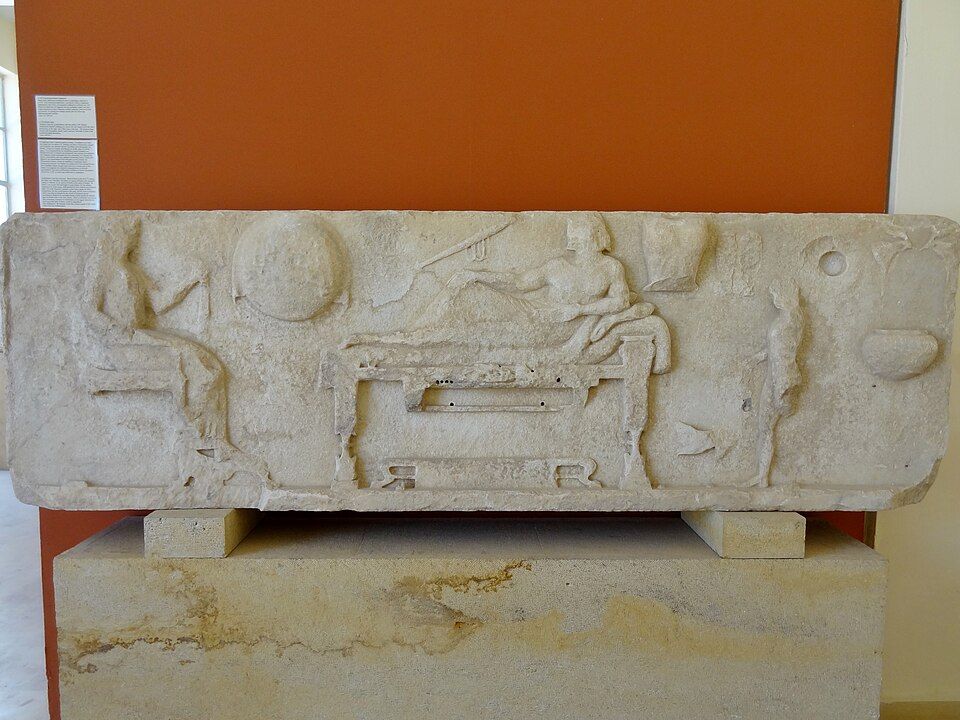
Poets and playwrightsElegy and iambus
Archilochus
Archilochus’ elegiacs, iambics, trochaics and epodes.
About · 1 of 3
Archilochus of Paros: what is known of his life
Archilochus was one of the Ionian poets of the archaic period.[1] Much of his life has been reconstructed from his own poems, and from a later tradition that read them as autobiography.
Date. He lived in the middle of the seventh century BC.[2] The date rests on his own verse. Fr. 122 W reacts to an eclipse of the sun, probably the total eclipse of 648 BC.[3] That eclipse fell on 6 April 648 BC. The mention of the Lydian king Gyges (680–644 BC) in fr. 19 agrees with the date.[4] Other accounts give simply “7th cent.”.[5] Strabo dated the elegist Callinus before Archilochus. Callinus speaks of Magnesia as prosperous, while Archilochus speaks of its destruction, after the Cimmerian invasion of about 645 BC.[6]
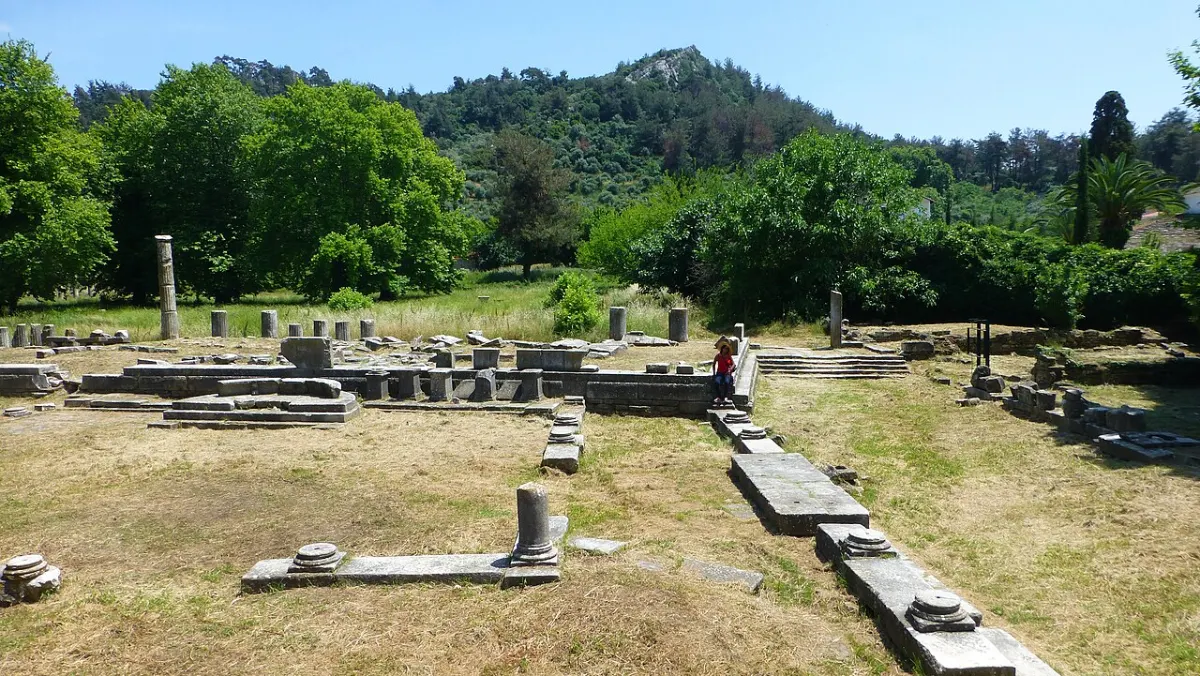
Paros and Thasos. He was born into an upper-class family on Paros. His father, Telesicles, took part in the Parian colonisation of Thasos. On Thasos Archilochus fought the Thracians, and the Naxians, who had their own interests on the island. Several fragments belong to these wars.[2]
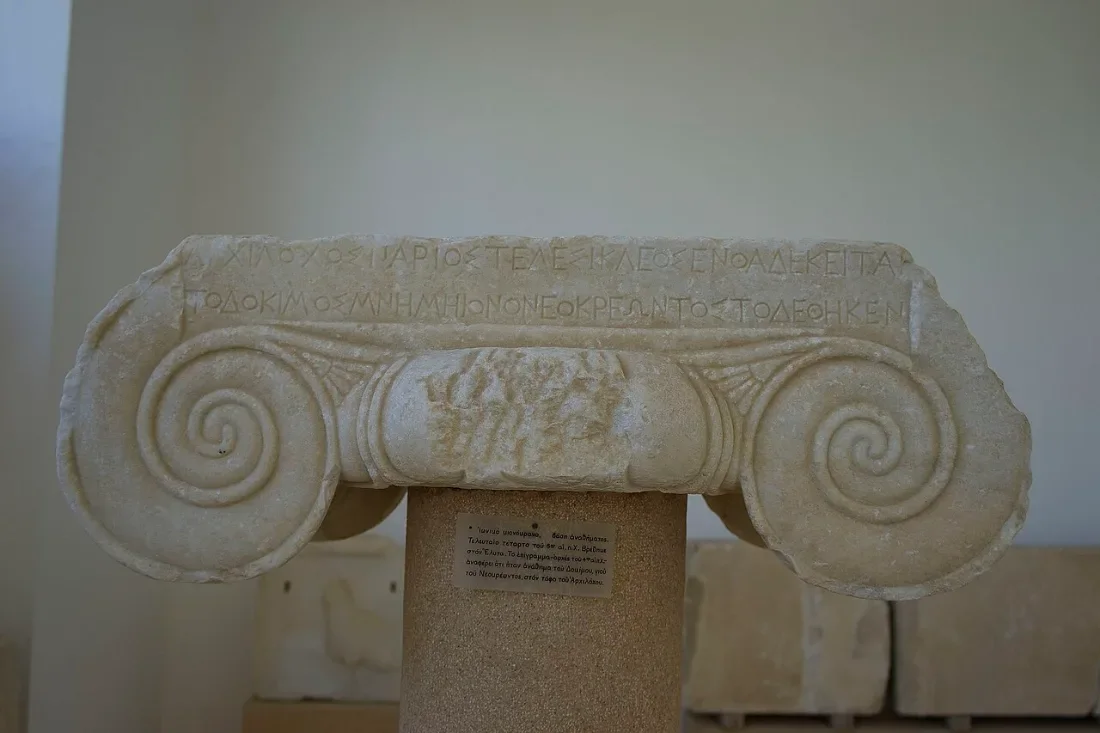
A Hellenistic inscription from a hero-shrine of Archilochus on Paros (SEG 15.517) gives further details. They are drawn partly from the poems and partly from local tradition, but the inscription is hagiographic: it honours a hero rather than recording facts.[3] Glaucus, a companion addressed in elegy, tetrameters and trimeters, was a real person. His tombstone has been found on Thasos.[7] Tradition said that Archilochus died in battle against the Naxians, and that the Parians gave him a public funeral.[8]
What the poems were taken to reveal. Aelian (VH 10.13) reports a complaint of the oligarch Critias. But for Archilochus’ own verses, Critias said, no one would know these things about him: that he was the son of a slave woman, Enipo; that he left Paros for Thasos through poverty; that he abused friends and enemies alike; that he was a seducer; and that he threw away his shield.[3]
This reading is both accurate and misleading. The shield poem is real. “Poverty” is a relative term, and it is compatible with elite birth. The mother’s name comes from enipē, “blame”. It suggests that Critias took literally a metaphorical claim by the poet to be a “son of Blame”.[9] The claim, Ἐνιποῦς υἱός (Enipous huios), “son of Enipo”, is in fr. 295(a).[10]
Lycambes and Neobule (disputed). The later story ran as follows. Lycambes promised his daughter Neobule to Archilochus and then broke the agreement. The poet’s attacks drove father and daughters to suicide.[11] The suicide is generally dismissed, since it recurs in the lives of other lampoonists and of Iambe herself.[12]
Whether the family existed is disputed. M. L. West first argued in 1974 for an “overall fictional approach”, and many have followed him. On this view the family are stock figures of a fictional series, performed as carnival entertainment at a festival of Demeter. Rösler, Carey, Bossi and others dissent.[13]
Carey argues that wherever the speaking “I” can be identified, it is Archilochus himself. The historical Glaucus makes it rash to turn the rest into figments. So Lycambes’ family should be taken as real, without accepting the poet’s version of the quarrel.[12] It has been suggested that “Lycambes” and “Neobule” are not historical names. But the marriage contract, the oath and the charge about the poet’s mother are hard to explain as pure fiction.[14]
Where he performed (disputed). Lennartz and Carey both place most of his poetry, iambi included, at the symposium of male companions. Carey allows that the secondary tradition points to some performance at festivals.[15] West’s alternative, which Lennartz rejects, is that “true iambos”, the sexual and bantering kind, belonged to ritual occasions.[16] By about 500 BC his poetry was being recited in public.[17]
Notes
- ^ West 1987, p. 31.
- ^ a b Lennartz 2022, p. 209.
- ^ a b c Carey 2009, p. 152.
- ^ Lennartz 2022, p. 209 n. 13.
- ^ Budelmann 2009, p. 386.
- ^ Bartol 2022, p. 224.
- ^ Lennartz 2022, p. 212 with n. 32; Carey 2009, p. 153.
- ^ Lennartz 2022, p. 213.
- ^ Carey 2009, pp. 152–153.
- ^ Lennartz 2022, p. 212.
- ^ Carey 2009, p. 153; Lennartz 2022, p. 209.
- ^ a b Carey 2009, p. 153.
- ^ Lennartz 2022, pp. 209 n. 16, 212.
- ^ Lennartz 2022, pp. 209–210.
- ^ Lennartz 2022, p. 209; Carey 2009, p. 160.
- ^ Lennartz 2022, p. 209 n. 10, p. 212.
- ^ Lennartz 2022, p. 209 n. 10.
About · 2 of 3
What he wrote, and how he was read
The word iambos (disputed). The word first occurs in a line of Archilochus, fr. 215 W: καί μ’ οὔτ’ ἰάμβων οὔτε τερπωλέων μέλει (kai m’ out’ iambōn oute terpōleōn melei), “iamboi and festivities are nothing to me”.[1] Whether it was originally a metrical term is disputed.
Carey argues that it was not. τερπωλή (terpōlē), “festivity”, which is coupled with it, is never metrical. In the classical period iambos is used of poems in different metres: Aristotle applies it to a poem in trochaic tetrameters as well as to one in trimeters. So the word more likely named content or occasion, with mockery as its mark (Carey notes that Rotstein reopens the metrical view).[2]
Lennartz reads the line as self-referential: a trimeter poem refusing the iamboi it delivers. On his view iambos comes to mean personal poetry, typically in three iambic metra. He grants, though, that most scholars define the genre by its content, abuse and vulgarity.[3] “Iambic” named Archilochus’ invective style in general (iambos connotes “missile”) as well as the metre.[4]
The Hellenistic standard edition called him ἰαμβοποιός (iambopoios), “poet of iambics”, and put that kind of poem first.[5] Hephaestion calls him “the iambic poet Archilochus”.[6]
Four kinds of verse. He composed many elegies, long and short.[7] He used the elegiac couplet, the iambic trimeter and the trochaic tetrameter catalectic. The Epodes, as they are called, of Archilochus and Hipponax are the model of the Ionians’ simple strophic poetry.[8]
The three iambic forms were delivered in different ways. The trimeters were spoken. The epodes were sung to the lyre; they are strophes of two or occasionally three verses, the last one shorter. The tetrameters, with their regular break, were accompanied by the aulos. Greek tradition kept all three apart from “song”, μέλος.[9] Parakatalogē was a half-sung delivery, and Archilochus himself was claimed as its inventor.[10] Each form has its own register. The epodes use high, periphrastic diction, and the trimeters coarse explicitness; the tetrameters stand in between.[11]
Range and manner. Iambos alone covers a broad range of themes, from sex and invective to war and the attack on a showy general in fr. 114. Direct speech is prominent.[12] In the Cologne Epode, fr. 196a, the speaker seduces a girl who is probably Neobule’s younger sister. The poem has a “perfect architecture”, and it is perhaps the subtlest invective that antiquity has left us.[13] Fable is a favourite device, as in the fox and the eagle of frr. 172–181, aimed at Lycambes.[14]
The founder of the mixed metres. Hephaestion credits him with a series of firsts. He was first with the ithyphallic, joined to a dactylic tetrameter.[15] He was first with the dactylic tetrameter catalectic, “in the epodes” (7.2). And he was first with the asynarteta, lines of two cola that cannot be fused (15.1–2).
Later poets handled his combinations differently. They used his regular caesura indifferently, and they avoided the spondees he admitted in mid-line (15.2–3). Cratinus’ line in the Archilochoi does not straightforwardly imitate his (15.7). The dactylic tetrameter + ithyphallic became common, and Callimachus was among its users (15.8).
Kiparsky calls him “the meticulous craftsman Archilochus”. He uses Archilochus’ dactylic-iambic forms as a “synchronic projection” of his theory that the hexameter had an iambic origin. In fr. 191, on this view, Archilochus reshapes a Homeric formula. In fr. 193 he splits ὀδύνῃσι πεπαρμένος (odynēisi peparmenos), “pierced with pains”, across a hexameter and an iambic dimeter.[16]
Reputation. Later antiquity chiefly remembered his invective, and Pindar singles it out (Pyth. 2.52–55).[17] He was called a “fighting dog” and a “wasp”.[18] Yet when iambos was revived in Hellenistic Alexandria, its figurehead was Hipponax, not Archilochus.[19]
Notes
- ^ Lennartz 2022, p. 207; Carey 2009, p. 149.
- ^ Carey 2009, pp. 149–150.
- ^ Lennartz 2022, pp. 207–208.
- ^ D’Angour 2022, p. 135.
- ^ Lennartz 2022, p. 207.
- ^ Hephaestion, Ench. 15.6.
- ^ Lennartz 2022, p. 209.
- ^ West 1987, pp. 24, 28, 31.
- ^ Lennartz 2022, p. 208.
- ^ D’Angour 2022, p. 134.
- ^ Lennartz 2022, pp. 211–212.
- ^ Carey 2009, pp. 154–155.
- ^ Lennartz 2022, pp. 210–211; Carey 2009, p. 156.
- ^ Carey 2009, pp. 158–159; Lennartz 2022, p. 210.
- ^ Hephaestion, Ench. 6.3, 7.4.
- ^ Kiparsky 2018, pp. 111–112, 120–121.
- ^ Carey 2009, pp. 150, 155.
- ^ Lennartz 2022, p. 212.
- ^ Lennartz 2022, pp. 215, 219.
About · 3 of 3
How the fragments reach us
Quotation. Until the papyri were found, Greek lyric was known only indirectly, apart from Pindar and the Theognidea. It was known through quotations in authors such as Athenaeus and Stobaeus, and in the scholia.[1]
For Archilochus the metrical handbooks are a major channel. Hephaestion’s Enchiridion quotes him repeatedly, almost always a single line chosen to illustrate a form. There is the dactylic tetrameter catalectic φαινόμενον κακὸν οἴκαδ’ ἄγεσθαι,[2] and the dactylic penthemimer ἐν δὲ Βατουσιάδης (4.2, 7.3). There is the trochaic trimeter catalectic Ζεῦ πάτερ, γάμον μὲν οὐκ ἐδαισάμην, “which some call an acephalous iambic” (6.2). There is the trochaic tetrameter catalectic Ἐρξίη πῆ δηῦτ’ ἄνολβος ἀθροΐζεται στρατός (6.2). And there are the asynarteta discussed under Metres (15.2–9).
| Line | Marks | Form and meaning |
|---|---|---|
| φαινόμενον κακὸν οἴκαδ’ ἄγεσθαιphainomenon kakon oikad’ agesthai | — ⏑ ⏑ — ⏑ ⏑ — ⏑ ⏑ — — | dactylic tetrameter catalectic:[2] “to bring home an evil plain to see” |
| ἐν δὲ Βατουσιάδηςen de Batousiadēs | — ⏑ ⏑ — ⏑ ⏑ — | dactylic penthemimer (4.2, 7.3): “and among them Batousiades” |
| Ζεῦ πάτερ, γάμον μὲν οὐκ ἐδαισάμηνZeu pater, gamon men ouk edaisamēn | — ⏑ — ⏑ — ⏑ — ⏑ — ⏑ — | trochaic trimeter catalectic (6.2): “Father Zeus, no wedding feast did I have” |
| Ἐρξίη πῆ δηῦτ’ ἄνολβος ἀθροΐζεται στρατόςErxiē pē dēut’ anolbos athroïzetai stratos | — ⏑ — — — ⏑ — ⏑ — ⏑ — ⏑ — ⏑ — | trochaic tetrameter catalectic (6.2): “Erxies, where is the hapless army massing yet again?” |
Colometry in antiquity. In some of these metres, ancient practice was to write two short cola as a single line, although they were in fact separate verses. The metricians who noticed that the parts were independent called such lines ἀσυνάρτητα (asynartēta), “disconnected”. They did not see that the break was simply period-end.[3] Hephaestion’s chapter on asynarteta[4] is the ancient side of that discussion. It also records that Archilochus’ successors did not reproduce his practice (15.2–3). Callimachus took over his dactylic tetrameter + ithyphallic (15.8). Callimachus also added the ithyphallic to an iambic trimeter (6.3).
Papyri. Papyrology has made Archilochus better understood than at any time since antiquity.[1] In Archilochus, an epode is a poem in which a longer line alternates with a shorter one. The First Cologne Epode, fr. 196a, was first published by Merkelbach and West in 1974.[5] It is in three-line stanzas of iambic trimeter, hemiepes and iambic dimeter.[6] In the ancient copy the hemiepes and the dimeter stand on one line, although they are separate verses.[3]
The elegy on Telephus, P.Oxy. 69.4708, was published by Obbink in 2005, with a second edition in 2006.[7] It consists of eight fragments. Only the first, twenty-eight lines long, is reasonably legible. The attribution does not rest on overlap with a known quotation, but it is judged sound.[8] Its mythological narrative was new: nothing like it had been known in early elegy before.[9]
An exemplum is a story from myth told to throw light on the present. It is disputed whether the Telephus elegy was a self-standing myth, or an exemplum within a poem on recent events, perhaps the Parian colonisation of Thasos. Bowie’s suggestion that it was performed in a sanctuary of Heracles on Thasos is disputed too.[10]
Two more papyri are P.Oxy. 4952, an ancient commentary on Archilochus’ trimeters, and P. Berlin 16002, an epodic poem that may belong with his poems on Lycambes (Lennartz, citing Ucciardello 2012).[11]
In the Theognidea. The Theognidea is the elegiac anthology transmitted under Theognis’ name. Among lines by other poets, it includes a piece (1123–1128) that Bowie thinks is probably by Archilochus.[12]
Editions and numbering. The standard edition of the elegiac and iambic poets is West’s Iambi et elegi Graeci (2nd edn, 1989–92). Gerber’s Loeb volumes of 1999 give text and translation.[13] Fragment numbers on this site are West’s. They are also the numbers used by Lennartz, who takes numbers and Greek text from West; by D’Angour (“fr. 120 W”); and by Kiparsky, who cites Gerber’s Loeb.[14] Swift’s commentary of 2019 is the recent commentary on Archilochus.[15]
The fragment numbers attached to Hephaestion’s quotations in the digitised Consbruch text belong to an older edition, Bergk’s Poetae Lyrici Graeci (cited there as PLG⁴). They differ from West’s. Kiparsky also cites Hipponax 115 as alternating hemiepes and iambic trimeter.[16]
Notes
- ^ a b Sampson 2022, p. 91.
- ^ a b Hephaestion, Ench. 7.2.
- ^ a b West 1987, p. 32.
- ^ Hephaestion, Ench. 15.
- ^ Lennartz 2022, p. 210 n. 21.
- ^ Kiparsky 2018, p. 107; D’Angour 2022, p. 135.
- ^ Bartol 2022, pp. 230–231 nn. 44, 48.
- ^ Aloni 2009, p. 179.
- ^ Sampson 2022, p. 113.
- ^ Bartol 2022, p. 231 with nn. 52–54.
- ^ Lennartz 2022, p. 210 nn. 17, 19.
- ^ Bowie 2022, pp. 310 n. 19, 311–312.
- ^ Budelmann 2009, p. 388.
- ^ Lennartz 2022, p. 207 n. 1; Kiparsky 2018, p. 107.
- ^ Lennartz 2022, p. 220.
- ^ Kiparsky 2018, p. 111; see the Iambographers page.
Trimeters (quoted by Hephaestion)
Archilochus: two catalectic trimeters (ap. Heph. 5.3, 6.2)
Synopsis
Archilochus lived in the middle of the seventh century BC. A poem of his reacts to an eclipse of the sun (fr. 122), usually taken to be the eclipse of 6 April 648 BC.[1] He was born into an upper-class family on Paros. He fought on Thasos, which the Parians had colonised, against Naxians and Thracians.[2] His poems were performed chiefly among male companions at the symposium.[3] West held that the bawdy kind of iambus belonged instead to ritual festivals, a view Lennartz rejects.[4] Greek tradition kept three forms of his iambus apart from song: spoken trimeters, epodes sung to the lyre, and tetrameters accompanied by the aulos.[5] His trimeters range from coarse sexual narrative and abuse to a tender welcome for a friend saved from the sea.[6]
Scanned here are the only two trimeters of his that Hephaestion’s handbook quotes. Both are a syllable short at the end. One is “Father Zeus, I never dined at a wedding feast”, his example of the trochaic trimeter catalectic.[7] The other is a line on the ravages of old age. Hephaestion calls it an iambic trimeter catalectic,[8] and West prints it as the second verse of an epode, fr. 188.[9]
Text and translation
The uninterrupted Greek with its English translation, line by line.
Show text and translation
Ζεῦ πάτερ, γάμον μὲν οὐκ ἐδαισάμην.
Archilochus · quoted by Hephaestion, Enchiridion 5.3 and 6.2 · text of Consbruch (1906), via First1KGreek
How to read each line
A guide to the Greek, syllables, pitch marks and quantities.
Show the reading key
- Above each line: the line as the edition prints it, each word placed over its own syllables. The main row: the same Greek divided into metrical syllables, each written as it is pronounced. A consonant that closes a syllable is written with it (λόθ | ρο); an elided word is closed up with the next vowel (ν’ἀ); a final consonant carried into the next word is set with a thin space (ς ἰ). Wider gaps mark word-ends.
- Above the syllables: the pitch of each syllable, from the accents. Under them: the quantity of each syllable as it falls in the line, then the transliteration, syllable by syllable, with accented syllables in capitals.
- Under each line: a line-for-line translation. In the right margin of the scansion: the line type, its scheme, and its analysis into cola.
Key to the labels
The names, patterns and symbols used beside this poem.
Show the labels and symbols
The labels in the right margin of the scansion below name the line, its scheme, the feet as the line realises them, and the caesurae and diaereses (the named word-ends) that fall in it. In the scheme ⏔ is a biceps, two shorts that may be contracted to one long; ⏕ is a long that may be resolved into two shorts; × is an anceps, long or short. A click on any syllable highlights its metron or colon, or, with the switch, its foot. The sources of the labels, with their page numbers, are given line by line under Prosody, line by line.
| Label | Name and shape | What it is |
|---|---|---|
| ah-3trc | Trochaic trimeter catalectic— ⏑ — × — ⏑ — × — ⏑ — | Hephaestion’s trochaic trimeter catalectic, “which some call an acephalous iambic”.[10] It is an iambic trimeter without its first syllable. |
| ah-pe | Penthemimer (pe)× — ⏑ — × | The first five positions of an iambic trimeter. With an ithyphallic it makes the iambic trimeter catalectic.[11] |
| ah-ith | Ithyphallic (ith)— ⏑ — ⏑ — — | Hephaestion’s trochaic dimeter brachycatalectic.[12] It is West’s ith.[13] |
The feet
Scansion
The two trimeters of Archilochus that Hephaestion quotes, one trochaic and one iambic, both catalectic: each syllable’s quantity and the reason for it, the metra, and the word-end that joins the cola.
Father Zeus, I never dined at a wedding feast.
your furrow; and […] of cruel old age is wearing you down.
Metre
- What survives in Hephaestion. West names Archilochus among the users of the elegiac couplet and of the iambic trimeter,[14] but Hephaestion’s handbook quotes no elegiac couplet and no full (acatalectic) iambic trimeter of his. The trimeters it does quote are both catalectic, and they are the two lines on this tab.
- Three kinds of iambos. Lennartz distinguishes the three forms of Archilochus’ iambos that Greek tradition kept apart from song: spoken iambic trimeters, epodes sung to the lyre, and trochaic tetrameters recited to the aulos, the reed pipe.[15] The second line here belongs to an epode.[16]
- Line 1: the trochaic trimeter catalectic. Hephaestion gives Ζεῦ πάτερ as his example of the trochaic trimeter catalectic, “which some call an acephalous iambic”:[10] it is an iambic trimeter without its first syllable, — ⏑ — × — ⏑ — × — ⏑ —. His rules for trochaic verse admit a spondee only in the even feet, so the anceps positions are the last syllables of the second and fourth feet, positions 4 and 8 here; in a catalectic line the next-to-last foot is mostly a trochee, sometimes a tribrach.[17] Both ancipitia are short in this line, so it runs in pure trochees.
- Line 2: the iambic trimeter catalectic. Hephaestion quotes ὄγμος κακοῦ as his example of the catalectic iambic trimeter.[18] West analyses the same line as a penthemimer and an ithyphallic, × — ⏑ — × | — ⏑ — ⏑ — — (pe | ith), and quotes it as the second verse of the epodic pair Archil. 188.1–2 West, after the dactylic tetrameter + ithyphallic οὐκέθ’ ὁμῶς θάλλεις.[13] The pair is scanned together on the Epodes tab.
- No resolution. In what survives of these pairings West finds no resolved long in the iambic cola;[13] Battezzato too calls resolution in iambic and trochaic verse very rare in the early iambic poets.[19] Neither line here resolves a long.
- Prosody. A syllable is long if its vowel is long or if it is closed by a consonant.[20] In the iambi of Archilochus a stop + liquid does not leave the syllable before it short, even at the start of a word;[21] neither line here has a stop + liquid after a short vowel. The one stop + nasal, γμ in ὄγμος, is a group that always makes position.[22] The last position of each line is at period-end and is indifferent.[23]
Prosody, line by line
Every syllable, with the reason for its length. Quantities are read from the vowel where the spelling shows it, from the consonants that follow (“position”), from the accent where it tells, and from the metre where nothing else does. Editors’ notes on the text follow in the boxed paragraphs.
- 1
Line 1 · Ζεῦ πάτερ, γάμον μὲν οὐκ ἐδαισάμην.
Ζεῦ πάτερ, γάμον μὲν οὐκ ἐδαισάμην.
Ζεῦπάτερ,γάμονμὲν οὐκἐδαισάμην.- 1 —Ζεῦεῦ is a diphthong, long by nature.
- 2 ⏑πάά is short by the metre (position 2 must be short).
- 3 —τερ,ε is short by nature; closed by ρ: long by position.
- 4 ⏑γάᾰ́ is short (its length is not shown by the ordinary spelling); the position is anceps.
- 5 —μονο is short by nature; closed by ν: long by position.
- 6 ⏑μὲὲ is short by nature.
- 7 —ν οὐκοὐ is a diphthong, long by nature; the first consonant belongs to the previous word and is carried over to this vowel.
- 8 ⏑ἐἐ is short by nature; the position is anceps.
- 9 —δαιαι is a diphthong, long by nature.
- 10 ⏑σάά is short by the metre (position 10 must be short).
- 11 ×μην.η is long by nature; closed by ν: long by position; the position is anceps.
Hephaestion quotes this line in Ench. 6.2; Consbruch’s text refers it to “Archil. 99”, a numbering older than West’s edition, and the sources used here do not give its number in West’s edition, so it is cited as “ap. Heph. 6.2”. The line has eleven positions, the length of an iambic trimeter less its first syllable, which is exactly how Hephaestion says some metricians described it.[10] The final ν of μὲν is carried into the next syllable before οὐκ, so μὲ is open and short in the trochaic short position 6.[20] The two anceps positions (γά at 4, with the short α of γάμος, marked with a breve in the input, and ἐ at 8) both hold short syllables, which Hephaestion’s rule allows.[17] There is no elision, hiatus or resolution.
Gerber prints the line as fr. 197, quoting Hephaestion 6.2, who calls it a catalectic trochaic trimeter that some call an acephalous iambic.[24]
- 2
Line 2 · ὄγμος κακοῦ δὲ γήραος καθαιρεῖ·
ὄγμος κακοῦ δὲ γήραος καθαιρεῖ·
ὄγμοςκακοῦδὲγήραοςκαθαιρεῖ·word-end after the penthemimer (join of the two cola).
The label in the margin, with its sources: pe | ith (West).
- 1 —ὄγὄ is short by nature; closed by γ: long by position; γμ is one of the four clusters (γμ, γν, δμ, δν) that never leave the syllable before them short;[22] the position is anceps.
- 2 —μοςο is short by nature; closed by ς: long by position.
- 3 ⏑καα is short by the metre (position 3 must be short).
- 4 —κοῦοῦ is a diphthong, long by nature.
- 5 ⏑δὲὲ is short by nature; the position is anceps.
- 6 —γήή is long by nature.
- 7 ⏑ραα is short by the metre (position 7 must be short).
- 8 —οςο is short by nature; closed by ς: long by position.
- 9 ⏑καα is short by the metre (position 9 must be short).
- 10 —θαιαι is a diphthong, long by nature.
- 11 ×ρεῖ·εῖ is a diphthong, long by nature; the position is anceps.
Hephaestion quotes this line in Ench. 5.3 (Consbruch’s reference “Archil. 116”); West quotes it as Archil. 188.2 West[13]. Hephaestion’s text has the nominative ὄγμος, “furrow”; West prints the dative ὄγμοις,[13] Snell’s emendation, which Carey accepts while calling the text uncertain[25] and which Lennartz quotes.[26] With the dative the word belongs to the verse before, which then says that the skin is already withering in furrows. The scansion is the same either way, since -μος before κ and -μοις with its diphthong are both long. The first anceps is long: ὄγ is closed by γ before μ, and γμ is one of the clusters that never leave the syllable before them short.[22] The second anceps is short: δὲ stands before the single consonant γ. Both lengths are allowed by West’s × — ⏑ — ×.[13] Word-end after δέ divides the penthemimer from the ithyphallic, the join West marks with |. In γήραος the short syllable ρα fills the trochaic short position 7, and the syllable ος is long because its ς is followed by the κ of καθαιρεῖ.[20]
Gerber prints a raised point after ὄγμος: the furrow belongs to κάρφεται in the line before, and a new clause begins with κακοῦ δέ.[27] The translation here follows that construction.
Notes
- ^ Lennartz 2022, p. 209 with n. 13; Carey 2009, p. 152.
- ^ Lennartz 2022, p. 209.
- ^ Lennartz 2022, p. 209; Carey 2009, p. 160.
- ^ Lennartz 2022, p. 209 n. 10, p. 212.
- ^ Lennartz 2022, p. 208.
- ^ Lennartz 2022, pp. 211–212.
- ^ Hephaestion, Ench. 6.2.
- ^ Hephaestion, Ench. 5.3.
- ^ West 1987, p. 31.
- ^ a b c Hephaestion, Ench. 6.2.
- ^ Hephaestion, Ench. 5.3; West 1987, p. 31.
- ^ Hephaestion, Ench. 6.3.
- ^ a b c d e f West 1987, p. 31.
- ^ West 1987, p. 24.
- ^ Lennartz 2022, pp. 207–208, 212.
- ^ See below.
- ^ a b Hephaestion, Ench. 6.1.
- ^ Hephaestion, Ench. 5.3.
- ^ Battezzato 2009, p. 136.
- ^ a b c West 1987, p. 12.
- ^ West 1987, p. 16 n. 7.
- ^ a b c West 1987, p. 16.
- ^ West 1987, p. 4.
- ^ Gerber 1999b, p. 216.
- ^ Carey 2009, p. 155 n. 14.
- ^ Lennartz 2022, p. 211.
- ^ Gerber 1999b, pp. 202–203.
Text and sources
- Text: Hephaestion, Enchiridion de metris, ed. M. Consbruch (Leipzig 1906), 5.3 and 6.2, Greek text from First1KGreek, licensed CC BY-SA 4.0.
- Rules: M. L. West, Introduction to Greek Metre (Oxford 1987), pp. 4–5 (period-end, catalexis), 12 and 16 with n. 7 (syllable length, stop + liquid), 24 (Archilochus’ metres), 31 (the epodic pe | ith; Archil. 188.1–2 in West’s text), checked against the page images.
- Hephaestion, Ench. 5.1–3 (the iambic metre), 6.1–2 (the trochaic metre).
- K. Lennartz, ‘Iambos’, in L. Swift (ed.), A Companion to Greek Lyric (Wiley 2022), ch. 14, pp. 207–208, 211–212.
- C. Carey, ‘Iambos’, and L. Battezzato, ‘Metre and music’, in F. Budelmann (ed.), The Cambridge Companion to Greek Lyric (Cambridge 2009), p. 155 with n. 14 (Archil. 188 W; ὄγμοις) and p. 136.
- D. E. Gerber, Greek Iambic Poetry from the Seventh to the Fifth Centuries BC (Loeb Classical Library 259, Cambridge, MA 1999), Archilochus frr. 197 (pp. 216–217) and 188 (pp. 202–203), compared: line 1 = fr. 197, line 2 = fr. 188.2 (Gerber’s numbers are West’s).
Quotations from copyrighted works are not covered by this page’s licence.
Tetrameters
Archilochus: a trochaic tetrameter (ap. Heph. 6.2)
Synopsis
Archilochus lived in the middle of the seventh century BC. A poem of his reacts to an eclipse of the sun (fr. 122), usually taken to be the eclipse of 6 April 648 BC.[1] He was born into an upper-class family on Paros. He fought on Thasos, which the Parians had colonised, against Naxians and Thracians.[2] His poems were performed chiefly among male companions at the symposium.[3] The trochaic tetrameter was accompanied by the aulos, and it had a regular break in the line. It stood between his spoken trimeters and his epodes sung to the lyre.[4] He used it for the wars on Paros and Thasos, in battle scenes where the speaker himself is one of the fighters. He also used it for ironic mockery, as of the tall, curly-haired captain of fr. 114.[5]
Scanned here is the one tetrameter of his that Hephaestion quotes, as the model of the metre: “Erxies, where is the hapless army massing yet again?”.[6]
Text and translation
The uninterrupted Greek with its English translation, line by line.
Show text and translation
Ἐρξίη πῆ δηῦτ’ ἄνολβος ἀθροΐζεται στρατός.
Archilochus · quoted by Hephaestion, Enchiridion 6.2 · text of Consbruch (1906), via First1KGreek
How to read each line
A guide to the Greek, syllables, pitch marks and quantities.
Show the reading key
- Above each line: the line as the edition prints it, each word placed over its own syllables. The main row: the same Greek divided into metrical syllables, each written as it is pronounced. A consonant that closes a syllable is written with it (λόθ | ρο); an elided word is closed up with the next vowel (ν’ἀ); a final consonant carried into the next word is set with a thin space (ς ἰ). Wider gaps mark word-ends.
- Above the syllables: the pitch of each syllable, from the accents. Under them: the quantity of each syllable as it falls in the line, then the transliteration, syllable by syllable, with accented syllables in capitals.
- Under each line: a line-for-line translation. In the right margin of the scansion: the line type, its scheme, and its analysis into cola.
Key to the labels
The names, patterns and symbols used beside this poem.
Show the labels and symbols
The labels in the right margin of the scansion below name the line, its scheme, the feet as the line realises them, and the caesurae and diaereses (the named word-ends) that fall in it. In the scheme ⏔ is a biceps, two shorts that may be contracted to one long; ⏕ is a long that may be resolved into two shorts; × is an anceps, long or short. A click on any syllable highlights its metron or colon, or, with the switch, its foot. The sources of the labels, with their page numbers, are given line by line under Prosody, line by line.
| Label | Name and shape | What it is |
|---|---|---|
| ah-4trc | Trochaic tetrameter catalectic— ⏑ — × — ⏑ — × — ⏑ — × — ⏑ — | Four trochaic metra, the last lacking its final syllable, with a regular word-end after the second metron.[7] Hephaestion quotes this line as his example of the catalectic tetrameter.[8] |
The feet
Scansion
The one trochaic tetrameter of Archilochus in Hephaestion’s handbook, scanned position by position, with its metra, the word-end at the middle of the line and the reason for every length.
Erxies, where is the hapless army massing yet again?
Metre
- The line. The trochaic tetrameter catalectic is four trochaic metra, — ⏑ — ×, the last lacking its final syllable. West prints the scheme — ⏑ — × — ⏑ — × | — ⏑ — × ⁝ — ⏑ — ‖, which looks like an iambic trimeter with — ⏑ — put in front of it;[9] his dotted bar after the third metron means “often word-end”.[10] West lists Archilochus and Solon as its early users,[7] and Hephaestion quotes this line as his example of the catalectic tetrameter.[8]
- Performance and themes. Lennartz describes the tetrameter as recited to the aulos (the reed pipe), with a regular break, and so as something between the spoken trimeters and the epodes sung to the lyre.[11] Archilochus treated the wars on Paros and Thasos in elegy and in tetrameters;[12] this line, about an army gathering, is of that kind.
- Caesura. The normal caesura is a word-end after the second metron, position 8.[13]
- Porson’s and Havet’s laws. In early iambus Porson’s law holds for the end of the tetrameter, as in the trimeter, and a corresponding rule (Havet’s law) for the beginning: the rhythm — ⏑ — — | is avoided in the first metron.[7]
- Resolution. The first six principes may be resolved.[7] This line resolves none of them.
- Prosody. In the iambi of Archilochus a stop + liquid makes position even at the beginning of a word.[14] The workbench therefore scans this line with the rule of epic, in which the cluster normally makes position, and the line needs it to.
Prosody, line by line
Every syllable, with the reason for its length. Quantities are read from the vowel where the spelling shows it, from the consonants that follow (“position”), from the accent where it tells, and from the metre where nothing else does. Editors’ notes on the text follow in the boxed paragraphs.
- 1
Line 1 · Ἐρξίη πῆ δηῦτ’ ἄνολβος ἀθροΐζεται στρατός.
Ἐρξίη πῆ δηῦτ’ ἄνολβος ἀθροΐζεται στρατός.
Ἐρξίηπῆδηῦτ’ἄνολβος ἀθροΐζεταιστρατός.diaeresis after the second metron.
The label in the margin, with its sources: (West 1987, p. 28).
- 1 —ἘρἘ is short by nature; closed by ρ: long by position.
- 2 ⏑ξίί is short by the metre (position 2 must be short).
- 3 —ηη is long by nature.
- 4 —πῆῆ is long by nature; the position is anceps.
- 5 —δηῦηῦ is a diphthong, long by nature.
- 6 ⏑τ’ἄἄ is short by the metre (position 6 must be short); the apostrophe marks an elided vowel; the consonant before it joins this syllable.
- 7 —νολο is short by nature; closed by λ: long by position.
- 8 ⏑βοο is short by nature; the position is anceps.
- 9 —ς ἀθἀ is a vowel of unknown length; closed by θ before a liquid: stop + liquid makes position, as it usually does in epic; the first consonant belongs to the previous word and is carried over to this vowel.
- 10 ⏑ροο is short by nature.
- 11 —ΐζ is a double consonant (two sounds) and closes the syllable: long by position.
- 12 ⏑ζεε is short by nature; the position is anceps.
- 13 —ταιαι is a diphthong, long by nature; the next word begins with στ: the syllable is closed before it: long by position.
- 14 ⏑στραα is short by the metre (position 14 must be short).
- 15 ×τός.ό is short by nature; closed by ς: long by position; the position is anceps.
Hephaestion quotes the line in Ench. 6.2; Consbruch’s text refers it to “Archil. 60”, a numbering older than West’s edition, and the sources used here do not give its number in West’s edition, so it is cited as “ap. Heph. 6.2”.
The word-end at the middle. The line has its caesura after position 8, between ἄνολβος and ἀθροΐζεται.[7] The final ς of ἄνολβος is carried into the next syllable (ς ἀθ), as syllabification across the word-boundary requires,[15] but the word still ends after the open syllable βο, and the margin reports the diaeresis there.
The anceps positions. Position 4 holds the long monosyllable πῆ, position 8 the short βο, position 12 the short ζε. A long in position 4 followed by word-end gives the rhythm — ⏑ — — | in the first metron, which Havet’s law restricts.[7] West states Havet’s law only as the counterpart of Porson’s law, and his statement of Porson’s law in the trimeter excepts the case in which one of the syllables is a monosyllable;[16] πῆ is a monosyllable. West does not say whether the same exception holds for Havet’s law, so whether this line strains the law is left open here. The short anceps at 12 satisfies Porson’s law at the end of the line.[7]
Elision and position. δηῦτ’ is elided before ἄνολβος, and its τ joins the next syllable.[17] In ἀθροΐζεται the short α stands before θρ, and the syllable is long because the stop + liquid makes position: in early poetry a stop + liquid normally leaves the syllable before it short only at the beginning of a word or in a word the verse could not otherwise admit, and the iambi of Archilochus avoid even that.[18] The ΐ is a separate syllable from the ο before it, as the diaeresis shows, and it is long because ζ counts as two consonants.[19] There is no resolution, hiatus or correption in the line.
Gerber prints the line as fr. 88, quoted by an anonymous treatise on metre for the trochee “that rolls along”; he writes ἁθροΐζεται with the rough breathing.[20]
Notes
- ^ Lennartz 2022, p. 209 with n. 13; Carey 2009, p. 152.
- ^ Lennartz 2022, p. 209.
- ^ Lennartz 2022, p. 209; Carey 2009, p. 160.
- ^ Lennartz 2022, pp. 208, 212.
- ^ Lennartz 2022, p. 213.
- ^ Hephaestion, Ench. 6.2.
- ^ a b c d e f g West 1987, p. 28.
- ^ a b Hephaestion, Ench. 6.2.
- ^ West 1987, p. 28; Battezzato 2009, pp. 136–137, likewise stresses how alike the two lines are.
- ^ West 1987, p. ix.
- ^ Lennartz 2022, pp. 208, 212.
- ^ Lennartz 2022, p. 213.
- ^ West 1987, p. 28; Battezzato 2009, p. 136, who calls it a diaeresis after the eighth element.
- ^ West 1987, p. 16 n. 7.
- ^ West 1987, p. 12.
- ^ West 1987, p. 25.
- ^ West 1987, pp. 12–13.
- ^ West 1987, p. 16 with n. 7.
- ^ West 1987, p. 12 n. 1.
- ^ Gerber 1999b, p. 128.
Text and sources
- Text: Hephaestion, Enchiridion de metris, ed. M. Consbruch (Leipzig 1906), 6.2, Greek text from First1KGreek, licensed CC BY-SA 4.0.
- Rules: M. L. West, Introduction to Greek Metre (Oxford 1987), pp. ix (symbols), 12–13 (syllables, elision), 16 with n. 7 (stop + liquid in Archilochus), 25 and 28 (Porson’s and Havet’s laws; the trochaic tetrameter), checked against the page images.
- K. Lennartz, ‘Iambos’, in L. Swift (ed.), A Companion to Greek Lyric (Wiley 2022), ch. 14, pp. 208, 212–213.
- Hephaestion, Ench. 6.1–2 (the trochaic metre).
- L. Battezzato, ‘Metre and music’, in F. Budelmann (ed.), The Cambridge Companion to Greek Lyric (Cambridge 2009), pp. 136–137.
- D. E. Gerber, Greek Iambic Poetry from the Seventh to the Fifth Centuries BC (Loeb Classical Library 259, Cambridge, MA 1999), Archilochus fr. 88 (pp. 128–129), the first of the trochaic tetrameters, frr. 88–167; same words.
Quotations from copyrighted works are not covered by this page’s licence.
Archilochus: the epodes, from Hephaestion
Synopsis
Archilochus lived in the middle of the seventh century BC. A poem of his reacts to an eclipse of the sun (fr. 122), usually taken to be the eclipse of 6 April 648 BC.[1] He was born into an upper-class family on Paros. He fought on Thasos, which the Parians had colonised, against Naxians and Thracians.[2] His poems were performed chiefly among male companions at the symposium.[3] His epodes are short strophes of two or occasionally three verses, the last one shorter, and they were sung to the lyre. Later metricians called them epōidoi.[4] The epodes of Archilochus and Hipponax are the model of the Ionians’ simple strophic poetry.[5] Their language is elevated, even when the subject is sex. So it is in the Cologne Epode (fr. 196a), first published in 1974. So it is too in frr. 188–191, which may look back on the poet’s affair with Neobule.[6]
Scanned here are the epodic lines that Hephaestion quotes. Among them are the address to Charilaus, son of Erasmon, with a joke to tell (fr. 168); the opening of fr. 188, on skin that no longer blooms; and “desire that slackens the limbs” (fr. 196).
Text and translation
The uninterrupted Greek with its English translation, line by line.
Show text and translation
Ἐρασμονίδη Χαρίλαε, χρῆμά τοι γελοῖον
Archilochus · epodic lines quoted by Hephaestion, Enchiridion 4–8 and 15 · text of Consbruch (1906), via First1KGreek
How to read each line
A guide to the Greek, syllables, pitch marks and quantities.
Show the reading key
- Above each line: the line as the edition prints it, each word placed over its own syllables. The main row: the same Greek divided into metrical syllables, each written as it is pronounced. A consonant that closes a syllable is written with it (λόθ | ρο); an elided word is closed up with the next vowel (ν’ἀ); a final consonant carried into the next word is set with a thin space (ς ἰ). Wider gaps mark word-ends.
- Above the syllables: the pitch of each syllable, from the accents. Under them: the quantity of each syllable as it falls in the line, then the transliteration, syllable by syllable, with accented syllables in capitals.
- Under each line: a line-for-line translation. In the right margin of the scansion: the line type, its scheme, and its analysis into cola.
Key to the labels
The names, patterns and symbols used beside this poem.
Show the labels and symbols
The labels in the right margin of the scansion below name the line, its scheme, the feet as the line realises them, and the caesurae and diaereses (the named word-ends) that fall in it. In the scheme ⏔ is a biceps, two shorts that may be contracted to one long; ⏕ is a long that may be resolved into two shorts; × is an anceps, long or short. A click on any syllable highlights its metron or colon, or, with the switch, its foot. The sources of the labels, with their page numbers, are given line by line under Prosody, line by line.
| Label | Name and shape | What it is |
|---|---|---|
| ah-xd | × D — (anceps + hemiepes + long)× — ⏔ — ⏑ ⏑ — — | The first period of the Erasmonides strophe (Archil. 168–71 West)[7]. It is an anceps, a hemiepes whose first biceps may be contracted, and a closing long. Period-end follows, so the last syllable is indifferent. Hephaestion calls the same colon an anapaestic hephthemimer.[8] |
| ah-ithr | Ithyphallic (ith), resolvable— ⏑ ⏕ ⏑ — — | The second period of the Erasmonides strophe. West marks its middle long as resolvable,[7] and μηδὲ διαλέγεσθαι resolves it. Hephaestion calls the colon a trochaic hemiolion, “the so-called ithyphallic”.[9] |
| ah-4da | Dactylic tetrameter (4da)— ⏔ — ⏔ — ⏔ — ⏑ × | Four dactylic feet. West prints the colon — ⏔ — ⏔ — ⏔ — ⏑ ⏑.[10] Hephaestion notes that its last syllable is indifferent, so that the last foot may be a cretic,[11] and this page follows him in marking the position ×. |
| ah-ith | Ithyphallic (ith)— ⏑ — ⏑ — — | Hephaestion’s trochaic dimeter brachycatalectic.[12] It is West’s ith.[10] |
| ah-pe | Penthemimer (pe)× — ⏑ — × | The first five positions of an iambic trimeter. With an ithyphallic it makes the iambic trimeter catalectic.[13] |
| ah-hem | Hemiepes (D)— ⏑ ⏑ — ⏑ ⏑ — | Hephaestion’s dactylic penthemimer.[14] In the epodes it admits no contraction or hiatus, but it does admit correption, at least in its first biceps.[7] |
| ah-2ia | Iambic dimeter (2ia)× — ⏑ — × — ⏑ — | Two iambic metra. In the epodes the dimeters show no resolution and appear to obey Porson’s law: the second anceps is not a long final syllable.[15] |
| ah-lek | Lekythion (lk)— ⏑ — × — ⏑ — | Hephaestion’s trochaic hephthemimer, “the Euripidean”.[16] It is West’s lekythion.[7] |
| ah-4dac | Dactylic tetrameter catalectic (4da∧)— ⏔ — ⏔ — ⏑ ⏑ — — | Hephaestion’s dactylic tetrameter catalectic in a disyllable, first used by Archilochus in the epodes.[17] It is West’s 4da∧.[10] |
The feet
| Foot and shape | Where |
|---|---|
| Anceps× | The free first position of the colon. |
| Dactyl (or spondee where the biceps may contract)— ⏑ ⏑ | One dactylic foot. |
| Long— | The single long that closes the colon. |
| Trochee— ⏑ | One trochaic foot. |
| Spondee (final syllable indifferent)— × | The close of the colon. |
| Last foot of the tetrameter— ⏑ × | A dactyl, or a cretic when the indifferent last syllable is long.[11] |
| Iambic metron× — ⏑ — | One iambic metron. |
| Catalectic close⏑ — — | The last metron of the catalectic trimeter lacks its final syllable. |
| Cretic close— ⏑ — | The close of the lekythion. |
Scansion
The short-colon lines of Archilochus that Hephaestion quotes, each scanned against the scheme West gives for its strophe: the anceps, the dactylic and iambic cola, the contractions and the one resolution, and the word-ends that join or separate the cola.
Charilaus, son of Erasmon,
here is something laughable
I will tell you, dearest by far of my friends,
and you will be glad to hear it.
Of the citizens, some were behind,
but the majority …
to be fond of him, loathsome as he is,
and not to converse with him
and about to lift up his hands to Demeter
Your tender skin has lost the bloom it had; already it is withering,
your furrow; and […] of cruel old age is wearing you down.
and the hard-climbing ravines of the mountains, the man I was when young.
Yet desire that slackens the limbs,
comrade, is mastering me.
of pure Demeter and the Maid,
revering the festival.
and among them, Batusiades
to take home an evident evil
Metre
- Epodic verse. For Lennartz the epodes are short strophes, mostly of two verses and sometimes three, ending in a shorter verse, performed to the lyre; later metricians named them epōidoi.[20] West treats the Epodes of Archilochus and Hipponax as a simple kind of strophic poetry: two or three periods to a strophe, the first as a rule a hexameter or an iambic trimeter, followed by briefer cola, dactylic or iambic; the shorter colon after the longer line was the epōidos (so also Battezzato 2009, p. 137, on the epode as a line added after a line)[10]. With the hexameter he lists the hemiepes D, the iambic dimeter 2ia, 2ia ‖ D and the dactylic tetrameter catalectic 4da∧; with the trimeter, D, 2ia, D ‖ 2ia and the ithyphallic; and one further form, 4da | ith ‖ pe | ith.[10]
- Two strophes that are not epodic. West adds two strophe-forms “just as simple”: the festival song for Demeter and Persephone ([Archil.] 322–3), an iambic dimeter with a lekythion, and the Erasmonides strophe (Archil. 168–71), × D — ‖ ith |||, “with some contraction and resolution”.[7]
- Asynarteta. Hephaestion calls a line made of two cola that cannot be joined into one rhythm an asynarteton and names Archilochus as the first to use them.[21] West explains that two short cola were by convention written as a single line though they were in fact separate verses, and that the “disconnection” between them is the break between periods.[7] West’s example is the Cologne Epode (fr. 196a.9–11), which he prints with the trimeter on one line and the hemiepes and the dimeter together on the next: τοσαῦτ’ ἐφώνει· τὴν δ’ ἐγὼ‿ἀνταμει[βόμην· (3ia ‖) / Ἀμφιμεδοῦς θύγατερ, ἐσθλῆς τε καὶ [× — ⏑ — (D ‖ 2ia |||), in our rendering “So she spoke, and I answered her in turn: ‘Daughter of Amphimedo, a noble and […]’”. The brevis in longo at the end of θύγατερ, he points out, proves a period-end there.[7] This tab prints the cola on separate lines and scans each as a period of its own, so its last position is indifferent.[22]
- Rules. In these combinations the iambic cola show no resolution, the dimeters appear to obey Porson’s law, and the hemiepes admits correption but not contraction or hiatus.[15] Hephaestion adds that Archilochus kept the word-end between × D — and the ithyphallic throughout and admitted spondees in the first colon, both of which later poets handled differently,[23] and that the last syllable of the dactylic tetrameter before an ithyphallic is indifferent.[11]
- Prosody. A syllable is long if its vowel is long or if it is closed by a consonant, and ζ, ξ, ψ count as two consonants.[24] The stop + nasal combinations γμ and γν always make position.[25] Short final vowels are elided before a vowel.[26]
- Numbering. Consbruch’s references use a numbering older than West’s edition. A fragment number in West’s edition is given only where one of the sources used here gives it (Kiparsky 2018 cites Gerber’s edition)[27]; otherwise the line is cited by Hephaestion’s chapter.
- Editorial marks. Where a vowel’s length is known but not shown by the spelling, the input marks it so that the reason given for the syllable is the true one (the marks are not shown): Χαρίλᾱε (West’s own mark, p. 32), βήσσᾱς (accusative plural), λῡσιμελής,[28] and the short vowels of φιλέω, πανήγυρις, δυσπαίπαλος,[29] χρόα and ἐόντα (accusative endings) and δάμναται (Kiparsky’s scansion, 2018, p. 107).
Prosody, line by line
Every syllable, with the reason for its length. Quantities are read from the vowel where the spelling shows it, from the consonants that follow (“position”), from the accent where it tells, and from the metre where nothing else does. Editors’ notes on the text follow in the boxed paragraphs.
- 1
Line 1 · Ἐρασμονίδη Χαρίλαε,
Ἐρασμονίδη Χαρίλαε,
ἘρασμονίδηΧαρίλαε,The label in the margin, with its sources: × D — (West).
- 1 ⏑ἘἘ is short by nature; the position is anceps.
- 2 —ρασα is a vowel of unknown length; closed by σ: long by position.
- 3 ⏑μοο is short by nature; one of the two shorts of the biceps at position 3.
- 4 ⏑νίί is short by the metre (position 3 must be short); one of the two shorts of the biceps at position 3.
- 5 —δηη is long by nature.
- 6 ⏑Χαα is short by the metre (position 5 must be short).
- 7 ⏑ρίί is short by the metre (position 6 must be short).
- 8 —λαᾱ is long (its length is not shown by the ordinary spelling).
- 9 ×ε,ε is short by nature; the position is anceps.
Hephaestion quotes lines 1–2 as one asynartete line[9] and the first colon alone in Ench. 8.7, where he calls it an anapaestic hephthemimer whose first foot is an iamb (Ἐρασ-). West quotes lines 1–4 as his example of the strophe of Archil. 168–71 West[7]. The anceps is short (Ἐ), and the biceps of the hemiepes is not contracted (μο νι). The α of Χαρίλαε fills the long position 7; West marks it long (Χαρίλᾱε, 1987, p. 32), and so does the input. The last position of × D — is a long, and the short ε that fills it at period-end is brevis in longo.[22]
- 2
Line 2 · χρῆμά τοι γελοῖον
χρῆμά τοι γελοῖον
χρῆμάτοιγελοῖονThe label in the margin, with its sources: ith (West).
- 1 —χρῆῆ is long by nature.
- 2 ⏑μάά is short by the accent rule: circumflex on the penult requires a short final syllable.
- 3 —τοιοι is a diphthong, long by nature.
- 4 ⏑γεε is short by nature.
- 5 —λοῖοῖ is a diphthong, long by nature.
- 6 ×ονο is short by nature; closed by ν: long by position; the position is anceps.
A pure ithyphallic. The ά of χρῆμα is short, as the circumflex on the penultimate shows. The final syllable is at the end of the strophe and indifferent.[22]
- 3
Line 3 · ἐρέ‿ω πολὺ φίλταθ’ ἑταίρων,
ἐρέ‿ω πολὺ φίλταθ’ ἑταίρων,
ἐρέ‿ωπολὺφίλταθ’ἑταίρων,The label in the margin, with its sources: × D — (West).
- 1 ⏑ἐἐ is short by nature; the position is anceps.
- 2 —ρέ‿ωέω is two vowels of one word pronounced together as one long syllable (synizesis).
- 3 ⏑ποο is short by nature; one of the two shorts of the biceps at position 3.
- 4 ⏑λὺὺ is short by the metre (position 3 must be short); one of the two shorts of the biceps at position 3.
- 5 —φίλί is a vowel of unknown length; closed by λ: long by position.
- 6 ⏑ταα is short by the metre (position 5 must be short).
- 7 ⏑θ’ἑἑ is short by nature; the apostrophe marks an elided vowel; the consonant before it joins this syllable.
- 8 —ταίαί is a diphthong, long by nature.
- 9 ×ρων,ω is long by nature; closed by ν: long by position; the position is anceps.
Hephaestion quotes this colon in Ench. 8.7 and, with line 4, in Ench. 15.6. He explains that ἐρέω only seems to begin with an anapaest: by synecphonesis -έω is one syllable, so the first foot is an iamb.[30] West counts synecphonesis within the word as frequent where the first vowel is ε[31] and prints the tie under -έω himself;[7] the input marks it with a tie. The workbench calls the merging of two vowels of one word synizesis, one of the names West gives for synecphonesis.[32] φίλταθ’ is elided before ἑταίρων, and its θ joins the next syllable, the rough breathing not being a consonant.[33]
- 4
Line 4 · τέρψεαι δ’ ἀκούων.
τέρψεαι δ’ ἀκούων.
τέρψεαιδ’ἀκούων.The label in the margin, with its sources: ith (West).
- 1 —τέρέ is short by nature; closed by ρ: long by position.
- 2 ⏑ψεε is short by nature.
- 3 —αιαι is a diphthong, long by nature.
- 4 ⏑δ’ἀἀ is short by the metre (position 4 must be short); the apostrophe marks an elided vowel; the consonant before it joins this syllable.
- 5 —κούού is a diphthong, long by nature.
- 6 ×ων.ω is long by nature; closed by ν: long by position; the position is anceps.
- 5
Line 5 · ἀστῶν δ’ οἱ μὲν κατ’ ὄπισθεν
ἀστῶν δ’ οἱ μὲν κατ’ ὄπισθεν
ἀστῶνδ’οἱμὲνκατ’ὄπισθενThe label in the margin, with its sources: × D — (West).
- 1 —ἀσἀ is a vowel of unknown length; closed by σ: long by position; the position is anceps.
- 2 —τῶνῶ is long by nature; closed by ν: long by position.
- 3 —δ’οἱοἱ is a diphthong, long by nature; the apostrophe marks an elided vowel; the consonant before it joins this syllable; a single long contracts the two shorts of the biceps at position 3.
- 4 —μὲνὲ is short by nature; closed by ν: long by position.
- 5 ⏑καα is short by the metre (position 5 must be short).
- 6 ⏑τ’ὄὄ is short by nature; the apostrophe marks an elided vowel; the consonant before it joins this syllable.
- 7 —πισι is a vowel of unknown length; closed by σ: long by position.
- 8 ×θενε is short by nature; closed by ν: long by position; the position is anceps.
Hephaestion quotes lines 5–6 as one line to show that Archilochus admitted spondees in the first colon,[9] and the first colon again in Ench. 15.5, where ἀστῶν δ’ οἱ is a molossus (three longs). In West’s terms the anceps is long (ἀσ) and the biceps is contracted (δ’ οἱ), the contraction West notes in this strophe.[7] δ’ and κατ’ are elided.[26]
Gerber writes κατόπισθεν as one word.[35]
- 6
Line 6 · ἦσαν· οἱ δὲ πολλοί·
ἦσαν· οἱ δὲ πολλοί·
ἦσα·ν οἱδὲπολλοί·The label in the margin, with its sources: ith (West).
- 1 —ἦἦ is long by nature.
- 2 ⏑σα·α is short by the accent rule: circumflex on the penult requires a short final syllable.
- 3 —ν οἱοἱ is a diphthong, long by nature; the first consonant belongs to the previous word and is carried over to this vowel.
- 4 ⏑δὲὲ is short by nature.
- 5 —πολο is short by nature; closed by λ: long by position.
- 6 ×λοί·οί is a diphthong, long by nature; the position is anceps.
The ν of ἦσαν is carried into the next syllable across the punctuation, since the period is syllabified as one continuous stretch of language.[34] A pure ithyphallic.
- 7
Line 7 · φιλέ‿ειν στυγνόν περ ἐόντα,
φιλέ‿ειν στυγνόν περ ἐόντα,
φιλέ‿εινστυγνόνπερ ἐόντα,The label in the margin, with its sources: × D — (West).
- 1 ⏑φιῐ is short (its length is not shown by the ordinary spelling); the position is anceps.
- 2 —λέ‿εινέει is two vowels of one word pronounced together as one long syllable (synizesis); closed by ν: long by position.
- 3 —στυγυ is a vowel of unknown length; closed by γ: long by position; γν is one of the four clusters (γμ, γν, δμ, δν) that never leave the syllable before them short;[25] a single long contracts the two shorts of the biceps at position 3.
- 4 —νόνό is short by nature; closed by ν: long by position.
- 5 ⏑πεε is short by nature.
- 6 ⏑ρ ἐἐ is short by nature; the first consonant belongs to the previous word and is carried over to this vowel.
- 7 —όνό is short by nature; closed by ν: long by position.
- 8 ×τα,ᾰ is short (its length is not shown by the ordinary spelling); the position is anceps.
Hephaestion quotes this colon in Ench. 8.7 and, with line 8, in Ench. 15.6. As with ἐρέω in line 3, -έει- in φιλέειν is one syllable by synecphonesis (synizesis), so the first foot is an iamb and not an anapaest.[36] The anceps is short (φι, with the short ι of φιλέω marked with a breve in the input). The biceps is contracted (στυγ), closed by γ before ν, a combination that always makes position.[25] The ρ of περ is carried into the next syllable, and the short final α of ἐόντα at period-end is brevis in longo in West’s scheme, whose last position is a long.[37]
Gerber prints φιλεῖν, contracted, with Hephaestion’s φιλέειν in his source text; Hephaestion explains that the line can be read as an iamb by synecphonesis.[35]
- 8
Line 8 · μηδὲ διαλέγεσθαι
μηδὲ διαλέγεσθαι
μηδὲδιαλέγεσθαιThe label in the margin, with its sources: ith (West).
- 1 —μηη is long by nature.
- 2 ⏑δὲὲ is short by nature.
- 3 ⏑διι is short by the metre (position 3 must be short); with its neighbour it resolves the long of position 3 into two shorts.
- 4 ⏑αα is short by the metre (position 3 must be short); with its neighbour it resolves the long of position 3 into two shorts.
- 5 ⏑λέέ is short by nature.
- 6 —γεσε is short by nature; closed by σ: long by position.
- 7 ×θαιαι is a diphthong, long by nature; the position is anceps.
The one resolution in Hephaestion’s quotations: δια- fills the third position of the ithyphallic with two shorts, the long West marks as resolvable in this strophe.[7] Both shorts belong to one word.
- 9
Line 9 · Δήμητρί τε χεῖρας ἀνέξων
Δήμητρί τε χεῖρας ἀνέξων
Δήμητρίτεχεῖρας ἀνέξωνThe label in the margin, with its sources: × D — (West).
- 1 —Δήή is long by nature; the position is anceps.
- 2 —μηη is long by nature.
- 3 ⏑τρίί is short by the accent rule: acute on the antepenult requires a short final syllable; one of the two shorts of the biceps at position 3.
- 4 ⏑τεε is short by nature; one of the two shorts of the biceps at position 3.
- 5 —χεῖεῖ is a diphthong, long by nature.
- 6 ⏑ραα is short by the accent rule: circumflex on the penult requires a short final syllable.
- 7 ⏑ς ἀἀ is short by the metre (position 6 must be short); the first consonant belongs to the previous word and is carried over to this vowel.
- 8 —νέέ is short by nature; ξ is a double consonant (two sounds) and closes the syllable: long by position.
- 9 ×ξωνω is long by nature; closed by ν: long by position; the position is anceps.
Hephaestion quotes this colon alone, as an example of a first foot that is a spondee (Δήμη-) in his anapaestic analysis;[38] in West’s terms the anceps is long. The ithyphallic that followed is not quoted. νέ is long because ξ counts as two consonants;[39] the ς of χεῖρας is carried into the next syllable.
- 10
Line 10 · οὐκέθ’ ὁμῶς θάλλεις ἁπαλὸν χρόα· κάρφεται γὰρ ἤδη·
οὐκέθ’ ὁμῶς θάλλεις ἁπαλὸν χρόα· κάρφεται γὰρ ἤδη·
οὐκέθ’ὁμῶςθάλλειςἁπαλὸνχρόα·κάρφεταιγὰρ ἤδη·word-end at the join of the two cola.
The label in the margin, with its sources: 4da | ith (West); last of 4da indifferent (Heph. 15.8).
- 1 —οὐοὐ is a diphthong, long by nature.
- 2 ⏑κέέ is short by nature; one of the two shorts of the biceps at position 2.
- 3 ⏑θ’ὁὁ is short by nature; the apostrophe marks an elided vowel; the consonant before it joins this syllable; one of the two shorts of the biceps at position 2.
- 4 —μῶςῶ is long by nature; closed by ς: long by position.
- 5 —θάλά is a vowel of unknown length; closed by λ: long by position; a single long contracts the two shorts of the biceps at position 4.
- 6 —λειςει is a diphthong, long by nature.
- 7 ⏑ἁἁ is short by the metre (position 6 must be short); one of the two shorts of the biceps at position 6.
- 8 ⏑παα is short by the metre (position 6 must be short); one of the two shorts of the biceps at position 6.
- 9 —λὸνὸ is short by nature; closed by ν: long by position.
- 10 ⏑χρόό is short by nature.
- 11 ⏑α·ᾰ is short (its length is not shown by the ordinary spelling); the position is anceps.
- 12 —κάρά is a vowel of unknown length; closed by ρ: long by position.
- 13 ⏑φεε is short by nature.
- 14 —ταιαι is a diphthong, long by nature.
- 15 ⏑γὰὰ is short by the metre (position 13 must be short).
- 16 —ρ ἤἤ is long by nature; the first consonant belongs to the previous word and is carried over to this vowel.
- 17 ×δη·η is long by nature; the position is anceps.
Hephaestion quotes this line three times: as the first use of the ithyphallic, joined to a dactylic tetrameter,[12] as the tetrameter Archilochus made famous by putting it before the ithyphallic (7.4), and as his second Archilochian asynarteton (15.8). West quotes it with line 11 as Archil. 188.1–2 West, 4da | ith ‖ pe | ith.[10] His text differs from Hephaestion’s in two places: he accents the adjective ἅπαλον (read on the page image at 600 and 1600 dpi: rough breathing and acute on the first syllable) where Hephaestion has ἁπαλὸν, and he prints ὄγμοις in line 11.[40] Neither changes the scansion. Carey reads the poem as an attack on an unidentified woman, her face “furrowed” and “dried out” like chaff;[41] Lennartz suggests that hearers would have related it to Neobule.[42]
οὐκέθ’ is elided.[26] The first biceps is uncontracted (κέ θ’ὁ), the second contracted (θάλ), the third uncontracted (ἁ πα). West’s scheme ends the tetrameter — ⏑ ⏑;[10] Hephaestion calls its last syllable indifferent,[11] and this page marks the position ×. Here it holds the short final α of χρόα (accusative), marked with a breve in the input, and word-end follows it at the join of the cola. The ρ of γὰρ is carried before ἤδη, so γὰ is short.
- 11
Line 11 · ὄγμος κακοῦ δὲ γήραος καθαιρεῖ·
ὄγμος κακοῦ δὲ γήραος καθαιρεῖ·
ὄγμοςκακοῦδὲγήραοςκαθαιρεῖ·word-end after the penthemimer (join of the two cola).
The label in the margin, with its sources: pe | ith (West).
- 1 —ὄγὄ is short by nature; closed by γ: long by position; γμ is one of the four clusters (γμ, γν, δμ, δν) that never leave the syllable before them short;[25] the position is anceps.
- 2 —μοςο is short by nature; closed by ς: long by position.
- 3 ⏑καα is short by the metre (position 3 must be short).
- 4 —κοῦοῦ is a diphthong, long by nature.
- 5 ⏑δὲὲ is short by nature; the position is anceps.
- 6 —γήή is long by nature.
- 7 ⏑ραα is short by the metre (position 7 must be short).
- 8 —οςο is short by nature; closed by ς: long by position.
- 9 ⏑καα is short by the metre (position 9 must be short).
- 10 —θαιαι is a diphthong, long by nature.
- 11 ×ρεῖ·εῖ is a diphthong, long by nature; the position is anceps.
Hephaestion’s iambic trimeter catalectic,[43] West’s pe | ith, the second verse of Archil. 188 West[10]; it is scanned on its own on the Trimeters tab. Hephaestion has ὄγμος; West prints Snell’s emendation ὄγμοις, which Carey accepts as the text of an uncertain passage;[44] the scansion is the same. The first anceps is long, ὄγ being closed by γ before μ, which always makes position;[25] the second is short (δὲ). Word-end after δέ joins the penthemimer and the ithyphallic.
Gerber prints this line from the Cologne papyrus with a raised point after ὄγμος, so that the furrow belongs to κάρφεται in the line before and a new clause begins with κακοῦ δέ; the subject of καθαιρεῖ is not in the line.[45] The translation here follows that construction.
- 12
Line 12 · καὶ βήσσας ὀρέων δυσπαιπάλους οἷος ἦν ἐπ’ ἤβης.
καὶ βήσσας ὀρέων δυσπαιπάλους οἷος ἦν ἐπ’ ἤβης.
καὶβήσσαςὀρέωνδυσπαιπάλουςοἷος ἦνἐπ’ἤβης.word-end at the join of the two cola.
The label in the margin, with its sources: 4da | ith (West); last of 4da indifferent (Heph. 15.8).
- 1 —καὶαὶ is a diphthong, long by nature.
- 2 —βήσή is long by nature; closed by σ: long by position; a single long contracts the two shorts of the biceps at position 2.
- 3 —σαςᾱ is long (its length is not shown by the ordinary spelling).
- 4 ⏑ὀὀ is short by nature; one of the two shorts of the biceps at position 4.
- 5 ⏑ρέέ is short by nature; one of the two shorts of the biceps at position 4.
- 6 —ωνω is long by nature; closed by ν: long by position.
- 7 —δυσυ is a vowel of unknown length; closed by σ: long by position; a single long contracts the two shorts of the biceps at position 6.
- 8 —παιαι is a diphthong, long by nature.
- 9 ⏑πάᾰ́ is short (its length is not shown by the ordinary spelling).
- 10 —λουςου is a diphthong, long by nature; the position is anceps.
- 11 —οἷοἷ is a diphthong, long by nature.
- 12 ⏑οο is short by nature.
- 13 —ς ἦνἦ is long by nature; the first consonant belongs to the previous word and is carried over to this vowel.
- 14 ⏑ἐἐ is short by nature.
- 15 —π’ἤἤ is long by nature; the apostrophe marks an elided vowel; the consonant before it joins this syllable.
- 16 ×βης.η is long by nature; closed by ς: long by position; the position is anceps.
Hephaestion quotes this line to show that the last syllable of the tetrameter, being indifferent, may be long, so that the last foot becomes a cretic:[11] here δυσπαιπάλους ends — ⏑ — instead of the dactyl — ⏑ ⏑ of West’s scheme for this strophe.[10] It belongs to the same poem as lines 10–11: Lennartz translates it as Archil. 190 West, within the epode frr. 188–191.[42] ἦν may be first or third person; Lennartz takes it as the first. The first and third bicipitia are contracted (βήσ, δυσ). The accusative plural βήσσας (“glens”) has a long α and fills the long position 3; the α of δυσπαίπαλος is short.[28] ὀρέων has three syllables. The ς of οἷος is carried before ἦν, and ἐπ’ is elided before ἤβης.[46]
Gerber prints ἐφ’ ἥβης and gives ἐπ’ as a variant.[47]
- 13
Line 13 · ἀλλά μ’ ὁ λυσιμελής,
ἀλλά μ’ ὁ λυσιμελής,
ἀλλάμ’ὁλυσιμελής,The label in the margin, with its sources: D (West).
- 1 —ἀλἀ is a vowel of unknown length; closed by λ: long by position.
- 2 ⏑λάά is short by the metre (position 2 must be short).
- 3 ⏑μ’ὁὁ is short by nature; the apostrophe marks an elided vowel; the consonant before it joins this syllable.
- 4 —λυῡ is long (its length is not shown by the ordinary spelling).
- 5 ⏑σιι is short by the metre (position 5 must be short).
- 6 ⏑μεε is short by nature.
- 7 ×λής,ή is long by nature; closed by ς: long by position; the position is anceps.
Hephaestion quotes lines 13–14 as one line, his third Archilochian asynarteton, of a dactylic penthemimer and an iambic dimeter acatalectic.[48] Kiparsky cites it as Archil. 196 (from Gerber’s edition) and scans it – ⏑ ⏑, – ⏑ ⏑, –, × – ⏑ –, ⏑ – ⏑ –, noting the phrase boundary between the dactylic and the iambic parts; in the notation of Maas such a line is D | × E, a simple dactylo-epitrite form.[49] West lists D ‖ 2ia among the epodes to the trimeter.[10] The hemiepes is pure, as West says it is in the epodes;[7] λυ, with the long υ of λῡσιμελής,[28] fills the long position 4. μ’ is elided before ὁ.[26]
Gerber prints the line as one, ὦταῖρε.[50]
- 14
Line 14 · ὠταῖρε, δάμναται πόθος.
ὠταῖρε, δάμναται πόθος.
ὠταῖρε,δάμναταιπόθος.The label in the margin, with its sources: 2ia (West).
- 1 —ὠὠ is long by nature; the position is anceps.
- 2 —ταῖαῖ is a diphthong, long by nature.
- 3 ⏑ρε,ε is short by nature.
- 4 —δάμά is a vowel of unknown length; closed by μ: long by position.
- 5 ⏑ναᾰ is short (its length is not shown by the ordinary spelling); the position is anceps.
- 6 —ταιαι is a diphthong, long by nature.
- 7 ⏑πόό is short by nature.
- 8 ×θος.ο is short by nature; closed by ς: long by position; the position is anceps.
ὠταῖρε stands for ὦ ἑταῖρε, the two vowels run together into one long syllable (crasis, which West counts as a kind of synecphonesis, commonest after a monosyllable such as ὦ, 1987, pp. 14–15). The first anceps is long (ὠ). The second anceps (να) lies inside the word δάμναται, so Porson’s law, which the dimeters of the epodes seem to obey (no long final syllable in the second anceps)[7], is kept; Kiparsky scans the syllable short,[51] and the input marks it so.
- 15
Line 15 · Δήμητρος ἁγνῆς καὶ Κόρης
Δήμητρος ἁγνῆς καὶ Κόρης
Δήμητρος ἁγνῆςκαὶΚόρηςThe label in the margin, with its sources: 2ia (West).
- 1 —Δήή is long by nature; the position is anceps.
- 2 —μηη is long by nature.
- 3 ⏑τροο is short by nature.
- 4 —ς ἁγἁ is a vowel of unknown length; closed by γ: long by position; γν is one of the four clusters (γμ, γν, δμ, δν) that never leave the syllable before them short;[25] the first consonant belongs to the previous word and is carried over to this vowel.
- 5 —νῆςῆ is long by nature; closed by ς: long by position; the position is anceps.
- 6 —καὶαὶ is a diphthong, long by nature.
- 7 ⏑Κόό is short by nature.
- 8 ×ρηςη is long by nature; closed by ς: long by position; the position is anceps.
Hephaestion quotes lines 15–16 as one asynartete line, an iambic dimeter acatalectic with the trochaic hephthemimer “called the Euripidean”, from the Iobacchi attributed to Archilochus.[16] West prints the two cola, with the same text, as [Archil.] 322–3 West, a festival song for Demeter and Persephone, and notes that Porson’s law is broken here:[7] the second anceps is the long final syllable νῆς. The ς of Δήμητρος is carried before ἁγνῆς, whose ἁγ is closed by γ before ν, a combination that always makes position.[25]
Gerber prints these lines among the spurious fragments, as from the Iobacchi ascribed to Archilochus.[52]
- 16
Line 16 · τὴν πανήγυριν σέβων.
τὴν πανήγυριν σέβων.
τὴνπανήγυρινσέβων.The label in the margin, with its sources: lk (West).
- 1 —τὴνὴ is long by nature; closed by ν: long by position.
- 2 ⏑παα is short by the metre (position 2 must be short).
- 3 —νήή is long by nature.
- 4 ⏑γυῠ is short (its length is not shown by the ordinary spelling); the position is anceps.
- 5 —ρινι is a vowel of unknown length; closed by ν: long by position.
- 6 ⏑σέέ is short by nature.
- 7 ×βων.ω is long by nature; closed by ν: long by position; the position is anceps.
- 17
Line 17 · ἐν δὲ Βατουσιάδης
ἐν δὲ Βατουσιάδης
ἐνδὲΒατουσιάδηςThe label in the margin, with its sources: D (West).
- 1 —ἐνἐ is short by nature; closed by ν: long by position.
- 2 ⏑δὲὲ is short by nature.
- 3 ⏑Βαα is short by the metre (position 3 must be short).
- 4 —τουου is a diphthong, long by nature.
- 5 ⏑σιι is short by the metre (position 5 must be short).
- 6 ⏑άά is short by the metre (position 6 must be short).
- 7 ×δηςη is long by nature; closed by ς: long by position; the position is anceps.
Hephaestion quotes this colon twice: as a dactylic colon short of a full foot by two syllables, which he calls “catalectic in a syllable”, since its last syllable δης stands for a whole trisyllabic foot,[53] and as the dactylic penthemimer that Archilochus used in an epode.[14] The sources used here do not give its number in West’s edition, so it is cited as “ap. Heph. 4.2, 7.3”. A pure hemiepes, without contraction.[7]
Gerber prints ἐν δὲ Βατουσιάδης as the second line of fr. 182, after εὖτε πρὸς ἆθλα δῆμος ἠθροΐζετο; Hesychius makes Batousiades the seer son of Selleus.[54]
- 18
Line 18 · φαινόμενον κακὸν οἴκαδ’ ἄγεσθαι
φαινόμενον κακὸν οἴκαδ’ ἄγεσθαι
φαινόμενονκακὸν οἴκαδ’ἄγεσθαιThe label in the margin, with its sources: 4da∧ (West).
- 1 —φαιαι is a diphthong, long by nature.
- 2 ⏑νόό is short by nature; one of the two shorts of the biceps at position 2.
- 3 ⏑μεε is short by nature; one of the two shorts of the biceps at position 2.
- 4 —νονο is short by nature; closed by ν: long by position.
- 5 ⏑καα is short by the metre (position 4 must be short); one of the two shorts of the biceps at position 4.
- 6 ⏑κὸὸ is short by nature; one of the two shorts of the biceps at position 4.
- 7 —ν οἴοἴ is a diphthong, long by nature; the first consonant belongs to the previous word and is carried over to this vowel.
- 8 ⏑καα is short by the metre (position 6 must be short).
- 9 ⏑δ’ἄἄ is short by the metre (position 7 must be short); the apostrophe marks an elided vowel; the consonant before it joins this syllable.
- 10 —γεσε is short by nature; closed by σ: long by position.
- 11 ×θαιαι is a diphthong, long by nature; the position is anceps.
Hephaestion quotes this line as the dactylic tetrameter catalectic in a disyllable, which Archilochus was the first to use, in the epodes;[17] West lists the 4da∧ among the cola joined to the hexameter in the epodes.[10] The sources used here do not give its number in West’s edition. The ν of κακὸν is carried before οἴκαδ’, and οἴκαδ’ is elided before ἄγεσθαι.[46] All three bicipitia are uncontracted.
Notes
- ^ Lennartz 2022, p. 209 with n. 13; Carey 2009, p. 152.
- ^ Lennartz 2022, p. 209.
- ^ Lennartz 2022, p. 209; Carey 2009, p. 160.
- ^ Lennartz 2022, p. 208.
- ^ West 1987, p. 31.
- ^ Lennartz 2022, pp. 210–211 with n. 21.
- ^ a b c d e f g h i j k l m n o p West 1987, p. 32.
- ^ Hephaestion, Ench. 8.7, 15.2.
- ^ a b c Hephaestion, Ench. 15.2.
- ^ a b c d e f g h i j k West 1987, p. 31.
- ^ a b c d e Hephaestion, Ench. 15.8.
- ^ a b Hephaestion, Ench. 6.3.
- ^ Hephaestion, Ench. 5.3; West 1987, p. 31.
- ^ a b Hephaestion, Ench. 7.3.
- ^ a b West 1987, pp. 31–32.
- ^ a b Hephaestion, Ench. 15.16.
- ^ a b Hephaestion, Ench. 7.2.
- ^ West 1987, p. 31; Lennartz 2022, p. 211.
- ^ ap. Heph. 4.2, 7.2–3.
- ^ Lennartz 2022, p. 208.
- ^ Hephaestion, Ench. 15.1–2.
- ^ a b c West 1987, p. 4.
- ^ Hephaestion, Ench. 15.2–3.
- ^ West 1987, p. 12 with n. 1.
- ^ a b c d e f g West 1987, p. 16.
- ^ a b c d e West 1987, p. 13.
- ^ West 1987, Lennartz 2022, Carey 2009.
- ^ a b c d LSJ s.v.
- ^ LSJ s.vv.
- ^ Hephaestion, Ench. 8.7, 15.6.
- ^ West 1987, p. 15.
- ^ West 1987, p. 14.
- ^ West 1987, pp. 12 n. 1, 13.
- ^ a b West 1987, p. 12.
- ^ a b Gerber 1999b, p. 182.
- ^ Hephaestion, Ench. 15.6; West 1987, p. 15.
- ^ West 1987, pp. 4, 12, 32.
- ^ Hephaestion, Ench. 8.7.
- ^ West 1987, p. 12 n. 1.
- ^ See there.
- ^ Carey 2009, p. 155.
- ^ a b Lennartz 2022, p. 211.
- ^ Hephaestion, Ench. 5.3.
- ^ Carey 2009, p. 155 n. 14.
- ^ Gerber 1999b, pp. 202–203.
- ^ a b West 1987, pp. 12–13.
- ^ Gerber 1999b, p. 204.
- ^ Hephaestion, Ench. 15.9.
- ^ Kiparsky 2018, pp. 107–108.
- ^ Gerber 1999b, p. 210.
- ^ Kiparsky 2018, p. 107.
- ^ Gerber 1999b, p. 280.
- ^ Hephaestion, Ench. 4.2.
- ^ Gerber 1999b, p. 198.
Text and sources
- Text: Hephaestion, Enchiridion de metris, ed. M. Consbruch (Leipzig 1906), 4.2, 5.3, 6.3, 7.2–4, 8.7, 15.2–16, Greek text from First1KGreek, licensed CC BY-SA 4.0.
- Schemes: M. L. West, Introduction to Greek Metre (Oxford 1987), pp. 31–32 (read from the page images at 600 dpi); prosody pp. 4, 12–16.
- Fragment 196: P. Kiparsky, “Indo-European Origins of the Greek Hexameter”, in D. Gunkel and O. Hackstein (eds), Language and Meter (Leiden 2018), ch. 4, pp. 107–108.
- K. Lennartz, ‘Iambos’, in L. Swift (ed.), A Companion to Greek Lyric (Wiley 2022), ch. 14, pp. 208, 211 (the epodes; frr. 188–191 as one poem).
- C. Carey, ‘Iambos’, and L. Battezzato, ‘Metre and music’, in F. Budelmann (ed.), The Cambridge Companion to Greek Lyric (Cambridge 2009), p. 155 with n. 14 (fr. 188) and p. 137 (the epode).
- Quantities: LSJ (Perseus Digital Library, CC BY-SA), s.vv. λυσιμελής, φιλέω, πανήγυρις, δυσπαίπαλος.
- D. E. Gerber, Greek Iambic Poetry from the Seventh to the Fifth Centuries BC (Loeb Classical Library 259, Cambridge, MA 1999), Archilochus frr. 168 (pp. 180–181), 169–171 (pp. 182–183), 182 (p. 198), 188 (pp. 202–203), 190 (pp. 204–205), 195 (pp. 208–209), 196 (pp. 210–211) and [322] (pp. 280–281), compared. Concordance (Gerber = West): lines 1–4 = 168; 5–6 = 170; 7–8 = 171; 9 = 169; 10–11 = 188.1–2; 12 = 190; 13–14 = 196; 15–16 = [322]; 17 = 182.2; 18 = 195.
Quotations from copyrighted works are not covered by this page’s licence.


