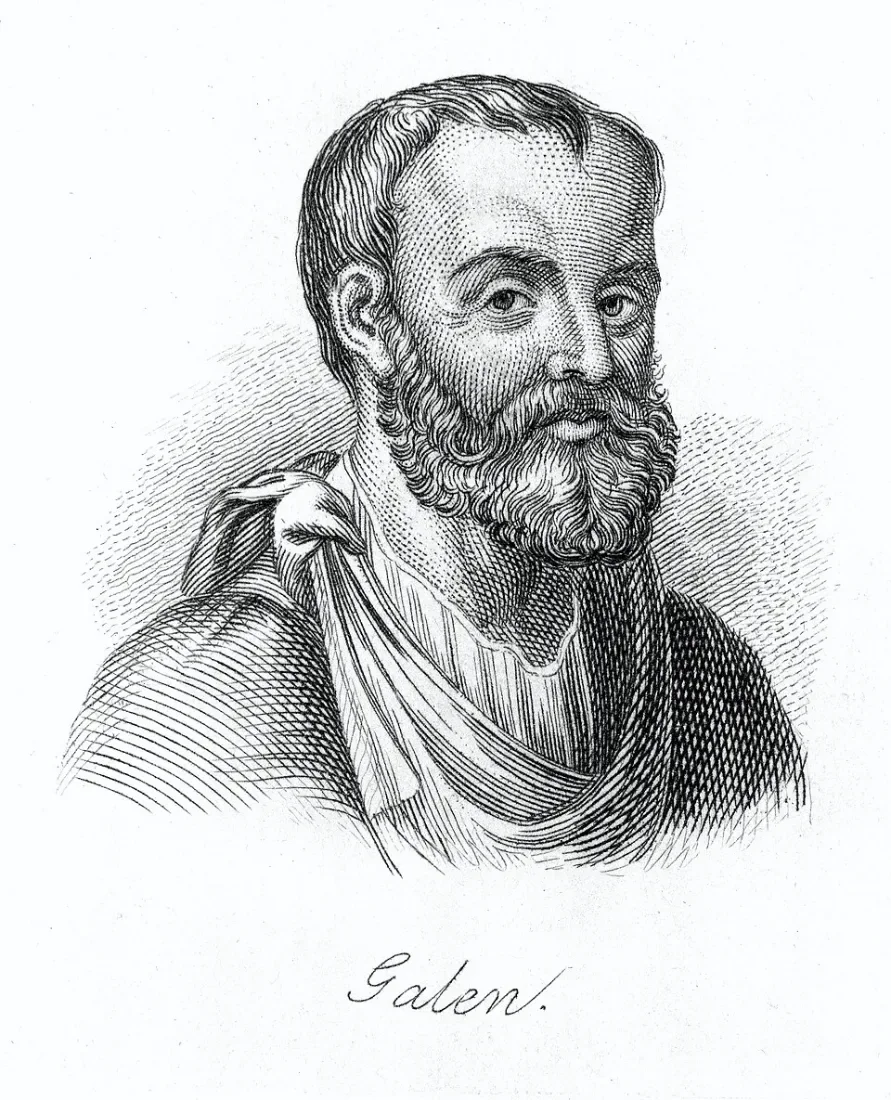
Poets and playwrightsImperial and late antique verse
Andromachus: the theriac poem (in Galen)
Andromachus’ elegiac recipe for theriac, preserved in Galen’s writings.
About
Works
- Synopsis
- Text and translation
- How to read each line
- Key to the labels
- Scansion
- Metre
- Prosody, line by line
- Notes
- Synopsis
- Text and translation
- How to read each line
- Key to the labels
- Scansion
- Metre
- Prosody, line by line
- Notes
About · 1 of 2
Andromachus and his poem on theriac
What we know comes from Galen. None of the metrical sources used on this site mentions Andromachus. Everything here is what Galen says about him, and the poem itself as Galen copies it. Galen calls him a Cretan (Ad Pisonem 1, Kühn XIV p. 211). He calls him “Nero’s chief physician” (ὁ Νέρωνος ἀρχιατρός, ho Nerōnos archiatros, De antidotis 1.1, Kühn XIV p. 2). He was told that Andromachus was a physician “of note, not long before our time”, who “was with Nero, to whom he addressed it” (Ad Pisonem 5, Kühn XIV p. 232). Andromachus is called “the Elder” because his son, Andromachus the Younger, wrote the same recipe again in prose (λέξει πεζῇ χρησάμενος, lexei pezēi chrēsamenos, “using prose diction”, De antidotis 1.7, Kühn XIV p. 42).
Theriac. Theriac was an antidote. Galen counts it among the antidotes that are taken by mouth against deadly drugs, venomous animals and illness alike. Andromachus made it from the older antidote of Mithridates. He added some ingredients, removed others, and mixed in a good quantity of viper flesh. That is why it works better against viper bites (De antidotis 1.1, Kühn XIV pp. 2–3).
The poem. Galen copies the poem in full in De antidotis 1.6, under the heading “Andromachus the Elder’s theriac from vipers, the one called Galene” (Kühn XIV pp. 32–42). In Kühn’s text it has 174 lines. An elegiac couplet is a hexameter followed by a pentameter, and the poem is made of 87 such couplets.[1] Here is the first.
Κλῦθι πολυθρονίου βριαρὸν σθένος ἀντιδότοιο,
Καῖσαρ, ἀδειμάντου δῶτορ ἐλευθερίης.
Klȳthi polythroniou briaron sthenos antidotoio, / Kaisar, adeimantou dōtor eleutheriēs.
“Hear the mighty strength of the many-herbed antidote, Caesar, giver of fearless freedom.”
A hexameter, then a pentameter, — ⏔ — ⏔ — ¦ — ⏑ ⏑ — ⏑ ⏑ —, with word-end at its middle, after ἀδειμάντου.
Andromachus, Galene 1–2, Kühn’s text, as on this site’s Galene 1–14 tab
synthetic ∿
The poem opens with a prayer to Nero: “Hear, Caesar … hear, Nero” (ll. 1–3). It names the antidote Γαλήνη (Galēnē), “Calm”, and lists the poisons, snakes and illnesses it defeats. It tells how to catch and cook the vipers and how to make the pastilles. It gives the ingredients with their weights. And it ends with a prayer to Paean (ll. 169–174).
Galen explains the name. A calm follows a storm, and so the drug brings health to the body after the storm of disease (Ad Pisonem 15, Kühn XIV pp. 270–271). He calls the poem “Andromachus’ elegiacs” (τὰ τοῦ Ἀνδρομάχου ἐλεγεῖα, ta tou Andromachou elegeia), and he finds them rather obscure (De antidotis 1.7, Kühn XIV p. 44).
Why a recipe in verse. Until the first century AD, elegiacs were often the choice for longer poems. This was above all true of poems that told legends below the heroic level, or gave medical recipes.[2] Galen gives a practical reason. Greek wrote numbers with letters of the alphabet: ιγ, for example, is 13 (ι = 10, γ = 3). In library copies, numbers written this way are easily corrupted. Five can be turned into nine, or ιγ altered by adding or taking away a stroke. So Galen writes the numbers out in words (De antidotis 1.5, Kühn XIV pp. 31–32). Then he goes on:
ἐπαινῶ δὲ καὶ τὸν Ἀνδρόμαχον ἐμμέτρως γράψαντα τὴν θηριακὴν αὐτὴν, ὥσπερ καὶ ἄλλοι τινές. ὁ δὲ Δαμοκράτης καὶ τἄλλα πάντα διὰ μέτρων ἔγραψεν ὀρθῶς ποιήσας. ἥκιστα γὰρ οἱ πανοῦργοι δύνανται διαστρέφειν αὐτά.
epainō de kai ton Andromachon emmetrōs grapsanta tēn thēriakēn autēn, hōsper kai alloi tines. ho de Damokratēs kai talla panta dia metrōn egrapsen orthōs poiēsas. hēkista gar hoi panourgoi dynantai diastrephein auta.
“I praise Andromachus, too, for writing the theriac itself in metre, as some others have also done. Damocrates wrote everything else in metre as well, and he was right: rogues are least able to tamper with it.”
(De antidotis 1.5, Kühn XIV p. 32)
Of Damocrates’ verse he adds that it “has the advantage not only of being easily remembered but also of keeping the proportions from being falsified” (De antidotis 1.15, Kühn XIV p. 89). A metre fixes the number of syllables and their lengths. So a weight written as a word cannot be changed without breaking the line. The works section Galene, 117–130 shows how the poem writes its weights: “two”, “twelve”, “half”, “as much”, “equal”. The verses Galen quotes from Damocrates (Kühn XIV p. 90) are not elegiacs but iambic trimeters. This metre was sometimes used to teach technical subjects in verse.[3]
One discrepancy. The son’s prose recipe agrees with the verse except in one figure: the verse gives 24 drachmas of long pepper, the prose 6 (De antidotis 1.7, Kühn XIV p. 44).
The tabs. The works tabs scan three passages of the poem from Kühn’s text. Kühn’s is not a critical edition of the poem. Of its 174 lines, this site’s workbench finds ten that do not scan as printed (ll. 17, 95, 115, 132, 137, 139, 141, 143, 144, 145), and none of them is used here. The To Piso tab explains what Galen’s treatise To Piso on Theriac contains. The works section Nicander in Galen’s To Piso scans the hexameters it quotes.
Notes
About · 2 of 2
Galen's To Piso on Theriac: prose with verse quoted in it
Prose, not verse. To Piso on Theriac (De theriaca ad Pisonem) is a prose treatise of about 85 pages in Kühn’s edition (Kühn XIV pp. 210–294). Galen dedicates it to Piso. He had found Piso one day reading a book on theriac by Andromachus, and he praises Piso’s care for his own son’s wound (ch. 1, Kühn XIV pp. 210–213). The treatise is not in elegiac couplets. But it is bound up with an elegiac poem, and it quotes verse in two places.
Andromachus’ poem: announced, not printed. At the end of chapter 5 Galen writes that Andromachus addressed the theriac to Nero, “writing it in verse (ἔπεσι, epesi), both its promise and its preparation”, and goes on:
καὶ παραθήσομαί γέ σοι αὐτὰ τὰ ἔπη … ἔστι δὲ τὰ ἔπη ταῦτα.
kai parathēsomai ge soi auta ta epē … esti de ta epē tauta.
“And I shall set out the verses themselves for you … The verses are these.”
(Ad Pisonem 5, Kühn XIV p. 232)
But in Kühn’s text, as First1KGreek transcribes it, only a heading follows on p. 233: “[The theriac from vipers of Andromachus the Elder, chief physician of Nero, called Galene]”. Then comes chapter 8, which begins “These verses, then, having been made not without talent by the man …” (Ad Pisonem 6–8, Kühn XIV p. 233). In chapter 15 Galen again speaks of the name Galene “in the verses set out above” (Kühn XIV p. 270).
The poem itself is printed in full in Galen’s De antidotis 1.6 (Kühn XIV pp. 32–42). It has 174 lines of elegiac couplets, and they are scanned on this page’s works tabs. The digital text does not show whether Kühn’s printed page carries a note at this point.
Nicander’s hexameters. The verse that To Piso does print is by Nicander of Colophon. It comes from his Theriaca, a didactic poem on venomous creatures in dactylic hexameters. All later epic, and the greater part of didactic poetry, was written in this metre.[1]
Nicander’s own date is disputed. The ancient lives put him anywhere from the court of Ptolemy II to that of Attalus III. Since Pasquali, many scholars have distinguished two Colophonian Nicanders. On that view the poet of the Theriaca belongs to the second half of the second century BC; otherwise he belongs to the middle or end of the third.[2] Galen quotes two passages:
- Seven lines on the viper’s mating and birth, “which the fine Nicander writes not without talent in his verses” (Ad Pisonem 9, Kühn XIV p. 239): the female bites off the male’s head, and the young, avenging their father, eat their way out of their mother. They are Nicander, Theriaca 128–134.
- Two lines on the female viper’s teeth, “as Nicander too says in these verses” (Ad Pisonem 13, Kühn XIV p. 265): the male shows two fangs, the female more. They are Theriaca 231–232.
Galen’s wording differs from Schneider’s text of Nicander in several words (for example τύχῃς for τύχοις, ὀδὰξ for ἀμὺξ, ἀναῤῥήξαντες for ἀναβρώσαντες, δύο for δύω). Eight of the nine lines scan as hexameters in Galen’s wording without difficulty. The first scans only if the υ of Galen’s πεφυγὼς is long; in Nicander’s πεφυζὼς the syllable is long by position. The works section Nicander in Galen’s To Piso scans the lines and lists the differences.
In short. To Piso is prose. But it promises the reader Andromachus’ elegiacs on theriac, and those elegiacs survive, complete, in another work of Galen’s. The only verse actually printed in To Piso is nine hexameters of Nicander.
| Where | What | Metre |
|---|---|---|
| Ad Pisonem 5–8 (Kühn XIV pp. 232–233) | Andromachus’ poem announced; heading only | elegiac couplets (text in De antidotis) |
| Ad Pisonem 9 (Kühn XIV p. 239) | Nicander, Theriaca 128–134 | dactylic hexameter |
| Ad Pisonem 13 (Kühn XIV p. 265) | Nicander, Theriaca 231–232 | dactylic hexameter |
| De antidotis 1.6 (Kühn XIV pp. 32–42) | Andromachus, Galene, 174 lines | elegiac couplets[3] |
Notes
Galene (theriac poem) · 1–14
Andromachus, Galene 1–14: the address to Nero
Synopsis
The Galene (“Calm”) is a recipe in verse for theriac. Theriac was an antidote, taken by mouth against deadly drugs, venomous creatures and illness alike. Galen (AD 129–c. 216)[1] tells its story in his De antidotis. Andromachus, he says, made it from the older antidote of Mithridates, changing some ingredients and adding viper flesh. Galen calls him Nero’s chief physician. In his To Piso he calls him a Cretan, and says that he addressed the poem to the emperor.[2] The poem survives only because Galen copied all 174 lines into the De antidotis.[3] He praises Andromachus for writing the recipe in metre. Figures written in verse cannot easily be tampered with, while the letter-numerals of library copies are easily altered.[4] The poem is in elegiac couplets. Until the first century AD this metre was often chosen for longer poems, especially those giving medical prescriptions.[5]
Scanned here are the opening lines. They address Nero and give the drink its name, Galene. Then they begin the list of poisons and venomous creatures against which it protects, from poppy juice, hemlock and aconite to the viper, the scorpion and the asp.
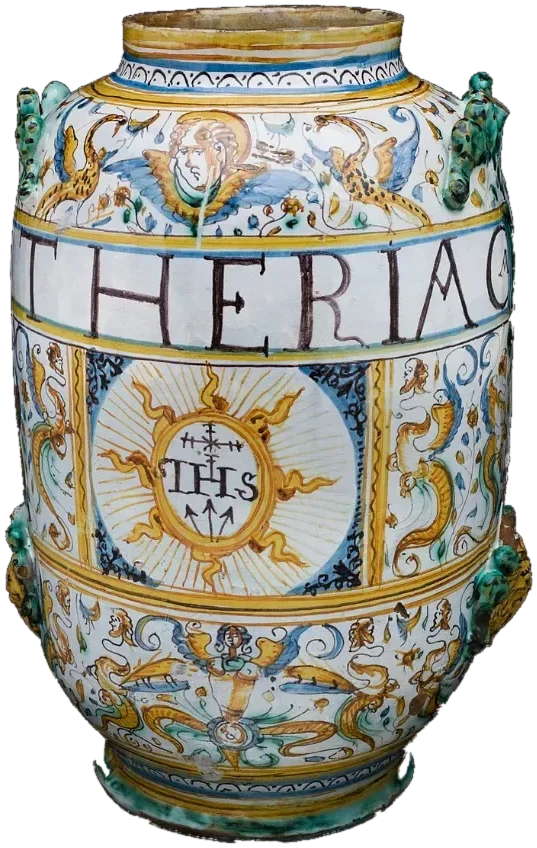
Text and translation
The uninterrupted Greek with its English translation, line by line.
Show text and translation
Κλῦθι πολυθρονίου βριαρὸν σθένος ἀντιδότοιο
Andromachus the Elder · the theriac poem (Galene) 1–14 · elegiac couplets · quoted by Galen, De antidotis 1.6 · text of Kühn (1827), via First1KGreek
How to read each line
A guide to the Greek, syllables, pitch marks and quantities.
Show the reading key
- Above each line: the line as the edition prints it, each word placed over its own syllables. The main row: the same Greek divided into metrical syllables, each written as it is pronounced. A consonant that closes a syllable is written with it (λόθ | ρο); an elided word is closed up with the next vowel (ν’ἀ); a final consonant carried into the next word is set with a thin space (ς ἰ). Wider gaps mark word-ends.
- Above the syllables: the pitch of each syllable, from the accents. Under them: the quantity of each syllable as it falls in the line, then the transliteration, syllable by syllable, with accented syllables in capitals.
- Under each line: a line-for-line translation. In the right margin of the scansion: the line type, its scheme, and its analysis into cola.
Key to the labels
The names, patterns and symbols used beside this poem.
Show the labels and symbols
The labels in the right margin of the scansion below name the line, its scheme, the feet as the line realises them, and the caesurae and diaereses (the named word-ends) that fall in it. In the scheme ⏔ is a biceps, two shorts that may be contracted to one long; ⏕ is a long that may be resolved into two shorts; × is an anceps, long or short. A click on any syllable highlights its metron or colon, or, with the switch, its foot.
| Label | Name and shape | What it is |
|---|---|---|
| hem1 | First hemiepes— ⏔ — ⏔ — | The first two and a half feet of the hexameter, up to the penthemimeral caesura; in the pentameter, its whole first half. |
| hem2 | Second half of the hexameter⏔ — ⏔ — ⏑ ⏑ — × | From the penthemimeral caesura to the line-end: the fifth foot is nearly always a dactyl, the sixth is — ×. |
| hemp | Second hemiepes— ⏑ ⏑ — ⏑ ⏑ × | The second half of the pentameter: two dactyls and a single syllable, with no contraction allowed. |
The traditional feet
| Foot and shape | Where |
|---|---|
| First foot: dactyl or spondee— ⏔ | Scheme positions 1–2. The biceps (⏑ ⏑) may be contracted to a single long, making a spondee. |
| Second foot: dactyl or spondee— ⏔ | Scheme positions 3–4. |
| Third foot: dactyl or spondee— ⏔ | Scheme positions 5–6. The penthemimeral caesura falls after its first syllable, the “trochaic” caesura after its second. |
| Fourth foot: dactyl or spondee— ⏔ | Scheme positions 7–8. Word-end at the end of this foot, when it is a dactyl, is the bucolic diaeresis (West’s “bucolic caesura”: word-end at the end of the fourth foot after an uncontracted biceps)[6]. |
| Fifth foot: dactyl— ⏑ ⏑ | Scheme positions 9–10. A spondee here (a “spondaic line”) is rare. |
| Sixth foot— × | Scheme positions 11–12: a long and the indifferent final syllable. |
| First foot: dactyl or spondee— ⏔ | Scheme positions 1–2 of the pentameter. |
| Second foot: dactyl or spondee— ⏔ | Scheme positions 3–4. |
| Half-foot before the diaeresis— | Scheme position 5: the long that closes the first hemiepes; word-end must follow. |
| Fourth foot: dactyl— ⏑ ⏑ | Scheme positions 6–8: no contraction after the diaeresis. |
| Fifth foot: dactyl— ⏑ ⏑ | Scheme positions 9–11. |
| Final syllable× | Scheme position 12. |
Scansion
The opening of Andromachus’ recipe for theriac in verse: an address to Nero and a catalogue of the poisons and venomous creatures the antidote defeats, in elegiac couplets of the first century AD.
Hear the mighty strength of the many-herbed antidote,
Caesar, giver of fearless freedom.
Hear, Nero: they call it the cheerful one, Galene (“Calm”),
fair-weathered, which pays no heed to the dark harbours.
Not even if someone, having squeezed the hateful handfuls of the poppy,
should hold his lip greedily over the loathsome cup;
not if he should fill his jaw with hemlock, nor with aconite;
nor has one had to complain of the juice of chilling henbane;
not hot thapsos, nor Medea’s drink of swift death,
nor the sores made by bloody blister-beetles;
not the blows of the gloomy viper and the painful horned viper,
and he would not care about the dry dipsas.
The scorpion does not arm itself against this drink, nor even
the asp, which holds the venom of laments past all contest.
Metre
- The couplet. A dactylic hexameter followed by a “pentameter”, two hemiepes divided by an invariable caesura, — ⏔ — ⏔ — | — ⏑ ⏑ — ⏑ ⏑ — ‖; contraction is limited to the first half of the pentameter, and the last position, at period-end, may hold a short syllable.[7] Galen himself calls the poem “elegiacs” (τὰ τοῦ Ἀνδρομάχου ἐλεγεῖα, De antidotis 1.7, Kühn XIV p. 44).
- Why elegiacs. West notes that until the first century AD elegiacs “are often chosen for longer poems, especially ones drawing on sub-heroic legend or containing medical prescriptions”.[8] Andromachus was physician to Nero (Galen, De antidotis 1.1, Kühn XIV p. 2), so the poem falls at the end of that period; Galen’s reason for valuing a recipe in verse is on the About tab.
- Measured against West’s account of later elegiacs. West describes Hellenistic elegiac versification as stricter than that of the hexameter poets: little hiatus; less correption in words that would scan without it; the feminine caesura of the hexameter preceded by a word whose own shape is — ⏑, not one that gets that shape through correption or elision; before the pentameter caesura, more and more often a syllable whose vowel is long or a diphthong; and pentameters increasingly avoiding an accented last syllable. From about AD 50, he adds, the rules are kept less strictly.[8] In these fourteen lines: there is no hiatus; the three correptions are of καί (ll. 9, 11), which before a vowel was almost automatically shortened,[9] and of the ending -ται in κορύσσεται (l. 13), a word that would not fit the verse unshortened at that point; the two feminine caesurae with a word ending there (μήκωνος l. 5, τήνδε l. 13) have words that end — ⏑ by nature; all seven pentameters have a long vowel or diphthong before the caesura (του, νῶν, νῆς, ροῦ, ρῶν, ρῆς, των); and none ends on an accented syllable (ἐλευθερίης, λιμένων, κύλικος, ὑοσκυάμου, κανθαρίδων, ἀλέγοι, γόων).
- Where Andromachus is freer than Callimachus. West lists the rhythms Callimachus avoids.[10] Line 9 has word-end after the fifth princeps after a word shaped — ⏑ ⏑ — (ὠκύμορον), which Callimachus avoids except with a word shaped ⏑ — ⏑ ⏑ —.[11] Lines 5 and 7 open with two and three spondees; there is no rule against that in West, but Nonnus later allows no more than one contracted biceps before the caesura.[12]
- Prosody. As in epic: a stop + liquid inside a word makes position (πολυθ-ρονίου, ἐπικ-λείουσι, ψυχ-ροῦ), while before a word that begins with one a short final vowel may stay short (ἀπεχθέα δράγματα, δράγματα θλίψας);[13] a final consonant before a vowel is carried into the next syllable.[14]
- The text. Galen’s text in Kühn’s edition (Leipzig 1827), as transcribed by First1KGreek; Kühn begins every line with a capital, as printed here. It is not a critical edition of the poem, and some later lines do not scan as Kühn prints them;[15] these fourteen all do. One editorial mark is added (not shown on the page): the long ι of ἀδηρῑ́των.[16] The line numbers count the lines of the poem in Kühn’s text.
Prosody, line by line
Every syllable, with the reason for its length. Quantities are read from the vowel where the spelling shows it, from the consonants that follow (“position”), from the accent where it tells, and from the metre where nothing else does. Editors’ notes on the text follow in the boxed paragraphs.
- 1
Line 1 · Κλῦθι πολυθρονίου βριαρὸν σθένος ἀντιδότοιο,
Κλῦθι πολυθρονίου βριαρὸν σθένος ἀντιδότοιο,
Κλῦθιπολυθρονίουβριαρὸνσθένος ἀντιδότοιο,dactyl, dactyl, dactyl, dactyl, dactyl, — ×; penthemimeral caesura; hephthemimeral caesura; bucolic diaeresis.
- 1 —Κλῦῦ carries a circumflex, so it is long.
- 2 ⏑θιι is short by the accent rule: circumflex on the penult requires a short final syllable; one of the two shorts of the biceps at position 2.
- 3 ⏑ποο is short by nature; one of the two shorts of the biceps at position 2.
- 4 —λυθυ is a vowel of unknown length; closed by θ before a liquid: stop + liquid makes position, as it usually does in epic.
- 5 ⏑ροο is short by nature; one of the two shorts of the biceps at position 4.
- 6 ⏑νίί is short by the metre (position 4 must be short); one of the two shorts of the biceps at position 4.
- 7 —ουου is a diphthong, long by nature; the next word begins with βρ: the syllable is closed before it: long by position.
- 8 ⏑βριι is short by the metre (position 6 must be short); one of the two shorts of the biceps at position 6.
- 9 ⏑αα is short by the metre (position 6 must be short); one of the two shorts of the biceps at position 6.
- 10 —ρὸνὸ is short by nature; closed by ν: long by position.
- 11 ⏑σθέέ is short by nature; one of the two shorts of the biceps at position 8.
- 12 ⏑νοο is short by nature; one of the two shorts of the biceps at position 8.
- 13 —ς ἀνἀ is a vowel of unknown length; closed by ν: long by position; the first consonant belongs to the previous word and is carried over to this vowel.
- 14 ⏑τιι is short by the metre (position 10 must be short); one of the two shorts of the biceps at position 10.
- 15 ⏑δόό is short by nature; one of the two shorts of the biceps at position 10.
- 16 —τοιοι is a diphthong, long by nature.
- 17 ×ο,ο is short by nature; the position is anceps.
Five dactyls. Penthemimeral caesura after πολυθρονίου, hephthemimeral after βριαρὸν, bucolic diaeresis after σθένος (the bucolic caesura, p. 78)[17]. Inside πολυθρονίου the stop + liquid θρ makes position (λυθ-ρο), the usual epic treatment.[9] The ς of σθένος is carried before ἀ-.[14] Κλῦθι, “hear”, is the opening of a prayer; it returns at the start of line 3.
- 2
Line 2 · Καῖσαρ, ἀδειμάντου δῶτορ ἐλευθερίης.
Καῖσαρ, ἀδειμάντου δῶτορ ἐλευθερίης.
Καῖσα,ρ ἀδειμάντουδῶτορ ἐλευθερίης.dactyl, spondee, —, dactyl, dactyl, ×; diaeresis after the first hemiepes.
- 1 —Καῖαῖ is a diphthong, long by nature.
- 2 ⏑σα,α is short by the accent rule: circumflex on the penult requires a short final syllable; one of the two shorts of the biceps at position 2.
- 3 ⏑ρ ἀἀ is short by the metre (position 2 must be short); the first consonant belongs to the previous word and is carried over to this vowel; one of the two shorts of the biceps at position 2.
- 4 —δειει is a diphthong, long by nature.
- 5 —μάνά is a vowel of unknown length; closed by ν: long by position; a single long contracts the two shorts of the biceps at position 4.
- 6 —τουου is a diphthong, long by nature.
- 7 —δῶῶ is long by nature.
- 8 ⏑τοο is short by nature.
- 9 ⏑ρ ἐἐ is short by nature; the first consonant belongs to the previous word and is carried over to this vowel.
- 10 —λευευ is a diphthong, long by nature.
- 11 ⏑θεε is short by nature.
- 12 ⏑ρίί is short by the metre (position 11 must be short).
- 13 ×ης.η is long by nature; closed by ς: long by position; the position is anceps.
- 3
Line 3 · Κλῦθι Νέρων, ἱλαρήν μιν ἐπικλείουσι, Γαλήνην,
Κλῦθι Νέρων, ἱλαρήν μιν ἐπικλείουσι, Γαλήνην,
ΚλῦθιΝέρων,ἱλαρήνμιν ἐπικλείουσι,Γαλήνην,dactyl, dactyl, dactyl, spondee, dactyl, — ×; penthemimeral caesura; caesura after the third trochee.
- 1 —Κλῦῦ carries a circumflex, so it is long.
- 2 ⏑θιι is short by the accent rule: circumflex on the penult requires a short final syllable; one of the two shorts of the biceps at position 2.
- 3 ⏑Νέέ is short by nature; one of the two shorts of the biceps at position 2.
- 4 —ρων,ω is long by nature.
- 5 ⏑ἱἱ is short by the metre (position 4 must be short); one of the two shorts of the biceps at position 4.
- 6 ⏑λαα is short by the metre (position 4 must be short); one of the two shorts of the biceps at position 4.
- 7 —ρήνή is long by nature; closed by ν: long by position.
- 8 ⏑μιι is short by the metre (position 6 must be short); one of the two shorts of the biceps at position 6.
- 9 ⏑ν ἐἐ is short by nature; the first consonant belongs to the previous word and is carried over to this vowel; one of the two shorts of the biceps at position 6.
- 10 —πικι is a vowel of unknown length; closed by κ before a liquid: stop + liquid makes position, as it usually does in epic.
- 11 —λείεί is a diphthong, long by nature; a single long contracts the two shorts of the biceps at position 8.
- 12 —ουου is a diphthong, long by nature.
- 13 ⏑σι,ι is short by the accent rule: acute on the antepenult requires a short final syllable; one of the two shorts of the biceps at position 10.
- 14 ⏑Γαα is short by the metre (position 10 must be short); one of the two shorts of the biceps at position 10.
- 15 —λήή is long by nature.
- 16 ×νην,η is long by nature; closed by ν: long by position; the position is anceps.
The scanner reports a penthemimeral caesura after ἱλαρήν and a feminine one after μιν; but the enclitic μιν counts with the word before it,[6] so the real word-end is at the feminine caesura, after ἱλαρήν μιν. The fourth biceps is contracted (λεί), with no word-end after it.[19] In ἐπικλείουσι the κλ makes position (ἐπικ-λεί)[9]. Γαλήνην, “Calm”, is the antidote’s name; Galen explains that Andromachus called it so because it brings health to the body as a calm comes after the storm of disease (Ad Pisonem 15, Kühn XIV pp. 270–271).
- 4
Line 4 · Εὔδιον, ἣ κυανῶν οὐκ ὄθεται λιμένων.
Εὔδιον, ἣ κυανῶν οὐκ ὄθεται λιμένων.
Εὔδιο,ν ἣκυανῶνοὐκὄθεταιλιμένων.dactyl, dactyl, —, dactyl, dactyl, ×; diaeresis after the first hemiepes.
- 1 —ΕὔΕὔ is a diphthong, long by nature.
- 2 ⏑διι is short by the metre (position 2 must be short); one of the two shorts of the biceps at position 2.
- 3 ⏑ο,ο is short by nature; one of the two shorts of the biceps at position 2.
- 4 —ν ἣἣ is long by nature; the first consonant belongs to the previous word and is carried over to this vowel.
- 5 ⏑κυυ is short by the metre (position 4 must be short); one of the two shorts of the biceps at position 4.
- 6 ⏑αα is short by the metre (position 4 must be short); one of the two shorts of the biceps at position 4.
- 7 —νῶνῶ is long by nature.
- 8 —οὐκοὐ is a diphthong, long by nature.
- 9 ⏑ὄὄ is short by nature.
- 10 ⏑θεε is short by nature.
- 11 —ταιαι is a diphthong, long by nature.
- 12 ⏑λιι is short by the metre (position 10 must be short).
- 13 ⏑μέέ is short by nature.
- 14 ×νων.ω is long by nature; closed by ν: long by position; the position is anceps.
- 5
Line 5 · Οὐδ' εἴ τις μήκωνος ἀπεχθέα δράγματα θλίψας,
Οὐδ' εἴ τις μήκωνος ἀπεχθέα δράγματα θλίψας,
Οὐδ’εἴτιςμήκωνος ἀπεχθέαδράγματαθλίψας,spondee, spondee, dactyl, dactyl, dactyl, — ×; caesura after the third trochee; bucolic diaeresis.
- 1 —ΟὐΟὐ is a diphthong, long by nature.
- 2 —δ’εἴεἴ is a diphthong, long by nature; the apostrophe marks an elided vowel; the consonant before it joins this syllable; a single long contracts the two shorts of the biceps at position 2.
- 3 —τιςι is a vowel of unknown length; closed by ς: long by position.
- 4 —μήή is long by nature; a single long contracts the two shorts of the biceps at position 4.
- 5 —κωω is long by nature.
- 6 ⏑νοο is short by nature; one of the two shorts of the biceps at position 6.
- 7 ⏑ς ἀἀ is short by the metre (position 6 must be short); the first consonant belongs to the previous word and is carried over to this vowel; one of the two shorts of the biceps at position 6.
- 8 —πεχε is short by nature; closed by χ: long by position.
- 9 ⏑θέέ is short by nature; one of the two shorts of the biceps at position 8.
- 10 ⏑αα is a vowel of unknown length; the next word begins with δρ, a stop + liquid that does not make position here, so the syllable stays short; one of the two shorts of the biceps at position 8.
- 11 —δράγά is a vowel of unknown length; closed by γ: long by position; γμ is one of the four clusters (γμ, γν, δμ, δν) that never leave the syllable before them short.[9]
- 12 ⏑μαα is short by the metre (position 10 must be short); one of the two shorts of the biceps at position 10.
- 13 ⏑ταα is short by the accent rule (the accent falls too far back for a long final syllable); the next word begins with θλ, a stop + liquid that does not make position here, so the syllable stays short; one of the two shorts of the biceps at position 10.
- 14 —θλίψ is a double consonant (two sounds) and closes the syllable: long by position.
- 15 ×ψας,α is a vowel of unknown length; closed by ς: long by position; the position is anceps.
Two spondees open the line (Οὐδ’ εἴ, τις μή). Οὐδ’ is elided;[21] τις is long because μ follows. Feminine caesura after μήκωνος, a word that ends — ⏑ by nature;[8] bucolic diaeresis after δράγματα. The final α of ἀπεχθέα stays short before the initial δρ of δράγματα, and that of δράγματα before the θλ of θλίψας;[9] inside δράγματα the γμ always makes position.[13]
- 6
Line 6 · Χανδὸν ὑπὲρ στυγνῆς χεῖλος ἔχοι κύλικος.
Χανδὸν ὑπὲρ στυγνῆς χεῖλος ἔχοι κύλικος.
Χανδὸν ὑπὲρστυγνῆςχεῖλος ἔχοικύλικος.dactyl, spondee, —, dactyl, dactyl, ×; diaeresis after the first hemiepes.
- 1 —Χανα is a vowel of unknown length; closed by ν: long by position.
- 2 ⏑δὸὸ is short by nature; one of the two shorts of the biceps at position 2.
- 3 ⏑ν ὑὑ is short by the metre (position 2 must be short); the first consonant belongs to the previous word and is carried over to this vowel; one of the two shorts of the biceps at position 2.
- 4 —πὲρὲ is short by nature; closed by ρ: long by position.
- 5 —στυγυ is a vowel of unknown length; closed by γ: long by position; γν is one of the four clusters (γμ, γν, δμ, δν) that never leave the syllable before them short;[9] a single long contracts the two shorts of the biceps at position 4.
- 6 —νῆςῆ is long by nature; closed by ς: long by position.
- 7 —χεῖεῖ is a diphthong, long by nature.
- 8 ⏑λοο is short by nature.
- 9 ⏑ς ἔἔ is short by nature; the first consonant belongs to the previous word and is carried over to this vowel.
- 10 —χοιοι is a diphthong, long by nature.
- 11 ⏑κύύ is short by the metre (position 10 must be short).
- 12 ⏑λιι is short by the metre (position 11 must be short).
- 13 ×κος.ο is short by nature; closed by ς: long by position; the position is anceps.
Second biceps contracted (στυγ: γν always makes position)[13]. The caesura follows στυγνῆς (long η). ὑπὲρ is long because στ follows. χανδόν, “with mouth wide open, greedily”.[22] The pentameter ends on κύλικος, accented on the antepenult.
- 7
Line 7 · Οὐδ' εἰ κωνείου πλήσοι γένυν, οὐκ ἀκονίτου,
Οὐδ' εἰ κωνείου πλήσοι γένυν, οὐκ ἀκονίτου,
Οὐδ’εἰκωνείουπλήσοιγένυ,ν οὐκἀκονίτου,spondee, spondee, spondee, dactyl, dactyl, — ×; penthemimeral caesura; hephthemimeral caesura; bucolic diaeresis.
- 1 —ΟὐΟὐ is a diphthong, long by nature.
- 2 —δ’εἰεἰ is a diphthong, long by nature; the apostrophe marks an elided vowel; the consonant before it joins this syllable; a single long contracts the two shorts of the biceps at position 2.
- 3 —κωω is long by nature.
- 4 —νείεί is a diphthong, long by nature; a single long contracts the two shorts of the biceps at position 4.
- 5 —ουου is a diphthong, long by nature; the next word begins with πλ: the syllable is closed before it: long by position.
- 6 —πλήή is long by nature; a single long contracts the two shorts of the biceps at position 6.
- 7 —σοιοι is a diphthong, long by nature.
- 8 ⏑γέέ is short by nature; one of the two shorts of the biceps at position 8.
- 9 ⏑νυ,υ is short by the metre (position 8 must be short); one of the two shorts of the biceps at position 8.
- 10 —ν οὐκοὐ is a diphthong, long by nature; the first consonant belongs to the previous word and is carried over to this vowel.
- 11 ⏑ἀἀ is short by the metre (position 10 must be short); one of the two shorts of the biceps at position 10.
- 12 ⏑κοο is short by nature; one of the two shorts of the biceps at position 10.
- 13 —νίί is long by the metre (position 11 must be long).
- 14 ×του,ου is a diphthong, long by nature; the position is anceps.
- 8
Line 8 · Μέμψατο δ' οὐ ψυχροῦ χυλὸν ὑοσκυάμου.
Μέμψατο δ' οὐ ψυχροῦ χυλὸν ὑοσκυάμου.
Μέμψατοδ’οὐψυχροῦχυλὸν ὑοσκυάμου.dactyl, spondee, —, dactyl, dactyl, ×; diaeresis after the first hemiepes.
- 1 —Μέμέ is short by nature; closed by μ: long by position.
- 2 ⏑ψαα is short by the metre (position 2 must be short); one of the two shorts of the biceps at position 2.
- 3 ⏑τοο is short by nature; one of the two shorts of the biceps at position 2.
- 4 —δ’οὐοὐ is a diphthong, long by nature; the next word begins with the double consonant ψ: the syllable is closed before it: long by position; the apostrophe marks an elided vowel; the consonant before it joins this syllable.
- 5 —ψυχυ is a vowel of unknown length; closed by χ before a liquid: stop + liquid makes position, as it usually does in epic; a single long contracts the two shorts of the biceps at position 4.
- 6 —ροῦοῦ is a diphthong, long by nature.
- 7 —χυυ is long by the metre (position 6 must be long).
- 8 ⏑λὸὸ is short by nature.
- 9 ⏑ν ὑὑ is short by the metre (position 8 must be short); the first consonant belongs to the previous word and is carried over to this vowel.
- 10 —οσο is short by nature; closed by σ: long by position.
- 11 ⏑κυυ is short by the metre (position 10 must be short).
- 12 ⏑άά is short by the metre (position 11 must be short).
- 13 ×μου.ου is a diphthong, long by nature; the position is anceps.
- 9
Line 9 · Οὐ θερμὴν θάψον τε καὶ ὠκύμορον πόμα Μήδης,
Οὐ θερμὴν θάψον τε καὶ ὠκύμορον πόμα Μήδης,
ΟὐθερμὴνθάψοντεκαὶὠκύμορονπόμαΜήδης,spondee, spondee, dactyl, dactyl, dactyl, — ×; penthemimeral caesura; caesura after the third trochee.
- 1 —ΟὐΟὐ is a diphthong, long by nature.
- 2 —θερε is short by nature; closed by ρ: long by position; a single long contracts the two shorts of the biceps at position 2.
- 3 —μὴνὴ is long by nature; closed by ν: long by position.
- 4 —θάψ is a double consonant (two sounds) and closes the syllable: long by position; a single long contracts the two shorts of the biceps at position 4.
- 5 —ψονο is short by nature; closed by ν: long by position.
- 6 ⏑τεε is short by nature; one of the two shorts of the biceps at position 6.
- 7 ⏑καὶαὶ is a diphthong, long by nature; shortened before the vowel that begins the next word (epic correption), as the metre requires; one of the two shorts of the biceps at position 6.
- 8 —ὠὠ is long by nature.
- 9 ⏑κύύ is short by the metre (position 8 must be short); one of the two shorts of the biceps at position 8.
- 10 ⏑μοο is short by nature; one of the two shorts of the biceps at position 8.
- 11 —ρονο is short by nature; closed by ν: long by position.
- 12 ⏑πόό is short by nature; one of the two shorts of the biceps at position 10.
- 13 ⏑μαα is short by the metre (position 10 must be short); one of the two shorts of the biceps at position 10.
- 14 —Μήή is long by nature.
- 15 ×δης,η is long by nature; closed by ς: long by position; the position is anceps.
Two spondees (Οὐ θερ, μὴν θά). Penthemimeral word-end after θάψον; with the enclitic τε, which counts with it,[6] the word-group ends at the feminine position. καὶ is shortened before ὠ- (epic correption)[24], as καί before a vowel almost always is.[9] ὠκύμορον ends on the fifth princeps, a word-end Callimachus avoids except after a word shaped ⏑ — ⏑ ⏑ —.[11]
- 10
Line 10 · Οὐδὲ μὲν αἱμηρῶν ἕλκεα κανθαρίδων.
Οὐδὲ μὲν αἱμηρῶν ἕλκεα κανθαρίδων.
Οὐδὲμὲν αἱμηρῶνἕλκεακανθαρίδων.dactyl, spondee, —, dactyl, dactyl, ×; diaeresis after the first hemiepes.
- 1 —ΟὐΟὐ is a diphthong, long by nature.
- 2 ⏑δὲὲ is short by nature; one of the two shorts of the biceps at position 2.
- 3 ⏑μὲὲ is short by nature; one of the two shorts of the biceps at position 2.
- 4 —ν αἱαἱ is a diphthong, long by nature; the first consonant belongs to the previous word and is carried over to this vowel.
- 5 —μηη is long by nature; a single long contracts the two shorts of the biceps at position 4.
- 6 —ρῶνῶ is long by nature.
- 7 —ἕλἕ is short by nature; closed by λ: long by position.
- 8 ⏑κεε is short by nature.
- 9 ⏑αα is short by the accent rule: acute on the antepenult requires a short final syllable.
- 10 —κανα is a vowel of unknown length; closed by ν: long by position.
- 11 ⏑θαα is short by the metre (position 10 must be short).
- 12 ⏑ρίί is short by the metre (position 11 must be short).
- 13 ×δων.ω is long by nature; closed by ν: long by position; the position is anceps.
Second biceps contracted (μη). The caesura follows αἱμηρῶν (long ω); the ν of μὲν is carried before αἱ-.[14] ἕλκεα keeps ε and α apart.
- 11
Line 11 · Οὐ ζοφερῆς ἔχιός τε καὶ ἀλγεινοῖο κεράστου
Οὐ ζοφερῆς ἔχιός τε καὶ ἀλγεινοῖο κεράστου
Οὐζοφερῆςἔχιόςτεκαὶἀλγεινοῖοκεράστουdactyl, dactyl, dactyl, spondee, dactyl, — ×; penthemimeral caesura; caesura after the third trochee.
- 1 —ΟὐΟὐ is a diphthong, long by nature; the next word begins with the double consonant ζ: the syllable is closed before it: long by position.
- 2 ⏑ζοο is short by nature; one of the two shorts of the biceps at position 2.
- 3 ⏑φεε is short by nature; one of the two shorts of the biceps at position 2.
- 4 —ρῆςῆ is long by nature.
- 5 ⏑ἔἔ is short by nature; one of the two shorts of the biceps at position 4.
- 6 ⏑χιι is short by the metre (position 4 must be short); one of the two shorts of the biceps at position 4.
- 7 —όςό is short by nature; closed by ς: long by position.
- 8 ⏑τεε is short by nature; one of the two shorts of the biceps at position 6.
- 9 ⏑καὶαὶ is a diphthong, long by nature; shortened before the vowel that begins the next word (epic correption), as the metre requires; one of the two shorts of the biceps at position 6.
- 10 —ἀλἀ is a vowel of unknown length; closed by λ: long by position.
- 11 —γειει is a diphthong, long by nature; a single long contracts the two shorts of the biceps at position 8.
- 12 —νοῖοῖ is a diphthong, long by nature.
- 13 ⏑οο is short by nature; one of the two shorts of the biceps at position 10.
- 14 ⏑κεε is short by nature; one of the two shorts of the biceps at position 10.
- 15 —ράσά is a vowel of unknown length; closed by σ: long by position.
- 16 ×τουου is a diphthong, long by nature; the position is anceps.
Penthemimeral word-end after ἔχιος, and with the enclitic τε the word-group ends at the feminine position;[6] ἔχιος takes a second accent from the enclitic. καὶ is shortened before ἀ- (epic correption, pp. 14, 16). The fourth biceps is contracted (γει of ἀλγεινοῖο) with no word-end after it.[19] The sentence runs on into the pentameter: τύμματα is the object of the line.
- 12
Line 12 · Τύμματα, καὶ ξηρῆς διψάδος οὐκ ἀλέγοι.
Τύμματα, καὶ ξηρῆς διψάδος οὐκ ἀλέγοι.
Τύμματα,καὶξηρῆςδιψάδος οὐκἀλέγοι.dactyl, spondee, —, dactyl, dactyl, ×; diaeresis after the first hemiepes.
- 1 —Τύμύ is a vowel of unknown length; closed by μ: long by position.
- 2 ⏑μαα is short by the metre (position 2 must be short); one of the two shorts of the biceps at position 2.
- 3 ⏑τα,α is short by the accent rule: acute on the antepenult requires a short final syllable; one of the two shorts of the biceps at position 2.
- 4 —καὶαὶ is a diphthong, long by nature; the next word begins with the double consonant ξ: the syllable is closed before it: long by position.
- 5 —ξηη is long by nature; a single long contracts the two shorts of the biceps at position 4.
- 6 —ρῆςῆ is long by nature; closed by ς: long by position.
- 7 —διψ is a double consonant (two sounds) and closes the syllable: long by position.
- 8 ⏑ψάά is short by the metre (position 7 must be short).
- 9 ⏑δοο is short by nature.
- 10 —ς οὐκοὐ is a diphthong, long by nature; the first consonant belongs to the previous word and is carried over to this vowel.
- 11 ⏑ἀἀ is short by the metre (position 10 must be short).
- 12 ⏑λέέ is short by nature.
- 13 ×γοι.οι is a diphthong, long by nature; the position is anceps.
- 13
Line 13 · Σκορπίος οὐκ ἐπὶ τήνδε κορύσσεται, οὐδὲ μὲν αὐτὴ
Σκορπίος οὐκ ἐπὶ τήνδε κορύσσεται, οὐδὲ μὲν αὐτὴ
Σκορπίος οὐκἐπὶτήνδεκορύσσεται,οὐδὲμὲν αὐτὴdactyl, dactyl, dactyl, dactyl, dactyl, — ×; caesura after the third trochee; bucolic diaeresis.
- 1 —Σκορο is short by nature; closed by ρ: long by position.
- 2 ⏑πίί is short by the metre (position 2 must be short); one of the two shorts of the biceps at position 2.
- 3 ⏑οο is short by nature; one of the two shorts of the biceps at position 2.
- 4 —ς οὐκοὐ is a diphthong, long by nature; the first consonant belongs to the previous word and is carried over to this vowel.
- 5 ⏑ἐἐ is short by nature; one of the two shorts of the biceps at position 4.
- 6 ⏑πὶὶ is short by the metre (position 4 must be short); one of the two shorts of the biceps at position 4.
- 7 —τήνή is long by nature; closed by ν: long by position.
- 8 ⏑δεε is short by nature; one of the two shorts of the biceps at position 6.
- 9 ⏑κοο is short by nature; one of the two shorts of the biceps at position 6.
- 10 —ρύσύ is a vowel of unknown length; closed by σ: long by position.
- 11 ⏑σεε is short by nature; one of the two shorts of the biceps at position 8.
- 12 ⏑ται,αι is a diphthong, long by nature; shortened before the vowel that begins the next word (epic correption), as the metre requires; one of the two shorts of the biceps at position 8.
- 13 —οὐοὐ is a diphthong, long by nature.
- 14 ⏑δὲὲ is short by nature; one of the two shorts of the biceps at position 10.
- 15 ⏑μὲὲ is short by nature; one of the two shorts of the biceps at position 10.
- 16 —ν αὐαὐ is a diphthong, long by nature; the first consonant belongs to the previous word and is carried over to this vowel.
- 17 ×τὴὴ is long by nature; the position is anceps.
- 14
Line 14 · Ἀσπὶς, ἀδηρίτων ἰὸν ἔχουσα γόων.
Ἀσπὶς, ἀδηρίτων ἰὸν ἔχουσα γόων.
Ἀσπὶ,ς ἀδηρίτωνἰὸν ἔχουσαγόων.dactyl, spondee, —, dactyl, dactyl, ×; diaeresis after the first hemiepes.
- 1 —ἈσἈ is a vowel of unknown length; closed by σ: long by position.
- 2 ⏑πὶ,ὶ is short by the metre (position 2 must be short); one of the two shorts of the biceps at position 2.
- 3 ⏑ς ἀἀ is short by the metre (position 2 must be short); the first consonant belongs to the previous word and is carried over to this vowel; one of the two shorts of the biceps at position 2.
- 4 —δηη is long by nature.
- 5 —ρίῑ́ is long (its length is not shown by the ordinary spelling); a single long contracts the two shorts of the biceps at position 4.
- 6 —τωνω is long by nature.
- 7 —ἰἰ is long by the metre (position 6 must be long).
- 8 ⏑ὸὸ is short by nature.
- 9 ⏑ν ἔἔ is short by nature; the first consonant belongs to the previous word and is carried over to this vowel.
- 10 —χουου is a diphthong, long by nature.
- 11 ⏑σαα is short by the accent rule: acute on the antepenult requires a short final syllable.
- 12 ⏑γόό is short by nature.
- 13 ×ων.ω is long by nature; closed by ν: long by position; the position is anceps.
The ι of ἀδηρίτων is long[26] and here a single long fills the contracted second biceps. The caesura follows ἀδηρίτων (long ω). The ι of ἰὸν fills the first princeps of the second half and is long by the metre. The pentameter ends on γόων, accented on the penult.
Notes
- ^ Johnston 2018, p. xi.
- ^ Kühn 1827, pp. 2–3, 211, 232.
- ^ Kühn 1827, pp. 32–42.
- ^ Kühn 1827, pp. 31–32.
- ^ West 1987, p. 80.
- ^ a b c d West 1987, p. 21.
- ^ West 1987, p. 24; Battezzato 2009, p. 138, on contraction avoided in the second half.
- ^ a b c d e West 1987, p. 80.
- ^ a b c d e f g h West 1987, p. 16.
- ^ West 1987, pp. 78–79.
- ^ a b West 1987, p. 79.
- ^ West 1987, p. 79; see the Nonnus page.
- ^ a b c West 1987, pp. 16–17.
- ^ a b c d e f g West 1987, p. 12.
- ^ See the About tab.
- ^ LSJ s.v. ἀδήριτος.
- ^ West 1987, p. 19.
- ^ West 1987, p. 24.
- ^ a b West 1987, pp. 20, 78.
- ^ LSJ s.v. ὄθομαι.
- ^ a b c West 1987, p. 13.
- ^ LSJ s.v.
- ^ West 1987, pp. 19, 78.
- ^ a b West 1987, p. 14.
- ^ West 1987, p. 10.
- ^ LSJ s.v. ἀδήριτος, which marks ῑ.
Text and sources
- Text: Galen, De antidotis 1.6, ed. C. G. Kühn, Claudii Galeni Opera Omnia XIV (Leipzig 1827), pp. 32–33, from First1KGreek (urn:cts:greekLit:tlg0057.tlg078.1st1K-grc1), licensed CC BY-SA 4.0 as stated in the TEI header.
- Galen, De antidotis 1.1, 1.7 (Kühn XIV pp. 2, 44) and De theriaca ad Pisonem 15 (Kühn XIV pp. 270–271, First1KGreek tlg0057.tlg079.1st1K-grc1), for the name, date and Galen’s word ἐλεγεῖα.
- Rules: M. L. West, Introduction to Greek Metre (Oxford 1987), pp. 10 (vowel length: diphthongs, accent), 12–17 (prosody), 19–21 (the hexameter, caesurae, contraction, appositives), 24 (the elegiac couplet), 78–80 (Hellenistic and later hexameter and elegiacs), checked against the page images (p. 20 from a photograph).
- L. Battezzato, ‘Metre and music’, in F. Budelmann (ed.), The Cambridge Companion to Greek Lyric (Cambridge 2009), p. 138 (the elegiac distich).
- LSJ (Liddell–Scott–Jones, 9th ed., 1940), s.vv. ἀδήριτος, ὄθομαι, χανδόν.
Quotations from copyrighted works are not covered by this page’s licence.
Galene (theriac poem) · 117–130
Andromachus, Galene 117–130: weights in verse
Synopsis
The Galene (“Calm”) is a recipe in verse for theriac. Theriac was an antidote, taken by mouth against deadly drugs, venomous creatures and illness alike. Galen (AD 129–c. 216)[1] tells its story in his De antidotis. Andromachus, he says, made it from the older antidote of Mithridates, changing some ingredients and adding viper flesh. Galen calls him Nero’s chief physician. In his To Piso he calls him a Cretan, and says that he addressed the poem to the emperor.[2] The poem survives only because Galen copied all 174 lines into the De antidotis.[3] He praises Andromachus for writing the recipe in metre. Figures written in verse cannot easily be tampered with, while the letter-numerals of library copies are easily altered.[4] The poem is in elegiac couplets. Until the first century AD this metre was often chosen for longer poems, especially those giving medical prescriptions.[5]
Scanned here are the first weights of the recipe. Every amount (“two”, “twelve”, “half”, “as much”, “equal”) is a word that the metre holds in place.
Text and translation
The uninterrupted Greek with its English translation, line by line.
Show text and translation
Τῶν δ' ἤτοι δραχμὰς μὲν ὑπὸ πλάστιγγος ἀφέλκοις
Andromachus the Elder · the theriac poem (Galene) 117–130 · elegiac couplets · quoted by Galen, De antidotis 1.6 · text of Kühn (1827), via First1KGreek
How to read each line
A guide to the Greek, syllables, pitch marks and quantities.
Show the reading key
- Above each line: the line as the edition prints it, each word placed over its own syllables. The main row: the same Greek divided into metrical syllables, each written as it is pronounced. A consonant that closes a syllable is written with it (λόθ | ρο); an elided word is closed up with the next vowel (ν’ἀ); a final consonant carried into the next word is set with a thin space (ς ἰ). Wider gaps mark word-ends.
- Above the syllables: the pitch of each syllable, from the accents. Under them: the quantity of each syllable as it falls in the line, then the transliteration, syllable by syllable, with accented syllables in capitals.
- Under each line: a line-for-line translation. In the right margin of the scansion: the line type, its scheme, and its analysis into cola.
Key to the labels
The names, patterns and symbols used beside this poem.
Show the labels and symbols
The labels in the right margin of the scansion below name the line, its scheme, the feet as the line realises them, and the caesurae and diaereses (the named word-ends) that fall in it. In the scheme ⏔ is a biceps, two shorts that may be contracted to one long; ⏕ is a long that may be resolved into two shorts; × is an anceps, long or short. A click on any syllable highlights its metron or colon, or, with the switch, its foot.
| Label | Name and shape | What it is |
|---|---|---|
| hem1 | First hemiepes— ⏔ — ⏔ — | The first two and a half feet of the hexameter, up to the penthemimeral caesura; in the pentameter, its whole first half. |
| hem2 | Second half of the hexameter⏔ — ⏔ — ⏑ ⏑ — × | From the penthemimeral caesura to the line-end: the fifth foot is nearly always a dactyl, the sixth is — ×. |
| hemp | Second hemiepes— ⏑ ⏑ — ⏑ ⏑ × | The second half of the pentameter: two dactyls and a single syllable, with no contraction allowed. |
The traditional feet
| Foot and shape | Where |
|---|---|
| First foot: dactyl or spondee— ⏔ | Scheme positions 1–2. The biceps (⏑ ⏑) may be contracted to a single long, making a spondee. |
| Second foot: dactyl or spondee— ⏔ | Scheme positions 3–4. |
| Third foot: dactyl or spondee— ⏔ | Scheme positions 5–6. The penthemimeral caesura falls after its first syllable, the “trochaic” caesura after its second. |
| Fourth foot: dactyl or spondee— ⏔ | Scheme positions 7–8. Word-end at the end of this foot, when it is a dactyl, is the bucolic diaeresis (West’s “bucolic caesura”: word-end at the end of the fourth foot after an uncontracted biceps)[6]. |
| Fifth foot: dactyl— ⏑ ⏑ | Scheme positions 9–10. A spondee here (a “spondaic line”) is rare. |
| Sixth foot— × | Scheme positions 11–12: a long and the indifferent final syllable. |
| First foot: dactyl or spondee— ⏔ | Scheme positions 1–2 of the pentameter. |
| Second foot: dactyl or spondee— ⏔ | Scheme positions 3–4. |
| Half-foot before the diaeresis— | Scheme position 5: the long that closes the first hemiepes; word-end must follow. |
| Fourth foot: dactyl— ⏑ ⏑ | Scheme positions 6–8: no contraction after the diaeresis. |
| Fifth foot: dactyl— ⏑ ⏑ | Scheme positions 9–11. |
| Final syllable× | Scheme position 12. |
Scansion
The first weights of the recipe. Every number is a word that the metre holds in place, which is why Galen praised recipes in verse; the son’s prose version lets the figures be checked.
Of these pastilles draw off, on the scale-pan, drachmas,
two, setting beside them the fifth ten;
adding half that weight of the wheel-shaped theriac bread,
and let long pepper have as much by weight.
Let it have equal amounts of poppy juice, and of the magma likewise,
drawing off as much of the sweet-coloured magma.
With twelve drachmas make equal the leaves of dried rose,
putting in the Illyrian iris too;
mix in as much of the dark, honey-sprouting liquorice,
and of the seeds of the sweet bunias.
Mix in scordion, and that fragrant juice,
taking it from inside the Assyrian balsam.
Make cinnamon equal to these, and do not forget
to put in agaric of equal weight with them.
Metre
- The couplet. Hexameter and pentameter, — ⏔ — ⏔ — | — ⏑ ⏑ — ⏑ ⏑ — ‖, contraction only in the first half of the pentameter, a short syllable allowed at the end.[7]
- Numbers in metre. Galen praises Andromachus for writing the theriac in metre because figures written in a metre cannot easily be tampered with, whereas the letter-numerals of library copies are easily altered (De antidotis 1.5, Kühn XIV pp. 31–32). Here the weights are words that take up fixed places in the line: δοιὰς and πέμπτην … δεκάδα (118), ἥμισυ (119), τόσσον “as much” (120, 122, 126), ἶσα “equal amounts” (121), δώδεκα “twelve” (123), ἰσάζοις, ἰσάζεο “make equal” (123, 129), ἰσοβαρές “of equal weight” (130). To change “twelve” to another number one would need a word of the same metrical shape.
- West’s account of later elegiacs. In West’s account the Hellenistic elegists kept hiatus rare, shortened words less where they would scan unshortened, put before the feminine caesura a word naturally shaped — ⏑, came to prefer a long vowel or diphthong just before the pentameter caesura, and increasingly kept an accented syllable out of the pentameter’s last place; from about AD 50 these habits loosen.[8] In these fourteen lines there is no hiatus; the two correptions are of καί (124) and of the final -ου of βαλσάμου (128), a word shaped — ⏑ — that needs the correption to fit the dactylic rhythm at all; every word before a feminine caesura ends — ⏑ by nature (δραχμὰς μὲν, θηρείοιο, μήκωνος, ξηροῖο, μίξαιο, κεῖνον, κιννάμωμον); every pentameter has a long vowel or diphthong before the caesura (την, μῷ, ου, ην, ρῆς, ης, τοις), and none ends on an accented syllable (δεκάδα, πέπερι, ἐφελκομένου, κατθέμενος, βουνιάδος, αἰνύμενος, θέμεναι).
- Spondees. Lines 117, 121, 123, 125 and 127 contract the fourth biceps, never with word-end after it except after the prepositive καί (121), which counts with the next word.[9] Lines 117 and 127 have three contracted bicepses each.
- Two quantities of one stem. The ι of ἰσ- is short in ἰσάζοις (123) and ἰσάζεο (129), where it stands in a biceps, and long in ἰσοβαρὲς (130), where it fills a princeps, as in epic ἶσος.[10]
- Editorial marks (not shown on the page): Σκόρδῑον, with the long ι that LSJ gives for this very line;[11] and Κυ̱ανέης, marked as lengthened metrically, as κυάνεος is lengthened in Homer.[6]
- The text. Galen’s text in Kühn’s edition (Leipzig 1827) via First1KGreek, with Kühn’s capital at every line-start. The lines are numbered from the beginning of the poem in Kühn’s text.
Prosody, line by line
Every syllable, with the reason for its length. Quantities are read from the vowel where the spelling shows it, from the consonants that follow (“position”), from the accent where it tells, and from the metre where nothing else does. Editors’ notes on the text follow in the boxed paragraphs.
- 117
Line 117 · Τῶν δ' ἤτοι δραχμὰς μὲν ὑπὸ πλάστιγγος ἀφέλκοις
Τῶν δ' ἤτοι δραχμὰς μὲν ὑπὸ πλάστιγγος ἀφέλκοις
Τῶνδ’ἤτοιδραχμὰςμὲν ὑπὸπλάστιγγος ἀφέλκοιςspondee, spondee, dactyl, spondee, dactyl, — ×; penthemimeral caesura; caesura after the third trochee; hephthemimeral caesura.
- 1 —Τῶνῶ is long by nature; closed by ν: long by position.
- 2 —δ’ἤἤ is long by nature; the apostrophe marks an elided vowel; the consonant before it joins this syllable; a single long contracts the two shorts of the biceps at position 2.
- 3 —τοιοι is a diphthong, long by nature; the next word begins with δρ: the syllable is closed before it: long by position.
- 4 —δραχα is a vowel of unknown length; closed by χ before a nasal: stop + nasal makes position, as it usually does in epic; a single long contracts the two shorts of the biceps at position 4.
- 5 —μὰςὰ is a vowel of unknown length; closed by ς: long by position.
- 6 ⏑μὲὲ is short by nature; one of the two shorts of the biceps at position 6.
- 7 ⏑ν ὑὑ is short by the metre (position 6 must be short); the first consonant belongs to the previous word and is carried over to this vowel; one of the two shorts of the biceps at position 6.
- 8 —πὸὸ is short by nature; the next word begins with πλ: the syllable is closed before it: long by position.
- 9 —πλάσά is a vowel of unknown length; closed by σ: long by position; a single long contracts the two shorts of the biceps at position 8.
- 10 —τιγι is a vowel of unknown length; closed by γ: long by position.
- 11 ⏑γοο is short by nature; one of the two shorts of the biceps at position 10.
- 12 ⏑ς ἀἀ is short by the metre (position 10 must be short); the first consonant belongs to the previous word and is carried over to this vowel; one of the two shorts of the biceps at position 10.
- 13 —φέλέ is short by nature; closed by λ: long by position.
- 14 ×κοιςοι is a diphthong, long by nature; closed by ς: long by position; the position is anceps.
Three spondees (Τῶν δ’ ἤ, τοι δραχ, πὸ πλάσ). δ’ is elided.[12] The masculine word-end after δραχμὰς is followed by the postpositive μὲν, which counts with it,[6] so the word-group ends at the feminine caesura; the scanner’s hephthemimeral caesura after ὑπὸ is not a real word-end, since a preposition counts with the next word.[13] The ο of ὑπὸ is lengthened in the fourth princeps before the initial πλ of πλάστιγγος, a lengthening largely restricted to the princeps.[14] The fourth biceps is contracted (πλάσ) inside the word. πλάστιγξ is the scale-pan of a balance.[15]
- 118
Line 118 · Δοιὰς, τὴν πέμπτην παρθέμενος δεκάδα,
Δοιὰς, τὴν πέμπτην παρθέμενος δεκάδα,
Δοιὰς,τὴνπέμπτηνπαρθέμενοςδεκάδα,spondee, spondee, —, dactyl, dactyl, ×; diaeresis after the first hemiepes.
- 1 —Δοιοι is a diphthong, long by nature.
- 2 —ὰς,ὰ is a vowel of unknown length; closed by ς: long by position; a single long contracts the two shorts of the biceps at position 2.
- 3 —τὴνὴ is long by nature; closed by ν: long by position.
- 4 —πέμπέ is short by nature; closed by μπ: long by position; a single long contracts the two shorts of the biceps at position 4.
- 5 —τηνη is long by nature; closed by ν: long by position.
- 6 —παρα is a vowel of unknown length; closed by ρ: long by position.
- 7 ⏑θέέ is short by nature.
- 8 ⏑μεε is short by nature.
- 9 —νοςο is short by nature; closed by ς: long by position.
- 10 ⏑δεε is short by nature.
- 11 ⏑κάά is short by the metre (position 11 must be short).
- 12 ×δα,α is of unknown length; the position is anceps, so either scans.
The first hemiepes is all spondees (Δοι ὰς, τὴν πέμπ, την), contraction being allowed only in this half.[16] The caesura follows πέμπτην (long η). The final α of δεκάδα is short at period-end (brevis in longo)[17]. The pentameter ends on δεκάδα, accented on the penult.
- 119
Line 119 · Ἥμισυ θηρείοιο βαλὼν τροχοειδέος ἄρτου,
Ἥμισυ θηρείοιο βαλὼν τροχοειδέος ἄρτου,
Ἥμισυθηρείοιοβαλὼντροχοειδέος ἄρτου,dactyl, spondee, dactyl, dactyl, dactyl, — ×; caesura after the third trochee; hephthemimeral caesura.
- 1 —ἭἭ is long by nature.
- 2 ⏑μιι is short by the metre (position 2 must be short); one of the two shorts of the biceps at position 2.
- 3 ⏑συυ is short by the accent rule: acute on the antepenult requires a short final syllable; one of the two shorts of the biceps at position 2.
- 4 —θηη is long by nature.
- 5 —ρείεί is a diphthong, long by nature; a single long contracts the two shorts of the biceps at position 4.
- 6 —οιοι is a diphthong, long by nature.
- 7 ⏑οο is short by nature; one of the two shorts of the biceps at position 6.
- 8 ⏑βαα is short by the metre (position 6 must be short); one of the two shorts of the biceps at position 6.
- 9 —λὼνὼ is long by nature; closed by ν: long by position.
- 10 ⏑τροο is short by nature; one of the two shorts of the biceps at position 8.
- 11 ⏑χοο is short by nature; one of the two shorts of the biceps at position 8.
- 12 —ειει is a diphthong, long by nature.
- 13 ⏑δέέ is short by nature; one of the two shorts of the biceps at position 10.
- 14 ⏑οο is short by nature; one of the two shorts of the biceps at position 10.
- 15 —ς ἄρἄ is a vowel of unknown length; closed by ρ: long by position; the first consonant belongs to the previous word and is carried over to this vowel.
- 16 ×του,ου is a diphthong, long by nature; the position is anceps.
Feminine caesura after θηρείοιο, a word that ends — ⏑ by nature;[8] hephthemimeral caesura after βαλὼν. The second biceps is contracted (ρεί). τροχοειδέος keeps ο, ει, ε and ο in separate syllables; the ς is carried before ἄρτου.[18] The “theriac bread” is the pastille of viper flesh made earlier in the poem; the prose calls it ἀρτίσκοι θηριακοί.
- 120
Line 120 · Καὶ δολιχὸν σταθμῷ τόσσον ἔχοι πέπερι.
Καὶ δολιχὸν σταθμῷ τόσσον ἔχοι πέπερι.
Καὶδολιχὸνσταθμῷτόσσον ἔχοιπέπερι.dactyl, spondee, —, dactyl, dactyl, ×; diaeresis after the first hemiepes.
- 1 —Καὶαὶ is a diphthong, long by nature.
- 2 ⏑δοο is short by nature; one of the two shorts of the biceps at position 2.
- 3 ⏑λιι is short by the metre (position 2 must be short); one of the two shorts of the biceps at position 2.
- 4 —χὸνὸ is short by nature; closed by ν: long by position.
- 5 —σταθα is a vowel of unknown length; closed by θ before a nasal: stop + nasal makes position, as it usually does in epic; a single long contracts the two shorts of the biceps at position 4.
- 6 —μῷῷ is long by nature.
- 7 —τόσό is short by nature; closed by σ: long by position.
- 8 ⏑σοο is short by nature.
- 9 ⏑ν ἔἔ is short by nature; the first consonant belongs to the previous word and is carried over to this vowel.
- 10 —χοιοι is a diphthong, long by nature.
- 11 ⏑πέέ is short by nature.
- 12 ⏑πεε is short by nature.
- 13 ×ρι.ι is short by the accent rule: acute on the antepenult requires a short final syllable; the position is anceps.
- 121
Line 121 · Ἶσα δ' ὀποῦ μήκωνος ἔχοι, καὶ μάγματος αὕτως,
Ἶσα δ' ὀποῦ μήκωνος ἔχοι, καὶ μάγματος αὕτως,
Ἶσαδ’ὀποῦμήκωνος ἔχοι,καὶμάγματος αὕτως,dactyl, spondee, dactyl, spondee, dactyl, — ×; caesura after the third trochee; hephthemimeral caesura; word-end after a spondaic fourth foot.
- 1 —ἾἾ carries a circumflex, so it is long.
- 2 ⏑σαα is short by the accent rule: circumflex on the penult requires a short final syllable; one of the two shorts of the biceps at position 2.
- 3 ⏑δ’ὀὀ is short by nature; the apostrophe marks an elided vowel; the consonant before it joins this syllable; one of the two shorts of the biceps at position 2.
- 4 —ποῦοῦ is a diphthong, long by nature.
- 5 —μήή is long by nature; a single long contracts the two shorts of the biceps at position 4.
- 6 —κωω is long by nature.
- 7 ⏑νοο is short by nature; one of the two shorts of the biceps at position 6.
- 8 ⏑ς ἔἔ is short by nature; the first consonant belongs to the previous word and is carried over to this vowel; one of the two shorts of the biceps at position 6.
- 9 —χοι,οι is a diphthong, long by nature.
- 10 —καὶαὶ is a diphthong, long by nature; a single long contracts the two shorts of the biceps at position 8.
- 11 —μάγά is a vowel of unknown length; closed by γ: long by position; γμ is one of the four clusters (γμ, γν, δμ, δν) that never leave the syllable before them short.[19]
- 12 ⏑μαα is short by the metre (position 10 must be short); one of the two shorts of the biceps at position 10.
- 13 ⏑τοο is short by nature; one of the two shorts of the biceps at position 10.
- 14 —ς αὕαὕ is a diphthong, long by nature; the first consonant belongs to the previous word and is carried over to this vowel.
- 15 ×τως,ω is long by nature; closed by ς: long by position; the position is anceps.
Feminine caesura after μήκωνος; hephthemimeral after ἔχοι. δ’ is elided.[12] The fourth biceps is contracted (καὶ); καί is a prepositive and counts with μάγματος,[6] so there is no word-end after the contracted biceps (Naeke’s law, p. 78). The ι of Ἶσα is long, as its circumflex shows.[20] ὀπὸς μήκωνος, “poppy juice”, is the prose’s opium.
- 122
Line 122 · Μάγματος ἡδυχρόου τόσσον ἐφελκομένου.
Μάγματος ἡδυχρόου τόσσον ἐφελκομένου.
Μάγματος ἡδυχρόουτόσσον ἐφελκομένου.dactyl, dactyl, —, dactyl, dactyl, ×; diaeresis after the first hemiepes.
- 1 —Μάγά is a vowel of unknown length; closed by γ: long by position; γμ is one of the four clusters (γμ, γν, δμ, δν) that never leave the syllable before them short.[19]
- 2 ⏑μαα is short by the metre (position 2 must be short); one of the two shorts of the biceps at position 2.
- 3 ⏑τοο is short by nature; one of the two shorts of the biceps at position 2.
- 4 —ς ἡἡ is long by nature; the first consonant belongs to the previous word and is carried over to this vowel.
- 5 ⏑δυυ is a vowel of unknown length; χρ is carried whole into the next syllable, so this syllable stays open and short (correption before a stop + liquid cluster, as the metre needs); one of the two shorts of the biceps at position 4.
- 6 ⏑χρόό is short by nature; one of the two shorts of the biceps at position 4.
- 7 —ουου is a diphthong, long by nature.
- 8 —τόσό is short by nature; closed by σ: long by position.
- 9 ⏑σοο is short by nature.
- 10 ⏑ν ἐἐ is short by nature; the first consonant belongs to the previous word and is carried over to this vowel.
- 11 —φελε is short by nature; closed by λ: long by position.
- 12 ⏑κοο is short by nature.
- 13 ⏑μέέ is short by nature.
- 14 ×νου.ου is a diphthong, long by nature; the position is anceps.
A pure first hemiepes. In ἡδυχρόου the χρ begins the second part of the compound and leaves δυ short, the treatment West says early poetry normally admits only at the beginning of a word.[19] The caesura follows ἡδυχρόου (diphthong ου).
- 123
Line 123 · Δώδεκα δὲ ξηροῖο ῥόδου δραχμαῖσιν ἰσάζοις
Δώδεκα δὲ ξηροῖο ῥόδου δραχμαῖσιν ἰσάζοις
Δώδεκαδὲξηροῖοῥόδουδραχμαῖσιν ἰσάζοιςdactyl, spondee, dactyl, spondee, dactyl, — ×; caesura after the third trochee; hephthemimeral caesura.
- 1 —Δώώ is long by nature.
- 2 ⏑δεε is short by nature; one of the two shorts of the biceps at position 2.
- 3 ⏑καα is short by the accent rule: acute on the antepenult requires a short final syllable; one of the two shorts of the biceps at position 2.
- 4 —δὲὲ is short by nature; the next word begins with the double consonant ξ: the syllable is closed before it: long by position.
- 5 —ξηη is long by nature; a single long contracts the two shorts of the biceps at position 4.
- 6 —ροῖοῖ is a diphthong, long by nature.
- 7 ⏑οο is short by nature; one of the two shorts of the biceps at position 6.
- 8 ⏑ῥόό is short by nature; one of the two shorts of the biceps at position 6.
- 9 —δουου is a diphthong, long by nature; the next word begins with δρ: the syllable is closed before it: long by position.
- 10 —δραχα is a vowel of unknown length; closed by χ before a nasal: stop + nasal makes position, as it usually does in epic; a single long contracts the two shorts of the biceps at position 8.
- 11 —μαῖαῖ is a diphthong, long by nature.
- 12 ⏑σιι is short by the accent rule: circumflex on the penult requires a short final syllable; one of the two shorts of the biceps at position 10.
- 13 ⏑ν ἰἰ is short by the metre (position 10 must be short); the first consonant belongs to the previous word and is carried over to this vowel; one of the two shorts of the biceps at position 10.
- 14 —σάζ is a double consonant (two sounds) and closes the syllable: long by position.
- 15 ×ζοιςοι is a diphthong, long by nature; closed by ς: long by position; the position is anceps.
Feminine caesura after ξηροῖο; hephthemimeral after ῥόδου. The second and fourth bicepses are contracted (ξη, δραχ); inside δραχμαῖσιν the χμ makes position,[19] and there is no word-end after the contracted fourth biceps.[21] δὲ is long before the initial ξ of ξηροῖο (ξ counts as two consonants, p. 12 n. 1). The ι of ἰσάζοις is short, in the fifth biceps.
- 124
Line 124 · Φύλλα, καὶ Ἰλλυρίην ἴριδα κατθέμενος,
Φύλλα, καὶ Ἰλλυρίην ἴριδα κατθέμενος,
Φύλλα,καὶἸλλυρίηνἴριδακατθέμενος,dactyl, dactyl, —, dactyl, dactyl, ×; diaeresis after the first hemiepes.
- 1 —Φύλύ is a vowel of unknown length; closed by λ: long by position.
- 2 ⏑λα,α is short by the metre (position 2 must be short); one of the two shorts of the biceps at position 2.
- 3 ⏑καὶαὶ is a diphthong, long by nature; shortened before the vowel that begins the next word (epic correption), as the metre requires; one of the two shorts of the biceps at position 2.
- 4 —ἸλἸ is a vowel of unknown length; closed by λ: long by position.
- 5 ⏑λυυ is short by the metre (position 4 must be short); one of the two shorts of the biceps at position 4.
- 6 ⏑ρίί is short by the metre (position 4 must be short); one of the two shorts of the biceps at position 4.
- 7 —ηνη is long by nature.
- 8 —ἴἴ is long by the metre (position 6 must be long).
- 9 ⏑ριι is short by the metre (position 7 must be short).
- 10 ⏑δαα is short by the accent rule: acute on the antepenult requires a short final syllable.
- 11 —κατα is a vowel of unknown length; closed by τ: long by position.
- 12 ⏑θέέ is short by nature.
- 13 ⏑μεε is short by nature.
- 14 ×νος,ο is short by nature; closed by ς: long by position; the position is anceps.
καὶ is shortened before Ἰ- (epic correption)[22]. The caesura follows Ἰλλυρίην (long η). The ι of ἴριδα fills the first princeps of the second half and is long by the metre.
- 125
Line 125 · Κυανέης μίξαιο μελιπτόρθου γλυκυρίζης
Κυανέης μίξαιο μελιπτόρθου γλυκυρίζης
Κυανέηςμίξαιομελιπτόρθουγλυκυρίζηςdactyl, spondee, dactyl, spondee, dactyl, — ×; caesura after the third trochee.
- 1 —Κυυ is short by nature; the syllable is lengthened metrically.[6]
- 2 ⏑αα is short by the metre (position 2 must be short); one of the two shorts of the biceps at position 2.
- 3 ⏑νέέ is short by nature; one of the two shorts of the biceps at position 2.
- 4 —ηςη is long by nature; closed by ς: long by position.
- 5 —μίξ is a double consonant (two sounds) and closes the syllable: long by position; a single long contracts the two shorts of the biceps at position 4.
- 6 —ξαιαι is a diphthong, long by nature.
- 7 ⏑οο is short by nature; one of the two shorts of the biceps at position 6.
- 8 ⏑μεε is short by nature; one of the two shorts of the biceps at position 6.
- 9 —λιπι is a vowel of unknown length; closed by π: long by position.
- 10 —τόρό is short by nature; closed by ρ: long by position; a single long contracts the two shorts of the biceps at position 8.
- 11 —θουου is a diphthong, long by nature; the next word begins with γλ: the syllable is closed before it: long by position.
- 12 ⏑γλυυ is short by the metre (position 10 must be short); one of the two shorts of the biceps at position 10.
- 13 ⏑κυυ is short by the metre (position 10 must be short); one of the two shorts of the biceps at position 10.
- 14 —ρίζ is a double consonant (two sounds) and closes the syllable: long by position.
- 15 ×ζηςη is long by nature; closed by ς: long by position; the position is anceps.
The first syllable of Κυανέης is lengthened metrically in the first princeps, as κυάνεος is in Homer;[6] in line 4 the same stem has its short υ (κυανῶν, in the biceps). Feminine caesura after μίξαιο. The second and fourth bicepses are contracted (μί, τόρ), the fourth inside μελιπτόρθου.[21] μελιπτόρθου ends on the fifth princeps, a word-end Callimachus avoids except after a word shaped ⏑ — ⏑ ⏑ —;[23] compare ὠκύμορον in line 9.
- 126
Line 126 · Τόσσον, καὶ γλυκερῆς σπέρματα βουνιάδος.
Τόσσον, καὶ γλυκερῆς σπέρματα βουνιάδος.
Τόσσον,καὶγλυκερῆςσπέρματαβουνιάδος.spondee, dactyl, —, dactyl, dactyl, ×; diaeresis after the first hemiepes.
- 1 —Τόσό is short by nature; closed by σ: long by position.
- 2 —σον,ο is short by nature; closed by ν: long by position; a single long contracts the two shorts of the biceps at position 2.
- 3 —καὶαὶ is a diphthong, long by nature; the next word begins with γλ: the syllable is closed before it: long by position.
- 4 ⏑γλυυ is short by the metre (position 4 must be short); one of the two shorts of the biceps at position 4.
- 5 ⏑κεε is short by nature; one of the two shorts of the biceps at position 4.
- 6 —ρῆςῆ is long by nature; closed by ς: long by position.
- 7 —σπέρέ is short by nature; closed by ρ: long by position.
- 8 ⏑μαα is short by the metre (position 7 must be short).
- 9 ⏑ταα is short by the accent rule: acute on the antepenult requires a short final syllable.
- 10 —βουου is a diphthong, long by nature.
- 11 ⏑νιι is short by the metre (position 10 must be short).
- 12 ⏑άά is short by the metre (position 11 must be short).
- 13 ×δος.ο is short by nature; closed by ς: long by position; the position is anceps.
The first biceps is contracted (σον); καὶ keeps its long diphthong in the second princeps. The caesura follows γλυκερῆς (long η). βουνιάδος: LSJ s.v. βουνιάς gives a turnip.
- 127
Line 127 · Σκόρδιον καὶ κεῖνον ὀπὸν μίσγοιο θυώδη,
Σκόρδιον καὶ κεῖνον ὀπὸν μίσγοιο θυώδη,
Σκόρδιονκαὶκεῖνον ὀπὸνμίσγοιοθυώδη,spondee, spondee, dactyl, spondee, dactyl, — ×; caesura after the third trochee; hephthemimeral caesura.
- 1 —Σκόρό is short by nature; closed by ρ: long by position.
- 2 —διῑ is long (its length is not shown by the ordinary spelling); a single long contracts the two shorts of the biceps at position 2.
- 3 —ονο is short by nature; closed by ν: long by position.
- 4 —καὶαὶ is a diphthong, long by nature; a single long contracts the two shorts of the biceps at position 4.
- 5 —κεῖεῖ is a diphthong, long by nature.
- 6 ⏑νοο is short by nature; one of the two shorts of the biceps at position 6.
- 7 ⏑ν ὀὀ is short by nature; the first consonant belongs to the previous word and is carried over to this vowel; one of the two shorts of the biceps at position 6.
- 8 —πὸνὸ is short by nature; closed by ν: long by position.
- 9 —μίσί is a vowel of unknown length; closed by σ: long by position; a single long contracts the two shorts of the biceps at position 8.
- 10 —γοιοι is a diphthong, long by nature.
- 11 ⏑οο is short by nature; one of the two shorts of the biceps at position 10.
- 12 ⏑θυυ is short by the metre (position 10 must be short); one of the two shorts of the biceps at position 10.
- 13 —ώώ is long by nature.
- 14 ×δη,η is long by nature; the position is anceps.
The ι of Σκόρδιον is long: LSJ s.v. σκόρδιον marks it long and cites this line. Three contracted bicepses (δι, καὶ, μίσ). The word-end after Σκόρδιον falls after the second princeps; καί counts with κεῖνον.[6] Feminine caesura after κεῖνον, hephthemimeral after ὀπὸν; the fourth biceps (μίσ) is contracted inside μίσγοιο.[21]
- 128
Line 128 · Βαλσάμου Ἀσσυρίης ἔνδοθεν αἰνύμενος.
Βαλσάμου Ἀσσυρίης ἔνδοθεν αἰνύμενος.
ΒαλσάμουἈσσυρίηςἔνδοθεν αἰνύμενος.dactyl, dactyl, —, dactyl, dactyl, ×; diaeresis after the first hemiepes.
- 1 —Βαλα is a vowel of unknown length; closed by λ: long by position.
- 2 ⏑σάά is short by the metre (position 2 must be short); one of the two shorts of the biceps at position 2.
- 3 ⏑μουου is a diphthong, long by nature; shortened before the vowel that begins the next word (epic correption), as the metre requires; one of the two shorts of the biceps at position 2.
- 4 —ἈσἈ is a vowel of unknown length; closed by σ: long by position.
- 5 ⏑συυ is short by the metre (position 4 must be short); one of the two shorts of the biceps at position 4.
- 6 ⏑ρίί is short by the metre (position 4 must be short); one of the two shorts of the biceps at position 4.
- 7 —ηςη is long by nature.
- 8 —ἔνἔ is short by nature; closed by ν: long by position.
- 9 ⏑δοο is short by nature.
- 10 ⏑θεε is short by nature.
- 11 —ν αἰαἰ is a diphthong, long by nature; the first consonant belongs to the previous word and is carried over to this vowel.
- 12 ⏑νύύ is short by the metre (position 10 must be short).
- 13 ⏑μεε is short by nature.
- 14 ×νος.ο is short by nature; closed by ς: long by position; the position is anceps.
- 129
Line 129 · Τοῖς δ' ἐπὶ κιννάμωμον ἰσάζεο, μηδὲ σε λήθη,
Τοῖς δ' ἐπὶ κιννάμωμον ἰσάζεο, μηδὲ σε λήθη,
Τοῖςδ’ἐπὶκιννάμωμον ἰσάζεο,μηδὲσελήθη,dactyl, spondee, dactyl, dactyl, dactyl, — ×; caesura after the third trochee; bucolic diaeresis.
- 1 —Τοῖςοῖ is a diphthong, long by nature; closed by ς: long by position.
- 2 ⏑δ’ἐἐ is short by nature; the apostrophe marks an elided vowel; the consonant before it joins this syllable; one of the two shorts of the biceps at position 2.
- 3 ⏑πὶὶ is short by the metre (position 2 must be short); one of the two shorts of the biceps at position 2.
- 4 —κινι is a vowel of unknown length; closed by ν: long by position.
- 5 —νάά is long by the metre (position 4 must be long); a single long contracts the two shorts of the biceps at position 4.
- 6 —μωω is long by nature.
- 7 ⏑μοο is short by nature; one of the two shorts of the biceps at position 6.
- 8 ⏑ν ἰἰ is short by the metre (position 6 must be short); the first consonant belongs to the previous word and is carried over to this vowel; one of the two shorts of the biceps at position 6.
- 9 —σάζ is a double consonant (two sounds) and closes the syllable: long by position.
- 10 ⏑ζεε is short by nature; one of the two shorts of the biceps at position 8.
- 11 ⏑ο,ο is short by nature; one of the two shorts of the biceps at position 8.
- 12 —μηη is long by nature.
- 13 ⏑δὲὲ is short by nature; one of the two shorts of the biceps at position 10.
- 14 ⏑σεε is short by nature; one of the two shorts of the biceps at position 10.
- 15 —λήή is long by nature.
- 16 ×θη,η is long by nature; the position is anceps.
- 130
Line 130 · Ἀγαρικὸν τούτοις ἰσοβαρὲς θέμεναι,
Ἀγαρικὸν τούτοις ἰσοβαρὲς θέμεναι,
Ἀγαρικὸντούτοιςἰσοβαρὲςθέμεναι,dactyl, spondee, —, dactyl, dactyl, ×; diaeresis after the first hemiepes.
- 1 —ἈἈ is long by the metre (position 1 must be long).
- 2 ⏑γαα is short by the metre (position 2 must be short); one of the two shorts of the biceps at position 2.
- 3 ⏑ριι is short by the metre (position 2 must be short); one of the two shorts of the biceps at position 2.
- 4 —κὸνὸ is short by nature; closed by ν: long by position.
- 5 —τούού is a diphthong, long by nature; a single long contracts the two shorts of the biceps at position 4.
- 6 —τοιςοι is a diphthong, long by nature.
- 7 —ἰἰ is long by the metre (position 6 must be long).
- 8 ⏑σοο is short by nature.
- 9 ⏑βαα is short by the metre (position 8 must be short).
- 10 —ρὲςὲ is short by nature; closed by ς: long by position.
- 11 ⏑θέέ is short by nature.
- 12 ⏑μεε is short by nature.
- 13 ×ναι,αι is a diphthong, long by nature; the position is anceps.
The first syllable of Ἀγαρικὸν fills the first princeps and is long by the metre; its quantity is not shown in the spelling. The second biceps is contracted (τού). The caesura follows τούτοις (diphthong οι). The ι of ἰσοβαρὲς is long in the princeps.[25] The pentameter ends on θέμεναι, accented on the antepenult.
Verse and prose compared
Andromachus’ son wrote the same recipe in prose, and Galen copies it straight after the poem (De antidotis 1.7, Kühn XIV pp. 42–43). The prose gives: squill pastilles 48 drachmas; theriac pastilles 24; hedychroum magma 24; black pepper 24; opium (poppy juice) 24; dried roses, Cretan scordion, bunias seed, Illyrian iris, agaric, cinnamon, liquorice juice, opobalsamum 12 each; long pepper 6. Galen says the two versions disagree in one figure only: the verse has 24 drachmas of long pepper, the prose 6 (Kühn XIV p. 44). In the verse the long pepper (δολιχὸν πέπερι, 120) has “as much” as the half-measure of theriac bread before it, so “half” of the squill pastilles is 24, and the squill pastilles are 48, as in the prose. How “two … the fifth ten” (118) arrives at 48 the poem does not say; the translation renders the words literally.
Notes
- ^ Johnston 2018, p. xi.
- ^ Kühn 1827, pp. 2–3, 211, 232.
- ^ Kühn 1827, pp. 32–42.
- ^ Kühn 1827, pp. 31–32.
- ^ West 1987, p. 80.
- ^ a b c d e f g West 1987, p. 21.
- ^ West 1987, p. 24; Battezzato 2009, p. 138.
- ^ a b c West 1987, p. 80.
- ^ West 1987, pp. 20–21, 78.
- ^ LSJ s.v. ἴσος.
- ^ LSJ s.v. σκόρδιον: “[ῑ, Androm. ap. Gal. 14.39]”.
- ^ a b c West 1987, p. 13.
- ^ West 1987, p. 20.
- ^ West 1987, pp. 16, 22.
- ^ LSJ s.v.
- ^ West 1987, p. 24.
- ^ a b West 1987, pp. 4, 24.
- ^ a b West 1987, p. 12.
- ^ a b c d e West 1987, p. 16.
- ^ West 1987, p. 10.
- ^ a b c West 1987, p. 78.
- ^ West 1987, pp. 14, 16.
- ^ West 1987, p. 79.
- ^ West 1987, p. 14.
- ^ See Metre.
Text and sources
- Text: Galen, De antidotis 1.6, ed. C. G. Kühn, Claudii Galeni Opera Omnia XIV (Leipzig 1827), p. 39, from First1KGreek (urn:cts:greekLit:tlg0057.tlg078.1st1K-grc1), CC BY-SA 4.0 (TEI header).
- Galen, De antidotis 1.5 (Kühn XIV pp. 31–32) and 1.7 (pp. 42–44), the prose version and Galen’s comparison.
- Rules: M. L. West, Introduction to Greek Metre (Oxford 1987), pp. 4, 10 (vowel length: the circumflex), 12–16, 20–22 (p. 20 from a photograph), 24, 78–80 (p. 79: word-end after the fifth princeps), checked against the page images.
- L. Battezzato, ‘Metre and music’, in F. Budelmann (ed.), The Cambridge Companion to Greek Lyric (Cambridge 2009), p. 138 (the elegiac distich).
- LSJ (9th ed., 1940), s.vv. σκόρδιον, ἴσος, πλάστιγξ, βουνιάς.
Quotations from copyrighted works are not covered by this page’s licence.
Galene (theriac poem) · 167–174
Andromachus, Galene 167–174: the prayer to Paean
Synopsis
The Galene (“Calm”) is a recipe in verse for theriac. Theriac was an antidote, taken by mouth against deadly drugs, venomous creatures and illness alike. Galen (AD 129–c. 216)[1] tells its story in his De antidotis. Andromachus, he says, made it from the older antidote of Mithridates, changing some ingredients and adding viper flesh. Galen calls him Nero’s chief physician. In his To Piso he calls him a Cretan, and says that he addressed the poem to the emperor.[2] The poem survives only because Galen copied all 174 lines into the De antidotis.[3] He praises Andromachus for writing the recipe in metre. Figures written in verse cannot easily be tampered with, while the letter-numerals of library copies are easily altered.[4] The poem is in elegiac couplets. Until the first century AD this metre was often chosen for longer poems, especially those giving medical prescriptions.[5]
Scanned here are the last lines of the poem. They give the final step of the recipe: pounding the ingredients and mixing them with Attic honey. Then comes a prayer to Paean, the god of healing, to grant the emperor the god’s own daughter, Panacea.
Text and translation
The uninterrupted Greek with its English translation, line by line.
Show text and translation
Κόψαι δ' εὖ λεπτῶς, τὰ δέ κεν ξυλοειδέα πάντα
Andromachus the Elder · the theriac poem (Galene) 167–174 · elegiac couplets · quoted by Galen, De antidotis 1.6 · text of Kühn (1827), via First1KGreek
How to read each line
A guide to the Greek, syllables, pitch marks and quantities.
Show the reading key
- Above each line: the line as the edition prints it, each word placed over its own syllables. The main row: the same Greek divided into metrical syllables, each written as it is pronounced. A consonant that closes a syllable is written with it (λόθ | ρο); an elided word is closed up with the next vowel (ν’ἀ); a final consonant carried into the next word is set with a thin space (ς ἰ). Wider gaps mark word-ends.
- Above the syllables: the pitch of each syllable, from the accents. Under them: the quantity of each syllable as it falls in the line, then the transliteration, syllable by syllable, with accented syllables in capitals.
- Under each line: a line-for-line translation. In the right margin of the scansion: the line type, its scheme, and its analysis into cola.
Key to the labels
The names, patterns and symbols used beside this poem.
Show the labels and symbols
The labels in the right margin of the scansion below name the line, its scheme, the feet as the line realises them, and the caesurae and diaereses (the named word-ends) that fall in it. In the scheme ⏔ is a biceps, two shorts that may be contracted to one long; ⏕ is a long that may be resolved into two shorts; × is an anceps, long or short. A click on any syllable highlights its metron or colon, or, with the switch, its foot.
| Label | Name and shape | What it is |
|---|---|---|
| hem1 | First hemiepes— ⏔ — ⏔ — | The first two and a half feet of the hexameter, up to the penthemimeral caesura; in the pentameter, its whole first half. |
| hem2 | Second half of the hexameter⏔ — ⏔ — ⏑ ⏑ — × | From the penthemimeral caesura to the line-end: the fifth foot is nearly always a dactyl, the sixth is — ×. |
| hemp | Second hemiepes— ⏑ ⏑ — ⏑ ⏑ × | The second half of the pentameter: two dactyls and a single syllable, with no contraction allowed. |
The traditional feet
| Foot and shape | Where |
|---|---|
| First foot: dactyl or spondee— ⏔ | Scheme positions 1–2. The biceps (⏑ ⏑) may be contracted to a single long, making a spondee. |
| Second foot: dactyl or spondee— ⏔ | Scheme positions 3–4. |
| Third foot: dactyl or spondee— ⏔ | Scheme positions 5–6. The penthemimeral caesura falls after its first syllable, the “trochaic” caesura after its second. |
| Fourth foot: dactyl or spondee— ⏔ | Scheme positions 7–8. Word-end at the end of this foot, when it is a dactyl, is the bucolic diaeresis (West’s “bucolic caesura”: word-end at the end of the fourth foot after an uncontracted biceps)[6]. |
| Fifth foot: dactyl— ⏑ ⏑ | Scheme positions 9–10. A spondee here (a “spondaic line”) is rare. |
| Sixth foot— × | Scheme positions 11–12: a long and the indifferent final syllable. |
| First foot: dactyl or spondee— ⏔ | Scheme positions 1–2 of the pentameter. |
| Second foot: dactyl or spondee— ⏔ | Scheme positions 3–4. |
| Half-foot before the diaeresis— | Scheme position 5: the long that closes the first hemiepes; word-end must follow. |
| Fourth foot: dactyl— ⏑ ⏑ | Scheme positions 6–8: no contraction after the diaeresis. |
| Fifth foot: dactyl— ⏑ ⏑ | Scheme positions 9–11. |
| Final syllable× | Scheme position 12. |
Scansion
The end of the poem: the last step of the recipe, then a prayer to Paean for the emperor.
Pound them well and fine, and all the woody ones
mix in, blending them with Attic honey.
Be gracious, blessed Paean, you who devised this,
whether the hills of Tricca hold you, god,
or Rhodes, or Bourinna and Epidaurus by the sea.
Be gracious, and always grant the lord, cheerful,
your daughter Panacea; and he, with pure offerings,
will always propitiate your painlessness.
Metre
- The couplet. Hexameter and pentameter, — ⏔ — ⏔ — | — ⏑ ⏑ — ⏑ ⏑ — ‖, contraction only in the first half of the pentameter, a short syllable allowed at the end.[7]
- West’s account of later elegiacs. According to West, Hellenistic elegists allowed little hiatus and seldom shortened a word that would scan without it; before the feminine caesura they set a word naturally shaped — ⏑, before the pentameter caesura they came to favour a long vowel or diphthong, and they increasingly kept an accented syllable out of the pentameter’s last place; from about AD 50 the practice grows looser.[8] Here: one hiatus, ἀγχιάλη Ἐπίδαυρος (171), the only one in the 36 lines of the poem scanned on this site; one correption, of καί (171), which before a vowel was almost always shortened;[9] the words before the feminine caesurae end — ⏑ by nature (τήνδε, Βουρίννα, Πανάκειαν); the pentameters have long vowels or diphthongs before the caesura (γοις, οι, ρὴν, σὴν) and none ends on an accented syllable (μέλιτι, λόφοι, δίδου, ἀνωδυνίην).
- Editorial marks (not shown on the page): the long ι of Ῑ̔λήκοις (169, 172)[10] and of Ῑ̔λάσεται (174)[11].
- The text. Galen’s text in Kühn’s edition (Leipzig 1827) via First1KGreek, with Kühn’s capital at every line-start; lines numbered from the beginning of the poem in Kühn’s text, which ends at line 174.
Prosody, line by line
Every syllable, with the reason for its length. Quantities are read from the vowel where the spelling shows it, from the consonants that follow (“position”), from the accent where it tells, and from the metre where nothing else does. Editors’ notes on the text follow in the boxed paragraphs.
- 167
Line 167 · Κόψαι δ' εὖ λεπτῶς, τὰ δέ κεν ξυλοειδέα πάντα
Κόψαι δ' εὖ λεπτῶς, τὰ δέ κεν ξυλοειδέα πάντα
Κόψαιδ’εὖλεπτῶς,τὰδέκενξυλοειδέαπάνταspondee, spondee, dactyl, dactyl, dactyl, — ×; penthemimeral caesura; caesura after the third trochee; hephthemimeral caesura.
- 1 —Κόό is short by nature; ψ is a double consonant (two sounds) and closes the syllable: long by position.
- 2 —ψαιαι is a diphthong, long by nature; a single long contracts the two shorts of the biceps at position 2.
- 3 —δ’εὖεὖ is a diphthong, long by nature; the apostrophe marks an elided vowel; the consonant before it joins this syllable.
- 4 —λεπε is short by nature; closed by π: long by position; a single long contracts the two shorts of the biceps at position 4.
- 5 —τῶς,ῶ is long by nature; closed by ς: long by position.
- 6 ⏑τὰὰ is short by the metre (position 6 must be short); one of the two shorts of the biceps at position 6.
- 7 ⏑δέέ is short by nature; one of the two shorts of the biceps at position 6.
- 8 —κενε is short by nature; closed by ν: long by position.
- 9 ⏑ξυυ is short by the metre (position 8 must be short); one of the two shorts of the biceps at position 8.
- 10 ⏑λοο is short by nature; one of the two shorts of the biceps at position 8.
- 11 —ειει is a diphthong, long by nature.
- 12 ⏑δέέ is short by nature; one of the two shorts of the biceps at position 10.
- 13 ⏑αα is short by the metre (position 10 must be short); one of the two shorts of the biceps at position 10.
- 14 —πάνά is a vowel of unknown length; closed by ν: long by position.
- 15 ×ταα is of unknown length; the position is anceps, so either scans.
- 168
Line 168 · Ἀκταίῳ μίσγοις συγκεράσας μέλιτι.
Ἀκταίῳ μίσγοις συγκεράσας μέλιτι.
Ἀκταίῳμίσγοιςσυγκεράσαςμέλιτι.spondee, spondee, —, dactyl, dactyl, ×; diaeresis after the first hemiepes.
- 1 —ἈκἈ is a vowel of unknown length; closed by κ: long by position.
- 2 —ταίαί is a diphthong, long by nature; a single long contracts the two shorts of the biceps at position 2.
- 3 —ῳῳ is long by nature.
- 4 —μίσί is a vowel of unknown length; closed by σ: long by position; a single long contracts the two shorts of the biceps at position 4.
- 5 —γοιςοι is a diphthong, long by nature; closed by ς: long by position.
- 6 —συγυ is a vowel of unknown length; closed by γ: long by position.
- 7 ⏑κεε is short by nature.
- 8 ⏑ράά is short by the metre (position 8 must be short).
- 9 —σαςα is a vowel of unknown length; closed by ς: long by position.
- 10 ⏑μέέ is short by nature.
- 11 ⏑λιι is short by the metre (position 11 must be short).
- 12 ×τι.ι is short by the accent rule: acute on the antepenult requires a short final syllable; the position is anceps.
Both bicepses of the first half are contracted (ταί, μίσ), as the pentameter allows only there.[14] The caesura follows μίσγοις (diphthong οι). The final ι of μέλιτι is short at period-end (brevis in longo)[15]. Ἀκταίῳ, “Attic”: LSJ s.v. ἀκταῖος gives Ἀκταία as an old name of Attica, and the son’s prose recipe has “Attic honey”, μέλιτος Ἀττικοῦ (Galen, De antidotis 1.7, Kühn XIV p. 43).
- 169
Line 169 · Ἱλήκοις ὃς τήνδε μάκαρ τεκτήναο Παίων,
Ἱλήκοις ὃς τήνδε μάκαρ τεκτήναο Παίων,
ἹλήκοιςὃςτήνδεμάκαρτεκτήναοΠαίων,spondee, spondee, dactyl, spondee, dactyl, — ×; caesura after the third trochee; hephthemimeral caesura.
- 1 —ἹῙ̔ is long (its length is not shown by the ordinary spelling).
- 2 —λήή is long by nature; a single long contracts the two shorts of the biceps at position 2.
- 3 —κοιςοι is a diphthong, long by nature.
- 4 —ὃςὃ is short by nature; closed by ς: long by position; a single long contracts the two shorts of the biceps at position 4.
- 5 —τήνή is long by nature; closed by ν: long by position.
- 6 ⏑δεε is short by nature; one of the two shorts of the biceps at position 6.
- 7 ⏑μάά is short by the metre (position 6 must be short); one of the two shorts of the biceps at position 6.
- 8 —καρα is a vowel of unknown length; closed by ρ: long by position.
- 9 —τεκε is short by nature; closed by κ: long by position; a single long contracts the two shorts of the biceps at position 8.
- 10 —τήή is long by nature.
- 11 ⏑ναα is short by the metre (position 10 must be short); one of the two shorts of the biceps at position 10.
- 12 ⏑οο is short by nature; one of the two shorts of the biceps at position 10.
- 13 —Παίαί is a diphthong, long by nature.
- 14 ×ων,ω is long by nature; closed by ν: long by position; the position is anceps.
The ι of Ἱλήκοις is long[10] and fills the first princeps; the first and second bicepses are contracted (λή, ὃς, long before τ). Feminine caesura after τήνδε, a word that ends — ⏑ by nature;[8] hephthemimeral caesura after μάκαρ. The fourth biceps is contracted (τεκ) inside τεκτήναο, with no word-end after it.[16] The line ends on Παίων, the god addressed.
- 170
Line 170 · Εἴτε σὲ Τρικκαῖοι δαῖμον ἔχουσι λόφοι,
Εἴτε σὲ Τρικκαῖοι δαῖμον ἔχουσι λόφοι,
ΕἴτεσὲΤρικκαῖοιδαῖμον ἔχουσιλόφοι,dactyl, spondee, —, dactyl, dactyl, ×; diaeresis after the first hemiepes.
- 1 —ΕἴΕἴ is a diphthong, long by nature.
- 2 ⏑τεε is short by nature; one of the two shorts of the biceps at position 2.
- 3 ⏑σὲὲ is short by nature; the next word begins with Τρ, a stop + liquid that does not make position here, so the syllable stays short; one of the two shorts of the biceps at position 2.
- 4 —Τρικι is a vowel of unknown length; closed by κ: long by position.
- 5 —καῖαῖ is a diphthong, long by nature; a single long contracts the two shorts of the biceps at position 4.
- 6 —οιοι is a diphthong, long by nature.
- 7 —δαῖαῖ is a diphthong, long by nature.
- 8 ⏑μοο is short by nature.
- 9 ⏑ν ἔἔ is short by nature; the first consonant belongs to the previous word and is carried over to this vowel.
- 10 —χουου is a diphthong, long by nature.
- 11 ⏑σιι is short by the accent rule: acute on the antepenult requires a short final syllable.
- 12 ⏑λόό is short by nature.
- 13 ×φοι,οι is a diphthong, long by nature; the position is anceps.
- 171
Line 171 · Ἢ Ῥόδος ἢ Βουρίννα καὶ ἀγχιάλη Ἐπίδαυρος.
Ἢ Ῥόδος ἢ Βουρίννα καὶ ἀγχιάλη Ἐπίδαυρος.
ἪῬόδος ἢΒουρίννακαὶἀγχιάληἘπίδαυρος.dactyl, spondee, dactyl, dactyl, dactyl, — ×; caesura after the third trochee.
- 1 —ἪἪ is long by nature.
- 2 ⏑Ῥόό is short by nature; one of the two shorts of the biceps at position 2.
- 3 ⏑δοο is short by nature; one of the two shorts of the biceps at position 2.
- 4 —ς ἢἢ is long by nature; the first consonant belongs to the previous word and is carried over to this vowel.
- 5 —Βουου is a diphthong, long by nature; a single long contracts the two shorts of the biceps at position 4.
- 6 —ρίνί is a vowel of unknown length; closed by ν: long by position.
- 7 ⏑ναα is short by the metre (position 6 must be short); one of the two shorts of the biceps at position 6.
- 8 ⏑καὶαὶ is a diphthong, long by nature; shortened before the vowel that begins the next word (epic correption), as the metre requires; one of the two shorts of the biceps at position 6.
- 9 —ἀγἀ is a vowel of unknown length; closed by γ: long by position.
- 10 ⏑χιι is short by the metre (position 8 must be short); one of the two shorts of the biceps at position 8.
- 11 ⏑άά is short by the metre (position 8 must be short); one of the two shorts of the biceps at position 8.
- 12 —ληη is long by nature; the next word begins with a vowel and nothing is elided: hiatus.
- 13 ⏑ἘἘ is short by nature; one of the two shorts of the biceps at position 10.
- 14 ⏑πίί is short by the metre (position 10 must be short); one of the two shorts of the biceps at position 10.
- 15 —δαυαυ is a diphthong, long by nature.
- 16 ×ρος.ο is short by nature; closed by ς: long by position; the position is anceps.
Feminine caesura after Βουρίννα. καὶ is shortened before ἀ- (epic correption)[18]. The η of ἀγχιάλη stays long in the fifth princeps before Ἐπίδαυρος: hiatus, a licence West lists for Homer, where the long vowel left unshortened stands mostly in the princeps,[6] and one the Hellenistic elegists restricted.[8] The second biceps is contracted (Βου); the ς of Ῥόδος is carried before ἢ.[17]
- 172
Line 172 · Ἱλήκοις, ἱλαρὴν δ' αἰὲν ἄνακτι δίδου
Ἱλήκοις, ἱλαρὴν δ' αἰὲν ἄνακτι δίδου
Ἱλήκοις,ἱλαρὴνδ’αἰὲν ἄνακτιδίδουspondee, dactyl, —, dactyl, dactyl, ×; diaeresis after the first hemiepes.
- 1 —ἹῙ̔ is long (its length is not shown by the ordinary spelling).
- 2 —λήή is long by nature; a single long contracts the two shorts of the biceps at position 2.
- 3 —κοις,οι is a diphthong, long by nature.
- 4 ⏑ἱἱ is short by the metre (position 4 must be short); one of the two shorts of the biceps at position 4.
- 5 ⏑λαα is short by the metre (position 4 must be short); one of the two shorts of the biceps at position 4.
- 6 —ρὴνὴ is long by nature; closed by ν: long by position.
- 7 —δ’αἰαἰ is a diphthong, long by nature; the apostrophe marks an elided vowel; the consonant before it joins this syllable.
- 8 ⏑ὲὲ is short by nature.
- 9 ⏑ν ἄἄ is short by the metre (position 8 must be short); the first consonant belongs to the previous word and is carried over to this vowel.
- 10 —νακα is a vowel of unknown length; closed by κ: long by position.
- 11 ⏑τιι is short by the accent rule: acute on the antepenult requires a short final syllable.
- 12 ⏑δίί is short by the metre (position 11 must be short).
- 13 ×δουου is a diphthong, long by nature; the position is anceps.
- 173
Line 173 · Παῖδα τεὴν Πανάκειαν. ὃ δ' εὐαγεέσσι θυηλαῖς
Παῖδα τεὴν Πανάκειαν. ὃ δ' εὐαγεέσσι θυηλαῖς
ΠαῖδατεὴνΠανάκεια.ν ὃδ’εὐαγεέσσιθυηλαῖςdactyl, dactyl, dactyl, dactyl, dactyl, — ×; caesura after the third trochee.
- 1 —Παῖαῖ is a diphthong, long by nature.
- 2 ⏑δαα is short by the accent rule: circumflex on the penult requires a short final syllable; one of the two shorts of the biceps at position 2.
- 3 ⏑τεε is short by nature; one of the two shorts of the biceps at position 2.
- 4 —ὴνὴ is long by nature; closed by ν: long by position.
- 5 ⏑Παα is short by the metre (position 4 must be short); one of the two shorts of the biceps at position 4.
- 6 ⏑νάά is short by the metre (position 4 must be short); one of the two shorts of the biceps at position 4.
- 7 —κειει is a diphthong, long by nature.
- 8 ⏑α.α is short by the accent rule: acute on the antepenult requires a short final syllable; one of the two shorts of the biceps at position 6.
- 9 ⏑ν ὃὃ is short by nature; the first consonant belongs to the previous word and is carried over to this vowel; one of the two shorts of the biceps at position 6.
- 10 —δ’εὐεὐ is a diphthong, long by nature; the apostrophe marks an elided vowel; the consonant before it joins this syllable.
- 11 ⏑αα is short by the metre (position 8 must be short); one of the two shorts of the biceps at position 8.
- 12 ⏑γεε is short by nature; one of the two shorts of the biceps at position 8.
- 13 —έσέ is short by nature; closed by σ: long by position.
- 14 ⏑σιι is short by the metre (position 10 must be short); one of the two shorts of the biceps at position 10.
- 15 ⏑θυυ is short by the metre (position 10 must be short); one of the two shorts of the biceps at position 10.
- 16 —ηη is long by nature.
- 17 ×λαῖςαῖ is a diphthong, long by nature; closed by ς: long by position; the position is anceps.
- 174
Line 174 · Ἱλάσεται τὴν σὴν αἰὲν ἀνωδυνίην.
Ἱλάσεται τὴν σὴν αἰὲν ἀνωδυνίην.
Ἱλάσεταιτὴνσὴναἰὲν ἀνωδυνίην.dactyl, spondee, —, dactyl, dactyl, ×; diaeresis after the first hemiepes.
- 1 —ἹῙ̔ is long (its length is not shown by the ordinary spelling).
- 2 ⏑λάά is short by the metre (position 2 must be short); one of the two shorts of the biceps at position 2.
- 3 ⏑σεε is short by nature; one of the two shorts of the biceps at position 2.
- 4 —ταιαι is a diphthong, long by nature.
- 5 —τὴνὴ is long by nature; closed by ν: long by position; a single long contracts the two shorts of the biceps at position 4.
- 6 —σὴνὴ is long by nature.
- 7 —αἰαἰ is a diphthong, long by nature.
- 8 ⏑ὲὲ is short by nature.
- 9 ⏑ν ἀἀ is short by the metre (position 8 must be short); the first consonant belongs to the previous word and is carried over to this vowel.
- 10 —νωω is long by nature.
- 11 ⏑δυυ is short by the metre (position 10 must be short).
- 12 ⏑νίί is short by the metre (position 11 must be short).
- 13 ×ην.η is long by nature; closed by ν: long by position; the position is anceps.
The ι of Ἱλάσεται is long;[11] its α is short (LSJ gives the future ἱλάσομαι with ᾰ). The second biceps is contracted (τὴν); the caesura follows σὴν (long η). The poem ends on ἀνωδυνίην, accented on the penult.
Notes
- ^ Johnston 2018, p. xi.
- ^ Kühn 1827, pp. 2–3, 211, 232.
- ^ Kühn 1827, pp. 32–42.
- ^ Kühn 1827, pp. 31–32.
- ^ West 1987, p. 80.
- ^ a b West 1987, p. 21.
- ^ West 1987, p. 24; Battezzato 2009, p. 138.
- ^ a b c West 1987, p. 80.
- ^ a b West 1987, p. 16.
- ^ a b c LSJ s.v. ἱλήκω.
- ^ a b LSJ s.v. ἱλάσκομαι, “ῑ regularly”.
- ^ a b c West 1987, p. 13.
- ^ West 1987, p. 12 n. 1.
- ^ West 1987, p. 24.
- ^ West 1987, pp. 4, 24.
- ^ West 1987, pp. 20, 78.
- ^ a b c West 1987, p. 12.
- ^ West 1987, pp. 14, 16.
Text and sources
- Text: Galen, De antidotis 1.6, ed. C. G. Kühn, Claudii Galeni Opera Omnia XIV (Leipzig 1827), p. 42, from First1KGreek (urn:cts:greekLit:tlg0057.tlg078.1st1K-grc1), CC BY-SA 4.0 (TEI header); Galen, De antidotis 1.7 (Kühn XIV p. 43), the prose recipe.
- Rules: M. L. West, Introduction to Greek Metre (Oxford 1987), pp. 4, 12–16, 20–21 (p. 20 from a photograph), 24, 78, 80, checked against the page images.
- L. Battezzato, ‘Metre and music’, in F. Budelmann (ed.), The Cambridge Companion to Greek Lyric (Cambridge 2009), p. 138 (the elegiac distich).
- LSJ (9th ed., 1940), s.vv. ἀκταῖος, ἱλήκω, ἱλάσκομαι.
Quotations from copyrighted works are not covered by this page’s licence.
Nicander in Galen's To Piso: the nine hexameters
Synopsis
To Piso on Theriac (De theriaca ad Pisonem) is a prose treatise by Galen (AD 129–c. 216).[1] He wrote it for Piso, a reader of Andromachus.[2] It promises Andromachus’ verses but prints only their heading; the poem itself is in De antidotis.[3] The only verse To Piso prints is nine hexameters from Nicander’s Theriaca, a didactic poem on venomous creatures. Galen calls its author “the fine Nicander”.[4] Nicander’s date is disputed. The ancient lives place him anywhere from the court of Ptolemy II to that of Attalus III. Since Pasquali (1913), many scholars have distinguished two Colophonian Nicanders. On that view the poet of the Theriaca belongs to the second half of the 2nd century BC; otherwise he belongs to the mid- or late 3rd.[5] There was a story that he and Aratus each wrote the other’s subject for King Antigonus. The Lives of Aratus already rejected it, on chronological grounds.[6] Didactic verse kept the hexameter.[7]
Scanned here are seven lines on the mating and birth of vipers (Theriaca 128–134). The female bites off the male’s head, and the young eat their way out of their mother. Two more lines describe the fang-marks of male and female (231–232).
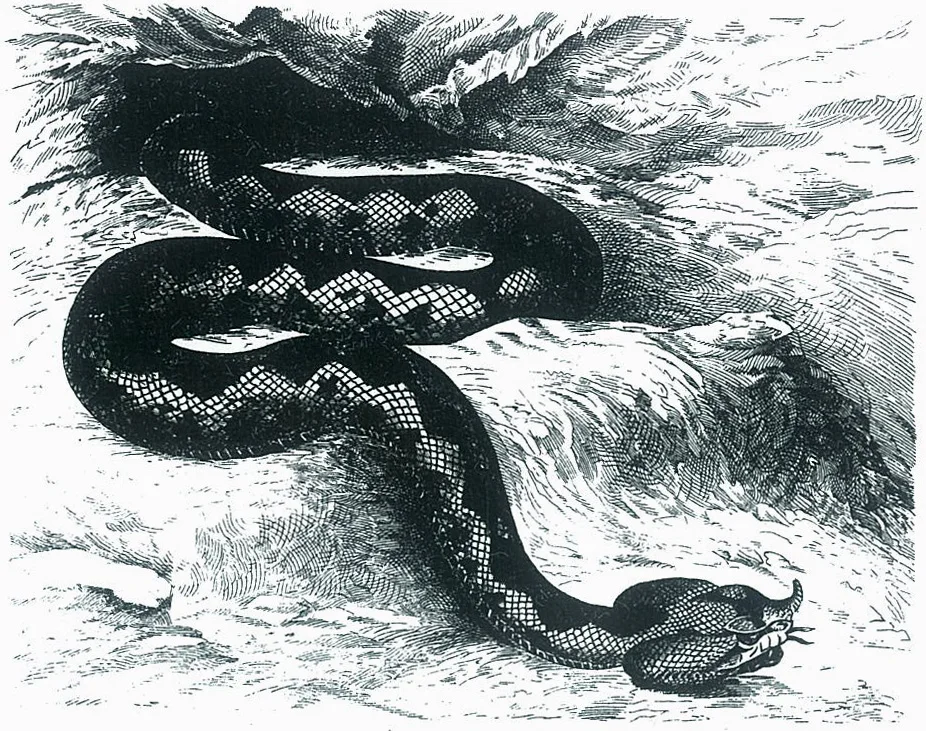
Text and translation
The uninterrupted Greek with its English translation, line by line.
Show text and translation
Μὴ σύ γ᾿ ἐνὶ τριόδοισι τύχῃς ὅτε δῆγμα πεφυγὼς
Nicander, Theriaca 128–134 and 231–232 · dactylic hexameters · as quoted by Galen, De theriaca ad Pisonem 9 and 13 · text of Kühn (1827), via First1KGreek · lines numbered 1–9 in Galen’s order
How to read each line
A guide to the Greek, syllables, pitch marks and quantities.
Show the reading key
- Above each line: the line as the edition prints it, each word placed over its own syllables. The main row: the same Greek divided into metrical syllables, each written as it is pronounced. A consonant that closes a syllable is written with it (λόθ | ρο); an elided word is closed up with the next vowel (ν’ἀ); a final consonant carried into the next word is set with a thin space (ς ἰ). Wider gaps mark word-ends.
- Above the syllables: the pitch of each syllable, from the accents. Under them: the quantity of each syllable as it falls in the line, then the transliteration, syllable by syllable, with accented syllables in capitals.
- Under each line: a line-for-line translation. In the right margin of the scansion: the line type, its scheme, and its analysis into cola.
Key to the labels
The names, patterns and symbols used beside this poem.
Show the labels and symbols
The labels in the right margin of the scansion below name the line, its scheme, the feet as the line realises them, and the caesurae and diaereses (the named word-ends) that fall in it. In the scheme ⏔ is a biceps, two shorts that may be contracted to one long; ⏕ is a long that may be resolved into two shorts; × is an anceps, long or short. A click on any syllable highlights its metron or colon, or, with the switch, its foot.
| Label | Name and shape | What it is |
|---|---|---|
| hem1 | First hemiepes— ⏔ — ⏔ — | The first two and a half feet of the hexameter, up to the penthemimeral caesura; in the pentameter, its whole first half. |
| hem2 | Second half of the hexameter⏔ — ⏔ — ⏑ ⏑ — × | From the penthemimeral caesura to the line-end: the fifth foot is nearly always a dactyl, the sixth is — ×. |
The traditional feet
| Foot and shape | Where |
|---|---|
| First foot: dactyl or spondee— ⏔ | Scheme positions 1–2. The biceps (⏑ ⏑) may be contracted to a single long, making a spondee. |
| Second foot: dactyl or spondee— ⏔ | Scheme positions 3–4. |
| Third foot: dactyl or spondee— ⏔ | Scheme positions 5–6. The penthemimeral caesura falls after its first syllable, the “trochaic” caesura after its second. |
| Fourth foot: dactyl or spondee— ⏔ | Scheme positions 7–8. Word-end at the end of this foot, when it is a dactyl, is the bucolic diaeresis (West’s “bucolic caesura”: word-end at the end of the fourth foot after an uncontracted biceps)[8]. |
| Fifth foot: dactyl— ⏑ ⏑ | Scheme positions 9–10. A spondee here (a “spondaic line”) is rare. |
| Sixth foot— × | Scheme positions 11–12: a long and the indifferent final syllable. |
Scansion
The only verse that Galen’s treatise To Piso actually prints: nine hexameters of Nicander on the viper, in Galen’s wording, compared with Schneider’s text of Nicander.
Do not let it be you who meets, at a crossroads, when he has escaped the bite,
the grey male viper in his frenzy — the female’s wrathful stroke;
for when the male is mounting her, with venom-fouled fang
the raging female bites in and severs her bedfellow’s head.
And the little ones go after vengeance for their father straight away,
the viper brood, as they are born: through their mother’s slender
belly they burst, and come out into life without a mother.
Of the male, two fangs leave their mark on the skin,
spewing poison; the female’s marks are always more.
Metre
- Where the lines come from. Galen introduces the first passage with “these things the fine Nicander writes, not without talent, in his verses, and the verses are these” (ὁ καλὸς Νίκανδρος ἐν τοῖς ἔπεσιν αὑτοῦ οὐκ ἀφυῶς γράφει, καὶ ἔστι τὰ ἔπη ταῦτα, Ad Pisonem 9, Kühn XIV p. 239), the second with “as Nicander too says in these verses” (Ad Pisonem 13, Kühn XIV p. 265). They are Nicander, Theriaca 128–134 and 231–232 in O. Schneider’s edition (Leipzig 1856). Galen has no line numbers; the page numbers them 1–9 in the order he quotes them.
- The metre. Dactylic hexameter, the line of Homer and Hesiod and of nearly all the epic and didactic verse after them:[9] six feet, the first five dactyls or spondees, the last — ×, with a caesura in the third foot, masculine or feminine.[10] Six of the nine lines have the feminine caesura, three the masculine (3, 5, 9); line 8 is a σπονδειάζων of the kind some Alexandrian poets liked, a dactylic fourth foot followed by a four-syllable word of the shape — — — ×.[11]
- Licences. Two hiatuses after a long diphthong in the princeps (3 θορνυμένου ἔχιος, 6 Γεινόμενοι ἐχιῆες), the kind West lists among Homer’s licences;[8] short final vowels lengthened in the princeps before an initial stop + liquid (1 ἐνὶ τριόδοισι, 8 δύο χροῒ)[12]; an elided noun (7 Γαστέρ᾿), a kind of elision that Callimachus restricts;[13] Γεινόμενοι, the metrically lengthened form of γενόμενοι.[8]
- Galen’s text and Schneider’s. Galen’s wording (as Kühn prints it) differs from Schneider’s text of Nicander in ten words: 1 τύχῃς (Schneider τύχοις), δῆγμα (δάχμα), πεφυγὼς (πεφυζὼς); 2 θύῃσι (θυίῃσι), τυπὴν χολόεσσαν (τυπῇ ψολόεντος); 3 θολερῷ (θαλερῷ); 4 ὀδὰξ (ἀμὺξ); 7 ἀναῤῥήξαντες (ἀναβρώσαντες); 8 δύο (δύω). Most change nothing in the scansion. Two do: in line 1 Galen’s πεφυγὼς needs a long υ where Schneider’s πεφυζὼς is long by position;[14] in line 8 Galen’s δύο needs its ο lengthened before χρ, where Schneider’s δύω is long by nature.
- Editorial marks (not shown on the page), each for a long vowel the spelling does not show: θῡ́ῃσι,[15] μετεκῑ́αθον,[16] ῑ̓ὸν.[17]
Prosody, line by line
Every syllable, with the reason for its length. Quantities are read from the vowel where the spelling shows it, from the consonants that follow (“position”), from the accent where it tells, and from the metre where nothing else does. Editors’ notes on the text follow in the boxed paragraphs.
- 128
Line 128 · Μὴ σύ γ᾿ ἐνὶ τριόδοισι τύχῃς ὅτε δῆγμα πεφυγὼς
Μὴ σύ γ᾿ ἐνὶ τριόδοισι τύχῃς ὅτε δῆγμα πεφυγὼς
Μὴσύγ ἐνὶτριόδοισιτύχῃςὅτεδῆγμαπεφυγὼςdactyl, dactyl, dactyl, dactyl, dactyl, — ×; caesura after the third trochee; hephthemimeral caesura; bucolic diaeresis.
- 1 —Μὴὴ is long by nature.
- 2 ⏑σύύ is short by the metre (position 2 must be short); one of the two shorts of the biceps at position 2.
- 3 ⏑γ ἐἐ is short by nature; the first consonant belongs to the previous word and is carried over to this vowel; one of the two shorts of the biceps at position 2.
- 4 —νὶὶ is a vowel of unknown length; the next word begins with τρ: the syllable is closed before it: long by position.
- 5 ⏑τριι is short by the metre (position 4 must be short); one of the two shorts of the biceps at position 4.
- 6 ⏑όό is short by nature; one of the two shorts of the biceps at position 4.
- 7 —δοιοι is a diphthong, long by nature.
- 8 ⏑σιι is short by the accent rule: acute on the antepenult requires a short final syllable; one of the two shorts of the biceps at position 6.
- 9 ⏑τύύ is short by the metre (position 6 must be short); one of the two shorts of the biceps at position 6.
- 10 —χῃςῃ is long by nature.
- 11 ⏑ὅὅ is short by nature; one of the two shorts of the biceps at position 8.
- 12 ⏑τεε is short by nature; one of the two shorts of the biceps at position 8.
- 13 —δῆγῆ is long by nature; closed by γ: long by position; γμ is one of the four clusters (γμ, γν, δμ, δν) that never leave the syllable before them short.[18]
- 14 ⏑μαα is short by the accent rule: circumflex on the penult requires a short final syllable; one of the two shorts of the biceps at position 10.
- 15 ⏑πεε is short by nature; one of the two shorts of the biceps at position 10.
- 16 —φυυ is long by the metre (position 11 must be long).
- 17 ×γὼςὼ is long by nature; closed by ς: long by position; the position is anceps.
Feminine caesura after τριόδοισι, hephthemimeral after τύχῃς, bucolic diaeresis after ὅτε.[19] γ᾿ is elided.[20] The final ι of ἐνὶ is lengthened in the second princeps before the initial τρ of τριόδοισι, a lengthening largely restricted to the princeps.[12] The last word. The sixth princeps needs a long syllable. Schneider’s Nicander has πεφυζὼς, the epic perfect participle,[21] where ζ, a double consonant, makes φυ long by position.[22] Galen’s text as Kühn prints it has πεφυγὼς, and the workbench, which cannot know the quantity of this υ, takes it long because the metre requires it. With Galen’s reading the line scans only if that υ is long; with Nicander’s it needs no licence.
- 129
Line 129 · Περκνὸς ἔχις θύῃσι, τυπὴν χολόεσσαν ἐχίδνης.
Περκνὸς ἔχις θύῃσι, τυπὴν χολόεσσαν ἐχίδνης.
Περκνὸς ἔχιςθύῃσι,τυπὴνχολόεσσαν ἐχίδνης.dactyl, spondee, dactyl, dactyl, dactyl, — ×; caesura after the third trochee; hephthemimeral caesura.
- 1 —Περε is short by nature; closed by ρ: long by position.
- 2 ⏑κνὸὸ is short by nature; one of the two shorts of the biceps at position 2.
- 3 ⏑ς ἔἔ is short by nature; the first consonant belongs to the previous word and is carried over to this vowel; one of the two shorts of the biceps at position 2.
- 4 —χιςι is a vowel of unknown length; closed by ς: long by position.
- 5 —θύῡ́ is long (its length is not shown by the ordinary spelling); a single long contracts the two shorts of the biceps at position 4.
- 6 —ῃῃ is long by nature.
- 7 ⏑σι,ι is short by the accent rule: acute on the antepenult requires a short final syllable; one of the two shorts of the biceps at position 6.
- 8 ⏑τυυ is short by the metre (position 6 must be short); one of the two shorts of the biceps at position 6.
- 9 —πὴνὴ is long by nature; closed by ν: long by position.
- 10 ⏑χοο is short by nature; one of the two shorts of the biceps at position 8.
- 11 ⏑λόό is short by nature; one of the two shorts of the biceps at position 8.
- 12 —εσε is short by nature; closed by σ: long by position.
- 13 ⏑σαα is short by the accent rule: acute on the antepenult requires a short final syllable; one of the two shorts of the biceps at position 10.
- 14 ⏑ν ἐἐ is short by nature; the first consonant belongs to the previous word and is carried over to this vowel; one of the two shorts of the biceps at position 10.
- 15 —χίδί is a vowel of unknown length; closed by δ: long by position; δν is one of the four clusters (γμ, γν, δμ, δν) that never leave the syllable before them short.[18]
- 16 ×νης.η is long by nature; closed by ς: long by position; the position is anceps.
- 130
Line 130 · Ἡνίκα θορνυμένου ἔχιος θολερῷ κυνόδοντι,
Ἡνίκα θορνυμένου ἔχιος θολερῷ κυνόδοντι,
Ἡνίκαθορνυμένουἔχιοςθολερῷκυνόδοντι,dactyl, dactyl, dactyl, dactyl, dactyl, — ×; penthemimeral caesura; hephthemimeral caesura.
- 1 —ἩἩ is long by nature.
- 2 ⏑νίί is short by the metre (position 2 must be short); one of the two shorts of the biceps at position 2.
- 3 ⏑καα is short by the metre (position 2 must be short); one of the two shorts of the biceps at position 2.
- 4 —θορο is short by nature; closed by ρ: long by position.
- 5 ⏑νυυ is short by the metre (position 4 must be short); one of the two shorts of the biceps at position 4.
- 6 ⏑μέέ is short by nature; one of the two shorts of the biceps at position 4.
- 7 —νουου is a diphthong, long by nature; the next word begins with a vowel and nothing is elided: hiatus.
- 8 ⏑ἔἔ is short by nature; one of the two shorts of the biceps at position 6.
- 9 ⏑χιι is short by the metre (position 6 must be short); one of the two shorts of the biceps at position 6.
- 10 —οςο is short by nature; closed by ς: long by position.
- 11 ⏑θοο is short by nature; one of the two shorts of the biceps at position 8.
- 12 ⏑λεε is short by nature; one of the two shorts of the biceps at position 8.
- 13 —ρῷῷ is long by nature.
- 14 ⏑κυυ is short by the metre (position 10 must be short); one of the two shorts of the biceps at position 10.
- 15 ⏑νόό is short by nature; one of the two shorts of the biceps at position 10.
- 16 —δονο is short by nature; closed by ν: long by position.
- 17 ×τι,ι is short by the accent rule: acute on the antepenult requires a short final syllable; the position is anceps.
Masculine caesura after θορνυμένου, with hiatus: the diphthong ου stays long in the third princeps before ἔχιος.[25] Hephthemimeral caesura after ἔχιος, whose ς with the θ of θολερῷ closes the syllable. Five dactyls.
- 131
Line 131 · Θουρὰς ὀδὰξ ἐμφῦσα κάρην ἀπέκοψεν ὁμεύνου·
Θουρὰς ὀδὰξ ἐμφῦσα κάρην ἀπέκοψεν ὁμεύνου·
Θουρὰς ὀδὰξἐμφῦσακάρηνἀπέκοψεν ὁμεύνου·dactyl, spondee, dactyl, dactyl, dactyl, — ×; caesura after the third trochee; hephthemimeral caesura.
- 1 —Θουου is a diphthong, long by nature.
- 2 ⏑ρὰὰ is short by the metre (position 2 must be short); one of the two shorts of the biceps at position 2.
- 3 ⏑ς ὀὀ is short by nature; the first consonant belongs to the previous word and is carried over to this vowel; one of the two shorts of the biceps at position 2.
- 4 —δὰξξ is a double consonant (two sounds) and closes the syllable: long by position.
- 5 —ἐμἐ is short by nature; closed by μ: long by position; a single long contracts the two shorts of the biceps at position 4.
- 6 —φῦῦ carries a circumflex, so it is long.
- 7 ⏑σαα is short by the accent rule: circumflex on the penult requires a short final syllable; one of the two shorts of the biceps at position 6.
- 8 ⏑κάά is short by the metre (position 6 must be short); one of the two shorts of the biceps at position 6.
- 9 —ρηνη is long by nature.
- 10 ⏑ἀἀ is short by the metre (position 8 must be short); one of the two shorts of the biceps at position 8.
- 11 ⏑πέέ is short by nature; one of the two shorts of the biceps at position 8.
- 12 —κοο is short by nature; ψ is a double consonant (two sounds) and closes the syllable: long by position.
- 13 ⏑ψεε is short by nature; one of the two shorts of the biceps at position 10.
- 14 ⏑ν ὁὁ is short by nature; the first consonant belongs to the previous word and is carried over to this vowel; one of the two shorts of the biceps at position 10.
- 15 —μεύεύ is a diphthong, long by nature.
- 16 ×νου·ου is a diphthong, long by nature; the position is anceps.
The second biceps is contracted (ἐμ). Feminine caesura after ἐμφῦσα, hephthemimeral after κάρην. In ἀπέκοψεν the ψ, a double consonant, makes κο long in the fifth princeps.[22] Schneider’s ἀμὺξ for Galen’s ὀδὰξ has the same shape, ⏑ —.
- 132
Line 132 · Οἱ δὲ πατρὸς λώβην μετεκίαθον αὐτίκα τυτθοὶ
Οἱ δὲ πατρὸς λώβην μετεκίαθον αὐτίκα τυτθοὶ
Οἱδὲπατρὸςλώβηνμετεκίαθον αὐτίκατυτθοὶdactyl, spondee, dactyl, dactyl, dactyl, — ×; penthemimeral caesura; bucolic diaeresis.
- 1 —ΟἱΟἱ is a diphthong, long by nature.
- 2 ⏑δὲὲ is short by nature; one of the two shorts of the biceps at position 2.
- 3 ⏑παα is a vowel of unknown length; τρ is carried whole into the next syllable, so this syllable stays open and short (correption before a stop + liquid cluster, as the metre needs); one of the two shorts of the biceps at position 2.
- 4 —τρὸςὸ is short by nature; closed by ς: long by position.
- 5 —λώώ is long by nature; a single long contracts the two shorts of the biceps at position 4.
- 6 —βηνη is long by nature; closed by ν: long by position.
- 7 ⏑μεε is short by nature; one of the two shorts of the biceps at position 6.
- 8 ⏑τεε is short by nature; one of the two shorts of the biceps at position 6.
- 9 —κίῑ́ is long (its length is not shown by the ordinary spelling).
- 10 ⏑αα is short by the metre (position 8 must be short); one of the two shorts of the biceps at position 8.
- 11 ⏑θοο is short by nature; one of the two shorts of the biceps at position 8.
- 12 —ν αὐαὐ is a diphthong, long by nature; the first consonant belongs to the previous word and is carried over to this vowel.
- 13 ⏑τίί is short by the metre (position 10 must be short); one of the two shorts of the biceps at position 10.
- 14 ⏑καα is short by the metre (position 10 must be short); one of the two shorts of the biceps at position 10.
- 15 —τυτυ is a vowel of unknown length; closed by τ: long by position.
- 16 ×θοὶοὶ is a diphthong, long by nature; the position is anceps.
- 133
Line 133 · Γεινόμενοι ἐχιῆες, ἐπεὶ διὰ μητρὸς ἀραιὴν
Γεινόμενοι ἐχιῆες, ἐπεὶ διὰ μητρὸς ἀραιὴν
Γεινόμενοιἐχιῆε,ς ἐπεὶδιὰμητρὸς ἀραιὴνdactyl, dactyl, dactyl, dactyl, dactyl, — ×; caesura after the third trochee; hephthemimeral caesura; bucolic diaeresis.
- 1 —Γειει is a diphthong, long by nature.
- 2 ⏑νόό is short by nature; one of the two shorts of the biceps at position 2.
- 3 ⏑μεε is short by nature; one of the two shorts of the biceps at position 2.
- 4 —νοιοι is a diphthong, long by nature; the next word begins with a vowel and nothing is elided: hiatus.
- 5 ⏑ἐἐ is short by nature; one of the two shorts of the biceps at position 4.
- 6 ⏑χιι is short by the metre (position 4 must be short); one of the two shorts of the biceps at position 4.
- 7 —ῆῆ is long by nature.
- 8 ⏑ε,ε is short by nature; one of the two shorts of the biceps at position 6.
- 9 ⏑ς ἐἐ is short by nature; the first consonant belongs to the previous word and is carried over to this vowel; one of the two shorts of the biceps at position 6.
- 10 —πεὶεὶ is a diphthong, long by nature.
- 11 ⏑διι is short by the metre (position 8 must be short); one of the two shorts of the biceps at position 8.
- 12 ⏑ὰὰ is short by the metre (position 8 must be short); one of the two shorts of the biceps at position 8.
- 13 —μηη is long by nature.
- 14 ⏑τρὸὸ is short by nature; one of the two shorts of the biceps at position 10.
- 15 ⏑ς ἀἀ is short by the metre (position 10 must be short); the first consonant belongs to the previous word and is carried over to this vowel; one of the two shorts of the biceps at position 10.
- 16 —ραιαι is a diphthong, long by nature.
- 17 ×ὴνὴ is long by nature; closed by ν: long by position; the position is anceps.
Γεινόμενοι is the metrically lengthened form of γενόμενοι, one of West’s examples of Homeric metrical lengthening.[8] Its diphthong οι stays long in the second princeps before ἐχιῆες: hiatus.[8] Feminine caesura after ἐχιῆες, hephthemimeral after ἐπεὶ. The scanner’s bucolic diaeresis after διὰ is not a real word-end, since a preposition counts with the next word.[27]
- 134
Line 134 · Γαστέρ᾿ ἀναῤῥήξαντες ἀμήτορες ἐξεγένοντο.
Γαστέρ᾿ ἀναῤῥήξαντες ἀμήτορες ἐξεγένοντο.
Γαστέρ ἀναῤῥήξαντες ἀμήτορες ἐξεγένοντο.dactyl, spondee, dactyl, dactyl, dactyl, — ×; caesura after the third trochee; bucolic diaeresis.
- 1 —Γασα is a vowel of unknown length; closed by σ: long by position.
- 2 ⏑τέέ is short by nature; one of the two shorts of the biceps at position 2.
- 3 ⏑ρ ἀἀ is short by the metre (position 2 must be short); the first consonant belongs to the previous word and is carried over to this vowel; one of the two shorts of the biceps at position 2.
- 4 —ναῤα is a vowel of unknown length; closed by ῤ: long by position.
- 5 —ῥήή is long by nature; ξ is a double consonant (two sounds) and closes the syllable: long by position; a single long contracts the two shorts of the biceps at position 4.
- 6 —ξανα is a vowel of unknown length; closed by ν: long by position.
- 7 ⏑τεε is short by nature; one of the two shorts of the biceps at position 6.
- 8 ⏑ς ἀἀ is short by the metre (position 6 must be short); the first consonant belongs to the previous word and is carried over to this vowel; one of the two shorts of the biceps at position 6.
- 9 —μήή is long by nature.
- 10 ⏑τοο is short by nature; one of the two shorts of the biceps at position 8.
- 11 ⏑ρεε is short by nature; one of the two shorts of the biceps at position 8.
- 12 —ς ἐἐ is short by nature; ξ is a double consonant (two sounds) and closes the syllable: long by position; the first consonant belongs to the previous word and is carried over to this vowel.
- 13 ⏑ξεε is short by nature; one of the two shorts of the biceps at position 10.
- 14 ⏑γέέ is short by nature; one of the two shorts of the biceps at position 10.
- 15 —νονο is short by nature; closed by ν: long by position.
- 16 ×το.ο is short by nature; the position is anceps.
Γαστέρ᾿ is elided,[20] the elision of a noun.[13] The second biceps is contracted (ῥή): in ἀναῤῥήξαντες the double ρ closes the syllable before it. Feminine caesura after ἀναῤῥήξαντες, bucolic diaeresis after ἀμήτορες. Schneider’s ἀναβρώσαντες scans the same, with βρ making position inside the word.[18]
- 231
Line 231 · Τοῦ μὲν ὑπὲρ κυνόδοντε δύο χροῒ τεκμαίρονται,
Τοῦ μὲν ὑπὲρ κυνόδοντε δύο χροῒ τεκμαίρονται,
Τοῦμὲν ὑπὲρκυνόδοντεδύοχροῒτεκμαίρονται,dactyl, dactyl, dactyl, dactyl, spondee, — ×; caesura after the third trochee; hephthemimeral caesura; bucolic diaeresis.
- 1 —Τοῦοῦ is a diphthong, long by nature.
- 2 ⏑μὲὲ is short by nature; one of the two shorts of the biceps at position 2.
- 3 ⏑ν ὑὑ is short by the metre (position 2 must be short); the first consonant belongs to the previous word and is carried over to this vowel; one of the two shorts of the biceps at position 2.
- 4 —πὲρὲ is short by nature; closed by ρ: long by position.
- 5 ⏑κυυ is short by the metre (position 4 must be short); one of the two shorts of the biceps at position 4.
- 6 ⏑νόό is short by nature; one of the two shorts of the biceps at position 4.
- 7 —δονο is short by nature; closed by ν: long by position.
- 8 ⏑τεε is short by nature; one of the two shorts of the biceps at position 6.
- 9 ⏑δύύ is short by the metre (position 6 must be short); one of the two shorts of the biceps at position 6.
- 10 —οο is short by nature; the next word begins with χρ: the syllable is closed before it: long by position.
- 11 ⏑χροο is short by nature; one of the two shorts of the biceps at position 8.
- 12 ⏑ῒῒ is short by the metre (position 8 must be short); one of the two shorts of the biceps at position 8.
- 13 —τεκε is short by nature; closed by κ before a nasal: stop + nasal makes position, as it usually does in epic.
- 14 —μαίαί is a diphthong, long by nature; a single long contracts the two shorts of the biceps at position 10.
- 15 —ρονο is short by nature; closed by ν: long by position.
- 16 ×ται,αι is a diphthong, long by nature; the position is anceps.
A σπονδειάζων: a dactylic fourth foot followed by the four-syllable word τεκμαίρονται, — — — ×, so that the fifth biceps is contracted (on contraction in the fifth foot, p. 20)[11]. Feminine caesura after κυνόδοντε, hephthemimeral after δύο, bucolic diaeresis after χροῒ. Galen’s δύο has its ο lengthened in the fourth princeps before the initial χρ of χροῒ;[12] Schneider’s δύω has a long ω and needs no licence. The ν of μὲν is carried before ὑ-.[24]
- 232
Line 232 · ἰὸν ἐρευγόμενοι, πλέονες δέ τοι αἰὲν ἐχίδνης.
ἰὸν ἐρευγόμενοι, πλέονες δέ τοι αἰὲν ἐχίδνης.
ἰὸν ἐρευγόμενοι,πλέονεςδέτοιαἰὲν ἐχίδνης.dactyl, dactyl, dactyl, dactyl, dactyl, — ×; penthemimeral caesura; hephthemimeral caesura; bucolic diaeresis.
- 1 —ἰῑ̓ is long (its length is not shown by the ordinary spelling).
- 2 ⏑ὸὸ is short by nature; one of the two shorts of the biceps at position 2.
- 3 ⏑ν ἐἐ is short by nature; the first consonant belongs to the previous word and is carried over to this vowel; one of the two shorts of the biceps at position 2.
- 4 —ρευευ is a diphthong, long by nature.
- 5 ⏑γόό is short by nature; one of the two shorts of the biceps at position 4.
- 6 ⏑μεε is short by nature; one of the two shorts of the biceps at position 4.
- 7 —νοι,οι is a diphthong, long by nature; the next word begins with πλ: the syllable is closed before it: long by position.
- 8 ⏑πλέέ is short by nature; one of the two shorts of the biceps at position 6.
- 9 ⏑οο is short by nature; one of the two shorts of the biceps at position 6.
- 10 —νεςε is short by nature; closed by ς: long by position.
- 11 ⏑δέέ is short by nature; one of the two shorts of the biceps at position 8.
- 12 ⏑τοιοι is a diphthong, long by nature; shortened before the vowel that begins the next word (epic correption), as the metre requires; one of the two shorts of the biceps at position 8.
- 13 —αἰαἰ is a diphthong, long by nature.
- 14 ⏑ὲὲ is short by nature; one of the two shorts of the biceps at position 10.
- 15 ⏑ν ἐἐ is short by nature; the first consonant belongs to the previous word and is carried over to this vowel; one of the two shorts of the biceps at position 10.
- 16 —χίδί is a vowel of unknown length; closed by δ: long by position; δν is one of the four clusters (γμ, γν, δμ, δν) that never leave the syllable before them short.[18]
- 17 ×νης.η is long by nature; closed by ς: long by position; the position is anceps.
The ι of ἰὸν is long.[28] Masculine caesura after ἐρευγόμενοι, hephthemimeral after πλέονες. δέ and τοι are a postpositive and an enclitic and count with πλέονες,[8] so the word-end after δέ, between the two shorts of the fourth biceps, does not break Hermann’s bridge.[8] τοι is shortened before αἰὲν (epic correption, p. 14).
Notes
- ^ Johnston 2018, p. xi.
- ^ Kühn 1827, pp. 210–213.
- ^ Kühn 1827, pp. 32–42, 232–233.
- ^ Kühn 1827, pp. 239, 265.
- ^ Overduin 2015, pp. 9–11.
- ^ Mair and Mair 1921, p. 363.
- ^ West 1987, p. 19.
- ^ a b c d e f g West 1987, p. 21.
- ^ West 1987, p. 19.
- ^ West 1987, p. 19; Battezzato 2009, p. 138.
- ^ a b West 1987, p. 78.
- ^ a b c West 1987, pp. 16, 22.
- ^ a b West 1987, p. 79.
- ^ See the note.
- ^ LSJ s.v. θύω (B), which cites this line and gives the υ long “always”.
- ^ a b LSJ s.v. μετακιάθω.
- ^ LSJ s.v. ἰός (B), poison.
- ^ a b c d West 1987, p. 16.
- ^ West 1987, pp. 19, 78.
- ^ a b West 1987, p. 13.
- ^ LSJ s.v. πεφυζότες: “Ep. pf. part. for πεφευγότες”.
- ^ a b West 1987, p. 12 n. 1.
- ^ LSJ s.v. θύω (B), which cites Nicander, Th. 129, with the variant θυίῃσι.
- ^ a b West 1987, p. 12.
- ^ West 1987, p. 21: in Homer such hiatus mostly leaves a long vowel in the princeps.
- ^ West 1987, pp. 16–17.
- ^ West 1987, p. 20.
- ^ LSJ s.v. ἰός (B).
Text and sources
- Text: Galen, De theriaca ad Pisonem 9 and 13, ed. C. G. Kühn, Claudii Galeni Opera Omnia XIV (Leipzig 1827), pp. 239, 265, from First1KGreek (urn:cts:greekLit:tlg0057.tlg079.1st1K-grc1), CC BY-SA 4.0 (TEI header).
- Comparison: Nicander, Theriaca 128–134, 231–232, ed. O. Schneider, Nicandrea (Leipzig 1856), from First1KGreek (urn:cts:greekLit:tlg0022.tlg001.1st1K-grc1), CC BY-SA 4.0 (TEI header).
- Rules: M. L. West, Introduction to Greek Metre (Oxford 1987), pp. 12–17, 19–22 (p. 20 from a photograph), 78–79, checked against the page images.
- L. Battezzato, ‘Metre and music’, in F. Budelmann (ed.), The Cambridge Companion to Greek Lyric (Cambridge 2009), p. 138 (the hexameter, its caesurae and contraction).
- LSJ (9th ed., 1940), s.vv. θύω (B), μετακιάθω, ἰός (B), πεφυζότες.
Quotations from copyrighted works are not covered by this page’s licence.


